GLP-1 weight loss for insulin resistant women: what actually works
TL;DR: GLP-1 receptor agonists work especially well for insulin resistant women because they lower blood sugar, quiet appetite, and address the hormonal driver behind stubborn weight gain. Clinical trials show 15-22% body weight loss over 68-72 weeks. Women with PCOS, prediabetes, or perimenopausal metabolic shifts are strong candidates. A prescriber evaluation is still required.
Why does insulin resistance make weight loss so hard for women?
Insulin resistance means your cells stop responding normally to insulin, so your pancreas pumps out more of it to force glucose into cells. High circulating insulin tells your body to store fat, especially around the abdomen, and it blocks fat-burning. You can eat at a calorie deficit and still gain weight because the hormonal signal is working against you.
This hits women harder at specific life stages. Estrogen helps maintain insulin sensitivity, so the drop that starts in perimenopause, often in the early 40s, directly worsens glucose metabolism [1]. Women with polycystic ovary syndrome (PCOS) have insulin resistance as a core feature, not a side effect, and PCOS affects an estimated 6-12% of reproductive-age women in the United States according to the CDC [2]. Thyroid dysfunction, far more common in women than men, adds another layer by slowing the metabolic rate that insulin depends on. See also: thyroid hormone replacement therapy.
The practical result is frustrating and real. Standard calorie restriction raises cortisol, which raises blood sugar, which triggers more insulin. Exercise helps but often not enough to overcome severe insulin resistance on its own. That cycle is exactly where GLP-1 drugs step in.
What is a GLP-1 receptor agonist and how does it work on insulin resistance?
GLP-1 (glucagon-like peptide-1) is a hormone your gut releases after eating. It tells the pancreas to secrete insulin only when glucose is actually elevated, tells the liver to stop dumping glucose into the bloodstream, slows gastric emptying so food absorbs more gradually, and signals the hypothalamus that you're full. GLP-1 receptor agonists are synthetic molecules that copy and amplify all of those effects.
For an insulin resistant woman, this matters on several levels. The drugs lower fasting insulin because they cut the chronic glucose load the pancreas keeps reacting to. A 2022 analysis published in Diabetes Care found that semaglutide reduced fasting insulin levels and improved HOMA-IR (the standard insulin resistance index) significantly compared to placebo in adults with overweight or obesity [3]. Lower insulin means the body can reach stored fat again. That is the mechanism that makes GLP-1s different in kind from a simple appetite suppressant.
The two GLP-1 drugs with the most weight-loss evidence in women with metabolic problems are semaglutide (Ozempic for type 2 diabetes, Wegovy for obesity) and tirzepatide (Mounjaro for type 2 diabetes, Zepbound for obesity). Tirzepatide also acts on GIP receptors, which may explain its slightly larger effect size in trials. For more on semaglutide specifically, see is semaglutide the same as ozempic.
What do the clinical trials actually show for weight loss and blood sugar?
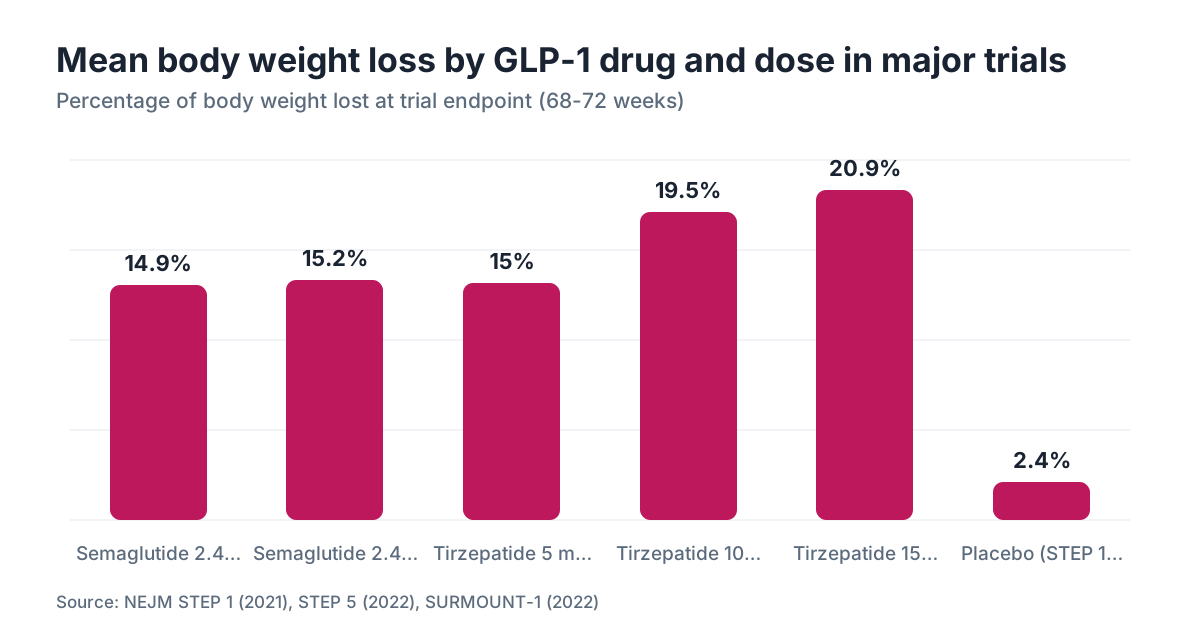
The STEP trials (Semaglutide Treatment Effect in People with Obesity) are the most cited data set. STEP 1, published in the New England Journal of Medicine in 2021, enrolled 1,961 adults with BMI ≥30 or ≥27 with a weight-related comorbidity. After 68 weeks on 2.4 mg weekly semaglutide plus lifestyle intervention, participants lost a mean of 14.9% of body weight versus 2.4% on placebo [4]. That is not a rounding difference. Women made up roughly 74% of the STEP 1 population.
SURMOUNT-1, the big tirzepatide trial published in NEJM in 2022, posted even larger numbers. At the highest dose (15 mg weekly), participants lost a mean of 20.9% of body weight over 72 weeks [5]. A prespecified subgroup analysis showed women lost more weight than men at equivalent doses, which fits earlier pharmacokinetic data suggesting women may absorb GLP-1 drugs differently.
For insulin resistant women specifically, the STEP 5 trial ran 104 weeks and confirmed the weight loss held long-term without tolerance developing [6]. A1c reductions in participants with prediabetes were large enough that many reverted to normal glucose ranges entirely. The FDA label for Wegovy now states that it reduces the risk of serious cardiovascular events in adults with cardiovascular disease, a real expansion beyond pure weight loss [7].
| Trial | Drug | Duration | Mean body weight loss | Population | |---|---|---|---|---| | STEP 1 | Semaglutide 2.4 mg | 68 weeks | 14.9% | Obesity, ~74% women | | STEP 5 | Semaglutide 2.4 mg | 104 weeks | 15.2% | Obesity, long-term | | SURMOUNT-1 (15 mg) | Tirzepatide 15 mg | 72 weeks | 20.9% | Obesity, no T2D | | SURMOUNT-1 (5 mg) | Tirzepatide 5 mg | 72 weeks | 15.0% | Obesity, no T2D |
Do GLP-1s work differently for women with PCOS?
Yes, and the data here is genuinely encouraging. PCOS is driven by insulin resistance in most women who have it, so hitting the insulin resistance directly tends to improve several PCOS symptoms at once, well beyond the weight.
Smaller randomized trials show GLP-1 receptor agonists reduce androgen levels, improve menstrual regularity, and lower LH/FSH ratios in women with PCOS, effects larger than weight loss alone would predict [8]. A 2023 meta-analysis in Reproductive Biology and Endocrinology reviewed nine trials and found GLP-1 agonists significantly reduced BMI, fasting insulin, testosterone, and LH in PCOS patients compared to controls.
None of the large obesity trials (STEP, SURMOUNT) enrolled only PCOS patients, so there is no dedicated 2,000-person PCOS trial yet. The closest proxy comes from trials in women with type 2 diabetes and PCOS overlap. The effect sizes look similar or better than in the general obese population, which makes biological sense given how central insulin resistance is to the condition.
One practical point: women with PCOS who want to conceive need to know that GLP-1s are not approved during pregnancy and must be stopped before trying to conceive. Restored ovulation from weight loss is real and has led to unintended pregnancies in women who assumed they were infertile.
How does perimenopause change your response to GLP-1 drugs?
Perimenopause speeds up insulin resistance on its own, no diet or exercise change required. Estrogen receptors sit in skeletal muscle and the pancreatic beta cells, so as estradiol swings and then falls, glucose regulation gets worse. The Menopause Society (formerly NAMS) has noted in its position statements that abdominal adiposity rises significantly during the menopausal transition and tracks with worse cardiometabolic risk [9].
GLP-1 drugs don't touch estrogen directly, but they hit the downstream consequence: the insulin resistance and caloric surplus that perimenopausal hormone change promotes. Several clinicians use them alongside menopausal hormone therapy (MHT) on the logic that MHT restores estrogen-driven insulin sensitivity while the GLP-1 handles appetite and glucose. That combination hasn't been studied in a large RCT as of mid-2025, so the evidence is mechanistic and observational, not trial-level.
Weight loss itself lowers systemic inflammation and can ease hot flash severity in some women, though the evidence for that link is modest. For more context on the perimenopausal experience, see peri menopausal and the new menopause.
One real concern for perimenopausal women on GLP-1s: muscle loss. GLP-1-driven weight loss includes a meaningful lean mass component. Estimates from the STEP trials put roughly 30-40% of weight lost as lean mass, similar to other calorie-deficit interventions. Resistance training and adequate protein (most guidelines suggest 1.2-1.6 g/kg body weight) are non-negotiable companions to the drug.
Which GLP-1 drug is best for insulin resistant women: semaglutide or tirzepatide?
Tirzepatide has larger average weight loss numbers in trials. That is the honest answer. But averages hide big individual variation, and access, cost, and side effect profiles matter too.
Semaglutide is a pure GLP-1 agonist. Tirzepatide adds GIP receptor activity, and GIP may improve insulin secretion through a slightly different pathway than GLP-1 alone. For women with severe insulin resistance or type 2 diabetes, that dual action may give tirzepatide an edge on A1c specifically. The SURPASS trials in type 2 diabetes showed tirzepatide beating semaglutide head-to-head on both A1c and weight [10].
For prediabetes or non-diabetic insulin resistance, no head-to-head trial has finished in women. The choice in practice usually comes down to insurance coverage (Mounjaro/Zepbound coverage for obesity without type 2 diabetes is still inconsistent), availability of compounded versions, and individual GI tolerance. Nausea is the most common side effect of both and tends to peak at dose escalation. Some women tolerate one drug's nausea profile better than the other.
If you're weighing your options, telehealth platforms like WomenRx read your metabolic labs, BMI, and hormonal picture together to help pin down which drug fits your situation. That matters, because a one-size answer doesn't exist here.
What labs should you get before starting a GLP-1 for insulin resistance?
A prescriber looking at insulin resistance in women should want more than your BMI. The minimum useful panel before starting a GLP-1 is fasting glucose, fasting insulin, HbA1c, a full lipid panel, and a metabolic panel (kidney and liver function). From those numbers you can calculate HOMA-IR (fasting insulin × fasting glucose ÷ 405); a HOMA-IR above 2.0 in a non-diabetic woman is a reasonable marker of clinically relevant insulin resistance, though some labs use 1.7 as the cutoff.
For women with PCOS or irregular cycles, adding free testosterone, SHBG, LH, and FSH fills in the metabolic-hormonal picture. A thyroid panel (TSH, free T4) is worth checking because hypothyroidism both worsens insulin resistance and causes weight gain that GLP-1s partially work around rather than fix. Thyroid hormone replacement therapy covers that topic separately.
You don't technically need all of this for an FDA-label prescription of Wegovy or Zepbound. The label requires BMI ≥30, or BMI ≥27 with at least one weight-related comorbidity like hypertension, type 2 diabetes, or dyslipidemia [7]. But if you have insulin resistance without a formal diabetes diagnosis, your prescriber may need to document the comorbidity clearly for insurance. Fasting insulin is not part of standard metabolic panels at most labs, so you may have to request it by name.
What are the real side effects of GLP-1s in women?
Nausea is the most common side effect, reported in 44% of semaglutide users versus 16% of placebo in STEP 1 [4]. It is almost always worst during dose escalation and eases for most women within 4-8 weeks at a stable dose. Vomiting, diarrhea, and constipation follow in frequency. The standard advice: eat smaller meals, skip fatty foods during titration, stay hydrated, and don't rush the dose schedule.
Hair loss (telogen effluvium) shows up with rapid weight loss on GLP-1s. It is not a drug-specific effect but a response to caloric deficit and metabolic shift. It typically peaks at 3-6 months and resolves. Adequate protein reduces but doesn't erase it.
The more serious labeled risks include pancreatitis, gallbladder disease (cholelithiasis risk climbs with rapid weight loss generally), and a black box warning for thyroid C-cell tumors based on rodent data. The FDA and drug labels state this risk has not been confirmed in humans and the warning is precautionary, but anyone with a personal or family history of medullary thyroid carcinoma or MEN2 syndrome should not use these drugs [7].
There is also a growing conversation about GLP-1s and mental health. Post-marketing surveillance and some observational data raised questions about suicidal ideation. The FDA reviewed this in 2023-2024 and concluded the available evidence did not establish a causal link, but it stays an open area of monitoring. Women with a history of depression or eating disorders should discuss this with their prescriber before starting.
Does insurance cover GLP-1s for insulin resistance without a type 2 diabetes diagnosis?
This is the most practically frustrating part of the whole conversation. Coverage is inconsistent and depends on your specific plan, the diagnosis code your prescriber uses, and whether you have a documented comorbidity.
For Wegovy (semaglutide 2.4 mg): Medicare Part D began covering it in 2024 for patients with established cardiovascular disease, following the FDA label expansion. General obesity coverage under Medicare stays restricted. Private insurers vary widely; some cover Wegovy for BMI ≥30, others require BMI ≥35 or failed prior therapy documentation.
For Zepbound (tirzepatide): the same patchwork. Eli Lilly lists Zepbound's average monthly list price around $1,060 before discounts as of early 2025. Novo Nordisk lists Wegovy near $1,350 per month list price. Both companies run savings programs that can cut out-of-pocket costs to $25-$500/month for commercially insured patients who qualify.
Compounded semaglutide became widely available during the FDA shortage that ran from 2022 into 2024-2025. The FDA removed semaglutide from its shortage list in early 2025, which means 503B compounding pharmacies must stop making copies unless they add a meaningful clinical difference. Check semaglutide news for current regulatory status, since this is changing fast.
If your insulin resistance doesn't yet meet type 2 diabetes criteria but you have prediabetes (A1c 5.7-6.4% or fasting glucose 100-125 mg/dL), a well-documented prescriber note about comorbid prediabetes and cardiovascular risk factors can sometimes open coverage. No guarantee, but it is worth the documentation effort.
How much weight can an insulin resistant woman realistically expect to lose on a GLP-1?
The STEP and SURMOUNT averages are real, but they are averages. Some women in those trials lost 5% of body weight; others lost 25%. Non-responders (less than 5% weight loss at 12 weeks) are a documented subgroup, estimated at roughly 10-15% of users. If you're not seeing meaningful movement at the maximum tolerated dose after 16 weeks, continuing is unlikely to change the trajectory.
Insulin resistant women without type 2 diabetes tend to respond better than women with established type 2 diabetes, probably because beta cell function is still intact enough to mount the full insulin-secretion response the drug is built to amplify. PCOS patients in small trials have shown weight loss comparable to or slightly better than the general obese population.
Realistic expectations for a motivated woman on semaglutide 2.4 mg: 12-18 months to reach a stable lower weight, with most of the loss in the first 6-9 months. Plateaus are common around months 4-6 and again around month 10-12. These are not treatment failures; they reflect the body settling at a lower set point.
Weight regain after stopping is real. STEP 4 showed that participants who stopped semaglutide regained two-thirds of their lost weight within a year [6]. This is not a character flaw. GLP-1 drugs work while you take them. So the conversation about duration, lifestyle change, and long-term use needs to happen at the start, not after you've lost 40 pounds.
Can you take a GLP-1 drug alongside metformin or other insulin-sensitizing medications?
Yes, and this combination is common in clinical practice. Metformin works mainly by reducing hepatic glucose output; GLP-1s work mainly through the gut-brain-pancreas axis. Their mechanisms complement rather than overlap, and no serious interaction has been identified.
The Endocrine Society's clinical practice guideline on obesity pharmacotherapy notes that combination metabolic therapy is appropriate when monotherapy doesn't achieve enough glucose control or weight reduction [11]. Many women with PCOS are already on metformin before a GLP-1 gets added. Inositol (specifically myo-inositol) is another common PCOS add-on with modest evidence for insulin sensitization, and no interaction with GLP-1s has been reported.
For women on sulfonylureas or insulin (more common in established type 2 diabetes), adding a GLP-1 can raise hypoglycemia risk and calls for dose adjustment of the existing medication. That is a conversation for your prescriber, not something to self-manage.
One interaction worth flagging: GLP-1s slow gastric emptying, which can shift the absorption timing of oral medications taken with food. Oral contraceptives, thyroid medications, and certain blood pressure drugs may need timing adjustments. Your pharmacist can review this against your specific medication list.
Frequently asked questions
How do I know if I have insulin resistance without being diabetic?
The most direct test is a fasting insulin plus fasting glucose, which lets you calculate HOMA-IR. A value above 2.0 suggests insulin resistance in a non-diabetic adult. Clinical signs help too: abdominal weight gain despite a reasonable diet, acanthosis nigricans (dark skin patches on the neck or underarms), irregular periods, and elevated triglycerides with low HDL are all tied to insulin resistance even with a normal fasting glucose.
Can GLP-1s help with belly fat specifically?
Yes, and this is one of the more meaningful findings. GLP-1 drugs appear to preferentially reduce visceral (abdominal) fat over subcutaneous fat, which matters because visceral fat is the metabolically active type tied to heart disease and insulin resistance. CT scan substudies in semaglutide trials confirmed meaningful visceral fat reduction even when total weight loss was modest. This is part of why cardiovascular risk markers improve before large-scale weight loss shows up.
Is semaglutide safe for women with prediabetes?
FDA-approved weight-loss doses of semaglutide (Wegovy 2.4 mg weekly) are not specifically approved for prediabetes, but prediabetes with BMI ≥27 qualifies as a weight-related comorbidity that meets the label criteria. The STEP 5 trial showed many prediabetic participants reverted to normal glucose ranges after 104 weeks on semaglutide. Prescribing for prediabetes is common and evidence-backed, but it is an off-label use of the obesity indication.
Will I have to take a GLP-1 drug forever?
Probably for as long as you want to hold the weight loss, yes. STEP 4 data showed participants regained about two-thirds of lost weight within 12 months of stopping semaglutide. That rebound is not different from what follows stopping any effective obesity treatment. Some women use GLP-1s for a defined period to reset metabolic health and then maintain with aggressive lifestyle change; long-term success with that approach is possible but less consistent than staying on the drug.
Can GLP-1 drugs help with PCOS weight loss?
Yes. Small trials and meta-analyses show GLP-1 agonists reduce BMI, fasting insulin, free testosterone, and LH in women with PCOS, sometimes more than weight loss alone would explain. There is no large RCT dedicated to PCOS as of mid-2025, but the mechanistic fit is strong: PCOS is driven by insulin resistance, and GLP-1s directly address insulin resistance. Most endocrinologists consider GLP-1s a reasonable option for overweight or obese women with PCOS.
Do GLP-1s affect fertility?
Indirectly, yes. Weight loss and lower insulin can restore ovulation in women with PCOS-related anovulation, which has led to unintended pregnancies in women who assumed they were infertile. GLP-1s are not approved during pregnancy and should be stopped at least two months before trying to conceive given the drug's half-life. If fertility is a goal, map out the timeline carefully with your prescriber before starting.
What's the difference between Ozempic and Wegovy for insulin resistant women?
Same active drug (semaglutide), different doses and FDA indications. Ozempic tops out at 2.0 mg weekly and is approved for type 2 diabetes management. Wegovy is dosed at 2.4 mg weekly and approved for chronic weight management. For an insulin resistant woman without type 2 diabetes, Wegovy is the on-label choice. Ozempic is often prescribed off-label for weight loss, which is legal but can complicate insurance coverage. See is semaglutide the same as ozempic.
Can I take a GLP-1 while on hormone replacement therapy for menopause?
No known drug interaction between GLP-1 receptor agonists and estrogen or progesterone-based MHT exists. Many women take both at once. The combination makes theoretical sense: MHT can improve estrogen-related insulin sensitivity while the GLP-1 handles appetite and glucose load. No large RCT has studied this combination specifically, so the evidence base is mechanistic and observational. Your prescriber should know about both medications to monitor GI effects and overall metabolic response.
How fast do GLP-1 drugs start working for weight loss?
Most women notice appetite suppression within the first week or two, even at low starting doses. Measurable weight loss usually begins in the first month, but the dose-escalation schedule means you're not at the full therapeutic dose for 4-5 months. Meaningful weight loss (5-10% of body weight) typically shows by months 3-6. The trajectory is not linear; expect plateaus, particularly around months 4-6 and again at months 10-12. Blood sugar improvements often precede visible weight loss.
What should I eat on a GLP-1 to get the best results with insulin resistance?
No single diet has been tested against GLP-1s head-to-head, but the metabolic logic points toward lower-glycemic eating: protein at every meal (targeting 1.2-1.6 g/kg body weight), fiber-rich vegetables, limited refined carbohydrates, and healthy fats. Because GLP-1s slow gastric emptying, smaller and more frequent meals tend to reduce nausea. Alcohol can worsen nausea on the drug and may blunt insulin-sensitizing effects. Processed foods high in fat also tend to worsen GI side effects during titration.
Is tirzepatide better than semaglutide for insulin resistance in women?
Head-to-head data in women with insulin resistance but not type 2 diabetes does not yet exist. In the SURPASS-2 trial for type 2 diabetes, tirzepatide 15 mg reduced A1c by 2.34% versus semaglutide's 1.86%, suggesting a modest edge for blood sugar control. For weight loss, SURMOUNT-1 showed tirzepatide outperforming STEP 1 semaglutide in average percentage lost. Whether that translates to meaningfully better outcomes for you depends on individual response, cost, and tolerability.
What happens to muscle mass when women lose weight on GLP-1s?
Roughly 30-40% of weight lost on GLP-1 drugs is lean mass, similar to the ratio seen with other calorie-deficit approaches. This is a real concern, particularly for perimenopausal and postmenopausal women who are already losing muscle with age. The main countermeasure is resistance training at least 2-3 days per week and protein intake at the higher end of recommendations. Some practitioners add peptides or use DEXA scans to track lean mass during treatment. Muscle loss from GLP-1 use is not inevitable but requires active prevention.
Are there GLP-1 foods that naturally boost GLP-1 without medication?
Yes, though the effect is far smaller than pharmaceutical doses. Foods that naturally stimulate GLP-1 release include high-fiber foods (oats, legumes, leafy greens), fermented foods, protein-rich meals, and healthy fats like olive oil. These support your body's own GLP-1 secretion but come nowhere near the sustained receptor activation that injectable agonists provide. For women with significant insulin resistance, dietary changes help but rarely do the job alone.
Can a telehealth provider prescribe GLP-1s for insulin resistance?
Yes. Federal telehealth prescribing rules allow licensed prescribers to prescribe GLP-1 receptor agonists via telemedicine in most states. The Ryan Haight Act requires a valid patient-provider relationship, which telehealth platforms establish through synchronous or asynchronous medical evaluations. Platforms like WomenRx review metabolic labs, BMI, and hormonal history to assess candidacy. A legitimate telehealth prescription for Wegovy or Zepbound still requires the same diagnostic criteria as in-person care.
Sources
- Menopause Society (NAMS), Menopause and Cardiometabolic Disease position statement
- CDC, Polycystic Ovary Syndrome (PCOS) fact page
- Diabetes Care, Semaglutide effects on insulin resistance markers (2022)
- New England Journal of Medicine, STEP 1 trial – Wilding et al. 2021
- New England Journal of Medicine, SURMOUNT-1 trial – Jastreboff et al. 2022
- New England Journal of Medicine, STEP 4 and STEP 5 trials – Rubino et al. 2021 / Garvey et al. 2022
- FDA, Wegovy (semaglutide injection) prescribing information and label
- Reproductive Biology and Endocrinology, meta-analysis of GLP-1 agonists in PCOS (2023)
- The Menopause Society, 2023 Hormone Therapy Position Statement
- New England Journal of Medicine, SURPASS-2 trial – Frías et al. 2021
- Endocrine Society, Clinical Practice Guideline on Pharmacological Management of Obesity