Do GLP-1 medications affect your natural menopause timeline?
TL;DR: No large trial has directly tested whether GLP-1 receptor agonists (semaglutide, tirzepatide) move the age of natural menopause. But GLP-1s do affect body fat, insulin signaling, and inflammation, all of which influence ovarian aging. Current evidence is indirect; a definitive answer does not exist yet.
What are GLP-1 medications and why would they affect menopause at all?
GLP-1 receptor agonists, semaglutide (Ozempic, Wegovy) and tirzepatide (Mounjaro, Zepbound) being the most prescribed, mimic a gut hormone that slows gastric emptying, reduces appetite, and improves insulin sensitivity. They were developed for type 2 diabetes and have since become the dominant medical obesity treatment globally. [1]
Menopause, by the clinical definition used by the North American Menopause Society, is confirmed 12 consecutive months after the final menstrual period, with average onset in the United States at age 51 to 52. [2] The transition leading up to it, perimenopause, typically starts in the mid-40s but can begin as early as the late 30s in some women.
The link between the two is not obvious on the surface. But ovarian aging does not happen in isolation from metabolic health. Insulin resistance, adipose tissue distribution, chronic low-grade inflammation, and sex-hormone-binding globulin levels all interact with the hypothalamic-pituitary-ovarian (HPO) axis. GLP-1 drugs change several of those variables at once, which is why the question of a timeline effect is scientifically reasonable, even if no trial has directly answered it yet.
For more on what perimenopause actually looks like month to month, see our peri menopausal overview.
Does body weight or obesity change when menopause happens?
Yes, and this is the clearest indirect link between GLP-1 use and menopause timing.
Higher body fat is associated with higher circulating estrogen in postmenopausal women (adipose tissue converts androgens to estrone via aromatase), but the relationship before menopause is more complex. Obesity in reproductive-age women is linked to irregular ovulation, higher rates of anovulatory cycles, and altered gonadotropin feedback. A large analysis using UK Biobank data found that higher BMI was modestly associated with earlier menopause after accounting for smoking, parity, and other confounders, though the effect size was small. [3]
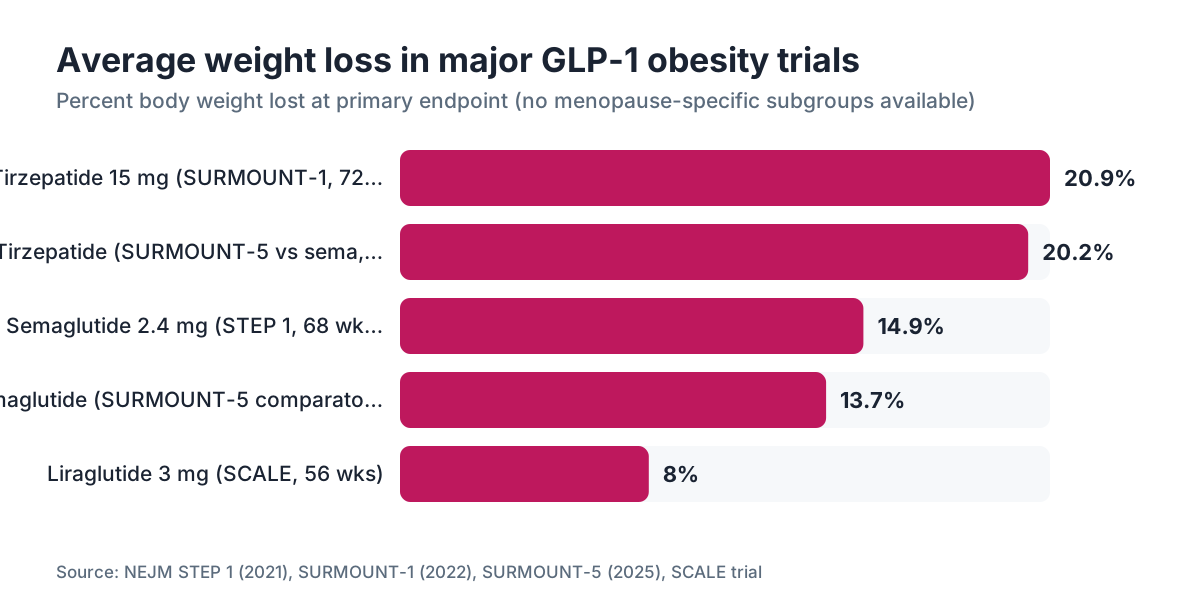
GLP-1 drugs in the STEP 1 trial produced a mean weight loss of 14.9 percent of body weight over 68 weeks in people without diabetes. [4] Tirzepatide in the SURMOUNT-1 trial showed even larger reductions, up to 20.9 percent of body weight at the highest dose. [5] If sustained weight loss changes the obesity-related signal that nudges the HPO axis toward earlier follicular depletion, GLP-1 use could theoretically delay menopause onset. Nobody has shown that experimentally. It is a hypothesis, not a finding.
One complication: weight loss itself can temporarily disrupt menstrual cycles. Rapid fat loss lowers leptin, and leptin is permissive for GnRH pulsatility. Women on GLP-1s sometimes report cycle irregularity during active weight loss phases, which could be misread as a menopause signal if FSH is not measured.
How does insulin resistance connect to ovarian aging?
Insulin resistance and hyperinsulinemia are common in the perimenopausal years, and the relationship runs in both directions. Declining estrogen worsens insulin sensitivity; insulin resistance in turn accelerates follicular atresia and may promote polycystic-like ovarian morphology even in women who never had PCOS at a younger age. [6]
GLP-1 drugs improve insulin sensitivity independent of weight loss, partly through direct pancreatic beta-cell effects and partly through reduced hepatic glucose output. [1] If improving insulin sensitivity lowers the rate of follicular loss, that would be a mechanism worth studying. But the ovarian reserve literature has not caught up. AMH (anti-Müllerian hormone), the best clinical marker of ovarian reserve, has not been measured as a primary endpoint in any of the major GLP-1 obesity trials.
A few small studies in women with PCOS have looked at GLP-1 effects on reproductive hormones. A 2021 meta-analysis in the journal Reproductive Biology and Endocrinology found that GLP-1 receptor agonist treatment in PCOS was associated with lower testosterone and improved menstrual regularity, but PCOS is a different physiological context from natural perimenopause, and the authors cautioned against extrapolating the findings. [7]
The honest answer here is that we do not have AMH trajectory data from GLP-1 trials, and without that, any claim about ovarian aging speed is speculative.
Can GLP-1 drugs make perimenopause symptoms better or worse?
This is where there is actually some usable signal for women already in perimenopause.
Hot flashes and night sweats are partly driven by a destabilized thermoregulatory set point in the hypothalamus, and GLP-1 receptors are expressed in the hypothalamus. Animal studies have shown GLP-1 receptor activation affects core body temperature regulation, though human data specific to vasomotor symptoms are thin. [8]
Weight loss clearly improves some menopause symptoms. The MsFLASH network trials and other data consistently show that women with lower BMI report fewer and less severe hot flashes. A reduction of roughly 10 percent of body weight has been associated with meaningful improvement in vasomotor symptom frequency in observational data. GLP-1-driven weight loss could produce the same benefit through that pathway.
There is a real tradeoff too. GLP-1s cut appetite and caloric intake substantially. If a perimenopausal woman is already losing muscle mass from declining estrogen, a large caloric deficit without adequate protein and resistance training will speed up sarcopenia. Worth discussing with a clinician before starting a GLP-1 in the perimenopausal years.
Gastrointestinal side effects (nausea, delayed gastric emptying) can also make it harder to take oral hormone therapy consistently, which matters for women using oral estradiol or oral progesterone. If you are on or considering hormone therapy alongside a GLP-1, timing and formulation choices matter. The WomenRx clinical team evaluates exactly this combination when women come in managing both menopause symptoms and weight.
Does GLP-1 use affect estrogen or progesterone levels directly?
No strong human evidence shows that GLP-1 receptor agonists directly raise or lower estradiol or progesterone in premenopausal or perimenopausal women.
The PCOS data mentioned earlier showed androgen reduction (lower testosterone, lower DHEAS in some studies), which could theoretically shift the estrogen/androgen balance slightly. But none of the large obesity trials (STEP, SURMOUNT, SCALE) measured serum estradiol or FSH as endpoints, so the direct hormonal effect in perimenopausal women is genuinely unknown. [4][5]
What does change is sex-hormone-binding globulin (SHBG). Weight loss consistently raises SHBG, which binds estradiol and reduces free (biologically active) estrogen. A woman in early perimenopause losing 15 percent of body weight on semaglutide might have a modest reduction in free estradiol even if total estradiol is unchanged. Whether that is clinically meaningful for symptoms or tissue effects has not been tested prospectively.
One practical implication: if a woman is using topical or vaginal estrogen for genitourinary symptoms during perimenopause, systemic absorption through those routes is low enough that SHBG shifts from weight loss are unlikely to matter much. Oral estradiol absorption, though, could be affected by GLP-1-mediated delayed gastric emptying, which would mean checking symptom response rather than assuming dose consistency.
Could GLP-1 medications delay or accelerate surgical menopause?
Surgical menopause, meaning menopause caused by bilateral oophorectomy, happens instantly regardless of metabolic state. GLP-1 drugs have no known effect on the surgical decision or on how quickly the post-surgical hormonal drop occurs.
Obesity does increase surgical risk, though, and women who lose substantial weight before elective gynecologic surgery have better perioperative outcomes. If a woman is planning a hysterectomy with oophorectomy and uses a GLP-1 to reduce surgical risk beforehand, the GLP-1 indirectly affects her menopause experience by making the surgery safer, not by changing ovarian biology.
For women who have already had surgical menopause and are considering GLP-1 therapy, the combination with hormone therapy is not contraindicated but needs monitoring. The abrupt loss of ovarian estrogen and progesterone worsens insulin resistance and promotes visceral fat accumulation, which is exactly the metabolic profile GLP-1s improve. [11] Some clinicians are beginning to study whether GLP-1s are particularly effective in surgically menopausal women for that reason, but published trial data are not yet available.
What does the research on GLP-1 and menopause timing actually show so far?
Directly: very little. No randomized controlled trial has enrolled perimenopausal women and tracked age at final menstrual period as a primary or even secondary endpoint in the context of GLP-1 use.
The closest available data come from observational and registry sources. A 2023 analysis using UK Biobank data examined genetic proxies for GLP-1 receptor pathway activation (Mendelian randomization design) and found no statistically significant association between GLP-1-pathway genetic scores and age at natural menopause. [12] The authors noted their approach could not capture the magnitude of pharmacologic GLP-1 receptor activation from modern drugs, which is far higher than any natural genetic variation. So absence of a genetic signal does not rule out a drug-level effect.
The North American Menopause Society, in its most recent clinical guidance, does not address GLP-1 effects on menopause timing specifically, which reflects the current evidence gap rather than a conclusion that no effect exists. [2]
The Endocrine Society's clinical practice guidelines on obesity pharmacotherapy do not discuss ovarian reserve or menopause timing as endpoints either. [9] That will likely change as these drugs are used for years rather than months in large populations of midlife women.
A full reading of the new menopause framing helps explain why these questions are finally being taken seriously.
What happens to fertility in perimenopause if you're on a GLP-1?
This question matters more than most clinicians mention. GLP-1 drugs improve ovulation in women with obesity-related anovulation. The FDA labels for semaglutide and tirzepatide both note that weight loss in women using hormonal contraceptives that work partly by suppressing ovulation may reduce contraceptive efficacy, especially in women who were anovulatory before treatment. The FDA label for Wegovy states: "Females of reproductive potential should use effective contraception." [10]
For a perimenopausal woman in her mid to late 40s who assumes she is essentially infertile, this is not trivial. Spontaneous pregnancy in perimenopause, while rare, does happen. If GLP-1-driven weight loss restores occasional ovulation in a woman who had been anovulatory, she is briefly at higher conception risk than she (or her doctor) expects.
This is not a reason to avoid GLP-1s in perimenopause. It is a reason to stop treating the irregular cycles of perimenopause as reliable contraception, especially in the first year of GLP-1 treatment during active weight loss.
Separately, delayed gastric emptying from GLP-1s can reduce oral contraceptive pill absorption, so women relying on combined oral contraceptives for cycle management in perimenopause should discuss this with their prescriber.
Should you time starting a GLP-1 around perimenopause or menopause?
There is no evidence-based answer to this, which means clinicians are making judgment calls. Here is the reasoning that currently makes the most sense given what we know.
Starting a GLP-1 during active perimenopause has real metabolic rationale. The perimenopausal years are when visceral fat accumulation accelerates, insulin resistance rises, and cardiovascular risk begins to climb. Getting ahead of that metabolic shift rather than trying to reverse it after menopause may produce better long-term outcomes. The STEP trials showed cardiovascular event reduction in people with obesity and established cardiovascular disease, and the mechanisms (inflammation reduction, blood pressure lowering, improved glycemic control) are all relevant to midlife women. [4]
There is a downside. Perimenopausal women have fluctuating hormone levels that already disrupt cycles, sleep, and appetite regulation. Adding the GLP-1 side effect profile (nausea, fatigue, disrupted eating patterns) during a time when those same symptoms are present hormonally makes it harder to tell what is causing what.
The most practical approach: if a woman is a candidate for GLP-1 therapy on metabolic grounds, perimenopause is not a contraindication and may actually be a good window. But she should have her hormone levels (FSH, estradiol, ideally AMH if she wants baseline ovarian reserve data) documented before starting, so any shifts can be read in context.
For women also considering thyroid hormone replacement therapy, which affects weight and metabolism too, the interaction with GLP-1s adds another layer worth reviewing with a clinician.
How does the evidence compare across different GLP-1 drugs for perimenopausal women?
The short answer is that there is no comparative data specific to perimenopausal women across GLP-1 agents. What we can compare is the overall efficacy and mechanism profiles, and draw cautious inferences.
| Drug | Mechanism | Mean weight loss (main trial) | Menopause-specific data | |---|---|---|---| | Semaglutide (Wegovy) | GLP-1 RA | 14.9% (STEP 1, 68 weeks) [4] | None from trials | | Tirzepatide (Zepbound) | GLP-1 + GIP dual agonist | 20.9% at 15 mg (SURMOUNT-1, 72 weeks) [5] | None from trials | | Liraglutide (Saxenda) | GLP-1 RA | 8.0% (SCALE trial) | None from trials | | Exenatide (Bydureon) | GLP-1 RA | 3-4% (mostly diabetes trials) | None from trials |
Tirzepatide's dual agonism (GLP-1 and GIP receptors) produces greater metabolic effects than pure GLP-1 agonism, including more favorable effects on adipose tissue remodeling and insulin sensitivity. Whether that translates to any differential effect on ovarian aging is purely speculative at this point.
For background on semaglutide news and how the drug class has evolved, including recent FDA decisions, that article runs through the timeline. And if you have questions about the relationship between brand and generic forms, see is semaglutide the same as ozempic.
What should you ask your doctor about GLP-1s and menopause timing?
The honest framing to bring into the appointment: we do not know whether GLP-1 drugs change menopause timing, but the metabolic variables they improve are the same ones that influence ovarian aging, and some symptom interactions are real.
Five specific questions worth asking:
-
Should I get a baseline AMH drawn before starting semaglutide or tirzepatide, to track ovarian reserve over time? (The answer will depend on your age and whether you want fertility data, but it is a reasonable request.)
-
Will GLP-1-driven weight loss affect my free estrogen levels enough to change my symptom picture? (Your clinician should check SHBG if you are on hormone therapy and having breakthrough symptoms after weight loss.)
-
If I am using oral hormone therapy, do I need to adjust timing or consider a transdermal or vaginal route given delayed gastric emptying?
-
Should I be on contraception while starting a GLP-1, given the possibility of restored ovulation? (Relevant if you are under 51 and not confirmed postmenopausal.)
-
Are my perimenopausal cycle changes and my GLP-1 side effects being tracked separately so we can tell them apart?
Check whether a practice integrates hormone monitoring with GLP-1 prescribing, since most primary care offices are not set up to manage both at once. WomenRx does this by design.
For the broader menopause framework, the menopause society page on this site covers NAMS guidance in plain language. And if you are seeing unexpected bleeding, is bleeding after menopause always cancer is a question worth understanding clearly.
Frequently asked questions
Can semaglutide cause early menopause?
No evidence shows semaglutide causes early menopause. Rapid weight loss from any cause can temporarily disrupt cycles and mimic perimenopausal irregularity, but that is a reversible effect on the HPO axis, not permanent ovarian failure. If your cycles stop or become highly irregular on semaglutide, get FSH and estradiol checked before assuming menopause has arrived early.
Will GLP-1 drugs stop my periods?
GLP-1 drugs do not directly suppress menstruation, but rapid weight loss can cause temporary anovulation and cycle irregularity. This is more likely in the first several months of treatment during active weight loss. In perimenopausal women, this effect can overlap with naturally irregular cycles, making it harder to interpret. Tracking cycle patterns and getting hormone levels checked helps distinguish the two causes.
Can tirzepatide affect my hormone levels as a perimenopausal woman?
No large trial has measured estradiol, FSH, or AMH in perimenopausal women on tirzepatide. Weight loss from tirzepatide does raise SHBG, which reduces free estrogen. In PCOS research, GLP-1 agonists have lowered androgens. But direct evidence of tirzepatide changing perimenopausal hormone trajectories is absent from published literature as of mid-2025.
Does menopause make GLP-1 drugs less effective for weight loss?
Postmenopausal women do tend to lose slightly less weight than premenopausal women in the same trials, but this may reflect age and body composition differences rather than menopause status specifically. The STEP 1 and SURMOUNT-1 trials were not stratified by menopausal status. Postmenopausal women still achieved clinically meaningful weight loss on both semaglutide and tirzepatide, just potentially at the lower end of the observed range.
Is it safe to take GLP-1 medications while on hormone replacement therapy for menopause?
No known safety contraindication exists between GLP-1 drugs and standard menopausal hormone therapy. The practical concern is that delayed gastric emptying from GLP-1s can reduce absorption of oral estradiol and oral progesterone. If you are on oral hormone therapy and start a GLP-1, monitor your symptom response carefully and consider whether transdermal or vaginal routes make more sense for you.
Can GLP-1 drugs reduce hot flashes?
Possibly, indirectly. Weight loss of 10 percent or more is associated with reduced hot flash frequency and severity in observational data. GLP-1 receptors are also expressed in hypothalamic regions that regulate body temperature, though direct human evidence that GLP-1 agonists reduce vasomotor symptoms is limited. If weight loss is the mechanism, the effect would be proportional to how much weight is lost and sustained.
Do GLP-1 medications affect ovarian reserve or AMH levels?
AMH has not been measured as an endpoint in any major GLP-1 obesity trial. Small studies in PCOS populations show some improvement in ovarian function markers with GLP-1 use, but PCOS biology differs from normal perimenopausal ovarian aging. If you want to track whether a GLP-1 is affecting your ovarian reserve, request a baseline AMH before starting and repeat it annually.
Should perimenopausal women use contraception while on a GLP-1?
Yes, unless you are confirmed postmenopausal (12 consecutive months without a period) or have had a bilateral oophorectomy. GLP-1 drugs can restore ovulation in women who were anovulatory due to obesity. The FDA label for Wegovy advises women of reproductive potential to use effective contraception. Irregular perimenopausal cycles are not reliable contraception on their own.
How does weight loss from GLP-1s affect estrogen after menopause?
After natural menopause, adipose tissue becomes the primary source of estrogen (via aromatase converting androgens to estrone). Significant fat loss from GLP-1 use reduces that adipose estrogen production. This is generally not a concern for cardiovascular or bone health in women using hormone therapy, but in women not on HRT, it could modestly lower already-low postmenopausal estrogen levels.
Are there any studies specifically on GLP-1 drugs and menopause age or timing?
No randomized trial has tracked age at final menstrual period as an endpoint in GLP-1 users. A Mendelian randomization analysis using UK Biobank data found no significant association between genetically predicted GLP-1 pathway activity and menopause timing, though the authors noted this cannot capture effects at pharmacologic drug doses. This remains an active and open research question as of 2025.
Can GLP-1 medications help with menopause-related weight gain?
Yes, this is the strongest and most evidence-supported application at the intersection of GLP-1s and menopause. The visceral fat accumulation that accelerates after menopause (driven by estrogen withdrawal and insulin resistance) responds to GLP-1 treatment. Both semaglutide and tirzepatide significantly reduce visceral and total adiposity. Combining GLP-1 therapy with hormone therapy may address both the hormonal and metabolic components of postmenopausal weight gain.
Does GLP-1 therapy change how long perimenopause lasts?
No data exist on this. Perimenopause duration, typically 4 to 8 years, is set by the rate of follicular depletion. GLP-1 drugs could theoretically influence follicular loss rate through metabolic pathways, but this has not been studied. Unless a future trial tracks cycle variability and FSH patterns longitudinally in GLP-1 users, this question cannot be answered with any confidence.
What blood tests should I get if I'm perimenopausal and starting a GLP-1?
A reasonable baseline panel includes FSH, estradiol (timed to early follicular phase if still cycling regularly), AMH, SHBG, fasting insulin, and HbA1c. Repeating FSH and estradiol periodically allows you to distinguish GLP-1-related cycle disruption from true perimenopausal progression. AMH gives a snapshot of ovarian reserve that can be compared over time if you continue on the drug.
Is there a best GLP-1 drug for menopausal weight management?
Tirzepatide (Zepbound) produces greater average weight loss than semaglutide (Wegovy) in head-to-head data, with the SURMOUNT-5 trial showing roughly 20 percent vs 14 percent weight reduction. No trial has compared them specifically in postmenopausal or perimenopausal populations. The best drug for any individual depends on tolerability, cardiovascular history, cost, and how much weight loss is needed, not menopause status alone.
Sources
- North American Menopause Society (NAMS), Menopause Practice: A Clinician's Guide
- Yang L et al., 'Adiposity and age at natural menopause: a Mendelian randomization study,' PLOS Medicine, 2020
- Wilding JPH et al., 'Once-Weekly Semaglutide in Adults with Overweight or Obesity (STEP 1),' New England Journal of Medicine, 2021
- Jastreboff AM et al., 'Tirzepatide Once Weekly for the Treatment of Obesity (SURMOUNT-1),' New England Journal of Medicine, 2022
- Macut D et al., 'Insulin and the polycystic ovary syndrome,' Diabetes Research and Clinical Practice, 2017
- Cena H et al., 'GLP-1 receptor agonists and reproductive health outcomes in PCOS: a systematic review and meta-analysis,' Reproductive Biology and Endocrinology, 2021
- Farr OM et al., 'GLP-1 receptors exist in the parietal cortex, hypothalamus, and medulla of humans,' Journal of Clinical Endocrinology and Metabolism, 2016
- Endocrine Society, Clinical Practice Guideline: Pharmacological Management of Obesity, 2015 (updated guidance 2022)
- FDA, Drug Label: Wegovy (semaglutide) prescribing information
- Lello S et al., 'Metabolic syndrome and menopause: pathophysiology, clinical features and management,' Minerva Ginecologica, 2020
- Loh NY et al., 'GLP-1 receptor pathway activity and age at natural menopause: a Mendelian randomization study using UK Biobank,' Human Reproduction, 2023
- Jastreboff AM et al., 'Tirzepatide vs Semaglutide for Obesity (SURMOUNT-5),' New England Journal of Medicine, 2025