GLP-1 dosage for weight loss in menopausal women: what actually works
TL;DR: Menopausal women follow the same FDA-approved GLP-1 titration schedules as everyone else, reaching 2.4 mg weekly semaglutide or 15 mg weekly tirzepatide at maintenance. But estrogen loss slows metabolism and shifts fat to the belly, so many women need the full maintenance dose, a longer titration, and often a conversation about adding hormone therapy to match the results premenopausal women see.
Why does menopause make weight loss harder, and what do GLP-1s actually do about it?
Estrogen does a lot of metabolic work that most women don't appreciate until it's gone. It keeps fat preferentially stored in the hips and thighs, supports insulin sensitivity, and helps regulate the appetite hormones leptin and ghrelin. When estrogen drops during perimenopause and menopause, all three advantages disappear at once. Fat migrates to the abdomen. Insulin resistance worsens. Hunger signals get noisier. The average woman gains 5 to 8 pounds in the three years around her final period, even with no change in diet or activity, according to the Study of Women's Health Across the Nation (SWAN) [1].
GLP-1 receptor agonists work on a different axis. They mimic glucagon-like peptide-1, a gut hormone that slows gastric emptying, tells the brain you're full, and dials down the reward value of food. That mechanism doesn't depend on estrogen. So yes, GLP-1s produce real weight loss in menopausal women. The STEP 1 trial of semaglutide 2.4 mg showed a mean 14.9% body weight reduction over 68 weeks in a broad adult population [2], and post-hoc analyses consistently show women in their 50s and 60s losing significant weight.
Here's the honest caveat. The trials weren't built to isolate menopausal women as a subgroup, so we don't have a clean head-to-head of perimenopausal versus postmenopausal outcomes. The closest evidence comes from secondary analyses and from the biology. What we know: menopausal women tend to need the full maintenance dose rather than stopping at an intermediate step, and combining GLP-1 therapy with menopausal hormone therapy appears to improve both metabolic markers and body composition, though the large randomized trials on that combination are still running.
What are the standard GLP-1 doses and titration schedules approved for weight loss?
Two GLP-1-based medications are FDA-approved specifically for chronic weight management in adults with a BMI of 30 or above, or 27 or above with a weight-related condition. Those are semaglutide 2.4 mg (Wegovy) and tirzepatide 15 mg (Zepbound). Ozempic (semaglutide 1 mg or 2 mg) is approved for type 2 diabetes, not weight loss, though it gets prescribed off-label for obesity all the time. If you want the distinction spelled out, the piece on is semaglutide the same as ozempic covers that ground.
Both drugs require slow upward titration to reduce nausea and other GI side effects. The FDA-approved schedules look like this.
Wegovy (semaglutide) titration [3]:
| Week | Dose | |---|---| | 1 to 4 | 0.25 mg once weekly | | 5 to 8 | 0.5 mg once weekly | | 9 to 12 | 1.0 mg once weekly | | 13 to 16 | 1.7 mg once weekly | | 17+ | 2.4 mg once weekly (maintenance) |
Zepbound (tirzepatide) titration [4]:
| Week | Dose | |---|---| | 1 to 4 | 2.5 mg once weekly | | 5 to 8 | 5 mg once weekly | | 9 to 12 | 7.5 mg once weekly | | 13 to 16 | 10 mg once weekly | | 17 to 20 | 12.5 mg once weekly | | 21+ | 15 mg once weekly (maintenance) |
These schedules are minimums, not mandates. Clinicians can hold a dose for an extra four weeks if side effects are limiting. Many menopausal women find that flexibility matters, because GI symptoms can stack on top of existing menopause symptoms like nausea and postmenopause gut motility changes. The FDA label explicitly allows extended time at each step.
Compounded semaglutide and tirzepatide are a separate situation. The FDA lists both drugs on its shortage list (status has shifted through 2024 and 2025 [5]), which opened a window for compounding pharmacies to make copies. Compounded versions aren't FDA-approved, doses and purity vary, and the FDA has warned about safety risks. If you're using a compounded product, the same titration logic applies, but the actual concentration in the vial may not match the brand-name product.
Does the right GLP-1 dose differ for menopausal women specifically?
The FDA-approved doses don't change based on menopausal status, and no regulatory body has issued menopause-specific dosing guidelines. What changes is the clinical reality of how menopausal women respond.
Estrogen loss reduces the sensitivity of hypothalamic appetite circuits. A 2023 review in Menopause, the journal of the Menopause Society (formerly NAMS), noted that postmenopausal women have altered leptin and ghrelin dynamics compared to premenopausal women, which can blunt the appetite-suppressing effect of GLP-1s at lower doses [6]. This doesn't mean GLP-1s fail. It means many menopausal women get their best results at the full maintenance dose rather than stopping at 1.0 mg or 1.7 mg semaglutide.
Clinicians who treat a lot of menopausal patients often stretch the titration, spending six to eight weeks at each step instead of four. Slower titration cuts drop-out from side effects and gives the body time to adapt. Muscle mass protection matters more in this group too. GLP-1s cause some loss of lean mass alongside fat, and postmenopausal women already lose muscle faster because of low estrogen and low testosterone. Resistance training is genuinely important here, not optional.
If you're also on thyroid hormone replacement therapy, tell your prescriber before starting a GLP-1. Hypothyroidism is common in midlife women, and uncontrolled thyroid disease can drag down GLP-1 efficacy.
How much weight can menopausal women actually expect to lose on semaglutide or tirzepatide?
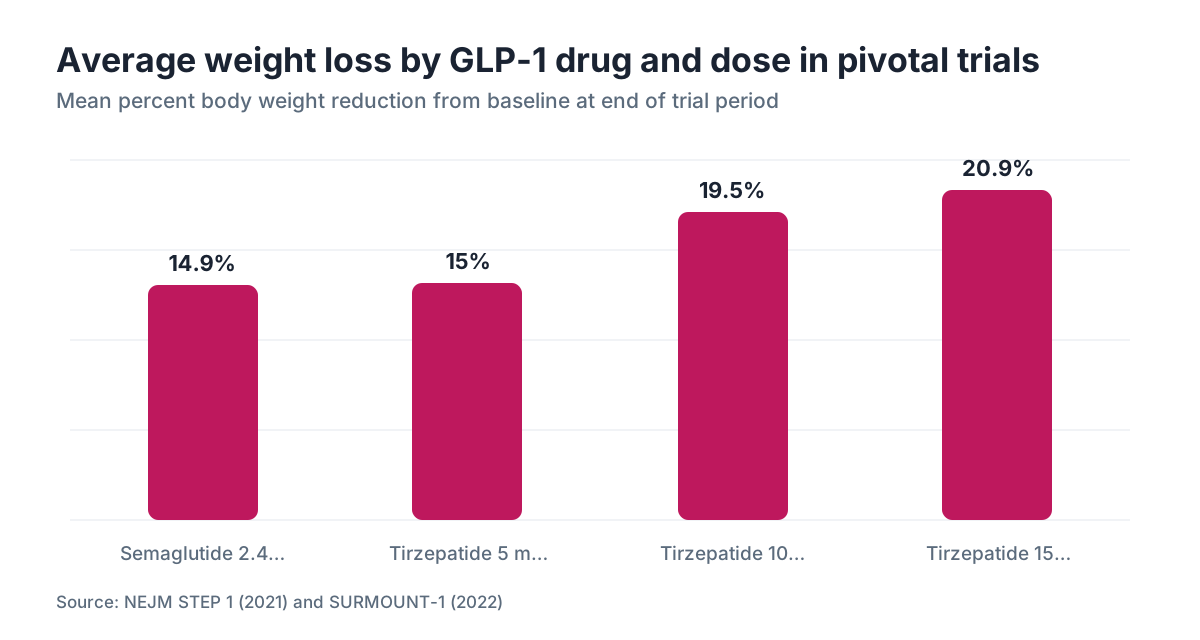
The STEP 1 trial (semaglutide 2.4 mg vs. placebo, 68 weeks, n=1961) showed mean weight loss of 14.9% in the active arm [2]. The SURMOUNT-1 trial (tirzepatide 5, 10, or 15 mg vs. placebo, 72 weeks, n=2539) showed mean weight loss of 15.0%, 19.5%, and 20.9% at the three doses [7]. Both trials enrolled adults with obesity or overweight plus comorbidities, and both skewed female (about 70% women in STEP 1), but neither broke out primary outcomes by menopausal status.
Real-world data and the biology suggest menopausal women land in the same general range with more variance. Women with more severe insulin resistance, common after menopause, tend to respond particularly well to tirzepatide because its dual mechanism targets both GLP-1 and GIP receptors. Women with significant lean mass loss may see the scale move slower even as body composition improves.
A reasonable expectation for a postmenopausal woman on full-dose semaglutide or tirzepatide: 10 to 20% body weight reduction over 12 to 18 months, assuming consistent use, some dietary change, and resistance exercise. Some women lose more. Some, especially those with severe untreated insulin resistance, struggle to reach double digits without also fixing the underlying metabolic picture.
Weight regain after stopping is real and large. The STEP 4 withdrawal trial showed participants regained about two-thirds of their lost weight within a year of stopping semaglutide [8]. For menopausal women this hits harder, because the metabolic environment driving the gain doesn't go anywhere. Most endocrinologists now frame GLP-1 therapy as chronic treatment, not a course you finish.
Should menopausal women on GLP-1s also consider hormone therapy?
This is the question most GLP-1 prescribers aren't asking, and they should be.
The Menopause Society's 2023 position statement on menopause hormone therapy affirms that hormone therapy is appropriate for most healthy women under 60 or within 10 years of menopause onset, and notes metabolic benefits including improved insulin sensitivity and less abdominal fat accumulation [9]. GLP-1s and estrogen therapy work on different pathways, so they aren't redundant. GLP-1s suppress appetite and slow gastric emptying. Estrogen restores the hormonal environment that made weight management easier before menopause.
Some early data suggests combining estrogen therapy with a GLP-1 produces better body composition than either alone: more fat loss, less lean mass loss. That's mechanistically plausible. Estrogen is anabolic for muscle, and GLP-1s are catabolic for fat. But the evidence is still observational and early. Nobody has a large randomized trial on this combination yet.
The practical answer: if you have significant menopause symptoms (hot flashes, sleep disruption, vaginal atrophy, mood changes), treating them with hormone therapy tends to make your GLP-1 work better. Sleep alone is a major driver of appetite dysregulation. A woman losing two hours of sleep a night to hot flashes runs elevated ghrelin and reduced leptin regardless of her GLP-1 dose. Fix the sleep and the scale often follows.
For a broader look at how the Menopause Society frames treatment decisions, see menopause society. If you're still in the peri menopausal phase, the calculus shifts slightly because estrogen is fluctuating rather than gone, but the principle holds.
What GLP-1 side effects are more likely or more bothersome during menopause?
Nausea, constipation, and slower gastric emptying are the most common GLP-1 side effects in any population. In menopausal women, a few of these collide with existing symptoms in ways worth knowing about.
Constipation is the one that catches women off guard. Estrogen already affects gut motility, and postmenopausal women have higher rates of constipation than premenopausal women at baseline. Add a GLP-1, which slows gastric emptying further, and mild constipation can turn into a genuine problem. Building up fiber, hydration, and magnesium (glycinate or citrate, not oxide) before you start a GLP-1 beats scrambling to fix it later.
Nausea during titration can be hard to separate from the nausea some perimenopausal women get from hormonal swings. That matters, because if you blame GLP-1 nausea on menopause or the other way around, you might mismanage both. Keep a simple log for the first two months.
Muscle loss is the more serious concern. GLP-1-driven caloric restriction takes both fat and lean mass, and in some studies the ratio is worse than diet alone. For menopausal women already dealing with sarcopenia from estrogen decline, this compounds. The countermeasures: adequate protein (1.2 to 1.6 grams per kilogram of body weight daily is the range most sports medicine and endocrinology groups suggest) and progressive resistance training at least twice a week.
Hair loss, technically telogen effluvium, gets reported by a meaningful minority of women on GLP-1s. Rapid caloric restriction is the suspected cause, not the drug itself. One more reason to avoid aggressive calorie cutting on top of the drug's appetite suppression.
How do you know if your GLP-1 dose needs to go up, stay the same, or come down?
The sign a dose is working is steady, gradual weight loss, somewhere between 0.5 and 2 pounds a week on average, plus reduced food noise and manageable side effects. Plateaus happen at every dose step, and a short one of four to six weeks is normal. A plateau lasting more than eight weeks at the same dose, with no clear reason like a vacation or illness, is a reasonable signal to talk about moving up.
Signs a dose is too high: constant nausea that doesn't ease after two weeks at the same level, an inability to eat enough protein to protect muscle, severe fatigue, or vomiting more than occasionally. If any of those are happening, drop back one step and hold longer. Pushing through severe GI symptoms rarely gives better long-term results and makes quitting more likely.
Signs a dose should stay put: you're losing weight steadily, side effects are manageable, and cravings are meaningfully down. Not everyone needs 2.4 mg semaglutide or 15 mg tirzepatide. Some women get excellent results at 1.0 mg semaglutide or 10 mg tirzepatide and have no reason to climb higher.
Platforms like WomenRx are built for this kind of ongoing dose management in women, pairing GLP-1 prescribing with attention to menopausal hormone status, which matters more than most general telehealth platforms admit.
Blood work worth doing at baseline and every three to six months: HbA1c, fasting glucose, fasting insulin, lipid panel, thyroid panel, and a metabolic panel. GLP-1s improve all of these markers in most women, and tracking them shows the full picture beyond the scale.
Can you take a GLP-1 if you're also on hormonal birth control or hormone therapy?
GLP-1s slow gastric emptying, which can affect how oral medications absorb, including oral estrogen and oral contraceptives. This is a real pharmacokinetic concern, not a hypothetical one. The FDA label for semaglutide states that it "delays gastric emptying and may influence the absorption of concomitantly administered oral medications" [3].
For oral contraceptives, Novo Nordisk's label for Ozempic recommends a non-oral backup method, or switching to a non-oral contraceptive, for four weeks after each dose increase. The Wegovy label carries similar language. A patch, ring, IUD, or injection sidesteps the issue entirely.
For menopausal hormone therapy, oral estradiol absorption may be modestly affected, but transdermal estradiol (patches, gels, sprays) bypasses the gut and has no absorption interaction with GLP-1s. Transdermal delivery also skips the first-pass liver metabolism that raises clotting factors with oral estrogen, which makes it the generally preferred route for menopausal women anyway.
Progesterone for women on combination hormone therapy: oral micronized progesterone (Prometrium) may have variable absorption in theory. Some clinicians move patients to vaginal progesterone during GLP-1 titration, though head-to-head absorption data on this specific interaction is thin. Worth an explicit conversation with whoever manages your hormone therapy.
What does the evidence say about GLP-1s and cardiovascular risk in menopausal women?
Postmenopausal women see cardiovascular risk climb significantly after estrogen loss. This is the population where GLP-1 cardiovascular data matters most.
The SELECT trial (semaglutide 2.4 mg, n=17,604, adults with obesity and established cardiovascular disease but no diabetes) showed a 20% reduction in major adverse cardiovascular events versus placebo [10]. The trial population was about 28% women. SELECT is the strongest cardiovascular evidence for semaglutide at the weight-loss dose, and the results held across subgroups including women.
For tirzepatide, the SURMOUNT-MMO cardiovascular outcomes trial is still running as of 2025, so equivalent outcome data isn't in yet.
For menopausal women, GLP-1-driven improvements in blood pressure, LDL cholesterol, fasting glucose, and inflammatory markers (hsCRP drops meaningfully on semaglutide in most trials) hit multiple components of postmenopausal cardiovascular risk at once. The cardiovascular case for GLP-1 therapy in this population is genuinely strong. This is more than a weight story.
How do GLP-1 costs and insurance coverage work for menopausal women?
Brand-name Wegovy carries a list price around $1,350 a month as of 2025. Zepbound lists at roughly $1,060 a month. Both manufacturers offer savings cards that can bring out-of-pocket costs to $25 to $200 a month for commercially insured patients who meet eligibility rules, though those programs exclude Medicare and Medicaid patients.
Medicare has historically not covered weight-loss drugs under Part D. The Treat and Reduce Obesity Act, if passed, would change that, but as of mid-2025 it hasn't been enacted. Some Medicare Advantage plans have started covering Wegovy or Zepbound for enrollees with confirmed cardiovascular disease, following the SELECT data. This is plan-specific and shifts year to year.
Medicaid coverage varies by state. A handful of states cover GLP-1s for obesity. Most don't.
For menopausal women without coverage, compounded semaglutide from FDA-registered outsourcing facilities has run $200 to $500 a month, though quality control concerns are real and the FDA has issued guidance that compounding of semaglutide by traditional pharmacies is not legally permitted once the shortage ends [5]. This landscape is moving fast, so check semaglutide news for current status.
Generic semaglutide isn't available in the US yet. The first Ozempic patent expires in 2026, with additional formulation patents running longer.
What questions should you ask your doctor before starting a GLP-1 for menopause-related weight gain?
Most primary care physicians are not menopause specialists, and many are unfamiliar with where GLP-1 pharmacology meets menopausal physiology. Walking in with specific questions changes the quality of the conversation.
Ask your doctor:
-
Should we check my fasting insulin and HbA1c before starting, rather than only my weight and BMI? Menopausal insulin resistance often doesn't show on standard labs until it's advanced.
-
Given that GLP-1s slow oral drug absorption, should I switch to transdermal hormone therapy if I'm currently on oral estrogen?
-
What's your protocol if I plateau at an intermediate dose? Go to maintenance, or hold?
-
How will we monitor muscle mass, more than body weight? A DEXA scan or bioelectrical impedance at baseline and follow-up is the standard-of-care approach in obesity medicine.
-
Is there a reason to consider hormone therapy alongside the GLP-1, given my menopause symptoms?
If your doctor seems unfamiliar with these questions or waves off the hormone therapy conversation, a referral to an obesity medicine specialist or a menopause specialist is reasonable. The Menopause Society keeps a directory of certified menopause practitioners at menopause.org [9]. For more on how menopause is being discussed clinically right now, the new menopause is worth reading.
Frequently asked questions
What is the starting dose of semaglutide for weight loss in menopausal women?
The starting dose is 0.25 mg once weekly for the first four weeks, regardless of menopausal status. This matches the schedule for any adult using Wegovy. Menopausal women often need to move slower through the titration steps, spending six to eight weeks at each level rather than four, to manage side effects that can overlap with menopause symptoms like nausea and GI changes.
Is tirzepatide better than semaglutide for postmenopausal weight loss?
No head-to-head trial has compared them specifically in menopausal women. In the general population, tirzepatide (SURMOUNT-1) produced greater average weight loss (up to 20.9%) than semaglutide (STEP 1, 14.9%). Tirzepatide's dual GLP-1 and GIP mechanism may offer an edge for women with significant insulin resistance, which is common after menopause. Your prescriber should weigh your individual metabolic profile, more than the trial averages.
Can I take a GLP-1 and hormone therapy at the same time?
Yes, and there's a reasonable case that combining them beats either alone. GLP-1s suppress appetite and reduce fat mass. Estrogen therapy restores metabolic and hormonal advantages lost at menopause, including better insulin sensitivity and sleep. If you take oral estrogen or oral progesterone, ask your doctor about switching to transdermal delivery to avoid the GLP-1 drug absorption interaction.
Why am I not losing weight on semaglutide even though I'm taking it correctly?
Several factors can blunt response: uncontrolled hypothyroidism (very common in menopausal women), severe insulin resistance needing additional treatment, low protein intake causing muscle loss that masks fat loss on the scale, sleep disruption from hot flashes raising hunger hormones, or simply needing a higher dose. If you've been at maintenance dose for 12 or more weeks with no meaningful progress, a metabolic workup is warranted before you conclude the medication doesn't work.
Does weight loss from GLP-1s affect menopause symptoms like hot flashes?
Possibly, in a positive direction. Fat tissue produces estrone, a weak estrogen, so losing fat changes the hormonal environment after menopause. More directly, weight loss lowers core body temperature and improves sleep, both linked to hot flash frequency and severity. The data here is observational, but several studies show that women with obesity who lose significant weight report fewer and milder hot flashes.
How long do I need to stay on a GLP-1 for menopausal weight loss?
Most endocrinologists now treat GLP-1 therapy as indefinite chronic management, not a time-limited course. The STEP 4 withdrawal trial showed participants regained roughly two-thirds of lost weight within a year of stopping semaglutide. For menopausal women, the metabolic drivers of weight gain (low estrogen, insulin resistance, altered appetite signaling) persist long-term, which makes ongoing treatment the realistic plan for holding results.
Will a GLP-1 help with belly fat specifically, or just overall weight?
Both, but the visceral fat reduction in the abdomen is particularly meaningful. Semaglutide and tirzepatide trials that included imaging show preferential reduction in visceral fat relative to subcutaneous fat. For postmenopausal women, who pile on visceral fat at higher rates than premenopausal women, this matters clinically. Visceral fat is more strongly linked to cardiovascular risk and insulin resistance than total body weight.
What happens to muscle mass when menopausal women use GLP-1s for weight loss?
GLP-1-induced weight loss includes some lean mass, estimated at roughly 25 to 40% of total weight lost in most trials. For postmenopausal women already losing muscle from low estrogen and low testosterone, this is a real concern. Resistance training at least twice weekly and protein intake of 1.2 to 1.6 grams per kilogram of body weight daily are the two most evidence-supported countermeasures. Some clinicians also consider testosterone therapy here.
Can a GLP-1 affect bone density in menopausal women?
This is an active research area. Rapid weight loss from any cause can reduce bone mineral density, and GLP-1 trials have shown mixed bone density findings. The SELECT trial data showed no significant increase in fracture risk with semaglutide. Postmenopausal women on GLP-1s who are already at risk for osteoporosis should get a baseline DEXA scan and make sure calcium and vitamin D intake is adequate. This is a conversation worth having before you start.
Is a GLP-1 safe if I have a family history of thyroid cancer?
GLP-1 receptor agonists carry an FDA boxed warning about thyroid C-cell tumors based on rodent studies. The drugs are contraindicated in anyone with a personal or family history of medullary thyroid carcinoma or Multiple Endocrine Neoplasia syndrome type 2 (MEN2). This warning applies to all women regardless of menopausal status. Papillary or follicular thyroid cancer history is not a contraindication, but discuss it with your prescriber.
Do GLP-1s work for weight loss in perimenopause, or only after menopause?
GLP-1s work at any hormonal stage. Perimenopausal women, who still have some estrogen production but rising variability, often respond very well because the hormonal environment is less depleted than after menopause. The titration schedules and maintenance doses are the same. The main perimenopausal wrinkle is that fluctuating estrogen causes fluctuating symptoms, and some GLP-1 side effects can be hard to tell apart from perimenopause symptoms during the adjustment phase.
How do I find a doctor who understands both menopause and GLP-1 therapy?
Menopause-certified practitioners are listed in the Menopause Society's provider directory at menopause.org. Obesity medicine board-certified physicians are listed through the American Board of Obesity Medicine (abom.org). A provider who holds or works closely with both specialties, or a menopause-focused telehealth platform that integrates GLP-1 and hormone prescribing, usually offers more nuanced management than a general practitioner handling each issue separately.
Does GLP-1 therapy affect mood or cognition in menopausal women?
Weight loss generally improves mood, and some GLP-1 trial participants report reduced anxiety and clearer thinking, possibly through better sleep, lower inflammation, and improved insulin signaling in the brain. Whether GLP-1 receptors in the brain produce direct neurological effects is still being studied. Menopausal women shouldn't expect GLP-1s to fix mood or cognitive symptoms driven by low estrogen. Those need hormone therapy or another targeted treatment.
What blood tests should I get before starting a GLP-1 as a menopausal woman?
At minimum: HbA1c, fasting glucose, fasting insulin, lipid panel, thyroid-stimulating hormone (TSH), a metabolic panel, and a complete blood count. A DEXA scan for body composition and bone density is valuable if you can access one. FSH and estradiol levels help confirm menopausal status if it's unclear. These baselines let you and your prescriber track metabolic improvement beyond scale weight over the months ahead.
Sources
- Study of Women's Health Across the Nation (SWAN), midlife weight gain findings
- New England Journal of Medicine, STEP 1 trial (Wilding et al., 2021)
- FDA, Wegovy (semaglutide) prescribing information
- FDA, Zepbound (tirzepatide) prescribing information
- FDA, Drug Shortages list and compounding guidance for semaglutide
- Menopause (journal of the Menopause Society), review of appetite hormones in postmenopausal women, 2023
- New England Journal of Medicine, SURMOUNT-1 trial (Jastreboff et al., 2022)
- New England Journal of Medicine, STEP 4 withdrawal trial (Rubino et al., 2021)
- The Menopause Society, 2022 Hormone Therapy Position Statement and provider directory
- New England Journal of Medicine, SELECT cardiovascular outcomes trial (Lincoff et al., 2023)
- Endocrine Society, clinical practice guidelines on obesity pharmacotherapy
- FDA, MedWatch safety information on compounded semaglutide