Genitourinary syndrome of menopause: causes, symptoms, and treatments
TL;DR: Genitourinary syndrome of menopause (GSM) is the umbrella term for vaginal dryness, burning, urinary urgency, and painful sex caused by falling estrogen after menopause. It affects up to 84% of postmenopausal women. Unlike hot flashes, GSM does not improve on its own. Effective treatments exist, from over-the-counter moisturizers to prescription local estrogen and ospemifene.
What is genitourinary syndrome of menopause?
Genitourinary syndrome of menopause, or GSM, replaced the older term "vulvovaginal atrophy" in 2014 when the North American Menopause Society and the International Society for the Study of Women's Sexual Health agreed the original name was too narrow. The new term captures the full picture: thinning, drying, and inflammation of the vaginal walls, the vulva, the urethra, and the bladder trigone, all driven by declining estrogen [1].
Estrogen keeps vaginal tissue thick, lubricated, and acidic. Once levels drop, collagen thins, blood flow decreases, the vaginal pH rises from roughly 4.5 to above 5.0, and the tissue becomes fragile. The bladder and urethra share the same embryological origin as the vagina, so urinary symptoms come along for the ride.
GSM is more than an inconvenience. It is chronic and progressive. Left untreated, the symptoms get worse over time, not better. That is the single most important thing to understand about it.
How common is GSM and why does it go untreated so often?
GSM prevalence lands somewhere between 27% and 84% of postmenopausal women, and that wide range reflects different definitions and survey methods [2]. The VIVA survey, which pooled data from the US, Canada, the UK, and other countries, found that 70% of women with GSM symptoms said those symptoms hurt their quality of life, yet fewer than 25% had ever received treatment [2].
The gap is stark. Women don't bring it up, and clinicians don't ask. A NAMS survey found many women feel embarrassed to discuss vaginal symptoms with their doctors, and many physicians skip a genital exam at routine annual visits for postmenopausal women [1].
There is also a cultural script that says this is just part of aging, so you suffer quietly. It is not, and you should not have to.
Cancer survivors, especially breast cancer survivors on aromatase inhibitors, have among the highest rates of severe GSM because those drugs push estrogen down to near-zero levels. They are also often told to avoid estrogen, which makes their options narrower but not zero.
What are the symptoms of GSM?
The symptoms split into two broad buckets: vaginal and urinary.
Vaginal symptoms include dryness, burning, itching, discharge, and pain with sex (dyspareunia). The thinned tissue can tear and bleed with minimal friction. Some women describe a constant low-grade irritation even when they aren't sexually active.
Urinary symptoms include urgency, frequency, recurrent urinary tract infections, and stress incontinence. The mechanism is real: the urothelium and periurethral tissue thin along with the vaginal walls. Women with GSM have roughly twice the rate of recurrent UTIs compared to women without it [3].
Sexual symptoms follow logically from the vaginal ones: reduced lubrication, decreased arousal, and sometimes complete avoidance of sex because the expected pain isn't worth it. This has real downstream effects on relationships and on a woman's sense of herself.
One thing that trips people up: these symptoms don't all appear together. You might have severe urinary urgency but tolerable vaginal dryness, or the reverse. GSM is a spectrum.
How is GSM diagnosed?
Diagnosis is clinical. There is no blood test for GSM. A clinician examines the vaginal tissue and looks for characteristic findings: pale, smooth, shiny walls with loss of rugae (the normal folds), possibly with petechiae (tiny red dots from fragile capillaries), a thin or absent discharge, and pH above 5.0 on simple pH paper [1].
A vaginal maturation index (VMI), a microscopic look at the cell types in a vaginal smear, can confirm atrophy but is rarely needed in practice. pH testing is cheap and fast.
Symptom questionnaires like the Day-to-Day Impact of Vaginal Aging (DIVA) questionnaire have been validated and give providers a structured way to track severity over time, which matters when you are adjusting treatment.
Walk into a clinic and describe painful sex and vaginal dryness after menopause, and a good clinician should be able to diagnose GSM in a single visit. You do not need an MRI or a specialist referral to get started on treatment.
What is the first-line treatment for mild GSM?
For mild symptoms, non-hormonal vaginal moisturizers and lubricants are the first recommendation from NAMS and the Endocrine Society [1][4].
Moisturizers (Replens, Revaree, K-Y Liquibeads) are applied regularly, two to three times per week, more than around sex. They absorb into the tissue, temporarily lower vaginal pH, and improve comfort. Hyaluronic acid products have decent short-term data: a 2021 meta-analysis in Menopause found hyaluronic acid moisturizers improved dryness and dyspareunia scores about as well as low-dose vaginal estrogen in mild-to-moderate GSM, though the studies were small [5].
Lubricants are used at the time of sex and aren't treatments in the same sense. Silicone-based lubricants last longer. Water-based ones are safe with silicone toys and condoms. Oil-based lubricants degrade latex condoms. Avoid anything with glycerin if you are prone to yeast infections.
If over-the-counter options aren't enough after four to eight weeks, you need prescription treatment. Most women with moderate to severe GSM will never get adequate relief from moisturizers alone.
Does vaginal estrogen work, and is it safe?
Vaginal (local) estrogen is the most effective treatment for GSM, and it has the strongest evidence behind it [1][4]. It comes as creams (Premarin, Estrace), rings (Estring), tablets (Vagifem, Yuvafem), and soft-gel inserts (Imvexxy). The delivery system matters less than consistent use.
Local estrogen works by restoring estrogen to the vaginal and urethral tissue directly. The doses are tiny: a standard vaginal estrogen tablet delivers roughly 10 micrograms of estradiol, compared to 50 to 100 micrograms per day for a systemic patch. Because of the low dose and limited absorption, serum estradiol levels usually stay within the postmenopausal range [4].
The safety question is the one women ask most. NAMS states that "low-dose vaginal estrogen preparations are appropriate for most women with GSM," including most women with a history of hormone-sensitive cancers, though those women should have the conversation with their oncologist [1]. FDA labels on vaginal estrogen carry a boxed warning about systemic risks, but that warning was written to cover all estrogen products collectively, and the prescribing information for low-dose vaginal products notes that systemic absorption is minimal.
A 2018 study in JAMA Oncology followed breast cancer survivors on aromatase inhibitors and found vaginal estrogen use was not linked to increased recurrence risk, though the authors called for larger confirmatory studies [6]. That data is reassuring but not the last word.
Most women notice improvement in vaginal dryness within four to eight weeks. Full restoration of tissue thickness takes three to six months of consistent use. This is maintenance therapy, not a short course.
What are the non-estrogen prescription options for GSM?
Several options exist for women who cannot or prefer not to use estrogen.
Ospemifene (Osphena) is a selective estrogen receptor modulator (SERM) taken as a daily oral pill, 60 mg. It acts like estrogen in vaginal tissue but not in breast tissue. The FDA approved it for moderate to severe dyspareunia and dryness due to GSM [7]. The catch: it carries a small increased risk of hot flashes and, because of its estrogen-like activity in the uterus, generally shouldn't be used without a progestogen in women with an intact uterus over extended periods, though clinical guidance on this is still evolving. It is genuinely useful for women who want an oral option.
Prasterone (Intrarosa) is a vaginal insert containing DHEA (dehydroepiandrosterone) at 6.5 mg. Once inside the vaginal cells, enzymes convert DHEA locally to estrogen and testosterone. The FDA approved it for dyspareunia due to GSM in 2016 [7]. Systemic absorption is low. It is a reasonable option for women who want to avoid exogenous estrogen but need something stronger than a moisturizer.
For women with urinary urgency and recurrent UTIs tied to GSM, those symptoms often respond to vaginal estrogen, but some women also benefit from bladder training, pelvic floor physical therapy, or topical lidocaine before intercourse for acute pain.
If you are exploring systemic hormone therapy for hot flashes or other menopause symptoms, adding vaginal estrogen to systemic hormone replacement therapy does not meaningfully increase total estrogen exposure, and many women need both.
Can systemic hormone therapy treat GSM?
Systemic hormone therapy (patches, pills, or pellets) does improve GSM symptoms for many women, but not reliably enough on its own [1]. About 10 to 15% of women on systemic HRT still develop significant vaginal atrophy symptoms and need additional local treatment [4].
The estrogen patch is one of the more convenient systemic delivery methods and skips first-pass liver metabolism. For women already on systemic HRT for hot flashes who also have GSM, adding a low-dose vaginal estrogen product is safe and often necessary.
Women not on systemic HRT whose only significant symptom is GSM are usually better served by local-only vaginal estrogen than by systemic therapy. The tissue effect is more direct, the dose is lower, and the side effect profile is cleaner.
For a full look at what systemic hormone therapy involves, what it costs, and which formulations have the best evidence, see our piece on menopause.
Does laser or energy-based vaginal treatment work for GSM?
Fractional CO2 laser devices (MonaLisa Touch, FemTouch) and radiofrequency devices (ThermiVa, Votiva) have been marketed hard for GSM. The theory is that controlled thermal injury stimulates collagen remodeling in vaginal tissue.
The evidence is disappointing so far. A 2021 randomized controlled trial published in Menopause found that fractional CO2 laser was no better than a sham procedure for improving vaginal dryness, dyspareunia, or the vaginal maturation index at 12 months [8]. In 2018, the FDA issued a Safety Communication warning that these devices had not been cleared for treating vaginal atrophy or GSM, and that the agency had received reports of adverse events including burns, scarring, and chronic pain [9].
NAMS says energy-based therapies "cannot currently be recommended" outside of clinical trials because the evidence isn't there [1].
These treatments cost between $1,500 and $3,000 per course out of pocket, and insurance does not cover them. Until better trial data exists, the money is almost certainly better spent on treatments with actual evidence behind them.
How does GSM affect sexual function and what can be done about it?
GSM is one of the most common identifiable causes of female sexual pain after menopause. Dyspareunia, painful sex, affects an estimated 17 to 45% of postmenopausal women [2]. The pain is not psychosomatic. It comes from micro-tears in thin, inelastic tissue.
The cascade is predictable. Painful sex leads to avoidance. Avoidance leads to less arousal and natural lubrication, which worsens the dryness. The cycle compounds. Partners often read avoidance as disinterest, and relationships suffer.
Treating the underlying tissue problem with vaginal estrogen or prasterone usually resolves dyspareunia over three to six months. Pelvic floor physical therapy helps women who have developed secondary vaginismus (involuntary muscle guarding in anticipation of pain) after years of painful intercourse. A referral to a pelvic floor PT is often more useful than any device or supplement.
Topical lidocaine 4% applied to the vestibule before intercourse has RCT evidence for reducing acute pain, and it's cheap. It doesn't treat the underlying atrophy, but it makes sex tolerable while longer-acting therapies take effect.
If you are working through this at a telehealth practice like WomenRx, a provider who specializes in menopause care can prescribe compounded topical combinations that retail pharmacies don't stock, which is sometimes the most efficient path for women with complex presentations.
What does GSM treatment actually cost, and does insurance cover it?
Coverage is inconsistent and depends heavily on plan type and insurer.
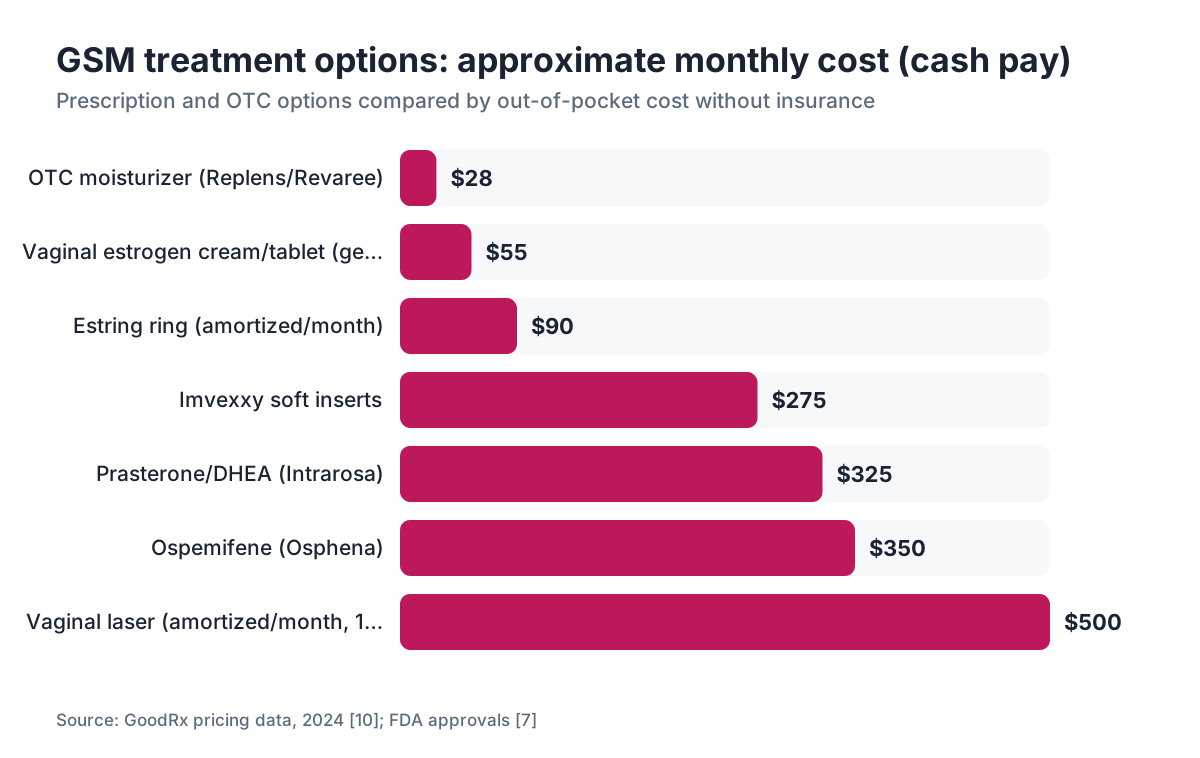
Vaginal estrogen tablets (Vagifem, generic estradiol vaginal) are the most affordable prescription option. Generic estradiol vaginal tablets run roughly $30 to $80 per month at major pharmacies with GoodRx discounts [10]. The Estring ring costs more upfront, around $200 to $350, but lasts 90 days, which makes the per-day cost comparable.
Ospemifene (Osphena) is brand-only and can run $300 to $400 per month without coverage. A manufacturer coupon and good-tier coverage can drop that a lot, but many Medicare Part D plans have moved it to a higher tier.
Non-hormonal moisturizers aren't covered by insurance and run $15 to $40 per month out of pocket.
The table below summarizes approximate monthly costs and coverage likelihood for common GSM treatments.
| Treatment | Approx. monthly cost (cash) | Typically covered by insurance? | |---|---|---| | Vaginal estrogen cream/tablet (generic) | $30-$80 | Usually yes | | Estring vaginal ring | $65-$115 (amortized/mo) | Usually yes | | Imvexxy soft inserts | $200-$350 | Variable | | Ospemifene (Osphena) | $300-$400 | Variable | | Prasterone/DHEA (Intrarosa) | $250-$400 | Variable | | OTC moisturizer (Replens, Revaree) | $15-$40 | No | | Vaginal laser (one course) | $1,500-$3,000 total | No |
Medicare Part B does not cover most outpatient prescription drugs. Medicare Part D plans have formularies that change every year. If you are post-65 and uninsured or on Medicare, check GoodRx or a manufacturer patient assistance program before paying retail.
When should you see a specialist for GSM?
Most women can have GSM diagnosed and treated by their primary care provider, OB-GYN, or a menopause-focused telehealth clinician. Referral makes sense in specific situations.
See a urogynecologist if you have significant stress or urge incontinence that doesn't respond to vaginal estrogen after three to four months. They have access to procedural options, pelvic floor evaluation, and urodynamic testing that a general practitioner may not offer.
See a dermatologist or vulvar specialist if a skin condition is overlapping with GSM. Lichen sclerosus and lichen planus look different from GSM but can coexist with it, and they need different treatments. If a clinician prescribes vaginal estrogen and your symptoms don't improve within eight to twelve weeks, that's a reason to look more carefully at the diagnosis.
See a pelvic floor physical therapist if you have developed muscle-based pain secondary to years of dyspareunia. PT is effective and often overlooked.
For women sorting out the broader hormone picture, including perimenopause symptoms that overlap with GSM, or trying to figure out when menopause starts, working with a clinician who understands the full hormone timeline rather than treating each symptom in isolation tends to produce better outcomes.
Are there any lifestyle changes that improve GSM symptoms?
Yes. Some are genuinely helpful and some are overstated.
Sexual activity helps. Regular penetration maintains blood flow to vaginal tissue and protects against atrophy. This is more than clinical folklore: a 2008 study in the American Journal of Medicine found that sexually active postmenopausal women had significantly better vaginal health scores than abstinent women [11]. Use a lubricant. Painful sex muscled through without lubrication does more harm than good.
Smoking worsens GSM. Nicotine constricts blood vessels, reduces estrogen levels, and is associated with earlier menopause and more severe atrophy. Quitting is one of the highest-value things a woman can do for vaginal health, and for her heart and bones too.
Tight synthetic underwear and pantyliners trap moisture, raise local temperature, and shift vaginal pH. Cotton underwear and skipping liners when you can reduces irritation.
Phytoestrogens, the plant compounds in soy and flaxseed, have weak estrogen-like activity. The clinical evidence that they improve GSM specifically is thin. A Cochrane review found phytoestrogen supplements did not significantly improve vaginal symptoms compared to placebo [12]. They aren't harmful, but don't count on them as treatment.
Aerobic exercise and a healthy weight support overall estrogen metabolism and cardiovascular health, both of which indirectly help tissue perfusion. There's no direct RCT showing exercise reverses vaginal atrophy.
Frequently asked questions
Is GSM the same as vaginal atrophy?
Vaginal atrophy is the older, narrower term. GSM, adopted in 2014 by NAMS and the International Society for the Study of Women's Sexual Health, includes vaginal atrophy but also covers urinary symptoms like urgency, frequency, and recurrent UTIs that come from the same estrogen-deprivation process. If your chart says 'vaginal atrophy,' you have GSM.
Can GSM symptoms start before menopause?
Yes. Estrogen levels begin dropping during perimenopause, which can start in a woman's late 30s or 40s. Some women notice vaginal dryness or pain with sex years before their last period. GSM symptoms can also appear in younger women who have estrogen deficiency from premature ovarian insufficiency, surgical menopause, or postpartum breastfeeding.
Is vaginal estrogen safe if I had breast cancer?
This requires an individualized conversation with your oncologist. Current evidence, including a 2018 JAMA Oncology study, has not found increased recurrence risk with low-dose vaginal estrogen in breast cancer survivors, but most oncologists remain cautious, especially for women on aromatase inhibitors. Non-estrogen options like prasterone (Intrarosa) or ospemifene, and non-hormonal moisturizers, are often recommended first in this group.
How long does it take for vaginal estrogen to work?
Most women notice some improvement in dryness and discomfort within four to eight weeks. Full restoration of vaginal tissue thickness and pH takes longer, typically three to six months of consistent use. Vaginal estrogen is a maintenance therapy, meaning you need to keep using it to keep the benefit. Stopping leads to a return of symptoms within weeks to months.
Does GSM go away on its own?
No. Unlike hot flashes, which tend to diminish over time for many women, GSM is progressive. Without treatment, vaginal tissue continues to thin, the vaginal opening can narrow (stenosis), and urinary symptoms tend to worsen. This is one of the key reasons early intervention matters more for GSM than for some other menopause symptoms.
What is the difference between a lubricant and a vaginal moisturizer for GSM?
Lubricants are used at the time of sex to reduce friction. They do not treat the underlying tissue changes. Moisturizers are applied regularly, two to three times per week regardless of sexual activity, and provide longer-lasting hydration and modest pH restoration. For mild GSM, moisturizers are a first-line option. For moderate to severe GSM, neither replaces prescription treatment.
Can GSM cause recurrent UTIs?
Yes. GSM thins the urethral and bladder tissue that normally provides a barrier to bacteria, and raises vaginal pH, which lets pathogenic bacteria overgrow. Recurrent UTIs in postmenopausal women with no other identifiable cause should prompt an evaluation for GSM. Vaginal estrogen has good evidence for reducing recurrent UTI frequency in this population.
What is ospemifene (Osphena) and who is it best for?
Ospemifene is an oral SERM (selective estrogen receptor modulator) taken daily that acts like estrogen in vaginal tissue. It is FDA-approved for moderate to severe dyspareunia and vaginal dryness due to GSM. It is a good option for women who cannot or prefer not to use vaginal products. Its main side effects are hot flashes (in about 7% of users) and an estrogen-like effect on uterine tissue that needs monitoring.
Does pelvic floor physical therapy help with GSM?
Pelvic floor PT doesn't reverse the tissue changes of GSM, but it is highly effective for the secondary muscle dysfunction that develops after painful sex. Women who have been guarding against pain for years often develop pelvic floor hypertonicity or vaginismus. PT with dilator therapy, manual release, and neuromuscular retraining is a standard part of full GSM care and is underused.
Is the MonaLisa Touch laser FDA-approved for GSM?
No. The FDA issued a 2018 Safety Communication warning that energy-based devices like the MonaLisa Touch, FemTouch, and ThermiVa had not been cleared or approved for treating vaginal atrophy or GSM, and the agency noted reports of serious adverse events. NAMS does not recommend energy-based therapies outside clinical trials due to insufficient evidence. The treatments cost $1,500 to $3,000 and insurance does not cover them.
Can I use systemic HRT and vaginal estrogen at the same time?
Yes, and it is often necessary. About 10 to 15% of women on systemic estrogen therapy still develop significant vaginal symptoms and need local vaginal estrogen as well. Adding low-dose vaginal estrogen to a systemic HRT regimen does not meaningfully raise total estrogen exposure or overall risk, according to NAMS guidance. Always tell your prescribing clinician about all the hormone products you are using.
What does prasterone (Intrarosa) do differently than vaginal estrogen?
Prasterone is a vaginal DHEA insert that your vaginal cells convert locally into both estrogen and testosterone, rather than delivering estrogen directly. It is FDA-approved for dyspareunia due to GSM. Because it doesn't introduce exogenous estrogen, some clinicians prefer it for women with concerns about estrogen exposure. The evidence for symptom improvement is comparable to low-dose vaginal estrogen in clinical trials.
Will treating GSM improve my sex drive?
It may, indirectly. Eliminating pain with sex removes one major barrier to sexual desire. But libido after menopause is multi-factorial: hormones, relationship dynamics, sleep quality, mental health, and medications all contribute. Some women find that resolving dyspareunia fully restores their interest in sex; others find they still have low desire that may benefit from evaluation for hypoactive sexual desire disorder, which is a separate diagnosis from GSM.
Sources
- North American Menopause Society (NAMS), Menopause Practice: A Clinician's Guide, GSM section
- Nappi RE et al., VIVA survey, Climacteric 2012
- Raz R, Stamm WE. NEJM 1993;329:753-756
- Endocrine Society Clinical Practice Guideline: Treatment of Symptoms of the Menopause
- Jokar A et al., Menopause 2021 meta-analysis, hyaluronic acid vs vaginal estrogen
- Crandall CJ et al., JAMA Oncology 2018; vaginal estrogen in breast cancer survivors on aromatase inhibitors
- FDA Drug Approval Database: Ospemifene (Osphena) and Prasterone (Intrarosa)
- Paraiso MFR et al., Menopause 2021; fractional CO2 laser RCT
- FDA Safety Communication, 2018: Energy-based devices for vaginal rejuvenation or cosmetic vaginal procedures
- GoodRx, estradiol vaginal tablet pricing
- Leiblum SR et al., American Journal of Medicine 2008; sexual activity and vaginal health
- Lethaby A et al., Cochrane Database of Systematic Reviews: Phytoestrogens for menopausal symptoms