Why you're gaining weight in menopause and what actually helps
TL;DR: Most women gain 2 to 5 pounds a year during the menopause transition, and it settles in the belly instead of the hips. Falling estrogen, rising cortisol, muscle loss, and broken sleep all push the same direction at once. Hormone therapy, resistance training, and GLP-1 medications each have real trial evidence. No single fix does the whole job.
What causes weight gain during menopause?
Several biological forces hit at once, and they all point the same direction.
Estrogen does more than run your cycle. It keeps insulin sensitivity healthy, tells your body to store fat in the hips and thighs rather than the belly, and helps hold onto the muscle that burns calories while you sit still. When estrogen falls through perimenopause and drops hard after your final period, all three of those effects fade together. [1]
Progesterone falls at the same time. Low progesterone breaks up your sleep architecture, and even a few bad nights raise ghrelin (the hunger hormone) and lower leptin (the fullness hormone). That single shift adds roughly 200 to 400 calories of appetite per day in controlled lab studies. [2]
Cortisol is the third piece. Poor sleep and midlife stress raise cortisol, and chronically high cortisol drives visceral fat regardless of what you eat. Visceral fat is the metabolically active fat packed around your organs, the kind tied to heart disease and insulin resistance, not the kind you can pinch.
Muscle mass falls roughly 3 to 8% per decade after 30, a process called sarcopenia, and it speeds up after menopause. [3] Muscle is expensive tissue to run. Lose it and your resting metabolic rate drops, which means the same diet that held your weight steady at 38 quietly builds a surplus at 52.
None of this makes weight gain inevitable. It means the old playbook stopped working and needs a rewrite.
How much weight do women actually gain during menopause?
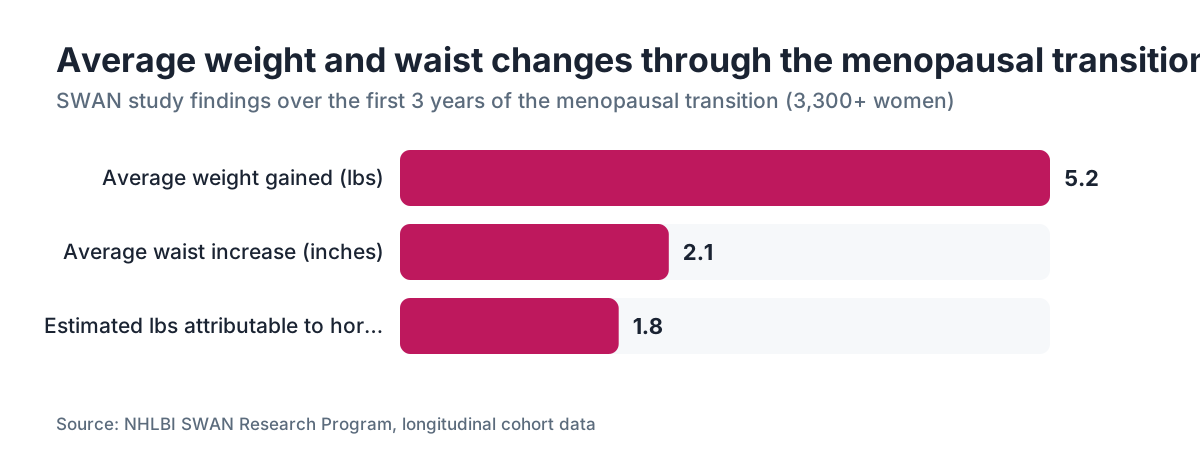
The number clinical literature cites most is 2 to 5 pounds a year through perimenopause, which on average runs 4 to 8 years. [1] The Study of Women's Health Across the Nation (SWAN) followed more than 3,300 women from before menopause through after it, and found an average gain of 5.2 lbs over the first 3 years of the transition. That weight showed up almost entirely as fat, not lean mass.
The number that should worry you more is your waist. SWAN data showed waist circumference grew by an average of 2.15 inches over the same stretch, even in women whose total weight barely moved. [1] Some women watch the scale stay flat while they quietly stack on visceral fat.
Timing matters too. Women who reach menopause earlier tend to pick up more cardiometabolic risk. You can read more about typical timing at perimenopause age and when does menopause start.
Here's the honest caveat. Some of what looks like menopausal weight gain is plain age-related gain that would have happened anyway. SWAN investigators tried to separate the two and found the hormonal transition added roughly 1.5 to 2 lbs beyond what aging alone would predict. That's real. It also means lifestyle still explains most of the total, and that's the part you can move.
Why does belly fat increase so much after menopause?
Before menopause, estrogen steers fat storage toward the gluteofemoral region: hips, thighs, and buttocks. That pattern protects you. Subcutaneous fat in those spots is mostly metabolically inert. When estrogen falls, the steering signal vanishes, and your body defaults to belly and visceral storage, the same pattern men run their whole lives. [4]
Visceral fat is not passive tissue. It pumps out inflammatory cytokines including IL-6 and TNF-alpha, drives insulin resistance, and raises LDL cholesterol. The North American Menopause Society reports that postmenopausal women have far higher rates of metabolic syndrome than premenopausal women at the same body weight, mostly because of this fat shift. [4]
Cortisol makes it worse. Fat cells in the abdomen carry more cortisol receptors than fat cells elsewhere, so a steady drip of stress hormone fattens the midsection first. Hot flashes and night sweats wreck sleep in perimenopause, which keeps cortisol high around the clock.
Waist-to-hip ratio beats BMI as a risk marker at this stage. A ratio above 0.85 in women is tied to elevated cardiovascular and metabolic risk, per the World Health Organization. [5] If your waist is growing while the scale sits still, that still counts clinically.
Does hormone replacement therapy help with menopause weight gain?
Yes, with nuance that matters.
Systemic estrogen therapy does not melt fat on its own. What it does is prevent or partly reverse the fat redistribution above. Multiple randomized controlled trials show postmenopausal women on estrogen-based hormone therapy gain less abdominal fat, keep better insulin sensitivity, and hold more lean mass than untreated women. [6] A 2022 meta-analysis in Climacteric reviewed 16 randomized trials and found hormone therapy was tied to a statistically significant drop in waist circumference (mean reduction around 1.5 cm) and in visceral fat area, even though total body weight didn't change much.
The mechanism is clean. Restore estrogen and you restore the signal that pushes fat away from visceral depots. It also improves sleep, which lowers ghrelin and cortisol, which quiets the appetite chaos driving overeating.
Progesterone matters too. Micronized progesterone (Prometrium) looks more metabolically neutral than synthetic progestins, and some data suggest it helps sleep quality a bit. See progesterone for the differences.
The estrogen patch and other transdermal forms are generally preferred over oral estrogen for metabolic outcomes, because they skip the first-pass liver effect that raises triglycerides and clotting factors with pills.
Hormone therapy isn't right for everyone. The decision weighs your personal risk for breast cancer, cardiovascular disease, and blood clots. A fuller account of risks, benefits, and timing lives at hormone replacement therapy. Here's the takeaway. If you're in the transition and gaining belly fat, hormone therapy deserves a real conversation with a clinician, not a shrug.
What does resistance training actually do for menopausal weight?
More than almost anything else you can do.
Resistance training is the most evidence-backed way to keep and rebuild lean mass during and after menopause. Lean mass is what keeps your resting metabolic rate from collapsing. A 2022 systematic review in Menopause, the journal of the North American Menopause Society, covered 24 randomized trials and found resistance training in postmenopausal women lowered fat mass, raised lean mass, and shrank waist circumference against controls. [7]
The dose that worked in most trials was 2 to 3 sessions a week with progressive overload, meaning you add weight or resistance over time instead of repeating the same routine forever. Bodyweight squats three times a week for three years give you diminishing returns. A program that keeps challenging you doesn't.
There's a bone reason too. Estrogen decline speeds bone loss, and weight-bearing resistance work is one of the few non-drug tools with good evidence for slowing it. A bone density test (DEXA scan) at menopause gives you a baseline worth having.
Cardio helps as well, and pairing it with lifting produces better body composition than either alone. But if you only have time for one thing at this stage, the evidence favors resistance training over steady-state cardio for holding onto metabolism.
Can GLP-1 medications help women gain less weight during menopause?
Yes, and the trial data are hard to argue with.
GLP-1 receptor agonists, mainly semaglutide (Wegovy) and tirzepatide (Zepbound), cut appetite and slow gastric emptying, producing steady weight loss in trials. The STEP 1 trial of semaglutide 2.4 mg weekly found a mean 14.9% weight reduction over 68 weeks in adults with obesity or overweight plus a weight-related condition. [8] The SURMOUNT-1 trial of tirzepatide found mean reductions up to 22.5% at the top dose. [9]
Neither STEP 1 nor SURMOUNT-1 broke results out by menopausal status, so there's no clean menopause-specific number. What exists are subgroup analyses suggesting women aged 45 to 65 respond at least as well as younger participants. The hormone environment of menopause doesn't appear to dull the GLP-1 response.
Where these drugs shine in menopause is the appetite chaos from bad sleep and high cortisol. They quiet food noise, the clinical term for the constant background hum of thinking about food that so many women describe in perimenopause.
One real concern. GLP-1 medications can speed up lean mass loss if you skimp on protein and skip resistance training. In women already shedding muscle from estrogen decline, that's a meaningful risk. Solid protocols pair GLP-1 use with 1.2 to 1.6 grams of protein per kilogram of body weight daily plus resistance training.
A telehealth platform like WomenRx can prescribe hormone therapy and GLP-1 medications together, which matters because treating the hormonal root cause alongside appetite generally beats either one alone.
For the most prescribed option in detail, see semaglutide for weight loss and the head-to-head at semaglutide vs tirzepatide.
How does sleep affect weight gain in menopause?
More directly than most women expect.
The Sleep Heart Health Study and other large cohorts show that sleeping under 7 hours a night is independently tied to higher BMI and more belly fat. [2] In menopause the mechanism doubles up: hot flashes and night sweats physically break your sleep, and lower progesterone strips out one of the body's natural sleep-promoting hormones.
Sleep loss hits metabolism from several angles at once. Ghrelin rises, so you're hungrier. Leptin falls, so you don't feel full at the same calorie load. The prefrontal cortex, which handles impulse control, gets impaired, so high-calorie choices win more often. And cortisol stays elevated the next day, feeding visceral fat.
Here's the practical part. Treating the hot flashes and night sweats that wreck your sleep is a metabolic intervention, more than a comfort measure. Hormone therapy reduces vasomotor symptoms in roughly 75 to 80% of women who use it, and better sleep follows. [6] CBT-I (cognitive behavioral therapy for insomnia) has strong evidence for menopausal insomnia even without hormones. A cooler bedroom (below 67 degrees Fahrenheit is the usual sleep-hygiene target) makes a measurable difference.
If you're eating well and training and still not losing weight in menopause, poor sleep is the most common thing nobody checks.
What dietary changes actually work for menopause weight gain?
No single magic diet exists for menopause, but a few patterns keep showing up in the trial data.
Protein is the strongest lever. As muscle mass drops with estrogen loss, dietary protein matters more for muscle protein synthesis. Most clinical guidance for older adults with body composition goals lands at 1.2 to 1.6 g per kg of body weight, well above the 0.8 g/kg RDA. [3] For a 150-lb (68 kg) woman, that's roughly 82 to 110 grams a day.
Calorie needs genuinely fall. Resting metabolic rate drops as lean mass shrinks, and many women need 200 to 400 fewer calories a day than they did at 35 to hold the same weight. Eat like you always did without adjusting and you run a slow, steady surplus.
Ultra-processed food deserves real cutting. A 2023 cohort study in The BMJ following more than 197,000 adults found each 10% jump in ultra-processed food intake was tied to a 0.28 kg/m2 higher BMI over 8 years. [10] These foods are engineered to override fullness signals that menopause already blunts.
Alcohol is worth a hard look. Past the calorie density (7 kcal/g), it fragments sleep, raises cortisol, and drops the inhibition that keeps late-night snacking in check. Two drinks an evening adds up fast.
Mediterranean-style eating, heavy on vegetables, legumes, fish, and olive oil with little processed food, shows steady associations with lower visceral fat in postmenopausal women across observational studies. Randomized trial evidence aimed specifically at the transition is thinner than fans sometimes claim, so take it as a strong default rather than proof.
Does stress management matter for weight gain in menopause?
Yes, and it gets skipped in most treatment conversations.
Cortisol is more than a stress hormone. It's a fat-storage signal, aimed especially at visceral fat. Midlife often stacks stressors: aging parents, career pressure, kids leaving or needing more, relationships shifting. All of it keeps cortisol high, and chronic cortisol drives belly fat regardless of what you eat.
Mindfulness-based stress reduction (MBSR) has randomized trial evidence for lowering cortisol, improving sleep, and modestly reducing belly fat in perimenopausal and postmenopausal women. An 8-week MBSR trial published in Menopause in 2012 found a significantly lower cortisol awakening response in the intervention group than in controls.
This doesn't replace diet, exercise, or hormones. It means ignoring cortisol leaves one of the main drivers of menopausal weight gain sitting untouched.
How to avoid gaining weight during menopause: a practical summary
No single move solves menopause weight gain. Stacking several evidence-based ones consistently beats any one alone.
The table below lays out what the evidence actually supports.
| Intervention | Evidence Level | Primary Mechanism | Caveats | |---|---|---|---| | Hormone therapy (systemic estrogen) | Strong RCT evidence | Reduces visceral fat redistribution, improves sleep | Requires individualized risk assessment | | Resistance training 2-3x/week | Strong RCT evidence | Preserves lean mass, maintains RMR | Must be progressive to stay effective | | GLP-1 medications (semaglutide, tirzepatide) | Strong RCT evidence | Reduces appetite, promotes fat loss | Risk of lean mass loss if protein/training inadequate | | Higher protein intake (1.2-1.6 g/kg/day) | Moderate evidence | Supports muscle protein synthesis | Most women fall well short of this | | Sleep optimization (treat hot flashes, CBT-I) | Moderate-strong evidence | Lowers ghrelin/cortisol, improves food choices | Often overlooked as a metabolic lever | | Reducing ultra-processed foods | Moderate observational evidence | Reduces engineered palatability, lowers calorie density | Not a simple calorie story | | Stress reduction / cortisol management | Moderate RCT evidence | Lowers visceral fat deposition | Underused in clinical protocols |
The women who do best are the ones who address hormones, build muscle, and fix sleep at the same time instead of treating each as its own project. Trying one thing and waiting months for results is the slow road.
For a broader medical orientation, menopause is the right starting point. If you want to weigh GLP-1 options including semaglutide and compounded versions through compounded semaglutide, those pages cover what you need before starting.
WomenRx offers telehealth consultations that handle hormone therapy and GLP-1 prescribing together, the combination most likely to work for women in the transition.
When should you see a doctor about weight gain in menopause?
See one soon if your gain is fast (more than 5 lbs in a month with no diet change), comes with new fatigue or cold intolerance (get your thyroid checked), rides alongside significant depression or anxiety, or if your waist has grown past 35 inches, a threshold the National Heart, Lung, and Blood Institute ties to elevated cardiometabolic risk. [5]
Hypothyroidism is common in perimenopausal and postmenopausal women and directly causes weight gain, fluid retention, and fatigue. Subclinical hypothyroidism affects an estimated 3 to 8% of adult women and gets missed often because TSH alone doesn't tell the whole story. A full thyroid panel including free T4 is worth asking for.
Insulin resistance, even without a diabetes diagnosis, can drive weight gain that shrugs off normal dieting. A fasting insulin, fasting glucose, and HbA1c together paint a clearer metabolic picture than HbA1c by itself.
Here's what matters most. Weight gain in menopause is not inevitable, not your fault, and not a willpower failure. The biology is real. The best thing a clinician can do is take it seriously instead of handing you generic advice that stopped working the moment your hormones changed.
Frequently asked questions
Is gaining weight during menopause inevitable?
Not entirely, but the biology is real. Falling estrogen, muscle loss, poor sleep, and rising cortisol all push toward gain at once. Women who address hormones, resistance training, protein, and sleep together often hold weight steady or lose it. Women who change nothing typically gain 2 to 5 lbs a year through the transition. Calling it inevitable is wrong; calling it easy to avoid is just as wrong.
How does estrogen loss cause belly fat specifically?
Estrogen steers fat toward the hips and thighs before menopause. When it falls, that signal disappears and fat redistributes to the abdomen, both subcutaneous and visceral. The SWAN study found waist circumference grew by an average of 2.15 inches through the transition even in women whose total weight barely moved. Visceral fat is metabolically active and raises cardiovascular and insulin resistance risk on its own.
Does menopause slow your metabolism?
Yes, through muscle loss. Lean mass drives resting metabolic rate, and women lose roughly 3 to 8% of muscle per decade after 30, faster after menopause. A woman who needed no diet change to hold weight at 38 may need 200 to 400 fewer calories a day at 52 just to break even. Resistance training is the most direct way to slow that decline.
Will HRT make me gain weight?
The evidence says no. Multiple randomized trials show women on systemic estrogen gain less abdominal fat and keep more lean mass than untreated women. A 2022 meta-analysis in Climacteric found hormone therapy was tied to reduced waist circumference on average. Some women notice mild water retention when starting, which usually clears within weeks. Total body weight does not consistently rise on estrogen-based hormone therapy in trial data.
What is the best diet for menopause weight loss?
No single diet has strong head-to-head trial evidence for the transition specifically. The patterns with the steadiest data are higher protein (1.2 to 1.6 g per kg of body weight daily) to protect muscle, less ultra-processed food, and Mediterranean-style eating for cardiometabolic markers. Calorie needs genuinely fall in menopause, so eating like your 30s without adjusting produces slow but real gain over time.
Can semaglutide or tirzepatide help with menopause weight gain?
Yes. The STEP 1 trial found semaglutide 2.4 mg weekly produced a mean 14.9% weight reduction over 68 weeks. SURMOUNT-1 found tirzepatide cut weight by up to 22.5%. Neither trial split results by menopausal status, but subgroup data suggest midlife women respond comparably. The main risk in menopause is extra lean mass loss, so both should pair with adequate protein and resistance training.
How does poor sleep contribute to weight gain in menopause?
Directly and heavily. Sleep loss raises ghrelin, lowers leptin, and keeps cortisol high, adding roughly 200 to 400 extra calories of appetite a day in controlled studies. Menopause breaks sleep through hot flashes, night sweats, and low progesterone. Treating vasomotor symptoms with hormone therapy, tightening sleep hygiene, and considering CBT-I for insomnia is a real metabolic intervention, more than a comfort measure.
What is the connection between stress and weight gain in menopause?
Chronic stress raises cortisol, which selectively parks fat around your organs. Abdominal fat cells carry more cortisol receptors than fat elsewhere, so high cortisol fattens the midsection first, regardless of calories. Midlife often stacks stressors, and menopause itself raises cortisol through broken sleep. Mindfulness-based stress reduction has randomized trial evidence for lowering cortisol and improving body composition in perimenopausal women.
At what age does menopause weight gain start?
Usually in perimenopause, which on average begins in the mid-to-late 40s, though some women notice changes as early as 40. Estrogen swings and declines through this transition, often redistributing fat before periods stop. The SWAN study found measurable gains in belly fat and waist circumference beginning in the early menopausal transition, before the final period rather than after.
Is menopause belly fat dangerous to health?
Yes, more so than subcutaneous fat elsewhere. Visceral fat pumps out inflammatory cytokines, drives insulin resistance, and raises LDL cholesterol. The North American Menopause Society reports postmenopausal women have far higher rates of metabolic syndrome than premenopausal women at similar body weights, mostly from this fat shift. A waist above 35 inches in women is an established threshold for elevated cardiometabolic risk per NHLBI guidance.
Does resistance training really help with menopause weight gain?
Yes. A 2022 systematic review in Menopause covering 24 randomized trials found resistance training in postmenopausal women lowered fat mass, raised lean mass, and shrank waist circumference against controls. Two to three sessions a week with progressive overload is the dose most trials used. For menopausal women it also slows bone density loss, making it the most multi-purpose intervention available.
Should I check my thyroid if I'm gaining weight in menopause?
Yes, rule it out. Hypothyroidism affects an estimated 3 to 8% of adult women and causes weight gain, fatigue, cold intolerance, and fluid retention that gets blamed on menopause. Subclinical hypothyroidism slips through if only TSH is checked, so request a full panel including free T4. Treating it when present often improves weight and energy before any other step does much.
How much weight is normal to gain during menopause?
The SWAN study found women gained an average of 5.2 lbs over the first 3 years of the transition, almost entirely as fat rather than lean mass. Annual rates of 2 to 5 lbs are commonly cited. But the hormonal transition adds an estimated 1.5 to 2 lbs beyond what normal aging predicts, meaning lifestyle factors still explain most of the total gain, and most of what you can change.
Can combining hormone therapy with a GLP-1 medication speed up weight loss in menopause?
The combination makes biological sense and gets used in practice, though large trials testing it together in menopausal women don't exist yet. Hormone therapy addresses fat redistribution and sleep disruption while GLP-1 medications cut appetite and total intake. Using both alongside resistance training and adequate protein covers more of the underlying mechanisms at once than any single treatment on its own.
Sources
- NIH National Heart, Lung, and Blood Institute – Sleep Deprivation and Deficiency
- National Institute on Aging – Sarcopenia with Aging
- North American Menopause Society (NAMS) – Menopause and Cardiovascular Disease Position Statement
- National Heart, Lung, and Blood Institute – Aim for a Healthy Weight, BMI and Waist Circumference
- Menopause (NAMS journal) – Hormone Therapy and Body Composition Meta-Analysis, Climacteric 2022
- Menopause (NAMS journal) – Systematic Review of Resistance Training in Postmenopausal Women, 2022
- NEJM – STEP 1 Trial: Semaglutide 2.4 mg for Weight Loss (Wilding et al., 2021)
- NEJM – SURMOUNT-1 Trial: Tirzepatide for Weight Loss (Jastreboff et al., 2022)
- The BMJ – Ultra-processed food consumption and BMI cohort study, 2023
- Endocrine Society – Clinical Practice Guideline on Menopausal Hormone Therapy
- FDA – Wegovy (semaglutide) Prescribing Information, Drugs@FDA