Fuzzy brain and menopause: what's really happening and what helps
TL;DR: Roughly 44 to 62% of women in perimenopause and early menopause report memory lapses, word-finding trouble, and difficulty concentrating. Falling estrogen hits verbal memory and processing speed hardest. The fog usually peaks in early postmenopause and clears for most women within 2 to 5 years. Hormone therapy, sleep treatment, and targeted lifestyle changes have the strongest evidence.
What is menopause brain fog, exactly?
Brain fog is not a diagnosis. It's a cluster of symptoms: losing a word mid-sentence, walking into a room and drawing a blank, reading the same paragraph three times, feeling mentally slow in meetings you used to run without effort. Women describe it as a change in how thinking feels, not a catastrophic loss, but real enough to be distressing.
Researchers call it subjective cognitive complaints (SCCs) or subjective cognitive decline (SCD). The Study of Women's Health Across the Nation (SWAN), one of the largest long-term studies of menopausal women, tracked more than 2,300 women across years. It found that scores on standardized tests of verbal memory and processing speed dipped during the transition, then improved once menopause was established [1]. That finding says two things at once. The fog is real and measurable. And for most women, it does not last.
The symptoms that show up most in the research are verbal memory (retrieving words and names), processing speed (how fast you work through a problem), and working memory (holding information in mind while you use it). Attention and executive function, the ability to plan and juggle several things at once, also take a hit for many women. Spatial memory tends to hold up better.
How common is brain fog during menopause?
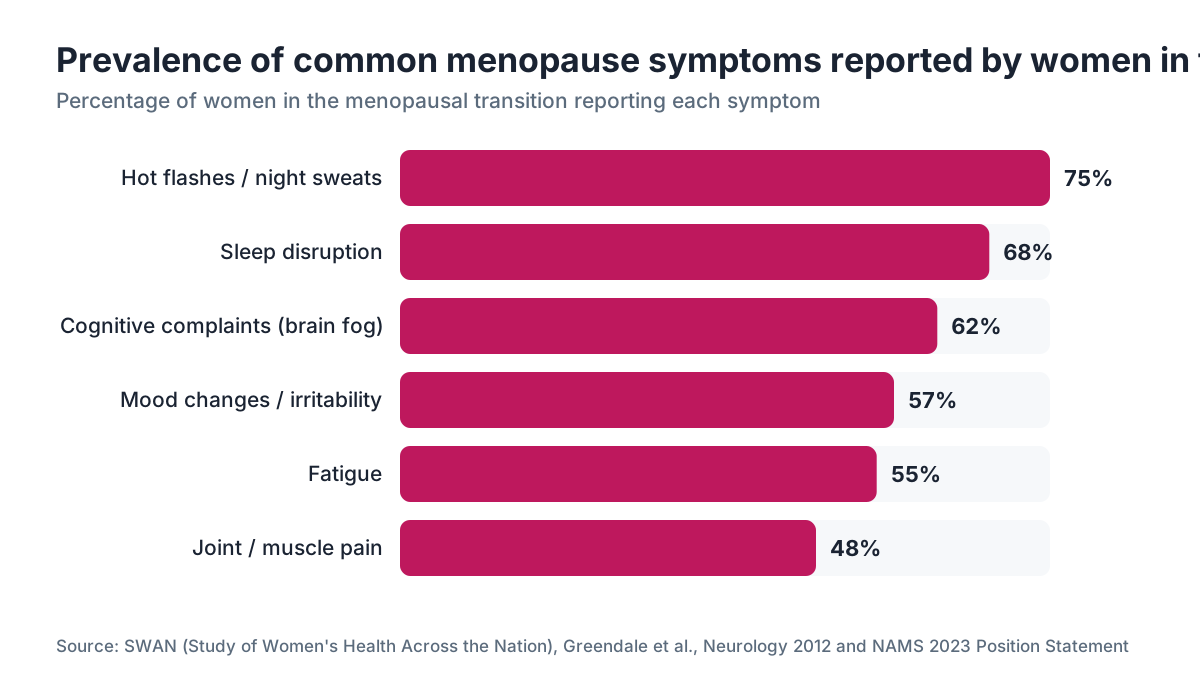
Studies put the prevalence between 44% and 62% of women in perimenopause and early menopause [1][2]. The wide range reflects differences in how researchers ask the question and which stage they study. The North American Menopause Society (NAMS) lists cognitive complaints among the most frequently reported menopause symptoms, alongside hot flashes and disrupted sleep [2].
SWAN data showed that late perimenopause and early postmenopause were the worst windows, with verbal memory scores dropping meaningfully below the premenopausal baseline and then recovering over the following years [1]. Women with more frequent hot flashes tended to score lower on objective memory tests. That gave researchers an early clue that vasomotor symptoms and brain function are connected through shared biology.
One thing the data makes clear: cognitive symptoms during this period are not a sign of early Alzheimer's disease for the vast majority of women. The SWAN investigators described the change as a temporary disruption tied to hormonal flux, not a slide toward dementia [1]. If your symptoms are getting steadily worse instead of fluctuating, or if they touch safety (driving, managing money), that calls for a formal neurological evaluation, not a wait-and-see approach.
What causes brain fog in menopause?
Estrogen is more than a reproductive hormone. It has receptors throughout the brain, including the hippocampus (memory formation), the prefrontal cortex (executive function), and regions that regulate cholinergic and serotonergic signaling. When estrogen falls, those systems lose a key modulator [3].
Here's what the research points to as the main drivers:
Estrogen withdrawal. Estradiol supports dendritic spine density and synaptic plasticity in the hippocampus. Animal studies and human imaging both show that declining estrogen weakens the structural support for memory circuits [3].
Sleep disruption. Hot flashes wake women multiple times a night. Even one night of fragmented sleep measurably impairs working memory and attention the next day, and chronic disruption compounds. SWAN found that sleep problems explained part of the cognitive complaints in perimenopausal women independent of estrogen levels [1].
Vasomotor symptoms. Hot flashes are more than uncomfortable. They are brief, repeated episodes of disrupted cerebral blood flow control. Brain imaging found that women with frequent hot flashes have measurable white matter differences in memory-related regions [4].
Mood dysregulation. Depression and anxiety independently impair cognition, and both spike during perimenopause. Depressive symptoms can mimic and amplify brain fog. The relationship runs both ways: poor cognition raises anxiety, and anxiety worsens cognitive performance.
Progesterone fluctuation. Progesterone has its own neuroprotective effects, partly through GABA-A receptor activity via its metabolite allopregnanolone. The chaotic swings of perimenopause, where progesterone often drops before estrogen does, may themselves add to the cognitive turbulence, separate from any estrogen effect. See our article on progesterone for more on how it affects the brain and sleep.
When does menopause brain fog start and how long does it last?
SWAN showed cognitive performance starts to dip in late perimenopause, the 1 to 2 years right before the final menstrual period, and bottoms out in early postmenopause, roughly the first 1 to 2 years after [1]. For most women the fog then clears gradually.
A 2012 SWAN publication tracking verbal memory found that women in early postmenopause scored lower than both their own premenopausal baseline and women who had not yet entered the transition. By late postmenopause (roughly 5 or more years after the final period), most women's scores had climbed back toward baseline [1].
Individual variation is real. Women who enter menopause earlier (natural or surgical), have severe and frequent hot flashes, sleep badly, or carry a history of depression tend to have more pronounced and longer-lasting symptoms. Surgical menopause is a specific risk factor. The abrupt estrogen loss from bilateral oophorectomy before natural menopause has been linked to worse cognitive outcomes than gradual natural menopause, especially when hormone therapy is not started promptly [5].
So the timeline for most women is a few years of real but fluctuating symptoms that ease once the hormonal environment settles. Not forever. If you're in perimenopause and feeling this now, that context matters.
Does hormone therapy actually help with brain fog?
This is where the evidence gets genuinely complicated, and anyone who gives you a clean yes or no is skipping the nuance that decides whether it helps you.
The timing hypothesis is the framework to know. Early observational studies suggested women who started hormone therapy around the time of menopause had better long-term cognitive outcomes. The Women's Health Initiative Memory Study (WHIMS) then showed that HRT started in women who were, on average, 65 and many years past menopause did not protect cognition and, in some analyses, increased dementia risk [6]. That result was alarming and drove a decade of overcorrection.
Later work, including re-analyses of WHI data and the KEEPS (Kronos Early Estrogen Prevention Study) trial, found that estrogen started closer to the transition did not raise cognitive risk and may have offered modest benefits for verbal memory [7]. The window that matters appears to be the years right around the final menstrual period, not a decade after.
For brain fog specifically, the 2023 NAMS position statement concluded that hormone therapy can improve subjective cognitive complaints, especially when sleep disruption and hot flashes are driving the fog, while evidence for a direct benefit on objective memory tests is more modest and variable [2]. In plain terms: if hot flashes wake you four times a night and you can't concentrate the next day, treating them with estrogen will likely help your brain. Whether estrogen improves memory on its own, apart from sleep and mood, is less certain.
Progesterone type matters too. Micronized progesterone (body-identical, such as Prometrium) looks more favorable for sleep and mood than synthetic progestins like medroxyprogesterone acetate, the progestin used in the original WHI and WHIMS trials [8]. That distinction is one reason many clinicians now prefer hormone replacement therapy built on estradiol plus micronized progesterone.
If you're weighing hormone therapy and want a clear picture of the options, including estrogen patch delivery versus oral, that's a conversation for a clinician who stays current with NAMS and Endocrine Society guidance.
What about the link between menopause brain fog and dementia risk?
This is the fear sitting quietly behind most women's worry about brain fog. Here's what the evidence actually says.
Alzheimer's disease is about twice as common in women as in men, and living longer does not fully explain the gap [9]. Researchers have proposed that the menopausal transition and the loss of estrogen's neuroprotective effects contribute to the higher risk. The brain changes of Alzheimer's, particularly amyloid buildup, appear to start 15 to 20 years before symptoms, which puts the perimenopausal years inside a biologically relevant window.
The 2020 Lancet Commission on dementia prevention flagged midlife factors, including sleep disruption, as areas needing more research [9]. "Around 40% of dementias worldwide are potentially preventable," the Commission wrote, pointing to modifiable risks across the life course.
Here is what we know for certain: the subjective cognitive complaints women report in perimenopause and early menopause do not, on their own, predict dementia. SWAN found that the dip during the transition was not a warning of ongoing decline for most women [1]. If your fog is new, moves with your sleep quality and hot flash frequency, and does not come with getting lost in familiar places or real functional loss, it fits the pattern of the transition, not early dementia.
The red flags that warrant a neurological referral: symptoms getting steadily worse instead of fluctuating, getting lost while driving in familiar areas, marked changes in personality or behavior, trouble managing finances you used to handle easily, or a family history of early-onset dementia.
What lifestyle changes actually improve menopause brain fog?
Lifestyle trials are messier than drug trials, but several approaches have real data behind them.
Aerobic exercise. A 2019 randomized trial in JAMA Internal Medicine found that a 12-month aerobic program improved verbal memory and hippocampal volume in postmenopausal women [10]. The effect sizes were modest but real. Aim for 150 minutes a week of moderate cardio. Not because it sounds like good advice, but because it demonstrably changes brain structure.
Sleep hygiene and sleep disorder treatment. Fixing sleep is probably the single highest-yield move for cognition when disrupted sleep is driving the fog. Cognitive behavioral therapy for insomnia (CBT-I) is the first-line treatment for chronic insomnia, ahead of sleep medication. If hot flashes are what wake you, treating the hot flashes (with HRT or an FDA-approved non-hormonal option like fezolinetant) treats the root cause.
Stress reduction. Sustained psychological stress raises cortisol, which is toxic to the hippocampus at high chronic levels. Mindfulness-based stress reduction (MBSR) has randomized evidence for improving subjective cognitive complaints in midlife women.
Diet. A Mediterranean-style diet is linked to lower rates of cognitive decline in aging populations. The evidence is observational, not from a randomized trial in menopausal women specifically, so treat it as plausible and healthy rather than proven. Limiting alcohol matters too: it worsens sleep quality and directly disrupts memory consolidation.
Strength training. Resistance exercise raises brain-derived neurotrophic factor (BDNF) and appears to improve executive function. It also protects bone density, a separate but real bone density concern at this age.
Can GLP-1 medications affect cognition in menopausal women?
This area is new and the data is early, but it's worth an honest discussion because many women in perimenopause and menopause are also using GLP-1 receptor agonists like semaglutide or tirzepatide for weight management.
GLP-1 receptors sit in the brain, including regions tied to memory and executive function. Animal studies and some early human data suggest GLP-1 agonists have neuroprotective and anti-inflammatory effects in the central nervous system. But nobody has good data yet on whether GLP-1s improve menopause-related brain fog specifically.
The SELECT trial (semaglutide for cardiovascular outcomes) enrolled more than 17,000 adults with obesity and found a 20% reduction in major adverse cardiovascular events [11]. Cognitive outcomes were not the focus, so treat any brain claims as unproven for now.
What is plausible: GLP-1 agonists reduce weight, inflammation, and insulin resistance, all of which touch brain health indirectly. If sleep apnea is feeding your brain fog (obstructive sleep apnea is far more common in postmenopausal women than most people realize), meaningful weight loss from a GLP-1 can improve the apnea and, with it, cognition. That's a real mechanism, not a guess.
For women weighing GLP-1 options, you can compare semaglutide vs tirzepatide or read about semaglutide for weight loss to see what the evidence currently supports. WomenRx evaluates these options against a woman's full hormonal picture, which matters because GLP-1 dosing and timing relative to HRT can change how well you tolerate it.
Bottom line: GLP-1s are not a cognitive treatment. But if weight, metabolic health, and sleep apnea are in the picture, they may help the brain indirectly.
What does an evaluation for menopause brain fog look like?
Most women never get a formal evaluation. They mention it to their gynecologist, get told it's normal, and leave without a plan. That's a missed chance.
A thorough workup should include:
Hormonal labs. FSH, estradiol, and thyroid function (TSH, free T4) at minimum. Thyroid disorders mimic cognitive symptoms almost perfectly and run higher in perimenopausal women. Low testosterone, which falls with age in women too, is associated with reduced mental energy and concentration.
Sleep assessment. A structured question set about snoring, witnessed apnea events, and daytime sleepiness is the floor. Postmenopausal women have higher rates of obstructive sleep apnea than premenopausal women, partly from reduced upper airway tone and partly because progesterone's protective effect on breathing during sleep is gone. An overnight sleep study may be warranted.
Mood screening. The PHQ-9 for depression and the GAD-7 for anxiety are quick validated tools. Depression is often missed in perimenopause because its symptoms overlap with the transition itself.
Cognitive screening. If the history raises red flags, formal neuropsychological testing can separate age-expected fluctuation from the pattern of mild cognitive impairment or early dementia. The MoCA (Montreal Cognitive Assessment) is a validated brief screener.
If you want care that looks at hormones, sleep, mood, and metabolic health together instead of in separate specialist silos, that's the model WomenRx is built around. Treating menopause as a whole-system transition, rather than a checklist of separate symptoms, tends to produce better outcomes.
On timing, it helps to know when menopause starts and what separates perimenopause from menopause, since the cognitive picture shifts slightly between those phases.
Are there medications specifically for menopause brain fog?
No medication is FDA-approved specifically for the cognitive symptoms of menopause. Here's what gets used and what the evidence says for each.
Hormone therapy (estrogen, progesterone). As covered above, the strongest evidence is indirect: treating hot flashes and improving sleep, which then improves cognition. A direct cognitive benefit in early menopause is plausible but not firmly established.
Fezolinetant (Veoza). FDA-approved in 2023 for moderate-to-severe vasomotor symptoms [12]. It blocks neurokinin B signaling in the hypothalamus. No direct cognitive data yet, but treating hot flashes may help the fog by improving sleep.
SSRIs and SNRIs. Low-dose paroxetine (Brisdelle) is FDA-approved for menopausal hot flashes. SSRIs treat depression, which independently improves cognition. They are not cognitive drugs in their own right.
Escitalopram and venlafaxine have the best non-hormonal hot flash data and may help mood-related cognitive symptoms as a knock-on effect.
Supplements. The evidence for products marketed for menopause brain fog (ginkgo biloba, phosphatidylserine, assorted herbal blends) is weak to nonexistent in well-controlled trials. A Cochrane review found insufficient evidence that ginkgo biloba prevents cognitive decline [13]. That review is over a decade old and has not been overturned by newer work.
Modafinil and other wakefulness agents are sometimes prescribed off-label for cognitive fatigue but have no menopause-specific trial data and carry real side effect and dependence concerns.
The honest position: the most evidence-based drug strategy for menopause brain fog is treating the underlying drivers (hot flashes, disrupted sleep, depression) rather than aiming at cognition directly.
What is the difference between normal menopause brain fog and something more serious?
This question deserves a direct answer, not a hedge.
Menopause-related cognitive symptoms are typically:
- Fluctuating, better some days than others
- Tied to sleep quality and hot flash severity
- Worst for verbal recall and word-finding
- Present alongside other menopause symptoms
- Not steadily progressing over months
Features that point beyond menopause:
- Steady, progressive worsening over 6 or more months without fluctuation
- Getting lost in familiar environments
- Repeating the same question or story in a short span without awareness
- Marked personality or behavioral change
- Trouble with multi-step tasks (cooking a familiar recipe, managing banking)
- Family history of early-onset Alzheimer's or frontotemporal dementia
Age shapes the odds too. A 47-year-old in perimenopause with word-finding trouble and poor sleep has a very different pre-test probability than a 58-year-old postmenopausal woman on stable HRT whose memory is progressively worse. The first is almost certainly the transition. The second deserves formal evaluation.
Women who carry APOE-e4 (a known Alzheimer's risk gene) may want to discuss earlier, more proactive monitoring with a neurologist familiar with sex differences in dementia risk. APOE-e4 testing is available, but it carries psychological weight and should come with genetic counseling.
Frequently asked questions
How long does menopause brain fog last?
For most women, the worst cognitive symptoms peak in late perimenopause and early postmenopause, roughly the 1 to 2 years around the final period. SWAN data show verbal memory scores climbing back toward baseline for most women within a few years of establishing postmenopause. Women with severe hot flashes, significant sleep disruption, or surgical menopause may have a longer and more pronounced course.
Does estrogen help with brain fog?
Yes, but mostly indirectly. Estrogen therapy reliably reduces hot flashes and improves sleep, both major contributors to brain fog. Whether estrogen improves memory on its own, apart from sleep and vasomotor effects, is less certain. The evidence is strongest when therapy starts close to the transition, not years after. NAMS recognizes cognitive symptom relief as a benefit of menopausal hormone therapy.
Can brain fog in menopause be a sign of early dementia?
For the vast majority of women, no. The cognitive dip in perimenopause is temporary and tied to hormonal flux and sleep disruption, not a dementia trajectory. Red flags that warrant neurological evaluation include steady worsening rather than fluctuation, getting lost in familiar places, repeating questions without awareness, and marked personality change. Isolated word-finding trouble and poor concentration alongside hot flashes and poor sleep are not dementia warning signs.
What vitamins or supplements help with menopause brain fog?
The honest answer: no supplement has strong, replicated evidence for menopause-specific brain fog. Omega-3 fatty acids have a reasonable biological rationale and a decent general cognitive-health evidence base. Vitamin D deficiency is common at this age and affects mood and energy, so checking and correcting a deficiency is reasonable. Ginkgo biloba is the most studied herbal option, and a Cochrane review found insufficient evidence for cognitive benefit.
Does perimenopause brain fog feel different from menopause brain fog?
Perimenopause fog tends to be more erratic, swinging with the cycle as estrogen rises and falls unpredictably. Some women feel worse in the luteal phase, when progesterone should rise but doesn't reliably. Early postmenopause fog is often steadier but tracks more closely with sleep quality. Both stages share similar symptoms: word retrieval, concentration, and processing speed.
Can treating sleep apnea improve menopause brain fog?
Yes, meaningfully. Postmenopausal women have roughly twice the rate of obstructive sleep apnea of premenopausal women. Apnea causes fragmented sleep and intermittent oxygen drops that directly impair memory consolidation and attention. If you have loud snoring, witnessed breathing pauses, or heavy daytime sleepiness, a sleep study is worth pursuing. Treating apnea with CPAP often produces clear cognitive improvement within weeks.
Is memory loss from menopause permanent?
No. SWAN, following women for over a decade, found that cognitive performance, especially verbal memory, dips during the transition and then recovers for most women in the years after. It's a temporary disruption, not permanent loss. Exceptions include women who had bilateral oophorectomy without prompt hormone therapy, where some studies suggest longer-lasting effects.
Can low testosterone cause brain fog in women?
Possibly. Testosterone has receptors in brain regions tied to memory and executive function, and women's levels decline with age. Some studies link low testosterone in women with reduced mental energy, concentration, and libido. A few clinicians use off-label testosterone for cognitive and mood symptoms when estrogen alone isn't enough, but there is no FDA-approved formulation for women in the US and the evidence base is smaller than for estrogen.
Does birth control cause brain fog similar to menopause?
Some women report cognitive effects on hormonal contraception, particularly combined oral contraceptives. The mechanism differs from menopausal fog: the pill suppresses ovarian estrogen and replaces it with synthetic estrogen and progestin. Studies here are mixed and mostly limited by self-report. Perimenopause brain fog is driven by erratic, falling endogenous estrogen, a distinct hormonal profile from what the pill creates.
What is the best diet for menopause brain fog?
A Mediterranean-style diet has the strongest observational evidence for long-term cognitive health in aging populations: olive oil, fish, vegetables, legumes, nuts, and whole grains as the base. Limiting alcohol matters because it worsens sleep quality and memory consolidation even in moderate amounts. Stabilizing blood sugar by cutting refined carbohydrates may reduce energy crashes that worsen concentration, though direct trial evidence in menopausal women is thin.
Can anxiety or depression cause brain fog in menopause?
Yes. Depression and anxiety both independently impair working memory, processing speed, and concentration through overlapping neurobiology. Perimenopause raises the risk of new-onset depression, even in women with no prior history. The cognitive symptoms of depression can be indistinguishable from hormone-related brain fog, and they often coexist. Screening for mood disorders is an essential part of evaluating menopause-related cognitive complaints.
How does exercise help with menopause brain fog?
Aerobic exercise raises BDNF (brain-derived neurotrophic factor), which supports hippocampal neuroplasticity. A 2019 randomized trial in JAMA Internal Medicine found that 12 months of aerobic exercise improved verbal memory and hippocampal volume in postmenopausal women. Resistance training has independent effects on executive function. Even 150 minutes of moderate cardio a week, the standard public health target, appears to produce measurable cognitive benefit at this age.
Should I see a neurologist for menopause brain fog?
Not for typical symptoms. Most women with menopause-related cognitive complaints are better served by a clinician who evaluates hormones, sleep, thyroid function, and mood together. A neurology referral is warranted if symptoms are steadily progressive, if there are safety concerns (driving, finances), or if formal cognitive testing is needed to rule out mild cognitive impairment. Your primary clinician or a menopause specialist is the right first stop.
What is the connection between hot flashes and brain fog?
Hot flashes and brain fog share biology. Both involve hypothalamic thermoregulatory and neurokinin B signaling disrupted by falling estrogen. Hot flashes also cause nighttime awakenings that fragment sleep and impair next-day cognition. Brain imaging studies have found white matter differences in women with frequent hot flashes compared to those without, suggesting vasomotor activity affects the brain beyond sleep disruption alone.
Sources
- Study of Women's Health Across the Nation (SWAN), Neurology 2012 (Greendale et al.)
- North American Menopause Society (NAMS), 2023 Position Statement on Hormone Therapy
- Brinton RD, Frontiers in Neuroendocrinology, 2009 (estrogen and brain)
- Maki PM et al., Menopause 2008 (hot flashes and white matter)
- Rocca WA et al., Neurology 2007 (surgical menopause and cognition)
- Women's Health Initiative Memory Study (WHIMS), JAMA 2004
- KEEPS Trial (Kronos Early Estrogen Prevention Study), Neurology 2015
- Schüssler P et al., Psychoneuroendocrinology 2018 (micronized progesterone and sleep)
- Livingston G et al., Lancet Commission on Dementia Prevention, Lancet 2020
- Erickson KI et al., JAMA Internal Medicine 2019 (exercise and memory in postmenopausal women)
- SELECT Trial (semaglutide cardiovascular outcomes), NEJM 2023
- FDA Drug Approval: Veoza (fezolinetant) 2023
- Birks J, Evans JG. Cochrane Review: Ginkgo biloba for cognitive impairment and dementia, 2009