Frozen shoulder and perimenopause: why estrogen matters
TL;DR: Frozen shoulder (adhesive capsulitis) hits women aged 40-60 far more than men, and the timing lines up almost exactly with perimenopause. Falling estrogen likely stiffens the connective tissue in the shoulder joint capsule. Left alone, it takes 1 to 3 years to resolve. Physical therapy, corticosteroid injections, and possibly hormone therapy can shorten that.
What is frozen shoulder and who gets it?
Frozen shoulder (the clinical name is adhesive capsulitis) is what it sounds like. The capsule of connective tissue around your shoulder joint thickens, scars, and contracts until your arm barely moves. This is more than stiffness. At its worst you cannot reach a seatbelt, fasten a bra, or lift a coffee cup above your waist.
The condition affects roughly 2-5% of the general population, but that number hides the real story [1]. Look at who actually gets it and a pattern jumps out: women between 40 and 60 make up the majority of cases, diagnosed at two to four times the rate of men in that age window [1]. That window is perimenopause.
There are three phases. The freezing phase brings building pain and dropping range of motion, and can last 2 to 9 months. The frozen phase eases the pain somewhat but locks the shoulder, running 4 to 12 months. The thawing phase returns motion slowly over 5 to 24 months. Total time without treatment runs anywhere from 1 to 3.5 years, and some women never fully recover [2].
Type 1 adhesive capsulitis is primary, meaning no obvious cause. Type 2 is secondary, showing up after trauma, surgery, or a systemic condition like diabetes or thyroid disease. Women in perimenopause tend to land in the primary category, which is one reason the hormonal link took so long to get attention.
Why does perimenopause cause frozen shoulder?
The honest answer: researchers do not have a complete mechanistic picture yet. But the epidemiological signal is strong enough that most shoulder specialists now treat perimenopause as a real risk factor, not a coincidence [3].
Estrogen receptors sit throughout connective tissue, including the fibrous capsule of the glenohumeral joint. Estrogen helps regulate collagen synthesis and the behavior of fibroblasts, the cells that build and remodel connective tissue. When estrogen falls, fibroblasts can go haywire, laying down excess collagen in a disordered pattern. That is the same pathology found in frozen shoulder biopsies: fibroblast proliferation and abnormal collagen in the joint capsule [3].
A 2019 study in JBJS Open Access examined synovial tissue from frozen shoulder patients and found elevated expression of estrogen receptor alpha, a sign the joint capsule is actively responding to estrogen signals or the loss of them [3]. The authors concluded that "estrogen may have a protective role in preventing the fibrotic changes associated with adhesive capsulitis."
Then there is the thyroid angle. Hypothyroidism is roughly five times more common in women than men, peaks in the perimenopausal years, and is independently tied to frozen shoulder [4]. Some perimenopausal women who assume they have a pure hormonal problem actually have undiagnosed thyroid dysfunction driving the shoulder. Check your TSH if you have not.
Diabetes is the other big secondary cause. Insulin resistance tends to worsen in perimenopause as estrogen drops, and women with diabetes carry a 10-20% lifetime risk of frozen shoulder against roughly 2-5% in the general population [1]. If your blood sugar control has been slipping, that matters for your shoulder too.
What do perimenopause frozen shoulder symptoms feel like?
Most women describe the onset as a dull, deep ache with no injury they can point to. The pain sits at the outer edge of the shoulder, sometimes runs down the upper arm, and wakes them at night when they roll onto that side. That nighttime pain is a classic early signal.
Then the stiffness arrives. Reaching overhead, reaching behind your back (the hand-to-bra-hook move), and rotating the arm outward all get restricted. A quick home test: try touching the opposite shoulder blade with your hand behind your back. Loss of internal rotation is usually the first measurable sign.
These symptoms overlap with other things common in this age group: rotator cuff tears, cervical radiculopathy (a pinched nerve in the neck), even referred pain from gallbladder disease. What sets frozen shoulder apart is that passive range of motion is also limited. A rotator cuff tear usually keeps passive motion intact (someone else can move your arm for you) even when active motion is weak. With frozen shoulder, neither works.
The pain is often worst in the freezing phase and eases once the shoulder is fully frozen. That temporary relief can fool you. Now the stiffness becomes the main problem, sometimes bad enough that women cannot drive safely or dress themselves.
Other symptoms women report but rarely hear discussed: a grinding or clicking as the shoulder thaws, a sense of weakness that is really restricted movement rather than true muscle loss, and a tendency for the non-dominant shoulder to go first, followed sometimes by the other side.
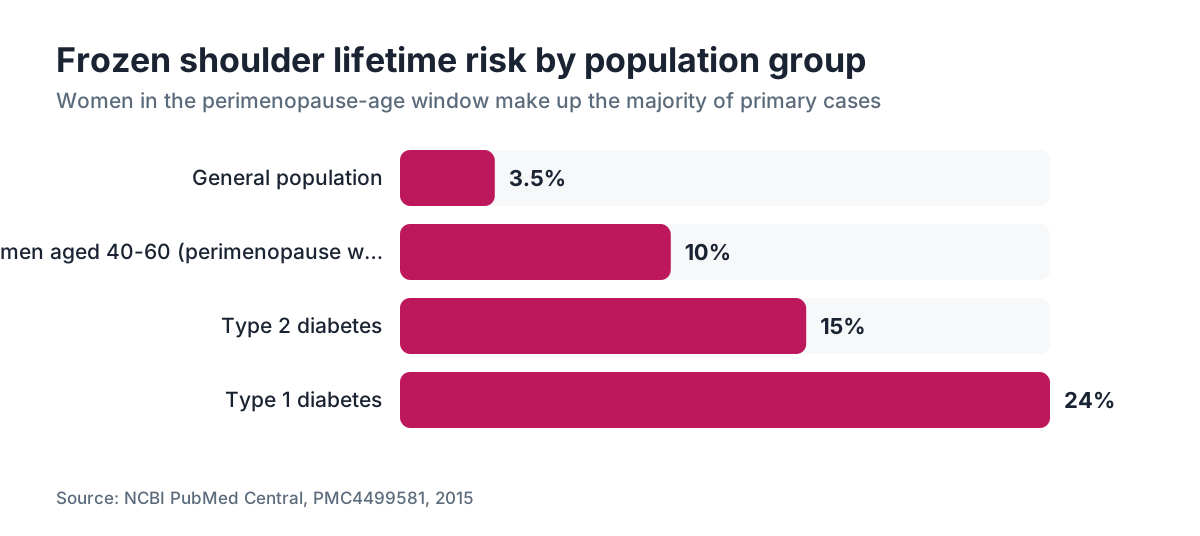
How common is frozen shoulder during perimenopause, really?
The 2-5% lifetime prevalence for the general population climbs to roughly 10-38% in people with type 1 diabetes and about 10-20% in type 2 diabetes [1]. For women in the perimenopausal age bracket specifically, some clinic-based studies report that women make up 60-70% of primary frozen shoulder cases [1].
A large UK primary care study using the Clinical Practice Research Datalink found peak incidence in women between ages 51 and 55, which maps closely onto the average age of menopause (51 in the US) [5]. That overlap has pushed a growing number of rheumatologists and orthopedic surgeons to view frozen shoulder as a musculoskeletal marker of the menopausal transition, the way joint pain and tendinopathy are increasingly recognized as estrogen-withdrawal symptoms.
Nobody has run a clean randomized trial proving that hormone therapy prevents frozen shoulder. That study has not been done. The closest evidence comes from observational data showing that women on hormone therapy have lower rates of several estrogen-sensitive connective tissue problems, plus the basic science on estrogen's role in fibroblast regulation [3][11]. Not proof, but a reasonable inference.
For reference, the average age women start noticing perimenopause symptoms is around 47, though the range is wide. See our overview of perimenopause age if you are trying to figure out where you are.
How is frozen shoulder diagnosed?
Diagnosis is mostly clinical. A doctor checks active and passive range of motion in all planes and compares both shoulders. The classic finding is restriction in external rotation, abduction, and internal rotation, present whether you move the arm or the examiner does.
Imaging exists mainly to rule out other causes. Plain X-rays are usually normal in primary frozen shoulder, though they can rule out arthritis, calcific tendinitis, or fracture. MRI can show capsular thickening and enhancement of the rotator interval (the tissue between the subscapularis and supraspinatus tendons), and earns its keep when the diagnosis is unclear or a concurrent rotator cuff tear is suspected [2].
Blood work matters more in perimenopausal women than in the general population. TSH to rule out hypothyroidism. Fasting glucose or HbA1c to catch diabetes or pre-diabetes. Sometimes ANA and inflammatory markers if an autoimmune process is on the table. None of these diagnose frozen shoulder, but they find treatable contributors.
Arthrogram (injecting dye into the joint) used to be the gold standard and would reveal a contracted capsular volume (under 10-12 mL versus a normal 20-30 mL), but clinical diagnosis plus MRI when needed has largely replaced it [2].
What are the most effective treatments for frozen shoulder in perimenopause?
Treatment tracks the phase. In the freezing phase, pain management comes first. In the frozen phase, restoring motion becomes the goal. In the thawing phase, aggressive physical therapy pays off.
Corticosteroid injections into the glenohumeral joint are the most evidence-backed short-term move. A 2017 Cochrane review found that subacromial corticosteroid injections gave meaningful short-term improvement in pain and function against placebo or physiotherapy alone, though the benefit faded at 6 to 12 months [7]. Most guidelines cap injections at 2 to 3 total given the systemic effects, which matter more in women who already have blood sugar concerns.
Physical therapy is the backbone of medium-to-long-term recovery. Timing and technique are everything. Aggressive stretching in the freezing phase tends to inflame things and delay recovery. Gentle range-of-motion work and pendulum swings early, progressing to active stretching once pain subsides, is the standard approach. Supervised PT 2 to 3 times a week for 3 to 6 months is realistic.
Hydrodilatation (distension arthrography) means injecting saline and sometimes corticosteroid into the joint under imaging guidance to stretch the contracted capsule. Evidence is mixed, but some studies show faster return of range of motion than injection alone [2].
Manipulation under anesthesia and arthroscopic capsular release are surgical options for cases that resist 6 to 12 months of conservative care. Arthroscopic release restores motion quickly and is generally preferred over blind manipulation, which carries a small fracture risk [2].
Oral NSAIDs help acute pain but do nothing to change the course of the disease. Same with oral corticosteroids: short courses ease pain briefly, but the benefit does not last.
A word on hormone therapy. There is no randomized trial of HRT for frozen shoulder prevention or treatment. But if you are perimenopausal and dealing with frozen shoulder alongside other estrogen-deficiency symptoms (hot flashes, disrupted sleep, vaginal dryness, joint aches), the case for discussing hormone replacement therapy with your clinician gets stronger. The Endocrine Society recognizes estrogen's role in connective tissue and the rise in musculoskeletal complaints during the transition, even though frozen shoulder is not singled out [11]. WomenRx clinicians evaluate this exact combination of symptoms regularly and can help you weigh whether systemic hormone therapy fits your full clinical picture.
Does hormone therapy help frozen shoulder in perimenopause?
This is the question every perimenopausal woman with a frozen shoulder asks, and the evidence is genuinely incomplete. Here is what actually exists.
Observational studies have found that postmenopausal women on estrogen therapy report less musculoskeletal pain and joint stiffness overall [11]. The Women's Health Initiative, for all its problems, collected musculoskeletal pain data and found that women on conjugated equine estrogen plus progestin reported less joint pain than those on placebo [11]. Not specific to frozen shoulder, but the tissue biology is the same.
Case reports and small series describe women whose frozen shoulder improved after starting estrogen therapy. Those are anecdotes, not evidence.
The intellectually honest position: estrogen therapy probably will not reverse an established frozen shoulder on its own, but it may lower the risk of developing one during perimenopause, and it may modestly speed recovery when paired with physical therapy. No clinician should promise more than that.
If you are already weighing HRT for hot flashes or other symptoms, frozen shoulder is one more reason to have the conversation. If the shoulder is your only symptom, physical therapy and injections are the established first-line treatments. Read more about hormone replacement therapy and estrogen patch options in our detailed guides.
What else can you do at home for perimenopause frozen shoulder?
Heat before movement, ice after. A heating pad for 15 to 20 minutes before exercises loosens the capsule enough to get more range out of each session. Ice for 10 to 15 minutes afterward cuts post-exercise inflammation.
Sleep position matters. Most frozen shoulder patients wake themselves by rolling onto the bad side. A pillow tucked under the arm while lying on the good side keeps the shoulder less compressed. It sounds trivial and it genuinely helps.
Pendulum exercises (lean forward, let the arm hang, make small circles) are the one exercise nearly every guideline agrees on for the early phase. Gravity gives gentle traction without forcing the joint.
Omega-3 supplementation has weak but positive evidence for reducing systemic inflammation and may help joint symptoms broadly. Nobody has studied it specifically in frozen shoulder.
Weight management matters more than most patients are told. Visceral fat worsens insulin resistance, which is an independent driver of frozen shoulder. In perimenopausal women, the metabolic shift toward central fat (driven partly by falling estrogen) can worsen several downstream problems. For women managing both weight and perimenopausal symptoms, our guides on semaglutide for weight loss and the broader menopause transition cover how these pieces connect.
Avoid immobilization. The instinct to rest a painful shoulder completely is wrong. Complete immobilization speeds capsular fibrosis. Keep the arm moving within a pain-free range every day.
How long does frozen shoulder last in perimenopausal women?
The textbook answer is 1 to 3 years for natural resolution. The reality is messier. A 2022 systematic review in the British Journal of Sports Medicine found that roughly 40% of patients still had some persistent pain or motion loss at 3 years, and about 15% had significant long-term limitation at 7 years [2]. The "it always gets better on its own" line many women hear from their GP is not entirely wrong, but it is overconfident.
Factors tied to longer recovery: diabetes, both shoulders involved, greater initial pain, and delayed start of physical therapy. Perimenopausal women with insulin resistance or uncontrolled blood sugar tend to recover slower than metabolically healthy women the same age.
Early treatment shortens the timeline. Women who start supervised PT plus a corticosteroid injection within the first 3 months of symptoms tend to recover faster than those who wait [7]. Here, "wait and see" is not the right default.
The good news: most women recover meaningful function. Full anatomical recovery (complete restoration of range) is less common than functional recovery (enough range to do everything you need). The distinction matters less than it sounds.
When should you see a doctor, and what kind?
See someone as soon as shoulder pain is limiting your sleep or daily activities. Do not wait for it to become a frozen phase problem. Early intervention shortens recovery.
Who to see first: a primary care physician or ob-gyn who can assess the full perimenopausal picture, order baseline blood work (TSH, fasting glucose, HbA1c), and refer appropriately. Many ob-gyns are now comfortable managing musculoskeletal complaints alongside a hormone evaluation.
Orthopedic surgeons or sports medicine physicians handle the shoulder-specific diagnosis and procedures (injections, hydrodilatation, possible surgery). Physical therapists with shoulder or musculoskeletal specialization run the rehab.
Rheumatologists earn a referral if there is any suspicion of inflammatory arthritis or autoimmune disease driving a secondary frozen shoulder.
For the hormonal piece, a clinician who specializes in perimenopausal care can assess whether your estrogen, progesterone, and thyroid status are contributing and whether hormone therapy fits. WomenRx clinicians see this exact combination regularly and can coordinate the hormonal evaluation alongside your orthopedic care.
Red flags that need urgent evaluation rather than a routine appointment: fever with shoulder pain (possible septic arthritis), recent trauma, profound weakness, and symptoms of stroke or a cardiac event (shoulder pain radiating to jaw or chest, shortness of breath). None of those are frozen shoulder.
Does frozen shoulder affect bone density or long-term joint health?
Frozen shoulder itself does not directly cause bone loss. But the perimenopause period when it tends to strike is exactly when bone density starts falling fastest, independent of any shoulder problem [8]. The two share a driver: falling estrogen.
There is a secondary concern. If frozen shoulder stops you from exercising or bearing weight through the affected arm for months or years, you lose the mechanical stimulus that helps maintain bone density in the shoulder girdle. Immobility-related bone loss is real and measurable within weeks.
Women in their mid-to-late 40s and 50s should also be thinking about a bone density test. The US Preventive Services Task Force recommends bone density screening for all women 65 and older, and for younger postmenopausal women with risk factors [8]. If you are perimenopausal with a frozen shoulder and considering hormone therapy, bone density is one more piece worth assessing.
Long-term, a fully resolved frozen shoulder generally leaves no permanent joint damage. This is not osteoarthritis and it does not reliably progress to it. That said, women who have had one frozen shoulder have a roughly 20-30% chance of developing it in the other shoulder within 5 years [1].
Is there a link between frozen shoulder and other perimenopausal symptoms?
Yes, and most clinical conversations miss it.
Joint pain and musculoskeletal complaints are among the most common symptoms of perimenopause, reported by up to 50-70% of women in some surveys [9]. Most of that research covers general joint aches rather than specific conditions like frozen shoulder, but the tissue biology is the same: estrogen-sensitive connective tissue responding to fluctuating and eventually falling hormone levels.
Women with frozen shoulder during perimenopause often report a cluster of concurrent problems: generalized joint stiffness (worst in the morning), tendinopathy elsewhere (plantar fasciitis, tennis elbow), hand stiffness that looks like early inflammatory arthritis but comes back negative on rheumatoid panels, and trigger finger. This cluster of tendon and capsule problems is sometimes called "musculoskeletal syndrome of menopause" in the literature, though the term is not yet standardized [9].
Carpal tunnel syndrome runs high in perimenopause too, tied to fluid retention and connective tissue changes. Carpal tunnel and frozen shoulder at the same time is a strong signal to evaluate your hormonal status.
Sleep disruption from frozen shoulder pain compounds the fatigue, brain fog, and mood shifts of perimenopause. The interaction runs both ways: poor sleep worsens pain perception, and pain wrecks sleep. Treating the shoulder is not purely a musculoskeletal move. It improves the whole perimenopausal experience.
For a fuller picture of what perimenopause age and timing look like, and whether your symptoms fit the transition, that context helps when you talk to a clinician about treating the shoulder, the hormones, or both.
Frequently asked questions
Can perimenopause directly cause frozen shoulder?
The connection is very likely but not yet proven by a randomized trial. Estrogen receptors sit in the shoulder joint capsule, and falling estrogen during perimenopause appears to drive fibroblast overactivity and abnormal collagen. Women aged 40-60 account for the majority of primary frozen shoulder diagnoses, and peak incidence in women maps closely onto the menopausal transition. Most shoulder specialists now treat perimenopause as a real risk factor.
What is the first sign of frozen shoulder in perimenopause?
Usually a dull, deep ache at the outer shoulder that starts waking you at night when you roll onto that arm. There is often no injury to explain it. Within weeks to months, you notice you cannot reach behind your back or lift your arm overhead as far as usual. Loss of internal rotation tends to show up first. If passive movement is also restricted when someone else moves your arm, that points strongly to adhesive capsulitis rather than a rotator cuff problem.
How long does frozen shoulder last in perimenopausal women?
Typically 1-3 years without treatment, but a 2022 systematic review in the British Journal of Sports Medicine found roughly 40% of patients had residual symptoms at 3 years and about 15% had significant limitation at 7 years. Perimenopausal women with diabetes or insulin resistance tend to recover slower. Starting physical therapy and a corticosteroid injection within the first 3 months of symptoms shortens the timeline meaningfully.
Will hormone replacement therapy cure frozen shoulder?
No. HRT is unlikely to reverse an established frozen shoulder on its own. The evidence suggests estrogen may lower the risk of developing one and may modestly support recovery alongside physical therapy, but no randomized trial has tested HRT for frozen shoulder treatment. If you have other estrogen-deficiency symptoms alongside the shoulder problem, HRT makes sense to discuss. For the shoulder itself, physical therapy and corticosteroid injections are the proven first-line treatments.
Is frozen shoulder the same as a rotator cuff tear?
No. A rotator cuff tear causes weakness and pain but usually keeps passive range of motion intact: someone else can move your arm even if you cannot do it yourself. Frozen shoulder restricts both active and passive movement. An MRI can tell them apart, which matters because the treatments differ. Both can occur in perimenopausal women and occasionally happen at the same time, which complicates diagnosis.
What exercises help frozen shoulder in perimenopause?
Pendulum exercises (lean forward, let the arm hang, make small circles using gravity) are the most broadly recommended for the early freezing phase. Gentle cross-body stretches, assisted overhead reaches using a pulley or the other hand, and wall walking (walking fingers up a wall) help in the frozen phase. Aggressive forced stretching in the acute pain phase backfires. A physical therapist should supervise progression so you apply the right intensity at the right stage.
Should I see an orthopedist or my gynecologist for frozen shoulder in perimenopause?
Ideally both, because the problem has two parts. Your gynecologist or a perimenopausal specialist should evaluate your hormone status, check TSH and blood sugar, and assess whether hormone therapy fits. An orthopedist or sports medicine physician handles the shoulder-specific diagnosis, imaging, and procedures like corticosteroid injections or hydrodilatation. Starting with your primary care physician or ob-gyn for the initial workup and referral is a reasonable path.
Does frozen shoulder affect both shoulders?
Usually one at a time. The dominant shoulder is affected slightly more often but not by much. Women who develop frozen shoulder in one shoulder have roughly a 20-30% chance of developing it in the other within 5 years. Bilateral simultaneous frozen shoulder is uncommon in primary cases but can occur in secondary cases tied to diabetes or systemic disease. If both shoulders freeze at once, a systemic cause should be actively ruled out.
Is there a connection between frozen shoulder and thyroid problems during perimenopause?
Yes. Hypothyroidism is an independent risk factor for frozen shoulder, and it is significantly more common in women than men, with incidence rising in the perimenopausal years. If you have frozen shoulder without an obvious cause, checking TSH makes sense as part of the workup. Sometimes treating undiagnosed hypothyroidism improves the shoulder and other perimenopausal symptoms at once. Thyroid disease and estrogen deficiency can coexist and compound each other.
Can losing weight help frozen shoulder during perimenopause?
Indirectly, yes. Visceral fat worsens insulin resistance, one of the strongest systemic drivers of secondary frozen shoulder. Perimenopausal women who carry central weight have elevated inflammatory markers and metabolic risk that can prolong shoulder recovery. Weight loss will not stretch the shoulder capsule, but reducing metabolic load appears to shorten recovery time in women with pre-diabetes or type 2 diabetes. Physical therapy stays the backbone regardless of weight.
What pain relief is safe for frozen shoulder during perimenopause?
NSAIDs (ibuprofen, naproxen) help acute pain and are fine for short-term use in women without contraindications. Topical NSAIDs (diclofenac gel) carry less systemic risk. Corticosteroid injections into the joint from a clinician are effective and give several weeks to months of relief. Oral corticosteroids work acutely but offer no lasting benefit. Opioids are not appropriate for frozen shoulder. Acetaminophen is a reasonable add-on for overnight pain when NSAIDs are not tolerated.
How is frozen shoulder different from general perimenopausal joint pain?
General perimenopausal joint pain is usually migratory, symmetric, and involves multiple joints (often hands, knees, hips) without restricting passive range of motion. Frozen shoulder is localized to one shoulder, progressively restricts both active and passive movement, and follows a predictable three-phase pattern. The two can occur together because they share the same hormonal driver, but frozen shoulder is a distinct structural pathology of the shoulder capsule, more than estrogen-withdrawal aching.
Does progesterone play any role in frozen shoulder?
Progesterone's role in connective tissue is less studied than estrogen's. Progesterone receptors are present in some musculoskeletal tissues, and progesterone has some anti-fibrotic effects in other organ systems. There is no direct clinical evidence linking progesterone levels to frozen shoulder risk or recovery. If you are on hormone therapy, the choice between estrogen-only (for women with a prior hysterectomy) and combined estrogen-progesterone therapy is driven by uterine safety, not frozen shoulder. See our guide on progesterone for more context.
Can frozen shoulder come back after it resolves?
In the same shoulder, recurrence of primary frozen shoulder is uncommon once full resolution is achieved. The greater risk is the other shoulder: 20-30% of women who have frozen shoulder in one will develop it in the other within 5 years. Secondary frozen shoulder tied to diabetes or ongoing metabolic dysfunction can recur or persist if the underlying driver is not controlled. Keeping up range of motion exercises even after recovery lowers the chance of recurrence.
Sources
- NCBI PubMed Central: Adhesive capsulitis (frozen shoulder) epidemiology and risk factors review, PMC4499581
- British Journal of Sports Medicine: Shoulder adhesive capsulitis systematic review and meta-analysis, 2022
- Journal of Shoulder and Elbow Surgery: Thyroid disease and adhesive capsulitis association
- NCBI PubMed Central: UK primary care frozen shoulder incidence by age and sex, PMC4499581
- Cochrane Database of Systematic Reviews: Corticosteroid injections for frozen shoulder, 2017
- US Preventive Services Task Force: Osteoporosis screening recommendation, 2018
- Climacteric (Journal of the International Menopause Society): Musculoskeletal syndrome of menopause, 2021
- Endocrine Society: Menopause and hormonal changes clinical practice guidelines