Foods that increase bone density: what the evidence actually shows
TL;DR: Dairy, leafy greens, fatty fish, fortified foods, beans, nuts, and fermented foods all feed bone through calcium, vitamin D, protein, magnesium, vitamin K2, and other bone-active nutrients. Women over 50 need 1,200 mg calcium and 800-1,000 IU vitamin D daily. Diet can preserve density. It rarely rebuilds significant losses without addressing hormones or adding resistance training.
Why does diet matter so much for bone density in women?
Bone is not static. Your skeleton turns over about 10 percent of its mass every year through a cycle of resorption and formation, and the raw materials for that process come almost entirely from what you eat [1]. When the supply of calcium, vitamin D, magnesium, or protein runs short, your body prioritizes blood calcium over bone calcium, pulling minerals out of the skeleton to keep your heart and nerves running.
For women, this matters more than for men, and it matters more after 40. Estrogen suppresses the osteoclasts (the cells that break bone down). When estrogen drops in perimenopause and menopause, osteoclast activity rises and bone loss can run at 1-2 percent per year in the spine in the first few years after the final period [2]. Diet cannot fully offset that estrogen-driven loss on its own, but it sets the floor. A woman entering menopause with dense, well-supplied bone loses far less than one who arrives depleted.
The practical question is not whether to eat well for bones, but which foods actually move the needle and how much of each nutrient you need. The answers are more specific than "drink more milk."
How much calcium do women actually need, and what foods provide it?
The National Institutes of Health Office of Dietary Supplements puts the recommended dietary allowance for calcium at 1,000 mg per day for women 19-50 and 1,200 mg per day for women 51 and older [3]. That 200 mg bump after 50 exists precisely because estrogen loss reduces calcium absorption efficiency in the gut.
Food is almost always the better delivery system than supplements. The Women's Health Initiative found that calcium supplements taken at high doses were associated with a modest increase in kidney stone risk, and some analyses raised cardiovascular questions, though the evidence is contested [4]. Food calcium comes packaged with other bone-supportive compounds and does not produce the same absorption spike that a single supplement pill does.
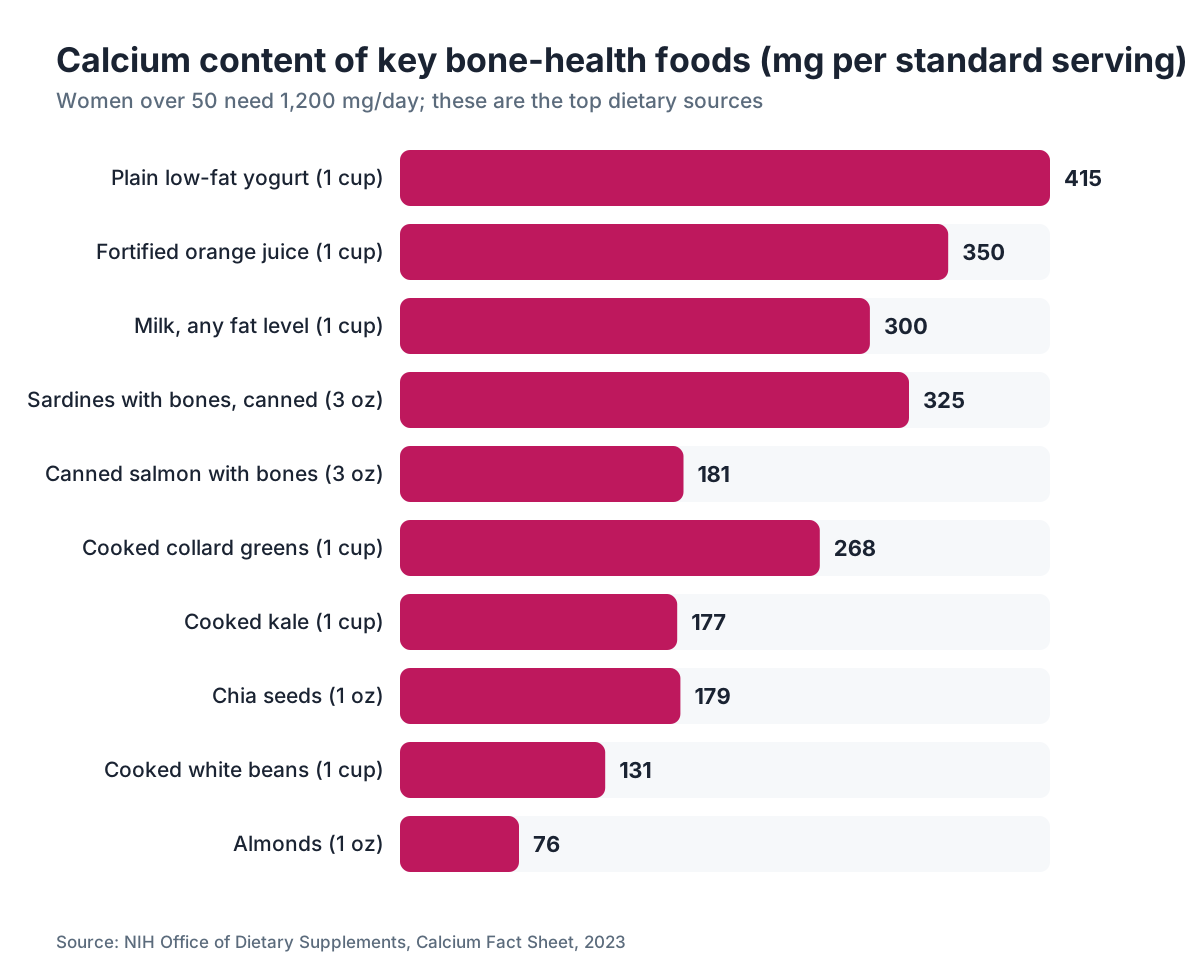
Here are the best dietary calcium sources, with amounts per standard serving:
| Food | Serving | Calcium (mg) | |---|---|---| | Plain yogurt (low-fat) | 1 cup | 415 | | Sardines with bones (canned) | 3 oz | 325 | | Firm tofu (made with calcium sulfate) | ½ cup | 253-861* | | Canned salmon with bones | 3 oz | 181 | | Cooked kale | 1 cup | 177 | | Fortified orange juice | 1 cup | ~350 | | Milk (any fat level) | 1 cup | 300 | | Cooked white beans | 1 cup | 131 | | Chia seeds | 1 oz | 179 | | Almonds | 1 oz | 76 |
*Tofu calcium varies widely by brand and coagulant used; check labels.
Sardines and canned salmon with bones deserve more attention than they get. A 3-ounce serving of sardines delivers 325 mg of calcium plus vitamin D and omega-3 fatty acids, making it one of the most efficient bone-supporting foods per dollar. If you do not eat dairy, hitting 1,200 mg from food takes deliberate planning across several sources every single day.
What role does vitamin D play, and which foods actually contain it?
Calcium without adequate vitamin D is nearly useless for bone. Vitamin D controls the proteins that transport calcium across the intestinal wall, and without enough of it, absorption of dietary calcium drops from roughly 30-40 percent to less than 15 percent [3]. The NIH RDA for women 19-70 is 600 IU per day and 800 IU for women over 70, but many endocrinologists treat patients to a target serum 25(OH)D of 30-50 ng/mL rather than chasing a fixed dose, because absorption varies enormously by body weight, skin tone, and gut health [3].
True dietary sources of vitamin D are limited:
| Food | Serving | Vitamin D (IU) | |---|---|---| | Sockeye salmon (cooked) | 3 oz | 570 | | Rainbow trout (farmed, cooked) | 3 oz | 645 | | Canned tuna in water | 3 oz | 68 | | Fortified milk | 1 cup | 115-124 | | Fortified orange juice | 1 cup | ~100 | | Egg yolk | 1 large | 41 | | UV-exposed mushrooms | ½ cup | 46-300 (variable) |
Fatty fish is the standout. A 3-ounce serving of cooked sockeye salmon covers roughly 95 percent of the RDA. But if you eat salmon twice a week and fortified milk daily and still live above the 37th parallel (roughly the latitude of San Francisco or Richmond, Virginia), you are probably not making enough vitamin D from sun exposure between October and April [3]. Most bone specialists test serum vitamin D and supplement to fill the gap rather than guessing.
Mushrooms exposed to UV light are the only meaningful plant source, but their vitamin D content swings widely and is mostly D2, which raises blood levels less efficiently than the D3 found in animal foods.
Does protein build bone or break it down?
Protein's relationship to bone confused researchers for decades. An older theory held that animal protein was "acidic" and leached calcium from bone. That hypothesis has not held up. A 2017 meta-analysis in Osteoporosis International covering 36 studies found that higher protein intake was associated with higher bone mineral density at the femoral neck and total body, with no significant harm from animal protein specifically [5]. The mechanism is practical: collagen makes up about a third of bone by weight, and collagen synthesis needs dietary protein as its raw material.
The Endocrine Society's clinical guidelines on osteoporosis note that protein intakes below 0.8 g per kilogram of body weight are associated with worse bone outcomes, particularly in older adults [6]. Many women over 50, especially those eating low-calorie diets, fall short of even that minimum.
The best protein sources for bone health tend to also bring other bone-supportive nutrients:
- Dairy (milk, Greek yogurt, cottage cheese): protein plus calcium in one package.
- Salmon and sardines: protein plus vitamin D plus omega-3 fatty acids.
- Legumes (lentils, white beans, edamame): protein plus magnesium plus some calcium.
- Eggs: protein plus vitamin D plus vitamin K2 (mostly in the yolk).
- Soy foods (tofu, tempeh, edamame): protein and, in some studies, isoflavones that have modest estrogen-receptor activity at the bone level.
Aim for at least 1.0-1.2 g of protein per kilogram of body weight if you are over 50 and active. That is higher than the official RDA but consistent with what multiple randomized trials show for preserving muscle and bone mass together.
Which less-talked-about nutrients and foods actually move the bone density needle?
Calcium and vitamin D get all the press. Several other nutrients have real evidence behind them.
Magnesium Magnesium is required for vitamin D activation and for locking calcium into the bone crystal matrix. About 60 percent of the body's magnesium lives in bone [3]. Low magnesium tracks with lower bone mineral density in epidemiological studies. Foods richest in magnesium: pumpkin seeds (156 mg per ounce), cooked black beans (60 mg per half cup), almonds (80 mg per ounce), and cooked spinach (78 mg per half cup).
Vitamin K2 Vitamin K2 (menaquinone) activates osteocalcin, a protein that anchors calcium to bone. It is distinct from vitamin K1 (phylloquinone, found in leafy greens), which mainly supports clotting. The richest food source of K2 is natto (fermented soybeans), which provides roughly 850 mcg per 100-gram serving. Cheese, egg yolks, and grass-fed butter carry smaller amounts. A 2019 review in Nutrients found that K2 supplementation at doses of 45-180 mcg/day improved bone strength markers in postmenopausal women, though fracture endpoint data are still limited [7].
Omega-3 fatty acids Several mechanisms suggest omega-3s reduce bone resorption: they lower inflammatory cytokines (like IL-6 and TNF-alpha) that activate osteoclasts, and they may improve calcium absorption in the gut. Fatty fish, walnuts, and flaxseed are the main dietary sources.
Zinc Zinc is required for osteoblast (bone-forming cell) activity and collagen cross-linking. Oysters carry more zinc per serving than any other food. Red meat, crab, pumpkin seeds, and fortified cereals are also strong sources.
Potassium Higher fruit and vegetable intake consistently tracks with better bone density, and potassium (particularly as potassium bicarbonate) appears to reduce urinary calcium excretion. Avocados, sweet potatoes, bananas, and cooked lentils are potassium-dense.
Fermented foods Fermented dairy (yogurt, kefir) and fermented soy (tempeh, natto) appear to support bone through the gut microbiome by improving calcium absorption and reducing gut inflammation. A 2021 Stanford trial published in Cell showed that fermented food consumption increased microbiome diversity and reduced inflammatory proteins [8], and gut health increasingly appears connected to bone remodeling through the gut-bone axis.
None of these nutrients works in isolation. The evidence is consistently strongest for dietary patterns rather than single-nutrient interventions.
What does the overall dietary pattern look like for maximum bone protection?
The Mediterranean diet pattern has the most consistent association with higher bone mineral density and lower fracture risk across large observational studies [9]. It emphasizes olive oil, vegetables, legumes, fish, nuts, and moderate dairy, and it happens to deliver calcium, magnesium, vitamin K1, omega-3s, and antioxidants in amounts that support bone.
A practical daily framework for bone-protective eating:
- Two to three servings of dairy or fortified dairy alternatives (to approach 900 mg calcium from food).
- Fatty fish (salmon, sardines, mackerel, trout) at least twice a week.
- One to two servings of leafy greens daily (kale, collards, bok choy, and broccoli beat spinach, whose oxalates block absorption).
- A legume serving most days (lentils, white beans, edamame, chickpeas).
- A handful of nuts or seeds (almonds, pumpkin seeds, walnuts) for magnesium and zinc.
- Egg yolks regularly for vitamin D, K2, and protein.
- Natto or aged cheese several times weekly for vitamin K2 if you can stomach natto (it is an acquired taste).
- Colorful vegetables and fruit broadly for potassium and antioxidants.
What you cut matters too. More than one drink a day accelerates bone loss. Very high sodium intakes drive up urinary calcium excretion. Carbonated soft drinks were long blamed, but the current evidence points to the displacement of milk and dairy in soda drinkers, not the phosphoric acid directly, at typical intake levels.
Caffeine increases urinary calcium loss slightly, but the effect is small and offset by taking calcium with the caffeinated drink, which is why coffee with milk is not a bone problem for most people.
How much can diet realistically increase bone density, and how long does it take?
This is where honesty matters. Diet built for bone can meaningfully slow loss and, in people with frank deficiency (particularly of calcium and vitamin D), can produce measurable density gains. A 2019 meta-analysis of calcium and vitamin D supplementation trials found average gains of 0.7-1.5 percent in femoral neck BMD over 1-2 years in populations starting from deficiency [4]. Those are real but modest numbers on a DEXA scan.
For a woman who already eats an adequate diet and whose bone loss is driven mainly by estrogen withdrawal after menopause, dietary optimization alone will not stop or reverse the loss. The biology is blunt: osteoclast suppression needs estrogen (or a drug that mimics its effect on bone, like bisphosphonates or SERM therapy). This is why hormone replacement therapy reduces fracture risk by roughly 30-40 percent in the WHI trial, an effect no dietary intervention has matched [10].
Here is the realistic expectation. Good diet keeps the floor from dropping further, reduces how much bone-protective treatment you need, and keeps the gains from any medical treatment from eroding. A bone density test (DEXA scan) gives you a baseline so you can measure what is happening, rather than guessing. The US Preventive Services Task Force recommends screening all women 65 and older, and younger postmenopausal women with risk factors [1].
Resistance training amplifies every dietary intervention. The mechanical load of lifting weights stimulates osteoblasts directly, independent of nutrition. Diet and exercise together beat either one alone by a wide margin.
Are there foods that actively harm bone density?
Yes, and a few of them are worth naming.
Alcohol above one drink daily suppresses osteoblast activity directly and interferes with vitamin D activation in the liver. Chronic heavy drinking is one of the stronger dietary predictors of osteoporosis.
Very low calorie diets consistently harm bone, both through protein and micronutrient shortfalls and through the hormonal effects of energy deficit. Women using GLP-1 receptor agonists like semaglutide for weight loss need to know that rapid weight loss can speed bone loss, partly because mechanical unloading cuts the stimulus for bone formation. The STEP trials noted that semaglutide users had lean mass and bone mass reductions alongside fat loss [10]. If you are using or considering semaglutide for weight loss, high protein intake, resistance training, and bone density monitoring are practical protections. WomenRx providers routinely walk through these tradeoffs when prescribing GLP-1 therapies to women over 40.
High-sodium diets Consuming more than 3,400 mg of sodium daily (the current American average sits around 3,400 mg) increases urinary calcium losses. Each 1,000 mg of extra sodium costs roughly 40-60 mg of calcium lost in urine [3].
Excessive vitamin A (retinol, not beta-carotene) at intakes above 10,000 IU per day competes with vitamin D at the receptor level and has been linked to lower bone density in some Nordic population studies. Liver and cod liver oil are the only realistic dietary sources at potentially excessive levels.
Phytate-heavy diets without variety Whole grains and legumes contain phytates that reduce calcium and zinc absorption. This does not mean avoiding whole grains, just not leaning on them as your primary calcium source and eating varied meals rather than the same grain-heavy plate every day.
Does soy help or hurt bone density in women?
Soy isoflavones (genistein, daidzein) bind weakly to estrogen receptors, including the receptors on osteoblasts, and there has been real hope that soy could act as a dietary estrogen-mimic for bone protection in postmenopausal women. The evidence is mixed but leaning modestly positive at adequate intakes.
A 2011 meta-analysis in the European Journal of Clinical Nutrition found that soy isoflavone supplementation modestly reduced bone resorption markers and improved lumbar spine BMD in postmenopausal women, particularly those with lower baseline isoflavone intake (typical in Western populations) [9]. The effect size is small and inconsistent, and isoflavone supplements are not equivalent to food-form soy.
Edamame, tofu, tempeh, and miso provide isoflavones alongside protein, calcium (in tofu made with calcium sulfate), and other beneficial compounds. Eating them several times a week is a reasonable strategy for women looking to increase bone density naturally through diet. What they will not do is replicate the bone-protective effect of estrogen therapy. For that, the magnitude simply does not compare.
How does the picture change if you are in perimenopause or postmenopause?
The dietary targets do not shift much by menopausal stage, but the urgency does, and so does the gap between what diet contributes and what your body actually needs.
In the years just before and just after the final menstrual period (roughly ages 45-55 for most women, though when menopause starts varies a lot), bone loss outruns what dietary calcium can offset. The NIH estimates that women can lose up to 20 percent of their bone density in the 5-7 years after menopause [1]. Calcium and vitamin D during this window work more as loss-limitation than active rebuilding.
For postmenopausal women, the current guidance from the North American Menopause Society (NAMS) and the Endocrine Society is that dietary optimization is necessary but usually not sufficient on its own. NAMS states that "adequate calcium and vitamin D intake and regular weight-bearing and muscle-strengthening exercise are recommended for all women to maintain bone health" as the baseline, with pharmacologic management layered on top based on DEXA results and fracture risk scores [2].
If you are in your late 40s or 50s and have not had a DEXA scan, get one. It gives you real data rather than estimates. Hormone replacement therapy started early in menopause (before age 60 and within 10 years of the last period) has a favorable benefit-risk profile for bone in most healthy women, according to NAMS's 2022 position statement [2]. That is a conversation worth having with a clinician who specializes in this, whether through a menopause-focused practice or a telehealth service like WomenRx that focuses on menopause care.
The estrogen patch, oral estrogen, and other formulations all protect bone. Diet stays the foundation regardless of which path you choose.
What does a practical bone-density meal plan actually look like for a week?
Abstract nutrient targets help less than knowing what a bone-protective day of eating looks like on a plate. Below is a framework, not a rigid plan, built around reaching roughly 1,200 mg calcium and 800 IU vitamin D from food each day, with adequate protein and supporting micronutrients.
Breakfast options (rotate)
- Greek yogurt (415 mg Ca) + chia seeds + berries + a hard-boiled egg (vitamin D, protein).
- Fortified oatmeal made with fortified milk (120+300 mg Ca) + a handful of almonds + an egg.
- Scrambled eggs with cooked spinach + cottage cheese + a glass of fortified OJ.
Lunch options (rotate)
- Sardines on whole grain toast with sliced avocado (325 mg Ca, vitamin D, omega-3, potassium).
- Lentil soup with kale added in the last 5 minutes + a glass of milk.
- Tofu stir-fry (calcium-set tofu) with bok choy, edamame, and sesame seeds over brown rice.
Dinner options (rotate)
- Baked salmon (570 IU vitamin D) + roasted broccoli + white beans with olive oil.
- Grilled mackerel + cooked collard greens + sweet potato.
- Tempeh with roasted vegetables + a side of miso soup + pickled natto if tolerated.
Snacks
- Kefir or a small wedge of aged cheese + walnuts.
- Pumpkin seeds + a piece of fruit.
- Edamame (in shell, lightly salted).
This is not a calorie-restricted plan. Restricting calories hard while trying to preserve bone is a tradeoff that rarely goes well. Under-eating and under-nourishment are genuine bone risks, particularly for women who have been dieting chronically for years.
Should you take supplements if you can't hit calcium or vitamin D targets from food alone?
Get as much as you can from food first. That said, the math is clear: many women, especially those who avoid dairy or live in low-sunlight climates, cannot reach 1,200 mg calcium or adequate vitamin D from food alone without extraordinary effort.
For calcium supplements, the evidence favors calcium citrate over calcium carbonate in women over 50, because citrate does not need stomach acid for absorption and postmenopausal women frequently have reduced gastric acid production. Take no more than 500 mg of supplemental calcium at a time, since absorption efficiency falls sharply above that threshold. Space doses several hours apart. Total intake from food plus supplements should stay below 2,000-2,500 mg per day to avoid the kidney stone and possible cardiovascular concerns [4].
For vitamin D, cholecalciferol (D3) raises serum 25(OH)D more effectively than ergocalciferol (D2) and is the preferred form. Most women over 50 in northern latitudes need 1,000-2,000 IU of supplemental D3 daily to hold serum levels above 30 ng/mL, but individual variation is large and the only way to know is to test [3].
For vitamin K2, dietary MK-7 (from natto or supplements) at 90-180 mcg per day is the form with the longest half-life and most evidence. If you are on warfarin or other anticoagulants, talk to your prescriber before starting K2; it interacts with clotting medications.
Magnesium glycinate or citrate (200-400 mg at night) is a reasonable supplement if your diet falls short and you get muscle cramps or sleep disruption, both of which can also be magnesium-insufficiency signs in perimenopausal women. These are not obscure fringe supplements. They are basic gap-filling when food does not cover the bases.
Frequently asked questions
What is the single best food for bone density?
No single food does it alone, but sardines with bones come closest to a one-stop source: a 3-ounce serving provides 325 mg of calcium, about 350 IU of vitamin D, high-quality protein, and anti-inflammatory omega-3 fatty acids. If you tolerate dairy, plain yogurt is a close second with 415 mg calcium per cup plus protein and probiotics that may improve calcium absorption.
Can you increase bone density after 50 through diet alone?
Diet can slow bone loss after 50 and, in women with genuine calcium or vitamin D deficiency, produce modest measurable gains (roughly 0.7-1.5 percent at the femoral neck over 1-2 years in trials). It rarely reverses significant menopause-related bone loss on its own because that loss is driven mainly by estrogen withdrawal, not nutrient deficiency. Diet plus resistance training plus, in many cases, hormone or pharmacologic therapy is the realistic picture.
How much calcium per day do women over 50 need?
The NIH Recommended Dietary Allowance for women 51 and older is 1,200 mg per day, up from 1,000 mg for women 19-50. This higher target accounts for reduced calcium absorption efficiency after estrogen loss. Food sources are preferred. Supplements can fill the gap but should be capped so total calcium intake (food plus supplements combined) stays below 2,000-2,500 mg per day.
Are dairy products necessary for strong bones, or can you get enough calcium without them?
Dairy is the most convenient concentrated calcium source, but it is not biologically necessary. You can meet 1,200 mg daily from sardines and salmon with bones, calcium-set tofu, cooked kale and bok choy, fortified plant milks, white beans, chia seeds, and almonds. It takes deliberate planning across multiple meals. If you avoid all dairy and do not plan carefully, you will very likely fall short.
Does coffee or soda hurt bone density?
Caffeine causes small increases in urinary calcium loss, but the effect is largely offset by adding milk to your coffee. The bigger concern with soda is displacement: people who drink a lot of soda tend to drink less milk and calcium-rich beverages. At typical intake levels, carbonated water and even cola have not been shown to directly harm bone density in adults eating adequate calcium. Limit soda mainly to protect your overall nutrient pattern.
What vegetables are highest in calcium for bone health?
Cooked kale, bok choy, broccoli, and collard greens are the best vegetable calcium sources because their calcium absorbs relatively well (around 40-60 percent). Cooked spinach has high listed calcium but very low absorption because oxalic acid binds the mineral. One cup of cooked collard greens provides about 268 mg of calcium; one cup of cooked kale provides around 177 mg.
How does magnesium affect bone density?
Magnesium is required for vitamin D activation and for the calcium-phosphate crystal structure of bone. About 60 percent of the body's magnesium is stored in bone. Low magnesium consistently tracks with lower bone mineral density in epidemiological studies. The best food sources are pumpkin seeds (156 mg per ounce), almonds (80 mg per ounce), cooked black beans (60 mg per half cup), and cooked spinach (78 mg per half cup).
Is vitamin K2 really important for bones, and where do I get it?
Vitamin K2 activates osteocalcin, the protein that anchors calcium into bone mineral. Evidence from randomized trials suggests K2 supplementation at 45-180 mcg per day improves bone strength markers in postmenopausal women, though fracture endpoint data remain limited. The richest food source by far is natto (fermented soybeans, roughly 850 mcg per 100 g). Aged cheeses, egg yolks, and chicken liver also provide smaller amounts.
Do GLP-1 drugs like semaglutide affect bone density?
Yes. The STEP trials reported that semaglutide users lost lean mass alongside fat mass, and bone mineral density declined modestly in some studies, likely from reduced mechanical loading as body weight dropped. Women using semaglutide or tirzepatide for weight loss should prioritize protein intake (at least 1.0-1.2 g per kg body weight), do resistance training consistently, and discuss DEXA monitoring with their provider if they have other bone risk factors.
What foods should I avoid if I have low bone density?
Limit alcohol to no more than one drink daily (heavy drinking directly suppresses osteoblasts and impairs vitamin D metabolism). Cut very high sodium intakes, which increase urinary calcium loss at roughly 40-60 mg extra calcium per 1,000 mg excess sodium. Avoid very low calorie diets. Watch excessive preformed vitamin A from liver and cod liver oil. Do not over-rely on high-oxalate foods like spinach as your sole calcium source.
How long does it take to see improvement in bone density from dietary changes?
Bone remodeling cycles take roughly 3-6 months each, and meaningful DEXA-measurable changes generally take 1-2 years. Studies of calcium and vitamin D correction in deficient populations show average femoral neck BMD gains of 0.7-1.5 percent over this period. If your baseline nutrition was adequate and your bone loss is primarily hormone-driven, dietary changes alone are unlikely to show up clearly on a DEXA without addressing the hormonal component.
Can fermented foods like yogurt and kefir actually help with bone density?
Fermented dairy provides calcium plus beneficial bacteria that may improve calcium absorption and reduce gut inflammation through the gut-bone axis. A 2021 Stanford trial in Cell showed fermented food consumption increased microbiome diversity and reduced inflammatory proteins. Yogurt and kefir also happen to be among the highest-calcium foods per serving. That combination of calcium content and microbiome support makes them among the most evidence-supported bone-health foods.
Does protein help or hurt bones?
Current evidence says protein helps. A 2017 meta-analysis of 36 studies in Osteoporosis International found higher protein intake was associated with higher bone mineral density at the femoral neck and total body. Protein is the raw material for collagen, which makes up about a third of bone by weight. Women over 50 should aim for 1.0-1.2 g per kg body weight daily, above the basic RDA of 0.8 g/kg but consistent with bone and muscle preservation evidence.
What is the connection between hormones and diet for bone health?
Estrogen suppresses osteoclasts (bone-breaking cells), so when estrogen drops in menopause, bone loss accelerates regardless of diet. Diet provides the raw materials; estrogen provides the regulatory signal. Optimizing calcium, vitamin D, protein, and magnesium intake limits how fast the floor drops and maximizes the response to any hormonal or pharmacologic treatment. The two work together; neither fully substitutes for the other.
Sources
- NIH Office of Dietary Supplements, Calcium Fact Sheet for Health Professionals
- North American Menopause Society (NAMS), 2022 Hormone Therapy Position Statement
- NIH Office of Dietary Supplements, Vitamin D Fact Sheet for Health Professionals
- Bolland MJ et al., BMJ 2010, Calcium supplements and cardiovascular events; and Weaver CM et al., Osteoporosis International 2016, meta-analysis of calcium plus vitamin D
- Shams-White MM et al., Osteoporosis International 2017, dietary protein and bone health meta-analysis
- Endocrine Society Clinical Practice Guidelines, Osteoporosis in Men and Women
- Mott A et al., Nutrients 2019, vitamin K2 and bone health in postmenopausal women (systematic review)
- Wastyk HC et al., Cell 2021, Gut-microbiota-targeted diets modulate human immune status
- Shen CL et al., European Journal of Clinical Nutrition 2011, meta-analysis of soy isoflavones and bone in postmenopausal women
- Wilding JPH et al., NEJM 2021, STEP 1 trial (semaglutide 2.4 mg for weight loss)