Foods to improve bone density: what actually works
TL;DR: Calcium, vitamin D, protein, and magnesium are the four nutrients with the strongest evidence for protecting bone density. Dairy, leafy greens, fatty fish, nuts, and seeds are your best food sources. Women lose up to 20% of bone mass in the first five to seven years after menopause, making diet changes most urgent in perimenopause and beyond.
Why does bone density drop so fast for women?
Bone is living tissue. It rebuilds itself constantly in a cycle of resorption (breaking down old bone) and formation (laying down new bone). Before menopause, estrogen keeps that cycle roughly balanced. After estrogen drops, resorption outpaces formation and bone mineral density falls fast.
The National Osteoporosis Foundation estimates that women can lose up to 20% of their bone density in the five to seven years immediately following menopause [1]. That is not a slow, steady decline. It is a cliff edge.
Osteoporosis affects roughly 10 million Americans, and another 44 million have low bone mass (osteopenia) that puts them at risk [2]. About 80% of those 10 million are women. One in two women over 50 will break a bone because of osteoporosis in her lifetime.
Here is the part worth holding onto: bone loss is not inevitable, and food is one of the strongest levers you have. Diet alone will not replace the protection estrogen provided, but the research is clear that low calcium, vitamin D, and protein speed up loss that adequate intake slows. These are not add-ons. They are the base of everything else you might do.
If you are in perimenopause or postmenopause and have not had a bone density scan, that is your first practical step. A bone density test gives you a baseline DEXA T-score so you know whether you are working with normal density, osteopenia, or osteoporosis, which changes how aggressive your dietary and medical strategy needs to be.
How much calcium do women actually need per day?
The National Institutes of Health Office of Dietary Supplements sets the Recommended Dietary Allowance for calcium at 1,000 mg per day for women aged 19 to 50, and 1,200 mg per day for women aged 51 and older [3]. Most American women get somewhere between 700 and 900 mg daily, which means the majority are running a consistent deficit at exactly the age when it matters most.
The goal is to get calcium from food first. Supplement calcium in doses larger than 500 mg at a time is not absorbed efficiently, and several large observational studies have raised questions about whether high-dose calcium supplements (not food calcium) may increase cardiovascular risk, though that evidence is contested. Food calcium does not carry the same concern.
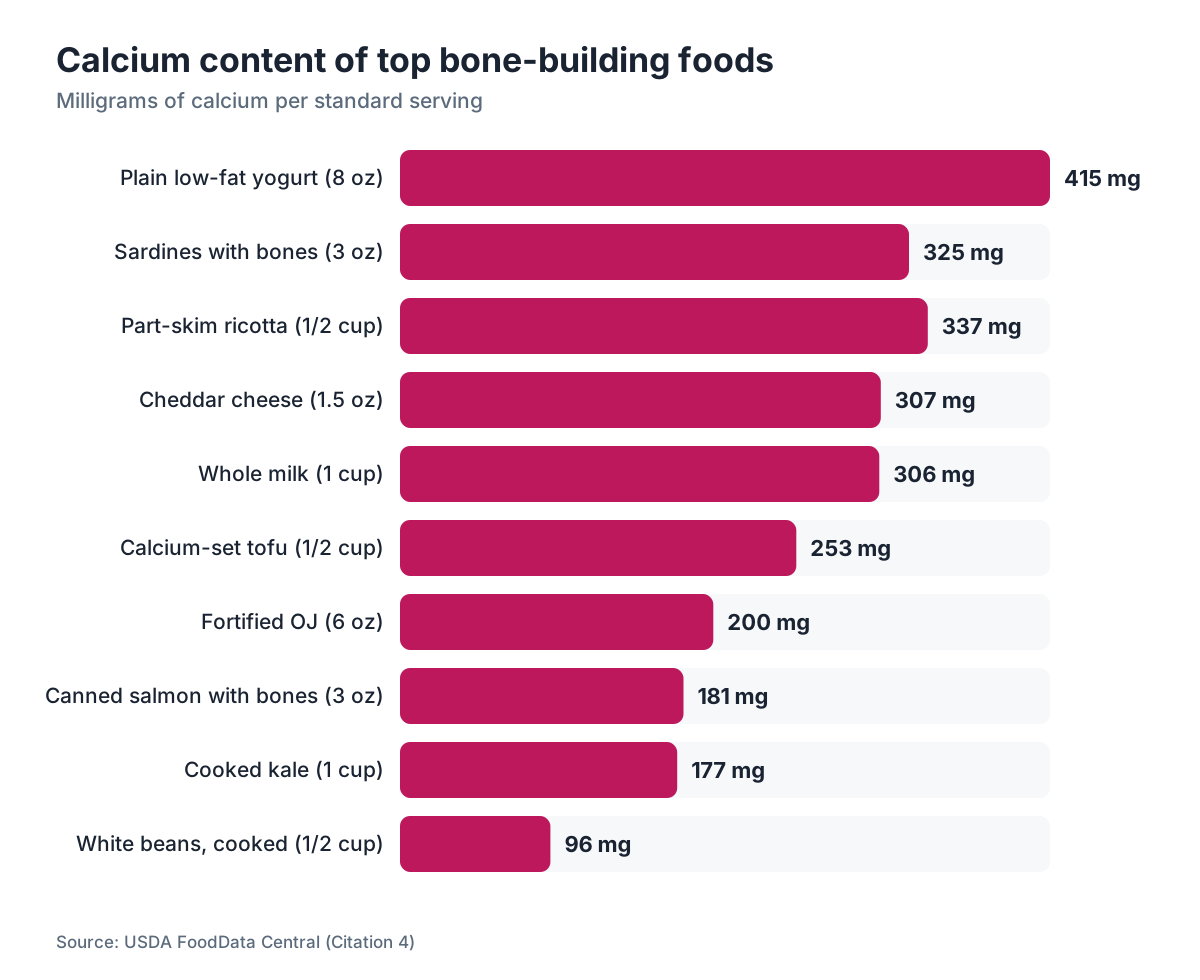
Here is what 1,200 mg looks like across a single day:
| Food | Serving | Calcium (mg) | |---|---|---| | Plain low-fat yogurt | 8 oz | 415 | | Part-skim ricotta | 1/2 cup | 337 | | Whole milk | 1 cup | 306 | | Cheddar cheese | 1.5 oz | 307 | | Cooked kale | 1 cup | 177 | | Cooked bok choy | 1 cup | 158 | | Fortified orange juice | 6 oz | 200 | | Canned sardines with bones | 3 oz | 325 | | Canned salmon with bones | 3 oz | 181 | | Firm tofu (made with calcium sulfate) | 1/2 cup | 253 | | Almonds | 1 oz | 76 | | White beans, cooked | 1/2 cup | 96 |
Source: USDA FoodData Central [4]
A single cup of yogurt at breakfast and a 3-ounce serving of sardines at lunch gets you to roughly 740 mg before dinner. A cup of cooked kale and some white beans at dinner closes the gap. This is achievable without dairy if you build the habit deliberately.
One caveat matters here. Spinach, beet greens, and Swiss chard are high in oxalates, which bind calcium in the gut and cut absorption. Do not rely on spinach as a primary calcium source even though its raw calcium content looks impressive. Kale, bok choy, and broccoli are low-oxalate greens with much better calcium bioavailability [3].
What does vitamin D do for bones, and how much do you need?
Vitamin D does not build bone directly. What it does is regulate how much calcium your intestines absorb. Without enough vitamin D, your body absorbs only 10 to 15% of dietary calcium. With adequate vitamin D, absorption jumps to 30 to 40% [9]. That gap is huge when you are trying to hit 1,200 mg of usable calcium a day.
The NIH recommends 600 IU per day for women aged 19 to 70, and 800 IU for women over 70 [3]. The Endocrine Society's clinical practice guideline notes that many adults, particularly those who are older, obese, have darker skin, or live at higher latitudes, may need 1,500 to 2,000 IU daily to keep blood levels above 20 ng/mL, which is the minimum sufficient threshold [5].
Food sources of vitamin D are limited. Fatty fish are by far the best:
- Swordfish (3 oz, cooked): 566 IU
- Salmon (3 oz, cooked): 447 IU
- Tuna (3 oz, canned in water): 154 IU
- Fortified milk (1 cup): 115-124 IU
- Fortified orange juice (1 cup): 137 IU
- Egg yolk (1 large): 44 IU
Source: NIH Office of Dietary Supplements [9]
Getting to even 600 IU from food alone means eating a serving of salmon nearly every day. Most women need a supplement to close this gap, and that is one situation where supplementing makes sense. Ask your clinician to check your 25-hydroxyvitamin D level. A value below 20 ng/mL is deficient; 20 to 50 ng/mL is the generally accepted sufficient range [5].
Sunlight also produces vitamin D in the skin, but the amount swings wildly by season, latitude, skin tone, and sunscreen use. You cannot reliably quantify it. Do not count on it as your primary source.
Does protein help or hurt bone density?
An older theory held that high protein made blood more acidic, which pulled calcium from bone to buffer pH. That theory has not held up. The current evidence says adequate protein supports bone health, and low protein tracks with worse outcomes after fracture and lower bone density in older adults.
A 2017 meta-analysis in the American Journal of Clinical Nutrition covering randomized trials and observational studies found that higher protein intake was associated with modestly higher bone mineral density at the femoral neck, one of the highest-risk fracture sites [6]. The association was particularly strong in women over 60.
The general recommendation for adults is 0.8 grams of protein per kilogram of body weight per day, but many bone and muscle researchers argue that women over 50 do better at 1.2 to 1.6 grams per kilogram, especially if they are active. For a 150-pound (68 kg) woman, that works out to 82 to 109 grams of protein daily.
Good protein sources for bone double as calcium sources: sardines, salmon with bones, dairy, edamame, tofu, and beans. Grass-fed meat and poultry give you protein without calcium but build overall muscle mass, which protects bone indirectly by cutting fall risk.
The worst dietary pattern for bone is low protein plus low calcium. That combination shows up over and over in the diets of older women who are restricting calories for weight loss without paying attention to nutrient density. If you are using a GLP-1 medication like semaglutide, this matters acutely. GLP-1s suppress appetite hard, which makes it easy to under-eat protein and calcium without noticing. WomenRx clinicians who prescribe semaglutide for weight loss address this directly in treatment protocols, because fast weight loss without intentional protein and calcium tracking can speed up bone loss.
Which minerals besides calcium support bone density?
Calcium gets all the attention, but bone mineral is not pure calcium. It is a crystalline structure called hydroxyapatite that contains calcium, phosphorus, magnesium, zinc, manganese, copper, and fluoride. Ignore the supporting cast and you undermine the whole effort.
Magnesium is the one most worth watching. About 60% of the body's magnesium is stored in bone [3]. Magnesium is required for vitamin D to convert to its active form, so low magnesium can jam the whole calcium-absorption chain even when vitamin D intake looks fine. The RDA for magnesium is 310 to 320 mg per day for adult women. Best food sources include pumpkin seeds (1 oz = 156 mg), chia seeds (1 oz = 111 mg), almonds (1 oz = 80 mg), dark chocolate (1 oz = 64 mg), cooked spinach (1/2 cup = 78 mg), and black beans (1/2 cup = 60 mg) [3].
Phosphorus works alongside calcium in hydroxyapatite. Most Americans get plenty from protein-rich foods, meat, fish, and dairy. Deficiency is rare on a Western diet.
Zinc supports the activity of osteoblasts (bone-building cells). Oysters, red meat, poultry, and pumpkin seeds are top sources.
Potassium has a mild alkalinizing effect that may reduce urinary calcium loss. Fruits and vegetables, especially bananas, sweet potatoes, and avocados, are the main sources.
Vitamin K2 (menaquinone) directs calcium into bone rather than arteries, working through a protein called osteocalcin. Natto (fermented soybeans) has by far the highest K2 content of any food. Aged cheeses and egg yolks contain smaller amounts. The evidence for K2 supplements is suggestive but not solid enough for a firm recommendation yet. Eating fermented dairy and eggs is sensible without overstating what the data shows.
What are the best overall foods to improve bone density?
Want a practical shortlist? These are the foods with the best evidence and the best nutrient density per calorie for bone health:
-
Dairy products (yogurt, kefir, cheese, milk): High calcium, good protein, often fortified with vitamin D. Fermented dairy like yogurt and kefir also supports gut health, which affects calcium absorption.
-
Fatty fish with edible bones (sardines, canned salmon): Calcium from bones, vitamin D, omega-3 fatty acids (which have emerging evidence for reducing bone resorption), and protein in one package. Sardines are one of the most bone-dense foods per dollar on the market.
-
Low-oxalate leafy greens (kale, bok choy, broccoli, collard greens): Good calcium with high bioavailability, plus magnesium, vitamin K1, and potassium.
-
Tofu made with calcium sulfate: A single half-cup serving can top 250 mg of calcium, and it is a complete protein source. Check the label; not all tofu uses calcium sulfate as the coagulant.
-
Nuts and seeds (almonds, chia seeds, pumpkin seeds): Magnesium, phosphorus, zinc, and healthy fats. Not high enough in calcium to anchor your intake, but meaningful as daily additions.
-
Fortified foods (orange juice, plant milks, breakfast cereals): Useful for women who avoid dairy, though bioavailability of added calcium varies. Calcium carbonate in fortified foods absorbs best when taken with food.
-
Legumes (white beans, edamame, black beans): Calcium, magnesium, protein, and fiber. Edamame also contains isoflavones, plant estrogens with modest evidence for reducing bone resorption in postmenopausal women.
-
Eggs: Vitamin D in the yolk, protein, and phosphorus. Not a calcium source, but they support the broader nutritional picture.
The dietary pattern that consistently correlates with better bone outcomes in research is the Mediterranean diet: high in fruits, vegetables, legumes, whole grains, fish, and olive oil, with moderate dairy. A 2020 review in Nutrients found that adherence to a Mediterranean-style diet was associated with higher bone mineral density and lower fracture risk across multiple cohort studies [7].
Which foods and habits hurt bone density?
The science on bone-damaging dietary habits is fairly consistent, and some of these are things many women do every day without knowing the effect.
High sodium intake increases urinary calcium excretion. For every 2,300 mg of sodium excreted, roughly 40 mg of calcium follows it out in urine [3]. If you are eating a high-sodium diet (the average American consumes about 3,400 mg daily) and not compensating with higher calcium intake, you are running a chronic calcium deficit. Ultra-processed foods, canned soups, deli meats, and restaurant food are the main sodium sources.
Excessive alcohol is directly toxic to osteoblasts and impairs calcium absorption. More than two drinks per day consistently tracks with lower bone density and higher fracture risk. Moderate intake (one drink per day or fewer) does not appear harmful.
Very high caffeine intake, above about 400 mg per day (roughly four cups of coffee), has a mild calcium-excretion effect. If you are already hitting your calcium targets, this is unlikely to matter. If you are calcium-deficient and drinking five cups of coffee, the combination compounds the deficit.
Extremely low calorie diets, below 1,200 to 1,400 calories per day for most women, almost always compromise calcium and protein intake. This is not theoretical. Women who crash-diet repeatedly, or who have a history of restrictive eating, show measurably lower bone density on DEXA scans.
Phytic acid in whole grains and oxalates in certain vegetables (spinach, rhubarb, beet greens) bind calcium and reduce absorption. This does not mean avoid whole grains. It means do not count on the calcium in spinach, and build your intake on higher-bioavailability sources.
Carbonated soft drinks, particularly colas, contain phosphoric acid, which some research suggests may promote calcium loss from bone, especially in women who drink soda instead of dairy. The effect looks stronger with cola specifically than with other carbonated drinks.
How does menopause change what you need to eat for bone health?
Everything above matters more once you enter perimenopause. Estrogen protects bone by suppressing osteoclast (bone-resorbing cell) activity. As estrogen falls during the menopause transition, osteoclasts get more active and bone loss speeds up even if nothing else changes in your diet or lifestyle.
The perimenopause age range is typically 40 to 51, and bone loss can begin before your last period. Women who reach menopause before 45, whether naturally or surgically, face a longer stretch of accelerated loss and may need more aggressive intervention. If you are unsure when menopause starts for you or what to expect, this overview of when does menopause start is worth reading.
For women in perimenopause and postmenopause, the practical dietary shifts are:
Hit 1,200 mg of food calcium daily. This is a hard target, not a rough guideline. Track it for a few days to calibrate. Most women are shocked by how far they fall short.
Get a vitamin D level checked. Do not guess. Supplement to keep 25-hydroxyvitamin D above 20 ng/mL, ideally 30 to 50 ng/mL [5].
Raise protein to at least 1.2 grams per kilogram of body weight. This preserves muscle mass at the same time, which matters for fall prevention as much as for bone.
Some postmenopausal women use hormone replacement therapy to slow bone loss. Hormone replacement therapy is about more than hot flashes. Estrogen therapy is FDA-approved for the prevention of postmenopausal osteoporosis, and a progesterone component is typically added for women with a uterus [10]. If you are postmenopausal and your DEXA T-score is already in osteopenia range, the conversation with your clinician needs to cover both diet and whether HRT or a bone-specific medication makes sense for you. Diet alone may not be enough once significant loss has happened.
Does exercise work together with diet to build bone density?
Yes, and it is not optional if you want to actually improve density rather than just slow the decline. Diet supplies the raw materials. Mechanical loading is what tells your body to use those materials to build bone.
Weight-bearing aerobic exercise (walking, hiking, jogging, dancing) stimulates bone formation in the lower body. Resistance training (weights, bands, bodyweight work) stimulates bone in the spine and hips, the highest-risk fracture sites. Balance training (yoga, tai chi) reduces fall risk.
A Cochrane review found that walking combined with resistance exercise was associated with reduced risk of vertebral fractures in postmenopausal women, though the evidence for hip fractures was less definitive [8]. Exercise research is harder to run than drug trials, but the directional evidence is consistent.
The bone response depends on progressive overload. A 20-minute walk that felt hard two years ago does not stimulate bone adaptation if it now feels easy. You have to keep adding load, speed, or complexity. That is why resistance training with progressively heavier weights shows stronger bone-density effects than walking alone.
Combine diet and exercise and you beat either one alone. Studies pairing adequate calcium with weight-bearing exercise show greater lumbar spine bone density gains than exercise by itself [8]. The mechanical signal and the nutritional substrate work together.
How to improve bone density naturally: a realistic timeline and approach
The research is honest about one thing: you cannot rebuild bone density to where it was at 30. The practical goal is to slow loss, preserve what you have, and maybe achieve small density gains (typically 1 to 3% per year at most) with aggressive dietary and exercise work.
Timeline expectations:
Dietary changes improve biomarkers of bone turnover (like urinary N-telopeptides) within weeks to months. Actual changes in DEXA bone mineral density take 12 to 24 months to become measurable, because the machines have a margin of error of about 1 to 2% and true biological change happens slowly.
Do not expect a two-month diet overhaul to show up on a DEXA scan. That is not how bone biology works. The payoff is measured in decade-long fracture risk, not quarterly scans.
A realistic natural approach:
Week 1 to 4: Track calcium intake for three days using a free tool like Cronometer. Most women find they are getting 600 to 800 mg when they need 1,200 mg. Pick the two or three food swaps that close the gap. Add a daily serving of yogurt, swap a meal to include canned salmon, or start smoothies with fortified plant milk.
Month 1 to 3: Get blood work including 25-hydroxyvitamin D, a metabolic panel, and ideally a baseline DEXA if you have not had one. Adjust vitamin D based on your actual level. Start resistance training two to three times per week.
Month 3 to 12: Refine protein intake, cut sodium, limit alcohol, and keep exercise consistent. If you are postmenopausal and your T-score is below negative 2.5 (osteoporosis), discuss pharmacological options (bisphosphonates, RANK-L inhibitors, or HRT) with your clinician, because diet and exercise alone are unlikely to prevent fracture at that level.
Year 1 to 2: Repeat DEXA. Compare T-scores and Z-scores. A stable score in a postmenopausal woman is a genuine win. A slight increase is excellent. A continued steep decline despite dietary and exercise work warrants a medication discussion.
WomenRx offers hormone care for women in perimenopause and postmenopause, including evaluation of whether hormone replacement therapy or an estrogen patch is appropriate for bone protection alongside lifestyle measures.
Are calcium and vitamin D supplements necessary, or can you get enough from food?
For most women under 50 eating a reasonably varied diet, food can cover calcium needs. For women over 50 who need 1,200 mg daily, food can still do it, but it takes deliberate daily planning that most people do not sustain.
The pragmatic answer: try food first, measure whether you are actually hitting your target, and supplement the gap (usually 400 to 600 mg of calcium carbonate or calcium citrate per day) if food alone is not enough. Calcium citrate absorbs without needing food or stomach acid, which makes it the better choice for women over 60 or those taking proton pump inhibitors.
Vitamin D supplementation is more universally warranted for perimenopausal and postmenopausal women, because food sources are so limited and deficiency is so common. The safest starting point for most adults is 1,000 to 2,000 IU of vitamin D3 (cholecalciferol) daily, adjusted based on blood levels [5].
Magnesium supplementation at 200 to 400 mg per day (as glycinate or malate for best tolerance) is reasonable for women whose diet is low in nuts, seeds, and legumes. Magnesium oxide is the cheapest form but also the least well absorbed and most likely to cause diarrhea.
Skip the "bone health" supplement stacks marketed as complete formulas. Many contain subtherapeutic doses of multiple minerals and add cost without evidence of benefit beyond their individual parts. Spend money on food quality and fill specific measured gaps with specific supplements.
Frequently asked questions
How long does it take to improve bone density with diet changes?
DEXA-measurable changes in bone mineral density typically take 12 to 24 months because DEXA has a margin of error of roughly 1 to 2% and biological change is slow. Bone turnover markers in blood and urine may improve faster, within weeks to months. The goal in most postmenopausal women is to slow loss and stabilize density, with small gains of 1 to 3% per year at best with aggressive diet and exercise.
Can you reverse osteoporosis with food alone?
No, not typically. Food and exercise can slow bone loss and produce modest density gains, but women who already have a T-score below negative 2.5 (osteoporosis diagnosis) almost always need pharmacological treatment, such as bisphosphonates, denosumab, or hormone therapy, alongside dietary changes. Diet is foundational but not sufficient as sole treatment once significant bone loss has occurred.
Is dairy necessary for strong bones, or can you get calcium without it?
Dairy is the most efficient calcium source per calorie, but it is not necessary. Sardines and canned salmon with bones, calcium-set tofu, fortified plant milks, low-oxalate leafy greens like kale and bok choy, and white beans all provide meaningful calcium. Non-dairy women need to plan more carefully to reach 1,200 mg daily, but it is achievable with consistent effort.
What vitamin D level should I aim for to protect my bones?
The Endocrine Society recommends maintaining a serum 25-hydroxyvitamin D level above 20 ng/mL as the minimum sufficient threshold, with many clinicians targeting 30 to 50 ng/mL for bone protection. Get a blood test to know your actual level before supplementing. Women over 50 and those at northern latitudes often need 1,500 to 2,000 IU of vitamin D3 daily to stay in the sufficient range.
Does coffee or caffeine weaken bones?
Modestly, at very high intakes. Caffeine above roughly 400 mg per day (four or more cups of coffee) increases urinary calcium excretion slightly. For women who hit their daily calcium target of 1,200 mg, this effect is unlikely to be clinically meaningful. For women already running a calcium deficit, cutting excess caffeine and adding a calcium-rich food makes more sense than eliminating coffee.
Which leafy greens are best for bone density?
Kale, bok choy, broccoli, and collard greens are the best leafy green choices for bone calcium because they are low in oxalates, making their calcium highly bioavailable (estimated absorption around 49 to 61%). Spinach and Swiss chard look impressive on nutrition labels but are high in oxalates, which bind calcium in the gut and reduce absorption to as low as 5%.
Does protein help or hurt bone density?
Adequate protein helps. The older theory that protein acidifies blood and pulls calcium from bone has not been supported in clinical trials. Current evidence from meta-analyses shows higher protein intake associates with modestly better bone mineral density at the hip and spine. Women over 50 likely benefit from 1.2 to 1.6 grams of protein per kilogram of body weight daily, which also supports the muscle mass needed to prevent falls.
What role does magnesium play in bone density?
About 60% of the body's magnesium is stored in bone, and magnesium is required for vitamin D to convert to its active form. Without adequate magnesium, the whole calcium-vitamin D axis works less efficiently. The RDA is 310 to 320 mg per day for adult women. Pumpkin seeds, chia seeds, almonds, dark chocolate, cooked spinach, and legumes are the best food sources.
Can semaglutide or other GLP-1 medications affect bone density?
Emerging data suggests that rapid weight loss on GLP-1 medications can reduce bone mineral density, likely because losing lean mass and mechanical loading reduces bone stimulation. Women on semaglutide or tirzepatide should pay particular attention to hitting calcium and protein targets and maintaining resistance training. No GLP-1 medication is FDA-approved for bone protection, and this is an active area of research.
Does hormone replacement therapy protect bone density?
Yes. Estrogen therapy is FDA-approved for the prevention of postmenopausal osteoporosis. The Women's Health Initiative found estrogen plus progestin reduced both vertebral and hip fracture risk by roughly 34%. Women with a uterus need a progestogen added to protect the uterine lining. The decision to use HRT involves weighing bone and other benefits against individual risk factors, a conversation best had with a knowledgeable clinician.
How does sodium intake affect bone density?
High sodium causes higher urinary calcium excretion. For roughly every 2,300 mg of sodium excreted, about 40 mg of calcium leaves the body in urine. The average American consumes about 3,400 mg of sodium daily, meaning many women are losing 40 to 60 mg of extra calcium per day through this mechanism. Reducing ultra-processed food, canned soups, and restaurant meals is one of the most underappreciated diet changes for bone health.
Are plant-based diets bad for bone density?
Not inherently, but they require more planning. Vegans and vegetarians who do not deliberately build calcium-rich foods into their diets, such as calcium-set tofu, fortified plant milks, edamame, kale, and bok choy, run a high risk of falling short of 1,200 mg daily. Vitamin D and vitamin K2 are also harder to get on a fully plant-based diet. With intentional food choices and likely supplementation, plant-based diets can support bone health adequately.
What is a good bone-building meal plan for a postmenopausal woman?
A practical day: breakfast of Greek yogurt (415 mg calcium) with chia seeds and fortified orange juice. Lunch of canned salmon with bones on a kale salad with almonds. Dinner of tofu stir-fry with bok choy and edamame, served over whole grains. A small portion of aged cheese as a snack. That pattern hits roughly 1,200 mg of calcium, 60 to 70 grams of protein, and good magnesium and vitamin K without a calcium supplement.
What foods should I avoid if I have osteoporosis?
Prioritize reducing: very high sodium foods (processed meats, canned soups, fast food), more than one to two alcoholic drinks per day, very high caffeine intake if your calcium is already low, and carbonated cola beverages in large quantities. Also avoid relying on spinach or beet greens as calcium sources due to their oxalate content. None of these require total elimination, but consistent high intake compounds over years.
Sources
- National Osteoporosis Foundation (Bone Health & Osteoporosis Foundation), Osteoporosis Fast Facts
- NIH National Institute of Arthritis and Musculoskeletal and Skin Diseases, Osteoporosis Overview
- NIH Office of Dietary Supplements, Calcium Fact Sheet for Health Professionals
- USDA FoodData Central
- Endocrine Society Clinical Practice Guideline, Vitamin D Deficiency
- Shams-White MM et al., American Journal of Clinical Nutrition, 2017 (protein and bone health meta-analysis)
- Rizzoli R et al., Nutrients 2020, Mediterranean diet and bone health review
- Cochrane Database of Systematic Reviews, Exercise for preventing and treating osteoporosis in postmenopausal women (Howe TE et al.)
- NIH Office of Dietary Supplements, Vitamin D Fact Sheet for Health Professionals
- FDA, Approved drug label for estrogen therapy (prevention of postmenopausal osteoporosis indication)
- Women's Health Initiative, JAMA 2002 (Rossouw JE et al.)