Foods that increase progesterone: what the evidence actually shows
TL;DR: No food contains bioavailable progesterone, so nothing you eat raises it directly. But zinc, magnesium, vitamin B6, vitamin C, and dietary fat all feed the pathway your ovaries use to make it. Fixing a nutrient-poor diet can move luteal-phase progesterone. Fixing ovarian aging cannot. Confirmed low progesterone usually needs medical treatment, not a grocery list.
Does food actually raise progesterone levels?
Somewhat, and only under specific conditions. That is the honest answer.
Progesterone is built from cholesterol, mostly in the corpus luteum after ovulation and, during pregnancy, in the placenta. Your adrenal glands make a smaller amount year-round. No food contains bioavailable progesterone, so you cannot eat your way to higher levels the way you can drink orange juice and raise your plasma vitamin C within hours.
What food can do is hand your body the raw materials and cofactors the synthesis pathway needs. Correct a real zinc, magnesium, or B6 deficiency and luteal-phase progesterone output can improve. Starve your cholesterol with an extreme low-fat diet and that matters too, because every steroid hormone begins as a cholesterol molecule. A 2021 review in Nutrients reported that micronutrient status, especially B6, zinc, and magnesium, influences ovarian steroidogenesis and luteal function [1].
The ceiling is real. If you are in late perimenopause and your corpus luteum is sputtering, a spinach salad is not going to compensate. Diet is a foundation, not a therapy. But if your low-ish progesterone sits against a backdrop of a nutrient-poor diet, cleaning up the diet can move the needle more than you would expect.
What nutrients does your body need to make progesterone?
Six nutrients keep the progesterone assembly line running: zinc, vitamin B6, magnesium, vitamin C, selenium, and dietary fat. Here is how each one earns its place.
The chain itself is short. Cholesterol becomes pregnenolone through the StAR protein and the CYP11A1 enzyme. Then 3β-HSD converts pregnenolone to progesterone. Micronutrients keep those steps working.
Zinc is required for several steroidogenic enzymes and for normal LH pulsatility, which triggers ovulation and corpus luteum formation in the first place [2]. Serum zinc below roughly 70 mcg/dL tracks with luteal phase defects in several observational studies.
Vitamin B6 (pyridoxine) is a cofactor for the enzymes that regulate progesterone metabolism. Higher B6 intake is linked to higher luteal-phase progesterone in premenopausal women, though most of that data comes from prospective cohorts, not randomized trials [1].
Magnesium helps regulate the HPA and HPO axes and blunts cortisol-driven suppression of progesterone [13]. High cortisol competes with progesterone and diverts pregnenolone toward cortisol synthesis, a phenomenon sometimes called "pregnenolone steal" (a term the literature still argues about).
Vitamin C concentrates in luteal tissue at very high levels. A small, well-cited randomized trial in Fertility and Sterility found that 750 mg/day raised midluteal serum progesterone by a mean of 77% in women with luteal phase defect versus placebo [3].
Selenium supports thyroid function, and low thyroid hormone drags progesterone output down with it [14]. Selenium deficiency is common in women eating low-variety diets.
Cholesterol and dietary fat are the substrate. Very low-fat diets, under 20% of calories from fat, track with lower sex steroid levels across multiple studies [4].
Which specific foods are highest in these progesterone-supporting nutrients?
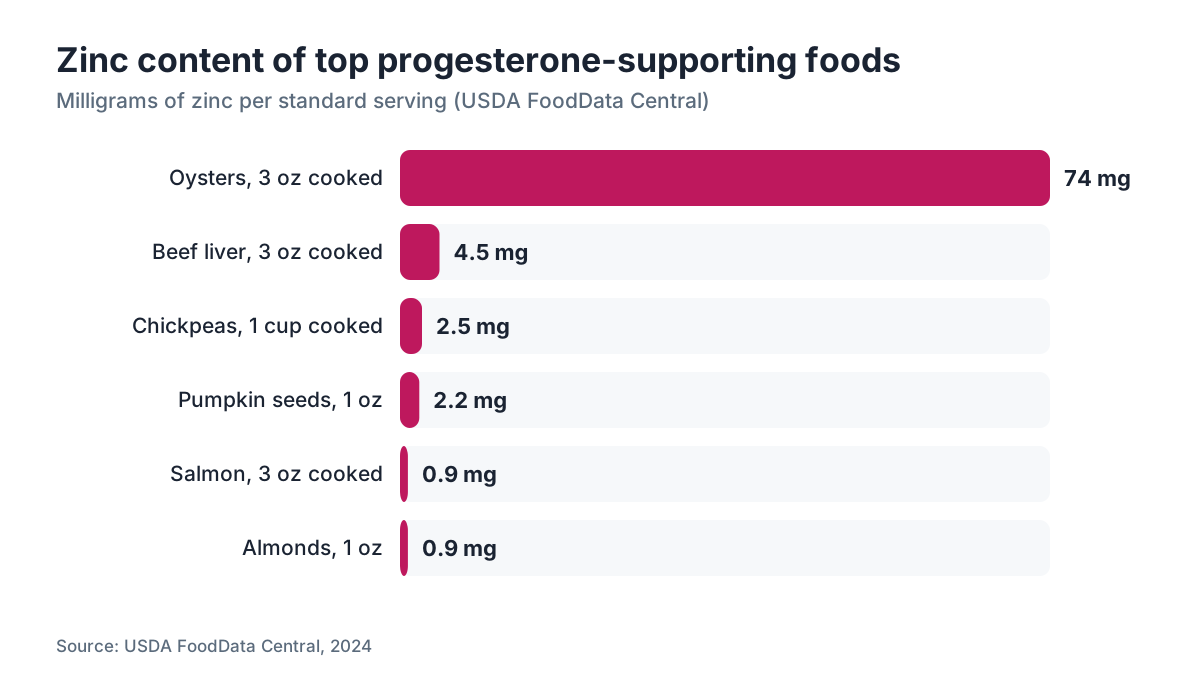
Here is the breakdown by nutrient, using USDA FoodData Central values [5].
| Food | Primary nutrient | Amount per serving | |---|---|---| | Pumpkin seeds (1 oz) | Zinc | 2.2 mg (20% DV) | | Beef liver (3 oz cooked) | Zinc + B6 | 4.5 mg zinc, 0.9 mg B6 | | Chickpeas (1 cup cooked) | B6 + magnesium | 1.1 mg B6, 79 mg Mg | | Dark chocolate 70%+ (1 oz) | Magnesium | 64 mg Mg | | Almonds (1 oz) | Magnesium | 77 mg Mg | | Oysters (3 oz cooked) | Zinc | 74 mg (673% DV) | | Bell pepper, red (1 cup raw) | Vitamin C | 190 mg | | Kiwifruit (2 medium) | Vitamin C | 137 mg | | Brazil nuts (1 to 2 nuts) | Selenium | 68 to 90 mcg (near 100% DV) | | Eggs (2 large) | Cholesterol + B vitamins | ~187 mg cholesterol, 0.2 mg B6 | | Salmon (3 oz cooked) | Cholesterol + selenium | 63 mg cholesterol, 36 mcg selenium | | Spinach (1 cup cooked) | Magnesium | 157 mg Mg |
Oysters have no real competition on zinc. One three-ounce serving delivers roughly six times the daily value, more than any other common food. If oysters are not in your rotation, a mix of pumpkin seeds, red meat, and legumes clears the 8 mg daily zinc target for women.
Vitamin C is the one place where food may fall short of the research. The Fertility and Sterility trial used 750 mg [3], far above what a normal day of eating provides. Food helps, but food alone may not reproduce the trial-level effect without a supplement.
Do seed cycling and other popular progesterone food protocols actually work?
Seed cycling has no clinical evidence behind it, and wild yam cream does not raise progesterone at all. Those are the two protocols you will see everywhere online, and both are weaker than their marketing.
Seed cycling means eating flax and pumpkin seeds in the follicular phase, then sesame and sunflower seeds in the luteal phase, the idea being that you match seed lignans and zinc to your hormonal calendar. There are zero randomized controlled trials on seed cycling for progesterone. The nutrients themselves have plausibility (zinc in pumpkin seeds, lignans in flax), but the claim that timing them to your cycle amplifies anything has never been tested.
Eating a variety of seeds is still good for you. If someone starts seed cycling and feels better, the likely reason is that they started eating more zinc and magnesium regularly. The nutrients did the work. The calendar was decoration.
Wild yam is a different story. It contains diosgenin, a compound a lab can convert into progesterone. Your body cannot run that reaction. Eating wild yam or rubbing on wild yam cream does not raise serum progesterone, and the FDA has not approved any wild yam product as a hormonal therapy [6]. If a cream lists progesterone on the label, that progesterone was made in a factory, not in the yam.
Can diet changes help with symptoms of low progesterone?
Diet changes help most when a real nutritional deficiency is driving the problem. Symptoms of low progesterone include irregular cycles, spotting before periods, short luteal phases, mid-cycle anxiety, poor sleep, and heavy periods. In perimenopause, falling progesterone tends to show up first as sleep disruption and mood changes in the second half of the cycle.
A woman eating a low-zinc, low-magnesium diet with luteal symptoms has a reasonable shot at noticing improvement after six to twelve weeks of consistent change, because intracellular micronutrient status shifts over weeks, not days.
A woman already eating a varied whole-food diet is far less likely to see a dramatic shift from diet alone. At that point, confirmed low progesterone is usually a structural problem, like infrequent or absent ovulation, rather than a substrate problem you can eat your way out of.
Cortisol deserves a mention. Chronic stress raises cortisol, which competes with progesterone for shared precursors. Low-glycemic, anti-inflammatory eating lowers cortisol reactivity in some studies. Cutting ultra-processed foods and added sugars reduces insulin resistance, which lowers the androgen excess that suppresses ovulation in women with PCOS, indirectly supporting progesterone production [7].
For what progesterone levels should actually be and what testing looks like, the full hormone reference covers it in depth.
How does body fat and weight affect progesterone levels?
Body fat pulls progesterone in two opposite directions, and both extremes cause problems.
Too little body fat, roughly below 18 to 22% in most clinical estimates, can shut down the HPO axis entirely, causing hypothalamic amenorrhea and near-zero progesterone output. Athletes and women with restrictive eating patterns see this often. Here the fix is more calories and more fat, not a specific superfood.
Too much body fat, especially visceral fat, raises aromatase activity. Aromatase converts androgens to estrogen, pushing the estrogen-to-progesterone ratio up even when progesterone itself sits inside the reference range. That is estrogen dominance by ratio, and it produces progesterone-deficiency symptoms without progesterone being technically low. Losing excess fat through sustainable caloric balance lowers aromatase load and improves the estrogen/progesterone balance.
For women on GLP-1 receptor agonists, early observational data suggests that meaningful weight loss with these drugs improves ovulatory function in women with PCOS, which you would expect to raise progesterone. No large trial has yet measured progesterone as a primary endpoint after GLP-1-driven weight loss, so treat that link as reasonable but unproven.
Are there foods that lower progesterone you should avoid?
Alcohol is the clearest offender. Even one to two drinks per day tracks with lower luteal-phase progesterone in prospective cohort studies. A study in Human Reproduction found that women drinking two or more drinks per day had meaningfully shorter luteal phases and lower progesterone than non-drinkers [8].
Trans fats are next. High intake of partially hydrogenated oils tracked with ovulatory infertility in the Nurses' Health Study II. Most trans fats left the food supply after the FDA revoked GRAS status for partially hydrogenated oils in 2015, but they still turn up in some commercially fried foods and older processed products [9].
Extreme low-fat diets suppress overall steroid hormone production, and the effect is dose-dependent, most visible below 20% of calories from fat.
Refined carbohydrates and added sugars drive insulin resistance and raise androgens in susceptible women, particularly those with PCOS. High androgens suppress LH pulsatility, and that suppresses ovulation and corpus luteum formation.
Soy needs a careful note. Phytoestrogens in soy compete at estrogen receptors but do not suppress progesterone synthesis directly. One to two servings per day does not appear to shift progesterone in most studies. Very high supplemental isoflavone doses may affect the cycle in some women, but tofu and edamame at normal amounts are not a documented progesterone problem [10].
What does the research actually say about diet and luteal phase progesterone?
The evidence is thin, and you deserve to hear that plainly. One decent randomized trial and a scatter of observational studies is about the whole picture.
The strongest single study is the vitamin C RCT in Fertility and Sterility: 150 women with luteal phase defect randomized to 750 mg vitamin C or placebo. The vitamin C group's midluteal progesterone rose from roughly 8 ng/mL to 14 ng/mL, and pregnancy rates ran higher in the supplemented group [3]. That is a supplement, not food, but it establishes a nutrient-level mechanism.
For zinc, the evidence leans on animal models and observational human data. A cross-sectional analysis in Nutrients in 2021 found higher dietary zinc intake tracked with higher luteal-phase progesterone in premenopausal women, independent of other dietary factors [1].
Magnesium's link to progesterone is mostly indirect: magnesium lowers the cortisol response to stress, and lower cortisol leaves more room for progesterone output [13]. No clean RCT tests dietary magnesium against progesterone directly.
The honest summary: micronutrient adequacy is associated with better luteal function in observational work, and the one well-powered RCT that showed a real progesterone increase used a nutrient (vitamin C). Diet changes are worth trying as a low-risk first step, especially for women who are nutritionally depleted. They do not replace medical evaluation or, when indicated, actual hormone replacement therapy.
Should you get progesterone tested before changing your diet?
Yes, if you can. A day-21 blood test costs little and tells you whether there is a real problem worth treating, instead of guessing for three months.
Midluteal serum progesterone, drawn seven days after confirmed ovulation or on day 21 of a regular 28-day cycle, is the standard clinical measure. Above 10 ng/mL suggests ovulation happened. Values of 3 to 10 ng/mL may point to a weak luteal phase. Below 3 ng/mL in the midluteal window suggests absent or minimal ovulation [11].
Saliva and urine progesterone tests are sold direct-to-consumer, but their methodology problems make them hard to interpret clinically. Serum is the reference standard your clinician will use to make treatment decisions.
If your levels are low, the reason matters before you commit to diet-only management. A 44-year-old in perimenopause with an FSH of 18 and progesterone of 2 ng/mL is dealing with ovarian aging, not a zinc gap. Diet supports her health but will not solve the problem. A 32-year-old with a poor diet, irregular cycles, and luteal progesterone of 6 ng/mL is a far better candidate for dietary change.
WomenRx sees both women regularly, and the evaluation pathway is genuinely different. If you have already confirmed low levels, the clinical team can talk through whether diet alone makes sense or whether progesterone therapy fits your numbers and history.
What is a realistic progesterone-supporting meal pattern for a week?
Theory meets a grocery list here. A week of eating that hits the key progesterone-supporting nutrients looks roughly like this.
Breakfasts built around eggs (zinc, B6, cholesterol substrate), whole-fat yogurt, or oatmeal topped with pumpkin seeds and Brazil nuts, which lands both magnesium and selenium in one bowl.
Lunch and dinner anchored two or three times a week by a high-zinc protein: oysters once if you like them, beef or lamb twice, legumes the rest of the week. Red bell peppers, kiwi, or strawberries cover vitamin C without a pill.
Snacks that pull their weight: almonds, dark chocolate, pumpkin seeds. They fill magnesium gaps cheaply.
Alcohol at zero or truly occasional, especially during the luteal phase.
Fat never avoided. Olive oil, avocado, fatty fish, and eggs supply the fat substrate and the anti-inflammatory fatty acids that steroidogenesis runs on.
One caveat. This describes what a nutrient-adequate diet looks like for hormone support in general. It is not a clinical prescription, and the effect on any one woman's progesterone depends on baseline nutrition, ovarian function, body composition, and stress. The women who benefit most are the ones with the most room to improve, meaning those eating a low-variety, processed-heavy diet right now.
When does low progesterone need more than food?
Some situations call for medicine, not menu changes. Confirmed luteal phase defect causing infertility or recurrent pregnancy loss, perimenopause with symptoms, and menopause all fall in that category.
Luteal phase defect tied to fertility problems is treated with vaginal progesterone supplementation, not diet. ASRM Practice Committee guidance specifies progesterone support for IVF cycles and considers it for recurrent pregnancy loss, with serum targets above 10 to 15 ng/mL depending on protocol [11].
Perimenopause and menopause are structural. As ovulation gets rare and then stops, dietary support for the corpus luteum stops mattering, because there is no corpus luteum forming to support. The progesterone decline is hormonal, and hormonal therapy is the evidence-based treatment for women who need it. NAMS names body-identical micronized progesterone (Prometrium) as the preferred progestogen for protecting the uterine lining in menopausal hormone therapy [12].
Women who have had a hysterectomy do not need progesterone in hormone therapy at all. That distinction changes the whole plan.
If you are in perimenopause and sleep disruption, anxiety, or cycle changes are your main complaints, asking a clinician whether micronized progesterone fits is a reasonable step. The menopause overview and the piece on perimenopause age help you place where in the transition you are.
Frequently asked questions
Can eating certain foods directly raise my progesterone levels?
No food contains bioavailable progesterone, so no food raises your serum levels directly. What food does is supply the nutrients your body uses to manufacture progesterone: zinc, magnesium, vitamin B6, vitamin C, selenium, and dietary fat. If you are deficient in these, correcting it can improve output. If your levels are low from ovarian aging or absent ovulation, diet changes alone will not fix it.
How quickly would dietary changes affect progesterone levels?
Intracellular micronutrient status shifts over weeks, not days. A realistic timeline for any change in luteal-phase progesterone from a better diet is six to twelve weeks of consistent eating. Testing on day 21 of your cycle before and after that window is the only way to know whether the change actually meant anything for you.
Does progesterone cream from wild yam actually work?
No. Wild yam contains diosgenin, which a lab can convert into progesterone, but your body lacks the enzymes to run that conversion. Wild yam cream does not raise serum progesterone. The FDA has not approved any wild yam product as a hormonal therapy. If a cream lists progesterone on the label, that progesterone was synthesized externally. It did not come from the yam.
What are the symptoms of low progesterone I should watch for?
Common signs include a short luteal phase (fewer than 10 days between ovulation and your period), spotting before your period, heavy or irregular periods, mid-cycle anxiety or mood swings, poor sleep in the second half of your cycle, and difficulty conceiving. In perimenopause, progesterone decline often shows up first as sleep disruption and increased premenstrual anxiety rather than obvious cycle changes.
Is zinc the most important nutrient for progesterone production?
Zinc is arguably the most studied single micronutrient here, partly because it is required for LH receptor function and several steroidogenic enzymes. But "most important" overstates it. Zinc deficiency impairs the system, and so does magnesium deficiency, B6 deficiency, and inadequate dietary fat. They are links in one chain, not interchangeable substitutes for each other.
Can vitamin C supplements really raise progesterone?
One randomized controlled trial in Fertility and Sterility tested 750 mg/day in women with luteal phase defect and found midluteal progesterone rose from about 8 ng/mL to about 14 ng/mL on average, versus no change on placebo. That is a supplement dose, not achievable from food without extraordinary effort. The trial was small (n=150) and has not been replicated at scale, so treat it as promising, not definitive.
Does seed cycling increase progesterone?
No clinical trial has tested seed cycling as a protocol for progesterone. The theory, that pumpkin seeds (zinc) in the luteal phase support progesterone, has individual-nutrient plausibility, but the timing element has never been studied. Eating seeds regularly helps your nutrition regardless. If seed cycling keeps you consistent with a mineral-rich diet, the nutrients are doing the work, not the calendar.
Do soy and phytoestrogens suppress progesterone?
At normal food intake, one to two servings of soy per day, the evidence does not show meaningful suppression of progesterone. Phytoestrogens act mainly at estrogen receptors, not through the progesterone synthesis pathway. Very high supplemental isoflavone doses may affect cycle dynamics in some women, but tofu, edamame, and soy milk at typical amounts are not documented progesterone problems in published human studies.
How does alcohol affect progesterone?
Alcohol suppresses luteal-phase progesterone even at moderate intake. A study in Human Reproduction found that women consuming two or more drinks daily had shorter luteal phases and lower progesterone than non-drinkers, and the effect looks dose-dependent. If you are trying to support progesterone through diet, cutting or dropping alcohol during the luteal phase is one of the higher-impact moves you can make.
Do I need to eat cholesterol-containing foods to make progesterone?
Your liver makes cholesterol on its own, so you will not run out of substrate on a low-dietary-cholesterol diet in most cases. But very low-fat diets, under 20% of total calories from fat, track with lower sex steroid output across multiple studies. Eating adequate fat from olive oil, fatty fish, eggs, and nuts creates the conditions for normal steroidogenesis without needing high cholesterol intake.
Can stress-reducing foods help with low progesterone?
Indirectly, yes. High cortisol competes with progesterone for shared precursors and suppresses the HPO axis. Foods that steady blood sugar and lower systemic inflammation, meaning vegetables, fiber, omega-3 fats, and magnesium-rich foods, reduce cortisol reactivity in some studies. The effect is modest, but chronic high-sugar, ultra-processed eating worsens cortisol patterns, so cleaning up the diet is a low-risk supporting move.
At what point should I see a doctor about low progesterone instead of trying diet changes?
See a clinician if you have confirmed low midluteal progesterone (below 10 ng/mL), recurrent pregnancy loss, cycles shorter than 24 days, or if you are over 40 with worsening premenstrual symptoms and sleep disruption. Dietary change is a fair first step for mild, unconfirmed concerns, but a lab test costs little and tells you whether there is a real problem worth treating medically.
Are progesterone-supporting foods different during perimenopause versus earlier in life?
The nutrient needs are the same, but the context differs. Before perimenopause, dietary nutrients can support the corpus luteum that forms after ovulation. In late perimenopause, ovulation becomes infrequent, so there is less corpus luteum activity for nutrients to support. Diet still matters for overall health and cortisol, but as progesterone declines structurally, hormonal therapy becomes the more effective option.
Which is better for low progesterone, diet changes or bioidentical progesterone?
They fix different problems. Diet corrects nutritional deficiencies that impair progesterone production. Bioidentical progesterone, like oral micronized progesterone (Prometrium) or vaginal progesterone, delivers the hormone directly. If poor nutrition drives your low progesterone, diet can help. If ovarian aging, absent ovulation, or perimenopause drives it, bioidentical progesterone prescribed by a clinician is the evidence-based option and diet is supportive at best.
Sources
- Nutrients (MDPI), Micronutrients and Ovarian Steroidogenesis review, 2021
- National Institutes of Health Office of Dietary Supplements, Zinc Fact Sheet for Health Professionals
- Fertility and Sterility, Vitamin C supplementation and luteal phase defect RCT (Henmi et al., 2003)
- Journal of Clinical Endocrinology and Metabolism, Dietary fat and sex steroid hormones study
- USDA FoodData Central
- U.S. Food and Drug Administration, Dietary Supplements Overview
- Endocrine Society, Polycystic Ovary Syndrome Clinical Practice Guideline
- Human Reproduction, Alcohol intake and menstrual cycle characteristics study
- U.S. Food and Drug Administration, Trans Fat and Partially Hydrogenated Oils
- National Institutes of Health Office of Dietary Supplements, Soy Isoflavones Fact Sheet
- American Society for Reproductive Medicine, Progesterone supplementation and luteal phase support Practice Committee Opinion
- The Menopause Society (NAMS), Hormone Therapy Position Statement
- National Institutes of Health Office of Dietary Supplements, Magnesium Fact Sheet for Health Professionals
- National Institutes of Health Office of Dietary Supplements, Selenium Fact Sheet for Health Professionals