First symptoms of perimenopause: what to expect and when
TL;DR: Perimenopause usually starts in a woman's mid-to-late 40s, though it can begin as early as 35. The first symptom is almost always a change in your menstrual cycle, followed within months to a few years by hot flashes, broken sleep, and mood shifts. Estrogen and progesterone are declining but not gone, which is why symptoms feel erratic. Most women spend 4 to 8 years in perimenopause before reaching menopause.
What are the first symptoms of perimenopause?
The first sign is almost always a change in your menstrual cycle. Periods that used to arrive like clockwork start coming a few days early, then late, then one goes missing entirely. Your ovaries make less progesterone after ovulation, and ovulation itself gets unpredictable. Estrogen doesn't fall in a straight line. It swings up and down erratically before declining for good, which is why the symptoms feel so confusing. [1]
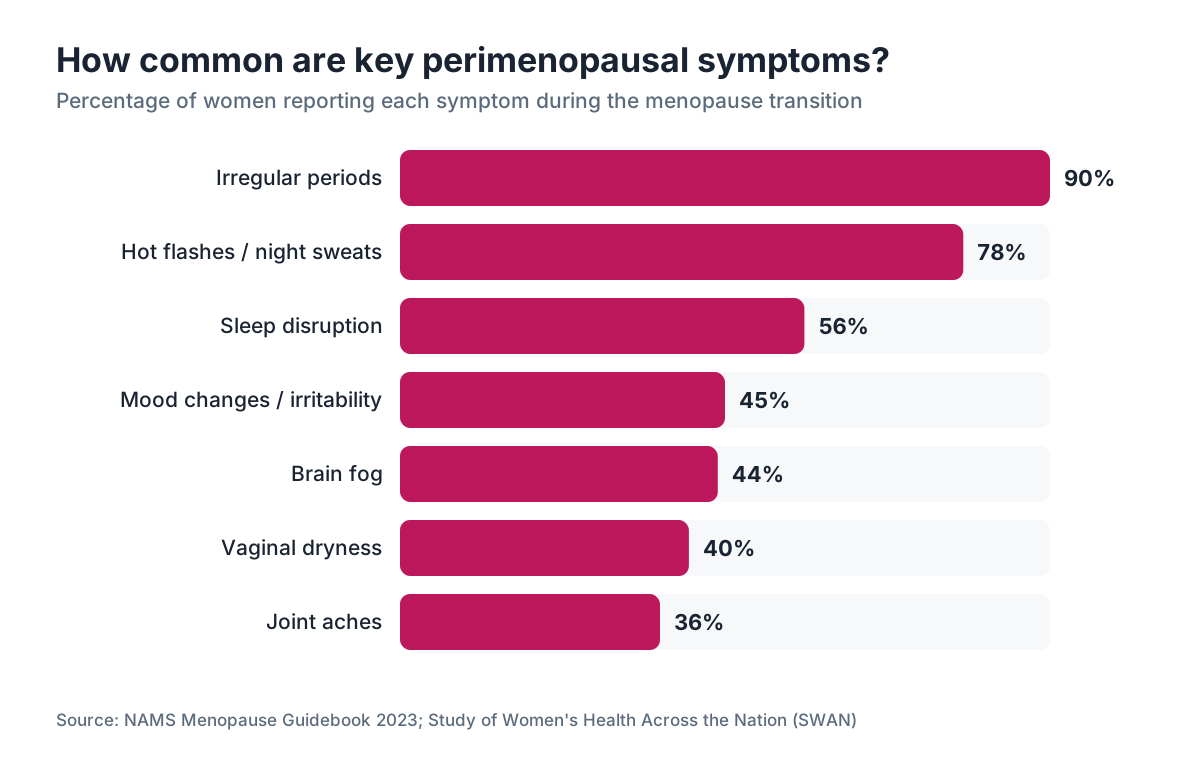
Hot flashes come next for most women. Roughly 75 to 80 percent of women in the United States get hot flashes at some point during the menopause transition, and for many, they start well before periods stop. [2] A hot flash is a sudden wave of heat, usually across the chest and face, lasting anywhere from 30 seconds to 10 minutes. At night, the same mechanism drives night sweats bad enough to soak the sheets.
Sleep falls apart too, and it goes beyond the night sweats. Progesterone has a mild sedative effect. Estrogen helps regulate body temperature and the neurotransmitters tied to mood. As both drop, women report trouble falling asleep, waking at 3 or 4 a.m. and staring at the ceiling, or feeling wrecked even after a full night.
Mood changes show up early and get written off as stress or a bad attitude. Irritability, anxiety, low mood, and that feeling of being flattened by small things trace directly back to estrogen swinging on the serotonin and GABA pathways in the brain. [3] Brain fog, a fuzzy trouble with finding words and holding focus, is common and well documented, though it usually eases after menopause.
Four clusters make up the opening act: cycle irregularity, hot flashes and night sweats, broken sleep, and mood or cognitive changes. Everything else (vaginal dryness, joint aches, shifting libido, hair thinning, weight moving to your middle) tends to arrive later or build slowly.
When does perimenopause start, and how long does it last?
Perimenopause begins around age 47 on average, with a range that runs from the early 40s to the early 50s. [1] A smaller group, somewhere near 1 in 100, hits premature ovarian insufficiency before age 40, which is a different and more abrupt picture. [4]
For most women, perimenopause lasts 4 to 8 years. The North American Menopause Society describes two broad stages: early perimenopause, when cycles still come but their length varies by 7 days or more, and late perimenopause, when you skip cycles for 60 days or longer at a stretch. [1] Late perimenopause usually brings the roughest symptoms, because estrogen is falling more steeply and less predictably.
You officially reach menopause after 12 straight months without a period. That single calendar year is the finish line, and everything before it, no matter how long, is perimenopause. See when does menopause start for a fuller breakdown of the timeline.
Genetics shapes your timing more than almost anything else. If your mother went through menopause early, your odds of the same go up in a real way. Smoking pulls the transition forward by roughly 1 to 2 years. [5] Body weight, some autoimmune conditions, and prior chemotherapy or pelvic radiation can move it too, sometimes a lot. See perimenopause age for a detailed look at what shifts the timeline.
How are irregular periods different from normal cycle variation?
Normal cycles wobble by a few days month to month. Perimenopausal changes are bigger and they stick around. The STRAW+10 staging system, the clinical standard for tracking the menopause transition, defines early perimenopause as cycles that vary by 7 or more days from your usual pattern on a regular basis. Late perimenopause means skipped cycles of 60 days or more. [1]
Here is how that plays out. You get a 24-day cycle followed by a 38-day one. Bleeding gets heavier, lighter, or both in different months. Spotting between periods, rare before, starts happening. Clotting picks up for some women, because high estrogen paired with low progesterone lets the uterine lining build up more than usual before it sheds. [6]
Heavy bleeding deserves real attention, not a shrug and the word "perimenopause." Fibroids, polyps, and endometrial changes all cause heavy bleeding in this age range, and a gynecologist should rule those out. Soaking through a pad or tampon every hour for two or more hours in a row is a same-day symptom.
Track your cycle with a simple calendar or app for 3 to 6 months before your appointment. It gives your provider something concrete. "My last six cycles were 28, 31, 24, 41, 28, and 60 days" beats "they're irregular" every time.
Why do hot flashes and night sweats happen in perimenopause?
A hot flash is a thermoregulatory event. Your hypothalamus keeps a "thermoneutral zone," the band of body temperature it tolerates before ordering a cooling response. [2] As estrogen drops, that zone narrows, so even a small upward drift in core temperature sets off an aggressive reaction: blood vessels dilate, heart rate jumps briefly, and you flush and sweat.
The North American Menopause Society reports that hot flashes affect roughly 75 to 80 percent of women during the transition. [2] They can start 2 to 3 years before your last period, and for about 15 percent of women they continue for 10 years or more after menopause. Averaged across all women, they run about 7 years from first onset.
Night sweats are hot flashes that happen while you sleep. They do the most damage because they cut into slow-wave and REM sleep, the stages that handle memory, immune function, and next-day mood. Plenty of women call night sweats the single most disabling perimenopausal symptom, and the reason is that downstream wreckage the following day.
Systemic estrogen is the most effective treatment for hot flashes, with a steady 75 to 90 percent drop in frequency and severity across clinical trials. [7] Non-hormonal options are real alternatives for women who can't or won't use hormones: fezolinetant (FDA-approved in 2023 specifically for vasomotor symptoms) and certain SSRIs or SNRIs used off-label. See hormone replacement therapy for a current overview.
What does perimenopausal sleep disruption actually feel like?
It rarely feels like classic insomnia. Women fall asleep fine, then wake between 2 and 4 a.m. with a racing heart or a wave of heat and can't get back down for an hour or two. Others describe a thin, fragmented sleep where they feel half-awake all night. Morning exhaustion then makes mood, thinking, and pain tolerance worse, and the loop feeds itself.
Progesterone matters here. It metabolizes into allopregnanolone, a neurosteroid that acts on GABA receptors, the same pathway that makes alcohol and benzodiazepines sedating. As progesterone falls in early perimenopause, that built-in sleep support disappears. [3] This is one reason low-dose progesterone alone is sometimes used early, to fix sleep before estrogen has dropped enough to trigger hot flashes.
Sleep trouble in perimenopause is not simply night sweats in disguise. Polysomnography studies, meaning actual sleep-lab recordings, show objective changes in sleep architecture even in perimenopausal women who deny significant hot flashes. [8] The hormonal hit to sleep is direct, more than a side effect of sweating.
If you're working on sleep and want the full hormone picture, progesterone is worth reading. Progesterone is one of the earlier interventions that genuinely helps in the perimenopausal window.
Can perimenopause cause anxiety and mood changes?
Yes, and a lot of clinicians who weren't trained to look for it miss the connection. The same fluctuating estrogen that drives hot flashes also acts on serotonin, dopamine, and GABA systems in the brain. The result is more anxiety, more irritability, low-grade depression, emotional reactivity, and a general sense of being harder to steady. [3]
The Harvard Study of Moods and Cycles found that women with a prior history of depression were significantly more likely to have depressive episodes during perimenopause, and so were women with no prior mental health history at all. The transition is itself a biological risk window for mood disorders, more than a time when old tendencies flare. [9]
Brain fog (trouble with word retrieval, multitasking, and focus) is real and tied to estrogen's role in the hippocampus. Most women find it lifts once they reach postmenopause and estrogen settles at a lower steady point. The perimenopausal years feel alarming because the changes are noticeable and seem to come from nowhere.
Telling perimenopausal mood symptoms apart from a primary depression or anxiety disorder matters, because the treatment differs. Hormone therapy can work well for mood symptoms driven by hormonal swings. Standard antidepressants fit better when the depression has a different origin. Often you need both. A provider who takes a real hormonal history alongside a mental health history is where to start.
What symptoms might indicate perimenopause but are often overlooked?
Joint aches and morning stiffness catch women off guard because nobody told them estrogen is anti-inflammatory. As it drops, joint pain in the hands, knees, and hips gets common. Some women get worked up for rheumatoid arthritis before anyone thinks of perimenopause.
Heart palpitations, a racing or fluttery heartbeat, are another one that gets missed. They tend to ride along with hot flash episodes and reflect the same autonomic nervous system firing. [2] They're alarming but usually harmless in women with no heart disease. Still, new palpitations always earn a cardiology workup to rule out an arrhythmia before you blame hormones.
Body composition shifts, with fat piling on around the abdomen instead of the hips and thighs, start in perimenopause even without changes to diet or activity. Estrogen influences where fat gets stored. As it declines, the body moves toward a central fat pattern tied to higher metabolic and cardiovascular risk. [10]
Vaginal dryness, painful sex, and urinary symptoms fall under genitourinary syndrome of menopause (GSM). They tend to surface in late perimenopause and worsen after menopause. Unlike hot flashes, which often fade over time, GSM gets worse without treatment. Local vaginal estrogen works well and carries a strong safety profile. [7]
Hair thinning, mostly at the crown and temples, hits many women during perimenopause. It comes from both falling estrogen and the relative rise in androgen effect as estrogen's opposing pull fades. Thyroid problems and iron deficiency, both common in this age group, can pile on, so get those checked before pinning it all on hormones.
How is perimenopause diagnosed?
Diagnosis is mostly clinical, meaning it rests on your age, your symptoms, and your menstrual pattern. No single blood test nails down perimenopause, and that's a real source of frustration for women and for some providers.
FSH (follicle-stimulating hormone) gets ordered sometimes. As ovarian function declines, the pituitary pushes FSH higher trying to squeeze out more estrogen. An FSH above 25 to 30 IU/L on a day 2 to 5 draw, alongside symptoms and cycle changes, supports the diagnosis. The catch is that FSH swings wildly in perimenopause, especially early on. One normal FSH does not rule it out. [4]
Estradiol is just as jumpy. A single low reading doesn't confirm perimenopause, and a single normal one doesn't rule it out. AMH (anti-Mullerian hormone), a marker of ovarian reserve, declines more steadily and some specialists use it, but it isn't standardized for perimenopausal diagnosis in routine care.
The STRAW+10 framework is the closest thing to a clinical standard for placing a woman in the transition. It stages by bleeding pattern, not hormone levels. [1]
For a woman in her late 40s with classic symptoms and changing cycles, a thoughtful clinician should be able to diagnose perimenopause without an expensive hormone panel. Lab work matters more for younger women, atypical cases, or women who've had a hysterectomy, where cycle tracking isn't an option.
Telehealth services like WomenRx that specialize in women's hormones can order and read a targeted hormone panel against your symptoms and cycle history, which often beats a rushed 15-minute office visit.
What is the difference between perimenopause and menopause?
Perimenopause is the transition. Menopause is the finish line. Menopause is defined as 12 straight months without a period, and it's confirmed only in hindsight, meaning you can call yourself menopausal only after that year has passed with no bleeding. [1]
During perimenopause you still ovulate sometimes, which means pregnancy is still possible even with irregular cycles. Contraception stays relevant until menopause is confirmed.
After menopause, estrogen and progesterone settle into a new, stable low. Hot flashes may hang on, but many symptoms driven by the erratic swings of perimenopause, mood volatility above all, often ease. New concerns move to the front in postmenopause: bone loss speeds up, cardiovascular risk climbs, and genitourinary symptoms tend to progress. See menopause for the full picture of what changes past that 12-month mark.
Many women feel their worst perimenopausal symptoms were brushed off until they could say the word "menopause." That's a real failure in clinical care. Perimenopause can run close to a decade, and it deserves the same attention as menopause.
What treatments help with early perimenopausal symptoms?
The best treatment depends on which symptoms hurt the most. There's no universal protocol. The honest version is that treatment is a negotiation between your symptom burden, your medical history, and what you want.
For hot flashes and night sweats, systemic hormone therapy (low-dose estrogen, plus progesterone if you have a uterus) has the strongest evidence. A 2017 Cochrane review found hormone therapy cut hot flash frequency by roughly 75 percent compared with placebo. [7] The risks have been substantially reframed since the early Women's Health Initiative data came out. For healthy women under 60 or within 10 years of menopause, the benefit-risk balance is generally favorable. [7]
For sleep specifically, low-dose oral micronized progesterone (100 mg at bedtime) helps in early perimenopause when progesterone deficiency is the main problem. It isn't a sleeping pill, but the allopregnanolone conversion brings real sedation without next-day fog for most women.
For mood and anxiety driven by hormonal swings, estrogen therapy has shown benefit in perimenopause specifically, separate from its effect in postmenopause. Some women do best on a combination of hormone therapy and an SSRI or SNRI, especially with a prior history of depression.
Non-hormonal options for hot flashes include fezolinetant, a neurokinin B receptor antagonist the FDA approved in 2023 under the brand name Veozah, plus gabapentin or certain antidepressants used off-label. [11]
Lifestyle changes move the needle too, though clinicians short on time tend to undersell them. Cutting alcohol (it triggers hot flashes and wrecks sleep), keeping the bedroom cool, regular aerobic exercise, and cognitive behavioral therapy for insomnia (CBT-I) all have evidence behind them. Not enough for severe symptoms on their own, but they help.
For women dealing with significant weight changes, semaglutide for weight loss is worth understanding. Metabolic shifts during perimenopause make weight harder to manage, and GLP-1 receptor agonists are used more and more in this group.
An estrogen patch is one of the most common ways to deliver systemic estrogen in perimenopause, partly because transdermal estrogen skips first-pass liver metabolism and carries a lower clotting risk than oral forms.
When should you see a doctor about perimenopausal symptoms?
You don't have to wait until things are unbearable. Plenty of women walk in after years of broken sleep, mood swings, and cycle chaos because they figured it was just aging. It is aging. It's also treatable.
Go soon if any of these fit: bleeding that soaks a pad or tampon every hour for two or more hours, spotting after sex, cycles more frequent than every 21 days, or any bleeding that returns after you've gone 12 months without a period. That last one always warrants prompt evaluation, because postmenopausal bleeding can signal endometrial changes. [6]
Go, too, if symptoms are hitting your quality of life, your work, your relationships, or your sleep. "Significantly" is your call. If it's bothering you enough to search the internet at midnight, it's bothering you enough to tell a clinician.
A bone density test is worth considering. Bone loss speeds up during perimenopause and into postmenopause, usually with no symptoms until something breaks. Knowing your baseline helps. See bone density test for when and why to get one.
If your current provider waves you off with "that's just perimenopause, nothing to do," that isn't adequate care. Menopause medicine has moved a long way in the past decade, and there are providers, including telehealth platforms built for this, who keep up with the evidence.
Frequently asked questions
What is usually the very first sign of perimenopause?
For most women, the first sign is a change in menstrual cycle length or predictability. Periods start arriving earlier, later, or less consistently than usual. This happens because progesterone production after ovulation gets less reliable as ovarian function shifts. Hot flashes and broken sleep usually follow within months to a few years after cycle changes begin.
Can perimenopause start at 35?
Yes, though it's less common. Most women begin between 40 and 50, with an average onset around 47. Onset in the mid-to-late 30s does happen, particularly with a family history of early menopause, a smoking history, or certain autoimmune conditions. If you're under 40 with significant symptoms, your provider should test FSH and estradiol and consider premature ovarian insufficiency.
How do you know if it's perimenopause or just stress?
Both cause irregular cycles, sleep problems, and mood changes, which makes them hard to separate. Age is the biggest clue: if you're in your 40s and symptoms have built over months, perimenopause is likely part of it. An FSH above 25 to 30 IU/L alongside symptoms adds support. Stress rarely causes hot flashes or night sweats the way perimenopause does, so vasomotor symptoms plus cycle changes point strongly to hormonal transition.
Can perimenopause cause anxiety even if you've never had anxiety before?
Yes. Estrogen fluctuations act directly on the serotonin and GABA systems that regulate anxiety. Studies show women with no prior mental health history can develop new-onset anxiety or depression during perimenopause as a direct result of these hormonal changes. This is not a character flaw or a reaction to aging. It's a biological event. Hormone therapy can help when the anxiety is hormonally driven.
Can you get pregnant during perimenopause?
Yes. Ovulation still happens during perimenopause, just less predictably. Irregular cycles don't mean infertile cycles. Pregnancies in women in their 40s with perimenopausal symptoms are documented. Contraception stays appropriate until menopause is confirmed by 12 consecutive months without a period. If pregnancy isn't the goal, don't assume irregular cycles mean you're protected.
What blood tests confirm perimenopause?
No single test confirms perimenopause, which frustrates a lot of women. FSH above 25 to 30 IU/L on a day 2 to 5 draw, combined with symptoms and cycle changes, supports the diagnosis. But FSH swings hard in early perimenopause, so one normal result doesn't rule it out. AMH (anti-Mullerian hormone) declines more steadily and some specialists use it. Diagnosis is mainly clinical, based on age, symptoms, and cycle pattern.
How long does perimenopause last?
On average, 4 to 8 years, but the range is wide. Some women move through it in 2 years, others spend 10 in the transition. Late perimenopause, when you skip cycles for 60 days or more at a time, usually carries the most intense symptoms. The STRAW+10 staging system splits it into early and late stages based on bleeding pattern changes, not hormone levels.
Is weight gain a symptom of perimenopause?
Weight gain in perimenopause is common, but a lot of it is fat redistribution rather than pure gain. Estrogen influences where fat gets stored. As it declines, fat moves from hips and thighs toward the abdomen, a pattern tied to higher metabolic and cardiovascular risk. Total body fat can rise even without diet or exercise changes. Muscle loss from lower estrogen and often lower activity makes it worse.
What foods or lifestyle changes help with perimenopausal symptoms?
Cutting alcohol is one of the most effective practical steps, since alcohol triggers hot flashes and degrades sleep. Regular aerobic exercise (at least 150 minutes per week) reduces hot flash severity and lifts mood. A cool bedroom helps night sweats. Cognitive behavioral therapy for insomnia (CBT-I) has strong evidence for sleep. A high-protein diet helps preserve muscle. None replace hormone therapy for severe symptoms, but they cut the total burden.
Does hormone therapy help perimenopause symptoms?
Yes. Hormone therapy is the most effective treatment for hot flashes, night sweats, and broken sleep in perimenopause, with roughly a 75 to 90 percent reduction in hot flash frequency in clinical trials. It also helps mood, vaginal symptoms, and bone density. For healthy women under 60 or within 10 years of menopause onset, current guidance from NAMS and the Endocrine Society supports its use when symptoms are bothersome. The risk-benefit picture has been substantially revised since early WHI reports.
Can perimenopause cause heart palpitations?
Yes, and this one surprises many women. Palpitations, a racing or fluttery heartbeat, are common in perimenopause and often coincide with hot flash episodes, reflecting autonomic nervous system activation during vasomotor events. New palpitations still deserve a cardiology workup to rule out an arrhythmia, especially if prolonged, paired with chest pain, or happening with no hot flash sensation. Once cardiac causes are cleared, treating the hot flashes often resolves the palpitations.
When should perimenopause symptoms prompt a doctor's visit?
Right away if you have bleeding that soaks a pad or tampon every hour for two-plus hours in a row, spotting after sex, cycles under 21 days, or any bleeding after 12 months without a period. Otherwise, see a provider when symptoms are affecting your sleep, mood, work, or daily life. Perimenopause can last years. You don't have to white-knuckle through it. Effective treatments exist and are underused.
What is the difference between early and late perimenopause symptoms?
Early perimenopause (cycles still arriving but varying by 7 or more days) tends to bring cycle changes, mood shifts, and early sleep disruption, often driven more by progesterone decline than estrogen collapse. Late perimenopause (skipping cycles for 60 days or more) brings more intense hot flashes, sharper estrogen withdrawal, and the start of vaginal dryness and urinary symptoms. Brain fog and joint pain can show up in either stage.
Sources
- Harlow et al., Executive Summary of the Stages of Reproductive Aging Workshop + 10 (STRAW+10), Journal of Clinical Endocrinology & Metabolism, 2012
- North American Menopause Society (NAMS), The Menopause Guidebook, 2023
- Soares CN, Systematic Review: Mood disorders and menopause transition, Menopause, 2014
- National Institute on Aging, Menopause: What Is It?
- Endocrine Society Clinical Practice Guideline, Treatment of Symptoms of the Menopause, 2015
- American College of Obstetricians and Gynecologists (ACOG), Abnormal Uterine Bleeding FAQ
- Marjoribanks J et al., Long-term hormone therapy for perimenopausal and postmenopausal women, Cochrane Database of Systematic Reviews, 2017
- Kravitz HM et al., Sleep difficulty in women at midlife: a community survey of sleep and the menopausal transition, Menopause, 2003
- Cohen LS et al., Risk for New Onset of Depression During the Menopausal Transition, Archives of General Psychiatry, 2006
- Janssen I et al., Menopause and the Metabolic Syndrome: The Study of Women's Health Across the Nation, Archives of Internal Medicine, 2008
- FDA, Prescribing Information: Veozah (fezolinetant), 2023
- Office on Women's Health, U.S. Department of Health and Human Services, Menopause