FDA-approved menopause hormone therapy: what's actually approved and why it matters
TL;DR: The FDA has approved more than 50 hormone therapy products for menopause symptoms, including estrogen-only and combination estrogen-progestogen formulations in pills, patches, gels, sprays, rings, and creams. Approved products carry regulated labels with known safety profiles. Compounded hormones are not FDA-approved. Costs run roughly $30 to $300 per month depending on the product and insurance status.
What does the FDA actually approve for menopause hormone therapy?
The FDA approves menopause hormone therapy through its standard New Drug Application process. Each approved product has cleared clinical trials proving it works for its labeled use, has a known safety profile, and carries an FDA-regulated prescribing label. As of 2024, approved products fall into a few broad groups: systemic estrogen therapy (pills, patches, gels, sprays, and rings designed to raise estrogen levels throughout the body), combination estrogen-progestogen therapy for women with a uterus, low-dose vaginal estrogen for genitourinary symptoms only, and tissue-selective estrogen complex options like conjugated estrogens combined with bazedoxifene. [1]
The approved indications matter. Systemic estrogen is FDA-approved specifically to treat moderate to severe vasomotor symptoms (hot flashes and night sweats) and moderate to severe vulvar and vaginal atrophy. Estrogen is also approved for the prevention of postmenopausal osteoporosis, though the North American Menopause Society (NAMS) generally suggests it as a primary choice only when osteoporosis prevention is the main goal and other agents are inappropriate. [2]
Women with an intact uterus must take a progestogen alongside systemic estrogen. That's not a preference. The FDA requires it because unopposed estrogen raises the risk of endometrial cancer. Approved progestogen options include oral micronized progesterone (sold as Prometrium), medroxyprogesterone acetate, and several combination patch and pill products that deliver both hormones together.
If you want to understand what each hormone does on its own, our article on progesterone covers the evidence on micronized progesterone vs. synthetic progestins in detail.
What does hormone replacement therapy actually do in the body?
Menopause happens because the ovaries produce far less estrogen and progesterone. That drop drives most of the symptoms women feel: hot flashes, night sweats, vaginal dryness, mood shifts, sleep disruption, joint pain, and faster bone loss. Hormone replacement therapy replenishes those hormones, and the effects are measurable. [2]
For hot flashes, systemic estrogen is the most effective treatment there is. A 2017 Cochrane review of 24 trials found estrogen therapy cut hot flash frequency by about 75 percent compared with placebo. No non-hormonal option comes close to that number. [3]
Estrogen also protects bone. It does this by slowing osteoclasts, the cells that break down bone. Women who use estrogen therapy consistently lose less bone density in the years right after menopause than women who don't. Our article on bone density test walks through when to get a baseline scan and what your T-score means.
Estrogen has well-documented effects on the heart and blood vessels too, but those effects hinge on timing. Estrogen started within 10 years of menopause or before age 60 appears to lower cardiovascular risk in healthy women. Started later, it doesn't carry the same benefit and may add risk. This is the "timing hypothesis" or "window of opportunity" that NAMS and the Endocrine Society both discuss in their recent guidelines. [2]
For vaginal dryness and painful sex, low-dose vaginal estrogen (cream, ring, suppository) works locally without meaningfully raising systemic estrogen levels. It's effective, and it doesn't require a progestogen because absorption into the bloodstream is minimal.
Learn more in our full guide to hormone replacement therapy.
Which FDA-approved HRT products are available in the US right now?
The FDA keeps a database of approved drug products called the Orange Book. Below is a representative, not exhaustive, breakdown of available categories as of 2024. [1]
| Category | Route | Examples | Approved Indication | |---|---|---|---| | Estradiol (systemic) | Oral pill | Estrace, generics | VMS, vaginal atrophy, osteoporosis prevention | | Estradiol (systemic) | Transdermal patch | Vivelle-Dot, Climara, Minivelle | VMS, vaginal atrophy, osteoporosis prevention | | Estradiol (systemic) | Gel | EstroGel, Divigel | VMS | | Estradiol (systemic) | Spray | Evamist | VMS | | Conjugated estrogens | Oral pill | Premarin | VMS, osteoporosis prevention | | Combination E+P | Oral pill | Prempro, Angeliq | VMS (women with uterus) | | Combination E+P | Patch | CombiPatch, Climara Pro | VMS (women with uterus) | | Estradiol + progesterone | Oral capsule | Bijuva | VMS (women with uterus) | | Conj. estrogens + bazedoxifene | Oral | Duavee | VMS (women with uterus, no progestogen needed) | | Vaginal estrogen | Cream, ring, tablet | Premarin cream, Estring, Vagifem | Vaginal atrophy only | | Ospemifene | Oral (non-estrogen) | Osphena | Dyspareunia from VVA |
VMS = vasomotor symptoms. VVA = vulvovaginal atrophy.
The estrogen patch has become one of the most commonly prescribed delivery methods because it bypasses the liver, which means it doesn't raise clotting factors the way oral estrogen can. That's clinically relevant for women with elevated clotting risk.
Ospemifene and vaginal DHEA (prasterone, brand name Intrarosa) are also FDA-approved for specific genitourinary symptoms and are technically not estrogen, which matters for women who prefer to avoid hormones entirely.
How much does hormone replacement therapy cost?
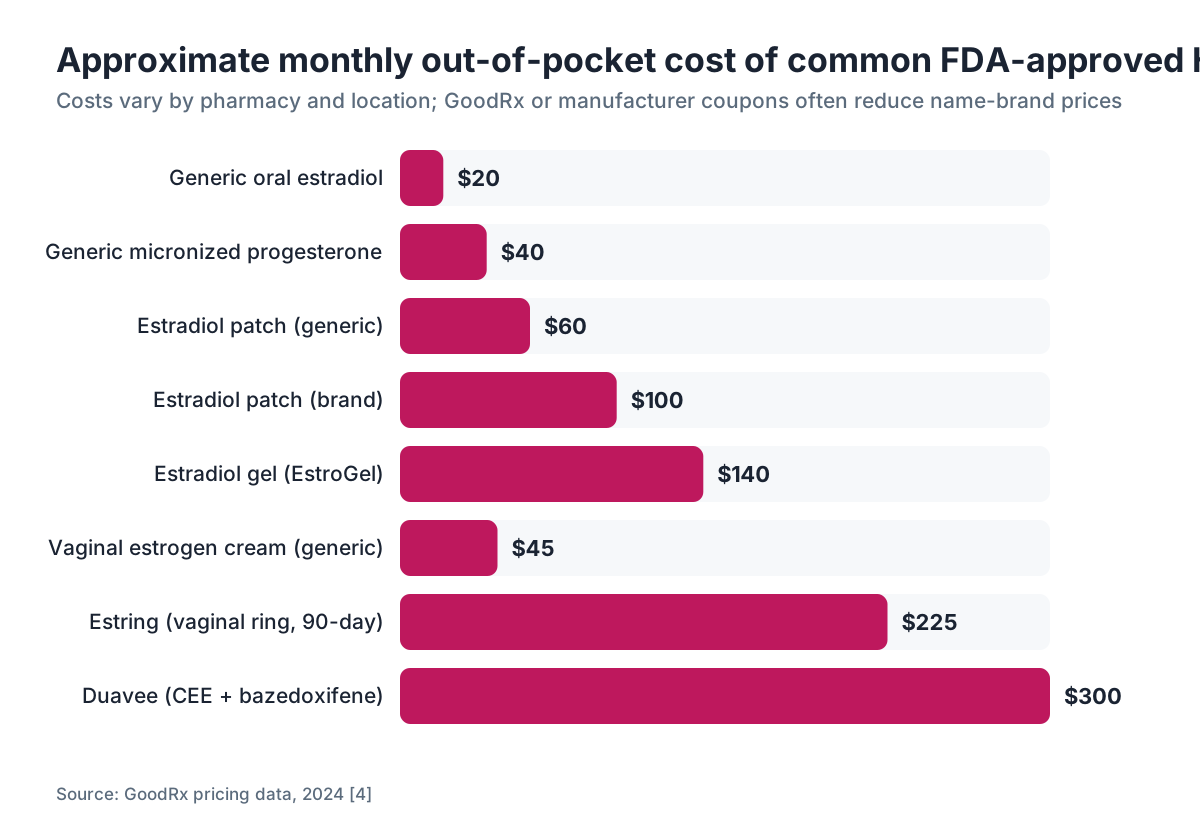
Cost swings a lot depending on product, delivery method, pharmacy, and whether you have insurance. Here's an honest range. [4]
Generic oral estradiol tablets are the cheapest option. With a GoodRx coupon, a 30-day supply often runs $10 to $30 at major chain pharmacies. Micronized progesterone (generic Prometrium) typically adds another $20 to $60 per month.
Name-brand patches like Vivelle-Dot or Climara run $50 to $150 per month without insurance. Generics cost less. Estradiol gel (EstroGel, Divigel) and spray (Evamist) tend to land in the $80 to $200 range without coverage.
The highest out-of-pocket costs are brand-name combination products or newer formulations like Bijuva or Duavee, which can hit $200 to $400 per month without insurance.
Vaginal estrogen products vary similarly. Generic vaginal cream can be $30 to $60. The Estring (a flexible ring you replace every 90 days) often runs $150 to $300 retail without insurance.
With insurance, most FDA-approved HRT products sit on Tier 1 or Tier 2 of the formulary, meaning copays of $10 to $50 per month. Medicare Part D covers them as well, though coverage depends on your specific plan.
Telehealth platforms that prescribe HRT sometimes bundle the visit and prescription into a flat monthly fee. If you're comparing options, WomenRx offers prescriptions for FDA-approved hormone therapy through licensed practitioners with pricing listed on its treatment pages.
Compounded "bioidentical" hormones are almost always more expensive than FDA-approved equivalents, running $50 to $300 or more per month depending on the formulation, and most insurance plans don't cover them.
Is compounded bioidentical hormone therapy FDA-approved?
No. This is one of the most misunderstood distinctions in menopause care, and it gets blurred constantly.
Compounded hormone products, including custom pellets, troches, creams, and multi-hormone combinations marketed as "bioidentical," are not FDA-approved. They haven't gone through the clinical trials required for FDA approval and don't carry regulated prescribing labels. The FDA has stated plainly that "FDA has not approved any compounded hormone therapy for treating menopause symptoms." [5]
That doesn't make compounded products automatically harmful. Compounding pharmacies serve a real purpose when a patient needs a dose or form that doesn't exist commercially. But it does mean the safety and efficacy data are incomplete. You don't know the exact dose you're getting, how it's absorbed, or how it compares to tested products.
The Endocrine Society's 2020 position statement on compounded bioidentical hormones concluded that they "cannot be considered equivalent or safer alternatives to FDA-approved menopausal hormone therapy" and raised concern about marketing claims that outrun the evidence. [6]
Some hormones sold as "bioidentical" are actually FDA-approved. Estradiol is chemically identical to what the ovaries produce, and many FDA-approved products (patches, gels, oral estradiol, Prometrium) contain it. So bioidentical doesn't mean compounded, and compounded doesn't mean better. The word has become more of a marketing term than a scientific one.
For more on what menopause treatment options actually exist, including non-hormonal ones, see our full menopause guide.
What are the FDA-recognized risks of hormone therapy?
Every FDA-approved HRT product carries a label with risks, and they're real. The key findings come mostly from the Women's Health Initiative (WHI), a large randomized trial that began in 1991 and published results in 2002 that triggered a massive drop in HRT use. [7]
The original WHI results found that women taking combined estrogen plus progestin (specifically Premarin plus Provera) had small but statistically significant increases in breast cancer, blood clots, stroke, and heart disease. Estrogen-only therapy (in women without a uterus) showed a different pattern: no rise in breast cancer and a trend toward lower coronary heart disease risk.
Here's the catch. The WHI enrolled women with an average age of 63, most of them overweight and many already past the window where hormone therapy fits best. Reanalysis stratified by age painted a different picture. For women aged 50 to 59 who started HRT near menopause, the risks were considerably lower and the benefits clearer. [11]
The FDA's current labeling still includes a "black box" warning on systemic estrogen products noting risks of cardiovascular events, breast cancer, and dementia. That language reflects the original WHI findings and hasn't been fully updated to match the timing-stratified reanalysis, which frustrates a lot of clinicians who treat menopause. [12]
NAMS's 2022 position statement says "for women aged younger than 60 years or who are within 10 years of menopause onset and have no contraindications, the benefit-risk ratio is favorable for treatment of bothersome VMS." [2] That's meaningfully different from the blanket caution implied by the old black-box language.
Contraindications to HRT include a personal history of breast cancer, estrogen-sensitive cancers, unexplained vaginal bleeding, active blood clots or recent stroke, and active liver disease. These are absolute, not negotiable.
What can you do for menopause without hormone replacement therapy?
Non-hormonal options exist, and some work reasonably well, though none match systemic estrogen for hot flash control.
For vasomotor symptoms, the FDA has approved two non-hormonal prescription options. Fezolinetant (Veozah), approved in 2023, is a neurokinin 3 receptor antagonist that targets the brain pathway driving hot flashes and cut their frequency by roughly 60 percent in phase 3 trials. [8] Paroxetine salt (Brisdelle), an SSRI, is also FDA-approved specifically for hot flashes, at a lower dose than used for depression.
Other medications used off-label for hot flashes include gabapentin, clonidine, and certain other SSRIs and SNRIs like venlafaxine. These have supporting evidence but aren't formally FDA-approved for this use.
For genitourinary symptoms (vaginal dryness, painful sex), non-hormonal options include vaginal moisturizers used regularly (like Replens) and vaginal lubricants used during sex. They don't fix the underlying tissue changes the way estrogen does, but they cut discomfort meaningfully for some women.
For bone protection without hormones, bisphosphonates like alendronate and raloxifene (a selective estrogen receptor modulator) are FDA-approved options.
Lifestyle measures matter too: resistance training, enough calcium and vitamin D, keeping weight in a healthy range, and limiting alcohol all affect how severe symptoms feel and how significant the long-term health changes are.
For women who also want weight support during menopause, GLP-1 receptor agonists like semaglutide have shown meaningful effects on body weight, which indirectly affects hot flash severity and metabolic risk. Our articles on semaglutide for weight loss and semaglutide vs tirzepatide cover the clinical data.
Our full guide on when does menopause start explains how symptoms progress so you can time any treatment decisions well.
How do FDA guidelines on HRT differ from what NAMS and the Endocrine Society recommend?
This is where things get genuinely complicated, and your doctor's advice will depend on which framework they follow.
The FDA label is the legal document. It reflects what the manufacturer proved in trials and what the agency required, and it hasn't fully kept up with the evolving literature on timing, age, and risk stratification. The label language is cautious in a way many menopause specialists consider outdated.
NAMS's 2022 hormone therapy position statement is the most widely used clinical guide among menopause practitioners. It takes a more nuanced stance: HRT is appropriate for healthy women under 60 or within 10 years of menopause onset who have bothersome symptoms, after a discussion of individual risks and benefits. NAMS states plainly that "for most symptomatic menopausal women, benefits outweigh risks." [2]
The Endocrine Society's 2015 Clinical Practice Guideline on menopause and HRT lines up broadly with NAMS: it supports systemic estrogen therapy for symptomatic women aged 50 to 59 without contraindications and recommends the lowest effective dose for the shortest time needed to control symptoms, while noting that arbitrary time limits aren't supported by evidence. [9]
The practical gap is real. Some primary care physicians, still shaped by the 2002 WHI alarm, hesitate to prescribe HRT or push to stop it after two years regardless of a patient's symptom burden. Menopause specialists and certified practitioners at NAMS-aligned practices or telehealth platforms tend to follow the updated guidelines more closely.
See also perimenopause age for context on when these decisions typically become relevant.
How long can you safely take FDA-approved hormone therapy?
There's no universally agreed maximum duration. That's the honest answer, even though it contradicts what many women were told in the early 2000s.
For years, the default advice was "use the lowest dose for the shortest time, ideally no more than 3 to 5 years." That guidance rested on risk extrapolation from the WHI rather than hard evidence that stopping at 5 years is safer than continuing.
NAMS's current position is that duration should be individualized. For women under 60 who are still symptomatic, continuing treatment makes sense if they understand the risks and benefits. There's no arbitrary cutoff. Some women have bothersome hot flashes for a decade or more after menopause, and stopping HRT just to hit a time limit often means symptoms come right back. [2]
For women who start HRT after age 60 or more than 10 years past menopause, the math changes. The cardiovascular and cognitive risks that showed up in the WHI carry more weight in this group, and the benefit-risk balance is less favorable.
Breast cancer risk with combination estrogen-progestogen therapy is the main concern with longer duration. The risk with estrogen alone is lower and, in the WHI, was actually reduced in hysterectomized women. This is one reason some clinicians now look more favorably at estrogen-only therapy in appropriate patients.
Any decision about duration should happen with a prescriber who knows your personal and family history. Annual review is standard practice.
What is the FDA's position on testosterone therapy for women in menopause?
The FDA has not approved any testosterone product specifically for women. That's a notable gap, given that testosterone levels decline with age and many postmenopausal women report low libido, fatigue, and trouble concentrating.
The only FDA-approved indication for testosterone in women that ever came close was a patch (Intrinsa) that was never approved in the US, though it was approved in Europe. Off-label prescribing of male-formulated testosterone products (gels, pellets, injectable testosterone) for women is common in practice but happens without FDA-approved dosing guidance for this population.
The Global Consensus Position Statement on testosterone therapy in women (published in 2019 in the Journal of Sexual Medicine and co-signed by multiple major societies including NAMS and the International Society for Sexual Medicine) concluded that there is "high-level evidence" supporting testosterone therapy for hypoactive sexual desire disorder in postmenopausal women. [10] It also acknowledged that no formulation is formally approved for this use.
For women considering testosterone as part of a broader hormone plan, the practical reality is that dosing has to be extrapolated from male products, which makes accuracy hard. Pellets in particular are difficult to dose and can deliver supraphysiologic levels. Blood testing before and during treatment is essential.
WomenRx clinicians prescribe testosterone off-label for women based on symptom profile and lab levels, within published evidence-based guidelines. This is worth discussing with any provider who manages your hormones.
How do you get a prescription for FDA-approved HRT?
You can get an HRT prescription from your OB-GYN, internal medicine physician, family practice doctor, or a menopause-certified clinician. You can also get one through a telehealth platform that specializes in women's hormones.
A good prescriber takes a full history before prescribing, including your symptoms, family history (especially breast cancer, blood clots, and heart disease), current medications, and when your last period was. Baseline labs are often ordered, though the specific panel varies. Some clinicians order FSH and estradiol levels to confirm where you are hormonally. Others treat based on symptoms alone for women clearly in the menopause transition. [2]
The menopause visit isn't a one-time thing. Follow-up at 3 months to check that the dose is working, then annual reassessment for risks, is the standard of care.
For women still having periods but experiencing symptoms, that's perimenopause, and treatment looks a bit different because ovarian function is still fluctuating. Low-dose hormonal contraceptives are sometimes used in this window rather than menopausal HRT.
If you've been told you're too old for HRT or that you have to stop after five years, and that guidance didn't come with a personalized risk discussion, get a second opinion from a NAMS-certified menopause practitioner or a telehealth provider who follows current evidence-based guidelines.
Frequently asked questions
Which hormone therapy products does the FDA approve for hot flashes?
Systemic estrogen in any FDA-approved form (pill, patch, gel, spray, or vaginal ring) is approved for moderate to severe hot flashes. For women with a uterus, a progestogen must be added. The non-hormonal option fezolinetant (Veozah) is also FDA-approved specifically for hot flashes and was cleared in 2023. Paroxetine salt (Brisdelle) is FDA-approved for this indication as well.
Is bioidentical hormone therapy FDA-approved?
The term bioidentical describes hormone structure, not regulatory status. Many FDA-approved products, including estradiol patches, gels, and oral micronized progesterone, contain hormones chemically identical to those the body makes, so they are bioidentical AND FDA-approved. Custom-compounded bioidentical products from compounding pharmacies are not FDA-approved. The FDA has stated no compounded hormone therapy has been approved for menopause symptoms.
What did the Women's Health Initiative find about HRT safety?
The WHI's 2002 results found small but significant increases in breast cancer, blood clots, stroke, and coronary heart disease in women taking combined estrogen-progestin (Premarin plus Provera). Estrogen-alone showed a different risk profile, including no increased breast cancer risk. Later reanalysis showed these risks were concentrated in older women who started HRT more than 10 years after menopause, not in women who began near menopause onset.
Can you take HRT if you have a family history of breast cancer?
A family history of breast cancer is a reason for a detailed risk discussion, not an automatic disqualification. The deciding factor is your personal history: a prior diagnosis of breast cancer is a contraindication to systemic HRT. A family history raises the conversation about risk level, type of hormone used (estrogen-alone carries lower breast cancer risk than combination therapy), and alternatives. This decision should happen with a provider who knows your full picture.
How long does it take for HRT to work?
Most women notice some reduction in hot flash frequency within 2 to 4 weeks of starting systemic estrogen, with full effect usually established by 8 to 12 weeks. Vaginal symptoms (dryness, painful sex) take longer, often 8 to 12 weeks for noticeable improvement. If symptoms don't improve within 3 months at a given dose, the dose or delivery method may need adjusting rather than abandoning treatment entirely.
Does HRT cause weight gain?
The evidence does not support that HRT causes clinically meaningful weight gain. Some women report initial water retention when starting estrogen, particularly oral forms, but randomized trial data don't show net weight gain from hormone therapy. Body fat distribution does shift during menopause (more central, abdominal fat) with or without HRT. Some data suggest HRT may modestly blunt that shift compared with no treatment.
What is the difference between systemic and local (vaginal) hormone therapy?
Systemic hormone therapy raises estrogen levels throughout the body and treats hot flashes, night sweats, bone loss, and mood effects. Local vaginal estrogen delivers a low dose directly to vaginal tissue with minimal systemic absorption. It treats vaginal dryness, painful sex, and recurrent UTIs but does not address hot flashes or bone loss. Local vaginal estrogen generally does not require a progestogen because systemic absorption is minimal.
What non-hormonal FDA-approved options exist for menopause symptoms?
As of 2024, the FDA has approved fezolinetant (Veozah) and paroxetine salt (Brisdelle) specifically for vasomotor symptoms of menopause. For genitourinary symptoms without hormones, ospemifene (Osphena) and vaginal DHEA (Intrarosa) are FDA-approved. Bisphosphonates and raloxifene are approved for postmenopausal bone loss. SSRIs, SNRIs, gabapentin, and clonidine are used off-label for hot flashes with supporting evidence.
Is hormone therapy covered by insurance?
Most FDA-approved HRT products are covered by commercial insurance and Medicare Part D, typically as Tier 1 or Tier 2 drugs with copays of $10 to $50 per month. Coverage specifics depend on your plan's formulary. Compounded hormones are almost never covered by insurance. Generic oral estradiol and generic progesterone are the cheapest options, often $10 to $30 per month with a GoodRx coupon even without insurance.
At what age should you stop taking hormone therapy?
There is no single age at which all women should stop. NAMS's 2022 guidelines say duration should be individualized, not based on an arbitrary time limit. Women who remain symptomatic and are at low risk can continue. Women who start after age 60 or more than 10 years past menopause face a less favorable benefit-risk ratio. Annual reviews with your provider are the recommended approach rather than a fixed stop date.
Can you start HRT years after menopause ends?
Starting HRT more than 10 years after menopause or after age 60 is not recommended for cardiovascular reasons, based on timing hypothesis data from the WHI and observational studies. In this window, estrogen may not provide the same cardiovascular benefit and may add risk. For genitourinary symptoms alone, low-dose vaginal estrogen can be started at any age because systemic absorption is minimal and the benefit-risk profile is favorable.
What blood tests do you need before starting HRT?
There is no single mandatory panel, but most clinicians order FSH and estradiol to confirm menopausal status, a lipid panel, blood pressure, and a full history including clotting risk factors. Thyroid function (TSH) is often checked because hypothyroidism mimics some menopause symptoms. Some providers also check testosterone levels if low libido is a primary complaint. Routine mammography should be current before starting HRT.
Does the FDA require a progestogen for all women on HRT?
The FDA requires progestogen only for women with an intact uterus who use systemic estrogen. Unopposed estrogen in this group increases endometrial cancer risk, so a progestogen is medically and regulatorily required. Women who have had a hysterectomy can use estrogen alone. Low-dose vaginal estrogen does not require a progestogen for any woman because systemic absorption is too low to stimulate the endometrium.
Sources
- FDA, Drugs@FDA database and menopause drug information page
- North American Menopause Society (NAMS), The 2022 Hormone Therapy Position Statement
- Cochrane Database of Systematic Reviews, MacLennan et al., Hormone therapy for symptoms of menopause, 2017
- GoodRx, hormone therapy pricing data 2024
- FDA, Bioidentical Hormones consumer information page
- Endocrine Society, Position Statement on Compounded Bioidentical Hormone Therapy, 2020
- JAMA, Rossouw JE et al., Risks and benefits of estrogen plus progestin in healthy postmenopausal women (Women's Health Initiative), 2002
- FDA, Veozah (fezolinetant) approval announcement, 2023
- Endocrine Society Clinical Practice Guideline, Treatment of Symptoms of the Menopause, 2015, Journal of Clinical Endocrinology and Metabolism
- Journal of Sexual Medicine, Davis SR et al., Global Consensus Position Statement on the Use of Testosterone Therapy for Women, 2019
- NIH National Heart, Lung, and Blood Institute, Women's Health Initiative overview
- FDA, Menopause and Hormones: Common Questions