Extreme fatigue in perimenopause: why it happens and what actually helps
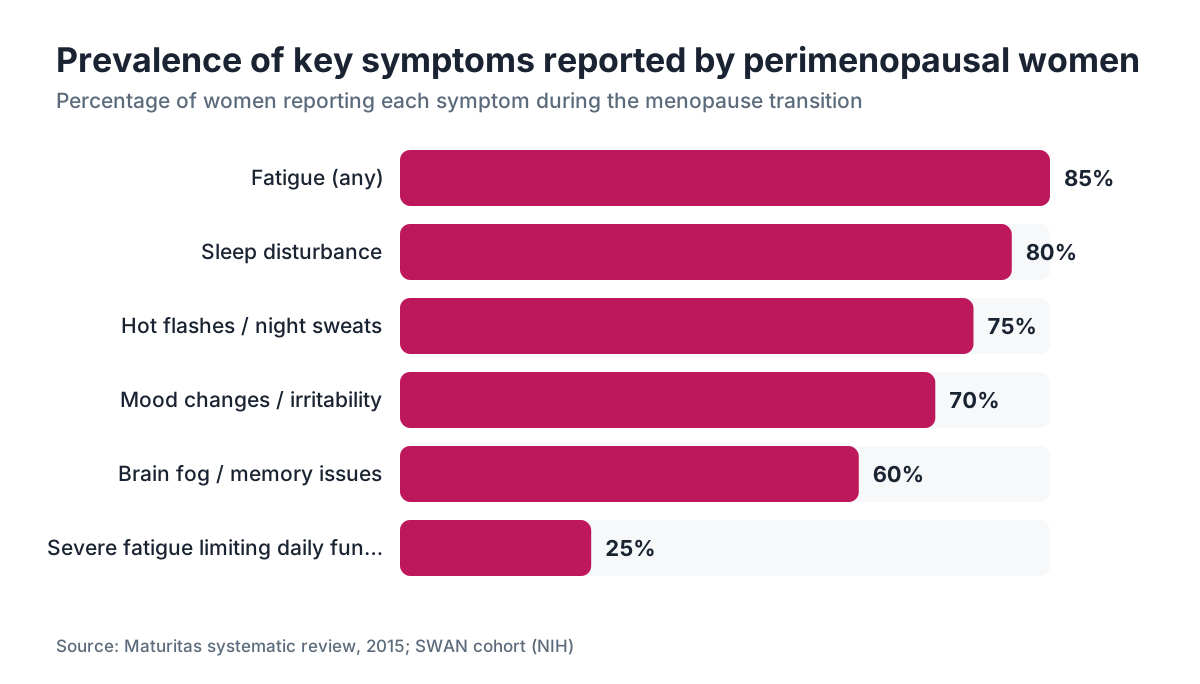
TL;DR: Extreme perimenopause fatigue is real and common, driven by falling estrogen and progesterone, fragmented sleep, and thyroid shifts that often hit at once. Up to 85% of women in the menopause transition report notable fatigue (Maturitas, 2015). Hormone therapy, a consistent wake time, thyroid and iron screening, and resistance training all reduce it. This is a physiology problem, not a mood problem.
What causes extreme fatigue during perimenopause?
Perimenopause fatigue is rarely one thing. It is several biological processes piling on at once, which is why the exhaustion feels so out of proportion to your actual life.
Estrogen does far more than run your period. It modulates serotonin, dopamine, and norepinephrine, the three neurotransmitters most responsible for energy, motivation, and mental stamina [1]. When estrogen starts its erratic decline in the late 30s and 40s, those signaling systems get noisy. You feel it as a bone-deep tiredness that sleep does not touch.
Progesterone is the other big player. It has a calming, sedating effect when it is present in the right amounts. Progesterone usually drops first, often years before estrogen falls much, and many women land in a state of relative estrogen dominance: poor sleep, anxiety, and that restless-but-wiped-out feeling that is hard to describe to anyone who has not lived it [2].
Then there is sleep architecture. Hot flashes and night sweats fragment sleep even when you never fully wake up. A study in Menopause found objective sleep efficiency dropped measurably in perimenopausal women compared to premenopausal controls, independent of mood [3]. You think you slept seven hours. Your brain may have reached deep sleep only once.
Cortisol adds another layer. The stress axis (the HPA axis) becomes less well regulated as ovarian hormones fall, so cortisol can spike at night and bottom out in the morning, the exact opposite of what you want [4]. Low morning cortisol reads as the inability to get out of bed.
Thyroid dysfunction climbs sharply in women aged 40 to 65, and its symptoms overlap almost perfectly with perimenopause: weight gain, cold intolerance, low energy, brain fog [5]. The two conditions travel together in the same population. Blaming everything on perimenopause and missing a quiet hypothyroid state is one of the most common clinical errors in this age group.
How common is severe fatigue in perimenopause?
Very common. A 2015 systematic review in Maturitas found fatigue prevalence estimates ranging from 40% to 85% among women in the menopause transition, depending on how fatigue was defined and measured [6]. That wide spread reflects real differences in how studies measured the symptom, not doubt about whether it exists.
The Study of Women's Health Across the Nation (SWAN), an NIH-funded cohort following more than 3,300 midlife women, found that sleep disturbance and fatigue were among the most consistently reported symptoms across every racial and ethnic group, tracking with hormonal change rather than age alone [3].
Here is the counterintuitive part. Fatigue tends to peak in late perimenopause, the two to three years before the final period, when hormonal swings are widest. Women expect to feel better as menopause approaches. Many feel worse right before periods stop for good.
Severe fatigue, meaning fatigue that limits daily function, affects roughly one in four perimenopausal women in primary care settings [6]. A quarter of women in the transition are functionally impaired by tiredness. That is not a minor side effect.
What does perimenopausal fatigue actually feel like?
The phrase women reach for most: tired but wired. You are too exhausted to keep your plans and too revved up to fall asleep. When you do sleep, you wake at 3 a.m. with your heart pounding or your shirt soaked through. Mornings are brutal. A full night in bed leaves you feeling like you got four hours.
Brain fog rides shotgun. Word retrieval slows. You walk into a room and forget why. Multitasking that came easily for decades now takes real effort. This is not early dementia. It is a documented effect of estrogen fluctuation on prefrontal cortex function [1].
The heaviness is physical too. Limbs feel leaden. Exercise that used to lift you now flattens you for the rest of the day, sometimes the rest of the week. Post-exertional malaise, the kind classically tied to ME/CFS, can show up in perimenopause, though the mechanism is different.
Many women describe an emotional flatness or a low-grade irritability sitting under everything. For most this is not clinical depression, though it can tip into it if ignored. It is more like the volume turned down on things that used to feel rewarding, a direct consequence of dopamine and serotonin instability from estrogen loss [1].
If this fits you, you are not imagining it and you are not weak. You are running on a fuel system that is being actively destabilized.
Which lab tests should you ask for when fatigue is this bad?
Start with a real workup. Fatigue this severe earns a differential diagnosis, not a shrug and a "that's just perimenopause."
The minimum panel should include:
| Test | Why it matters in perimenopause | |---|---| | TSH (thyroid stimulating hormone) | Hypothyroidism peaks in this age group; TSH above 4.0 mIU/L warrants follow-up | | Free T3 and Free T4 | TSH alone misses subclinical thyroid dysfunction in some women | | CBC (complete blood count) | Rules out iron-deficiency anemia, another common culprit | | Ferritin | Can be low even when hemoglobin is normal; ferritin below 30 ng/mL impairs energy | | Vitamin B12 | Deficiency causes profound fatigue and neurological symptoms; often missed | | Vitamin D | Below 20 ng/mL is associated with fatigue; common in this population | | Fasting glucose and HbA1c | Insulin resistance rises in perimenopause and causes energy crashes | | FSH and estradiol | Supports the hormonal picture; FSH above 25 IU/L on repeat testing suggests the transition [7] | | Cortisol (morning, fasting) | High or low values point to adrenal dysregulation |
FSH and estradiol swing wildly during perimenopause, sometimes week to week. A single low estradiol reading proves little. A high FSH (above 25 IU/L on more than one occasion) alongside symptoms carries more weight [7]. The North American Menopause Society describes perimenopause as primarily a clinical diagnosis, which means your symptom history matters as much as any single blood value [7].
Ask your provider to consider a sleep study if night sweats do not fully account for the fatigue. Obstructive sleep apnea rates rise in women after 40, partly because upper airway muscle tone falls with estrogen loss, and women with sleep apnea are chronically underdiagnosed compared with men [3].
Does hormone therapy actually help with perimenopause fatigue?
For most women, yes, and meaningfully. This is where the evidence is cleanest.
Estrogen therapy improves sleep architecture, cuts hot flashes and night sweats that fragment sleep, and restores some of the neurotransmitter signaling behind energy and mood [1]. In the Women's Health Initiative, women on combined hormone therapy reported better sleep quality than placebo at one year on the trial's insomnia rating scale [3].
Progesterone matters too, and the form matters. Micronized progesterone (brand name Prometrium, or compounded bioidentical formulations) has a direct sedating effect through GABA-A receptor activity in the brain [11]. A small but well-designed randomized trial in Menopause found oral micronized progesterone at 300 mg improved objective sleep measures in postmenopausal women versus placebo [2]. Many clinicians use 100 mg at bedtime during perimenopause for sleep support. Our progesterone explainer compares the different forms.
Timing changes the math. The "window of opportunity" idea, now well supported, holds that starting estrogen within 10 years of menopause onset or before age 60 carries a very different risk-benefit profile than starting decades later [7]. For a woman in her mid-40s with debilitating fatigue and no contraindications, the case for trying hormone therapy is strong.
For women who cannot or would rather not use estrogen orally, transdermal options (patches and gels) deliver estrogen without first-pass liver metabolism, which lowers clotting risk and makes them the preferred route for most healthy perimenopausal women under NAMS guidance [7]. See our hormone replacement therapy and estrogen patch guides.
One honest caveat. Hormone therapy reliably treats the hormonal causes of fatigue. If a thyroid problem, anemia, or sleep apnea is layered on top, HRT alone will not carry you all the way. The best results come from treating every contributing factor, more than the obvious one.
What lifestyle changes make a real dent in perimenopause fatigue?
Real ones, not platitudes.
Sleep hygiene carries the load here. Hot flashes disrupt your circadian rhythm, so your body cannot lean on its normal sleep cues as reliably. A consistent wake time, even on weekends, even when you feel terrible, is the single most evidence-backed behavioral fix for sleep quality across dozens of randomized trials. A cool bedroom, ideally below 67 degrees Fahrenheit (19 Celsius), raises the threshold for night-sweat awakenings.
Resistance training has data behind it for perimenopausal fatigue specifically. A randomized controlled trial found that twice-weekly resistance training improved self-reported fatigue and sleep quality in perimenopausal women over 16 weeks, independent of any weight change [6]. The likely mechanisms are better insulin sensitivity, improved sleep architecture, and steadier cortisol. Aerobic exercise helps too, but the fatigue-specific research is stronger for lifting in this group.
Protein is underrated. As estrogen falls, muscle protein synthesis gets less efficient. Women who do not deliberately push protein (most guidelines suggest 1.2 to 1.6 grams per kilogram of body weight daily during the transition) lose lean mass, and muscle loss feeds directly into that heavy, depleted feeling [4].
Alcohol deserves plain talk. Even one or two drinks disrupt the second half of the night, cut REM, and suppress melatonin. For a woman already fighting night sweats and broken sleep, alcohol makes all of it worse. Cutting it for four weeks often produces an energy bump that surprises people.
Caffeine timing beats caffeine quantity. Caffeine's half-life runs roughly five to six hours. A 2 p.m. coffee is half-active at 8 p.m. and a quarter active at midnight. Moving your last cup to noon or 1 p.m. is a free intervention with a real effect on sleep quality.
Stress management is not a soft suggestion. Chronic psychological stress keeps cortisol elevated, which suppresses ovarian hormone production through a well-documented feedback loop. Mindfulness-based stress reduction has been studied in menopausal women and lowered insomnia and fatigue scores in randomized trials [6].
Can iron deficiency cause this level of fatigue during perimenopause?
Yes, and it gets missed constantly.
Heavy periods are common in perimenopause, a byproduct of anovulatory cycles and hormonal chaos. Many women bleed harder for two to five years before periods stop, and that loss drains iron. You can have a normal hemoglobin and still sit at a ferritin of 12 ng/mL, technically "in range" but functionally empty.
Fatigue is the cardinal symptom of iron deficiency, arriving before anemia does. A study in the British Journal of General Practice found that treating iron deficiency without anemia in women of reproductive age improved fatigue scores at four and twelve weeks versus placebo [12]. Many clinicians now treat a ferritin below 30 ng/mL symptomatically, and some argue for 50 ng/mL as the target when fatigue is the complaint.
Oral iron works but takes three to four months to rebuild stores and can wreck your gut. Alternate-day dosing (every other day) actually improves absorption and eases constipation, according to a 2017 trial in Lancet Haematology [9]. IV iron infusion is faster, replenishing stores in two to four weeks, and it is a reasonable option when oral iron is not tolerated or ferritin is very low.
If your provider runs a CBC, calls it normal, and never checks ferritin, ask for the ferritin result by name.
How does thyroid disease overlap with perimenopause fatigue?
The overlap is large and the timing is no accident.
Hashimoto's thyroiditis, the autoimmune condition behind most hypothyroidism in women, often becomes obvious in the 40s and 50s. Estrogen is immune-modulatory, so as it swings and declines, autoimmune conditions can flare or surface for the first time [5]. The American Thyroid Association estimates one in eight women will develop a thyroid disorder in her lifetime, with peak incidence around perimenopause and early postmenopause.
Subclinical hypothyroidism, defined as a TSH above 4.5 mIU/L with normal free T4, shows up in roughly 10% of women over 45 [5]. Its symptoms mirror perimenopause exactly: fatigue, weight gain, brain fog, cold sensitivity, constipation, low mood. A TSH between 2.5 and 4.5 mIU/L with real symptoms is a gray zone where clinical judgment matters and where some women respond to low-dose thyroid treatment.
The error to avoid: a TSH of 3.8, a wave of the hand, and no follow-up. A TSH above 2.5 with classic symptoms in a woman with a personal or family history of autoimmune disease deserves TPO antibody testing and a repeat check in six to twelve months.
When thyroid disease is confirmed and dosing is optimized, fatigue often lifts within four to eight weeks. Levothyroxine (T4) is first-line, though some women feel clearly better on combination T4/T3 therapy, a point still argued in the endocrinology literature.
Does weight gain in perimenopause make fatigue worse?
It does, through several routes.
Visceral fat, the fat that packs around abdominal organs and climbs sharply in perimenopause as estrogen falls, is metabolically active. It secretes inflammatory cytokines including IL-6 and TNF-alpha that directly cause fatigue, the same way a mild chronic illness does [4]. This is not a metaphor. It is the identical inflammatory signaling pathway.
Insulin resistance rises in the transition and drives the blood sugar crashes behind afternoon fatigue, brain fog, and carb cravings. The pancreas answers by pumping out more insulin, which drives fat storage, which worsens inflammation, which worsens fatigue. It is a loop that feeds itself.
Weight gain also adds mechanical load, raises sleep apnea risk, and cuts exercise capacity, all of which stack more fatigue on top.
When fatigue and weight gain are both significant, GLP-1 receptor agonists (semaglutide, tirzepatide) improved energy and metabolic markers alongside weight loss in the STEP and SURMOUNT trials [8]. Semaglutide (the active ingredient in Ozempic and Wegovy) produced an average 15% body weight reduction in STEP 1. Tirzepatide reached up to 22.5% in SURMOUNT-1 [8]. Perimenopausal and menopausal women were included in both trials, though subgroup analyses by menopausal status were not primary endpoints. A platform like WomenRx focused on women's hormones can help you weigh whether a GLP-1 fits your full picture. More in our semaglutide for weight loss guide.
Treating the weight, inflammation, and insulin resistance piece does not replace hormone therapy when hormone therapy is indicated. Ignore it, though, and you leave a major fatigue driver running.
What about adrenal fatigue, cortisol, and perimenopause?
"Adrenal fatigue" is not a recognized medical diagnosis, and you will not find it in the Endocrine Society's clinical practice guidelines. The physiology people are pointing at, though, is real and documented.
The HPA (hypothalamic-pituitary-adrenal) axis that governs cortisol is directly influenced by estrogen and progesterone. As those hormones turn erratic in perimenopause, HPA regulation loses precision [4]. Some women develop elevated nighttime cortisol, which disrupts sleep and produces the wired-but-tired state, or a blunted morning cortisol response, which makes getting out of bed feel impossible.
A 24-hour salivary cortisol test or a dried urine hormone panel (the DUTCH test, for example) can reveal these patterns, but most insurers do not cover them and interpretation needs a clinician with specific expertise. The Endocrine Society does not recommend routine cortisol testing for fatigue absent clinical signs of Cushing's syndrome or adrenal insufficiency [4].
What you can do without testing: protect sleep, cut chronic stressors, skip high-intensity exercise when you are depleted (it spikes cortisol further), and consider ashwagandha, which has three randomized trials showing reduced salivary cortisol and stress-related fatigue, though the effect sizes are modest. No supplement replaces treating the underlying hormonal cause.
The honest summary: cortisol dysregulation in perimenopause is real but hard to measure accurately or treat with precision. Handle the well-documented drivers first (estrogen, progesterone, thyroid, iron) before going deep on cortisol protocols.
When is perimenopause fatigue a sign of something more serious?
Most of the time, fatigue in this age group traces back to the mundane and fixable causes above. A few red flags call for a faster workup.
Fatigue with unintentional weight loss, swollen lymph nodes, or drenching night sweats that do not match a hot-flash pattern needs prompt evaluation to rule out lymphoma and other malignancies. Perimenopausal night sweats are hot and flushing and usually last one to five minutes. Malignancy night sweats tend to soak the sheets, arrive without a clear hormonal trigger, and come with other systemic symptoms.
Fatigue with new joint pain, rash, or photosensitivity can point to autoimmune disease, particularly lupus, which has a second incidence peak in women in their 40s and 50s. ANA antibody testing is appropriate.
Fatigue with shortness of breath or palpitations beyond the occasional perimenopausal heart pounding needs cardiac evaluation. Cardiovascular risk rises sharply after menopause, and atypical cardiac presentations, more common in women than men, can include profound fatigue as the leading symptom.
Post-COVID and long COVID syndromes can mimic perimenopause fatigue closely. If your fatigue turned severe after a COVID infection, that history matters for the workup.
The rule of thumb: if fatigue is severe enough to limit your ability to work or care for yourself and basic labs come back normal, push for a fuller evaluation rather than accepting a blanket perimenopause explanation.
How long does perimenopause fatigue last?
This is the question women ask most, and the one with the most honest uncertainty attached.
Perimenopause itself lasts four to eight years on average, though it can run from one year to more than a decade [7]. Our perimenopause age guide covers timing in detail. Fatigue driven mainly by sleep disruption from hot flashes often improves within one to two years after the final period, when hormones settle at their new lower baseline and night sweats ease.
Fatigue driven by the erratic swings of perimenopause, the unpredictable highs and lows before periods stop, can be worse during perimenopause than after it for some women. That is one of the transition's cruel surprises.
With treatment, including hormone therapy where it fits, many women report meaningful improvement within eight to twelve weeks. Sleep quality tends to improve first, and energy follows. Full resolution can take four to six months, and some women stay on hormone therapy for years because the relief is worth it.
Without treatment, fatigue often does ease once hormones stabilize after menopause, but that is not guaranteed. Women with untreated thyroid disease, iron deficiency, or sleep apnea will not improve on their own no matter where they sit in the transition. For the wider timeline, see when does menopause start and menopause age.
The honest answer: sit in the thick of severe perimenopause fatigue and do nothing, and you will probably feel better in three to five years. Treat the underlying causes now, and you will probably feel better in three to five months. That gap is not nothing.
Frequently asked questions
Can perimenopause cause extreme tiredness even if I'm sleeping enough hours?
Yes. Estrogen and progesterone changes disrupt sleep architecture, so your brain cycles through less restorative deep sleep and REM even when total hours look fine. Hot flashes can trigger microarousals you never remember. A sleep study can confirm whether your sleep quality matches your sleep quantity. Many women log seven to eight hours and still wake unrestored.
What is the difference between perimenopause fatigue and depression?
They overlap and can coexist, but they are not the same. Perimenopausal fatigue is driven mainly by sleep disruption and neurotransmitter instability from hormonal change. Depression involves persistent low mood, loss of interest, and often hopelessness. Fatigue that resolves with hormone therapy was likely hormonal at its root. Fatigue that persists despite hormonal treatment warrants a mental health evaluation. A good clinician screens for both.
How do I know if my fatigue is from perimenopause or my thyroid?
You cannot reliably tell without lab work. TSH, free T3, free T4, and TPO thyroid antibodies should be checked in any perimenopausal woman with significant fatigue. Both conditions produce the same profile: exhaustion, weight gain, brain fog, mood changes. Many women have both at once. Treating one and missing the other leaves fatigue unresolved.
Can low iron cause fatigue in perimenopause even without anemia?
Yes, and this gets missed often. Iron deficiency without anemia (low ferritin, normal hemoglobin) causes real fatigue, cold intolerance, and poor concentration. Heavy perimenopausal periods drain iron stores. Ask your provider to check ferritin specifically. A ferritin below 30 ng/mL in a symptomatic woman is worth treating even when the CBC reads normal.
Does hormone replacement therapy help with perimenopausal fatigue?
For most women, yes. Estrogen therapy reduces hot flashes, improves sleep architecture, and restores some neurotransmitter function. Micronized progesterone at bedtime has direct sleep-promoting effects through GABA receptors. The North American Menopause Society supports HRT for symptomatic women under 60 or within 10 years of menopause onset. Improvement in sleep usually arrives several weeks before the energy lift.
What vitamins or supplements help with perimenopause fatigue?
Vitamin D (if deficient), iron (if ferritin is low), and B12 (if deficient) have real evidence for fatigue improvement. Magnesium glycinate at 300 to 400 mg at night can improve sleep quality. Ashwagandha has three randomized trials showing modest cortisol reduction and energy improvement. Most other supplements marketed for menopause fatigue lack quality evidence. Fix deficiencies first before adding extras.
Can GLP-1 medications like semaglutide help with perimenopause fatigue?
Indirectly, yes. When significant weight gain and insulin resistance drive inflammation and fatigue, GLP-1 drugs like semaglutide or tirzepatide can break that cycle. STEP 1 showed 15% average weight loss with semaglutide; SURMOUNT-1 showed up to 22.5% with tirzepatide. Cutting visceral fat lowers the inflammatory cytokines behind fatigue. These drugs do not directly treat hormonal fatigue, so they work best alongside hormonal assessment, not instead of it.
Is extreme fatigue an early sign of perimenopause?
It can be. Fatigue and sleep disruption can appear before irregular periods, especially as progesterone declines in the late 30s and early 40s. FSH and estradiol may still read normal at this stage. A clinical diagnosis of perimenopause rests on symptoms plus age and menstrual changes, not on blood values alone. New, unexplained fatigue is worth considering as perimenopause even when your periods are still regular.
Does perimenopause fatigue get worse before it gets better?
Often, yes. Fatigue tends to peak in late perimenopause, the two to three years just before the final period, when hormonal swings are widest. Many women expect to feel better as periods thin out. Instead they feel worse. Fatigue usually improves in early postmenopause as hormone levels settle at a new baseline, though this varies widely.
Can exercise make perimenopause fatigue worse?
High-intensity exercise can temporarily worsen fatigue in women with depleted iron, low cortisol, or severe sleep loss. Post-exertional malaise, feeling worse for one to two days after exertion, is a real pattern for some perimenopausal women. Resistance training two to three times weekly tends to be better tolerated and more helpful for fatigue than daily high-intensity cardio. Start moderate and build.
How is perimenopause fatigue diagnosed?
There is no single test. Diagnosis rests on clinical history (symptom pattern, menstrual changes, age), a physical exam, and blood work including TSH, CBC, ferritin, B12, vitamin D, fasting glucose, and hormonal markers like FSH and estradiol. NAMS calls perimenopause a clinical diagnosis. The point of labs is to rule out or identify treatable contributors, not to confirm perimenopause on one number.
What time of day is perimenopause fatigue usually worst?
Most women name the afternoon, typically 2 to 4 p.m. That matches a natural circadian dip compounded by poor nighttime sleep and, often, post-meal blood sugar swings from insulin resistance. Morning fatigue (unable to get out of bed despite feeling awake) is common when the cortisol response is blunted. Both patterns are worth describing to your provider, since they point to different underlying causes.
Can sleep apnea develop or worsen during perimenopause?
Yes. Estrogen and progesterone help maintain upper airway muscle tone. As they fall, sleep apnea risk rises sharply in women. A 2003 study in JAMA found postmenopausal women had 3.5 times the odds of sleep-disordered breathing compared with premenopausal women. Women with sleep apnea are underdiagnosed because their symptoms often differ from men's. If fatigue persists after treating hormonal causes, ask for a sleep study.
Is it normal to feel this tired in your early 40s during perimenopause?
Yes. Perimenopause can start as early as the late 30s, and fatigue is often one of its first symptoms, showing up before irregular periods or hot flashes. In your early 40s with unexplained fatigue, poor sleep, and subtle mood changes, hormonal testing and a full metabolic panel are worth requesting. Being dismissed as "too young for menopause" is common but not clinically justified.
Sources
- Endocrine Society, Journal of Clinical Endocrinology and Metabolism: Estrogen effects on central neurotransmitters and cognition
- Menopause journal (The Menopause Society): Micronized progesterone and sleep quality RCT
- NIH/NHLBI, Study of Women's Health Across the Nation (SWAN)
- Endocrine Society Clinical Practice Guidelines: Management of menopause
- American Thyroid Association: Thyroid disease in women
- Maturitas journal: Systematic review of fatigue prevalence in the menopause transition (2015)
- North American Menopause Society (NAMS): The Menopause Guidebook and 2022 Hormone Therapy Position Statement
- New England Journal of Medicine: STEP 1 trial (semaglutide) and SURMOUNT-1 trial (tirzepatide)
- Lancet Haematology: Alternate-day iron dosing trial (2017)
- JAMA: Sleep-disordered breathing in postmenopausal women (2003)
- FDA: Progesterone (Prometrium) prescribing information
- British Journal of General Practice: Iron deficiency without anemia and fatigue in women