Estrogen withdrawal headaches: how to treat and prevent them
TL;DR: Estrogen withdrawal headaches happen when estrogen drops sharply, triggering migraine or tension-type pain in up to 60% of perimenopausal women. Stabilizing estrogen with low-dose transdermal HRT is the most evidence-backed approach. NSAIDs, triptans, and targeted lifestyle changes help in the short term. Most women see real improvement once hormone levels stop swinging.
What exactly is an estrogen withdrawal headache?
An estrogen withdrawal headache is head pain driven by a rapid fall in estrogen, not by any fixed low level. The brain's trigeminal pain system is sensitive to estrogen flux. When estrogen drops quickly, it lowers the threshold for spreading cortical depression, the wave of electrical suppression that underlies migraine aura, and it shifts serotonin and prostaglandin signaling in ways that make blood vessels in the meninges reactive and painful [1].
Most women have already lived the classic example: the menstrual migraine. Estrogen crests before ovulation and then falls sharply in the days before a period. That drop, not the period itself, is what causes the headache. In perimenopause the same mechanism runs on a chaotic, unpredictable schedule. Estrogen can spike and crash multiple times in a single week, so headaches become more frequent, harder to predict, and often more severe than anything a woman experienced in her 20s and 30s [2].
These are not imaginary or psychosomatic. The International Headache Society classifies "headache attributed to exogenous hormone use" as a distinct entity (ICHD-3, section 8.3), and clinicians now recognize the broader category of estrogen-related headache as a physiological phenomenon tied to ovarian hormone changes rather than stress alone [1].
One distinction matters. A withdrawal headache is not the same as a headache caused by consistently low estrogen. Low estrogen can raise baseline migraine frequency too, but the sharpest pain tracks the rate of change, not the absolute number.
Why do estrogen levels drop and cause headaches in perimenopause?
Perimenopause begins, on average, in a woman's mid-to-late 40s and can last four to eight years before the final menstrual period [2]. During this window the ovaries still produce estrogen but do so erratically. Follicle-stimulating hormone (FSH) rises, tries to recruit follicles, and sometimes overshoots, producing estrogen spikes followed by steep falls. The nervous system, which has spent decades adapting to a fairly predictable monthly cycle, suddenly has no pattern to calibrate to.
A few scenarios produce the sharpest estrogen drops and therefore the worst withdrawal headaches:
- The premenstrual phase of an irregular cycle, especially after a long anovulatory stretch followed by a sudden ovulatory cycle.
- The pill-free week on combined oral contraceptives, which many perimenopausal women still use.
- Stopping or skipping a dose of estrogen-containing HRT.
- Natural menopause itself, where ovarian estrogen production winds down (though once estrogen is consistently low and stable, withdrawal headaches often ease).
After menopause, roughly 45% to 60% of women who had migraines before menopause see improvement once estrogen stabilizes at a low but steady level. The remaining group, particularly those who enter menopause surgically with an abrupt estrogen loss, often have their worst headaches immediately after surgery [3].
Thyroid dysfunction can look remarkably similar and is worth ruling out, since hypothyroidism causes headaches and is common in this age group. See our overview of thyroid hormone replacement therapy if you have other thyroid symptoms alongside the head pain.
How do you know if your headache is from estrogen withdrawal or something else?
Diagnosis is mostly clinical. No blood test reliably predicts or confirms an estrogen withdrawal headache in real time, because the culprit is the rate of change, and estrogen levels swing hour to hour.
Features that point toward estrogen withdrawal as the cause:
- Headaches cluster around the days before your period, the pill-free week, or the day after you skip an HRT dose.
- Migraine-type quality: moderate to severe, often one-sided, throbbing, worsened by light or movement.
- The headache starts 24 to 48 hours after the estrogen drop begins.
- Pattern changed at perimenopause onset: headaches that were manageable before your mid-40s are now more frequent or more severe.
- Pain responds to estrogen supplementation (a therapeutic trial can itself be diagnostic).
Features that should prompt urgent evaluation (these are not estrogen withdrawal headaches until proven otherwise):
- "Thunderclap" onset, the worst headache of your life arriving in under a minute.
- Headache with fever, stiff neck, or rash.
- New neurological symptoms: weakness, slurred speech, vision loss.
- Headache that steadily worsens over days to weeks.
- First migraine ever appearing after age 50.
The American Migraine Foundation notes that new-onset headache in midlife women deserves imaging to exclude secondary causes before attributing it to hormones [4]. The perimenopausal hormone context is real, but it is not a reason to skip a workup when red flags are present.
What are the most effective treatments for estrogen withdrawal headaches?
Treatment splits into two jobs: fixing the underlying estrogen instability, and managing the acute pain when it arrives.
Stabilizing estrogen (the most durable fix)
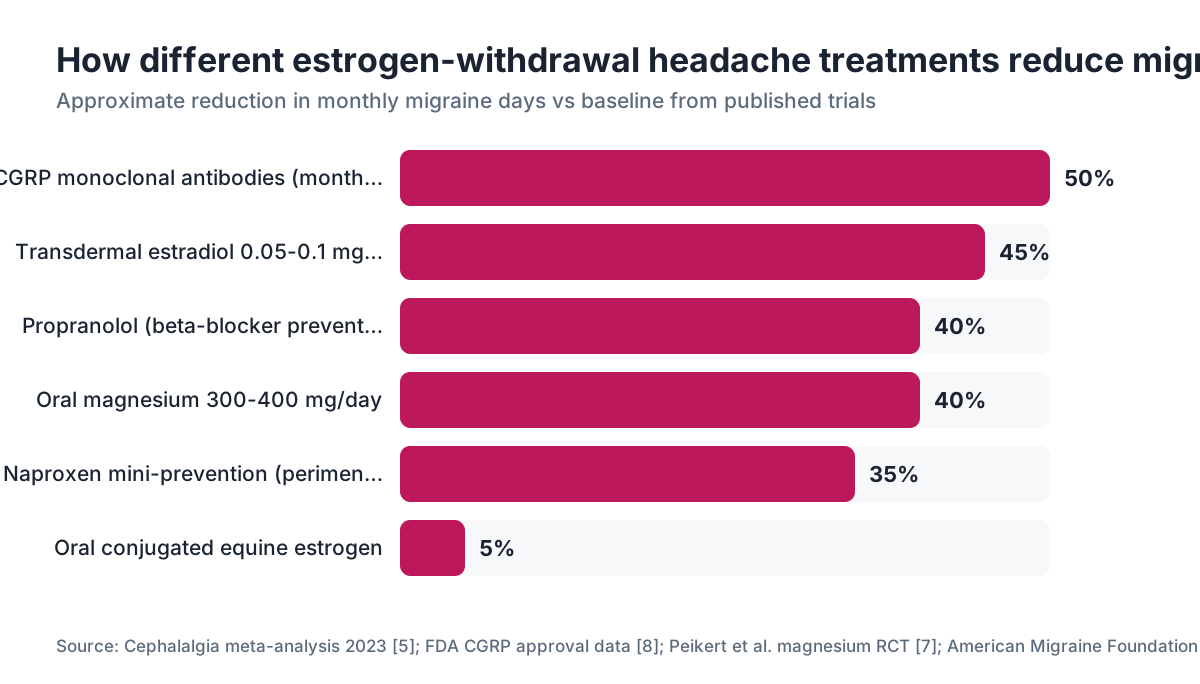
The most evidence-supported approach is transdermal estrogen therapy, delivered by patch, gel, or spray, because it bypasses the gut and produces steadier blood levels than oral estrogen [5]. A 2023 meta-analysis in Cephalalgia found that transdermal 17-beta estradiol at 0.05 to 0.1 mg/day significantly reduced migraine frequency in perimenopausal women, while oral conjugated equine estrogen did not show consistent benefit and sometimes worsened headaches because of its uneven absorption and conversion [5]. Oral estrogen creates peaks and troughs that can themselves trigger withdrawal headaches between doses. That is the whole problem in one sentence.
For women who still have a uterus, estrogen has to be combined with progestogen to prevent endometrial hyperplasia. The progesterone choice matters for headache too. Micronized progesterone (brand name Prometrium in the US) appears more headache-neutral than synthetic progestins, which can be vasoconstrictive and sometimes worsen migraine [6].
The North American Menopause Society (NAMS) states in its 2022 Hormone Therapy Position Statement that "transdermal estrogen is preferred over oral estrogen for migraine sufferers because it avoids first-pass hepatic metabolism and maintains more stable serum levels" [6]. That is as close to a clinical consensus statement as this field gets.
Acute treatment when a headache is already there
Triptans are the first-line acute treatment for estrogen-withdrawal migraines that meet migraine criteria, the same as for any migraine [4]. Sumatriptan, rizatriptan, and eletriptan are all reasonable. They bind serotonin receptors and constrict dilated cranial vessels, and they work best taken early, ideally within the first hour of an attack.
NSAIDs, particularly naproxen sodium 550 mg, help both for acute treatment and as short-term prevention. Taking naproxen twice daily starting two days before an expected hormone drop (before the pill-free week, before the period) can blunt the headache before it starts [4].
Gepants (rimegepant, ubrogepant) are newer CGRP-receptor antagonists that treat acute migraine without the vasoconstriction risk of triptans, which makes them an option for women with cardiovascular concerns or triptan non-responders.
Overt magnesium deficiency worsens migraine, and magnesium glycinate 300 to 400 mg daily has modest evidence for prevention [7]. It will not replace HRT if HRT is indicated, but it is low-risk and cheap.
Does hormone replacement therapy help or worsen estrogen withdrawal headaches?
The answer depends almost entirely on the route of delivery and the consistency of dosing. This is one of the most common points of confusion women bring to their doctors.
Oral estrogen, especially at the start of treatment, can temporarily worsen headaches in women who are migraine-prone. Absorption is variable, first-pass liver metabolism converts it to multiple estrogen metabolites at unpredictable rates, and the resulting swings can mimic the very withdrawal cycles that cause trouble [5].
Transdermal estrogen, applied as a patch changed twice weekly (or a gel or spray used daily), produces much flatter pharmacokinetics. Most studies and clinical guidelines now agree this is the preferred form for women with migraine [5][6]. Some women, particularly those with menstrual migraine who switch from cyclical oral contraceptives to continuous low-dose transdermal estradiol, see a big drop in headache frequency within two to three months.
A practical nuance: the progestogen component. If you are on a sequential (cyclical) HRT regimen, the days when progestogen is added and then withdrawn can trigger headaches the same way progesterone withdrawal does in late-cycle menstrual migraine. Switching to continuous combined HRT (estrogen and progestogen every day without breaks) or using a progesterone-releasing IUD (levonorgestrel IUD) with continuous transdermal estrogen often resolves this [6].
Four things that raise the odds HRT helps your headaches rather than hurting them:
- Use transdermal, not oral, estrogen.
- Use micronized progesterone or a levonorgestrel IUD instead of synthetic progestins where possible.
- Dose continuously, not cyclically, if headaches cluster around the progestogen-free phase.
- Start at the lowest effective dose and titrate slowly.
This is exactly the kind of nuance a hormone-literate clinician should walk you through. Platforms like WomenRx connect women with clinicians who specialize in this territory, particularly if your GP is less familiar with migraine-HRT interactions.
What non-hormonal options can prevent estrogen withdrawal headaches?
Not every woman wants or can safely use HRT. Some have absolute contraindications (certain hormone-sensitive cancers, active blood clots). Others prefer to try non-hormonal strategies first. Here is what the evidence actually supports.
Preventive medications with real data:
Beta-blockers (propranolol, metoprolol) are FDA-approved for migraine prevention and work through a separate pathway, calming the neurological excitability that makes the brain prone to an attack. They do not touch estrogen levels. Propranolol at 40 to 240 mg daily has the most evidence [4].
Amitriptyline at low doses (10 to 75 mg nightly) has decades of evidence for migraine prevention and also helps with the sleep disruption that can itself trigger headaches during perimenopause.
Calcitonin gene-related peptide (CGRP) monoclonal antibodies (erenumab, fremanezumab, galcanezumab) are injectable monthly or quarterly preventives, FDA-approved starting in 2018 [8]. They work on the CGRP pathway involved in migraine and show roughly 50% reduction in monthly migraine days in clinical trials. They are expensive (often $600 to $900 per month before insurance), but for women with chronic migraine they can change everything.
Lifestyle factors with real (if modest) impact:
Sleep regularity matters more than most people realize. Estrogen-related sleep disruption, the night sweats that wake you at 3 a.m., feeds directly into the next morning's migraine. Treating the sleep disruption, through HRT or other means, often cuts headache frequency even without a direct headache treatment [3].
Skipping meals is a reliable trigger. Estrogen already destabilizes blood sugar in some perimenopausal women, and adding fasting or long gaps between meals is asking for a headache.
Alcohol, especially red wine, triggers migraine through several pathways (histamine, tyramine, sulfites, direct vasodilation). Perimenopausal women often find their previously tolerable alcohol intake now reliably causes next-morning migraines.
Caffeine cuts both ways. A cup of coffee can abort a mild estrogen-withdrawal headache by causing vasoconstriction. But daily caffeine above about 200 mg per day raises rebound headache risk. The rule: use caffeine for acute rescue, not as a daily preventive.
How are estrogen withdrawal headaches different from regular migraines?
Mechanically they share the same final pathway: trigeminal nerve activation, neurogenic inflammation, CGRP release, and vasodilation of meningeal vessels. What differs is the trigger and the hormonal context.
A few features stand out in practice.
Estrogen withdrawal headaches tend to run longer. Menstrual migraines, the closest analog, last an average of 23 hours compared to about 13 hours for non-menstrual migraines in the same women, according to a study of women with migraine published in Cephalalgia [9]. They are also more likely to resist triptans than non-hormonal migraines, which is clinically important. If your triptan is not working as well as it used to, estrogen fluctuation is a plausible reason.
Estrogen withdrawal headaches also recur more often within 24 hours after initial treatment. A dose of sumatriptan brings relief, but the headache returns the next morning because the underlying estrogen drop is still happening. That is why extended NSAID coverage (naproxen around the clock for two to three days) sometimes beats a single triptan dose for these headaches.
Standard migraine triggers like stress, bright lights, or loud noise still apply and often stack. Estrogen withdrawal lowers the threshold, so a trigger that would have been tolerated a decade ago is now enough to tip the balance. Keeping a headache diary that tracks both cycle or HRT dosing and external triggers helps identify this stacking and gives your clinician far better data to work from.
Are estrogen withdrawal headaches worse during perimenopause or after menopause?
For most women, the worst stretch is perimenopause, specifically the years when estrogen is actively fluctuating rather than declining steadily to a new stable floor.
The data are fairly consistent. A large cohort study, the Study of Women's Health Across the Nation (SWAN), followed thousands of women across the transition and found that headache frequency increased significantly during the menopausal transition compared to the premenopausal period, then decreased after the final menstrual period in the majority of participants [2]. Women with migraines before the transition were more likely to worsen during perimenopause and then improve after menopause.
The exception is surgical menopause. Women who undergo bilateral oophorectomy lose ovarian estrogen abruptly and completely, rather than through the gradual (if chaotic) decline of natural menopause. This group has significantly higher rates of post-surgical migraine and more severe headaches, and they tend to benefit most from immediate transdermal HRT to cushion the hormonal freefall [3].
The honest answer for natural menopause: if you can get through the perimenopausal storm, headaches usually improve. The goal of treatment is to make that transition less painful, not to prevent every headache forever.
For context on what happens to the broader hormonal picture during this window, our piece on the peri menopausal transition covers the full symptom spectrum.
What should you tell your doctor to get the right treatment?
Most primary care physicians get limited training in the overlap of hormones and headache. Coming to an appointment with the right information sharply improves your odds of leaving with a plan that actually works.
Bring a headache diary covering at least two months. It should include the date and time the headache started, severity on a 1 to 10 scale, any associated symptoms (nausea, aura, light or sound sensitivity), where you were in your cycle or HRT dosing schedule, what you took for it and whether it helped, and how long it lasted. Even a simple smartphone notes app entry is useful data.
Be explicit about timing. "I get headaches" is far less useful to a clinician than "I get a moderate to severe throbbing headache almost every month starting about two days before my period, and another in the week after I take my placebo pills on my OCP."
Ask specifically about transdermal estrogen. If your doctor suggests oral HRT and you have migraine, it is fair to ask why transdermal was not offered, given that NAMS explicitly recommends it as the preferred route for women with migraine [6].
Ask about migraine prevention, more than rescue. Many women are handed a triptan and sent home. A woman with monthly or more frequent estrogen-withdrawal migraines is a candidate for preventive therapy. Prevention is the goal, not chasing pain after it starts.
If your GP is not comfortable managing both migraine and hormone therapy together, asking for a referral to a neurologist with headache subspecialty training, or a menopause specialist, is reasonable. The menopause society maintains a provider directory that can help you find a NAMS-certified clinician.
Can birth control pills make estrogen withdrawal headaches worse?
Yes, for many women, and this is one of the more counterintuitive findings in the field.
Combined oral contraceptives (COCs) suppress natural ovarian estrogen production and deliver synthetic ethinyl estradiol at a fixed dose. During the 21 active pill days, ethinyl estradiol is present. During the 7 placebo or pill-free days, it drops abruptly. That drop can trigger a withdrawal migraine worse than the natural hormonal fluctuation the pill was supposed to control, because the synthetic estrogen level falls faster and more completely than natural estradiol typically would [10].
For perimenopausal women with migraine who also need contraception, several alternatives are worth discussing with a clinician:
- Continuous COC use (no placebo week, skipping the withdrawal interval entirely). This removes the monthly estrogen drop and many women see big migraine reduction.
- Progestogen-only pills (the "mini-pill") do not provide estrogen at all, so there is no withdrawal; migraine response is variable but generally neutral.
- A levonorgestrel IUD combined with transdermal estradiol: highly effective contraception plus steady estrogen without a weekly or monthly drop.
- The contraceptive implant or injectable progestogen: again, no estrogen withdrawal.
One firm clinical rule: women with migraine with aura should not use combined hormonal contraceptives containing estrogen, because of the established increased stroke risk. This is an FDA label contraindication, not a theoretical concern [10]. If your migraines include visual aura, loss of vision, or other neurological symptoms, combined pills are off the table.
For women curious about the broader landscape of menopause care, the new menopause covers how clinical thinking has shifted.
When should an estrogen withdrawal headache send you to the emergency room?
Most estrogen withdrawal headaches, even severe ones, do not require emergency care. But some headaches that feel hormonal are not.
Go to the emergency room immediately for:
- Thunderclap headache: maximal pain within 60 seconds of onset. This is subarachnoid hemorrhage until proven otherwise.
- Headache with fever above 38.5C (101.3F) and neck stiffness or new light sensitivity (not your usual migraine photophobia). This suggests meningitis.
- Headache with focal neurological deficit (weakness on one side, speech problems, sudden vision loss). This could be a TIA or stroke.
- Headache in someone with a known history of brain tumor or immunosuppression.
- A headache that is different in character from all previous headaches, even if you have a long migraine history.
For women already diagnosed with estrogen-withdrawal migraines, a headache that is severe but follows the familiar pattern is generally manageable at home with triptans and NSAIDs. The warning signs above are about the headache that breaks the pattern.
Postmenopausal women should also know that new or worsening headache is a recognized, if less-discussed, symptom that warrants evaluation. It is easy to blame everything in midlife on hormones, but postmenopausal women are also at higher baseline risk for cardiovascular events, and new headache deserves a fresh clinical look. This parallels the principle that bleeding after menopause is always worth investigating even when most causes turn out to be benign.
Frequently asked questions
How long do estrogen withdrawal headaches last?
Without treatment, estrogen-withdrawal migraines typically last 23 to 72 hours, longer on average than non-hormonal migraines. Menstrual migraines have been documented to average about 23 hours in published headache studies. With early triptan or NSAID treatment, duration can often drop to under 8 hours. Headaches driven by ongoing estrogen fluctuation, rather than a single drop, can recur daily until levels stabilize.
Can magnesium really help with estrogen withdrawal headaches?
Magnesium has modest evidence for migraine prevention overall. Published trials in Cephalalgia found that oral magnesium supplementation reduced migraine attack frequency by roughly 40% compared to placebo over three months. For estrogen-related migraine specifically the evidence is thinner, but magnesium deficiency is common in perimenopausal women and the supplement is low-risk. Magnesium glycinate or citrate at 300 to 400 mg daily is the usual recommendation.
Do triptans work for estrogen withdrawal headaches?
Yes, but they work less well than for non-hormonal migraines in many women. Estrogen-withdrawal migraines tend to last longer and recur after the initial triptan dose wears off, because the underlying hormone drop continues. Taking a triptan early in the attack and following it with naproxen 500 to 550 mg improves sustained pain-free rates. If triptans consistently fail, a gepant (rimegepant or ubrogepant) is a reasonable alternative.
Why did my migraines get worse in perimenopause if estrogen is supposed to help?
Estrogen is protective when levels are stable, but the perimenopause problem is instability, more than low levels. The erratic ovarian estrogen output during the transition means levels spike and crash unpredictably, and each drop can trigger a withdrawal headache. Many women find their migraines improve after full menopause, once estrogen settles at a consistently lower but stable level, which confirms that flux is the real culprit.
Is there a difference between an estrogen withdrawal headache and a menstrual migraine?
They share the same core mechanism: a rapid fall in estrogen triggering trigeminal pain system activation. Menstrual migraine is essentially the premenstrual version of an estrogen withdrawal headache, caused by the late-luteal estrogen drop before a period. In perimenopause the same mechanism runs on an unpredictable schedule outside neat monthly cycles. Clinically they are treated the same way.
Can stopping HRT cause withdrawal headaches?
Yes, and this is a real and underrecognized issue. Abruptly stopping estrogen therapy causes a steep drop in circulating estrogen, the same mechanism that drives any withdrawal headache. If you need to discontinue HRT, tapering the dose gradually over several weeks to months is far less likely to trigger severe withdrawal headaches than stopping cold turkey. Talk to your prescriber before stopping.
What type of HRT patch is best for headache prevention?
Any patch delivering 17-beta estradiol continuously is a reasonable starting point. A common dose studied for migraine prevention is 0.05 mg per day (50 micrograms) applied twice weekly. Patches changed twice weekly, such as Vivelle-Dot or generic equivalents, maintain steadier blood levels than once-weekly patches. The key is avoiding oral estrogen, which creates peaks and troughs that can worsen rather than help withdrawal headaches.
Can CGRP medications help with estrogen withdrawal headaches?
Yes. CGRP monoclonal antibodies, approved by the FDA starting in 2018, work on the calcitonin gene-related peptide pathway central to all migraine, including estrogen-withdrawal types. They reduce monthly migraine days by roughly 50% in clinical trials. Monthly injectable options include erenumab (Aimovig), fremanezumab (Ajovy), and galcanezumab (Emgality). They do not affect estrogen levels and can be used alongside or instead of HRT.
How do I track whether my headaches are hormone-related?
Keep a daily log for at least two months noting headache onset time and severity, menstrual cycle day or HRT dose timing, sleep quality, major meals and alcohol, and any other potential triggers. An app like Migraine Buddy or a paper diary both work. Pattern recognition is the diagnostic tool here. If 70% or more of headaches cluster within a two-day window around a hormone event, the hormonal connection is almost certainly real.
Are estrogen withdrawal headaches dangerous during perimenopause?
The headaches themselves are not dangerous for most women. They are painful and disruptive but do not cause permanent harm. The risk to watch for is migraine with aura in women using combined hormonal contraceptives, which carries an elevated stroke risk and requires stopping the estrogen-containing method. New headache patterns, sudden-onset severe headache, or headache with neurological symptoms always warrant prompt medical evaluation.
Do non-hormonal menopause treatments help with headaches?
Indirectly. SSRIs and SNRIs used for vasomotor symptoms (like venlafaxine or low-dose paroxetine) have some evidence for migraine prevention, though it is not their primary indication. Reducing hot flashes and night sweats with any effective treatment improves sleep, and better sleep reduces migraine frequency. Gabapentin, sometimes used off-label for hot flashes, has limited headache prevention data and side effects that make it a poor first choice.
Can frozen shoulder or other musculoskeletal symptoms occur alongside estrogen withdrawal headaches?
Yes. Falling estrogen in perimenopause affects connective tissue, tendons, and joint fluid throughout the body. Many women get a cluster of symptoms at once: headaches, joint pain, frozen shoulder, skin changes, and brain fog. The common thread is estrogen loss affecting tissues and systems that depend on it. See our coverage of frozen shoulder menopause if joint pain is part of your picture.
How quickly does transdermal estrogen relieve withdrawal headaches?
Improvement with transdermal estradiol is not immediate. Most women report noticeable reduction in headache frequency within six to twelve weeks of starting a stable transdermal regimen. The first month can be inconsistent as the body adjusts to steadier levels. If headaches worsen significantly beyond the first six weeks, the dose, formulation, or delivery method likely needs adjustment with your clinician.
What is the connection between estrogen withdrawal headaches and sleep problems in menopause?
Estrogen withdrawal disrupts sleep directly, through night sweats, thermoregulation failures, and reduced REM sleep, and sleep disruption is one of the most reliable migraine triggers. This creates a reinforcing loop: estrogen drops, sleep fragments, the fragmented sleep triggers a headache, and the headache further disrupts sleep. Breaking this loop usually requires treating both the hormonal instability and the sleep problem at once rather than addressing just one.
Sources
- International Headache Society, ICHD-3 Classification (2018)
- NIH National Institute on Aging, menopause and the menopausal transition information
- Menopause (journal), NAMS, review on menopause and migraine
- American Migraine Foundation, treatment guidelines for menstrual migraine
- Cephalalgia (journal), meta-analysis on transdermal vs oral estrogen and migraine (2023)
- North American Menopause Society (NAMS), 2022 Hormone Therapy Position Statement
- Cephalalgia (journal), Peikert et al. 1996 magnesium RCT; confirmed in later magnesium reviews
- U.S. Food and Drug Administration, CGRP monoclonal antibody drug approvals (Aimovig, Ajovy, Emgality)
- Cephalalgia (journal), Granella et al. study of menstrual vs non-menstrual migraine duration
- U.S. Food and Drug Administration, combined oral contraceptive prescribing information and migraine-with-aura contraindication
- Endocrine Society, Clinical Practice Guidelines
- NAMS, Menopause Practice: A Clinician's Guide and certified practitioner directory