Estrogen replacement in perimenopause: what actually works
TL;DR: Estrogen is the most effective treatment for perimenopausal hot flashes, night sweats, disrupted sleep, and vaginal dryness, cutting hot flash frequency 75 to 90 percent in most women. For women under 60 with no contraindications, NAMS and the Endocrine Society agree benefits outweigh risks. It works best started within 10 years of the last period.
What is estrogen replacement and how is it different from full HRT?
Estrogen replacement therapy (ERT) means taking estrogen by itself, no progestogen attached. Full hormone replacement therapy (HRT) adds a progestogen, either a synthetic progestin or body-identical progesterone, to protect the uterine lining. If you still have your uterus, you need that progestogen. If you've had a hysterectomy, estrogen alone is usually what you get.
The distinction changes the risk math. Most of the breast cancer worry from the original Women's Health Initiative (WHI) trial came from the combined estrogen-plus-progestin arm, not the estrogen-only arm. In the WHI estrogen-alone arm, which followed roughly 10,000 women who had hysterectomies, researchers found a non-statistically-significant reduction in breast cancer risk after 7.1 years of use [1].
Perimenopause is the stretch before your last period, often lasting 4 to 10 years. Hormone levels here are chaotic: estradiol swings wildly instead of declining smoothly, and progesterone drops first. That chaos drives the symptoms most women notice long before their periods stop. If you want to place yourself on that timeline, our article on perimenopause age lays out the staging clearly.
Estrogen replacement during perimenopause usually means adding back the estradiol your ovaries are producing unpredictably, to flatten out the swings. This is not the older, high-dose conjugated equine estrogen used in the WHI. The dominant approach now is low-dose transdermal estradiol, which skips the liver and carries a different risk profile than pills.
What symptoms does estrogen replacement actually treat in perimenopause?
Estrogen has good evidence for the classic cluster: hot flashes and night sweats, the sleep loss those flashes cause, genitourinary syndrome of menopause (vaginal dryness, urinary urgency, pain with sex), mood instability, and joint pain. It treats all of these, some better than others.
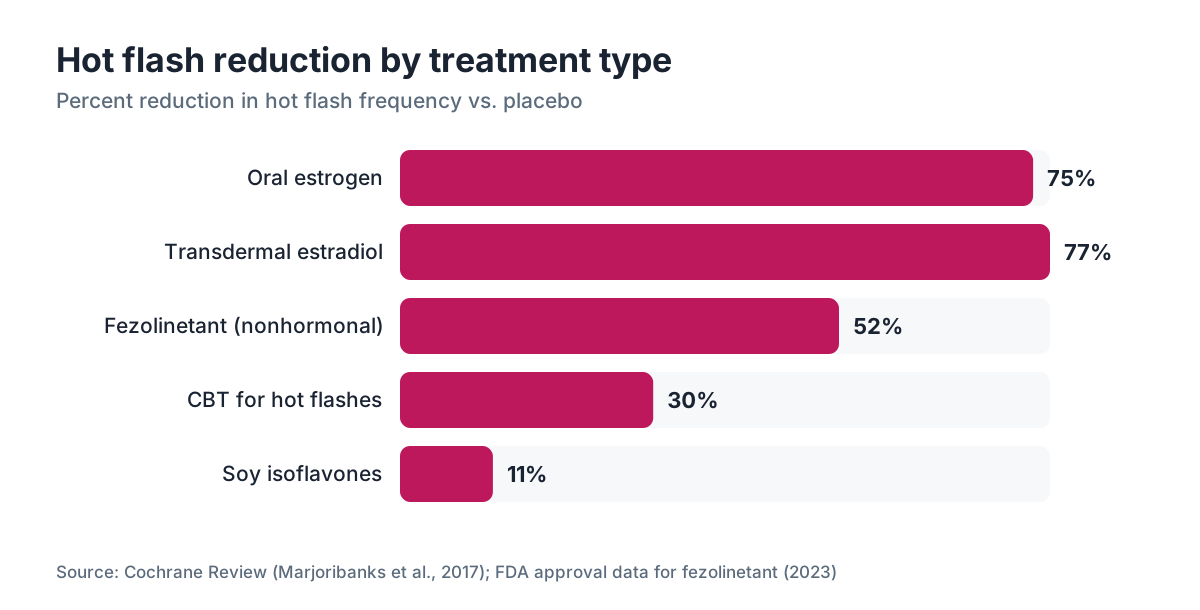
Hot flashes and night sweats have the strongest trial data. A 2017 Cochrane review of 24 trials found oral estrogen reduced hot flash frequency by about 75 percent versus placebo, and severity by roughly 87 percent [2]. Transdermal forms perform about the same.
Sleep is trickier. The improvement is real but mostly secondhand: fewer night sweats means fewer 3 a.m. wakeups. If your sleep problem is vasomotor-driven, estrogen works well. If your insomnia has other roots, it helps less.
Genitourinary symptoms respond to both systemic and local estrogen. Low-dose vaginal estrogen (a cream, ring, or tablet placed right on the tissue) treats dryness and painful sex without raising blood levels in any meaningful way. It's safe even for most women who can't use systemic estrogen [3].
Depression and anxiety in perimenopause are real and often missed. Estrogen has a modest, documented antidepressant effect in the perimenopausal window specifically. A randomized trial in JAMA Psychiatry in 2018 found transdermal estradiol significantly cut depressive symptoms versus placebo over 12 months in perimenopausal and early postmenopausal women [4]. The effect ties to the hormonal transition. It is not a general antidepressant for everyone.
Bone is the quiet benefit. Estrogen slows bone loss, and women lose density fastest in the years around menopause. A bone density test (DEXA scan) before you start gives you a baseline that actually earns its keep, especially if you're in your mid-40s with cycles already going haywire.
What are the real risks of estrogen replacement in perimenopause?
Your risk depends on your age, whether you have a uterus, which formulation you use, and your health history. Lumping all hormone therapy into one risk bucket, which a lot of the old messaging did, is just wrong.
Blood clots (venous thromboembolism, VTE) are a genuine risk with oral estrogen. The culprit is liver metabolism: swallowed estradiol pushes the liver to make more clotting factors. Transdermal estradiol doesn't do this to the same degree. The ESTHER study found transdermal estrogen carried no increased VTE risk versus non-users, while oral estrogen roughly doubled it [5]. That's one of the clearest reasons clinicians now reach for patches, gels, or sprays over pills in women with clot risk factors.
Breast cancer risk is the fear that stops most women cold. Here's the honest picture. The WHI combined therapy (synthetic progestin plus conjugated equine estrogen) showed a small increase in breast cancer after about 5 years, roughly 8 extra cases per 10,000 women per year [1]. The estrogen-alone arm showed no significant increase and a possible decrease. Newer data hints that micronized progesterone (body-identical) may carry less breast risk than synthetic progestins, though that evidence is mostly observational, not from randomized trials [6].
Stroke risk goes up with oral estrogen at standard doses, especially in older women or those with cardiovascular risk factors. Low-dose transdermal estrogen doesn't appear to raise stroke risk in otherwise healthy women under 60 [7].
Endometrial cancer is the reason unopposed estrogen belongs only to women without a uterus. Estrogen stimulates the uterine lining and raises endometrial cancer risk when it's not balanced by a progestogen. Add adequate progestogen and the risk drops back to baseline.
Gallbladder disease is mildly more common with oral estrogen. Transdermal routes carry less risk again, because they skip that first pass through the liver.
The framing that matters: if you're 45 to 55 with bothersome symptoms and no contraindications, the absolute risk increase from estrogen is small. The North American Menopause Society (NAMS) says plainly that for healthy women under 60 within 10 years of menopause onset, the benefit-risk balance favors treatment for most [7]. For the wider context, see our article on hormone replacement therapy.
Which forms of estrogen are used in perimenopause: patch, pill, gel, or cream?
Estrogen comes in several delivery forms, and choosing between them is part clinical, part practical.
| Form | Route | Liver Effect | VTE Risk | Typical Dose Range | |---|---|---|---|---| | Oral estradiol | Swallowed | First-pass metabolism | Elevated | 0.5 to 2 mg/day | | Transdermal patch | Skin | Bypasses liver | Not elevated | 0.025 to 0.1 mg/day | | Estradiol gel | Skin | Bypasses liver | Not elevated | 0.25 to 1.5 g/day | | Estradiol spray | Skin | Bypasses liver | Not elevated | 1 to 3 sprays/day | | Vaginal ring (Estring) | Local | Minimal systemic | Not elevated | 2 mg ring, 90-day release | | Vaginal cream | Local | Minimal systemic | Not elevated | 0.5 to 2 g as directed |
For most perimenopausal women, the estrogen patch is the most commonly prescribed systemic option right now. Steady levels, easy to monitor, and it skips the liver entirely. Gels and sprays behave similarly but ask for a little more daily attention: let them dry, and keep the treated skin off children and partners.
Oral estradiol is fine for women without VTE, migraine, or liver issues, and some women simply want a pill. It costs less at the counter and comes with decades of safety data. The trick is knowing where its limits are.
Vaginal estrogen is underused. It works extremely well for genitourinary symptoms, absorbs very little at standard doses, and the FDA label for low-dose vaginal estrogen reflects that safety [3]. Many oncologists now allow it even for breast cancer survivors with severe symptoms, though that call should involve both the oncologist and the prescriber.
Compounded formulations (pellets, custom creams) stay popular but lack FDA-approved standardization. Pellet blood levels in particular run all over the place and can sit supraphysiologic for weeks. Major societies do not recommend pellets as first-line therapy.
How is estrogen dosed and monitored during perimenopause?
Dosing in perimenopause is harder because your ovaries are still making estrogen on their own erratic schedule. A blood level drawn on any single day may not reflect your average. So clinicians usually lean on how you feel more than on a serum estradiol target, at least at first.
Typical starting doses: a patch at 0.0375 mg to 0.05 mg per day, oral estradiol at 0.5 to 1 mg per day, or 0.5 g per day of 0.1% gel. The aim is the lowest dose that controls symptoms. After 6 to 12 weeks, most clinicians check in: are symptoms controlled, and is anything acting up, like breast tenderness or spotting?
If you have a uterus, the progestogen matters as much as the estrogen dose. Micronized progesterone (Prometrium in the US) at 100 to 200 mg at bedtime is the most commonly recommended form now, thanks to its side effect profile and the observational data pointing to lower breast cancer risk than synthetic progestins like medroxyprogesterone acetate [6]. Our progesterone article goes deeper.
Lab monitoring is somewhat optional. Baseline labs often include estradiol, FSH, thyroid (TSH), and sometimes lipids and a metabolic panel. FSH confirms perimenopausal status but is useless for titrating a dose, because it bounces around day to day. Annual follow-up usually means a blood pressure check, a symptom review, and a conversation about whether to keep going.
Keep your mammograms on schedule. Combined estrogen-progestogen therapy can raise breast density on imaging, which makes it harder to read. Tell your radiologist you're on hormone therapy.
At WomenRx you can work with clinicians who focus on perimenopausal hormone management, which matters because dosing in the transition years is genuinely fussier than postmenopause.
Who should not use estrogen replacement therapy?
The absolute no-go list is short. Estrogen is not appropriate for women with:
- Active or recent (within 12 months) venous thromboembolism or pulmonary embolism
- Active arterial thromboembolic disease (recent stroke or heart attack)
- Known estrogen-sensitive cancers, specifically active breast cancer or endometrial cancer
- Undiagnosed vaginal bleeding
- Liver disease severe enough to impair metabolism
- Known or suspected pregnancy
A personal history of breast cancer is usually a contraindication to systemic estrogen, though oncology guidance keeps shifting, and some clinicians will prescribe vaginal estrogen in this group after a careful conversation.
Migraine with aura is a relative contraindication to oral estrogen because of the stroke link. Transdermal estrogen at low, stable doses doesn't carry the same risk and is generally considered acceptable [7].
A family history of breast cancer alone, including a first-degree relative, is not a contraindication under NAMS guidelines. The absolute risk increase from therapy is small enough that shared decision-making, not automatic avoidance, is the right move.
High cardiovascular risk is a relative contraindication, especially for older women starting more than 10 years after their last period. The timing hypothesis is real: estrogen looks protective in younger, recently menopausal women and may be neutral or mildly harmful in women with established atherosclerosis who start late. That's the case for starting young if you're going to start at all.
When is the best time to start estrogen in perimenopause?
Earlier is generally better, and perimenopause is not too early if your symptoms are significant.
The window of opportunity, or timing hypothesis, is one of the most important ideas in menopause medicine. Re-analysis of WHI data plus multiple observational studies keep showing the same thing: women who start hormone therapy within 10 years of menopause onset, and especially within 5 years, have better cardiovascular outcomes and lower all-cause mortality than non-users. Women who start more than 10 years out show neutral to slightly negative cardiovascular effects [1].
For perimenopause specifically, starting while cycles are still irregular is fine if symptoms bother you. Your ovaries are producing less progesterone reliably, so the progestogen matters even before periods stop for good. Fertility is still live: estrogen therapy doesn't reliably block ovulation, so you need contraception if you don't want pregnancy. Low-dose combined birth control pills sometimes fill this role in early perimenopause because they handle symptoms and contraception at once, though they use higher hormone doses than standard HRT.
The move from perimenopause to menopause (12 straight months with no period) usually lands in the early to mid-50s. Knowing when menopause starts for your age and history helps frame the timing conversation. Our menopause age article covers the population-level data.
You don't have to wait until symptoms are unbearable. Starting at moderate severity is perfectly reasonable, and some evidence points to better long-term outcomes when therapy begins before big cardiovascular or bone changes pile up.
How long can you take estrogen replacement safely?
The old 5-years-maximum rule came from an early WHI reading that has since been walked back. Most major societies, NAMS and the Endocrine Society included, now say there's no arbitrary time limit for healthy women who are benefiting and have no contraindications [7, 8].
The Endocrine Society's 2015 clinical practice guideline puts it directly: "We recommend against routine discontinuation of systemic [menopausal hormone therapy] in women aged 65 years or older," advising individualized decisions over age-based cutoffs [8].
Women who start in perimenopause often continue into their 60s. The choice to stop, cut back, or keep going should get revisited every year, weighing current symptoms, current risk factors, and whether the original reasons still hold. Bone protection, for one, fades fast after you stop, so a woman taking estrogen partly for her bones may have reason to continue longer or switch to a bisphosphonate.
Stopping cold tends to bring symptoms roaring back. Tapering over 2 to 4 months is usually more comfortable. Some women taper and coast; others get every symptom back no matter how slow they go.
The reassuring counterpoint to "how long is safe": the absolute numbers are small. A 60-year-old woman's baseline breast cancer risk is roughly 2.7 percent over the next 10 years (per the NCI Gail model). A modest relative risk of 1.1 nudges that to about 3 percent, a difference of 0.3 percentage points [9]. That's the kind of number-grounded conversation to have with your prescriber.
What's the difference between bioidentical hormones and conventional estrogen?
"Bioidentical" just means the hormone molecule matches what your ovaries make. Estradiol is estradiol, whether it comes from an FDA-approved patch or a compounding pharmacy. Marketing has muddied the word, but the chemistry is plain.
FDA-approved bioidentical estrogen products include estradiol patches (Vivelle-Dot, Climara, Minivelle), gels (Divigel, EstroGel), sprays (Evamist), and oral estradiol tablets. All bioidentical. All standardized, quality-tested, and the exact products used in most clinical trials.
Custom-compounded bioidentical hormones from a pharmacy are a different animal. They may hold the same estradiol molecule, but purity, absorption, and dose consistency swing from batch to batch. NAMS, the FDA, and the Endocrine Society all note that compounded hormones lack the safety and efficacy evidence of FDA-approved products and shouldn't be preferred over them just because a label says "natural" or "custom" [7].
Estriol, a weaker estrogen sometimes tucked into compounded "Biest" or "Triest" blends, has no FDA-approved indication and thin long-term safety data. Major societies do not recommend it as a substitute for estradiol.
So: if you want body-identical estrogen, you can get it in a fully regulated, standardized, FDA-approved form. The word "compounded" does not automatically mean better or safer.
Can you use estrogen replacement if you're also taking a GLP-1 for weight loss?
Yes, and this question comes up constantly, because GLP-1 receptor agonists like semaglutide and tirzepatide are increasingly used by perimenopausal women for weight. There's no known pharmacokinetic interaction between estradiol and GLP-1 medications.
There may even be some overlap that helps. GLP-1 receptors sit in the hypothalamus, where temperature control and vasomotor symptoms start. Early data hint that GLP-1s might modestly ease hot flash severity, though that's nowhere near established enough to call it a treatment. Estrogen, for its part, improves insulin sensitivity and can shift body composition in ways that pair well with GLP-1-driven weight loss.
Women dropping real weight on a GLP-1 medication should know that losing fat lowers peripheral estrogen production, since fat tissue is a backup estrogen source after menopause. If you're on a GLP-1 and nearing menopause, your symptoms may sharpen as the weight comes off, which makes estrogen therapy more relevant, not less.
For a side-by-side of the GLP-1 options that come up for this group, the semaglutide vs tirzepatide article walks through the practical differences.
Neither drug needs a dose change when you combine them. They sit together fine in practice, though formal trial data on the combination in perimenopausal women specifically is sparse.
What does estrogen replacement cost and how is it covered?
Cost swings hard by formulation and by whether insurance is involved.
| Formulation | Brand Example | Cash Price (approx.) | Generic Available? | |---|---|---|---| | Oral estradiol 1 mg | Estrace | $15 to $40/month | Yes | | Patch 0.05 mg (8/month) | Vivelle-Dot | $30 to $90/month | Yes | | Estradiol gel 0.1% | EstroGel | $80 to $150/month | Yes | | Estradiol spray | Evamist | $150 to $250/month | No | | Vaginal cream | Estrace cream | $50 to $120/month | Yes | | Vaginal ring (Estring) | Estring | $200 to $350/ring (90 days) | No |
Cash prices from GoodRx and pharmacy retail data as of early 2025; exact prices vary by pharmacy and location.
Most FDA-approved estrogen products are covered under Medicare Part D and most commercial plans, though formulary tier sets your out-of-pocket cost. Generic oral estradiol and generic patches usually land on Tier 1 or 2, meaning low copays.
The ACA requires most new private plans to cover preventive services rated A or B by the USPSTF with no cost-sharing. Menopause hormone therapy doesn't carry an A or B rating for general prevention, so copays apply in most plans. Medically indicated prescriptions for symptom management are typically covered under the prescription benefit anyway.
Telehealth prescribing of hormone therapy, including through women's-hormone platforms, is generally covered by commercial insurance for the visit itself, with the prescription filled at your chosen pharmacy. The consultation runs from zero (in-network covered visit) to $75 to $200 out of pocket depending on the platform.
How does estrogen replacement relate to the full picture of menopause care?
Estrogen does a lot. It does not do everything. A complete perimenopause and menopause plan usually pulls in several pieces beyond estrogen.
Sleep: estrogen helps with vasomotor-driven insomnia, but cognitive behavioral therapy for insomnia (CBT-I) has the best long-term evidence for insomnia of any cause. You can do both.
Weight and metabolic health: women gain an average of 1 to 2 pounds per year across the perimenopausal transition, part hormonal and part lifestyle [9]. Estrogen modestly helps with belly fat but is not a weight loss drug. GLP-1 medications hit that more directly for women who qualify.
Mood: estrogen helps with mood in the hormonal transition specifically, but clinical depression needs its own treatment. The two aren't interchangeable.
Bone: estrogen protects, but weight-bearing exercise, enough calcium (1200 mg daily for women over 50 per NIH), and vitamin D (600 to 800 IU daily minimum per the National Academy of Medicine) are the foundation no matter your hormone status [10].
Cardiovascular health: estrogen's heart benefits in younger women are real. But blood pressure control, lipid management, not smoking, and regular aerobic exercise are not things estrogen can stand in for.
Our full menopause article covers the broader treatment landscape. And if you want the combined role of estrogen and progesterone in the perimenopausal years, the progesterone article is the right next read.
Frequently asked questions
Can I start estrogen replacement while I'm still having periods?
Yes. Perimenopause by definition includes years when cycles still happen but come irregularly. Estrogen therapy can start during this phase if symptoms are significant. If you have a uterus, you need a progestogen. You also need contraception, because estrogen therapy does not reliably prevent ovulation. Some clinicians use low-dose combination birth control pills early in perimenopause to cover both.
Does estrogen replacement cause weight gain?
No, not typically. The evidence doesn't support estrogen as a cause of weight gain. It may even modestly reduce abdominal fat compared to no therapy. Women often gain weight in perimenopause from metabolic changes, lost muscle mass, and less activity, but that happens at similar rates with and without estrogen. Some women get early fluid retention, which usually settles.
What's the difference between estrogen for perimenopause and birth control pills?
Combination birth control pills contain synthetic estrogen (ethinyl estradiol) at doses roughly 4 to 7 times higher than standard menopause therapy, plus synthetic progestin. Perimenopause HRT uses body-identical estradiol at much lower doses aimed at symptom relief, not ovulation suppression. The higher-dose pill is better contraception but carries more cardiovascular and clot risk. They're not interchangeable, though pills sometimes cover both jobs in early perimenopause.
How quickly does estrogen replacement start working for hot flashes?
Most women notice improvement within 2 to 4 weeks of starting transdermal or oral estradiol, with full effect usually by 8 to 12 weeks. If the dose is too low, symptoms may ease partway but not fully, which is your signal to reassess. Most women hit significant hot flash reduction within 3 months at the right dose.
Is the estrogen patch safer than the pill for perimenopause?
For most perimenopausal women, yes. The patch skips liver metabolism, so it doesn't push up clotting factors the way oral estrogen can. The ESTHER study found no increased VTE risk with transdermal estrogen versus nearly double the risk with oral. The patch is preferred by most current guidelines for women with VTE risk factors, migraines, or hypertension. For women without those, oral estradiol is also reasonable.
Do I need progesterone if I still have my uterus and use an estrogen patch?
Yes. Estrogen stimulates the uterine lining, and without a progestogen to balance it, the risk of endometrial hyperplasia and endometrial cancer climbs over time. This holds for every delivery route: patch, gel, spray, or pill. If you have a uterus, the progestogen is not optional. Micronized progesterone (Prometrium) is the most commonly recommended form now, based on its side effect profile and safety data.
Can estrogen replacement help with perimenopausal depression and anxiety?
Estrogen has a real but specific antidepressant effect during the hormonal transition. A 2018 JAMA Psychiatry randomized trial found transdermal estradiol significantly reduced depressive symptoms in perimenopausal women versus placebo over 12 months. The effect appears tied to hormonal flux. It does not replace antidepressant therapy in women with clinical major depression unrelated to the transition.
Can I use vaginal estrogen if I can't take systemic hormones?
Usually yes. Low-dose vaginal estrogen absorbs very little systemically and is considered safe for most women who can't take systemic estrogen, including many with a history of certain cancers (breast cancer survivors should still check with their oncologist). The FDA label for low-dose vaginal estrogen reflects this distinct safety profile. It treats vaginal dryness, painful sex, and urinary urgency, but not hot flashes or sleep.
Will stopping estrogen bring symptoms back?
For most women, yes. Hot flashes and night sweats return when estrogen stops, often within weeks to months, especially if they were severe before you started. The comeback tends to match the original intensity. Tapering over 2 to 4 months is more comfortable than quitting abruptly for most women, though some get their symptoms back regardless of how slowly they taper.
Does estrogen replacement protect against Alzheimer's disease?
The evidence is genuinely mixed, and it deserves an honest answer. Observational studies suggested cognitive protection when estrogen started early in the transition. The WHI Memory Study, which started older women on combined therapy, showed a small increased risk of dementia. Current NAMS consensus is that estrogen should not be started or continued specifically to prevent dementia, given weak evidence for late initiation and unclear benefit for early initiation in randomized trials.
What labs do I need before starting estrogen replacement?
There's no universal mandated panel, but a typical pre-treatment workup includes a baseline estradiol, FSH (to confirm perimenopausal status), TSH (thyroid problems mimic these symptoms), and sometimes a metabolic panel and lipids. Blood pressure and BMI get documented. A mammogram within 1 to 2 years is standard. Pelvic exam and Pap should be current. Pregnancy test if you're still at risk.
Is there a natural alternative to estrogen replacement that works as well?
Nothing non-hormonal matches estrogen for moderate to severe vasomotor symptoms. Fezolinetant (Veozah), a nonhormonal neurokinin B receptor antagonist the FDA approved in 2023, cuts hot flash frequency by roughly 45 to 60 percent, well below estrogen's 75 to 90 percent. Cognitive behavioral therapy for hot flashes has moderate evidence. Soy isoflavones and herbal supplements show weak, inconsistent results across trials and are not endorsed by NAMS as equal to hormone therapy.
Can estrogen replacement affect my thyroid medication dose?
Oral estrogen specifically can raise thyroxine-binding globulin, which can mean women on thyroid replacement need more levothyroxine. This is an oral-route effect; most studies show transdermal estrogen doesn't meaningfully change thyroxine binding. If you're on thyroid medication and starting oral estradiol, check a TSH 6 to 8 weeks after starting to see whether your dose needs adjusting.
How do I find a doctor who will actually prescribe estrogen for perimenopause?
OB-GYNs and internists with extra training in menopause medicine are the best starting point. NAMS certifies Menopause Practitioners (the NCMP designation) and keeps a provider directory at menopause.org. Telehealth platforms that specialize in women's hormones, including WomenRx, can also connect you with prescribers trained specifically in perimenopausal hormone management, which helps if your primary care provider is unfamiliar or reluctant.
Sources
- Cochrane Database of Systematic Reviews, Marjoribanks et al. 2017, Long-term hormone therapy for perimenopausal and postmenopausal women
- FDA, Prescribing Information for Vaginal Estrogen Products (Estring, Estrace Vaginal Cream)
- JAMA Psychiatry, Maki et al. 2018, Estradiol and Depressive Symptoms in Perimenopause
- Circulation, ESTHER Study, Canonico et al. 2007, Hormone therapy and venous thromboembolism among postmenopausal women
- BMJ, Fournier et al. 2008, Unequal risks for breast cancer associated with different hormone replacement therapies
- North American Menopause Society (NAMS), 2022 Hormone Therapy Position Statement
- Endocrine Society, 2015 Clinical Practice Guideline: Treatment of Symptoms of the Menopause
- National Cancer Institute, Breast Cancer Risk Assessment Tool (Gail model) background documentation
- NIH Office of Dietary Supplements, Calcium Fact Sheet for Health Professionals
- FDA, Drug Approval for Veozah (fezolinetant), 2023