Estrogen progesterone patch: what it is, how it works, and which brands to know
TL;DR: A combination estrogen-progesterone patch delivers both hormones through your skin, skipping the liver and the first-pass metabolism that comes with pills. Only one FDA-approved combination patch exists in the U.S., Combipatch, though many women pair a standalone estrogen patch with oral or vaginal progesterone. Bioidentical estrogen patches are widely available. Compounded combination patches exist but carry less oversight.
What is an estrogen progesterone patch and how does it work?
An estrogen-progesterone patch is a sticky square that releases hormones through your skin into your bloodstream, continuously, for 3 to 7 days at a time. Most patches use a reservoir or matrix design: the hormones sit in a drug-containing layer, migrate through an adhesive layer, and pass into your skin at a controlled rate depending on the product.
The main appeal of the skin route is that it skips the liver on the first pass. When you swallow an estrogen pill, your liver processes it before it reaches your circulation, and that triggers a rise in clotting proteins. A patch avoids that step. Research linked to the ESTHER study found that transdermal estradiol does not significantly increase C-reactive protein or clotting factor levels the way oral estradiol does [1]. For women with cardiovascular risk factors or a history of migraine with aura, many clinicians prefer the patch for exactly this reason.
Progesterone is trickier. The progestogen in most FDA-approved patches is norethindrone acetate (NETA), which is synthetic. True bioidentical progesterone (micronized progesterone, sold as Prometrium) has no FDA-approved patch, because it does not absorb well through skin at therapeutic doses. That distinction matters. We will come back to it.
Want both hormones in a single patch? Your FDA-approved option in the U.S. is Combipatch, and that is it. Everything else means pairing a standalone estrogen patch with a separate progesterone delivery method.
Who needs both estrogen and progesterone (and who only needs estrogen)?
This is one of the most clinically important questions in hormone replacement therapy. The answer hinges almost entirely on whether you have a uterus.
If you have a uterus, you need a progestogen alongside any estrogen. Estrogen on its own thickens the uterine lining (endometrial hyperplasia), which raises endometrial cancer risk over time. The Women's Health Initiative showed that unopposed estrogen in women with a uterus increased endometrial cancer risk roughly 2.5-fold [2]. Adding progesterone or a synthetic progestogen stops that thickening.
If you had a hysterectomy, you do not need progesterone for uterine protection, and many clinicians prescribe estrogen-only therapy in that case. A few women with a history of endometriosis who had a hysterectomy still get combination therapy, because residual endometrial tissue can hang around.
Women moving through perimenopause sometimes still ovulate irregularly, which muddies the picture. If you are still cycling, even unpredictably, your clinician has to account for the progesterone your own ovaries make before layering on more.
Here is the short version. Uterus intact means a combination patch (or an estrogen patch plus separate progesterone) is standard of care. Hysterectomy means you almost certainly skip the progesterone side entirely.
What FDA-approved combination estrogen-progesterone patch brands are available?
One. In the United States, there is currently a single FDA-approved patch carrying both estrogen and a progestogen in one system: Combipatch.
Combipatch contains estradiol and norethindrone acetate (NETA). It comes in two strengths:
| Patch | Estradiol dose | NETA dose | Change schedule | |---|---|---|---| | Combipatch 0.05/0.14 | 0.05 mg/day estradiol | 0.14 mg/day NETA | Twice weekly | | Combipatch 0.05/0.25 | 0.05 mg/day estradiol | 0.25 mg/day NETA | Twice weekly |
You wear Combipatch continuously, both estradiol and NETA every day, which makes it a continuous-combined regimen. Most women on continuous-combined therapy stop having monthly withdrawal bleeds within a few months, though irregular spotting is common in the first 3 to 6 months [3].
A handful of other combination patches have existed globally. Estragest TTS (estradiol plus NETA) has been sold in some European markets. In the U.S., Climara Pro previously held FDA approval as a combination patch (estradiol 0.045 mg/day plus levonorgestrel 0.015 mg/day, changed weekly), but availability has been spotty, so confirm current status with your pharmacist.
For standalone estrogen patches that get paired with separate progesterone, the major U.S. brands are Vivelle-Dot, Climara, Alora, Minivelle, and Menostar (that last one at a very low dose, for bone protection only, not symptom relief). Generic estradiol patches are widely available and carry the same FDA approval as their branded versions [4].
About that term "bioidentical estrogen patch." It refers to patches containing 17-beta estradiol, which is chemically identical to the estrogen your ovaries made. Every branded and generic estradiol patch above is, by that definition, bioidentical on the estrogen side. The word does not mean "compounded" or "custom." FDA-approved bioidentical estrogen patches are the standard of care.
What is the difference between a bioidentical estrogen patch and a compounded combination patch?
This distinction trips up a lot of smart women, so let's be precise.
"Bioidentical" means the hormone molecule matches the one your body makes. The estradiol (17-beta estradiol) in your Vivelle-Dot or Climara patch is bioidentical by that definition. It is FDA-approved, made under strict quality controls, and the dose on the label is what lands in your body.
Compounded hormone patches get mixed by a compounding pharmacy, often with a custom dose of estradiol, estriol, or both, plus a progestogen. Some compounders offer a single patch with both estrogen and progesterone. None of these are FDA-approved. The FDA has repeatedly flagged concerns about dose consistency, sterility, and absorption in compounded transdermal products [5].
The Menopause Society (formerly NAMS) and the Endocrine Society both recommend FDA-approved hormone therapies as first-line, saving compounded formulations for cases where a woman cannot use any commercial product (an allergy to an excipient, say) [6]. That does not make compounded patches automatically unsafe. It means the quality control data simply do not exist the way they do for manufactured products.
Where compounding comes up most is progesterone. Because micronized progesterone absorbs poorly through skin, some compounders claim to have cracked it with special formulations. Independent testing has found inconsistent hormone levels in compounded progesterone creams and gels, and there is even less standardized data on compounded progesterone patches [7]. If you want bioidentical progesterone, oral Prometrium (FDA-approved micronized progesterone) has far more evidence behind it.
If cost is what is driving the question, generic estradiol patches are cheap. GoodRx lists generic estradiol patches (for example, twice-weekly 0.05 mg) at roughly $20 to $60 for a one-month supply at many pharmacies, depending on location and insurance.
How do combination patches compare to other hormone delivery methods?
Women and their clinicians have more delivery options than ever, which is a good thing, but it makes comparison harder. Here is how a combination patch stacks up against the common alternatives.
| Method | Liver first-pass? | Progestogen type options | Dosing frequency | Notes | |---|---|---|---|---| | Combination patch (Combipatch) | No | Synthetic (NETA) only | Twice weekly | Single application; NETA is not bioidentical | | Estrogen patch + oral progesterone | No (estrogen); Yes (progesterone) | Bioidentical (Prometrium) or synthetic | Patch: 1-2x/week; Pill: nightly | Most flexible; bioidentical progesterone achievable | | Estrogen patch + progesterone IUD (Mirena) | No | Synthetic (levonorgestrel), local only | Patch weekly; IUD 5-8 years | Near-zero systemic progestogen; good for women with progestogen side effects | | Oral combined HRT (pill) | Yes for both | Both options available | Daily | Convenient; oral estrogen raises clotting proteins [1] | | Estrogen gel/spray + oral progesterone | No (estrogen) | Bioidentical available | Daily gel/spray; nightly pill | Good for women who dislike patch adhesion |
If you tolerate synthetic progestogens well, Combipatch is genuinely convenient. One patch, twice a week, done. If synthetic progestogens give you trouble (mood changes, bloating, breast tenderness) and you want bioidentical progesterone, pairing an FDA-approved estradiol patch with oral micronized progesterone is usually the better call.
The Mirena IUD option gets skipped too often in this conversation. Because levonorgestrel from a Mirena acts mostly inside the uterus, systemic progestogen levels stay very low. For a woman who struggles with progestogen side effects but still has a uterus, patch plus IUD deserves a real conversation with her clinician.
You can read more about progesterone specifically, including synthetic versus bioidentical forms, in our guide to progesterone.
What symptoms do estrogen-progesterone patches actually treat?
Menopausal hormone therapy at an adequate dose addresses a broad set of symptoms. The estrogen does most of the heavy lifting on symptom relief. The progesterone mainly protects the uterine lining, though it also has its own effects on sleep and mood.
Estradiol via patch is FDA-approved for:
- Moderate to severe vasomotor symptoms (hot flashes, night sweats)
- Vulvovaginal atrophy symptoms (dryness, pain with intercourse, recurrent UTIs)
- Prevention of osteoporosis in postmenopausal women [4]
Combipatch specifically carries FDA approval for moderate to severe vasomotor symptoms and vulvovaginal atrophy in women with an intact uterus [3].
Women also report improvement in brain fog, joint pain, sleep, and mood, none of which appear in the FDA-approved indications. The evidence there is real but messier. A 2023 analysis in Menopause found that estradiol significantly reduced depressive symptoms in perimenopausal women compared with placebo, with effect sizes comparable to antidepressants in that population [8].
Bone protection is a solid reason to consider HRT even after your hot flashes settle. Estrogen loss speeds bone loss in the years right after menopause, and estradiol therapy, including via patch, reduces fracture risk. See our article on bone density tests for when to screen and what your T-score means.
Urogenital symptoms sometimes stay undertreated on systemic therapy alone. Many women on a systemic estrogen-progesterone patch still benefit from adding low-dose vaginal estrogen for local tissue, which adds almost no systemic absorption.
What are the real risks of estrogen-progesterone patch therapy?
The honest answer: risk depends heavily on your age, how many years since menopause, your cardiovascular history, and which progestogen is used. The picture for a 48-year-old who just stopped cycling looks very different from that of a 65-year-old who has been postmenopausal for 15 years.
Breast cancer is the concern that stops most women cold. The Women's Health Initiative found a small increase in breast cancer risk with combination estrogen-progestogen therapy (conjugated equine estrogen plus medroxyprogesterone acetate): about 8 extra cases per 10,000 women per year after 5 years of use [2]. Small in absolute terms, but real. The risk seems driven mainly by the progestogen. Estrogen-only therapy in WHI (in women who had hysterectomies) showed no increase in breast cancer risk, and actually a slight decrease.
Data on bioidentical progesterone and breast cancer are more reassuring, though less definitive. The E3N cohort study in France followed more than 80,000 women and found that estrogen with micronized progesterone was not linked to higher breast cancer risk over 8 years, while estrogen with synthetic progestogens was [9]. This is observational data, not a randomized trial, but it shapes clinical practice.
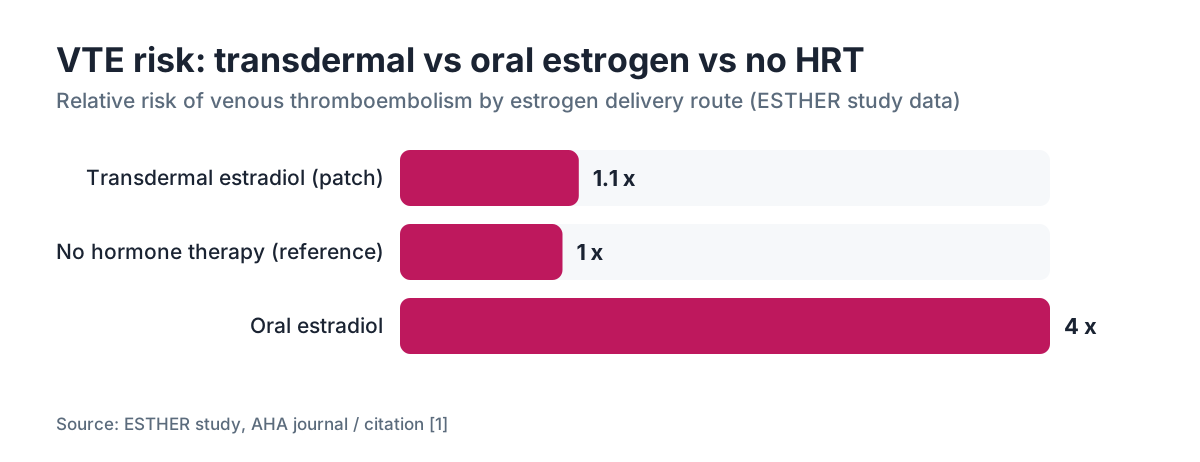
Blood clot risk (venous thromboembolism) is much lower with patches than with pills. The ESTHER study found that oral estrogen raised VTE risk roughly 4-fold, while transdermal estradiol did not significantly raise risk compared with non-users [1]. That is why women with a history of DVT or a known clotting disorder are usually steered toward the patch rather than a pill.
Cardiovascular risk turns on timing. The WHI enrolled women averaging age 63, many years past menopause. Newer data and the timing hypothesis (supported by KEEPS, ELITE, and the Danish Osteoporosis Prevention Study) suggest that starting HRT close to menopause, within 10 years or before age 60, is linked to lower cardiovascular risk, not higher [10]. Starting later, in women with established heart disease, is a different situation.
Endometrial risk: adequately dosed progesterone with estrogen keeps the lining safe. Endometrial cancer risk is not elevated with appropriate combination therapy [2].
Every woman deserves an individual risk-benefit conversation with a menopause-knowledgeable clinician, not a blanket refusal built on an outdated reading of the WHI.
How do you use an estrogen-progesterone patch correctly?
Application technique matters more than people think, and it is one of the most overlooked reasons a patch "is not working."
For Combipatch and most matrix-style estradiol patches:
- Apply to clean, dry, intact skin on your lower abdomen or upper buttock. Avoid the breasts. Avoid waistband areas where clothing friction can loosen it.
- Press firmly with your palm for 10 full seconds. Your hand's heat helps the adhesive bond.
- Rotate sites with each application. The same spot over and over can reduce absorption and irritate skin.
- Change on schedule. Combipatch changes twice a week (every 3 to 4 days). Climara Pro, when available, changes once weekly. Set a phone reminder.
- Do not cut patches. Cutting a matrix patch can change the drug release rate unpredictably and throws off the pharmacokinetics it was built around.
- If a patch falls off, put on a new one and return to your original schedule (do not stretch the interval to compensate).
- Shower and swim normally. These patches stay on in water, though a long hot tub soak can push up absorption.
Skin redness or itching at the site usually responds to rotating locations and using a mild, fragrance-free barrier before you apply. True allergic contact dermatitis to patch components is less common but real, and it may mean switching to estradiol gel or spray.
If you use a standalone estradiol patch plus oral progesterone (say, Vivelle-Dot 0.05 mg plus Prometrium 100-200 mg nightly), take the progesterone at bedtime. Many women sleep better on micronized progesterone, which seems to have a mild sedating effect through GABA receptor activity.
How does a doctor decide on the right dose?
Dosing is not one-size-fits-all, and it should not be. Clinicians start with symptoms: how severe, how much they wreck your quality of life, and what your baseline health looks like.
For estradiol patches, standard starting doses for hot flashes run 0.025 to 0.05 mg/day. Women with worse symptoms, younger age at menopause (surgical or premature), or serious bone concerns may need 0.05 to 0.1 mg/day. The goal is the lowest dose that controls symptoms adequately, not the lowest possible dose if you are still miserable.
Blood levels of estradiol sometimes get checked, but they are not always needed for dose changes. Symptom response matters more. Estradiol levels swing with patches depending on placement, skin temperature, and individual absorption. Menopause Society guidance notes that serum estradiol levels alone should not drive dosing without weighing clinical response [6].
For progesterone, if you use oral micronized progesterone alongside an estradiol patch, standard dosing is 100 mg/day continuously or 200 mg/day for the first 12 days of the month (cyclic use). Cyclic progesterone produces a withdrawal bleed; continuous use usually means no periods after a few months of irregular spotting.
Women postmenopausal for many years sometimes need a higher estradiol dose at first, simply because their skin's hormone receptors have sat in a low-estrogen environment for a long time. That is clinical judgment, not a formula.
If you are weighing your options, services like WomenRx connect you with clinicians who work in menopause care and can review your symptoms, labs, and history to recommend a specific patch type and dose.
What does an estrogen-progesterone patch cost, and is it covered by insurance?
Cost swings a lot by brand, generic availability, and your insurance plan.
Combipatch (brand name) can run $200 to $400 for a one-month supply without insurance. Generic versions of the estradiol/NETA combination cost substantially less. GoodRx and similar discount programs can bring generic Combipatch to roughly $50 to $100 per month depending on the pharmacy.
Standalone estradiol patches (Vivelle-Dot, Climara, Alora generics) are among the cheapest hormone therapies out there. Generic twice-weekly estradiol patches at 0.05 mg can cost as little as $15 to $50 per month at major chains with a discount card.
Oral micronized progesterone (Prometrium or generic) runs roughly $20 to $80 per month for 100 mg capsules, again depending on pharmacy and insurance.
Most commercial insurance plans and Medicare Part D cover FDA-approved hormone therapies, but prior authorization rules and tier placement vary. Some plans cover generics only. Combipatch has had occasional supply hiccups at big chains, so call ahead.
Compounded patches are usually not covered by insurance and can cost $80 to $200 per month depending on the pharmacy and formulation.
Here is the value math. If a combination patch keeps you consistent (one patch, done) and you tolerate synthetic progestogen, Combipatch is clinically reasonable and can work out cheaper than juggling two prescriptions once insurance is factored in.
Are there women who should not use an estrogen-progesterone patch?
Yes, and the contraindications are worth taking seriously.
Absolute contraindications to combined estrogen-progestogen therapy, per FDA labeling and clinical guidelines, include:
- Known or suspected breast cancer, or a personal history of breast cancer [3]
- Known or suspected estrogen-dependent tumors (certain uterine cancers)
- Active deep vein thrombosis, pulmonary embolism, or a recent history of either
- Active or recent arterial clot disease (stroke or heart attack within the past year)
- Known liver impairment or disease
- Known or suspected pregnancy
- Undiagnosed abnormal uterine bleeding
Relative contraindications, where the decision needs careful individual assessment, include a strong family history of breast cancer, BRCA mutation carrier status, active gallbladder disease (estrogen can worsen gallstones, especially oral forms), and severe uncontrolled hypertension.
Age by itself is not a contraindication. A woman in her 60s who is within 10 years of menopause and has no absolute contraindications can still be an appropriate candidate, per the Menopause Society 2022 position statement [6]. The old habit of refusing HRT to any woman over 60 is not supported by current evidence.
Women who cannot tolerate synthetic progestogens but still have a uterus are not automatically shut out of hormone therapy. Options include oral micronized progesterone, the Mirena IUD, or low-dose vaginal progesterone in some cases. Worth discussing with a menopause specialist rather than accepting a flat "you cannot have hormones."
Understanding when menopause starts and your own baseline health is where every honest conversation with a prescriber should begin.
How does an estrogen-progesterone patch fit into a broader menopause care plan?
A patch is one tool. It handles the hormonal piece, which matters a lot for symptom burden and long-term bone and heart health, but good menopause care involves more.
Take bone health. Estrogen therapy reduces fracture risk, but strength training and enough calcium and vitamin D matter on their own. A bone density test gives you a baseline so you and your clinician can track whether your skeleton is responding.
Some women on hormone therapy also ask about GLP-1 medications. Menopause shifts fat toward the abdomen and slows metabolic rate, and plenty of women gain weight in this stretch despite eating the same. HRT helps somewhat with that metabolic shift, but not dramatically. GLP-1 receptor agonists like semaglutide work on weight and metabolic function through a different mechanism, and combining them with hormone therapy is something more women are raising with their clinicians. If that fits you, WomenRx has clinicians who handle both. Our articles on semaglutide for weight loss and semaglutide walk through how that treatment works.
Sleep, often wrecked in perimenopause and early menopause, tends to improve on HRT for many women, especially with oral micronized progesterone at bedtime. Cognitive symptoms (memory lapses, word-finding trouble) often ease once estradiol levels steady out. Neither is an FDA-approved indication, but both are real clinical observations that matter to how a woman feels.
The goal of a good menopause plan is not to chase a lab number. It is to help a woman feel and function well in this phase, with risk managed honestly and revisited as her health changes.
Frequently asked questions
Is there a patch that has both estrogen and progesterone in one?
Yes. Combipatch is the FDA-approved combination patch in the U.S., containing estradiol (0.05 mg/day) and norethindrone acetate (a synthetic progestogen) in two dose options. You change it twice weekly. Climara Pro (estradiol plus levonorgestrel) has also been FDA-approved, but availability fluctuates, so check with your pharmacy. Combination patches with bioidentical progesterone are not FDA-approved in the U.S.
What are the most common estrogen patch brands in the U.S.?
For estrogen-only patches, the main branded options are Vivelle-Dot, Climara, Alora, Minivelle, and Menostar. All contain 17-beta estradiol, which is bioidentical. Generic estradiol patches come from multiple manufacturers and are therapeutically equivalent. For combination patches, Combipatch is the primary FDA-approved option. Brand availability changes, so always confirm with your pharmacist.
What is the difference between a bioidentical estrogen patch and a regular estrogen patch?
For most commercial patches, no meaningful difference. The estradiol in FDA-approved patches like Vivelle-Dot and Climara is 17-beta estradiol, chemically identical to the estrogen your body makes. That is the definition of bioidentical. The word gets used to market compounded custom patches, but every FDA-approved estradiol patch already qualifies as bioidentical on the estrogen side.
Can I get progesterone in a transdermal patch?
Micronized progesterone does not absorb reliably through skin at therapeutic doses, which is why no FDA-approved patch contains it. The progestogens in combination patches (norethindrone acetate in Combipatch, levonorgestrel in Climara Pro) are synthetic. Compounded progesterone patches exist but have unproven absorption. Most clinicians recommend oral micronized progesterone (Prometrium) as the bioidentical progesterone option for women using a skin patch for estrogen.
Does an estrogen-progesterone patch cause weight gain?
The evidence does not support HRT causing weight gain. Several studies suggest estrogen therapy helps blunt the menopause-related shift of fat to the abdomen. The WHI found no significant difference in weight gain between hormone users and placebo groups. Some women notice temporary fluid retention when starting, which usually resolves within a few months. Weight changes during menopause come mostly from hormonal shifts and lifestyle, not the patch.
How long does it take for an estrogen-progesterone patch to start working?
Most women notice improvement in hot flashes and night sweats within 4 to 12 weeks of starting at an effective dose. Vaginal symptoms can take a bit longer, sometimes 12 to 16 weeks for full benefit. Sleep often improves sooner if oral progesterone is part of the regimen. If there is no noticeable improvement after 8 to 12 weeks, a dose adjustment is usually the next step rather than quitting therapy.
Is it safe to use an estrogen-progesterone patch long-term?
The Menopause Society and the Endocrine Society both state there is no arbitrary time limit on hormone therapy for healthy women in the appropriate age window. The decision to continue gets reassessed annually based on symptom need, benefits, and individual risk factors. Breast cancer risk with combined estrogen-progestogen therapy rises with duration of use, so that risk-benefit talk should happen every year. Some women use HRT for a decade or more without contraindications arising.
Can I use a combination estrogen-progesterone patch if I have a history of migraines with aura?
Migraine with aura is a reason many neurologists prefer transdermal over oral estrogen, because the patch avoids the estrogen surges tied to pills and does not raise clotting proteins the way oral estrogen does. But combination patches include a progestogen, and some synthetic progestogens can affect migraine frequency in sensitive women. This is a nuanced conversation for your clinician. Many women with migraine with aura do well on transdermal estrogen with separate oral progesterone.
Do I still need progesterone if my estrogen patch dose is low?
Yes, if you have a uterus. Any systemic estrogen dose high enough to affect the uterine lining requires progesterone for protection. The exception is very low-dose local vaginal estrogen used only for genitourinary symptoms, which has minimal systemic absorption. With any systemic patch at standard doses, a progestogen is required to prevent endometrial hyperplasia and cancer risk in women with a uterus.
What happens if I stop using an estrogen-progesterone patch suddenly?
Stopping abruptly is not dangerous the way quitting some medications can be, but many women see hot flashes, sleep disruption, and other menopausal symptoms return quickly, sometimes within days to weeks. Tapering the dose over a few months tends to feel smoother. There is no strong evidence that tapering prevents symptom rebound better than stopping outright, but clinically it is often better tolerated.
Can I swim or shower while wearing the patch?
Yes. Both Combipatch and the major estradiol-only patches are designed to stay on during normal bathing, swimming, and exercise. A long soak in very hot water (hot tubs) may loosen adhesion or nudge the absorption rate. If a patch falls off, dry the skin thoroughly, apply a replacement, and continue your normal change schedule. Avoid lotion or oil on the skin where the patch sits.
What is the best estrogen-progesterone patch for perimenopause?
There is no single best answer. Women in perimenopause who still have a uterus and working ovaries need a different approach than fully postmenopausal women. Many perimenopausal women do better starting with progesterone alone if irregular cycles are the main problem, then adding estrogen as ovarian output falls. If systemic estradiol fits, Combipatch or a standalone estradiol patch plus oral progesterone are both reasonable. A menopause-trained clinician can tailor this to your hormone picture.
Are compounded estrogen-progesterone patches safe?
Compounded patches are not FDA-approved and do not go through the same quality or absorption testing as manufactured products. The FDA has issued warnings about variable potency in compounded hormone products. Independent testing has found inconsistent hormone delivery from compounded transdermal preparations. The Menopause Society recommends FDA-approved therapies first. Compounded patches may be considered when no commercial option is tolerable, but that is a narrow justification, not a general recommendation.
Does progesterone in the patch affect mood?
Synthetic progestogens like norethindrone acetate (in Combipatch) can cause mood changes, irritability, or depression in progesterone-sensitive women. This is one of the most common reasons women struggle with combination patches. Oral micronized progesterone appears to have a friendlier mood profile and may improve sleep and reduce anxiety, possibly through GABA receptor activity. Women with a history of PMDD or progesterone sensitivity often do better on bioidentical oral progesterone than on synthetic progestogens in a patch.
Sources
- Scarabin et al., ESTHER study, Arteriosclerosis Thrombosis and Vascular Biology (AHA journal)
- Women's Health Initiative, NIH National Heart Lung and Blood Institute
- FDA Drug Label, Combipatch (estradiol/norethindrone acetate transdermal system)
- FDA Drug Labels for estradiol transdermal patches (Vivelle-Dot, Climara, Alora)
- U.S. Food and Drug Administration, compounding information
- The Menopause Society (formerly NAMS), 2022 Hormone Therapy Position Statement
- Endocrine Society Clinical Practice Guideline, Treatment of Menopause
- Joffe et al., Menopause journal 2023, estradiol and depressive symptoms in perimenopause
- Fournier et al., Breast Cancer Research and Treatment (E3N Cohort Study)
- Hodis et al., ELITE trial, New England Journal of Medicine 2016