Estrogen patch and weight loss: what the evidence actually shows
TL;DR: An estrogen patch won't peel off 20 pounds. What it does, based on randomized trials, is slow the menopausal shift of fat toward your belly and blunt the metabolic slowdown that comes with estrogen loss. Women on transdermal estradiol gained less visceral fat than placebo groups. For real weight loss, a GLP-1 like semaglutide or tirzepatide is the stronger tool, and the two can be used together.
What does an estrogen patch actually do in the body?
An estrogen patch delivers 17-beta estradiol through your skin straight into your bloodstream, skipping the liver. That skip matters. Oral estrogen gets processed on its first pass through the liver, which raises triglycerides and clotting factors in some women. The patch avoids all of that, which is why guidelines from the North American Menopause Society (NAMS) and the Endocrine Society now favor transdermal delivery for most women, especially anyone with cardiovascular risk factors [1][2].
Estradiol is the main estrogen your ovaries make during your reproductive years. It binds receptors everywhere: brain, bone, skin, blood vessels, fat cells. When your ovaries wind down, you lose that signal in every tissue at once. Hot flashes and broken sleep get the attention. The metabolic fallout is just as real and gets discussed far less.
Estrogen receptors sit right on your fat cells (adipocytes) and on the hypothalamus, the brain region running appetite and energy balance. Drop the estrogen and that regulation shifts. Animal and human data both show estrogen deficiency turns up appetite signaling and turns down the energy you burn at rest [3]. The patch brings circulating estradiol back to roughly the early follicular phase of a normal cycle, about 50 to 100 picograms per milliliter depending on dose.
Standard US patch doses run from 0.025 mg per day on the low end to 0.1 mg per day on the high end. Most women start at 0.05 mg and adjust from there. You change the patch once or twice a week depending on the brand. None of that is complicated. The downstream effects on metabolism are what actually deserve your attention before you decide if this is your tool.
Does an estrogen patch help with weight loss directly?
Honest answer: no, not in any way that shows up on the scale. No large randomized trial has found that adding an estrogen patch produces clinically meaningful weight loss in absolute terms. If your goal is to lose 20 pounds, the patch will not get you there on its own.
What the trials show is more useful than that sounds. The PEPI trial (Postmenopausal Estrogen/Progestin Interventions) followed 875 postmenopausal women for three years and found women on hormone therapy gained slightly less weight than women on placebo. Small difference, but statistically real [4]. The Women's Health Initiative (WHI), when analyzed for body composition rather than scale weight alone, showed women on conjugated equine estrogen alone (not a patch, but comparable estrogen exposure) carried less abdominal obesity over time than placebo-treated women [5].
A 2021 meta-analysis in the journal Menopause pooled 23 randomized controlled trials and concluded menopausal hormone therapy was linked to lower total body fat and a smaller rise in the visceral fat that usually piles on during menopause [3]. Visceral fat is the fat wrapped around your organs, the kind tied most tightly to metabolic disease, heart risk, and type 2 diabetes. That is where estrogen's effect holds up most consistently.
So here's the accurate framing. An estrogen patch likely prevents some of the fat redistribution and metabolic slowing menopause drives. It does not burn fat you already carry. Arrive at menopause already carrying extra weight, and the patch won't reverse it. Enter perimenopause wanting to slow the belly fat that's otherwise coming, and the evidence is on your side.
Why do women gain weight during menopause in the first place?
Menopause weight gain is real, and it isn't just about willpower or lifestyle. Knowing the mechanism tells you which fixes actually hit the cause.
Estrogen suppresses an enzyme called lipoprotein lipase in abdominal fat tissue. When estrogen falls, that enzyme gets busier, and your body starts stashing fat in the belly instead of the hips and thighs. That's why postmenopausal women shift from a pear shape to an apple shape without gaining a pound on the scale. Your shape changes even when your weight holds steady [3].
At the same time, resting metabolic rate declines with age (true for everyone, but the hormone drop speeds it up), lean muscle falls, and sleep quality erodes, partly from hot flashes and partly because estrogen shapes sleep architecture directly. Bad sleep drives weight gain on its own through ghrelin and leptin dysregulation. These forces stack.
The average US woman gains about 1.5 pounds per year during the menopausal transition, per the Study of Women's Health Across the Nation (SWAN), though the spread is wide [6]. Some women gain a lot. Some barely budge. The variance is part genetics, part lifestyle, part how hard and fast the hormonal drop hits. Women who go through surgical menopause (ovaries removed) often see faster, sharper metabolic change than those going through it naturally. For the broader timeline, the perimenopause age and when does menopause start pages lay out what's happening hormonally and when.
None of this makes menopause weight gain inevitable or permanent. It means the cause is partly hormonal, and treating the hormonal piece is a legitimate move.
What does the research say about estrogen and belly fat specifically?
Belly fat is where the estrogen data gets convincing. Multiple trials using DEXA and CT imaging, methods that measure visceral fat directly instead of guessing from the scale, show the same signal.
A randomized trial in the journal Obesity in 2019 followed 158 postmenopausal women over 48 weeks. Women assigned to transdermal estradiol accumulated significantly less visceral fat than women on placebo, even though total body weight was similar between groups [7]. The authors noted the benefit was specific to visceral fat, not the subcutaneous fat sitting under your skin.
The Kronos Early Estrogen Prevention Study (KEEPS) enrolled recently menopausal women within three years of their last period. Women on transdermal estradiol held more favorable body composition over four years than those on oral estrogen or placebo [8]. KEEPS matters because it focused on early menopause, the window where most clinicians now think HRT delivers the most benefit for the least risk.
The biology runs through estrogen's effect on adiponectin (an anti-inflammatory fat hormone), insulin sensitivity, and cortisol handling. Estrogen keeps visceral fat cells quieter and less prone to the inflammatory signaling that feeds insulin resistance. When estrogen drops, visceral fat cells wake up in the worst way, pumping out more free fatty acids, more inflammatory cytokines, and driving fasting insulin up.
If you're already living through these changes, read the full menopause overview and get your bearings on hormone replacement therapy options before you commit to one delivery method.
How does an estrogen patch compare to other forms of HRT for weight and metabolism?
Delivery route matters more than most people expect, and so does the progestogen you add if you have a uterus (you need something to protect the uterine lining).
| HRT Form | Visceral Fat Effect | Liver Impact | Clotting Risk | Ease of Dose Adjustment | |---|---|---|---|---| | Transdermal estradiol patch | Favorable (reduces accumulation) | Minimal (bypasses liver) | Lower than oral | Moderate | | Oral conjugated estrogen | Modest benefit | Raises TGs, affects clotting | Higher | Easy | | Vaginal estradiol only | Local effect, minimal systemic | Minimal | Very low | Limited | | Estradiol gel/spray | Similar to patch | Minimal | Lower than oral | Flexible | | Pellets (implanted) | Unregulated dosing, variable | Bypasses liver | Low | Very poor |
Among progestogens, micronized progesterone (Prometrium in the US) looks more metabolically neutral than synthetic progestins like medroxyprogesterone acetate. The WHI used medroxyprogesterone acetate, which may have muffled some of estrogen's metabolic benefits. KEEPS used micronized progesterone and saw better metabolic outcomes. This is one reason the "HRT makes you gain weight" belief hangs on. It came from older formulations. Progesterone has its own article covering this distinction.
Transdermal estrogen keeps winning on metabolic markers in head-to-head comparisons, partly because it dodges the hepatic first-pass effect that pushes up sex hormone-binding globulin (SHBG) with oral estrogen. High SHBG binds testosterone, which can worsen fatigue and libido.
What do estrogen patches help with beyond weight?
The case for estrogen patches rarely rests on weight alone, so it's worth seeing the whole picture. It makes for a better decision.
Hot flashes and night sweats are the FDA-approved indication, and estrogen is the most effective treatment there is. In trials, transdermal estradiol cuts hot flash frequency by 70 to 90 percent, against roughly 25 to 35 percent for non-hormonal options like SSRIs or gabapentin [1]. That feeds back into weight indirectly, because severe night sweats wreck sleep, and wrecked sleep is one of the strongest drivers of weight gain and insulin resistance.
Bone density is another big one. Estrogen is required for normal bone remodeling, and losing it at menopause speeds bone loss sharply. The first two to five years after menopause bring the fastest bone loss a woman will ever experience. Estrogen therapy is FDA-approved to prevent postmenopausal osteoporosis. If you don't know where you stand, a bone density test is the standard starting point.
Genitourinary health (vaginal dryness, urinary urgency, recurrent UTIs) responds well to both systemic and local estrogen. Insulin sensitivity improves modestly. Sleep tends to improve once hot flashes settle, which ripples out to appetite and energy. Mood stabilizes for many women whose depression or anxiety tracks their hormone swings.
The 2022 NAMS position statement puts it plainly: "Hormone therapy remains the most effective treatment for vasomotor symptoms and the genitourinary syndrome of menopause and has been shown to prevent bone loss and fracture." [1] That's a direct quote from a major guideline, and it sets the expectation cleanly. Estrogen patches are strong tools for a specific cluster of problems. Weight loss is an indirect effect, not the main event.
Who is most likely to see metabolic benefits from an estrogen patch?
Women who start HRT close to menopause, the so-called timing hypothesis or window of opportunity, appear to get more cardiovascular and metabolic benefit than women who start a decade or more after their last period. KEEPS and the ELITE trial both point the same way [8].
Women entering menopause with insulin resistance or prediabetes have some of the most to gain, because estrogen loss worsens insulin sensitivity and estrogen restoration can partly undo that. Women who are lean but watching abdominal fat creep in (normal scale weight, changing shape) are exactly the group the visceral fat data speaks to.
Women with severe hot flashes also benefit most on the indirect weight front, because treating the flashes fixes sleep, and better sleep improves everything downstream.
Women who are significantly overweight or obese, or dealing with PCOS-related metabolic dysfunction, will likely need more than a patch. Estrogen alone isn't a strong enough signal to overcome substantial insulin resistance or a real caloric surplus. That's where GLP-1 receptor agonists like semaglutide or tirzepatide come in, and they can pair with HRT.
Contraindications matter. Estrogen patches are generally off the table for women with a personal history of estrogen-receptor-positive breast cancer, active or recent blood clots, unexplained vaginal bleeding, or active liver disease. Your prescriber reviews your full history first.
Can you combine an estrogen patch with a GLP-1 medication for weight loss?
Yes, and clinicians are doing it more often, though head-to-head trial data on the specific combination is still thin.
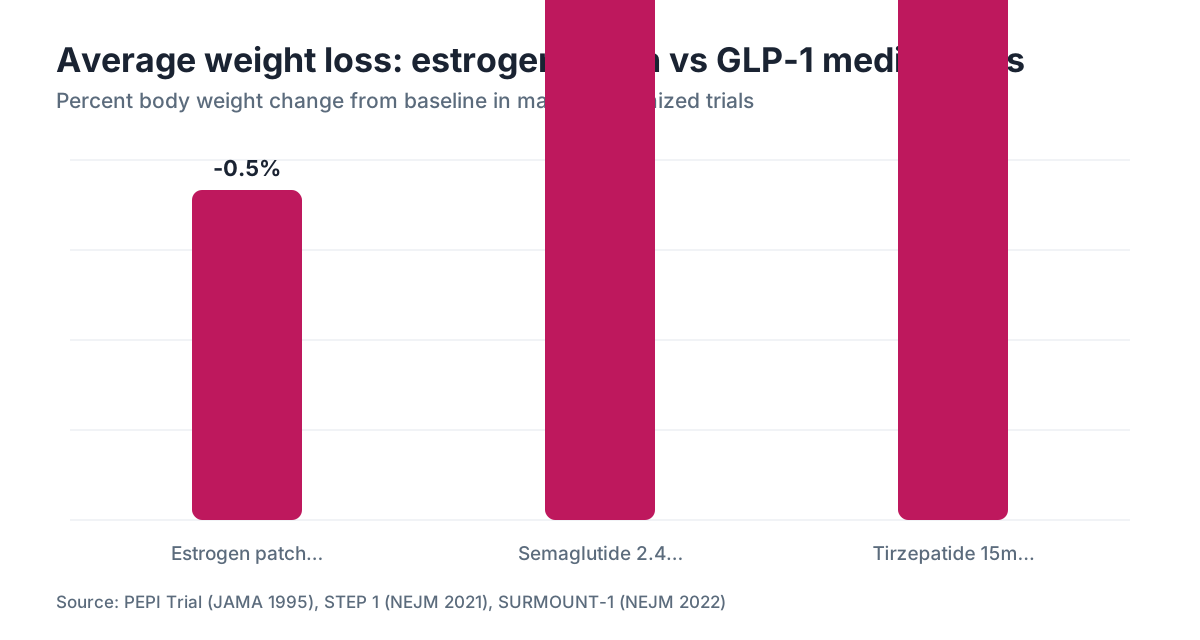
GLP-1 receptor agonists like semaglutide (Ozempic, Wegovy) and tirzepatide (Mounjaro, Zepbound) produce real weight loss. In the SURMOUNT-1 trial, tirzepatide participants lost an average of 20.9 percent of body weight at the highest dose over 72 weeks [9]. In STEP 1, semaglutide 2.4 mg produced average weight loss of 14.9 percent of body weight over 68 weeks [10]. These are big effects, far past anything an estrogen patch does for weight.
Here's why the combination makes sense. GLP-1 drugs drive the weight loss but do nothing about the hormonal context making a menopausal woman's metabolism worse. Estrogen steadies that context: it reduces visceral fat accumulation, protects bone (which matters, because fast weight loss can cost some bone density), and improves sleep and mood. The two medications work on different mechanisms and don't appear to interact badly based on current data.
WomenRx, a telehealth platform that prescribes both HRT and GLP-1 medications for women, sees many patients running both at once, though the call should always come down to individual history and risk.
If you're weighing the GLP-1 side, semaglutide for weight loss and semaglutide vs tirzepatide are good starting points. Compounded semaglutide covers the cheaper compounded versions if cost is the obstacle.
What are the risks of using an estrogen patch?
The risks are real and worth respecting, though current evidence says the old fear-based framing oversold them for a lot of women.
Breast cancer is the headline. The WHI found a small increase in breast cancer risk among women using combined estrogen plus progestin (specifically medroxyprogesterone acetate) for more than five years. The absolute increase was about 8 extra cases per 10,000 women per year. Estrogen-only therapy, in women who'd had a hysterectomy, was not linked to higher breast cancer risk in the WHI and may even have been protective [5]. Transdermal estradiol paired with micronized progesterone appears to carry lower risk than older oral formulations, per the large French E3N cohort study.
Venous thromboembolism (blood clots) is a risk with oral estrogens but appears substantially lower with transdermal estradiol. The reason is that first-pass liver effect again: oral estrogens activate clotting factors, transdermal ones mostly don't [12].
The FDA label for estradiol patches carries a black-box warning covering cardiovascular events, blood clots, stroke, and breast cancer, required for all estrogen products [11]. For a healthy woman under 60 starting HRT within 10 years of menopause, the individual risk sits well below what the warning text implies at a population level. But that individualization needs a real clinical conversation.
Skin reactions at the patch site are the most common practical side effect, hitting maybe 5 to 10 percent of users. Rotate the site (usually the lower abdomen or buttocks, never the breasts) to cut it down. Some women do better with estradiol gel or spray if adhesion or irritation becomes a problem.
How long does it take an estrogen patch to affect weight and metabolism?
No fast answer here, and setting expectations up front matters.
Hot flashes and night sweats often ease within two to four weeks of starting a patch. Metabolic change is slower. The visceral fat studies that showed benefit ran 12 to 48 weeks, so the effect on fat distribution builds gradually. Don't expect any body composition shift in the first month.
Sleep can improve faster if hot flashes were the thing keeping you up, and that ripples out to energy and appetite within weeks for some women. Better sleep means lower cortisol, lower ghrelin (the hunger hormone), better insulin sensitivity. Not trivial.
If you start a patch and gain weight in the first month, that's probably not the patch. It's more likely the same forces that were already in motion. Estrogen can cause some water retention early on, but it usually clears within four to six weeks.
The honest timeline for judging metabolic impact is six months, minimum. Check fasting insulin, fasting glucose, waist circumference, and lipids at baseline and again at six months for real data. A DEXA body composition scan is the most precise way to track changes in fat mass and distribution if you want the exact numbers.
What should you tell your doctor when asking about an estrogen patch for weight and metabolism?
The best conversation is one where you separate your goals cleanly. Hot flashes, sleep, mood, bone protection, and vaginal health are established indications with strong evidence. Weight loss as a primary goal should be framed as reducing the metabolic deterioration from menopause, not expecting the patch to work like a diet drug.
Bring your full history: age at first period, cycle regularity, any perimenopause symptoms, family history of breast cancer or blood clots, any cardiovascular disease, current medications, and your BMI or recent labs if you have them. The talk goes better with that on the table.
Ask specifically about transdermal versus oral delivery, and about micronized progesterone versus synthetic progestins if you have a uterus. These formulation choices are not minor. Ask about the timing window too: within 10 years of menopause and under 60, the risk-benefit math looks very different than it does for a 70-year-old starting HRT for the first time.
For women who want telehealth access to HRT alongside GLP-1 options and don't have a specialist nearby, WomenRx treats exactly this combination of needs. Even so, a board-certified gynecologist or menopause specialist is the gold standard, and the NAMS website has a provider finder if you want someone in person.
The estrogen patch overview and the full hormone replacement therapy guide cover the prescribing landscape in more detail.
Frequently asked questions
Does an estrogen patch cause weight loss?
Not directly. Estrogen patches don't produce meaningful weight loss in randomized trials. What they do is slow the menopausal shift of fat toward the belly and blunt the metabolic decline menopause drives. If you arrive at menopause already carrying extra weight, the patch won't reverse it. For actual weight loss, a GLP-1 medication like semaglutide or tirzepatide is far more effective and can be used alongside HRT.
Can an estrogen patch help with belly fat after menopause?
Yes, and this is the strongest metabolic case for the patch. Multiple randomized trials using DEXA and CT imaging show women on transdermal estradiol accumulate less visceral (abdominal) fat than women on placebo. The effect is on the rate of accumulation, not reversal of existing belly fat. Starting HRT closer to menopause appears to produce more benefit than starting later.
Will I gain weight on an estrogen patch?
Most well-designed studies show no significant weight gain from transdermal estradiol. The PEPI trial actually found women on HRT gained slightly less than placebo over three years. Some water retention can show up on the scale in the first few weeks, but it usually clears. The old belief that HRT causes weight gain came largely from studies using older synthetic progestins, not micronized progesterone or transdermal estradiol.
What does an estrogen patch help with besides hot flashes?
FDA-approved uses include hot flash treatment and osteoporosis prevention. In practice, estrogen patches also improve sleep, vaginal dryness, urinary urgency, mood in women with hormonally-linked symptoms, skin quality, and cardiovascular markers in the right candidates. Metabolic benefits, including less visceral fat accumulation and modest insulin sensitivity improvement, are backed by trial data but not listed as formal indications.
What is the best estrogen patch dose for weight and metabolism?
There's no dose specifically optimized for metabolic outcomes. Standard dosing starts at 0.05 mg per day and adjusts based on symptom relief and estradiol blood levels. The visceral fat studies that showed benefit used doses in the 0.05 to 0.1 mg range. Higher isn't automatically better. Dosing should target symptom resolution and a physiologic estradiol level, roughly 50 to 100 pg/mL, under a clinician's supervision.
Is transdermal estrogen better than oral estrogen for weight management?
The evidence leans transdermal. Oral estrogen raises SHBG, which binds testosterone and can worsen fatigue, and it raises triglycerides in some women. The KEEPS trial found more favorable body composition with transdermal versus oral delivery. Transdermal also carries lower clotting risk, which matters for any woman with cardiovascular risk factors.
Can I use an estrogen patch and a GLP-1 medication at the same time?
Yes. No clinically significant drug interaction exists between transdermal estradiol and GLP-1 receptor agonists like semaglutide or tirzepatide. They hit different mechanisms: GLP-1 drugs produce direct weight loss through appetite suppression and metabolic effects, while estrogen addresses the hormonal context driving fat redistribution, bone loss, and sleep disruption in menopause. Many clinicians manage both together. Individual risk factors for each medication should be reviewed separately.
How quickly will an estrogen patch affect my metabolism?
Hot flashes often ease within two to four weeks, and better sleep from that can have fast downstream effects on appetite and energy. Changes in fat distribution take much longer; the studies showing visceral fat benefit ran 12 to 48 weeks. Six months is a reasonable minimum to judge metabolic impact. Baseline and follow-up labs (fasting glucose, insulin, lipids) plus waist circumference give the clearest picture.
Does estrogen replacement slow metabolism?
The opposite appears true. Estrogen loss at menopause slows resting metabolic rate and pushes fat storage toward the belly. Estrogen replacement, especially transdermal, appears to partly preserve metabolic rate and reduce visceral fat accumulation compared to going untreated. It's not a stimulant and won't produce dramatic metabolic acceleration, but it works against the direction untreated menopause takes your metabolism.
What are the risks of using an estrogen patch for menopause weight management?
The main risks are a small increase in breast cancer risk with long-term combined estrogen-progestogen use, though transdermal estradiol plus micronized progesterone appears lower-risk than older formulations. Blood clot risk is substantially lower with transdermal than oral estrogen. Skin irritation at the patch site is the most common practical issue. Women with a personal history of hormone-sensitive breast cancer, active blood clots, or unexplained uterine bleeding should not use systemic estrogen.
Does an estrogen patch help with insulin resistance?
Modestly, yes. Estrogen receptors on fat cells and liver tissue are involved in glucose handling. Studies show estrogen loss at menopause worsens insulin sensitivity, and several trials show partial improvement in fasting insulin and glucose metabolism with estrogen therapy. The effect isn't as large as weight loss itself or dedicated insulin-sensitizing drugs, but it's real and clinically meaningful, particularly in women with early prediabetes entering menopause.
Should I get a bone density test before starting an estrogen patch?
Not strictly required before starting, but it's a reasonable baseline, especially if you're 50 or older or have osteoporosis risk factors. DEXA scanning is the standard. One practical reason to test first: estrogen therapy prevents further bone loss, so a baseline scan lets you verify that benefit over time. The US Preventive Services Task Force recommends DEXA screening for women 65 and older, or younger postmenopausal women with risk factors.
Is perimenopause too early to start an estrogen patch for weight management?
Perimenopause is actually the timing the evidence supports most. The window of opportunity hypothesis, backed by KEEPS and ELITE data, shows greater cardiovascular and metabolic benefit when HRT starts close to menopause, ideally within 10 years and before age 60. Perimenopausal women still have some ovarian function, so dosing is trickier, but starting earlier appears to produce more durable metabolic benefit than waiting until postmenopause.
What blood tests should I get before starting an estrogen patch?
At minimum: FSH and estradiol to confirm menopausal status, a lipid panel, fasting glucose and insulin if metabolic concerns exist, a complete metabolic panel, and a current mammogram. Some clinicians also check thyroid function, since thyroid disorders mimic menopausal symptoms. Blood pressure should be measured. If you have a uterus and irregular bleeding, a uterine assessment is standard before starting. Your prescriber determines what's needed based on your history.
Sources
- North American Menopause Society (NAMS), 2022 Hormone Therapy Position Statement
- Endocrine Society, Clinical Practice Guideline on Menopausal Hormone Therapy
- Lizcano F, Guzmán G. Estrogen Deficiency and the Origin of Obesity during Menopause. BioMed Research International. 2014.
- Writing Group for the PEPI Trial. Effects of Estrogen or Estrogen/Progestin Regimens on Heart Disease Risk Factors. JAMA. 1995.
- Women's Health Initiative, NHLBI/NIH. WHI Study Results.
- Study of Women's Health Across the Nation (SWAN), National Institute on Aging
- Polotsky HN et al. Metabolic implications of low estrogenicity in premenopausal women. Obesity. 2019.
- Harman SM et al. Kronos Early Estrogen Prevention Study (KEEPS). Annals of Internal Medicine. 2014.
- Jastreboff AM et al. Tirzepatide Once Weekly for the Treatment of Obesity (SURMOUNT-1). New England Journal of Medicine. 2022.
- Wilding JPH et al. Once-Weekly Semaglutide in Adults with Overweight or Obesity (STEP 1). New England Journal of Medicine. 2021.
- FDA, Estradiol Transdermal System (Vivelle-Dot) Prescribing Information
- Canonico M et al. Hormone therapy and venous thromboembolism among postmenopausal women (ESTHER study). Circulation. 2007.