Estrogen patch Vivelle-Dot: dosages, how it works, and what to expect
TL;DR: Vivelle-Dot is a twice-weekly estradiol patch the FDA approved for menopausal symptoms and osteoporosis prevention. It comes in six doses (0.025 to 0.1 mg/day) and sends estrogen through the skin, skipping the first pass through the liver. Most women feel relief in two to four weeks. If you still have a uterus, you have to add a progestogen.
What is the Vivelle-Dot estrogen patch and what is it approved for?
Vivelle-Dot is a small round transdermal estradiol patch. Novartis developed it, and Noven Pharmaceuticals distributes it now. The FDA approved it to treat moderate-to-severe hot flashes and night sweats of menopause, vulvar and vaginal atrophy, and to prevent postmenopausal osteoporosis [1]. It is not birth control. It does not protect against sexually transmitted infections.
The active ingredient is 17-beta estradiol, chemically identical to the estrogen your ovaries made before menopause. That matters. Bioidentical estradiol has a different risk profile than older synthetic estrogens like conjugated equine estrogen, though the two have never been compared head-to-head in a mortality trial.
You wear one patch on the lower abdomen, buttock, or hip and change it every three to four days, so twice a week. The patch is matrix-style, which means the hormone sits throughout the adhesive layer instead of a separate reservoir. That design keeps Vivelle-Dot among the thinnest and smallest patches sold, which is part of why clinicians reach for it often.
The FDA label tells prescribers to use the lowest effective dose for the shortest time consistent with treatment goals [1]. Hold onto that line. It gives you and your prescriber a clear frame for every dose decision.
What are the Vivelle-Dot dosage options and how do you choose the right one?
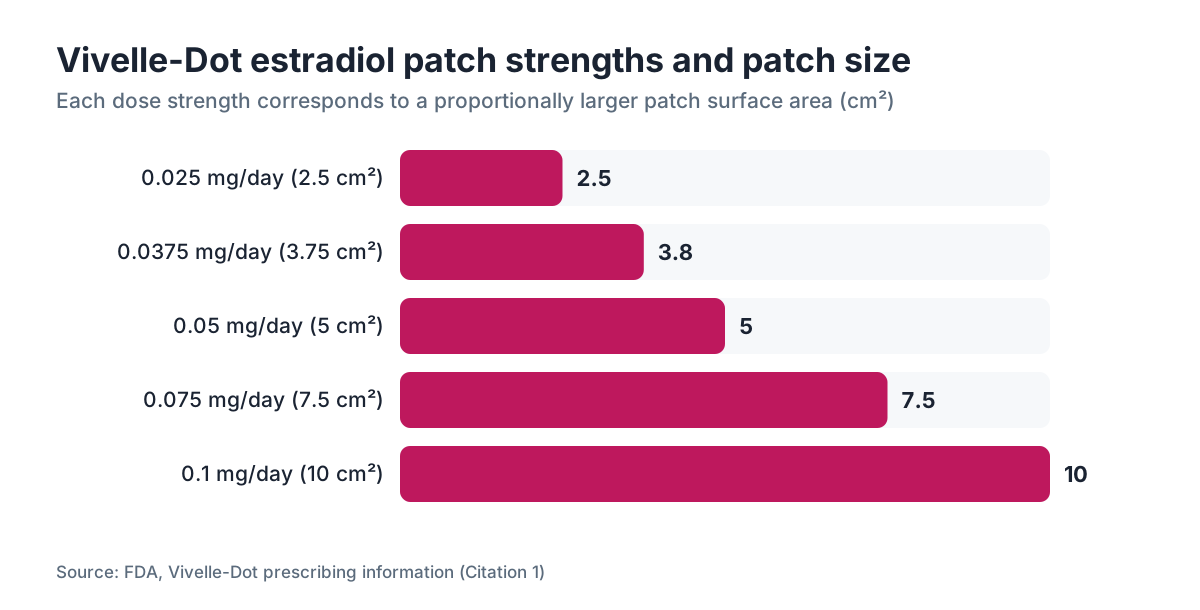
Vivelle-Dot comes in six strengths: 0.025 mg, 0.0375 mg, 0.05 mg, 0.075 mg, and 0.1 mg per day [1]. Each number is the average daily release rate through your skin, not the total amount loaded into the patch.
| Patch strength | Estradiol released per day | Patch size (cm²) | |---|---|---| | 0.025 mg/day | 0.025 mg | 2.5 cm² | | 0.0375 mg/day | 0.0375 mg | 3.75 cm² | | 0.05 mg/day | 0.05 mg | 5 cm² | | 0.075 mg/day | 0.075 mg | 7.5 cm² | | 0.1 mg/day | 0.1 mg | 10 cm² |
Most prescribers start at 0.025 mg or 0.05 mg and check in after eight to twelve weeks. The 0.025 mg dose is often enough to protect bone. Hot flashes and broken sleep usually need 0.05 mg or higher [2]. The 0.1 mg dose sits at the top of the range and is usually saved for women who tried lower doses without enough relief.
Blood estradiol levels swing widely between people on the same dose. That's a real limit of any patch. Skin thickness, where you stick it, hydration, even room temperature change how much you absorb. A woman on 0.05 mg might land anywhere from 40 to 100 pg/mL. So following symptoms beats chasing a specific lab number, though labs can confirm you're in a physiologic range.
Want the wider view of hormone replacement therapy options, including gels, sprays, and oral estrogen? That context helps explain why your doctor picked a patch over another route.
How does transdermal estrogen differ from oral estrogen pills?
The liver is the single biggest reason many clinicians now pick patches over pills. Swallow an estrogen pill and it moves through your gut and liver before it reaches your bloodstream. That first pass pushes the liver to make more clotting factors and more sex hormone-binding globulin (SHBG), which drops the free estrogen that actually reaches your tissues [3].
A patch skips all of it. Estrogen enters the blood straight through the skin and reaches target tissues without the liver detour. The practical result: transdermal estradiol does not raise triglycerides, does not meaningfully raise SHBG, and appears to carry a much lower risk of venous thromboembolism (VTE) than oral estrogen [3].
A 2016 systematic review in Climacteric found oral estrogens raised VTE risk roughly two- to fourfold, while transdermal estradiol at standard doses showed no statistically significant increase [3]. That finding changed how doctors prescribe, especially for women with cardiovascular risk factors.
The trade-off is steadiness. Pills absorb more uniformly than patches because they don't depend on skin variables. Some women also find a daily pill easier to remember than a twice-weekly patch swap.
For a full look at every route, the estrogen patch overview covers gels, rings, and sprays alongside patches.
Why do women with a uterus need to add progesterone?
Estrogen used alone in a woman who still has her uterus thickens the uterine lining (the endometrium) and raises the risk of endometrial hyperplasia and cancer. This is not theoretical. Women's Health Initiative data found that unopposed estrogen in women with an intact uterus raised endometrial cancer risk substantially [4].
A progestogen protects the lining. The word progestogen covers both synthetic progestins (like medroxyprogesterone acetate) and bioidentical progesterone (like FDA-approved micronized progesterone, sold as Prometrium). Most current guidelines, including those from NAMS, lean toward oral micronized progesterone over synthetic progestins because it looks kinder to breast tissue and cardiovascular markers, though that preference isn't settled [2].
Had a hysterectomy? You don't need a progestogen with your estrogen. Full stop.
The progesterone article digs into dosing and formulation choices if you're sorting out that half of your regimen.
How do you apply the Vivelle-Dot patch correctly?
Where you put it matters more than most people think. The lower abdomen, below the waistline and away from your waistband, is the spot most often recommended. The buttocks and hip are also approved. Skip the breasts entirely. Skip irritated, oily, or broken skin.
Rotate sites every time so you never land a new patch where the last one sat in the past seven days. Rotation prevents irritation and keeps absorption steady. Press the patch flat for about 30 seconds so the edges grip.
Change day comes every three to four days, so twice a week. Many women lock in the same two days, say Monday and Thursday. If a patch falls off, the label says to apply a fresh one to clean, dry skin and stay on your original schedule.
Bathing, swimming, showering: all fine. The patch is built to stay put through normal activity. High heat, like a sauna or hot tub, can bump absorption for a while, worth knowing but not a reason to skip the hot tub.
Redness under the patch is common and usually mild. Rotating helps. A rash or welt that sticks around could mean a real allergy to the adhesive, not the estradiol, and your prescriber may switch you to a gel or spray instead.
What symptoms does the Vivelle-Dot patch actually treat?
The FDA-approved uses are hot flashes and night sweats, vulvar and vaginal atrophy, and osteoporosis prevention [1]. In practice, the relief reaches further because estrogen acts across the body.
Hot flashes usually ease within two to four weeks at an effective dose. Full relief often takes two to three months, because finding the right dose takes time. Sleep tied to night sweats improves alongside the flashes. Mood swings during perimenopause often lift too, though estrogen is not an antidepressant and shouldn't replace one when real clinical depression is present.
Vaginal dryness and painful sex respond to systemic estrogen, though some women still need low-dose vaginal estrogen on top if the patch alone doesn't cover genitourinary symptoms. Vaginal estrogen barely reaches the bloodstream and counts as very low risk.
Bone protection is real and measurable. Studies consistently show transdermal estradiol holds or raises bone mineral density in postmenopausal women [4]. The 0.025 mg dose has shown bone benefit in some data; higher doses show it more reliably. Pair estrogen therapy with a bone density test at baseline and again down the road, and you have hard numbers to track.
Brain effects are still under study. The timing hypothesis, backed by observational data, suggests starting estrogen closer to menopause rather than years later may protect the brain more. That window looks like within ten years of menopause or before age 60, but this is not settled science and shouldn't be your only reason to start or skip therapy [2].
What are the risks and side effects of the Vivelle-Dot patch?
The risks of estrogen therapy hinge on which estrogen, which route, whether you add a progestogen, your age, and how far out you are from your last period. Lumping every HRT formulation together throws away the nuance that actually matters.
For Vivelle-Dot specifically, the most common side effects in clinical trials were application-site reactions (redness, itching, rash), breast tenderness, breakthrough bleeding in women using it with a progestogen, headache, and nausea [1]. Most of these track with dose and often ease with a lower dose or a format change.
The bigger risks on the FDA label are breast cancer, blood clots, stroke, and heart disease [1]. Context does a lot of work here.
Breast cancer: The Women's Health Initiative (WHI) found combined estrogen plus progestin (conjugated equine estrogen plus medroxyprogesterone acetate) raised breast cancer risk after about five years. Estrogen alone, in women who'd had a hysterectomy, actually showed a lower breast cancer risk in the same trial after seven years [4]. Whether that maps exactly onto bioidentical transdermal estradiol is debated, but most experts believe the risk is lower with transdermal estradiol plus oral micronized progesterone than with the older WHI drugs [2].
Blood clots: Transdermal estrogen does not appear to meaningfully raise VTE risk at standard doses, unlike oral estrogen [3].
Heart disease: Start estrogen under 60, or within ten years of menopause, and it doesn't appear to raise cardiovascular risk and may lower it. Start it fresh over 60, or more than ten years past menopause, and the risk picture gets worse [2]. That's the timing hypothesis, and it shapes when clinicians feel comfortable starting therapy.
The North American Menopause Society's 2022 position statement put it plainly: "For women who are younger than 60 years or who are within 10 years of menopause onset and have no contraindications, the benefit-risk ratio is favorable for treatment of bothersome vasomotor symptoms" [2].
Who should not use the Vivelle-Dot patch?
The FDA label lists these contraindications: known or suspected estrogen-dependent cancers (including breast cancer), active or recent arterial clot disease (heart attack, stroke), active or recent VTE (DVT, pulmonary embolism), known protein C or protein S deficiency or other inherited clotting disorders, undiagnosed abnormal uterine bleeding, and a known allergy to any part of the patch [1].
Women with a history of breast cancer are usually told to avoid systemic estrogen, though individual risk-benefit talks with an oncologist happen more often than the blanket ban suggests. Some women with early-stage, hormone-receptor-negative disease may qualify, but that call needs specialist input, not a guess.
Active liver disease is another reason to pause, even though the patch largely skips the liver on first pass. The liver still handles estrogen to a degree.
Pregnancy is a contraindication, though postmenopausal women aren't at risk. Women in perimenopause who still get occasional periods should confirm they aren't pregnant before starting.
How much does the Vivelle-Dot patch cost and is it covered by insurance?
Price swings a lot depending on insurance, pharmacy, and your plan's formulary.
Brand-name Vivelle-Dot can run $150 to $300 a month without insurance, depending on dose and quantity. Generic estradiol patches (same drug, same doses, different maker) cost far less, often $20 to $60 a month at retail, and many show up on discount programs through GoodRx or similar services [5].
Most commercial plans and Medicare Part D formularies cover generic estradiol patches, usually on lower-cost tiers, though copays and tier placement vary. Medicare covers transdermal estradiol under Part D for approved uses.
If cost is your main hurdle, ask your prescriber to write a generic script (estradiol transdermal patch, same strength) instead of a brand-specific one. That's the single most effective way to cut the bill. The generic uses the same active ingredient and delivers the same doses.
Telehealth platforms like WomenRx can prescribe generic estradiol patches as part of a menopause hormone evaluation, which trims both the cost and the hassle of getting started.
If you're managing weight alongside menopause, the link between hormonal change and metabolism is worth understanding. Semaglutide for weight loss has its own evidence base for postmenopausal women who meet the criteria.
How does the Vivelle-Dot patch compare to other estrogen patches?
Several estradiol patches are on the market. They differ in change frequency, size, available doses, and adhesive design.
| Patch | Change frequency | Doses available | Style | |---|---|---|---| | Vivelle-Dot | Twice weekly | 0.025, 0.0375, 0.05, 0.075, 0.1 mg/day | Matrix | | Climara | Once weekly | 0.025, 0.0375, 0.05, 0.06, 0.075, 0.1 mg/day | Matrix | | Alora | Twice weekly | 0.025, 0.05, 0.075, 0.1 mg/day | Matrix | | Minivelle | Twice weekly | 0.025, 0.0375, 0.05, 0.075, 0.1 mg/day | Matrix | | Menostar | Once weekly | 0.014 mg/day | Matrix |
Menostar is worth a mention because it's approved only for osteoporosis prevention, not hot flashes. Its 0.014 mg dose is too low to reliably control hot flashes but does protect bone.
Climara wins on once-weekly dosing, which some women find easier to track. Vivelle-Dot's edge is its small size and long track record. Minivelle is nearly identical to Vivelle-Dot in design and dose range and pharmacies often treat it as an interchangeable substitute.
The choice among patches usually comes down to what your insurance covers, what your pharmacy stocks, and whether once-weekly or twice-weekly fits your life. The pharmacology across matrix patches is basically the same.
What does the evidence say about long-term use of estrogen patches?
How long to stay on therapy is one of the questions women and clinicians wrestle with most. There's no single answer, because the evidence isn't clean.
The WHI, the largest randomized HRT trial, ran about five to seven years [4]. Most observational studies follow women for five to ten years. Data past ten years of continuous use is thin, especially for breast outcomes.
NAMS's 2022 position statement says there's no arbitrary time limit on duration, and that women still bothered by symptoms or with ongoing reasons to use therapy (bone protection, quality of life) shouldn't be pushed to quit at five years just to hit a threshold [2]. That's a real shift from the fearful language that followed the WHI in the early 2000s.
What the evidence does back: the risk-benefit math changes as you age. Starting in your early 50s looks different from starting at 65 with no prior use. For a woman already on therapy in her 60s, the stay-or-stop conversation should be individual, not driven by a calendar.
Annual reassessment is a sensible standard. Check in with your prescriber once a year to review symptoms, any new risk factors, and whether the dose still fits. Free of hot flashes for a year? A slow taper (dropping one dose level at a time over several months) is worth discussing.
For the wider picture of where menopause treatment sits now, the evidence has moved a lot since 2002, and the current story is more nuanced than most people assume.
What should you expect in the first few months on the Vivelle-Dot patch?
Weeks one and two often feel like nothing much. Some women catch a subtle shift in hot flash intensity, and a few get breast tenderness or mild bloating. Common early side effects, and they usually settle.
By weeks three to six, most women on an adequate dose report a measurable drop in hot flash frequency and severity. Sleep tends to improve before mood does. Vaginal dryness lags, sometimes taking two to three months.
Hit twelve weeks with no real improvement and that's your cue to rethink the dose. Going up one level (say 0.05 to 0.075 mg) is standard. If side effects are the problem rather than weak relief, a different format (gel, spray) might suit you better.
Breakthrough bleeding in the first three to six months is common in women pairing the patch with a cyclic progestogen. Women on continuous combined therapy (estrogen plus progestogen daily) often see irregular spotting early before the bleeding stops. Heavy bleeding that persists past six months needs a uterine workup to rule out other causes.
WomenRx clinicians work often with women starting hormone replacement therapy who want a clear protocol, not a generic recommendation. A prescriber who adjusts your dose off your actual symptom response, rather than ordering labs and waiting, speeds the whole thing up.
If you're also thinking about metabolic health alongside hormones, menopause age and its tie to cardiovascular risk is worth understanding before you decide on treatment.
Frequently asked questions
Can I cut the Vivelle-Dot patch to lower my dose?
No. Cutting a matrix patch is not recommended and not FDA-approved. Some practitioners do it off-label with certain matrix patches, but Vivelle-Dot's drug release is calibrated to the full surface area of each patch size. Cutting it changes drug delivery unpredictably and can cause inconsistent absorption. If you need a dose between the standard strengths, ask your prescriber about an estradiol gel or spray, which titrate more precisely.
How long does it take for the Vivelle-Dot patch to start working?
Blood estradiol rises within hours of applying the first patch. Symptom relief usually starts within two to four weeks. Hot flashes often ease first, then sleep, then mood. Vaginal dryness takes longer, often eight to twelve weeks for a noticeable change. Full benefit at any given dose usually becomes clear by twelve weeks, the standard reassessment window most clinicians use.
What happens if I forget to change my Vivelle-Dot patch on schedule?
Apply a new patch as soon as you remember, then go back to your regular change schedule. More than a day late, and you may feel a brief return of symptoms as estradiol drops. Missing one change now and then isn't dangerous, but regular delays cut into how well it works. Setting a phone reminder for your two weekly change days is the simplest fix.
Can I use the Vivelle-Dot patch if I still have a period occasionally?
Perimenopausal women are sometimes prescribed estradiol patches, but it takes more careful management. You still need contraception if pregnancy is possible, because the patch does not prevent ovulation or pregnancy. You also need a progestogen to protect your uterine lining. Talk through your cycle status and contraceptive needs directly with your prescriber before starting.
Is the Vivelle-Dot patch the same as bioidentical hormone therapy?
Yes. The estradiol in Vivelle-Dot is 17-beta estradiol, chemically identical to the estrogen human ovaries make. It's FDA-approved and regulated for purity and dose accuracy. That sets it apart from compounded bioidentical hormones, which are not FDA-approved and vary in quality between pharmacies. Both are bioidentical in structure; the regulatory oversight is what differs.
Does the Vivelle-Dot patch affect breast cancer risk?
The honest answer: it depends on the progestogen you use with it. Estrogen alone in women without a uterus showed no increased breast cancer risk and possibly a reduction in the WHI after seven years. Combined estrogen plus older synthetic progestin did show increased risk after five years. Current evidence suggests transdermal estradiol with oral micronized progesterone carries less breast risk than the WHI combination, but data past ten years is limited.
Can the Vivelle-Dot patch be worn during exercise or while swimming?
Yes. The patch is built to stay on through normal activity, including swimming, showering, and sweating. Very hot settings like saunas or hot tubs may briefly raise estradiol absorption because heat opens skin blood vessels. That's generally not a safety problem at standard doses, but it's worth knowing if you spend a lot of time in extreme heat.
What is the difference between Vivelle-Dot and Minivelle?
Both are twice-weekly, matrix-style transdermal estradiol patches with the same dose range (0.025 to 0.1 mg/day). Minivelle comes from a different manufacturer and runs slightly smaller at each dose. They're considered therapeutically equivalent and pharmacies often swap one for the other when stock runs out. Insurance formularies may cover one and not the other, so check your plan.
Can I use the Vivelle-Dot patch if I've had a blood clot in the past?
A prior VTE ranges from a relative to an absolute contraindication depending on the details. Active or recent VTE is a contraindication on the FDA label. For women with a remote clot who are on anticoagulation or at low thrombotic risk, some specialists do prescribe transdermal estrogen because it doesn't raise clotting factors the way oral estrogen does. This needs a careful individual discussion with your prescriber and possibly a hematologist.
Does insurance cover the Vivelle-Dot patch specifically, or only generic estradiol patches?
Most commercial plans and Medicare Part D formularies cover generic estradiol transdermal patches and put them on lower-cost tiers. Brand-name Vivelle-Dot may need prior authorization or step therapy (showing generics were tried first) on many plans. Asking your prescriber to write the script as 'estradiol transdermal patch' rather than naming the brand almost always gets you the covered generic at much lower out-of-pocket cost.
What dose of Vivelle-Dot is right for bone protection?
Studies show bone benefit starting at 0.025 mg/day, though the evidence for consistent bone density preservation is stronger at 0.05 mg/day and above. The FDA approved Vivelle-Dot for osteoporosis prevention across all six strengths. If bone protection is your main goal and you have few or no hot flashes, 0.025 mg may fit. A baseline bone density test shows where you're starting and whether you need extra therapy.
How do I stop using the Vivelle-Dot patch?
You can stop abruptly, but a gradual taper often softens the return of symptoms. A common approach steps down one dose level every one to two months, so 0.05 to 0.0375 to 0.025 mg before stopping. Some women find their symptoms have resolved and quit easily; others get hot flashes back no matter how slowly they taper. There's no medical harm in stopping cold, but the rebound can be uncomfortable.
Is a prescription required for the Vivelle-Dot patch?
Yes. Vivelle-Dot and all estradiol patches are prescription-only in the United States. You cannot buy them over the counter. A licensed prescriber, including those working through telehealth platforms, can review your symptoms and prescribe the right dose after a medical history review. The evaluation covers your symptoms, medical history, and any contraindications.
Sources
- FDA, Vivelle-Dot (estradiol transdermal system) prescribing information
- North American Menopause Society (NAMS), 2022 Hormone Therapy Position Statement
- Canonico M et al., Climacteric 2016; systematic review of transdermal vs oral estrogen and VTE risk
- Women's Health Initiative (WHI), NIH, primary trial publications
- GoodRx, estradiol patch pricing data
- Endocrine Society, Clinical Practice Guideline on Menopause and Hormone Therapy
- FDA MedWatch / DailyMed, estradiol transdermal system labeling
- National Osteoporosis Foundation / Bone Health and Osteoporosis Foundation, hormone therapy and bone
- NAMS, Menopause journal, Timing Hypothesis review
- ClinicalTrials.gov, NIH, postmenopausal hormone therapy bone studies