Estrogen patch for menopause: what it does, who needs it, and how to use it
TL;DR: Estrogen patches deliver estradiol through the skin, bypassing the liver and keeping hormone levels steadier than pills. They reduce hot flashes by 75 to 90 percent, protect bone density, and improve sleep and mood. Women with a uterus must pair them with progesterone. Most patches are applied once or twice weekly. The FDA treats transdermal estradiol as a well-studied, first-line menopause treatment.
What does an estrogen patch actually do in your body?
An estrogen patch is a small adhesive disc you stick to your skin, usually on your lower abdomen, buttock, or outer thigh. It releases estradiol, the same estrogen your ovaries produced before menopause, directly through the skin and into your bloodstream. That route matters more than most people realize.
Swallow an estrogen pill and it travels through your gut and hits your liver first. The liver responds by ramping up production of clotting proteins and sex hormone-binding globulin, which can raise stroke and clot risk. Transdermal estradiol skips that "first-pass" liver metabolism entirely. The estrogen goes straight to circulation, so the liver never sees that spike. Several large observational studies, including a British Medical Journal analysis covering more than 80,000 women, found that patches and gels were not associated with the elevated clot risk seen with oral estrogens [1].
Once estradiol enters your bloodstream from the patch, it binds to estrogen receptors in the brain, bones, vaginal tissue, cardiovascular system, and pretty much every organ that lost estrogen when your ovaries slowed down. The result: hot flashes quiet, night sweats ease, bone breakdown slows, vaginal tissue stays moist, and mood often steadies. None of this is a side effect. It's what estrogen was doing all along.
How much does an estrogen patch reduce hot flashes?
Transdermal estradiol at standard doses (0.05 mg/day or higher) cuts hot flash frequency by 75 to 90 percent compared to placebo in randomized trials [2]. That's the number most women want before they commit. It comes from the Menopause Strategies: Finding Lasting Answers for Symptoms and Health (MsFLASH) network studies and from FDA-reviewed label data for individual products.
The reduction usually starts within two to four weeks. You may not hit your full response for eight to twelve weeks, which is why most clinicians ask you to stay with a starting dose for at least three months before declaring it a failure.
Severity matters as much as frequency. Women in trials typically reported that remaining hot flashes were milder, shorter, and less disruptive to sleep even when frequency didn't drop to zero. For a woman having 10 or more moderate-to-severe hot flashes a day, that difference changes her life.
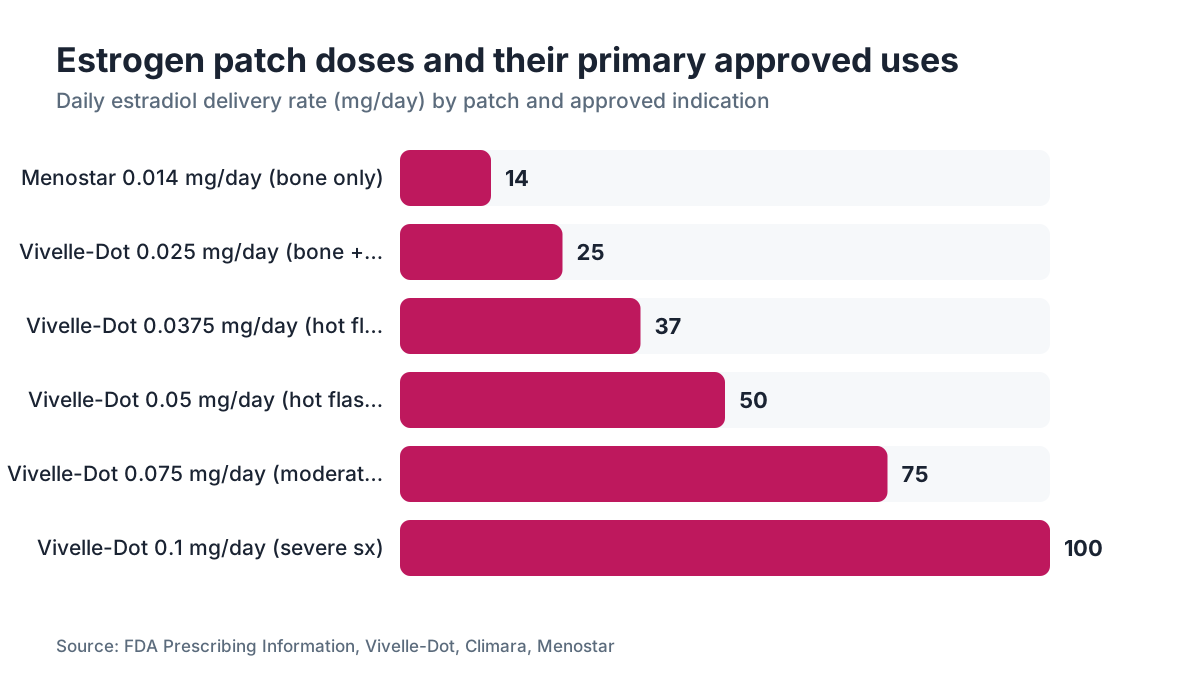
Low-dose patches (0.014 to 0.025 mg/day) mostly protect bone rather than substantially reduce hot flashes. If flashes are your main problem, you generally need at least 0.0375 to 0.05 mg/day. Your prescribing clinician will titrate based on symptom response and, occasionally, serum estradiol levels.
Which estrogen patches are FDA-approved and what are the differences?
All FDA-approved transdermal estradiol patches contain 17-beta estradiol, which is identical in molecular structure to what your ovaries made. The brand names differ in matrix design, adhesive, and dosing schedule. The active molecule is the same [3].
| Brand | Generic available | Dose range (mg/day) | Change schedule | |---|---|---|---| | Vivelle-Dot | Yes | 0.025, 0.0375, 0.05, 0.075, 0.1 | Twice weekly | | Climara | Yes | 0.025, 0.0375, 0.05, 0.06, 0.075, 0.1 | Once weekly | | Minivelle | Yes | 0.025, 0.0375, 0.05, 0.075, 0.1 | Twice weekly | | Alora | Yes | 0.025, 0.05, 0.075, 0.1 | Twice weekly | | Menostar | No | 0.014 | Once weekly | | Dotti | Yes | 0.025, 0.05, 0.075, 0.1 | Twice weekly |
Menostar is the outlier. Its ultra-low 0.014 mg/day dose is approved only for osteoporosis prevention, not for hot flash relief. The others are approved for both moderate-to-severe hot flashes and prevention of postmenopausal osteoporosis.
Generic versions of Vivelle-Dot and Climara have been around for years and cost far less. At most major pharmacies, a month of generic transdermal estradiol runs roughly $30 to $80 without insurance, depending on dose and patch count, though prices shift by region and pharmacy [4]. Brand-name versions can run $150 to $300 or more out of pocket. GoodRx and similar discount programs push generics down further, sometimes to $15 to $25 a month.
Combination patches that carry both estradiol and a progestin (like CombiPatch or Climara Pro) exist for women with a uterus who prefer one patch over two separate products. The trade-off is less freedom to dose each hormone on its own.
Do you need progesterone with an estrogen patch?
Yes, if you have a uterus. Full stop.
Estrogen alone thickens the uterine lining (endometrium). Without progesterone to oppose that growth, the risk of endometrial hyperplasia and endometrial cancer rises sharply. The North American Menopause Society (NAMS) and the Endocrine Society both state clearly that systemic estrogen should always come with adequate progestogen in women who have not had a hysterectomy [5].
If you've had a hysterectomy, you don't need progesterone. Estrogen-only therapy is actually tied to slightly better cardiovascular and breast outcomes in that group, based on the Women's Health Initiative estrogen-only arm.
You have real choices for the progesterone half. Oral micronized progesterone (Prometrium, generic) is body-identical and has the best safety profile of the bunch. Some women use a progestin-releasing IUD (like Mirena), which delivers progestin locally to the uterus with little systemic absorption, and pair it with a standalone estrogen patch. Synthetic progestins like medroxyprogesterone acetate work but carry more of the breast-cancer signal seen in older WHI data.
See the progesterone guide for a full comparison. The dose and duration depend on which form you use and how you cycle it (or don't), so this is worth a careful conversation with your clinician.
Are estrogen patches safe? What do the big studies actually show?
Safety is where this topic gets complicated, and where a lot of misinformation lives. Here's an honest read of the data.
The Women's Health Initiative (WHI) trial published in 2002 alarmed millions of women and their doctors. But the WHI used oral conjugated equine estrogen (Premarin) and synthetic medroxyprogesterone acetate (MPA), not transdermal estradiol. The average participant was 63 years old, well past menopause onset. Transdermal estradiol was never studied in WHI [6].
Since then, the patch-specific evidence has been reassuring on several fronts. The BMJ study found no elevated VTE (venous thromboembolism) risk with transdermal estrogen against a clear elevation with oral estrogen [1]. A 2019 meta-analysis in The Lancet did find a modest increase in breast cancer risk with combined estrogen-progesterone use, but it was substantially lower for estrogen-only therapy and for shorter duration of use [7].
Timing is the hinge. Women who start hormone therapy within 10 years of menopause onset or before age 60 appear to get cardiovascular benefit rather than risk. Women who start later may not. NAMS named this the "timing hypothesis" in its 2022 position statement, and it now shapes most clinical decisions [5].
Baseline risks vary enormously by person. A woman with a BRCA1 mutation faces a different risk-benefit math than a woman with severe hot flashes and a low baseline breast cancer risk. These conversations belong with a clinician who knows your history, more than your search results.
Here's the honest read: for healthy women under 60 who are within 10 years of menopause, the benefits of transdermal estradiol for quality of life and bone protection generally outweigh the risks. That's the current consensus of both NAMS and the Endocrine Society.
How do you apply an estrogen patch correctly?
Application sounds simple, but technique affects how much estradiol you actually absorb, and wrong placement is one of the most common reasons patches fail.
Apply to clean, dry, hairless skin. The lower abdomen below the waistline, the outer buttock, and the upper outer thigh are the standard sites. Avoid the breasts entirely. Avoid skin that's oily, irritated, cut, or recently lotioned. Press firmly for 10 full seconds, running your finger around the edges to seal them.
Rotate sites with each new patch. Wearing a patch on the same spot over and over irritates the skin and can cut absorption. Keep a simple log or rotate in a fixed pattern (left, center, right, repeat).
Change twice-weekly patches on the same two days every week, say Monday and Thursday. Once-weekly patches go on the same day each week. If a patch falls off, reapply it if it's been less than a couple of hours. If it's been longer, apply a new patch and keep your original change schedule.
Water is fine. Patches are built to stay on through showering, swimming, and light exercise. Very hot baths or saunas can speed absorption unpredictably and may cause irritability or breast tenderness.
Skin irritation under the patch is the most common side effect, hitting roughly 10 to 20 percent of users in clinical trials [3]. Rotating sites helps. If irritation sticks around, switching brands can solve it since adhesives differ. A very thin layer of hydrocortisone 1% on the skin before patch application (not on the patch itself) is sometimes recommended by dermatologists, though this isn't in the official labeling.
What dose of estrogen patch should you start with?
Most guidelines recommend starting with the lowest effective dose, which for hot flash relief usually means 0.0375 or 0.05 mg/day [5]. Use what works for your symptoms, not more.
That said, "lowest dose" isn't the same number for everyone. A woman who is 48, recently in perimenopause, and having 15 drenching night sweats a night might need 0.075 mg/day from the start. A woman who is 58 and mainly worried about bone protection might do fine at 0.025 to 0.05 mg/day.
Blood levels of estradiol can be checked, but there's real debate about how useful that is for managing symptoms. Serum estradiol in the 40 to 100 pg/mL range is a common clinical target for symptom relief, but symptoms matter more than the number. Some women feel fine at 30 pg/mL. Others still flash at 80 pg/mL.
Dose adjustments should happen no faster than every 4 to 8 weeks. Give each dose a real trial before you call it insufficient. Most underdosing mistakes come from switching too fast.
How does an estrogen patch compare to other forms of estrogen therapy?
Women want to know: is the patch better than the pill, the gel, the spray, or the ring? Here's an honest comparison.
| Form | Route | Liver first-pass | VTE risk vs. oral | Convenience | Cost (monthly, generic) | |---|---|---|---|---|---| | Patch | Transdermal | No | Lower | Change 1-2x/week | $15-$80 | | Pill | Oral | Yes | Reference (higher) | Daily | $10-$40 | | Gel | Transdermal | No | Lower | Daily | $50-$150 | | Spray | Transdermal | No | Lower | Daily | $100-$200 | | Vaginal ring (Femring) | Transdermal/systemic | No | Lower | Change every 90 days | $150-$300 | | Vaginal ring (Estring) | Local only | Minimal | Minimal | Change every 90 days | $150-$300 |
Pills are the cheapest and most studied form, but they carry higher clot risk. Gels and sprays share the metabolic advantage of patches but need daily application and careful handling to avoid transferring estrogen to partners or children through skin contact. The patch drops both daily dosing and transfer risk.
Vaginal rings deliver estrogen locally (Estring) or systemically (Femring). Estring treats vaginal symptoms only and does nothing for hot flashes or bone. Femring is systemic, functionally close to a patch but changed every three months.
For most women with no particular reason to avoid patches (skin sensitivity, sweating that loosens adhesion), the patch is a sound first choice among systemic options because of its metabolic profile and its once-or-twice-weekly dosing. If adhesion keeps failing, a gel or spray is the logical backup.
For a wider look at the therapy landscape, see our guide on hormone replacement therapy.
Who should not use an estrogen patch?
There are real contraindications, and they matter.
Avoid estrogen patches if you have a history of hormone receptor-positive breast cancer. The evidence isn't settled on whether estrogen causes new breast cancers in women with no prior history, but in women with prior HR+ breast cancer, estrogen can stimulate residual cancer cells [5].
Avoid if you have active or recent (within the past year) cardiovascular disease: heart attack, stroke, or unstable angina. Timing cuts both ways. Starting estrogen years after a cardiac event, especially in older women, may raise rather than lower risk.
Avoid with active liver disease. The patch bypasses first-pass liver metabolism, but estradiol still gets cleared by the liver eventually, and significant hepatic impairment can change that.
Avoid with unexplained vaginal bleeding. This needs investigation before adding estrogen.
Known or suspected pregnancy is an absolute contraindication, though transdermal estradiol is rarely prescribed to someone who might conceive.
Women with a history of VTE should tread carefully. The transdermal route substantially reduces but may not fully erase clot risk in very high-risk individuals (Factor V Leiden, antiphospholipid syndrome). These cases need hematology input.
Migraines with aura are a relative contraindication to oral estrogen because of stroke risk, but the evidence on transdermal estradiol specifically is thinner, and some neurologists consider it lower risk. Individualized decision-making wins here too.
Does an estrogen patch help with bone density?
Yes, and this is one of the clearest benefits in the data. Estradiol is a major regulator of bone remodeling. When estrogen drops at menopause, bone breakdown (resorption) speeds up, and women can lose 10 to 20 percent of their bone mass in the first 5 to 7 years after menopause [8].
Transdermal estradiol at 0.025 mg/day or higher has been shown to prevent bone loss and reduce fracture risk. Even the ultra-low Menostar patch (0.014 mg/day) cut spine bone loss over two years in its registration trial [3]. The 2002 WHI trial (using oral CEE) showed a 33 percent reduction in hip fractures in the hormone therapy group.
If bone protection is a main goal, estrogen therapy is one of the most effective options going. It holds its own against bisphosphonates for spine and hip protection and handles other menopause symptoms at the same time.
Women starting estrogen partly for bone reasons should get a baseline bone density test (DEXA scan) if they haven't had one. Medicare covers DEXA every two years for women at risk, and most commercial insurance follows similar rules.
Stopping estrogen therapy lets bone loss resume, so the benefit isn't permanent once you quit. Factor that into your long-term plan.
How long should you stay on an estrogen patch?
This is genuinely contested, and anyone who hands you a confident single answer is oversimplifying.
For years, "five years maximum" was the default, mostly driven by the WHI breast cancer findings. NAMS's 2022 position statement dropped that arbitrary limit. Current guidance says duration should be individualized based on ongoing symptoms, risk profile, and patient preference [5]. Some women have legitimate reasons to stay on therapy into their 60s or 70s.
The Endocrine Society says the same. For symptomatic women who are candidates for hormone therapy, there is no evidence-based mandatory duration limit, and therapy should be reassessed each year [9].
In practice, most clinicians revisit the decision every year. The yearly conversation covers three things: are symptoms still present or returning, have any new risk factors shown up (new cancer diagnosis, cardiovascular event, elevated clot risk), and does the woman still want to continue weighing all of that.
Stopping abruptly can trigger a rebound of hot flashes. Tapering the dose over several months can ease the transition, though the data on whether tapering truly beats stopping cold is thin. Some women try to taper, watch symptoms come roaring back, and learn something useful about whether quitting is really the right call yet.
Women also managing weight with semaglutide or other GLP-1 therapies should know that significant weight loss can change how much estradiol the body stores and metabolizes, which may mean revisiting the patch dose. A clinician who works with both, like those at WomenRx, can help you watch for it.
What are the most common side effects of estrogen patches?
Side effects split into two buckets: local (from the patch itself) and systemic (from the estradiol).
Local reactions top the list. Redness, itching, and mild irritation at the application site hit 10 to 20 percent of users. Rotating sites and switching brands often fixes it.
Systemic effects from estradiol include breast tenderness or swelling (usually worse when starting or raising a dose), bloating, nausea (rare with patches compared to pills), and headaches. Most are dose-related and ease after the first 1 to 3 months as your body adjusts.
Breast tenderness that persists or worsens suggests your dose is too high. If you're also using a progestogen, the type and dose of that can add to breast symptoms too.
Unscheduled vaginal bleeding ("breakthrough bleeding") can happen, especially in the first few months of combined estrogen-progesterone use. Persistent or heavy bleeding needs evaluation to rule out endometrial pathology.
Mood changes are worth flagging. Some women feel notably better on estrogen. Some feel anxious or emotionally flat, particularly if the progestogen component is synthetic. These responses are real and worth reporting to your prescriber rather than white-knuckling through.
If you get sudden severe headache, vision changes, chest pain, shortness of breath, or leg pain and swelling, stop the patch and seek immediate care. These can signal rare but serious events like stroke, PE, or DVT.
Can you get an estrogen patch through telehealth?
Yes, and it's become a practical option for many women who can't easily reach a menopause-literate clinician in person.
Federal telehealth rules allow prescribing of non-controlled substances, including estradiol, over synchronous video or, in many states, after an asynchronous intake questionnaire. Estradiol is not a controlled substance, so it doesn't face the telehealth prescribing restrictions that testosterone does.
The catch is that good telehealth care for menopause isn't a checkbox and a prescription. A clinician should review your personal and family history, ask about breast symptoms, check cardiovascular risk factors, and confirm whether you need progesterone before sending a patch prescription. Platforms that skip all that and just ship a patch should raise a flag.
WomenRx offers telehealth menopause care built for women who want estradiol therapy evaluated properly, including progesterone pairing and follow-up dose adjustments, rather than a script and a goodbye. If you're researching this path, look for clinicians who have completed NAMS's menopause practitioner training or who specialize in women's hormonal health.
What questions should you ask your clinician before starting an estrogen patch?
Walking in prepared makes a real difference. Here are the questions worth raising.
Ask whether you need progesterone and, if yes, which form is right for you. The answer should address your uterine status and your preference for body-identical versus synthetic progestogen.
Ask which dose the clinician is starting you on and why. Understanding the reasoning helps you take part in later adjustments.
Ask what would prompt a dose increase versus a decrease. Getting this spelled out before you start means you won't be guessing later.
Ask how your symptoms will be tracked. Some clinicians use structured questionnaires. Others rely on what you report. Either way, knowing the plan helps.
Ask about breast screening. Starting hormone therapy is no reason to skip mammograms, and your clinician should have a view on your schedule.
Ask about duration. "How long do you expect I'll be on this, and how will we decide when to stop?" A clinician who says "five years, no exceptions" is working from 2005 guidelines. A clinician who says "we'll assess yearly based on symptoms and your risk" is current.
If your clinician seems unfamiliar with the transdermal-versus-oral distinction, or waves off patches in favor of oral-only, it may be worth a second opinion from a menopause specialist. NAMS maintains a Menopause Society Certified Practitioner directory at menopause.org [5].
For more on the full spectrum of menopause care, the menopause and when does menopause start guides cover the clinical picture in more detail.
Frequently asked questions
How long does it take for an estrogen patch to start working?
Most women notice some improvement in hot flash frequency within two to four weeks of starting a patch at an effective dose (0.0375 to 0.05 mg/day or higher). Full response can take eight to twelve weeks. Sleep often improves before hot flashes fully settle. If you see no change at all after eight weeks, a dose increase or route switch is worth discussing.
Can an estrogen patch help with vaginal dryness?
Systemic estradiol patches do help vaginal tissue over time, usually within two to three months of steady use. But if vaginal dryness or painful sex is your main complaint, low-dose vaginal estrogen (cream, tablet, or ring) is often more effective because it delivers estradiol straight to the tissue. Many women use both: a systemic patch for hot flashes and bone protection, plus vaginal estrogen for local symptoms.
Will an estrogen patch make me gain weight?
No well-designed trial has shown that transdermal estradiol causes weight gain. Menopause itself brings metabolic shifts and fat redistribution toward the abdomen, and estrogen therapy may actually counter some of that. Some women get temporary fluid retention when starting, especially at higher doses, which can feel like weight gain but usually resolves within the first month or two.
Can an estrogen patch fall off, and what do I do if it does?
Patches do fall off occasionally, especially in heat, heavy sweating, or on slightly oily skin. If a patch falls off within a few hours, try reapplying it or put on a new patch and continue your original change schedule. If it's been longer, apply a fresh patch and restart the countdown from that day. Consistent skin prep before each application cuts fall-off a lot.
Is an estrogen patch the same as bioidentical hormone therapy?
Yes. All FDA-approved estrogen patches contain 17-beta estradiol, molecularly identical to the estrogen your ovaries produced. That's what 'bioidentical' means. Some compounding pharmacies also make custom transdermal estradiol patches or gels, but those lack FDA approval for purity and dosing accuracy. For most women, FDA-approved patches are both bioidentical and the better-regulated choice.
Can I wear an estrogen patch during pregnancy?
No. Estrogen patches are contraindicated in pregnancy. If there's any chance you could be pregnant, do a test before starting. Estradiol in the first trimester carries theoretical teratogenic risk, and no clinician should prescribe a systemic estrogen to a woman with unconfirmed pregnancy status.
Do estrogen patches protect against heart disease?
For women who start within 10 years of menopause onset or before age 60, the evidence suggests transdermal estradiol brings favorable cardiovascular effects, including better lipid profiles and slower atherosclerosis progression. Starting after 60, or more than 10 years post-menopause in women with existing cardiovascular disease, is a different risk-benefit picture and generally not recommended as a cardiovascular intervention.
What is the difference between the Vivelle-Dot and Climara patches?
Both deliver FDA-approved 17-beta estradiol through the skin. Climara is a once-weekly patch with a slightly larger surface area. Vivelle-Dot is applied twice weekly and is notably smaller, which many women prefer for discretion and comfort. Both come in generics. Dose ranges overlap heavily. The choice usually comes down to weekly versus twice-weekly changes and which adhesive irritates your skin less.
Can you use an estrogen patch if you still have periods?
Perimenopause is tricky territory. Women who still have periods are still producing estrogen and progesterone, though erratically. A systemic estrogen patch during perimenopause can help hot flashes and sleep disruption, but dosing is harder because your ovaries are still active. Some clinicians prefer low-dose oral contraceptives during perimenopause for this reason. A NAMS-trained menopause specialist can sort out which approach fits your symptom pattern.
How does an estrogen patch affect mood and mental health?
Estrogen has real effects on serotonin and dopamine pathways. Many women report better mood, less anxiety, and sharper cognitive function on estradiol. Clinical trials show modest but meaningful improvement in depression scores, particularly for perimenopausal women. That said, estrogen is no substitute for treating clinical depression. If mood symptoms are severe or meet diagnostic criteria for depression, they need separate evaluation alongside any hormone therapy.
Is an estrogen patch covered by insurance?
Most generic transdermal estradiol patches are covered by commercial insurance and Medicare Part D, though tier placement and copays vary. Without insurance, generic patches run roughly $15 to $80 a month depending on dose, with GoodRx or similar programs often dropping costs further. Brand-name patches can cost $150 to $300 out of pocket. Call your pharmacy with the specific NDC number before filling to get the real price.
Can you cut an estrogen patch in half to lower the dose?
It depends entirely on the patch type. Matrix patches (including most Vivelle-Dot, Alora, and Climara generics) can generally be cut, since the drug is spread evenly through the adhesive matrix. Reservoir patches, which hold a drug-filled chamber, should never be cut because the contents can leak. Check with your pharmacist before cutting any patch, and confirm the type first. Cutting isn't in official labeling but is used clinically.
What happens when you stop an estrogen patch?
Hot flashes, night sweats, and other vasomotor symptoms often return when you stop, sometimes within days to weeks. Bone loss resumes. Sleep and mood may worsen. Stopping abruptly tends to cause a sharper rebound than tapering the dose over two to three months, though the evidence that tapering is meaningfully better is not strong. Discuss a stopping plan with your clinician rather than pulling the patch off one day.
Does using an estrogen patch affect mammogram results?
Hormone therapy, particularly combined estrogen-progestogen regimens, can raise breast density on mammograms, which makes images harder to read. This is more pronounced with synthetic progestins than with micronized progesterone. Tell your mammogram technician and radiologist that you're on hormone therapy so they can flag it. Don't skip or delay scheduled mammograms because you're using a patch.
Sources
- BMJ, Vinogradova et al. 2019 - 'Use of hormone replacement therapy and risk of venous thromboembolism'
- FDA, Guidance for Industry: Estrogen and Estrogen/Progestin Drug Products
- FDA, Prescribing Information for Menostar (estradiol transdermal system)
- GoodRx, estradiol patch price data
- North American Menopause Society (NAMS), 2022 Hormone Therapy Position Statement
- JAMA, Writing Group for the Women's Health Initiative Investigators, 2002 - 'Risks and Benefits of Estrogen Plus Progestin in Healthy Postmenopausal Women'
- The Lancet, Collaborative Group on Hormonal Factors in Breast Cancer, 2019 - 'Type and timing of menopausal hormone therapy and breast cancer risk'
- National Institutes of Health, Office of Dietary Supplements - Calcium fact sheet
- Endocrine Society, Clinical Practice Guideline: Treatment of Menopause Symptoms 2015
- FDA, Prescribing Information for Vivelle-Dot (estradiol transdermal system)
- MsFLASH Network, published in Menopause journal - network trials of vasomotor symptom interventions
- ClinicalTrials.gov, Women's Health Initiative study record