Estrogen patch benefits: what the evidence actually shows
TL;DR: Estrogen patches deliver estradiol through the skin, skipping the liver and lowering clot risk compared to oral estrogen. Clinical evidence shows they cut hot flashes by 75-90%, protect bone density, improve sleep and mood, and support vaginal and urinary health. Low-dose options (0.025-0.05 mg/day) give real relief with a more conservative hormone exposure.
What does an estrogen patch actually do?
An estrogen patch is a small adhesive square you place on your lower abdomen, buttock, or hip. It releases estradiol, the most biologically active form of estrogen, continuously through your skin into your bloodstream. You change it once or twice a week depending on the brand.
The route of delivery is what sets it apart from a pill. Oral estrogen is absorbed through your gut and then processed by your liver on its first pass, which pushes the liver to make more clotting proteins and C-reactive protein. Transdermal estradiol skips that liver pass entirely. The drug lands directly in your circulation at a steady, predictable level, with no sharp peaks and no hepatic amplification of coagulation factors. [1]
Patches come in several strengths. The standard range runs from 0.025 mg per day (low-dose) up to 0.1 mg per day. Most clinicians start around 0.05 mg and adjust based on symptom response and follow-up labs. The estrogen patch delivers 17-beta estradiol, the same molecule your ovaries made before menopause, so your body recognizes and uses it exactly the same way.
What are the main benefits of an estrogen patch for menopause symptoms?
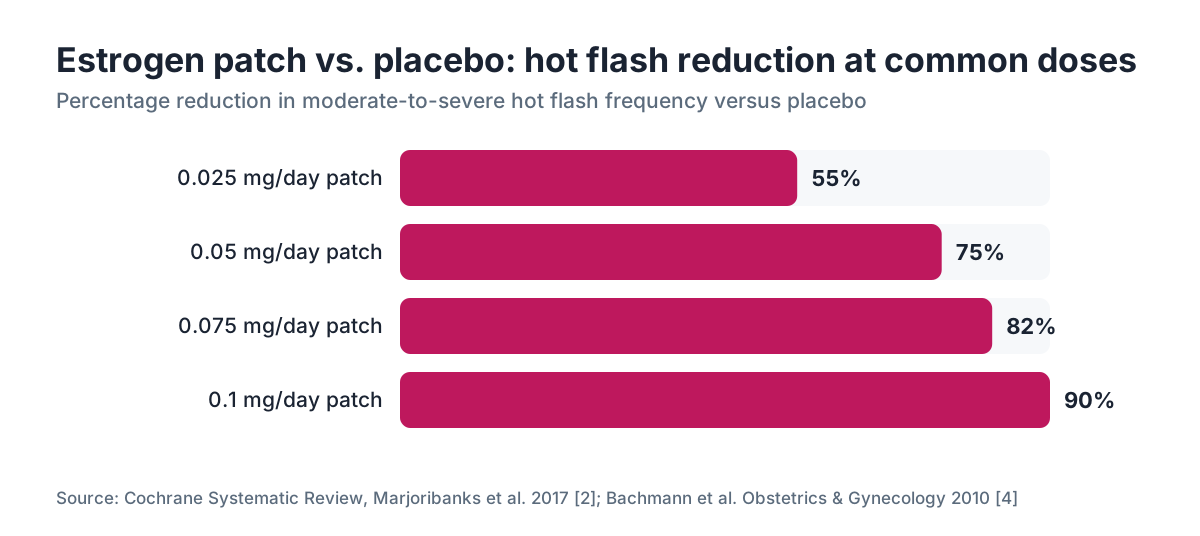
Hot flashes are the reason most women ask about patches in the first place, and the evidence is genuinely strong. A 2017 Cochrane review covering 24 randomized trials found transdermal estradiol reduced the frequency of moderate-to-severe hot flashes by roughly 75-90% compared to placebo. [2] That is not a marginal effect. Women often describe the change as moving from 8-12 disruptive flashes a day down to one or two mild ones.
Night sweats fall into the same category because they are the nocturnal version of the same vasomotor instability. Control them and sleep quality improves. Sleep disruption is one of the most under-discussed consequences of menopause: fragmented sleep cascades into mood disturbance, cognitive fog, and worse metabolic regulation. Patching that particular hole matters more than most clinicians explain.
Mood and cognition respond too. Estradiol acts directly on serotonin and dopamine systems. Several observational studies and smaller randomized trials show that women starting HRT in early menopause report less anxiety, steadier mood, and better verbal memory. The effect is strongest when treatment begins within a few years of the final menstrual period, sometimes called the "critical window" or timing hypothesis. [3]
Genitourinary symptoms improve as well. Estrogen receptors line the vaginal wall, urethra, and bladder. As estradiol falls in perimenopause, vaginal tissue thins and loses lubrication, and the urethra gets more prone to irritation. Systemic patches raise estradiol enough to partly reverse this. If your main complaint is vaginal dryness or recurrent urinary urgency, localized vaginal estrogen is more targeted. But a systemic patch handles both the hot flashes and the genitourinary symptoms at once.
How does a low-dose estrogen patch differ, and who is it right for?
Low-dose means a patch releasing 0.025 mg of estradiol per day. Brands like Vivelle-Dot 0.025 and generic equivalents sit at this level. A 2010 randomized controlled trial published in Obstetrics & Gynecology found that even the 0.025 mg dose significantly reduced hot flash frequency compared to placebo, though the absolute reduction was smaller than at higher doses. [4]
The benefits of a low-dose estrogen patch are real, especially for women who want symptom control with the most conservative hormone exposure. Women who had estrogen-sensitive conditions in the past, women in their mid-to-late 60s who are several years past menopause, and women who are sensitive to side effects often start here. The bone-protective effect also kicks in at the low dose, which matters for women whose main concern is osteoporosis prevention rather than hot flashes.
Low-dose is not the same as no risk. Any systemic estrogen in a woman with an intact uterus needs concurrent progesterone to protect the uterine lining. That rule does not change at 0.025 mg. Women who have had a hysterectomy can use estrogen alone.
Some clinicians and telehealth platforms, including WomenRx, start patients at 0.025 mg and titrate up only if symptoms are incompletely controlled at a 6-8 week follow-up. This fits the North American Menopause Society (NAMS) position that treatment should use the lowest effective dose for the shortest duration that meets each individual woman's goals. [5]
Does the estrogen patch protect bone density?
Yes, and this is one of the most evidence-backed benefits. The Women's Health Initiative (WHI), despite its complicated reputation, clearly showed that conjugated equine estrogen reduced hip fracture risk by 34% and vertebral fracture risk by 34% compared to placebo. [6] That trial used oral conjugated estrogen, but mechanistic data and smaller trials show transdermal estradiol works through the same bone-protective mechanism: it suppresses osteoclast activity and slows bone resorption.
Bone loss speeds up sharply in the first five years after menopause, sometimes 2-3% per year in the spine. [12] Starting estrogen during this window does the most good. Women who begin HRT in their early 50s keep substantially more bone mass than those who wait until their 60s.
If you are already thinking about this, a bone density test (DEXA scan) gives you a baseline T-score and helps your clinician calibrate how much weight to put on the osteoporosis prevention argument in your case. A woman with a T-score of -1.5 at 52 faces a different calculus than one with a T-score of -2.4.
Is the estrogen patch safer than estrogen pills because of clot risk?
This is the most clinically meaningful pharmacological advantage of the patch over oral estrogen. Several large observational studies, including the ESTHER study published in Circulation in 2007, found that transdermal estradiol carried no statistically significant increase in venous thromboembolism (VTE) risk, while oral estrogen raised VTE risk by roughly two-fold. [1]
The mechanism, as noted above, is the liver bypass. Oral estrogen raises hepatic synthesis of clotting factors including Factor VIII, Factor X, and fibrinogen. Transdermal estrogen does not. That is not a minor detail for women who have a personal or family history of blood clots, carry a Factor V Leiden mutation, or are obese (obesity itself raises baseline clot risk).
The Endocrine Society's 2015 clinical practice guideline on menopause explicitly says transdermal estrogens are preferred over oral formulations in women with elevated VTE risk. [7]
Here is the honest caveat. The ESTHER study and similar research are observational, not randomized. Women who got transdermal estrogen may have been healthier at baseline. Randomized trial data comparing patch versus pill for VTE outcomes are limited. The mechanistic argument is strong and the observational data point the same direction, but certainty is not absolute.
What does the evidence say about cardiovascular benefits of the estrogen patch?
The timing hypothesis matters most here. Estrogen appears to help the cardiovascular system when started close to menopause, and may be neutral or slightly harmful when started in older women who already have arterial disease. This is called the "healthy artery" hypothesis.
The WHI enrolled women with an average age of 63, many of whom already had subclinical atherosclerosis. Starting estrogen in that population showed no cardiovascular benefit. But observational data from the Nurses' Health Study and secondary analyses of WHI women aged 50-59 both point to lower coronary heart disease risk (roughly 30-40% lower) in women who start HRT within 10 years of menopause. [3]
For the patch specifically, the KEEPS trial (Kronos Early Estrogen Prevention Study) randomized recently menopausal women to oral conjugated estrogen, transdermal estradiol, or placebo. After four years, neither hormone arm showed statistically significant differences in coronary artery calcium versus placebo, though the transdermal group had more favorable lipid profiles. KEEPS was not powered to detect clinical cardiovascular events. [8]
Bottom line: the patch is not a cardiac treatment. But for women under 60 or within 10 years of their last period, it looks cardiovascular-neutral to modestly beneficial, which is a long way from risky.
Does the estrogen patch help with weight and metabolism?
Here the data gets softer. Estrogen does not directly cause weight loss, but estradiol decline in menopause shifts fat toward the visceral (abdominal) compartment, raises insulin resistance, and lowers metabolic rate. HRT does not reverse all of that, but small trials show it partly blunts the visceral fat gain and may modestly improve insulin sensitivity. [9]
For women dealing with real menopausal weight gain who want a more direct tool, GLP-1 receptor agonists like semaglutide or tirzepatide are the best-studied drugs available right now. Our article on semaglutide for weight loss covers the SURMOUNT and STEP trial data in detail. Some clinicians combine HRT and a GLP-1 in women with both vasomotor symptoms and obesity, reasoning that the hormonal environment from HRT makes GLP-1 treatment more effective. That combination has not been studied in a well-powered randomized trial.
Sleep improvement from controlling night sweats has a metabolic payoff downstream. Poor sleep raises cortisol, disrupts appetite hormones (ghrelin, leptin), and promotes fat storage. Fixing sleep through estrogen is not a trivial metabolic win.
What are the real risks of an estrogen patch, and how significant are they?
No treatment has zero risk. Here are the relevant risks for the estrogen patch, in honest proportion.
Breast cancer is the most discussed one. The WHI found that conjugated equine estrogen alone (no progestogen) did not increase breast cancer risk after 7 years. The combination of estrogen plus medroxyprogesterone acetate (a synthetic progestogen, not the same as bioidentical progesterone) did show a small increased risk. The absolute increase was about 8 extra cases per 10,000 women per year of use. For context, that is smaller than the risk increase from one alcoholic drink a day or from being sedentary. [6] Using micronized progesterone (Prometrium) rather than a synthetic progestogen appears to carry lower breast cancer risk in observational data, though randomized confirmation is limited.
Endometrial cancer risk: estrogen alone thickens the uterine lining. Any woman with a uterus must use a progestogen alongside her estrogen. This is non-negotiable.
Stroke: the WHI showed a modest increased stroke risk with oral estrogen, an absolute risk of about 8 extra strokes per 10,000 women per year. The transdermal route, again because it avoids the hepatic first-pass effect on coagulation and blood pressure regulation, looks much more favorable on stroke risk in observational data. [1]
Local skin reactions: 10-20% of women get mild redness or itching at the patch site. Rotating sites helps. Serious skin reactions are rare.
The NAMS 2022 Hormone Therapy Position Statement puts it plainly: "For most symptomatic menopausal women aged younger than 60 years or within 10 years of menopause onset, the benefits of hormone therapy outweigh the risks." [5]
How does the estrogen patch compare to other estrogen delivery methods?
There are several ways to deliver estrogen: pills, patches, gels, sprays, vaginal rings, and injections. Here is how they stack up on the factors that matter most.
| Delivery method | Liver first-pass | VTE risk profile | Ease of use | Dose flexibility | |---|---|---|---|---| | Oral estrogen (pill) | Yes | Elevated vs baseline | Daily pill | Fixed tablet doses | | Patch (transdermal) | No | No significant increase | Twice weekly | Multiple strengths | | Gel/spray (transdermal) | No | No significant increase | Daily application | Adjustable pumps | | Vaginal ring (systemic) | No | No significant increase | Replace every 90 days | Fixed release rate | | Pellet implant | No | No significant increase | Every 3-6 months | Variable, hard to adjust |
Gels and sprays give the same liver-bypass benefit as patches and allow fine-grained dose titration. The trade-off is daily application and transfer risk (the gel can rub off onto a partner or child before it dries). Patches stay put and deliver a steady level over 3-4 days per application.
For how all of this fits into a wider hormone replacement plan, the article on hormone replacement therapy covers the full category.
Who should not use an estrogen patch?
There are clear contraindications. Women with a personal history of estrogen-receptor-positive breast cancer should generally not use systemic estrogen without a detailed risk-benefit conversation with an oncologist. Women with active or recent VTE, active liver disease, unexplained vaginal bleeding, or a history of estrogen-dependent endometrial cancer are not candidates for standard HRT. [5]
Relative contraindications call for individual risk-benefit analysis rather than an automatic no. Controlled hypertension, a strong family history of breast cancer, a history of benign fibrocystic breast disease, and current smoking are all worth talking through carefully rather than treating as automatic disqualifiers. Migraine with aura has historically been listed as a contraindication to oral estrogen but is less clear-cut for transdermal estrogen. Some neurologists actually favor transdermal here because it avoids peak-and-trough estrogen levels.
Age alone is not a contraindication. The debate about starting HRT after 65 is about recalculating risk versus benefit, not a clinical absolute. Women who start late, or who need to continue for reasons like severe osteoporosis or premature ovarian insufficiency, can do so with the right monitoring.
How do you know if an estrogen patch is working?
Most women notice fewer hot flashes within 2-4 weeks of starting a patch. Sleep often improves around the same time. Mood and cognitive symptoms can take 6-8 weeks to shift meaningfully.
Serum estradiol levels help confirm absorption. A woman on a 0.05 mg/day patch should generally have a serum estradiol in the 40-80 pg/mL range, though individual variation is wide. Labs below 30 pg/mL at steady state suggest poor patch adherence or unusually high skin clearance. Levels above 150 pg/mL at standard doses warrant rechecking application technique and possibly stepping down.
If symptoms are not controlled at 6-8 weeks on 0.05 mg, most clinicians step up to 0.075 mg before trying 0.1 mg. The maximum commonly prescribed dose is 0.1 mg/day, though some women, particularly those with premature ovarian insufficiency, need higher levels.
If you are working up to starting hormone therapy, knowing where you are in the perimenopause-to-menopause transition helps frame the conversation. The article on when does menopause start explains the staging criteria.
What should you ask a clinician before starting an estrogen patch?
The conversation is worth having carefully. These are the questions that actually matter.
First, do you need progestogen alongside the estrogen? If you have a uterus, yes. Your clinician should specify which progestogen and at what dose. Micronized progesterone (Prometrium 100 or 200 mg) is generally preferred over synthetic progestins based on observational safety data.
Second, what is your personal risk profile for VTE, stroke, and breast cancer? This is not a generic question. A woman with Factor V Leiden, a history of DVT, or a BRCA1/2 mutation starts from a meaningfully different place than a woman with none of those factors.
Third, what dose will you start at and what is the plan for follow-up? A 6-8 week follow-up with symptom reassessment and optional serum estradiol testing is standard practice.
Fourth, how long should you plan to stay on it? NAMS and the Endocrine Society both moved away from the old "five-year maximum" rule. Duration should be individualized. Some women stay on estrogen indefinitely for osteoporosis prevention, quality of life, or management of premature ovarian insufficiency.
Telehealth services that specialize in women's hormones, like WomenRx, can prescribe and manage estrogen patches through synchronous or asynchronous consultations, which removes the access barrier for women who cannot easily see an in-person ob-gyn or menopause specialist.
Frequently asked questions
How long does it take for an estrogen patch to start working?
Most women notice fewer hot flashes within 2-4 weeks. Night sweat improvement usually follows in the same window. Mood and vaginal tissue changes take longer, typically 6-8 weeks for meaningful improvement. Serum estradiol reaches a steady state within 24-48 hours of the first patch, but the symptom response lags because tissues need time to respond to restored estrogen.
Can you use an estrogen patch during perimenopause or only after menopause?
Patches are used in both stages. During perimenopause, when estrogen levels swing rather than staying uniformly low, the patch smooths out those swings and cuts vasomotor symptoms. Menopause is officially one year after your last period, but the hormonal instability of late perimenopause often produces the worst symptoms. See our article on perimenopause age for more on timing.
Do you need progesterone with an estrogen patch?
Yes, if you have a uterus. Estrogen alone thickens the uterine lining (endometrium) and raises endometrial cancer risk. A progestogen, either synthetic (like medroxyprogesterone acetate) or bioidentical micronized progesterone, is required to protect the lining. Women who have had a hysterectomy can safely use estrogen-only therapy without any progestogen.
What is the lowest dose estrogen patch available?
The lowest commercially available dose in the United States is 0.014 mg per day (Menostar), approved specifically for osteoporosis prevention. For symptom management, the lowest commonly prescribed dose is 0.025 mg per day. At this level, bone-protective benefits are documented and hot flash frequency drops meaningfully versus placebo, though the effect is smaller than at 0.05 mg or higher.
Can an estrogen patch help with anxiety and depression in menopause?
Evidence points to yes, especially for anxiety. Estradiol modulates serotonin and dopamine pathways. Several trials show women starting HRT near menopause report lower anxiety scores and steadier mood. The effect is strongest when treatment starts close to the transition rather than years later. Clinical depression with a major depressive episode needs its own psychiatric treatment; HRT alone is not a substitute for antidepressants in that setting.
Is the estrogen patch covered by insurance?
Most branded and generic estradiol patches are covered under the Affordable Care Act preventive care provisions when prescribed for menopause management. Coverage specifics depend on your plan and formulary. Generic transdermal estradiol patches are widely available at around $30-60 per month without insurance. Check your pharmacy's generic tier before assuming you need a brand.
How do you keep an estrogen patch from falling off?
Apply to clean, dry, hairless skin on the lower abdomen, buttock, or hip. Avoid areas that crease when you sit. Press firmly for 10 seconds after application. Skip lotion, sunscreen, or oil near the site. Swimming and exercise are fine once the patch is fully adherent. If a patch partially lifts, press it back. If it falls off entirely, apply a new patch and continue on the original schedule.
Can an estrogen patch cause weight gain?
Most evidence says no, and it may modestly offset menopausal weight redistribution. Estradiol decline drives visceral fat accumulation. Patching that deficit does not cause net weight gain and may partly blunt the abdominal weight gain typical of the menopausal transition. Individual responses vary, and water retention in the first few weeks is possible but usually passes.
What is the difference between a bioidentical estrogen patch and a regular estrogen patch?
Most FDA-approved transdermal estrogen patches already contain 17-beta estradiol, which is structurally identical to the estrogen your ovaries produced. That is bioidentical by definition. The term "bioidentical" in marketing usually refers to compounded preparations, which are not FDA-approved and lack the same quality-control standards. FDA-approved patches with estradiol are bioidentical and regulated; that is the better option for most women.
Does the estrogen patch affect libido?
Indirectly, yes. Systemic estrogen improves vaginal moisture, reduces dyspareunia (painful intercourse), and, by improving sleep and mood, can increase interest in sex. Direct libido effects are mostly governed by testosterone rather than estrogen. Many women who feel the patch helped their sex drive attribute it to the combined improvement in comfort, sleep, and emotional wellbeing rather than a direct hormone-to-libido link.
How is an estrogen patch different from estrogen cream or gel?
All three bypass the liver and deliver estradiol transdermally, giving them the same favorable VTE profile versus oral estrogen. The patch is applied twice weekly (or weekly for some brands) and stays in place; gels and sprays are applied daily. Gels allow more granular dose adjustment. Creams can vary in absorption consistency. Many women prefer patches for convenience and steady absorption. Vaginal creams are a different category, delivering mostly local estrogen with minimal systemic absorption.
At what age should a woman stop using an estrogen patch?
There is no universal cutoff age. The old "stop at 60" rule has been retired by NAMS and the Endocrine Society in favor of individualized duration based on ongoing risk-benefit assessment. Women with premature ovarian insufficiency, persistent symptoms, or significant osteoporosis may continue well past 65. Annual review with your clinician, weighing current bone density, symptoms, breast health, and cardiovascular status, tells you more than age alone.
Can an estrogen patch interact with other medications?
Yes. Drugs that induce liver enzymes (rifampicin, certain anticonvulsants like phenytoin and carbamazepine, St. John's Wort) speed up estradiol metabolism and can lower patch effectiveness. Because transdermal estradiol bypasses the liver, this interaction is less pronounced than with oral estrogen, but it is not zero. Thyroid medication doses sometimes need adjustment after starting HRT. Always give your prescribing clinician a full medication list.
Sources
- Circulation, ESTHER Study, Canonico M et al. 2007
- Cochrane Database of Systematic Reviews, Marjoribanks J et al. 2017
- Menopause, NAMS Journal, Timing Hypothesis / Critical Window
- Obstetrics & Gynecology, Bachmann G et al. 2010, low-dose patch RCT
- NAMS 2022 Hormone Therapy Position Statement
- JAMA, Women's Health Initiative, Rossouw JE et al. 2002
- Endocrine Society Clinical Practice Guideline, Menopause 2015
- Annals of Internal Medicine, KEEPS Trial, Harman SM et al. 2014
- Menopause, Davis SR et al., estrogen and metabolic effects review
- FDA Drug Label, Estradiol Transdermal System (Vivelle-Dot)
- FDA Drug Label, Menostar (estradiol transdermal 0.014 mg/day)
- NIH National Institute on Aging, Menopause overview