Estrogen patch: how it works, side effects, and which to choose
TL;DR: Estrogen patches send 17-beta estradiol through your skin straight into the bloodstream, skipping the liver. Doses run from 0.014 mg/day to 0.1 mg/day, applied once or twice a week. Side effects are usually mild and skin-related. Patches are FDA-approved for hot flashes, vaginal symptoms, and osteoporosis prevention, and they carry a lower clot risk than estrogen pills.
What is an estrogen patch and how does it work?
An estrogen patch is a small adhesive square, roughly the size of a silver dollar, that sticks to your skin and releases 17-beta estradiol into your bloodstream around the clock. The hormone crosses the outer skin layers into the capillaries and never touches your digestive system or gets processed by the liver on its first pass. That skipped liver step matters more than it sounds.
Swallow estrogen and the liver metabolizes it, ramping up clotting proteins and sex hormone-binding globulin along the way. A patch skips all of that. A 2010 observational study in the BMJ (Canonico et al.) found oral estrogen doubled the risk of venous thromboembolism compared to no HRT, while transdermal estrogen showed no statistically significant increase in VTE risk [1]. That single finding reshaped how a lot of clinicians prescribe.
Patches come in two designs. Matrix patches hold the hormone throughout the adhesive layer. Reservoir patches keep a drug-containing gel behind a rate-controlling membrane. Most products on the market now are matrix, because they're thinner and less likely to leak. You apply them to clean, dry skin on the lower abdomen, buttocks, or upper thigh, and you rotate sites to keep your skin happy. Never put a patch on your breast.
See the hormone replacement therapy overview for how patches fit into a full HRT plan.
What estrogen patch doses are available, and which dose is right for you?
FDA-approved estrogen patches cover a wide range. The lowest one sold is the Climara 0.014 mg/day patch, cleared specifically for osteoporosis prevention in postmenopausal women who don't need hot flash relief [2]. From there, doses climb through 0.025, 0.0375, 0.05, 0.06, 0.075, and 0.1 mg/day depending on the brand.
The North American Menopause Society recommends starting at the lowest effective dose and titrating up based on how you respond, usually reassessing at 8 to 12 weeks [3]. For most women with moderate-to-severe hot flashes, a 0.05 mg/day patch is a sensible starting point. Women in early perimenopause, women with mild symptoms, or women mostly after bone protection often do fine at 0.025 or even 0.014 mg/day.
The 0.014 to 0.025 mg/day range is sometimes called "ultra-low dose." It appeals to women who feel cautious about hormones but still want skeletal or cardiovascular benefit. The ULTRA trial, published in JAMA Internal Medicine in 2004, showed that 0.014 mg/day of transdermal estradiol raised spine bone mineral density by about 2.6% over two years versus placebo, with minimal systemic side effects [4].
Your dose depends on your age, how long ago you hit menopause, how bad your symptoms are, and whether you're pairing estrogen with a progestogen. If you have a uterus, you need progestogen to protect the lining. Our progesterone guide covers that piece.
What are the side effects of estrogen patches?
Side effects split into two buckets: skin reactions where the patch sits, and hormonal effects everywhere else.
Skin reactions top the list. Up to 30% of patch users report some redness, itching, or irritation at the site [5]. For most women it's mild and fades within a day of pulling the patch off. Rotating sites every time helps a lot. If your skin is genuinely reactive, a thin layer of 1% hydrocortisone cream on the site before you apply the patch can calm it down, though that's an off-label move.
Systemic effects look like estrogen anywhere: breast tenderness, bloating, headaches, mood shifts. Most are dose-dependent. Persistent breast tenderness usually resolves with a step down in dose without giving up symptom control. Nausea, which plagues a lot of pill users, is much rarer with patches because blood levels stay steady instead of spiking.
The serious risks deserve straight talk. Estrogen-alone therapy does not raise breast cancer risk in the first five to seven years, and Women's Health Initiative data actually showed a lower breast cancer rate in hysterectomized women on estrogen-only HRT [6]. The worrying signal in WHI came from combined estrogen-progestogen, and even that was small in absolute terms, about 8 extra breast cancer cases per 10,000 women per year. Endometrial cancer risk is real with unopposed estrogen if you have a uterus, which is exactly why progestogen co-therapy is standard.
Clot and stroke risk exist, but both run lower with a patch than with a pill, as noted above. Current NAMS guidance holds that for healthy women under 60 or within 10 years of menopause, the benefits of HRT generally outweigh the risks [3].
Are low-dose estrogen patch side effects different from standard-dose side effects?
Yes, and the difference is real. Low-dose and ultra-low-dose patches produce fewer and milder systemic effects because peak and trough estradiol levels sit closer to the low end of the premenopausal range.
The ULTRA trial found that women on 0.014 mg/day had endometrial thickness essentially the same as placebo, meaning the ultra-low dose didn't meaningfully stimulate the uterine lining even without progestogen. Still, the FDA has cleared no estrogen patch for use without progestogen in women who have a uterus, at any dose, so the clinical rule doesn't change [4].
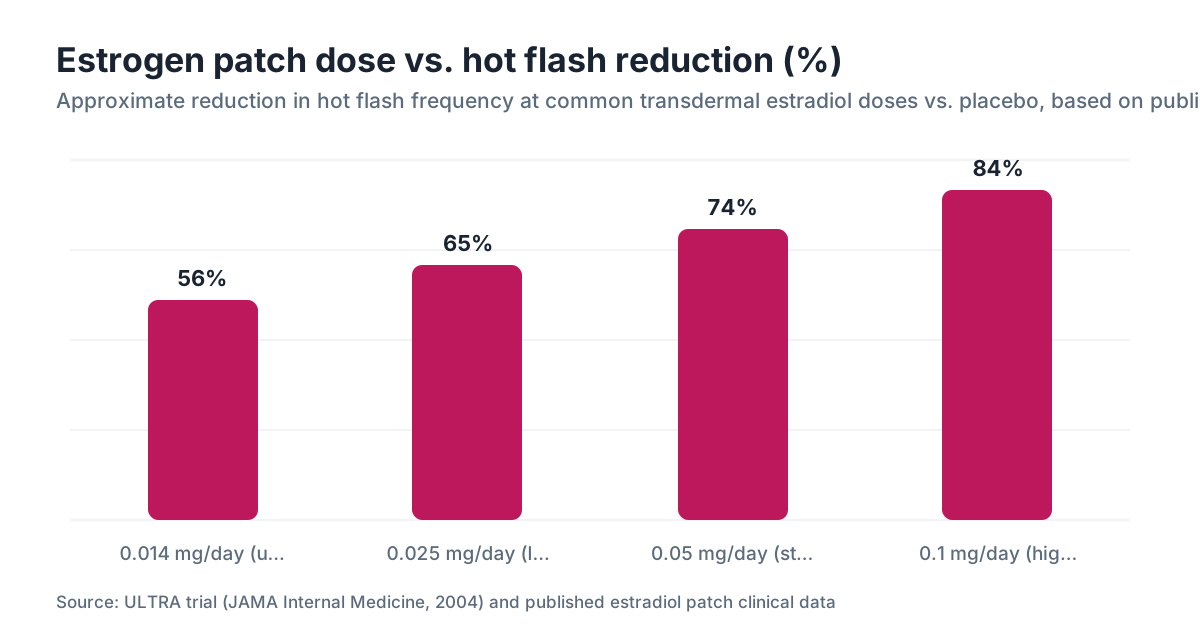
Breast tenderness shows up less at lower doses. Hot flash relief is also less complete. The same ULTRA trial found the 0.014 mg/day patch cut hot flash frequency by about 56%, versus roughly 74% typically seen with 0.05 mg/day patches in head-to-head data. There's a genuine tradeoff here. The low-dose patch is a poor pick if hot flashes wake you three times a night. It's a fine pick if you mostly want bone protection or mild symptom control.
Local skin reactions don't really change with dose, because the irritation comes from the adhesive and the physical patch, not the hormone strength.
What are the best estrogen patches? A comparison of FDA-approved brands
"Best" comes down to your dosing needs, your insurance formulary, and how your skin behaves. Here's a look at the major FDA-approved transdermal estradiol patches sold as of 2025.
| Brand | Dose (mg/day) | Application Frequency | Notes | |---|---|---|---| | Climara | 0.025, 0.05, 0.075, 0.1 | Once weekly | Matrix; 0.014 mg/day version for osteoporosis only | | Vivelle-Dot | 0.025, 0.0375, 0.05, 0.075, 0.1 | Twice weekly | Smallest patch sold; popular for sensitive skin | | Alora | 0.025, 0.05, 0.075, 0.1 | Twice weekly | Matrix; slightly larger than Vivelle-Dot | | Minivelle | 0.025, 0.0375, 0.05, 0.075, 0.1 | Twice weekly | Very small; matrix design | | Menostar | 0.014 | Once weekly | Osteoporosis prevention only; not for vasomotor symptoms | | Combipatch | 0.05/0.14 or 0.05/0.25 (estradiol/norethindrone) | Twice weekly | Combination patch; includes progestogen | | Climara Pro | 0.045/0.015 (estradiol/levonorgestrel) | Once weekly | Combination patch; includes progestogen |
Once-weekly patches (Climara, Menostar, Climara Pro) are convenient, but twice-weekly options usually give steadier blood levels because there are fewer gaps between applications. If your estrogen tends to dip noticeably in the days before a new patch is due, twice-weekly can smooth things out.
Generic transdermal estradiol patches are everywhere and bioequivalent to the brands. They cost a lot less. Generics run roughly $30 to $60 for a month at major chains, while brand-name patches can top $200 without insurance. GoodRx pricing in mid-2025 shows generic estradiol patch (0.05 mg/day, twice-weekly) at about $35 to $55 for a 4-patch carton at most pharmacies [7].
If you want help fitting a patch into a broader plan, WomenRx offers telehealth visits where a clinician can review your labs, symptoms, and history and recommend a specific patch and dose.
How do estrogen patches compare to estrogen pills, gels, and creams?
Every delivery method gets estrogen into your blood. What differs is how steadily, how safely, and how conveniently.
Pills are the oldest option and still common. They're cheap and reliably effective for symptoms, but oral estrogen raises triglycerides, pushes up C-reactive protein (an inflammation marker), and carries that higher clot risk from the liver first-pass effect [1]. If you already have high triglycerides or a clotting history, a pill is usually the wrong tool.
Gels and sprays (EstroGel, Evamist) go on the arm or shoulder daily. Blood levels swing more than with patches because you get a once-a-day bolus instead of steady release. Transfer to partners or kids through skin contact is a real problem with gels, and the FDA has issued safety communications about it [8]. Patches don't transfer.
Creams, including compounded ones, produce the most variable blood levels of all. Nobody has clean data on what estradiol level you'll actually reach with a compounded cream dose, because absorption swings with skin site, thickness, and the cream base. If you go the compounded route, get serum estradiol tested periodically at a minimum.
Patches land in the middle: better liver safety than pills, steadier levels than gels, more controlled dosing than creams, no transfer risk. The downsides are the skin irritation issue and the fact that the patch is visible, which bugs some women.
For how menopause symptoms usually evolve and when people typically start hormone therapy, that article covers the timing in detail.
Who should not use an estrogen patch?
Contraindications to estrogen patches match those for all systemic estrogen. The FDA label for estradiol patches lists absolute contraindications: undiagnosed abnormal uterine bleeding, known or suspected estrogen-sensitive cancers (breast, uterine), active or recent arterial thromboembolic disease (stroke, heart attack), active venous thromboembolism or prior VTE without a clear reversible cause, known clotting disorders, liver disease with impaired function, and known hypersensitivity to estradiol or the patch components [5].
Pregnancy is another contraindication, though patches are used in the peri and postmenopausal window by definition. Women still cycling who are thinking about hormone therapy in perimenopause should confirm they aren't pregnant before starting.
Relative contraindications, meaning situations that call for extra caution and a real conversation with a clinician, include migraines with aura, significant cardiovascular risk factors, a strong family history of breast cancer, uncontrolled hypertension, gallbladder disease, and hypertriglyceridemia. In several of these, transdermal estrogen is actually preferred over oral because it doesn't worsen lipids.
The Endocrine Society's 2015 menopause guideline puts timing front and center: women who start HRT within 10 years of menopause onset or before age 60 have a more favorable risk-benefit profile than women who start later [9]. People call this the "timing hypothesis" or "window of opportunity."
Not sure where you are in the transition? The perimenopause age article walks through the typical timeline and the lab patterns that signal shifting ovarian function.
How do you apply an estrogen patch correctly?
Good application cuts down on both skin irritation and the odds of the patch peeling off.
Pick your site first: lower abdomen below the navel, upper outer buttock, or hip. Skip the waistband, where clothing friction loosens the adhesive. The breast is off-limits. Don't apply to irritated, oily, or broken skin.
Clean the site with water only (no soap, lotion, or powder beforehand) and let it dry completely. Tear open the foil pouch and peel away half the backing without touching the adhesive. Press the sticky side to your skin, then peel the rest of the backing while pressing the other half flat. Run a finger firmly around the edges to seal them.
For twice-weekly patches, most women pick the same two days each week, say Monday and Thursday, to lock in a routine. For once-weekly, choose a day you'll remember.
If a patch partly lifts, press it back and hold for 10 seconds. If it falls off completely, apply a new one to a different spot and keep your original schedule, unless it fell off within the first 24 hours, in which case you may need to reset your change day depending on the brand's label.
Sweating, swimming, and bathing are generally fine. Most modern matrix patches are water-resistant, not waterproof, so a long soak in a hot bath can loosen them. A shower is no problem.
Can an estrogen patch help with bone loss and osteoporosis?
Yes, and this is one of the better-supported uses. Estrogen sits at the center of bone remodeling. It slows osteoclasts, the cells that break bone down. When estrogen drops after menopause, bone loss speeds up, sometimes fast.
The FDA has approved estradiol patches for preventing postmenopausal osteoporosis. The Menostar 0.014 mg/day patch carries that exact indication. Even the lowest doses produce meaningful bone density gains: the ULTRA trial reported a 2.6% rise in lumbar spine BMD at two years for the 0.014 mg/day dose [4]. Higher doses do more, with the 0.05 mg/day patch typically producing a 4 to 6% lumbar spine BMD improvement over two years in published trials.
Estrogen therapy is one of the few interventions that prevents bone loss in early postmenopause, before it has progressed to osteoporosis. Bisphosphonates and other bone drugs usually come in once low bone density is already established. If you're 50 to 60 and weighing HRT partly for skeletal protection, a patch is a reasonable tool even at a low dose.
A bone density test (DXA scan) is the standard way to see whether your bones are responding. NAMS recommends a baseline DXA at age 65 for all women, or earlier if you have risk factors like early menopause, smoking, or a family history of fracture [3].
How does the estrogen patch interact with perimenopause and irregular cycles?
Perimenopause is the tricky stretch. You're still making estrogen, sometimes in big chaotic bursts, and your symptoms can swing wildly month to month. Layering patch estrogen on top of unpredictable ovarian output can occasionally make things worse before they get better.
For women still menstruating, even irregularly, the standard approach pairs the patch with a progestogen to protect the uterine lining. A combined oral contraceptive is often the better fit in early perimenopause because it also regulates cycles. The patch becomes more appropriate in late perimenopause, when cycles are very infrequent or have stopped.
Estradiol in perimenopause can drop to near-postmenopausal lows (under 20 pg/mL) and spike to supraphysiologic highs (over 300 pg/mL) inside a single cycle. So serum estradiol testing during perimenopause often misleads as a dosing guide. Symptom-based titration works better: if hot flashes and broken sleep aren't controlled, go up; if you have breast tenderness and bloating, come down.
For a fuller picture of when perimenopause starts and what the transition looks like, see our articles on when does menopause start and perimenopause age.
What does an estrogen patch cost, and is it covered by insurance?
Cost swings on brand versus generic and whether you have insurance.
Generic transdermal estradiol patches sit on most insurance formularies in Tier 1 or Tier 2, so copays of $5 to $30 a month are common. Without insurance, a 30-day supply of generic patches (twice-weekly, so 8 patches) runs roughly $30 to $60 at major chains per GoodRx data [7]. Brand-name patches like Vivelle-Dot or Climara can cost $150 to $250 a month without coverage.
Medicare Part D covers estradiol patches, though which products depends on your plan. Most Part D formularies include at least one generic estradiol patch.
Compounded estradiol patches generally aren't available from standard compounding pharmacies, because patch manufacturing needs specialized equipment to keep dosing consistent across the patch surface. Compounded estradiol shows up more often as gels, creams, or sublingual troches. If a compounding pharmacy claims it offers a "patch," ask hard questions about how it guarantees consistent dosing.
If you're also weighing GLP-1 medications for weight management alongside HRT (a pairing that comes up more and more in perimenopausal care), see our semaglutide for weight loss overview.
How long does it take for an estrogen patch to start working?
Blood estradiol rises within hours of applying a patch. Most matrix patches reach steady-state levels within 24 to 48 hours of the first application [5]. Symptom relief, though, doesn't move on the same clock.
Hot flash frequency and severity usually improve within two to four weeks, though some women notice relief in a few days. Sleep disruption, often driven by night sweats, tends to improve on the same timeline. Mood and cognitive symptoms often take four to eight weeks to settle.
Vaginal symptoms (dryness, pain with sex) take longer. Even with systemic patch estrogen, vaginal tissue can need three to six months for full improvement, because it requires real tissue regeneration rather than just symptom blunting. Many clinicians add a low-dose vaginal estrogen product alongside the systemic patch for faster, more complete local relief.
Bone density changes are slower still. Measurable BMD improvement on DXA takes 12 to 24 months. If the patch is mainly for bone protection, plan to commit to at least two years before you can judge the skeletal response.
Skin irritation, if it's coming, usually turns up in the first few weeks. If you're months in and your skin still flares at every site, try a different brand (adhesive formulas differ) or switch to a gel.
What is the latest guidance from NAMS and the FDA on estrogen patch safety?
The FDA requires a boxed warning on all systemic estrogen products, patches included, covering endometrial cancer (for women with a uterus not using progestogen), cardiovascular events, and breast cancer. The warning language, pulled from Women's Health Initiative data, states that the WHI estrogen-plus-progestin substudy reported increased risks of myocardial infarction, stroke, invasive breast cancer, pulmonary emboli, and deep vein thrombosis [5]. But the WHI enrolled older, mostly obese women, average age 63, many years past menopause, and the label does not mean those risks look the same for a woman who starts in her late 40s or early 50s.
NAMS's 2022 position statement on HRT reads with more nuance. It states plainly: "For women aged younger than 60 years or who are within 10 years of menopause onset and have no contraindications, the benefit-risk ratio is favorable for treatment of bothersome VMS and prevention of bone loss" [3]. The Endocrine Society reasons along the same lines [9].
The FDA also updated patch labeling to reflect that transdermal estrogen products carry lower VTE risk than oral products, acknowledging the growing observational evidence. That was a meaningful shift.
For a general primer on HRT before the patch specifics, the what is HRT article lays out the regulatory and clinical picture. And if you want to talk through your own history and symptoms with a clinician, WomenRx's telehealth platform can connect you with a prescriber who focuses on menopause care.
Frequently asked questions
Where do you put an estrogen patch on your body?
Apply it to clean, dry skin on the lower abdomen (below the navel), upper buttocks, or outer hip. Avoid the breasts, the waistband area, and any skin that's irritated, oily, or recently shaved. Rotate sites with each new patch to cut down skin reactions. Press firmly around the edges so it sticks well.
Can you wear an estrogen patch while swimming or showering?
Yes for most daily activities. Modern matrix patches handle showering and brief swims fine. A long soak in a hot bath or hot tub can loosen the adhesive, so limit soak time or pat the edges dry afterward. If a patch falls off in the water, apply a new one to a different site.
How soon after menopause should you start an estrogen patch?
Evidence points to starting within 10 years of menopause onset for the most favorable risk-benefit ratio on heart and bone outcomes, a principle called the timing hypothesis. NAMS and the Endocrine Society both support starting HRT in symptomatic women under 60 without contraindications. Starting many years out calls for more individualized risk assessment.
Can an estrogen patch cause weight gain?
Estrogen patches alone don't cause meaningful weight gain in most women. Menopause itself drives fat toward the abdomen, and some women pin that on HRT when the cause is the hormonal change. Some notice mild fluid retention in the first weeks on a new dose. It usually settles. If weight worries you, your clinician can check for other causes.
Do you need progesterone with an estrogen patch?
Yes, if you have a uterus. Estrogen alone (unopposed estrogen) stimulates the uterine lining and raises endometrial cancer risk. Any woman with a uterus on a systemic estrogen patch needs a progestogen: oral micronized progesterone, a progestin pill, a progestogen IUD, or a combination patch. Women who've had a hysterectomy can use estrogen alone.
What causes skin irritation from estrogen patches and how do you reduce it?
The irritation comes from the adhesive, not the hormone, so different brands can behave differently on your skin. Rotate sites every application, let skin dry fully before applying, and don't apply right after bathing when skin absorbs more. Some clinicians suggest a thin barrier spray (like Cavilon) or brief hydrocortisone on reactive sites. If one brand keeps irritating you, try another.
Is an estrogen patch better than the pill for menopause symptoms?
Both relieve symptoms well. The patch skips the liver first-pass effect, which means lower clot risk, no worsening of triglycerides, and steadier blood levels without daily peaks. Oral estrogen is cheaper and familiar to most pharmacies. For women with high clotting risk, high triglycerides, or migraines with aura, the patch is generally preferred. With normal lipids and no clot history, either can work.
Can an estrogen patch help with anxiety and depression during menopause?
Estrogen affects serotonin and dopamine pathways, and many women report mood improvement on HRT. Evidence supports estrogen for depressive symptoms in perimenopause specifically: a 2018 NEJM study (Gordon et al.) found transdermal estradiol plus intermittent progesterone lowered depressive symptom scores versus placebo in perimenopausal women. Severe clinical depression usually needs dedicated psychiatric treatment alongside or instead of HRT.
What happens if you stop using an estrogen patch suddenly?
Stopping abruptly doesn't cause a dangerous medical event, but symptoms often come back, sometimes hard, within days to a few weeks as estradiol falls. Hot flashes, broken sleep, and mood changes are the common rebound symptoms. If you want to stop, tapering through lower doses over several weeks is usually more comfortable than quitting cold, though the data on the best tapering method is thin.
Can estrogen patches help prevent heart disease?
Timing drives everything here. Estrogen started close to menopause (within 10 years, before significant atherosclerosis sets in) looks cardioprotective in observational data and some trial data. The WHI showed no cardiovascular benefit when HRT started an average of 13 years after menopause. Guidance doesn't recommend starting HRT solely for heart prevention, but it also doesn't discourage HRT for symptomatic women with otherwise healthy hearts.
How do you know if your estrogen patch dose is too low or too high?
Too low: hot flashes, night sweats, broken sleep, and vaginal dryness persist despite consistent use for 8 or more weeks. Too high: breast tenderness, bloating, headaches, mood swings, or spotting if you have a uterus. Serum estradiol can guide titration; most clinicians aim for 40 to 100 pg/mL for symptom control, though some women feel best at the higher end.
Are compounded estrogen patches available?
True transdermal patches need specialized pharmaceutical manufacturing to keep hormone release consistent across the patch surface. Most compounding pharmacies can't make regulated patches. Compounded estradiol usually comes as creams, gels, or troches instead. FDA-approved generic estradiol patches are cheap enough that compounded patches rarely offer a practical edge.
Can younger women with surgical menopause use an estrogen patch?
Yes, and both NAMS and the Endocrine Society strongly recommend HRT for this group. Surgical menopause (from oophorectomy) causes abrupt, severe estrogen loss, not the gradual slide of natural menopause. The risks to bone, heart, and cognition are significant. Estrogen replacement usually continues at least until the average age of natural menopause, around 51 to 52, and often longer.
Does an estrogen patch affect libido?
Systemic estrogen can help libido indirectly by easing vaginal dryness and painful sex, improving sleep, and steadying mood. But estrogen alone isn't the main driver of libido in women. Testosterone is, and it isn't in standard HRT patches. Women with stubborn low libido despite adequate estrogen may benefit from a separate conversation about testosterone therapy, which stays off-label for women in the US.
Sources
- BMJ, Canonico et al. 2010, Hormone therapy and venous thromboembolism among postmenopausal women
- FDA, Menostar (estradiol transdermal system) prescribing information
- North American Menopause Society, 2022 Hormone Therapy Position Statement
- JAMA Internal Medicine, Ettinger et al. 2004 (ULTRA trial), Ultra-low-dose transdermal estradiol and bone density
- FDA, Vivelle-Dot (estradiol transdermal system) full prescribing information including boxed warning
- JAMA, WHI Writing Group, 2004, Effects of conjugated equine estrogen in postmenopausal women with hysterectomy
- GoodRx, estradiol patch pricing data 2025
- FDA Drug Safety Communication, 2010, Risk of secondary exposure to testosterone and estrogen topical products
- Endocrine Society Clinical Practice Guideline, 2015, Treatment of symptoms of menopause
- NEJM, Gordon et al. 2018, Estradiol for perimenopausal depression
- FDA, Climara (estradiol transdermal system) prescribing information