Estrogen metabolism slowing at 45: what's actually happening and what to do
TL;DR: Around age 45, the liver and gut process estrogen more slowly, and the ovaries shift which estrogens they make. More of the wrong metabolites circulate longer. The fix: feed the liver's detox pathways specific nutrients, repair the gut, drop visceral fat, and for many women, talk to a clinician who reads the full hormone picture, more than one lab value.
What does 'estrogen metabolism' actually mean?
Estrogen metabolism is how your body breaks down, transforms, and eliminates estrogens after they have done their job. It is not one step. Think of it as a three-stage relay: the ovaries and fat tissue make estrogens, the liver modifies them into intermediate metabolites, and the gut finishes the job by pushing most of them out through bile and stool.
The liver runs Phase I metabolism, mainly through cytochrome P450 enzymes (especially CYP1A2 and CYP3A4). These convert the primary estrogens (estradiol and estrone) into three metabolite families: 2-hydroxyestrone (considered protective), 4-hydroxyestrone (potentially harmful in excess), and 16-alpha-hydroxyestrone (weakly estrogenic and linked to higher breast density) [1]. Phase II then attaches a methyl or glucuronide group to make those metabolites water-soluble so the body can excrete them.
The gut adds a twist. Bacteria in the large intestine, collectively called the estrobolome, produce an enzyme called beta-glucuronidase that strips the glucuronide group back off and sends free estrogen back into the bloodstream [2]. A less diverse or inflamed microbiome cranks up beta-glucuronidase activity, so estrogen that should leave the body gets recycled instead.
All three stages can slow down in your mid-to-late 40s.
Why does estrogen metabolism slow specifically around age 45?
Several things converge in the perimenopausal window, usually from age 45 on, and together they build a less efficient estrogen-processing system.
First, ovarian function goes erratic. Follicle numbers drop, progesterone production falls steeply, and estradiol swings wildly before it finally declines [12]. The ratio of estradiol to estrone shifts, and estrone (made in fat tissue) becomes the dominant estrogen. Estrone clears more slowly than estradiol and leans toward the 16-alpha-hydroxyestrone pathway.
Second, liver enzyme activity changes. CYP1A2 activity slows with age and drops further as estradiol itself falls, which creates a feedback loop [1]. Liver blood flow also decreases roughly 1% per year after age 40, and first-pass metabolism of estrogen happens right there.
Third, the gut microbiome shifts toward lower diversity. Microbial diversity declines after age 40, and the strains that keep beta-glucuronidase in check (notably Lactobacillus and Bifidobacterium species) tend to fall off [2]. A thinner estrobolome means more estrogen recirculation.
Fourth, visceral fat piles up. Adipose tissue is not passive storage. It makes aromatase, the enzyme that converts androgens to estrone. More visceral fat means more peripheral estrone and more of that slowly-cleared estrogen hanging around [4].
Fifth, methylation capacity often declines with age. The COMT enzyme (catechol-O-methyltransferase) uses methyl groups from SAM-e to neutralize 4-hydroxyestrone, the problem metabolite. If your methylation machinery runs sluggish, whether from low B vitamins, a COMT gene variant, or oxidative stress, 4-hydroxyestrone builds up [5].
See this overview of perimenopause for more on the broader hormonal shifts at this stage.
What symptoms suggest slow estrogen metabolism?
The symptoms overlap heavily with general perimenopausal symptoms, which makes this genuinely hard to tease apart without lab work. Still, certain patterns point more toward a metabolism problem than toward simple estrogen deficiency.
Estrogen dominance symptoms (too much estrogen relative to progesterone, or estrogen lingering too long) include heavy or irregular periods, breast tenderness, bloating, mood swings that track with the luteal phase, and worse PMS. These show up at 45 precisely because progesterone falls faster than estrogen in perimenopause, leaving estrogen unopposed even when absolute levels are not high.
A buildup of the 16-alpha-hydroxyestrone pathway is associated with higher breast density on mammogram, though that is a population-level link, not a reliable individual marker [6].
High beta-glucuronidase activity in the gut shows up as constipation (slower transit means more reabsorption), irregular bowel habits, and bloating. Some women with these patterns also report cyclical headaches, especially migraines that get worse the week before a period.
Poor methylation (a sluggish COMT) can bring anxiety, low stress resilience, and trouble sleeping, because COMT also breaks down dopamine and adrenaline. If your anxiety spikes around ovulation and the week before your period, that is a pattern worth noting.
None of these clusters diagnose anything on their own. They are starting points for a conversation with a clinician.
Can you test estrogen metabolism, and should you?
Yes, tests exist. Whether they are the right spend for you is a different question.
The DUTCH test (Dried Urine Test for Complete Hormones) from Precision Analytical measures estrogen metabolites, including the 2-OH to 16-OH ratio and 4-hydroxyestrone levels, plus cortisol patterns and androgen metabolites [7]. It costs roughly $350 to $450 out of pocket and is not covered by most insurance plans. It needs a knowledgeable clinician to read it well.
Standard serum estrogen tests (estradiol, FSH, total estrogen) do not show metabolite patterns. They tell you how much estrogen is in circulation at one moment, not how well you process it. FSH above 25 IU/L on two tests taken at least a month apart, combined with twelve months of no periods, confirms menopause under the Menopause Society's diagnostic criteria [3]. That is a separate question from how your metabolites move.
A 2-OHE1 to 16-alpha-OHE1 ratio above 2.0 is generally considered favorable in the research literature, though the clinical cutoffs are not standardized across labs [6].
Here is my honest take. For most women at 45 with symptoms, start with the interventions that improve estrogen metabolism across every pathway (fiber, cruciferous vegetables, B vitamins, less alcohol, weight management) before spending on specialty testing. If you have a strong family history of breast or uterine cancer, or if symptoms are severe and not responding, then targeted testing with the right clinician earns its cost.
For what a menopause-competent clinician looks at, the Menopause Society has a provider directory and clinical practice guidelines.
What does the evidence say about diet and estrogen metabolism?
This is where the clearest actionable data lives.
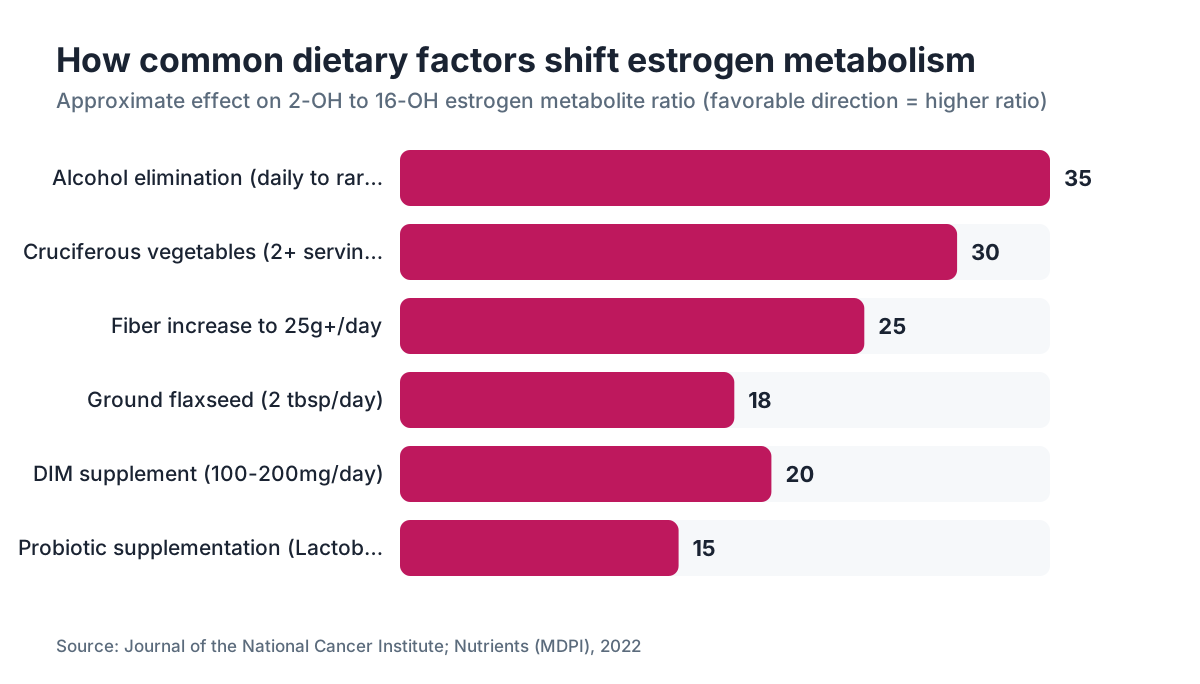
Cruciferous vegetables are the most studied intervention. They contain indole-3-carbinol (I3C), which converts in the stomach to diindolylmethane (DIM). DIM pushes liver Phase I metabolism toward the 2-hydroxyestrone pathway and away from the 16-alpha-hydroxyestrone pathway [1]. A controlled crossover study in the Journal of the National Cancer Institute found that women eating 500g of cruciferous vegetables daily (roughly 2.5 cups of cooked broccoli) significantly raised their 2-OHE1 to 16-OHE1 ratio over 4 weeks [6]. Broccoli, Brussels sprouts, cabbage, kale, and arugula all work.
Fiber matters a lot for the estrobolome. Insoluble fiber binds estrogen in the gut and speeds transit, so beta-glucuronidase has less time to reactivate it. A 2022 review in Nutrients found women eating at least 25g of dietary fiber daily had significantly lower circulating estrogen than those eating under 15g [2]. The average American woman eats about 15g a day, so most women at 45 have room to move here.
Flaxseed deserves its own mention. It gives you fiber plus lignans, phytoestrogens that bind estrogen receptors weakly and crowd out stronger estrogens. Two tablespoons of ground flaxseed daily is the dose most trials have used.
Alcohol directly impairs Phase I and Phase II liver metabolism of estrogen and raises circulating estradiol. A JAMA meta-analysis found that even moderate intake (one drink daily) raised breast cancer risk by roughly 7 to 10%, partly through this estrogen mechanism [8]. Cutting alcohol is probably the single highest-leverage dietary change for most women this age.
Animal protein cooked at high heat produces compounds that can push the 4-hydroxy pathway. Swapping some red and processed meat for fish, legumes, and fermented soy (miso, tempeh) improves the metabolite balance in most observational studies, though the trial data here is thinner.
| Food or factor | Effect on estrogen metabolism | Evidence level | |---|---|---| | Cruciferous vegetables (I3C/DIM) | Shifts toward protective 2-OH pathway | Controlled trials [6] | | Dietary fiber (25g+ daily) | Lowers recirculation via estrobolome | Systematic reviews [2] | | Flaxseed (2 tbsp/day) | Competes at receptor, improves 2:16 ratio | Small RCTs | | Alcohol (1+ drinks/day) | Impairs liver metabolism, raises estradiol | Meta-analyses [8] | | High-temperature meat cooking | May increase 4-OH pathway activity | Observational data | | Fermented soy | Improves estrobolome diversity | Mechanistic and cohort data |
Which supplements actually support estrogen metabolism at 45?
A few have real mechanistic rationale and at least some human data. Most have thin human trial evidence, so stay skeptical of any supplement sold with dramatic claims.
DIM (diindolylmethane) is the most studied. Supplemental DIM at 100 to 200mg daily has shifted the 2-OH to 16-OH estrogen ratio favorably in human trials [1]. It is a concentrated version of what you get from cruciferous vegetables. Most women tolerate it well, though a small share get headaches at first. Start low.
B vitamins, specifically B6, B12, and methylfolate (the active form of folate), are needed for both Phase II methylation of estrogen and for COMT function. If you carry a MTHFR gene variant that slows folate conversion, methylfolate rather than folic acid is the right form. Lab ranges call B12 above 200 pg/mL acceptable, but methylation research suggests functional sufficiency starts around 400 pg/mL [5]. Plenty of women in their 40s sit in that technically-normal, functionally-low zone.
Magnesium glycinate supports liver Phase II glutathione conjugation and also helps with sleep and anxiety, which so often ride along with poor estrogen metabolism in perimenopause. Most U.S. adults fall below the RDA of 320mg per day for women [5].
Calcium d-glucarate inhibits beta-glucuronidase in the gut, which directly cuts estrogen reabsorption. The animal data is strong; human trial data is limited. Doses in use run 500 to 1500mg daily. It is safe, but the evidence is thin enough that I would not put it ahead of fiber and diet changes.
Probiotics with Lactobacillus acidophilus and Bifidobacterium longum strains are being studied for estrobolome support. The data is early but mechanistically plausible. A 2020 systematic review in Nutrients found meaningful estrogen-modulating effects from probiotic supplementation in postmenopausal women, though trial quality varied [2].
What I would skip: most "hormone balance" proprietary blends stuffed with a dozen herbs at sub-therapeutic doses. The margins on those are high. The evidence is not.
How does body composition affect estrogen metabolism after 45?
Visceral fat is an estrogen factory. Adipose tissue makes aromatase at meaningful levels, and the more visceral fat you carry, the more androstenedione (an adrenal androgen) gets converted to estrone in peripheral tissue [4]. At 45, when ovarian estradiol is going erratic, this peripheral estrone can keep total estrogen elevated even as the ovaries wind down. That is the paradox that confuses so many women who expect to feel estrogen-deficient and instead feel estrogen-dominant.
Estrone is not benign in excess. It is a weaker estrogen than estradiol, but it has a longer half-life and favors the 16-alpha-hydroxyestrone route over the protective 2-hydroxy one.
The practical part: reducing visceral fat specifically (more than total weight) directly improves estrogen metabolism. Resistance training hits visceral fat harder than cardio alone. A 2020 meta-analysis in Obesity Reviews found resistance training cut visceral fat by 5 to 6% even without caloric restriction, and the effect grew when paired with a moderate deficit [4].
For women with real metabolic weight to lose who have not gotten there with diet and exercise, GLP-1 receptor agonists are now a legitimate option and are increasingly studied in perimenopausal women. They are not a first-line move for estrogen metabolism itself, but the visceral fat reduction they produce carries downstream hormonal benefits.
Does hormone therapy (HRT) help or complicate estrogen metabolism?
This question has more nuance than most women are told.
Hormone therapy does not fix impaired estrogen metabolism by making your liver enzymes faster. What it does is replace erratic ovarian estradiol with a steady, physiologic dose, which removes the wild swings that make symptoms so disruptive. Transdermal estradiol (patches, gels, sprays) skips first-pass liver metabolism entirely, so the liver never has to process a large oral bolus. That matters: oral estrogen raises SHBG, CRP, and clotting factors in ways transdermal does not [3].
The Menopause Society's 2023 position statement says that for most healthy women under 60 or within 10 years of menopause onset, the benefits of hormone therapy outweigh the risks [3]. That is the evidence-based consensus. The WHI study (often cited as the reason to fear HRT) used oral conjugated equine estrogen plus synthetic medroxyprogesterone acetate, not bioidentical transdermal estradiol with micronized progesterone. The risks are not equivalent [3].
Micronized progesterone (Prometrium or compounded progesterone) matters for women with a uterus. It has a friendlier metabolite profile than synthetic progestins and does not appear to carry the same breast cancer risk signal [9].
For women whose main problem is metabolism rather than deficiency, progesterone alone is sometimes the right call. Progesterone upregulates the 2-hydroxy pathway and directly opposes some effects of estrogen dominance. Many perimenopausal women at 45 have plenty of estrogen and almost no progesterone, so adding progesterone in the luteal phase (days 14 to 28 of the cycle) can improve symptoms a lot without adding any exogenous estrogen.
WomenRx telehealth offers exactly this kind of nuanced hormone evaluation, where a clinician can decide whether your situation calls for progesterone alone, transdermal estradiol, or a combination, rather than applying one template to everyone.
For how thyroid compounds estrogen metabolism issues in many women, see thyroid hormone replacement therapy.
What lifestyle changes have the best evidence for improving estrogen metabolism?
Ranked by quality of evidence and practical impact:
-
Cut alcohol to zero or one drink or fewer per week. The estrogen metabolism data on this is not ambiguous, and the breast cancer signal is real. Highest-leverage single change for most women [8].
-
Eat 25g or more of dietary fiber daily, weighted toward vegetables, legumes, and whole grains rather than fiber supplements. Supplements work, but food-based fiber also feeds the good gut bacteria.
-
Add two servings of cruciferous vegetables daily. Broccoli sprouts pack the highest concentration of glucoraphanin (the DIM precursor), but regular broccoli, cauliflower, and Brussels sprouts all count.
-
Do resistance training at least twice a week. Skeletal muscle improves insulin sensitivity, cuts visceral fat, and raises SHBG, which buffers circulating estrogen. A 2019 trial in Menopause found 12 weeks of resistance training significantly improved menopausal symptom scores even without hormone therapy [10].
-
Protect your sleep. Chronically poor sleep (under 6 hours) raises cortisol, which competes with progesterone for receptor sites and degrades Phase II liver detox capacity. This driver gets ignored constantly.
-
Treat constipation aggressively. Slow bowel transit means estrogen that should be excreted gets reabsorbed. Water, magnesium, and fiber all help. One formed bowel movement a day is a reasonable target.
-
Reduce xenoestrogen exposure. Plastics with BPA and phthalates, certain pesticides, and some personal care ingredients act as environmental estrogens or disrupt estrogen metabolism. Filtered water, glass or stainless food storage, and fragrance-free products are practical steps. The proof that any single exposure meaningfully shifts clinical outcomes is still developing, but the mechanism is real [11].
How does slow estrogen metabolism relate to breast cancer risk?
This is a legitimate concern, and it deserves a straight answer rather than hedging.
The 4-hydroxyestrone metabolite can form DNA adducts, meaning it binds to DNA and can initiate mutations. That is the proposed mechanism by which unfavorable estrogen metabolism contributes to breast cancer risk [6]. Observational studies find women with higher 2-OH to 16-OH ratios have lower breast cancer incidence, but that is association data, not proof that improving the ratio through diet or supplements prevents cancer in any one woman.
The American Cancer Society's current guidance does not recommend routine estrogen metabolite testing for breast cancer risk stratification in the general population [8]. It is not standard care. What is clear: the same factors that improve estrogen metabolism (healthy weight, low alcohol, high fiber, physical activity) are independently linked to lower breast cancer risk, so the behaviors are worth doing regardless of whether the metabolite story is the direct mechanism.
For women with a BRCA variant, dense breasts, or strong family history, talk to a breast cancer specialist or genetic counselor before drawing conclusions from metabolite testing.
For a wider look at what the research and clinical community is saying about menopause and women's health, The New Menopause is a good starting point.
When should you actually see a doctor about this?
Start with your own clinician if your symptoms are hitting your quality of life hard, if you have had any unexplained bleeding (see is bleeding after menopause always cancer for what that warrants), or if your symptoms have not budged after 2 to 3 months of consistent diet and lifestyle changes.
Seek out a menopause-competent clinician specifically if your current provider dismisses your symptoms or falls back on "your labs are normal" without evaluating metabolites, thyroid, cortisol, or progesterone. The Menopause Society keeps a directory of certified menopause practitioners at menopause.org. As of 2024, roughly 1,300 clinicians in the U.S. hold NAMS certified menopause practitioner (NCMP) status [3], so there are likely options within reach.
WomenRx offers telehealth hormone evaluation built for this stage of life, including assessment of estrogen metabolite patterns and a personalized protocol, for women who cannot easily reach a menopause-competent local provider.
Red flags that need urgent attention rather than watchful lifestyle changes: any postmenopausal bleeding, a new breast lump, severe depression or anxiety, or symptoms getting worse fast despite intervention.
Frequently asked questions
What is the 2-OH to 16-OH estrogen ratio and is mine likely normal?
This ratio compares two estrogen metabolite families: 2-hydroxyestrone (generally considered protective) and 16-alpha-hydroxyestrone (associated with higher breast density and estrogenic activity). A ratio above 2.0 is considered favorable in most research, though lab reference ranges vary. Women with higher fiber intake, healthy weight, and cruciferous vegetable consumption tend to have higher ratios. Most women at 45 have never had this tested, because it is not a standard clinical panel.
Can DIM supplements really change how my body processes estrogen?
Yes, with caveats. Human trials using 100 to 200mg of supplemental DIM daily show measurable shifts toward the 2-hydroxy estrogen pathway within 4 to 8 weeks. The effect is real but modest. DIM is a concentrated delivery of what broccoli provides. It does not replace the broader diet and lifestyle picture, and it does not address progesterone deficiency, which is often the bigger driver of symptoms at 45.
Does having a slow COMT gene variant make estrogen metabolism worse?
COMT (catechol-O-methyltransferase) is the enzyme that methylates and neutralizes the 4-hydroxyestrone metabolite. The COMT Val158Met polymorphism, carried by roughly 25% of women in some studies, reduces COMT activity by about 40%. Women with this variant may accumulate more 4-hydroxyestrone. The practical response is adequate methylfolate, B12, B6, and magnesium, which support COMT function regardless of genetic variant.
Is estrogen dominance at 45 a real diagnosis or a wellness industry concept?
It describes a real physiological state (estrogen high relative to progesterone), but it is not a formal diagnostic category in conventional medicine. In perimenopause, progesterone drops faster than estrogen, creating a real imbalance even when absolute estrogen is not elevated. The symptoms (heavy periods, breast tenderness, bloating, mood swings) are real. Whether the label itself helps depends on the clinician using it.
How much alcohol is too much for estrogen metabolism at 45?
Even one drink daily raises circulating estradiol and impairs liver estrogen metabolism. A JAMA meta-analysis found a 7 to 10% increase in breast cancer risk per daily drink, partly through this mechanism. There is no evidence-based threshold below which alcohol has no effect on estrogen clearance. Cutting back to occasional drinking (a few times a month) rather than daily is the most defensible position based on current data.
Will losing weight improve estrogen metabolism?
Yes, specifically reducing visceral fat. Adipose tissue produces estrone via aromatase, and visceral fat makes more per unit than subcutaneous fat. Losing 5 to 10% of body weight in women with excess visceral fat measurably lowers circulating estrone and improves the 2-OH to 16-OH ratio in observational studies. Resistance training, dietary fiber, and reduced calorie intake all contribute.
Can the gut microbiome actually affect estrogen levels?
Yes. The estrobolome, the collection of gut bacteria that produce beta-glucuronidase, can deconjugate excreted estrogen and return it to circulation. Women with lower microbiome diversity and higher beta-glucuronidase activity carry more recirculating estrogen. Probiotics, prebiotic fiber, and less alcohol all improve estrobolome function. A 2020 systematic review in Nutrients found probiotic supplementation significantly altered estrogen levels in postmenopausal women.
Is transdermal estrogen safer for the liver than oral estrogen?
Yes. Transdermal estradiol skips first-pass hepatic metabolism, so the liver never processes a large delivered dose at once. Oral estrogen raises SHBG, triglycerides, CRP, and clotting factors more than transdermal forms. The Menopause Society's guidelines note this distinction specifically in their guidance on venous thromboembolism risk. For women with existing liver conditions or clotting concerns, transdermal is the strongly preferred route.
What foods speed up estrogen clearance the most?
Cruciferous vegetables (broccoli, Brussels sprouts, kale, arugula) have the most evidence, via the I3C/DIM pathway. Ground flaxseed (2 tablespoons daily) adds lignans that improve the 2:16 ratio. High-fiber foods in general (25g+ daily) reduce gut reabsorption. Fermented soy (miso, tempeh) supports estrobolome diversity. Cutting alcohol has the strongest single effect on liver clearance capacity.
Can slow estrogen metabolism cause weight gain at 45?
It contributes in a circular way. Excess visceral fat produces more estrone via aromatase, and more estrone slows liver clearance, so more estrogen recirculates. That excess estrogen can worsen insulin resistance and fluid retention. The causality runs both directions. Improving estrogen metabolism alone is unlikely to produce dramatic weight loss; addressing insulin resistance, sleep, and calorie balance alongside metabolite support produces better results.
Should I get a DUTCH test or standard blood work?
Standard blood work (estradiol, FSH, progesterone, thyroid, fasting insulin, vitamin D) is the right first step for most women and is usually covered by insurance. DUTCH testing adds urinary metabolite data, including the 2-OH and 4-OH pathways, which serum panels miss. It costs $350 to $450 out of pocket. It is most useful for women who have optimized diet and lifestyle and still have symptoms, or those with high-risk family histories who need a fuller metabolite picture.
Does progesterone help with estrogen metabolism, or does it just balance estrogen?
Both. Progesterone directly upregulates CYP1A1 and CYP1B1 expression in some tissues, shifting metabolism toward protective metabolites. It also competes with estrogen at the receptor level, reducing estrogenic signaling. Micronized progesterone (not synthetic progestins) has the most favorable profile. Many women at 45 have near-zero progesterone from anovulatory cycles but still carry significant estrogen, which makes progesterone supplementation the most targeted intervention.
Are there symptoms that look like slow estrogen metabolism but are actually thyroid problems?
Yes, and this is a common diagnostic miss. Hypothyroidism causes constipation, weight gain, heavy periods, fatigue, and brain fog, which overlap almost completely with estrogen dominance symptoms. Hypothyroidism also independently impairs liver Phase II glucuronidation, slowing estrogen clearance and making the problem worse. Any woman at 45 with these symptoms should get a full thyroid panel including TSH, free T4, and free T3, not TSH alone.
Sources
- Journal of the National Cancer Institute: Michnovicz et al., I3C and estrogen metabolism
- Nutrients (MDPI): Baker et al. 2022, dietary fiber and estrogen recirculation via the estrobolome
- The Menopause Society (NAMS), 2023 Hormone Therapy Position Statement
- Obesity Reviews: Ismail et al. 2020, resistance training and visceral fat meta-analysis
- National Institutes of Health Office of Dietary Supplements: Magnesium Fact Sheet
- Journal of the National Cancer Institute: Fowke et al., cruciferous vegetables and estrogen metabolite ratio
- Precision Analytical: DUTCH Complete Test overview
- JAMA: Collaborative Group on Hormonal Factors in Breast Cancer, alcohol and breast cancer risk meta-analysis
- Climacteric: Fournier et al., breast cancer risk and type of progestogen
- Menopause (journal): resistance training and menopausal symptom scores trial 2019
- National Institute of Environmental Health Sciences: Endocrine Disruptors fact sheet
- Endocrine Society: Clinical Practice Guidelines