Estrogen hormone patches: what every woman needs to know
TL;DR: Estrogen patches are thin adhesive films that deliver estradiol through the skin straight into the bloodstream, skipping the liver. They treat hot flashes, night sweats, vaginal dryness, and bone loss from menopause. Most women change them once or twice a week. Data from the Women's Health Initiative and later studies points to a lower clot risk with transdermal estrogen than oral estrogen.
What is an estrogen patch and how does it work?
An estrogen patch is a small adhesive film you press onto your skin, usually on the lower abdomen, buttocks, or upper thigh. The patch holds a reservoir or matrix of estradiol. The hormone passes through the outer skin layers into the capillaries beneath and reaches the bloodstream without going through your gut or liver first.
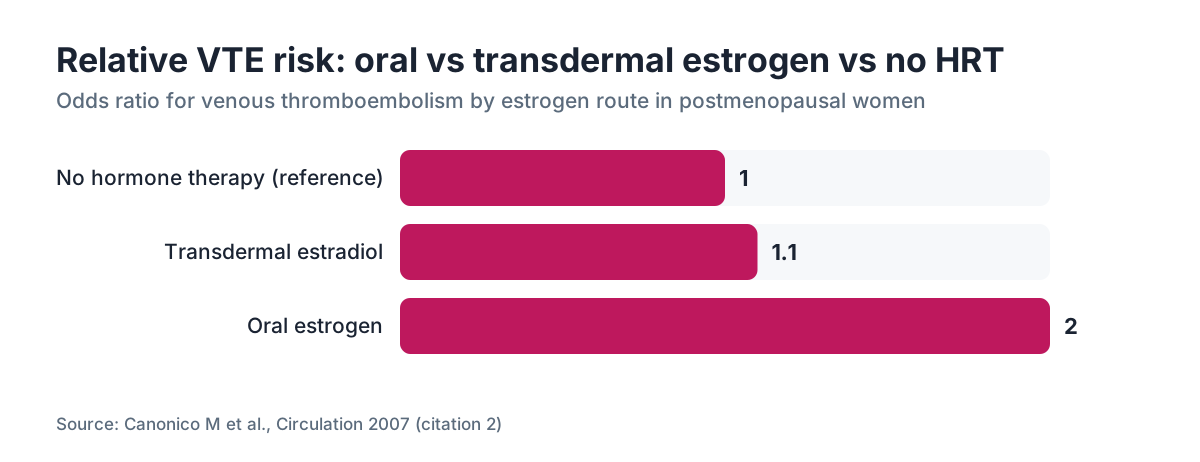
That route matters more than it looks. Swallow oral estradiol and the liver grabs it, converts much of it to estrone (a weaker estrogen), and cranks out clotting proteins and C-reactive protein in response. The patch skips that "first-pass" liver step entirely [1]. This is why most observational data shows lower rates of deep-vein thrombosis (DVT) and pulmonary embolism with transdermal estradiol than with oral formulations [2].
Two main designs sell on the market. Reservoir patches hold a gel or liquid core of estradiol behind a rate-controlling membrane. Matrix patches, the more common modern design, mix the estradiol right into the adhesive layer. Matrix patches run thinner, leak less, and sit more comfortably under clothes.
Once it's on, a steady low concentration of estradiol diffuses across the skin at a fairly constant rate. Blood levels stay far more even than the peaks and troughs you get from a daily pill. That's one reason some women feel steadier on the patch than on oral therapy.
What conditions do estrogen patches treat?
The FDA has approved estradiol patches for several specific uses, and they rank among the most prescribed forms of hormone replacement therapy in the United States [3].
The primary approved indications are:
- Moderate-to-severe vasomotor symptoms of menopause: hot flashes and night sweats.
- Hypoestrogenism due to hypogonadism, castration, or primary ovarian insufficiency.
- Moderate-to-severe vulvar and vaginal atrophy symptoms (dryness, irritation, painful intercourse).
- Prevention of postmenopausal osteoporosis. Estrogen is not a first-line osteoporosis drug, but it fits women who also have vasomotor symptoms, especially those at elevated fracture risk who want one therapy for both problems [4].
Off-label, clinicians also prescribe estradiol patches for perimenopausal mood instability and sleep disruption. The evidence here is real but softer than for hot flashes. A 2015 randomized trial in JAMA Psychiatry found that transdermal estradiol reduced new-onset depression in perimenopausal and early postmenopausal women [5].
If you're mapping out when symptoms tend to start, the perimenopause age article lays out the timeline, and when does menopause start covers the diagnostic cutoffs.
Which estrogen patches are available and what doses do they come in?
Several brand-name and generic estradiol patches sell in the US. All deliver 17-beta estradiol, which is bioidentical to what the human ovary produces.
| Brand | Dose options (mg/day) | Change schedule | Design | |---|---|---|---| | Vivelle-Dot | 0.025, 0.0375, 0.05, 0.075, 0.1 | Twice weekly | Matrix | | Climara | 0.025, 0.0375, 0.05, 0.06, 0.075, 0.1 | Once weekly | Matrix | | Minivelle | 0.025, 0.0375, 0.05, 0.075, 0.1 | Twice weekly | Matrix | | Alora | 0.025, 0.05, 0.075, 0.1 | Twice weekly | Matrix | | Menostar | 0.014 | Once weekly | Matrix (bone-only dose) | | Generic (various) | Matches brand doses | Matches schedule | Matrix |
Menostar deserves a footnote. Its 0.014 mg/day dose is too low to reliably relieve hot flashes and is approved only for osteoporosis prevention in postmenopausal women who decline or can't tolerate other medications [3].
Starting doses for symptom relief usually run 0.025 to 0.05 mg/day, then titrate up based on how you feel and follow-up hormone levels. The Menopause Society (NAMS) recommends the lowest effective dose for the shortest time that meets the individual woman's treatment goals [4].
Generics are everywhere and chemically identical to the brands. At most pharmacies the generic versions of Vivelle-Dot and Climara cost meaningfully less. The cost section below has specifics.
Do you need progestin with an estrogen patch?
Yes, if you have a uterus. This one isn't negotiable.
Estrogen alone thickens the uterine lining (endometrium). Without a progestogen to balance it, that stimulation can progress to endometrial hyperplasia and, over years, endometrial cancer. The risk is real. Unopposed estrogen therapy roughly quadruples endometrial cancer risk versus no therapy in women with an intact uterus [6].
A progestogen protects the endometrium. Options include oral micronized progesterone (Prometrium, or generic), synthetic progestins (medroxyprogesterone acetate, norethindrone), or the levonorgestrel-releasing IUD (Mirena), which delivers progestin locally to the uterus with minimal systemic absorption.
Had a hysterectomy? You can use an estrogen patch with no progestogen. There's no uterine lining to protect.
Some combination patches exist (Climara Pro, CombiPatch) with both estradiol and a progestin in one adhesive. They simplify the routine but give you less room to dose the two hormones independently. Most hormone-focused clinicians prefer separate dosing, because estrogen and progestogen needs rarely move in lockstep.
What are the benefits of patches over pills and other estrogen forms?
This is where the routing question turns clinical. The liver-bypass effect of transdermal delivery produces real, measurable differences from oral estrogen.
Clotting risk. A 2007 study in Circulation, part of the ESTHER research on postmenopausal women, found oral estrogen users carried roughly double the risk of venous thromboembolism (VTE) versus non-users, while transdermal estrogen users showed no significant increase [2]. Later studies replicated that split. For women with a personal or family history of DVT, or who carry a thrombophilia like Factor V Leiden, transdermal delivery is the default recommendation from most specialists.
Triglycerides and blood pressure. Oral estrogen raises triglycerides and can push blood pressure up in susceptible women. Transdermal estradiol runs neutral to mildly favorable on both, largely because the liver isn't flooded with high hormone concentrations [1].
Stable blood levels. Pills produce a spike-and-trough pattern. Patches hold estradiol in a tighter band, which some women feel as fewer mood swings and fewer breakthrough hot flashes between doses.
The downsides are real too. Some women get skin reactions at the site, from mild redness to full contact dermatitis. In humid weather or during hard exercise, patches can peel. And a few situations still favor oral estrogen, for example treating certain lipid problems, because oral estrogen raises HDL.
Gels, sprays, and creams are other transdermal options that also skip the liver. Patches win on convenience and steady dosing. Gels and sprays need daily application and care about transfer (keep the area away from others' skin until dry).
What does the research say about the safety of estrogen patches?
The main safety evidence for estrogen therapy comes from the Women's Health Initiative (WHI), a large randomized trial that enrolled over 160,000 postmenopausal women aged 50 to 79 between 1991 and 1998 [12]. The WHI used oral conjugated equine estrogen (CEE) plus medroxyprogesterone acetate, not transdermal estradiol, so its numbers don't map cleanly onto patch use. It still set the framework we use to weigh benefits and risks.
Breast cancer. In the WHI combined arm (CEE plus progestin), breast cancer risk rose about 26% after roughly five years of use [6]. In the estrogen-only arm (women without a uterus), breast cancer risk actually dipped slightly, though not significantly. The Menopause Society notes that breast cancer risk with hormone therapy is "predominantly associated with the progestin component" and looks lower with micronized progesterone than with synthetic progestins [4]. The Million Women Study reached a similar conclusion: the risk tracks with combined estrogen-progestogen therapy and climbs with duration of use [9].
Cardiovascular disease. Timing runs the whole story here. Women who started hormone therapy within 10 years of menopause age or before 60 showed fewer cardiovascular events in the WHI and in the Danish Osteoporosis Prevention Study. Women who started more than 10 years out saw no benefit or slight harm. This "timing hypothesis" or "window of opportunity" is accepted by NAMS and the Endocrine Society [4][7].
Cognitive health. The WHIMS substudy found higher dementia risk in women over 65 who started combined hormone therapy. That signal doesn't appear to reach women who begin therapy in early perimenopause or at menopause, but the data are observational and still under study.
Stroke. Oral estrogen carries a small increase in stroke risk. Some transdermal studies show no rise, but that evidence is weaker than the VTE data. Women with a prior stroke or TIA are generally told to avoid systemic estrogen.
The shared position across NAMS, the Endocrine Society, and the American College of Obstetricians and Gynecologists: for healthy women under 60 or within 10 years of menopause, the benefits of hormone therapy generally outweigh the risks for treating bothersome vasomotor symptoms [4][7].
How do you apply an estrogen patch correctly?
Application sounds trivial. It isn't. Sloppy technique is the top reason patches fall off early or irritate the skin.
Pick the right spot. Lower abdomen, upper buttock, or outer upper thigh are standard. Skip the breasts (no evidence supports breast delivery and it's not FDA-approved). Skip the waistband, because friction pulls patches off. Skip skin that's irritated, cut, oily, or just washed with a lotion-containing product.
Rotate sites. Never put a new patch on the same spot as the last one. Give each site at least a week off. Repeated use of one area raises contact dermatitis risk and can throw off absorption.
Clean and dry. Wash the area with plain soap, rinse, and pat completely dry. Wait 5 minutes if you just bathed. Even a thin film of moisture under the adhesive traps heat and breaks the seal.
Apply firmly. Press the patch flat with your palm for 10 full seconds. Run a fingernail along the edges to lock them down.
For twice-weekly patches (Vivelle-Dot, Minivelle, Alora), most women pick two set days, Monday and Thursday or Tuesday and Friday, so the gap never stretches past 3.5 days.
For once-weekly patches (Climara), same day each week is the rule.
If a patch partly lifts, press it back down. If it falls off within the first day, replace it right away and keep your original change schedule. If it's already been on for most of the interval, apply a new patch and reset your schedule from there.
Peel a patch off slowly from one edge to spare the skin. Any adhesive residue wipes off with baby oil or rubbing alcohol.
What are the side effects of estrogen patches?
Most side effects are local and dose-related.
Skin reactions top the list. Mild redness under the patch is common and usually fades within an hour of removal. Persistent itching, blistering, or a rash spreading past the patch border may mean contact allergy to the adhesive, not the estradiol itself. Switching brands (different adhesive formulas) or moving to a gel or spray sometimes fixes it.
Breast tenderness and swelling are systemic effects that show up in the first few weeks as tissue adapts to rising estrogen. They often settle after 4 to 8 weeks. If they hang on, lowering the dose usually works better than quitting.
Bloating and mild nausea come up far less with transdermal than oral delivery, but they can still hit women who react strongly to hormonal shifts.
Vaginal bleeding or spotting can happen, especially in the first few months on combined therapy. Irregular or heavy bleeding after the first 6 months needs endometrial evaluation.
Headaches, including migraine, are unpredictable. Some women whose migraines tracked estrogen swings on oral pills find patches steadier and less triggering. Others find any added estrogen makes headaches worse. There's no reliable way to predict who's who.
Rare but serious risks match the safety section: VTE, breast cancer with long-term combined therapy, and endometrial cancer in women who skip the progestogen. None of these are patch-specific. They're class effects of systemic estrogen.
Who should not use an estrogen patch?
There are genuine contraindications here, more than cautions.
Absolute contraindications include active or recent (within the past year) arterial thromboembolic disease (stroke, heart attack), active or suspected estrogen-sensitive cancers (breast, endometrial), undiagnosed abnormal uterine bleeding, and known or suspected pregnancy [3].
Relative contraindications, where careful individual risk assessment matters: prior VTE (a patch rather than a pill can sometimes still work if the risk is weighed carefully), active liver disease, migraine with aura (increased stroke risk in some studies, though the transdermal evidence is mixed), uncontrolled hypertension, and active gallbladder disease (estrogen raises biliary cholesterol saturation).
Women with BRCA1 or BRCA2 mutations need a more nuanced talk about hormone therapy. Many specialists will prescribe transdermal estradiol after careful counseling in women who've had risk-reducing surgery, but that decision needs a geneticist and a hormone specialist in the room, not a general algorithm.
For women on GLP-1 receptor agonists for weight loss, there are no known pharmacokinetic interactions between semaglutide and estradiol patches. If GLP-1 therapy is part of your picture, the semaglutide for weight loss article covers what menopausal women specifically need to know.
How much do estrogen patches cost, with and without insurance?
Costs swing wide by brand, pharmacy, and insurance tier.
With insurance, most generic estradiol patches land in Tier 1 or Tier 2, typically $10 to $40 per month out of pocket. Brand-name patches like Vivelle-Dot can reach $80 to $200 per month on Tier 3 without prior authorization.
Without insurance, or with a high deductible, cash prices for a month's supply of generic estradiol patches (eight patches for a twice-weekly regimen) run roughly $25 to $75 at major pharmacies using GoodRx-type discount cards. Generic Climara (four patches for a once-weekly regimen) runs similar.
Medicare Part D covers FDA-approved estradiol patches for menopause symptoms, but Part D formularies vary by plan, so confirm your plan's tier.
Telehealth platforms that prescribe and ship hormone therapy, including WomenRx, can sometimes beat retail pharmacy pricing through negotiated rates or compounding pharmacies. Be careful there: compounded transdermal estradiol is not FDA-approved and quality control varies. FDA testing has flagged inconsistent hormone levels and absorption in compounded products [8].
| Option | Approx monthly cost | Notes | |---|---|---| | Generic twice-weekly patch (GoodRx) | $25-$75 | FDA-approved, bioidentical estradiol | | Brand Vivelle-Dot (no insurance) | $130-$250 | Identical molecule, higher price | | Generic once-weekly (Climara generic) | $20-$60 | Fewer adhesive changes | | With Tier 1/2 insurance | $10-$40 | Varies by plan | | Compounded transdermal estradiol | $30-$80 | Not FDA-approved; inconsistent absorption |
Monitoring adds cost. Baseline and follow-up labs plus office or telehealth visits run $150 to $400 per year depending on your insurance and provider model.
How do estrogen patches interact with other medications?
Because transdermal estradiol skips the first-pass liver step, it has fewer drug interactions than oral estrogen. A few still matter.
CYP3A4 inducers (rifampin, carbamazepine, phenytoin, St. John's Wort) speed up estradiol breakdown and can drop blood levels enough to cut efficacy. Women on these drugs may need higher patch doses or closer monitoring.
CYP3A4 inhibitors (ketoconazole, erythromycin, grapefruit juice in large amounts) can nudge estradiol levels up. The clinical impact is usually small at standard patch doses, but it deserves attention in women with estrogen-sensitive conditions.
Thyroid replacement. Oral estrogen raises thyroid-binding globulin and can push up levothyroxine requirements. Transdermal estrogen barely touches binding proteins, so women switching from oral to transdermal while on levothyroxine should recheck TSH 6 to 8 weeks after the switch, because the thyroid dose may need to come down.
Anticoagulants. Estrogen's modest procoagulant effect matters for women on warfarin. Watch INR more closely when starting hormone therapy. Transdermal delivery reduces but doesn't erase this concern.
There's no evidence of interaction with metformin, GLP-1 agonists, statins, or most blood pressure drugs at the doses used for hormone therapy.
How do estrogen patches affect bone density?
Estrogen runs bone remodeling in women. When estrogen drops at menopause, osteoclast activity (bone breakdown) speeds up hard. Women can lose 1 to 3 percent of bone mass per year in the first three to five years after menopause with no intervention [10].
Estradiol patches at standard doses (0.025 mg/day and up) preserve bone density and cut fracture risk. The Women's Health Initiative found a 34 percent reduction in hip fracture risk with combined hormone therapy versus placebo [6]. The 0.014 mg/day Menostar patch is approved specifically for osteoporosis prevention in women who need a very low systemic dose.
Want to pin down your bone status before or after starting? A bone density test (DEXA scan) gives you a baseline T-score and Z-score to track over time.
Hormone therapy doesn't replace bisphosphonates or other antiresorptive drugs in women with established osteoporosis and several fracture risk factors. But for a woman in early menopause with hot flashes and slipping bone density, a single estrogen patch handles both at once. That's one reason it stays a first-line conversation in this group.
When is a telehealth or specialist prescription appropriate for estrogen patches?
Most healthy women in their late 40s and 50s who want symptom relief can have a direct hormone therapy talk with their primary care clinician or gynecologist. Estrogen patches for menopause symptoms aren't fringe or experimental. They're mainstream, well-studied, and have been in use for decades.
A specialist (reproductive endocrinologist, menopause-trained gynecologist, or hormone-focused internist) earns their keep in a few situations: a complex history (personal or family breast cancer, cardiovascular disease, clotting disorders), symptoms that won't settle at standard doses after 8 to 12 weeks, a perimenopausal cycle that's irregular with unclear hormone status, or weighing patch therapy alongside treatments like GLP-1 agonists.
Telehealth has made first-contact prescribing faster. WomenRx focuses on women's hormones and can prescribe estradiol patches, coordinate the required progestogen therapy, and order baseline labs without an in-person visit. Telehealth or local practice, the standard of care is the same: a full intake history, informed consent for known risks, and follow-up labs at 6 to 12 weeks.
One thing to distrust: any platform or provider that writes an estrogen-only prescription for a woman with an intact uterus without asking about progestogen. That's not a shortcut. That's a safety miss.
Frequently asked questions
How long does it take for an estrogen patch to start working?
Most women notice hot flashes and night sweats easing within 2 to 4 weeks of an effective dose. Full relief, including vaginal and mood effects, usually takes 8 to 12 weeks. No improvement after 3 months at the starting dose? The dose likely needs to go up, not away.
Can you shower or swim with an estrogen patch on?
Yes. FDA-approved matrix patches are built to stay on through bathing, showering, and moderate swimming. Very hot water (long hot baths or hot tubs) can loosen the adhesive. Pat the patch dry after water rather than rubbing, and press any lifted edges back down.
What happens if you forget to change your patch on schedule?
Change it as soon as you remember. Within one day of your scheduled change, apply the new patch and keep your original schedule. More than a day late, apply a new one and reset your schedule from that day. Short lapses at low doses rarely cause acute symptoms, but repeated late changes cut efficacy.
Is there a difference between an estrogen patch and bioidentical estrogen?
All FDA-approved estradiol patches contain 17-beta estradiol, the same molecule the human ovary makes. They're bioidentical by any reasonable chemical definition. 'Bioidentical' is a marketing term that often points to compounded formulations, which aren't FDA-approved. The clinical worry with compounded patches is inconsistent absorption, not the molecule itself.
Can estrogen patches help with weight gain during menopause?
Indirectly, yes. Estrogen deficiency promotes visceral fat and dents insulin sensitivity. Restoring estradiol to physiologic levels can improve body composition somewhat, but estrogen therapy isn't a weight-loss drug. If metabolic weight gain is a main concern alongside menopause symptoms, pairing hormone therapy with a GLP-1 agonist is an active area of clinical interest.
Do estrogen patches affect libido?
Systemic estradiol repairs the vaginal and vulvar tissue changes that make sex painful, which indirectly supports interest. But estrogen doesn't directly raise libido; testosterone does. Women with low libido plus adequate estrogen levels can discuss testosterone therapy separately with their clinician, since it's prescribed off-label for hypoactive sexual desire disorder in women.
Can younger women or perimenopausal women use estrogen patches?
Yes, though the indication depends on symptoms and documented estrogen deficiency. Women in early perimenopause with irregular cycles, hot flashes, or primary ovarian insufficiency can use estradiol patches. In perimenopausal women who still ovulate, contraception is also needed, because hormone therapy doesn't prevent pregnancy.
How do estrogen patches compare to estrogen gel or spray?
Gels and sprays are transdermal too, so they share the liver-bypass benefit. The practical difference is convenience: patches go on every 3 to 7 days; gels and sprays need daily application. Gels need a drying period before skin contact with others to prevent transfer. Patches absorb more consistently; daily formulations bring some day-to-day variability.
What blood tests should you get before and while using an estrogen patch?
Before starting: FSH, estradiol, thyroid (TSH), metabolic panel, lipid panel, and a pelvic exam with any indicated cervical screening. On therapy: estradiol at 6 to 12 weeks to confirm absorption (goal is usually 40 to 100 pg/mL for symptom relief), then annually with a symptom and breast check. Endometrial biopsy is only needed for abnormal bleeding.
How long is it safe to use an estrogen patch?
There's no universal time limit. NAMS guidance is the lowest effective dose for as long as the benefits outweigh the risks for the individual woman, with annual reassessment. Some women use hormone therapy for five years; others continue into their 60s for quality-of-life and bone benefits. Specialist societies have largely dropped the old 'five-year rule'.
Can estrogen patches cause cancer?
The main cancer concern with estrogen therapy is endometrial cancer in women with a uterus who use estrogen alone without a progestogen. Adding a progestogen removes most of that excess risk. Breast cancer risk rises modestly after several years of combined estrogen plus synthetic progestin; the signal is smaller with micronized progesterone. Estrogen-only therapy in women without a uterus doesn't clearly raise breast cancer risk in WHI data.
What is the difference between Vivelle-Dot and Climara?
Both are FDA-approved matrix estradiol patches. Vivelle-Dot changes twice weekly and comes in a very small size at higher doses, which some women find easier to hide. Climara changes once weekly, which appeals to women who want fewer changes. Dose ranges overlap but aren't identical. Neither is clinically better; it comes down to preference and your prescriber's familiarity.
Do estrogen patches help with sleep problems during menopause?
Yes, mainly by cutting night sweats and hot flashes that break up sleep. Several randomized trials show better sleep quality on estrogen therapy versus placebo. The effect is largely indirect through symptom control rather than a direct sedating action, though estradiol does interact with serotonin and GABA pathways that shape sleep architecture.
Can you use an estrogen patch after breast cancer?
This is one of the most contested areas in menopause medicine. Most oncology guidelines currently advise against systemic estrogen in women with hormone receptor-positive breast cancer. In hormone receptor-negative disease, some specialists do prescribe transdermal estradiol after careful shared decision-making and completion of primary treatment, but this remains off-guideline. Women here need a conversation with both their oncologist and a menopause specialist.
Sources
- Scarabin P-Y, Oger E, Plu-Bureau G; EStrogen and THromboEmbolism Risk (ESTHER) Study Group. BMJ 2003;327:1128
- Canonico M et al. Circulation. 2007;115(7):840-845. 'Hormone Therapy and Venous Thromboembolism Among Postmenopausal Women'
- FDA Drug Label: Vivelle-Dot (estradiol transdermal system), DailyMed, National Library of Medicine
- The Menopause Society (NAMS). 'The 2023 Menopause Society Position Statement on Hormone Therapy'
- Gleason CE et al. JAMA Psychiatry. 2015;72(9):921-928. Transdermal estradiol and incident depression in perimenopausal and postmenopausal women
- Women's Health Initiative Steering Committee. JAMA. 2002;288(3):321-333. 'Risks and Benefits of Estrogen Plus Progestin in Healthy Postmenopausal Women'
- Endocrine Society Clinical Practice Guideline: 'Treatment of Symptoms of the Menopause', Journal of Clinical Endocrinology & Metabolism, 2015
- FDA. 'Bioidentical Hormones: Why the FDA Is Concerned About Compounded Hormone Products'
- Beral V; Million Women Study Collaborators. Lancet. 2003;362(9382):419-427. 'Breast cancer and hormone-replacement therapy in the Million Women Study'
- Bone Health and Osteoporosis Foundation. 'Clinician's Guide to Prevention and Treatment of Osteoporosis'
- Notelovitz M et al. Fertil Steril. 2002;78(6):1270-1277. Estradiol absorption from two matrix transdermal delivery systems: a crossover study in postmenopausal women
- National Heart, Lung, and Blood Institute (NIH). Women's Health Initiative study description