Estrogen dominance symptoms checklist for women over 40
TL;DR: Estrogen dominance means estrogen is high relative to progesterone, whether estrogen is actually elevated or progesterone has simply dropped. In women over 40, perimenopause causes progesterone to fall first, creating this imbalance. Common symptoms include heavy or irregular periods, breast tenderness, bloating, mood swings, poor sleep, and weight gain around the hips. A serum hormone panel helps confirm the picture.
What is estrogen dominance and why does it happen after 40?
Estrogen dominance is not a single diagnosis you'll find in the ICD-10. It is a functional description: estrogen's effects are running unopposed because progesterone is too low to balance them out. That balance matters because progesterone counteracts many of estrogen's proliferative effects on the uterus, breasts, and brain.
The reason this becomes a real issue for women over 40 is ovulation. Progesterone is made almost entirely by the corpus luteum, the temporary structure that forms after an egg is released each month. In perimenopause, ovulatory cycles become irregular before estrogen levels drop dramatically. You may still be making reasonable amounts of estrogen, but if you are skipping ovulations, you are producing far less progesterone. The ratio tilts.
Estrogen can also be genuinely elevated on its own. Body fat converts androgens to estrogen through an enzyme called aromatase, so women who carry more adipose tissue produce more estrogen outside the ovaries [1]. Liver congestion, chronic stress, and certain gut microbiome disruptions can slow estrogen clearance and allow metabolites to recirculate. Environmental xenoestrogens from plastics and pesticides are a real but smaller contributor. None of these cause dramatic spikes in most women, but they add up on top of an already tilted ratio.
The Endocrine Society notes that perimenopause typically begins in the mid-to-late 40s, though it can start in the late 30s, and the transition averages about four years before the final menstrual period [2]. During that window, irregular progesterone production is the norm, not the exception. That is why the checklist below focuses on symptoms that reflect this specific hormonal picture rather than just generic "hormonal imbalance."
What are the most common estrogen dominance symptoms in women over 40?
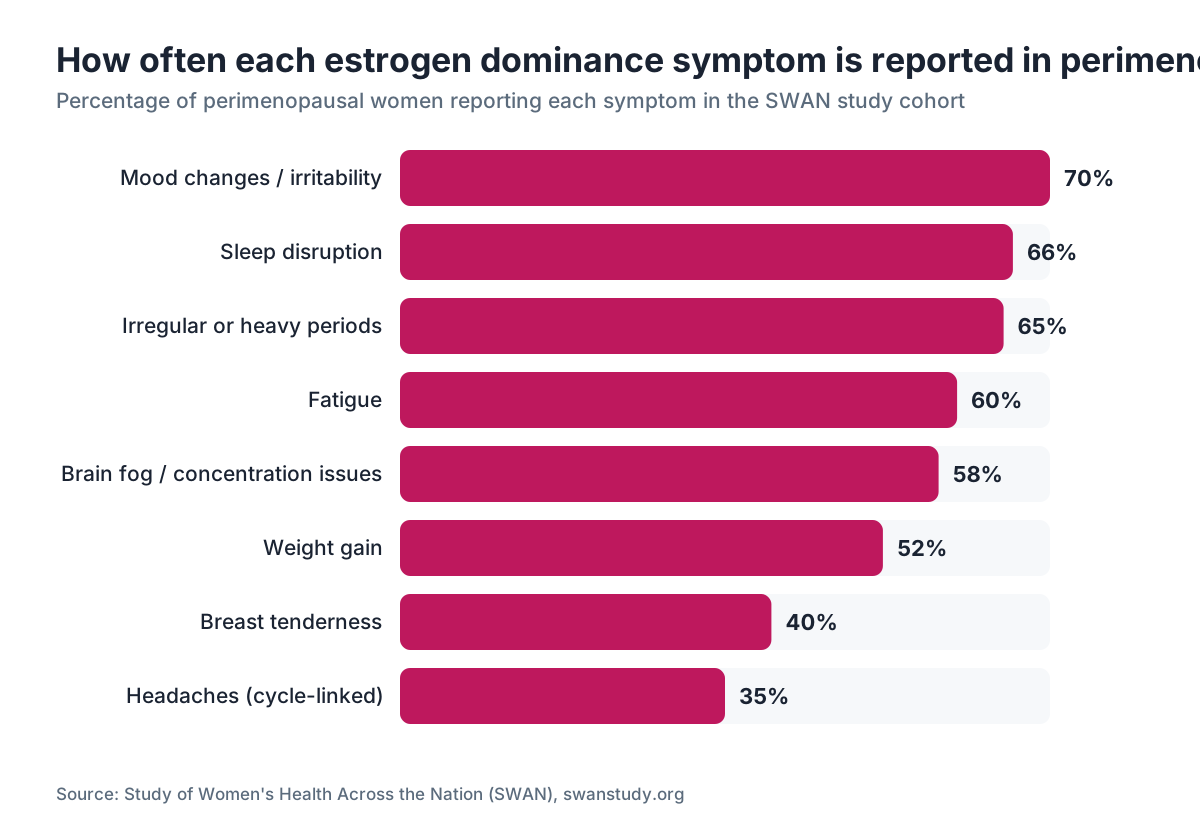
Here is the practical checklist. These symptoms cluster together in a recognizable pattern. The more boxes you check, the stronger the clinical case for investigating hormone levels.
Menstrual changes
- Heavy or prolonged periods (soaking through a pad or tampon in an hour or less for several consecutive hours)
- Shorter cycle length, often less than 25 days
- Spotting between periods
- Worsening premenstrual syndrome in the 1 to 2 weeks before flow starts
- Clots larger than a quarter
Breast symptoms
- Breast tenderness or fullness, especially in the second half of the cycle
- Fibrocystic breast changes confirmed by imaging
Mood and cognitive symptoms
- Irritability or rage that feels out of proportion
- Anxiety, particularly the kind that spikes in the premenstrual window
- Low mood or mild depression
- Brain fog, difficulty with word retrieval or working memory
- Poor concentration at work or in conversation
Sleep and fatigue
- Difficulty falling asleep or staying asleep (distinct from classic hot-flash-driven insomnia, though these can overlap)
- Waking between 2 and 4 a.m. without a clear reason
- Fatigue that does not resolve with rest
Physical and metabolic
- Bloating, often cyclical and worse before a period
- Weight gain in hips, thighs, and lower abdomen that feels resistant to diet changes
- Water retention or puffiness in face and hands
- Low libido
- Headaches or migraines tied to the menstrual cycle
Less commonly discussed but real
- Thyroid disruption: estrogen raises thyroid-binding globulin, which can lower free thyroid hormone availability and mimic hypothyroid symptoms even when TSH looks normal [3]. If you have estrogen dominance symptoms and also feel cold, constipated, or mentally slow, it is worth checking free T3 and free T4. See more on thyroid hormone replacement therapy if that angle applies to you.
- Uterine fibroids and endometriosis flares: both are estrogen-sensitive conditions, and both tend to worsen in perimenopause if progesterone is insufficient [4]
- Frozen shoulder, which has an established association with hormonal transitions in midlife women
No single symptom confirms estrogen dominance. But if you are checking five or more of these, especially the menstrual and mood clusters together, a hormone panel is the logical next step.
How do you know if your symptoms are estrogen dominance or just perimenopause?
Honest answer: they overlap significantly. Perimenopause is the most common cause of estrogen dominance in women over 40, so in many cases the two phrases describe the same underlying problem from different angles.
The difference in framing matters for treatment, though. Classic late-perimenopause or early menopause is characterized by low estrogen, which produces hot flashes, vaginal dryness, and bone loss. Estrogen dominance, by contrast, tends to dominate in early-to-mid perimenopause, when estrogen is fluctuating (sometimes spiking quite high) and progesterone has already started dropping. The North American Menopause Society describes this erratic estrogen variability as one of the defining features of the menopausal transition [5].
If your primary symptoms are heavy periods, breast tenderness, and mood swings rather than hot flashes and night sweats, you are probably in earlier perimenopause with relative estrogen excess. If hot flashes and vaginal changes have moved to the front of the symptom list, your estrogen has likely started dropping too, and the picture is more complex. Both patterns can coexist. Understanding what perimenopause actually looks like can help you map your own experience.
Lab work adds precision. A serum estradiol drawn on day 3 of a cycle, along with FSH and progesterone (drawn on day 21 if you are still cycling), gives a real snapshot. In practice, though, levels fluctuate so much in perimenopause that a single test can mislead. Clinicians often rely more on symptom pattern and history than on any one number.
What lab tests actually confirm estrogen dominance?
There is no single test called an "estrogen dominance panel." What you are looking for is a set of values that, taken together, support the diagnosis.
| Test | When to draw | What you're looking for | |---|---|---| | Serum estradiol (E2) | Day 2-4 of cycle (early follicular) | May be elevated, normal, or fluctuating | | Serum progesterone | Day 19-22 of a 28-day cycle (luteal peak) | Low relative to estradiol, often below 5 ng/mL in perimenopause | | FSH | Day 2-4 | Rising FSH (above 10-12 IU/L) suggests perimenopause is beginning | | LH | Day 2-4 | Helps confirm ovulatory dysfunction | | SHBG | Any day | High SHBG (driven by estrogen) reduces free testosterone | | Free T3 / Free T4 | Any day | Rules out thyroid contribution to symptoms | | Fasting insulin + glucose | Fasting | Insulin resistance worsens estrogen metabolism |
A progesterone-to-estradiol ratio below about 100:1 (when progesterone is in ng/mL and estradiol is in pg/mL, converting appropriately) is a rough marker some clinicians use, but the thresholds are not universally standardized [6]. Here is the honest clinical picture. A woman in her mid-40s with heavy periods, breast pain, and mood changes, combined with a luteal-phase progesterone below 5 ng/mL and a rising FSH, has a clear enough picture to act on.
Urine dried blood spot or salivary testing for estrogen metabolites (the 2-OH, 4-OH, and 16-OH estrone pathways) exists but is not well validated for clinical decision-making in the way serum testing is. Some functional medicine practices use it. Mainstream endocrinology does not recommend it as a primary diagnostic tool.
If you want to go further on interpreting results in the context of menopause care, resources from the Menopause Society are the most authoritative starting point.
Can estrogen dominance cause weight gain, and where does the weight go?
Yes, and the distribution is distinctive. Estrogen dominance tends to push fat storage toward the hips, thighs, and lower abdomen rather than the visceral belly fat more common in insulin resistance. Women often describe it as a "pear shape" that appeared seemingly overnight, even without obvious changes in eating.
The mechanism runs in both directions. Excess estrogen relative to progesterone promotes fat cell proliferation in gluteal and femoral regions. But body fat itself produces more estrogen via aromatase, so the more adipose tissue a woman carries, the more estrogen she makes outside the ovaries [1]. This is a genuine feedback loop, not a metaphor.
Progesterone has some counter-effects here. It is a natural diuretic, reduces cortisol's fat-storage effects, and supports thyroid function. When progesterone falls, you lose all of those offsetting actions at once. That is why some women notice immediate water retention and bloating when they enter perimenopause, before any real weight is gained.
Calorie restriction alone often fails because the hormonal environment is actively working against fat mobilization. This is one reason some clinicians are now combining hormone optimization with metabolic support. The research on GLP-1 receptor agonists in perimenopausal women is early but real, and it is an area worth discussing with a hormone-literate provider. If you are curious how tools like semaglutide fit into this picture, the latest semaglutide news gives useful context.
So here is the practical read. If you are gaining weight despite no meaningful change in diet or activity, and you are also experiencing four or more other symptoms on the checklist, the weight is probably metabolic and hormonal rather than purely behavioral. Address the hormones first.
Does estrogen dominance cause anxiety and mood changes?
It does, and this is probably the most underrecognized part of the symptom picture.
Estrogen has complex effects on serotonin, GABA, and dopamine. In appropriate amounts and with progesterone present to balance it, estrogen actually supports mood. But when estrogen is high relative to progesterone, the balance shifts. Progesterone metabolizes into allopregnanolone, a neuroactive steroid that acts on GABA-A receptors, the same receptors targeted by benzodiazepines and alcohol. When progesterone drops, allopregnanolone drops with it, and the calming, anti-anxiety effect of that GABA activity disappears [7].
The result is often described by women as a new kind of anxiety that did not exist in their 30s. It tends to be free-floating, physical (heart racing, chest tightness), and worst in the premenstrual week. It can coexist with irritability, rage, or low mood. Many women are prescribed SSRIs or anxiolytics at this point without any hormone evaluation. That is not always wrong, but it is incomplete.
Brain fog is a related complaint. Research from the Study of Women's Health Across the Nation (SWAN) found that self-reported cognitive difficulties were most prominent in perimenopause, particularly around the menopausal transition, and were associated with sleep disruption, mood symptoms, and hormonal variability [8]. The cognitive effects were real, measurable on testing, and not simply a function of aging.
If your anxiety or mood changes arrived alongside menstrual changes or other physical symptoms on this checklist, they deserve to be evaluated together, not in separate siloes.
What conditions can mimic or worsen estrogen dominance symptoms?
Several conditions overlap with this picture and are worth ruling out before attributing everything to hormones.
Hypothyroidism produces fatigue, weight gain, brain fog, heavy periods, and depression. Since high estrogen also raises thyroid-binding globulin and reduces free thyroid hormone, the two problems can coexist and amplify each other [3]. A TSH alone misses this if it is technically normal but free T3 is low. See thyroid hormone replacement therapy for more detail on this overlap.
PCOS (polycystic ovary syndrome) in women over 40 still exists and produces a specific hormonal pattern: elevated androgens, irregular or absent ovulation, and often high estrogen relative to progesterone. The presentation differs from estrogen dominance without PCOS, but symptoms overlap.
Insulin resistance is closely connected. High insulin drives androgen production, which then converts to estrogen via aromatase. It also suppresses SHBG, raising free estrogen. Many women develop insulin resistance in their 40s independently of perimenopause, and the two together are a metabolic and hormonal double hit.
Fibroids and adenomyosis are both estrogen-sensitive and can cause heavy bleeding that looks like estrogen dominance symptoms. They need to be diagnosed on imaging (ultrasound) because the treatment approach differs. A heavy period with clots in a woman over 40 always warrants at least a pelvic ultrasound.
Anxiety and depression diagnosed in isolation in a perimenopausal woman without hormone evaluation is one of the most common missed connections in primary care. The new menopause conversation in medicine is pushing back on this, but the gap remains real.
What are the treatment options for estrogen dominance symptoms?
Treatment depends on what is driving the imbalance, how severe symptoms are, and what a woman's full health picture looks like.
Progesterone supplementation is the most targeted approach when low progesterone is the primary problem. Bioidentical oral micronized progesterone (available as FDA-approved Prometrium, among others) is well studied and has a favorable safety profile compared to synthetic progestins [12]. Oral micronized progesterone has been shown to be better tolerated and may carry fewer cardiovascular risks than medroxyprogesterone acetate in the Women's Health Initiative context [9]. Topical progesterone cream exists but absorption is inconsistent and blood levels harder to monitor.
Lifestyle interventions have real, not trivial, effects. Cruciferous vegetables (broccoli, cauliflower, Brussels sprouts) contain diindolylmethane (DIM) and indole-3-carbinol, which support the 2-OH estrogen metabolism pathway and may shift the estrogen metabolite ratio toward less proliferative forms [10]. Fiber supports estrogen excretion via the gut. Reducing alcohol significantly matters too, since alcohol impairs liver estrogen metabolism and raises estradiol even at moderate intake. Exercise, particularly resistance training, lowers body fat and reduces peripheral aromatization.
Stress reduction is not soft medicine here. Chronic cortisol elevation uses up the same enzymatic pathways that produce progesterone (via pregnenolone steal), functionally lowering progesterone output. Managing chronic stress meaningfully affects the hormonal picture.
When to consider full HRT evaluation is a question worth taking seriously if symptoms are significantly affecting quality of life. Hormone therapy prescribed by a clinician who knows the current evidence does not look like the 2002 WHI scare story that dominated the conversation for two decades. The picture is more nuanced, and for many women in their 40s and 50s, the benefit-to-risk ratio is favorable. WomenRx connects women with clinicians who specialize in exactly this evaluation, with individualized dosing rather than a one-size approach.
What probably is not worth the money in the absence of confirmed deficiency: supplements marketing themselves as "estrogen blockers" with no peer-reviewed trial data. DIM is the exception with a reasonable evidence base, but most proprietary "hormone balance" blends are not tested head-to-head against anything.
Is estrogen dominance dangerous, and what are the long-term risks?
The honest answer is: it depends on severity, duration, and individual risk factors.
Prolonged unopposed estrogen stimulation of the uterus is a well-established risk factor for endometrial hyperplasia and endometrial cancer. This is why women who still have a uterus and take estrogen as part of HRT always receive progesterone alongside it. The same principle applies to endogenous estrogen excess. Women with prolonged heavy periods, anovulatory cycles, or other signs of chronic estrogen excess and progesterone insufficiency should be evaluated. Postmenopausal bleeding of any kind requires investigation. The article is bleeding after menopause always cancer covers when to worry and when to breathe.
Breast tissue is also estrogen-sensitive. The relationship between estrogen exposure, breast density, and breast cancer risk is real but complex. Breast cancer risk is associated with cumulative lifetime estrogen exposure, including early menarche, late menopause, nulliparity, obesity, and alcohol use. Estrogen dominance per se does not have a clean risk coefficient in the literature, but chronic fibrocystic changes and high breast density (both linked to estrogen stimulation) are independent breast cancer risk factors [11].
Cardiovascular and metabolic risks are less directly linked to estrogen dominance specifically and more to the underlying conditions that drive it, particularly insulin resistance and obesity.
For most women, the acute risks of symptomatic estrogen dominance in perimenopause are quality-of-life impacts rather than life-threatening ones. But ignoring it for years, particularly the endometrial exposure angle, is not clinically neutral.
How is estrogen dominance different in women who are postmenopausal?
After menopause, the ovaries stop producing significant estrogen, so the relative estrogen dominance picture shifts. The primary estrogen source becomes aromatization in adipose tissue. Women who carry more body fat after menopause can still have meaningfully elevated estradiol from this route, high enough to cause symptoms and, more significantly, high enough to affect endometrial and breast tissue over time [1].
Postmenopausal women on estrogen-only HRT without progesterone (usually prescribed only for women without a uterus) can also experience a form of estrogen dominance if dosing is not calibrated carefully.
Symptoms in postmenopausal estrogen dominance look different from perimenopausal estrogen dominance. Instead of heavy bleeding (no bleeding occurs), signs might include persistent breast tenderness, breast density on mammography, or unexplained weight gain concentrated in fat tissue. The mood and sleep symptoms can persist or recur.
This is also the window where postmenopausal bleeding is particularly significant and always requires investigation. Elevated estrogen from aromatization stimulating the endometrium is one mechanism that can cause unexpected spotting years after the last period. See is bleeding after menopause always cancer for a grounded breakdown of what that workup looks like.
If you are taking any form of hormone therapy and new breast symptoms develop, that is worth evaluating promptly rather than assuming it is benign.
What should you do next if you recognize yourself in this checklist?
Start by tracking your symptoms for one to two cycles if you are still menstruating. Note the timing, severity, and which symptoms cluster together. A simple app or paper log that marks heavy days, breast tenderness, mood, and sleep gives a clinician much more to work with than "I just feel off."
Request a hormone panel that includes serum estradiol, progesterone (timed to your cycle), FSH, LH, free T3, free T4, TSH, fasting insulin, and SHBG. If your primary care provider is not comfortable with this panel or dismisses your symptoms as normal for your age, you have the right to seek a second opinion from a gynecologist or reproductive endocrinologist with menopause expertise.
Bring the specific symptom list to your appointment. Research consistently shows that women who present with detailed, organized symptom documentation receive more thorough evaluations. You are not being dramatic. You are being efficient.
If you want to work with a clinician who already understands this hormonal picture without you having to educate them from scratch, telehealth platforms that specialize in women's hormones, like WomenRx, connect you with providers experienced in perimenopause evaluation and evidence-based treatment.
Do not wait until symptoms are debilitating. The perimenopausal window is a real opportunity to get ahead of metabolic changes, bone changes, and cardiovascular changes that accumulate if estrogen and progesterone are dysregulated for years without attention. The resources at health & her perimenopause support and the Menopause Society are good starting points for self-education between now and your appointment.
Frequently asked questions
Can you have estrogen dominance if your estrogen levels look normal on a blood test?
Yes. Estrogen dominance is about the ratio of estrogen to progesterone, not estrogen alone. If progesterone is very low, you can have a completely normal estradiol reading and still experience all the symptoms of relative estrogen excess. This is exactly the situation in early-to-mid perimenopause, when progesterone drops before estrogen does. A progesterone drawn on day 19 to 22 of your cycle is the key number to check alongside estradiol.
What foods make estrogen dominance worse?
Alcohol is the biggest dietary driver because it impairs liver estrogen metabolism and directly raises estradiol levels even at moderate intake. Highly processed foods and excess refined carbohydrates worsen insulin resistance, which in turn raises aromatase activity and estrogen production. Conventionally raised meat and some plastics contain xenoestrogen residues, but the clinical significance is smaller than alcohol or metabolic dysfunction. Reducing both alcohol and processed carbohydrates has measurable effects on estrogen metabolism.
Does estrogen dominance go away on its own after menopause?
The perimenopausal form largely resolves once the ovaries stop cycling entirely, because the extreme fluctuations stabilize. However, postmenopausal women with significant body fat can still have elevated estrogen from aromatization in adipose tissue. This form does not resolve on its own without weight reduction or medical intervention. It is lower-grade than perimenopausal estrogen dominance but not clinically irrelevant, particularly for endometrial and breast tissue exposure over time.
Can estrogen dominance cause hair loss?
Indirectly, yes. High estrogen raises SHBG, which lowers free testosterone. Free testosterone is needed for hair follicle maintenance. And if high estrogen is suppressing thyroid function by raising thyroid-binding globulin and reducing free T3, hypothyroid-pattern hair loss can occur even with a normal TSH. Female pattern hair loss in perimenopause is often multifactorial, and estrogen-progesterone imbalance is one of the contributors worth investigating alongside thyroid and androgen levels.
Is progesterone cream effective for estrogen dominance symptoms?
Progesterone cream can raise salivary progesterone but does not reliably raise serum progesterone to therapeutic levels in most studies. Absorption through skin is inconsistent and varies with application site, body composition, and product concentration. Oral micronized progesterone (Prometrium) has well-documented pharmacokinetics and is the standard in most clinical guidelines. If you want to address a confirmed progesterone deficiency, an oral or vaginally administered prescription-grade progesterone is more predictable than over-the-counter cream.
How do I tell the difference between estrogen dominance and PMS or PMDD?
PMDD is a luteal-phase mood disorder with a distinct diagnostic threshold: five or more specific symptoms in the week before menstruation that resolve within a few days of flow starting, severe enough to impair function. Estrogen dominance frequently causes or worsens PMDD-like symptoms because low progesterone reduces allopregnanolone, a GABA-active neurosteroid. In practice, PMDD and low progesterone often coexist. Hormone evaluation is appropriate in any woman over 40 with new or worsening luteal-phase mood symptoms.
Can stress alone cause estrogen dominance?
Chronic stress does not cause estrogen dominance directly, but it contributes meaningfully. Cortisol and progesterone share a precursor (pregnenolone), and under chronic stress the body prioritizes cortisol production, reducing available substrate for progesterone. Cortisol also promotes fat storage and can worsen insulin resistance, both of which increase peripheral aromatization and estrogen production. So chronic stress tilts the ratio in the wrong direction, but it is rarely the sole driver in women over 40.
Can a woman in her early 40s be in perimenopause and have estrogen dominance at the same time?
Absolutely. This is actually the most common scenario. The Endocrine Society notes perimenopause can begin in the early-to-mid 40s. The hallmark of early perimenopause is anovulatory or poorly ovulatory cycles, which means less progesterone production despite continued (sometimes elevated) estrogen. Heavy periods, breast tenderness, mood changes, and bloating in a 41-year-old with no prior history are classic early-perimenopause estrogen dominance. This is different from late perimenopause, when estrogen itself starts declining.
Does DIM actually work for estrogen dominance?
DIM (diindolylmethane), found in cruciferous vegetables and available as a supplement, supports the 2-hydroxy estrogen metabolite pathway, which is considered a less proliferative route compared to 4-OH and 16-OH estrone. Small studies suggest DIM supplementation shifts urinary estrogen metabolite ratios in a favorable direction. No large randomized trials confirm clinical symptom improvement. It is a reasonable low-risk addition to a broader protocol but should not replace progesterone therapy when progesterone deficiency is confirmed on labs.
What is the connection between estrogen dominance and fibroids?
Uterine fibroids are estrogen-sensitive benign tumors. They grow under estrogen stimulation and typically stabilize or shrink after menopause when estrogen drops. In perimenopausal women with estrogen dominance, fibroids can grow more aggressively and cause heavier bleeding. Progesterone also affects fibroid growth, which makes the picture complicated, but the clinical association between estrogen-dominant states and fibroid growth is well established. Women with fibroids who develop worsening symptoms in their 40s should have both imaging and hormonal evaluation.
How long does it take to see improvement after treating estrogen dominance?
It depends heavily on the intervention. Women who start oral micronized progesterone often notice sleep improvement within one to two cycles and meaningful mood improvement within two to three months. Menstrual changes (lighter, less painful periods) may take two to three cycles to stabilize. Dietary and lifestyle changes take longer, typically three to six months for measurable metabolic shifts. Weight changes are the slowest to respond. Tracking symptoms monthly against baseline gives you a real signal rather than relying on memory.
Should women with estrogen dominance avoid soy?
The soy-estrogen fear is significantly overstated in the research. Soy isoflavones are phytoestrogens with weak estrogenic activity, but population studies of high soy-consuming populations show no increased rates of hormone-sensitive cancers and some protective effects. Moderate soy consumption (one to two servings of whole soy foods daily) is not shown to worsen estrogen dominance in clinical studies. Fermented soy (tempeh, miso) is generally considered lower risk than heavily processed soy protein isolates. Alcohol and body fat are far more significant drivers.
Can estrogen dominance affect sleep even without hot flashes?
Yes. Progesterone has direct sleep-promoting effects through its conversion to allopregnanolone, which enhances GABA-A receptor activity. Low progesterone reduces this effect, causing difficulty falling asleep, lighter sleep architecture, and early morning waking, all independent of hot flashes. Women in early perimenopause often report significant sleep disruption before hot flashes appear. This is progesterone-driven sleep disruption rather than estrogen-withdrawal insomnia, and it responds better to progesterone supplementation than to estrogen alone.
When should I see a doctor about estrogen dominance symptoms rather than trying to manage them myself?
See a provider promptly if you have periods so heavy you are soaking through a pad or tampon hourly for two or more hours, passing clots larger than a quarter, experiencing any postmenopausal bleeding, or if mood symptoms are impacting your ability to function. Also see a provider if you have pelvic pain, known fibroids, a history of endometriosis, or any personal or family history of hormone-sensitive cancers. Lifestyle measures and supplements are appropriate for mild symptoms with confirmed labs, not as substitutes for evaluation of potentially serious underlying conditions.
Sources
- National Cancer Institute, Endogenous Hormones and Breast Cancer Risk
- Endocrine Society, Menopause clinical practice guideline
- American Thyroid Association, patient resources on thyroid and reproductive hormones
- Office on Women's Health, U.S. Department of Health and Human Services, Endometriosis fact sheet
- Menopause (journal), North American Menopause Society, 2023 Menopause Practice Guidelines
- Journal of Clinical Endocrinology and Metabolism, progesterone to estradiol ratios in luteal phase
- NIMH, research on allopregnanolone and GABA-A receptor activity in mood disorders
- Study of Women's Health Across the Nation (SWAN), published findings on cognition and perimenopause
- JAMA Internal Medicine, WHI re-analysis and oral micronized progesterone vs medroxyprogesterone acetate safety comparisons
- Journal of Nutrition, diindolylmethane (DIM) and estrogen metabolite ratios
- National Cancer Institute, breast density and cancer risk
- FDA, Prometrium (oral micronized progesterone) prescribing information