Estradiol levels in perimenopause: what's normal and what to do
TL;DR: Estradiol in perimenopause is erratic, not simply low. Levels can spike above 300 pg/mL early on, then crash below 30 pg/mL as ovarian reserve declines. One number tells you little without FSH, cycle timing, and symptoms. Most women enter perimenopause in their mid-40s and reach menopause around 51. Lab ranges, symptoms, and treatment options follow.
What is estradiol and why does it matter in perimenopause?
Estradiol (E2) is the strongest estrogen in reproductive-age women. The granulosa cells of your ovarian follicles make most of it, and it drives uterine lining growth, bone maintenance, and serotonin regulation. During your reproductive years, estradiol follows a monthly rhythm: low at menstruation, rising to a peak just before ovulation, then falling again. Your brain, bones, skin, and mood are calibrated to expect that rhythm.
Perimenopause breaks it. Not neatly. The ovaries run low on responsive follicles, so the pituitary gland pushes out more follicle-stimulating hormone (FSH) to compensate. Early on, that extra pushing can drive estradiol higher than it was at 30, because the ovaries are being cranked harder. Then the follicle supply finally runs out and estradiol drops sharply and stays low.
That boom-and-bust pattern is why perimenopause symptoms are so variable and, frankly, so confusing to live through. You can measure 350 pg/mL one week and feel fantastic, then crash to 40 pg/mL three weeks later and feel like a stranger in your own body. Neither number alone tells the full story. [1][2]
What are normal estradiol levels during perimenopause?
There is no single normal estradiol for perimenopause. That is genuinely frustrating and also just the reality. Reference ranges shift by lab and by where you are in your cycle. Established ranges still give you useful benchmarks.
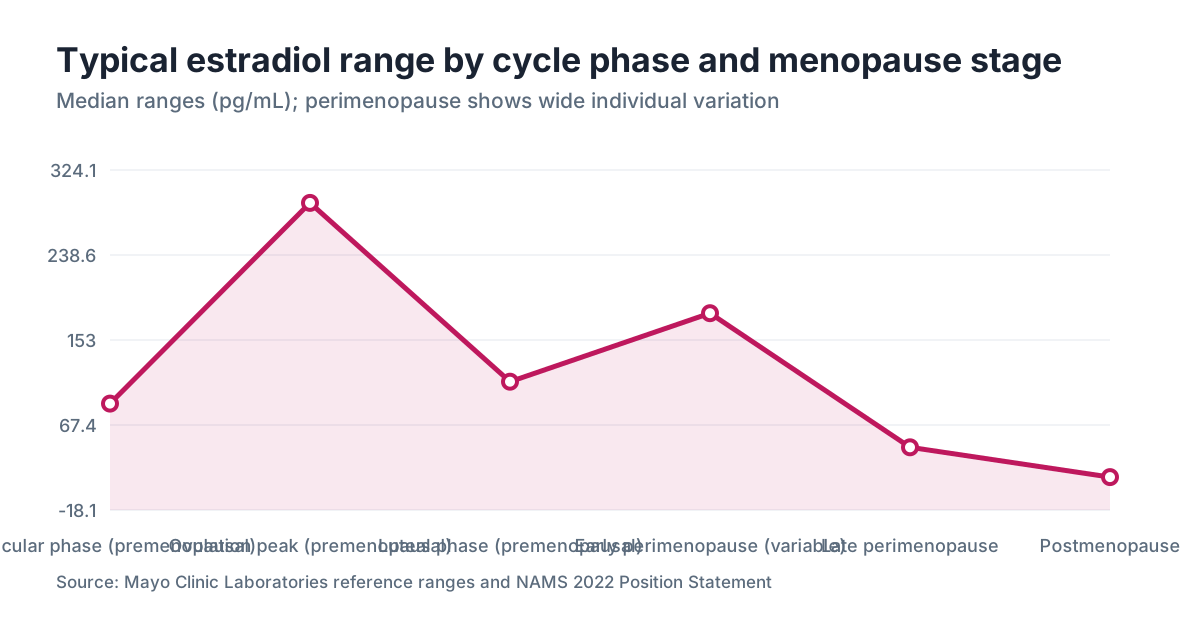
For premenopausal women, the Endocrine Society and major reference labs describe estradiol this way [1][3]:
| Cycle phase | Typical estradiol range (pg/mL) | |---|---| | Early follicular (days 1-5) | 12-166 | | Mid-cycle peak (around ovulation) | 85-498 | | Luteal phase (days 15-28) | 43-180 | | Postmenopausal | < 10-30 |
Early perimenopause can throw mid-cycle peaks well above 300 pg/mL as the pituitary overdrives the ovaries. Late perimenopause often holds estradiol below 50 pg/mL consistently. Below about 30 pg/mL, many women notice real symptoms: hot flashes, broken sleep, vaginal dryness, brain fog. That threshold is not a hard cutoff, though. Some women are miserable at 60 pg/mL and some feel fine at 20 pg/mL. [2][3]
FSH matters as much as estradiol here. An FSH above 40 mIU/mL on two separate tests taken at least 60 days apart, combined with 12 months without a period, is the clinical definition of menopause. Before that point, a single FSH or estradiol draw can mislead you. [4]
How does estradiol change across the stages of perimenopause?
The Stages of Reproductive Aging Workshop (STRAW+10), the consensus framework clinicians use, splits perimenopause into early and late stages based on menstrual cycle changes, not hormone levels. The reason is simple: hormone levels swing too much to stage reliably. [5]
Early perimenopause is defined by cycles that vary by 7 or more days from your usual pattern. Estradiol here is genuinely unpredictable. You can see follicular-phase levels that look premenopausal one month and perimenopausal the next. FSH starts creeping up but may still land in the normal range for your age.
Late perimenopause starts when you go 60 or more days without a period. Estradiol tends to fall more consistently now, though it still fluctuates. Hot flashes are most common and often most severe in this stage. Not because estradiol sits at its lowest, but because it is changing fast. The brain's thermoregulatory center is exquisitely sensitive to estradiol withdrawal.
The average age of menopause in the United States is 51, per the North American Menopause Society (NAMS). [4] Most women spend 4 to 8 years in perimenopause before reaching it. Some move through in 2 years. Others take 10. Genetics, smoking (smokers reach menopause about 2 years earlier), and body weight all bend the timeline. [5]
To place yourself on that timeline, see perimenopause age for a detailed breakdown.
What symptoms suggest estradiol is dropping?
Low or fast-falling estradiol has a recognizable signature. The most common symptoms tracked in the SWAN (Study of Women's Health Across the Nation) longitudinal study include hot flashes in 55 to 75 percent of perimenopausal women, broken sleep, mood changes (especially anxiety and irritability), and shifts in cycle length or flow. [6]
Beyond the headline symptoms, low estradiol hits systems most women never connect to hormones. Vaginal tissues thin and dry out. Joints ache. Skin loses collagen faster. Verbal recall feels sluggish. Libido drops. Some women get palpitations or a racing heart, which is alarming and often misdiagnosed.
None of these symptoms confirm a specific estradiol level. They are signals, not diagnostics. Reading them right takes a lab draw timed properly in the cycle (or on any day if cycles are irregular), FSH alongside it, and ideally a thyroid panel, since thyroid disorders mimic perimenopause closely.
High estradiol in early perimenopause has its own pattern: breast tenderness, heavy periods, bloating, mood swings. People call this estrogen dominance, though the term is imprecise. Progesterone deficiency is usually the real driver. Estradiol is high relative to progesterone, which is falling faster. [7]
How do you test estradiol levels, and when should you test?
Estradiol is measured with a serum blood draw. Saliva and urine tests exist, but major medical organizations consider them too unreliable for clinical decisions. The Endocrine Society does not recommend salivary hormone testing for diagnosing menopause-related hormone changes. [1]
Timing matters enormously. If you still have cycles, even irregular ones, the most informative draw is day 2 or 3 of your period (early follicular phase), because that is when estradiol should sit at its monthly baseline. That timing is when a high FSH and low estradiol carry the most meaning. A random draw on day 20 of a long cycle looks different from a day 3 draw in the same woman in the same month.
If your cycles are too irregular to find day 3, a random draw still helps when paired with FSH and your symptom picture. Ask for FSH, estradiol (E2), and TSH at minimum. Adding LH, progesterone (timed about 7 days after suspected ovulation), DHEA-S, and testosterone fills in the picture, especially if you also have fatigue or low libido.
One caveat worth repeating: a normal result does not rule out perimenopause. STRAW+10 was built precisely because hormone testing alone was found to be an unreliable way to stage reproductive aging. Your menstrual pattern often tells you more than any single lab. [5]
What is the relationship between estradiol and FSH in perimenopause?
FSH and estradiol usually move in opposite directions. FSH is the brain's signal to the ovary: make more estrogen, grow a follicle. As follicle quality declines in perimenopause, FSH has to shout louder to get a response. So FSH climbs.
The relationship is not tidy. In early perimenopause, FSH may be only mildly up (say 15-20 mIU/mL) while estradiol occasionally spikes high, because the ovaries are still answering the extra stimulation. Later, with ovarian reserve nearly gone, estradiol stays low despite very high FSH. A postmenopausal FSH is generally above 40 mIU/mL, though some labs use 25-30 mIU/mL as the perimenopause threshold. [3][4]
Here is the point that trips people up. A high FSH on a single test does not mean you are done ovulating. Women in perimenopause with FSH of 20-30 still ovulate erratically and can still get pregnant. Contraception stays necessary until you have gone 12 consecutive months without a period. [4]
If you take hormonal contraception, that changes everything. Oral contraceptives suppress both FSH and LH, which makes these tests uninterpretable while you are on them. You would need to stop for at least 4 to 6 weeks before testing, which turns the transition off birth control into a common moment of diagnostic confusion.
What estradiol level is too low, and when does treatment make sense?
No number is universally too low, but most menopause specialists treat sustained estradiol below 30 to 40 pg/mL as clinically significant when it tracks with symptoms. The NAMS 2022 Hormone Therapy Position Statement calls hormone therapy the most effective treatment for vasomotor and genitourinary symptoms of menopause, and states that for women under 60 or within 10 years of menopause onset, the benefits generally outweigh the risks for most women without contraindications. [4]
Treatment does not hinge on hitting a lab number. The indication is symptoms that hurt your quality of life, backed by the clinical picture. Estradiol labs help with dosing and monitoring once you start, but they are not the admission ticket.
Bone health is different. Postmenopausal estradiol below 10-15 pg/mL is tied to accelerated bone loss. Estrogen deficiency drives the 3 to 5 percent per year of bone loss many women hit in the years right after menopause. A bone density test can measure what has already happened and help set the urgency of treatment.
WomenRx offers telehealth review of hormone labs and symptoms if you want a clinician reading your numbers against your history instead of in isolation.
For a full look at options, see hormone replacement therapy and estrogen patch for delivery-method specifics.
What are the treatment options for low estradiol in perimenopause?
Each option carries a different risk-benefit math. Here are the main ones.
Systemic hormone therapy. Estradiol delivered as a patch, gel, spray, or oral pill lifts circulating estradiol into a physiologic range. Transdermal delivery (patches, gels) skips first-pass liver metabolism and carries lower clot and stroke risk than oral estrogen, based on observational data reviewed by NAMS. [4] Doses for symptom relief usually target estradiol of 40 to 100 pg/mL, though response varies person to person.
Progesterone co-administration. Any woman with a uterus must take a progestogen alongside estrogen to protect the uterine lining. Micronized progesterone (Prometrium) has the best evidence for low breast risk and a real sleep benefit. See progesterone for a full comparison of progestogen types.
Local vaginal estrogen. For genitourinary symptoms only (dryness, painful sex, recurrent UTIs), low-dose vaginal estrogen cream, tablets, or rings deliver estradiol locally with minimal systemic absorption. The FDA label on these products notes systemic absorption is low, though not zero. [8] With oncologist input, some women with a history of estrogen-sensitive cancers can use them.
Non-hormonal options. For women who cannot or will not use estrogen, the FDA approved fezolinetant (Veozah) in 2023 for hot flashes. It blocks neurokinin B signaling rather than raising estradiol. SSRIs and SNRIs cut hot flash frequency by 40 to 60 percent in trials, though they do nothing for estradiol-driven bone or vaginal changes. [9]
Non-medical approaches (cognitive behavioral therapy for hot flashes, weight loss, avoiding triggers) have modest but real evidence behind them. Losing even 10 pounds reduced hot flash frequency in SWAN observations. [6]
Does body weight or BMI affect estradiol levels in perimenopause?
Yes, substantially. Fat tissue holds an enzyme called aromatase, which converts androgens (testosterone, androstenedione) into estrone, a weaker estrogen. Women with higher body fat often carry higher total estrogen after menopause than lean women, which is one reason obesity raises the risk of estrogen-receptor-positive breast cancer after menopause. [10]
In perimenopause the picture gets more tangled. Higher body fat can soften the estrogen decline somewhat, but it also drives metabolic changes that worsen other symptoms and pushes estrone up relative to estradiol. Estrone binds estrogen receptors less effectively than estradiol, so more of it does not fully replace what you are losing.
Some women in perimenopause turn to GLP-1 receptor agonists like semaglutide for weight loss, which raises a fair question: does big weight loss change hormone levels? The honest answer is probably yes, modestly. Losing a large amount of fat cuts peripheral aromatization. For most perimenopausal women the effect is unlikely to be dramatic, but it is worth watching estradiol and symptoms if you drop 15 percent or more of body weight on a GLP-1. See semaglutide for weight loss for how GLP-1s work in women.
WomenRx providers see this pairing of hormone and weight questions constantly. The two issues genuinely interact and are worth handling together.
Can you have perimenopause symptoms with normal estradiol levels?
Absolutely. This is one of the most common sources of confusion, and honestly of anger, for women handed a normal lab result and told their symptoms are not hormonal.
Three things explain it. First, sensitivity to estradiol varies between women. Receptor density and sensitivity differ by genetics, prior hormone exposure, and other factors. A woman whose lifetime baseline estradiol ran 180 pg/mL can be symptomatic at 90 pg/mL even though 90 sits inside the population reference range.
Second, the rate of change matters as much as the absolute level. The hypothalamus adapts to estradiol over time, so a rapid drop triggers symptoms even when the final level is not technically low. That is why some women get slammed in early perimenopause, when estradiol is still relatively high overall but swinging wildly.
Third, progesterone deficiency is often the real driver of early perimenopausal symptoms: heavy periods, breast tenderness, anxiety, poor sleep, all without any abnormal estradiol. Normal estradiol plus low progesterone can produce a miserable stretch. [7]
If your labs read normal but you feel terrible, the problem is usually the interpretation, not you. A clinician who understands reproductive aging stages and the limits of hormone testing reads your symptom history, menstrual pattern, and labs together instead of waving you off because one number sits in range.
What does estradiol have to do with brain fog and mood in perimenopause?
Estradiol is neuroactive. It modulates the serotonin, dopamine, and acetylcholine systems, all of which shape mood, memory, and cognition. The brain carries estrogen receptors in the hippocampus (memory formation), the prefrontal cortex, and the amygdala (emotional regulation).
The SWAN study found that cognitive complaints and depressive symptoms peak during late perimenopause, not in postmenopause. That points to instability of estradiol during the transition, more than low estradiol itself, as the driver of much of the mood and cognitive disruption. [6]
A 2016 analysis in the journal Menopause found that women with greater estradiol variability across the transition had more depressive symptoms, independent of their absolute estradiol levels. [12] That matches what clinicians watch play out: the rollercoaster is often worse than the destination.
Estrogen therapy started during perimenopause or early postmenopause has helped mood and cognitive symptoms in multiple trials. The timing hypothesis, supported by data from the Women's Health Initiative Memory Study (WHIMS) and later analyses, suggests that starting hormone therapy within 6 years of menopause onset is tied to better cognitive outcomes than starting later. [11] This does not prove hormone therapy prevents dementia. The evidence is not there yet. It does mean waiting has costs of its own.
For a wider view of menopause and its full symptom picture, see menopause.
When does perimenopause start, and how long do estradiol fluctuations last?
Most women notice the first signs in their mid-40s, though it can start as early as 38 or as late as 55. Perimenopause runs 4 to 8 years on average, with wide individual ranges. [5][4]
Estradiol fluctuations tend to be sharpest in the 2 to 3 years before the final menstrual period. After menopause (12 consecutive months without a period), estradiol settles at a low level, usually below 20-30 pg/mL, and the dramatic swings stop. For most women that settling brings some relief from the volatility, even though the level itself is lower.
Early menopause (before 45) and premature ovarian insufficiency (POI, before 40) follow similar hormone patterns but carry heavier long-term stakes because of the longer stretch of estrogen deficiency. Women with early or premature menopause face higher risks of cardiovascular disease, osteoporosis, and cognitive decline, and hormone therapy is generally recommended at least until the average age of natural menopause (51) in these cases. [4]
For more on age and timing, see when does menopause start and menopause age.
Frequently asked questions
What is a normal estradiol level for a 45-year-old woman?
At 45, estradiol can range from under 20 pg/mL to over 300 pg/mL depending on your cycle timing and how far into perimenopause you are. A day-3 follicular-phase draw below 80 pg/mL combined with FSH above 10-15 mIU/mL often signals declining ovarian reserve. No single number is normal or abnormal at 45 without context.
Can estradiol levels be normal in perimenopause but still cause symptoms?
Yes. Symptoms often reflect the rate of estradiol change more than the absolute level. A rapid drop from your personal baseline can cause hot flashes and mood changes even when the final number sits inside population reference ranges. Progesterone deficiency, which often shows up before estradiol falls much, is another common driver of symptoms with seemingly normal estradiol.
What FSH level confirms perimenopause?
An FSH above 10-12 mIU/mL on a day-2 or day-3 draw suggests declining ovarian reserve. FSH consistently above 40 mIU/mL on two tests at least 60 days apart, alongside 12 months without a period, confirms menopause rather than perimenopause. FSH alone cannot confirm perimenopause because it fluctuates significantly cycle to cycle.
How often should I test my estradiol during perimenopause?
There is no standard frequency. Most clinicians test at baseline when symptoms start, then as needed to guide treatment or monitor therapy. Annual testing alongside FSH and TSH is reasonable if you are managing symptoms with hormones. Testing more often than every 3 months is rarely useful given how much estradiol varies on its own.
Does a high estradiol level mean I am not in perimenopause?
No. Estradiol can spike well above 300 pg/mL in early perimenopause because the pituitary is overdriving the ovaries. High estradiol with high FSH, or high estradiol followed by rapid crashes, is actually characteristic of early perimenopause. Your menstrual pattern and symptom history matter more than any single estradiol reading.
What estradiol level is targeted with hormone therapy?
Most menopause specialists aim for a serum estradiol of 40 to 100 pg/mL on systemic therapy, which mimics the low-to-mid follicular range. Symptom relief is the main guide, with labs used to confirm absorption and avoid excessive levels. Local vaginal estradiol keeps systemic levels near zero and is used only for genitourinary symptoms.
Is saliva or urine estradiol testing accurate?
The Endocrine Society does not recommend salivary hormone testing for diagnosing or managing menopause-related hormone changes. Saliva and urine tests carry wider variability and are affected by collection timing, hydration, and the specific assay. Serum blood testing is the clinical standard for estradiol measurement.
Can estradiol levels affect weight gain in perimenopause?
Yes. Declining estradiol shifts fat from the hips and thighs toward the abdomen, adding visceral fat even without any change in calorie intake. Estradiol also influences insulin sensitivity and appetite-regulating hormones. This is why many women gain weight in perimenopause without obvious changes in diet or activity.
How does estradiol affect bone health during perimenopause?
Estradiol suppresses osteoclast activity, the bone breakdown process. As estradiol falls, bone resorption speeds up. Women lose an average of 3 to 5 percent of bone density per year in the years right around menopause. Estrogen therapy prevents this loss and is one of the most evidence-based ways to prevent osteoporosis in women under 60.
What is the difference between estradiol and estrone?
Estradiol (E2) is the strongest estrogen and the dominant form during reproductive years. Estrone (E1) is weaker and becomes the main circulating estrogen after menopause, produced mostly in fat tissue by aromatization of androgens. Estriol (E3) is primarily a pregnancy hormone. Estradiol is the form used in FDA-approved hormone therapies.
Can I still get pregnant in perimenopause with low estradiol?
Yes. Estradiol fluctuates in perimenopause, and ovulation still happens intermittently. Even with FSH elevated and estradiol often low, unexpected pregnancies occur. Contraception is recommended until you have completed 12 consecutive months without a period, which is the clinical definition of menopause.
Does taking birth control pills affect estradiol test results?
Yes, significantly. Combined oral contraceptives suppress the hypothalamic-pituitary-ovarian axis, lowering both FSH and LH and making your serum estradiol reflect the pill's synthetic estrogen rather than your own ovarian production. Wait at least 4 to 6 weeks after stopping oral contraceptives before testing for meaningful perimenopause-related results.
What is estrogen dominance in perimenopause?
Estrogen dominance describes a state where estradiol is high or normal relative to progesterone, which falls earlier and faster in perimenopause. Symptoms include breast tenderness, heavy periods, bloating, and mood changes. It does not mean estradiol is abnormally high in absolute terms; the imbalance is what matters. Progesterone supplementation often addresses these symptoms.
When should I see a doctor about my estradiol levels?
See a clinician if you have cycle changes lasting more than 3 months, symptoms affecting sleep or daily function, or concerns about bone health. You do not need an abnormal lab first. A menopause-informed provider can evaluate your symptom pattern, order the right labs, and discuss options. Waiting for labs to look clearly abnormal often just delays treatment.
Sources
- Endocrine Society, "Endocrine Society Clinical Practice Guideline: Menopause"
- National Institutes of Health, National Library of Medicine, StatPearls: "Physiology, Estrogen"
- Mayo Clinic Laboratories, "Estradiol, Serum" reference ranges
- North American Menopause Society (NAMS), 2022 Hormone Therapy Position Statement
- Harlow SD et al., "Executive summary of the Stages of Reproductive Aging Workshop +10: addressing the unfinished agenda of staging reproductive aging", Climacteric, 2012
- Study of Women's Health Across the Nation (SWAN), University of Michigan / NIH
- Prior JC, "Progesterone for Symptomatic Perimenopause Treatment", Journal of Obstetrics and Gynaecology Canada, 2011
- FDA, Prescribing Information for Vaginal Estradiol Products (Vagifem/Yuvafem)
- FDA, Approval of Fezolinetant (Veozah) for Vasomotor Symptoms, 2023
- National Cancer Institute, "Obesity and Cancer"
- Shumaker SA et al., "Estrogen plus progestin and the incidence of dementia and mild cognitive impairment in postmenopausal women: the Women's Health Initiative Memory Study", JAMA, 2003; and subsequent reanalyses
- Gordon JL et al., "Estradiol variability, stressful life events, and the emergence of depressive symptomatology during the menopausal transition", Menopause, 2016