Estradiol and progesterone: what every woman needs to know
TL;DR: Estradiol is your strongest estrogen, made mostly in the ovaries, and it governs bone, heart, mood, and skin. Progesterone, also ovarian, balances estradiol in the uterus and brain. Both fall hard in perimenopause and menopause. How the two interact explains most of your symptoms and most of what hormone therapy fixes.
What are estradiol and progesterone, exactly?
Estradiol (E2) is the most biologically active estrogen in reproductive-age women. It is made mostly in the ovarian granulosa cells, with smaller amounts from fat tissue, the adrenal glands, and the brain. Progesterone is a steroid hormone made in the corpus luteum after ovulation, plus small amounts from the adrenal glands and, in pregnancy, the placenta.
They are not interchangeable. Estradiol drives growth. It tells cells in the uterine lining, breast, bone, and blood vessels to thicken and maintain themselves. Progesterone mostly pushes back. In the uterus, it turns the growing lining into a secretory lining ready for an embryo, then it limits any further estrogen-driven growth [1].
Both hormones bind to receptors inside the cell, not on its surface, so they enter the nucleus and change gene expression directly. That is why their effects reach so far, and why hormone therapy takes weeks, not hours, to show its full result.
Outside the reproductive system, estradiol slows the cells that break down bone, keeps LDL cholesterol lower and HDL higher, maintains the vaginal lining, and tunes serotonin and dopamine pathways. Progesterone has its own brain effects through GABA-A receptors, which is why its metabolite allopregnanolone calms many women and helps them sleep [2].
One note on terms. "Estrogen" is a class of hormones. Estradiol is the dominant estrogen during your reproductive years. Estrone (E1) takes over after menopause, and estriol (E3) peaks in pregnancy. When your doctor orders an "estrogen" blood test, they are almost certainly measuring estradiol.
How do estradiol and progesterone change across a woman's life?
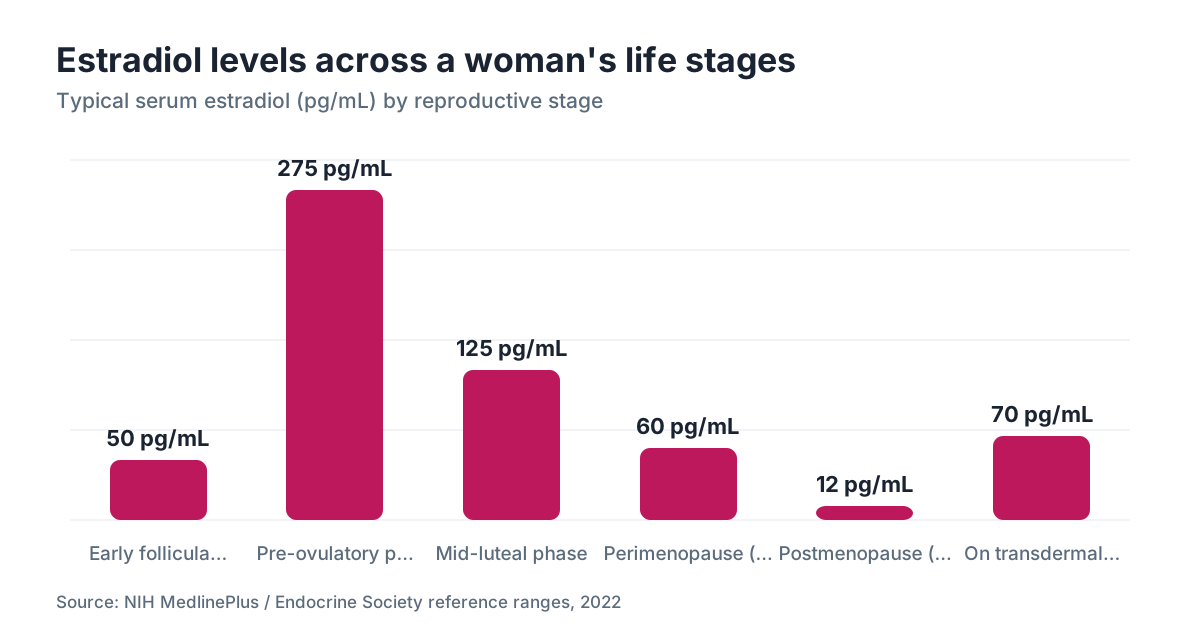
From puberty into the mid-to-late thirties, estradiol and progesterone run on a monthly loop you can nearly set a clock by. In the follicular phase (days 1 to 14 of a typical cycle), FSH from the pituitary drives follicle growth and estradiol climbs from roughly 25 to 75 pg/mL at menstruation to a pre-ovulatory peak of 150 to 400 pg/mL [3]. That estradiol surge triggers the LH surge, which triggers ovulation.
After ovulation, the corpus luteum pumps out progesterone, peaking at 5 to 20 ng/mL in the mid-luteal phase (around day 21). No pregnancy, and both hormones drop hard, the lining sheds, and the loop starts over.
Perimenopause breaks the loop years before your last period. Follicle quality and quantity fall, ovulation gets patchy, and progesterone drops first because it depends on ovulation. Estradiol turns erratic. It can spike higher than your premenopausal peaks, then crash within days. That is why perimenopause feels so chaotic. Women often report the swings hurt more than any single low reading [4].
Menopause, defined as 12 straight months without a period, drops estradiol to a postmenopausal range of roughly 10 to 20 pg/mL and progesterone below 1 ng/mL. Those numbers are not catastrophic by themselves. The trouble is the speed and permanence of the fall, laid over the lifelong jobs both hormones do.
You can read more about when perimenopause typically starts and what the transition looks like at perimenopause age and when does menopause start.
What symptoms does low estradiol cause?
Low estradiol produces a recognizable symptom cluster, though how hard it hits varies a lot from woman to woman.
Hot flashes and night sweats are the classic signs. They affect 75 to 80% of menopausal women and last a median of 7 years, with some women running past a decade [5]. The mechanism sits in the hypothalamic thermostat. Without enough estradiol, the neutral zone for body temperature narrows, and small shifts trigger a sweat response.
Sleep falls apart alongside it. Night sweats wake you, but estradiol also changes sleep architecture on its own, hot flashes or not. Mood follows too. Irritability, anxiety, and low mood partly track estradiol's grip on serotonin receptor sensitivity and tryptophan supply.
Genitourinary syndrome of menopause (GSM) gets talked about far less and affects roughly 50% of postmenopausal women [6]. The vaginal lining, urethra, and bladder trigone all carry estrogen receptors, and without estradiol they thin and dry out. Dryness, burning, painful sex, urinary urgency, and repeat UTIs are all on the menu. GSM does not resolve on its own. It gets worse without treatment.
Bone loss is quieter but arguably the bigger long-term problem. Estradiol suppresses the cells that resorb bone. Once it drops, resorption speeds up. Women lose an average of 2% of bone mass per year in the first five years after menopause, against about 0.5 to 1% per year before [7]. The bone density test page covers when to get a baseline DEXA scan.
Cardiovascular risk climbs too. Estradiol's help with lipids, blood vessel lining, and inflammation goes away, which feeds the sharp jump in heart disease women see after menopause.
What does low progesterone cause, and why does it matter outside pregnancy?
Low progesterone gets framed as a fertility issue, and that framing misses its bigger effects on the brain, sleep, and mood.
The first sign of low progesterone in perimenopause is usually irregular periods with heavier bleeding. Without the secretory transformation that reins it in, estrogen-driven lining growth keeps going, so periods get heavier and less predictable. This is the same reason women with a uterus who take estrogen must take a progestogen alongside it. Unopposed estrogen raises endometrial cancer risk [1].
Beyond the uterus, progesterone's main metabolite, allopregnanolone, is a strong positive modulator of GABA-A receptors. Benzodiazepines hit the same pathway by a different door. When progesterone drops, that natural GABA activity drops with it, which shows up as more anxiety, broken sleep (slow-wave and REM stages especially), and sometimes unstable mood [2].
Women in early perimenopause with still-normal estradiol but low or absent progesterone (because they are not ovulating steadily) often report the worst sleep and anxiety, even when their "estrogen" test reads fine. That is exactly why a single hormone panel misleads. You have to read both hormones together.
Progesterone also shows anti-inflammatory and neuroprotective properties in the lab, an active research area, though nothing outside HRT is settled clinically yet.
Read more at progesterone.
How are estradiol and progesterone measured, and what do the numbers mean?
Both hormones are measured in serum, a standard blood draw. Saliva and urine tests exist, but they vary too much for clinical decisions, and neither the Endocrine Society nor The Menopause Society recommends them as primary tools for menopause care [8].
Reference ranges shift wildly depending on where you are in your cycle and your life stage. The table below shows typical serum ranges.
| Stage | Estradiol (pg/mL) | Progesterone (ng/mL) | |---|---|---| | Follicular phase | 25-150 | 0.1-0.9 | | Pre-ovulatory peak | 150-400 | 0.5-1.5 | | Mid-luteal phase | 50-200 | 5-20 | | Postmenopause (no HRT) | 5-20 | < 0.5 | | On standard HRT (patch/pill) | 40-100 target | Varies by regimen |
A few caveats worth keeping. Hormones move hour to hour and day to day. A single low reading in perimenopause means very little. Patterns beat snapshots. FSH often gets checked next to estradiol. An FSH above 30 mIU/mL with symptoms points strongly toward menopause, though FSH itself bounces around in perimenopause [3].
Women on hormone therapy do not need to hit a magic number to know it is working. The Endocrine Society is direct that symptom relief, not a target serum level, is the goal for most women [8]. Checking levels 4 to 6 weeks after you start or change a dose is still useful, mainly to confirm you are absorbing the hormone, since patches and gels vary a lot person to person.
What is the difference between natural and synthetic progesterone in HRT?
Here the terminology gets genuinely confusing, and the difference matters clinically.
"Progesterone" in the strict sense is the exact molecule your body makes. In HRT it goes by micronized progesterone (brand name Prometrium in the US, Utrogestan in the UK and Canada). It is bioidentical. It behaves in the brain like your own progesterone, including the conversion to allopregnanolone, which is one reason it tends to sit better for sleep and mood than the synthetics [9].
"Progestins" or "progestogens" are synthetic molecules built to protect the uterine lining. They do that job well. But they are shaped differently from progesterone and do not convert to allopregnanolone. Some, like medroxyprogesterone acetate (MPA), carry weak androgenic and glucocorticoid activity that can bring bloating, mood changes, and the modest bump in breast cancer risk seen in the Women's Health Initiative (WHI) data [10].
The E3N-EPIC cohort and re-analyses of WHI data suggest that estradiol plus micronized progesterone carries a lower breast cancer risk than estradiol plus MPA, though the absolute risks are small and depend on context [9]. The Endocrine Society's 2022 guideline notes this distinction [8].
Practical version. If you have a uterus and you are starting HRT, asking your prescriber for micronized progesterone rather than a synthetic progestin is a reasonable, evidence-backed preference. If you have had a hysterectomy, you need no progestogen at all, so the question does not apply to you.
What are the main HRT delivery methods for estradiol and progesterone?
How you take estradiol matters more than most women expect, and the reason is the first-pass effect. Swallowed as a pill, estradiol runs through the liver before it reaches the rest of your body, converts largely to estrone, and revs up liver protein production, including clotting factors and sex hormone binding globulin (SHBG). Transdermal estradiol (patches, gels, sprays) skips the liver, delivers estradiol more directly, and does not raise clotting proteins the same way [8].
Why that matters: observational studies and a meta-analysis based in the BMJ found that transdermal estradiol shows no detectable rise in venous thromboembolism (VTE) risk, while oral estradiol shows a small measurable one, roughly a doubling of a very low baseline [11]. The estrogen patch article goes deeper on transdermal-specific options.
For progesterone, oral micronized progesterone is the standard route. It absorbs well by mouth, and here the first-pass metabolism helps, because the liver and gut convert it to allopregnanolone, which is where the sleep benefit comes from. Vaginal progesterone shows up in fertility care but is less common for menopause HRT.
A practical look at common formulations:
| Estradiol delivery | Examples | Notes | |---|---|---| | Transdermal patch | Vivelle-Dot, Climara | Changed 1-2x/week, steady levels | | Gel or spray | Divigel, Evamist | Daily, easy to fine-tune the dose | | Oral (pill) | Estrace | Convenient, higher clot risk | | Vaginal (low-dose) | Vagifem, Imvexxy | Local only, for GSM |
| Progestogen delivery | Examples | Notes | |---|---|---| | Oral micronized P4 | Prometrium | Bioidentical, sleep benefit | | Levonorgestrel IUD | Mirena | Local uterine protection, low systemic dose | | MPA (oral) | Provera | Synthetic, more side effects |
Women who want to work through these options with a clinician who does hormones all day can look at telehealth practices like WomenRx, which focuses on hormone therapy and hormone replacement therapy for women.
Is HRT with estradiol and progesterone safe? What does the current evidence say?
The WHI, published in 2002, scared a generation of women and doctors off HRT over breast cancer and heart attacks. The full picture is more careful and, honestly, more reassuring for most women.
The WHI tested two things. Conjugated equine estrogens (CEE) plus MPA in women with a uterus, and CEE alone in women after hysterectomy. The estrogen-alone arm actually showed a reduced risk of breast cancer (hazard ratio 0.77) and fewer breast cancer deaths. The combined arm showed a small rise in breast cancer risk, but the average participant was 63 and had been menopausal for over a decade [10]. Starting HRT that late, after years without estradiol, carries different risk math than starting within a few years of menopause.
The "timing hypothesis," backed now by several analyses and a re-reading of the WHI data, holds that starting estradiol within 10 years of menopause (or before age 60) generally shows cardiovascular benefit or neutrality, while starting much later may not [8]. The Endocrine Society's 2022 guideline states: "For women who initiate HT within 10 years of menopause or under the age of 60 years, the benefits of HT outweigh the risks" [8].
Absolute numbers matter here. The WHI combined arm showed roughly 8 additional breast cancer cases per 10,000 women-years with CEE plus MPA. Real, but small, and it sits against the bone, heart, and quality-of-life benefits, especially since modern formulations (transdermal estradiol plus micronized progesterone) appear to carry lower risk [9].
The bottom line. For healthy women in their 40s and 50s with bothersome symptoms, current evidence from The Menopause Society, the Endocrine Society, and the British Menopause Society supports that HRT's benefits beat its risks when there is no specific contraindication (active breast cancer, undiagnosed vaginal bleeding, recent VTE, active liver disease). This is not what got taught a decade ago, and plenty of women are still hearing the old version.
Do estradiol and progesterone affect weight, and does HRT cause weight gain?
This is one of the most common questions, and the short answer is no, not the way most women fear.
Estradiol shapes where fat goes. In your reproductive years it steers fat toward hips, thighs, and breasts (subcutaneous fat). After menopause, the shift toward central, abdominal, visceral fat is driven by estradiol leaving, not by HRT. Several randomized trials found that HRT, transdermal estradiol especially, either holds body composition steady or nudges it slightly better than untreated menopause [8].
Progesterone can cause fluid retention and mild bloating in some women, mostly in the first 2 to 3 months. That is real and usually passes.
The metabolic slowdown of menopause (less muscle, a lower resting metabolic rate, more insulin resistance) is real and does add weight, but it comes from losing estradiol, not from replacing it. Most randomized controlled trials show no meaningful weight gain from standard-dose HRT versus placebo.
For women carrying real weight gain through perimenopause or menopause, some now pair HRT with GLP-1 receptor agonists like semaglutide. The data on that combination is emerging, not settled. You can read more about semaglutide for weight loss and the broader semaglutide options.
What is the role of estradiol and progesterone in brain health and dementia risk?
This area moves fast and the answers are genuinely uncertain. Anyone who tells you the science is settled in either direction is overselling.
Estrogen receptors sit throughout the brain, including the hippocampus (memory), prefrontal cortex (executive function), and mood-regulating regions. Estradiol supports synaptic density, cerebral blood flow, and glucose metabolism. Observational data keep finding that women who use HRT, particularly starting in perimenopause, have lower rates of Alzheimer's and dementia than never-users [12].
The catch is that the randomized trial data is mixed. The WHIMS sub-study (Women's Health Initiative Memory Study) found increased dementia risk with CEE plus MPA in women over 65, but those women were, again, starting HRT late, after years of estradiol deprivation. The "critical window" idea applies here too. The brain may benefit from estrogen mainly when it starts close to natural menopause, not years or decades later [12].
For progesterone specifically, the GABA-A effects of allopregnanolone and the neuroprotection seen in animal models are interesting, but solid human trial evidence for dementia prevention is not there yet.
The Menopause Society's 2022 position statement acknowledges the possible neuroprotective benefit of HRT started early but stops short of recommending HRT to prevent dementia, citing thin randomized data [8]. The fair reading: the fear that HRT causes dementia, partly born from WHIMS, applies to synthetic progestins and late starts, not to modern transdermal estradiol plus micronized progesterone begun at menopause.
When should a woman consider starting hormone therapy?
The best window, on current evidence, is within 10 years of your last period or before age 60, whichever comes first [8]. Starting there gets you the most cardiovascular and bone benefit and the least of the risk that comes with starting late.
Symptoms alone are enough reason for most healthy women. You do not need a certain FSH level, a specific estradiol reading, or to have "tried everything else first." The Menopause Society position statement is plain: bothersome hot flashes, night sweats, and genitourinary syndrome of menopause are appropriate reasons for hormone therapy when there is no contraindication.
Perimenopause gets undertreated. Many women have symptoms for years before periods actually stop, and many clinicians wait for FSH confirmation before prescribing, which misses the window when therapy tends to help most. Irregular cycles, worse sleep, new anxiety, brain fog, and shifting periods are all reasons to have the conversation, not reasons to wait.
Contraindications that call for a careful risk-benefit talk rather than an automatic no include a personal history of hormone-receptor-positive breast cancer, active liver disease, unexplained uterine bleeding, a recent arterial cardiovascular event, and active VTE. Each one needs individual assessment, not a blanket "never." The conversation is more careful than the reflex prescribing of the post-WHI decade.
At WomenRx, clinicians trained in menopause medicine can help you work through your own risk picture instead of applying one answer to everyone. The menopause hub is a good starting point if you want broader context.
Are there non-hormonal options, and how do they compare?
Yes, and some work genuinely well, though none match HRT for the breadth of what it does.
For hot flashes: fezolinetant (Veozah), FDA-approved in May 2023, is a non-hormonal NK3 receptor antagonist that hits the temperature pathway directly. Trials showed a 60 to 70% cut in moderate-to-severe hot flash frequency against a 30 to 40% placebo response [13]. It does nothing for bone, and it does not touch mood, GSM, or sleep the way HRT does.
SSRIs and SNRIs (low-dose paroxetine is the only FDA-approved one for hot flashes) reduce hot flash frequency by 40 to 60% in trials. Reasonable for women who cannot take HRT, though they bring their own side effects, including sexual dysfunction and weight changes.
Gabapentin cuts hot flashes in randomized trials, nighttime ones especially, but causes sedation and dizziness in a lot of women.
For GSM specifically, low-dose vaginal estradiol (Vagifem tablets, Imvexxy suppositories) and vaginal DHEA (Intrarosa) work locally with minimal systemic absorption. These are appropriate even for many breast cancer survivors, per Menopause Society guidance, because systemic estradiol stays within normal postmenopausal ranges at standard vaginal doses.
For bone, bisphosphonates (alendronate, risedronate) reduce fracture risk and are first-line for osteoporosis in women who cannot use HRT. They do nothing for hot flashes.
The honest summary: non-hormonal options handle specific symptoms reasonably well but do not reproduce the full reach of estradiol and progesterone. For most healthy, symptomatic women in the right age window, HRT is still the most effective tool on the table.
Frequently asked questions
What is the difference between estradiol and estrogen?
Estrogen is a class of hormones that includes estradiol (E2), estrone (E1), and estriol (E3). Estradiol is the strongest and is the main form during your reproductive years. Estrone takes over after menopause. When doctors say "estrogen therapy" in HRT, they almost always mean estradiol, either as estradiol itself or as conjugated equine estrogens, which contain several estrogen compounds.
Can you have normal estradiol but low progesterone?
Yes, and it is very common in early perimenopause. As ovulation gets irregular, progesterone drops because it needs ovulation to be made. Estradiol can stay normal or even run high. That imbalance (sometimes called estrogen dominance) can bring heavy periods, poor sleep, anxiety, and mood changes before any drop in estradiol shows up. A single estrogen test misses it entirely.
What is a normal estradiol level for a woman in her 40s?
In a woman still cycling, estradiol swings across the month from roughly 25 to 75 pg/mL at menstruation to 150 to 400 pg/mL just before ovulation, then settles to 50 to 200 pg/mL in the mid-luteal phase. A single test captures one moment in that range. In perimenopause the range widens further. Any reading has to be read alongside cycle day, symptoms, and FSH to mean anything.
Does HRT with estradiol and progesterone cause breast cancer?
The risk depends heavily on the type of therapy and when you start. Estradiol alone (in women without a uterus) showed a reduced breast cancer risk in the WHI. Combined estradiol plus a progestin shows a small rise in absolute risk with long-term use. E3N cohort data suggest estradiol plus micronized progesterone carries lower risk than estradiol plus synthetic progestins. The absolute numbers are small and must be weighed against the benefits for each woman.
How long does it take for estradiol and progesterone therapy to work?
Hot flashes and night sweats often ease within 2 to 4 weeks of starting HRT, with full effect by 8 to 12 weeks. Sleep and mood improvements usually follow within a month. Genitourinary symptoms can take 3 to 6 months to fully respond. Bone protection builds over 1 to 2 years. If symptoms are not controlled at 12 weeks, the dose or delivery method likely needs adjusting rather than dropping.
Do I need progesterone if I've had a hysterectomy?
No. Progesterone's job in HRT is to protect the uterine lining from unopposed estrogen. No uterus, no lining to protect. Women who have had a hysterectomy can use estradiol alone, which simplifies therapy and drops the side effects some women get from progestogens. The possible sleep and mood benefits of micronized progesterone are the main reason a few women without a uterus still choose to include it.
Can estradiol and progesterone levels be tested at home?
At-home finger-prick blood tests for estradiol and progesterone are available and have improved. But neither The Menopause Society nor the Endocrine Society recommends salivary hormone testing for clinical menopause care, because it varies too much. Serum testing at a lab stays the standard. If you use an at-home test, confirm any meaningful result with a standard serum draw before you make treatment decisions.
What is bioidentical hormone therapy, and is it different from regular HRT?
Bioidentical means the hormone molecule matches what your body makes. FDA-approved bioidentical options include estradiol patches, gels, and pills, plus micronized progesterone (Prometrium). These are not the same as compounded bioidentical hormones, which are custom-mixed by a pharmacy and are not FDA-approved for safety and efficacy. Regulated bioidentical HRT is mainstream medicine, not alternative medicine.
Does estradiol affect libido, and does HRT help with low sex drive?
Estradiol helps indirectly, mostly by restoring vaginal tissue health and cutting pain with sex. Desire itself leans more on testosterone, which also falls in menopause. Many women find that treating GSM with estradiol improves sexual function a lot. If libido stays low after HRT is dialed in, testosterone therapy (off-label in the US, licensed in some other countries) is a further conversation to have with your prescriber.
Is there an age limit for starting hormone therapy?
There is no hard cutoff, but the benefit-risk balance shifts with age and years since menopause. Starting before age 60 or within 10 years of your last period is the most favorable window. Women starting after 60 or more than 10 years post-menopause need a more careful individual assessment, cardiovascular risk especially. Age alone is not a contraindication, but it changes the conversation.
Can perimenopause symptoms be treated with estradiol and progesterone?
Yes. Perimenopause gets undertreated because many clinicians wait for FSH confirmation or a full year without periods. But erratic hormone levels in perimenopause can cause severe symptoms, and low-dose combined HRT or progesterone alone (for women with adequate estradiol who are not ovulating regularly) can work well. Low-dose hormonal contraception is another option that also regulates cycles. Symptoms, not lab values, should guide the call.
How do estradiol and progesterone interact with GLP-1 medications like semaglutide?
There is no established direct interaction between estradiol or progesterone and GLP-1 receptor agonists. Some early evidence suggests estradiol may sharpen GLP-1 receptor sensitivity, which could explain why postmenopausal women sometimes respond differently to GLP-1s than premenopausal women. In practice, many women use both HRT and GLP-1s at once for weight and metabolic management with no known safety issue, but prospective trial data on the combination are limited.
What happens if I stop taking estradiol and progesterone therapy suddenly?
Stopping cold can bring hot flashes and night sweats roaring back, sometimes worse than before you started. There is no evidence that tapering is physiologically necessary, but many women find a gradual dose reduction more comfortable. Bone and cardiovascular protection fade after stopping, and GSM symptoms return over time. There is no defined maximum duration of use. Staying on therapy is appropriate as long as you benefit and have no new contraindications.
What does a typical HRT regimen with estradiol and progesterone look like?
A common starting regimen for a woman with a uterus is transdermal estradiol 0.05 mg/day via patch (changed twice weekly) plus oral micronized progesterone 100 mg nightly (continuous combined) or 200 mg nightly for 12 days a month (sequential). Doses get adjusted by symptom response at the 6 to 12 week follow-up. There is no universal correct dose. Individualizing it is the point.
Sources
- National Cancer Institute, NCI Dictionary of Cancer Terms: Progesterone
- NIH National Institute on Aging, Hormones and Menopause
- The Menopause Society (NAMS), 2023 Menopause Practice: A Clinician's Guide
- NIH Office on Women's Health, Menopause symptoms and relief
- The Menopause Society (NAMS), patient information on genitourinary syndrome of menopause
- Bone Health and Osteoporosis Foundation
- Endocrine Society, Clinical Practice Guideline: Treatment of Symptoms of the Menopause (2022)
- Fournier A et al., Breast Cancer Risk in Relation to Different Types of Hormone Replacement Therapy in the E3N-EPIC Cohort, International Journal of Cancer, 2005
- Women's Health Initiative (WHI), NHLBI program summary
- Canonico M et al., Hormone therapy and venous thromboembolism among postmenopausal women, BMJ 2008
- NIH National Institute on Aging, menopause and cognitive health
- US FDA, approval of fezolinetant (Veozah) for vasomotor symptoms, May 2023