Endometrial hyperplasia progesterone treatment: what actually works
TL;DR: Progesterone is the first-line medical treatment for endometrial hyperplasia without atypia, reversing it in roughly 80-96% of women. The levonorgestrel IUD beats oral progestogens in most head-to-head data. Treatment runs 6 months minimum. Atypical hyperplasia carries a much higher cancer risk and usually calls for a gynecologic-oncology consult before you choose medical over surgical management.
What is endometrial hyperplasia and why does progesterone treat it?
Endometrial hyperplasia is an abnormal thickening of the uterine lining caused by too much estrogen relative to progesterone. Estrogen tells the endometrium to grow. Progesterone is the counterweight: it matures the lining, limits further proliferation, and, when it withdraws, triggers shedding. Tip that balance and the lining can overgrow into hyperplasia.
There are two main categories. Hyperplasia without atypia means the cells look architecturally crowded but the individual cells still look normal. Atypical hyperplasia (also called endometrial intraepithelial neoplasia, or EIN) means the cells themselves have begun to look abnormal under the microscope. That distinction changes everything about treatment, because atypical hyperplasia carries a roughly 25-30% risk of concurrent endometrial cancer at diagnosis and a substantial risk of progression if left alone [1].
Progesterone reverses hyperplasia by binding progesterone receptors in the endometrial cells and pushing them out of a proliferative state. It also turns up enzymes that convert estradiol to the weaker estrone and increases proteins that degrade estrogen receptors, which quiets estrogen's local signal. If the lining responds, you get maturation, then shedding, then over months a return to normal thickness.
Women who develop hyperplasia tend to share risk factors that all point back to unopposed estrogen: obesity, polycystic ovary syndrome, anovulatory cycles (common in perimenopause), long-term tamoxifen use, and estrogen taken without a progestogen. The root cause matters. Treatment works better when you also fix what is driving the estrogen.
What are the main progesterone treatment options for endometrial hyperplasia?
Not all progestogens do the same job here, and how you deliver the drug changes how much actually reaches the uterine lining.
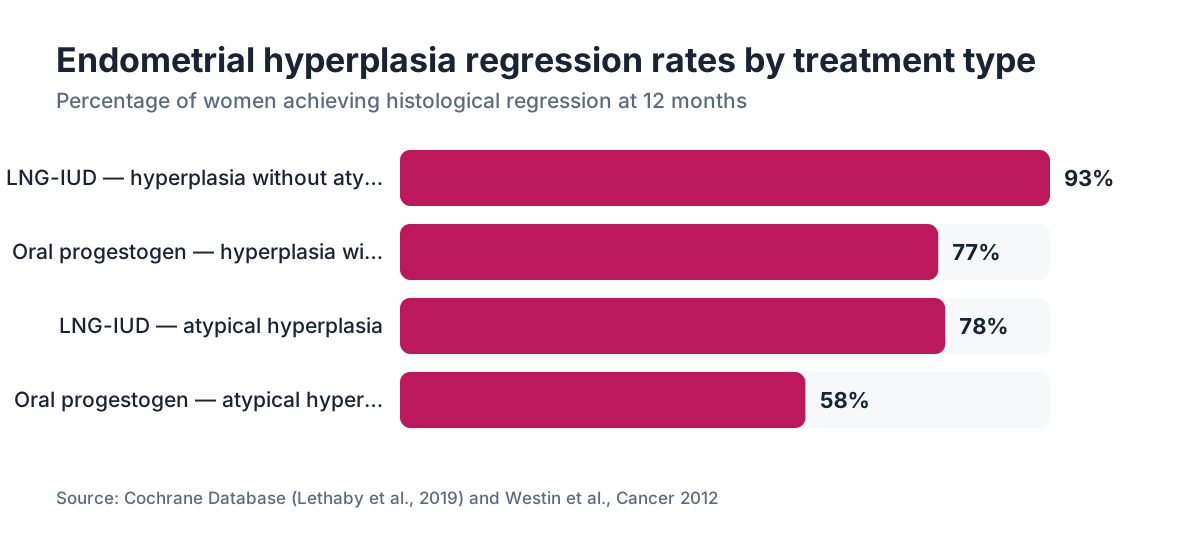
Levonorgestrel intrauterine device (LNG-IUD, 52 mg) This is the frontrunner. The LNG-IUD drops levonorgestrel straight into the uterine cavity, so local endometrial concentrations run far higher than any oral pill can manage while systemic blood levels stay low [6]. Regression rates in published trials run 90 to 96% for hyperplasia without atypia at 6-12 months, against 69-85% for oral progestogens in the same studies [2]. Mirena is the most studied brand, but any 52-mg LNG-IUD shares the pharmacology.
Oral medroxyprogesterone acetate (MPA) MPA 10 mg daily for 14 days per cycle (cyclic) or continuously is the most commonly prescribed oral option. Regression rates sit around 80-85% for non-atypical hyperplasia [8]. Cyclic regimens produce a monthly withdrawal bleed that may flush the hyperplastic tissue more effectively than continuous dosing, though head-to-head data among oral progestogens are thin.
Oral norethindrone acetate (NETA) NETA 5-10 mg daily is another oral option. It is a 19-nortestosterone derivative, so it has some androgenic activity and a slightly different side-effect profile than MPA. Some women tolerate it better. Others notice more acne or mood changes.
Oral micronized progesterone (Prometrium) Micronized progesterone at typical HRT doses (100-200 mg) has a weaker anti-proliferative effect on the endometrium than synthetic progestogens at equivalent systemic levels [9]. It is widely used in hormone replacement therapy to protect the uterus, but as a standalone treatment for established hyperplasia the evidence is thinner. Higher doses (400-600 mg) have been studied but bring more sedation.
Progestogen injections Depot medroxyprogesterone acetate (DMPA, 150 mg IM every 3 months) gets used, mostly in women who cannot manage daily oral dosing. The data are limited next to the LNG-IUD or daily oral MPA.
Here is the honest bottom line. If you want the most evidence behind the highest regression rate with the fewest systemic side effects, the LNG-IUD is what the data support. If an IUD is not acceptable or not possible, daily oral MPA or NETA are reasonable. Read more about progesterone forms and how they differ.
How effective is progesterone at reversing endometrial hyperplasia?
Very effective for hyperplasia without atypia. Moderately effective for atypical hyperplasia. The exact numbers move depending on which drug and which route you pick.
| Treatment | Hyperplasia without atypia (regression rate) | Atypical hyperplasia (regression rate) | |---|---|---| | LNG-IUD 52 mg | 90-96% at 12 months [2] | ~75-80% at 12 months [3] | | Oral MPA 10-20 mg/day | 80-85% at 6-12 months [2] | 50-65% at 6-12 months [3] | | Oral NETA 5-10 mg/day | ~80% (limited direct trials) | Data sparse | | DMPA injection | ~80% (small series) | Limited data |
The largest systematic review and meta-analysis on this, in the Cochrane Database, found the LNG-IUD significantly more effective than oral progestogens for regression of endometrial hyperplasia, with fewer side effects leading to discontinuation [2]. The authors wrote that the LNG-IUD should be "considered as the first treatment option" for women with hyperplasia without atypia who want to keep their uterus.
For atypical hyperplasia, even the best-case 75-80% regression rate with the LNG-IUD leaves 20-25% of women with persistent or progressing disease. That is why most gynecologic oncologists still recommend hysterectomy as the definitive treatment for atypical hyperplasia, unless a woman has strong reasons to preserve fertility or is a poor surgical candidate [1][3].
Recurrence after successful regression is real. Studies report roughly 3-6% recurrence for non-atypical hyperplasia in the 12-24 months after stopping treatment, and higher if the underlying hormonal environment (obesity, anovulation, unopposed estrogen) never gets corrected [4]. Surveillance with endometrial sampling stays standard no matter how cleanly the first pathology cleared.
How long does progesterone treatment for endometrial hyperplasia take?
Six months is the minimum treatment duration in most guidelines for hyperplasia without atypia, and that holds whether you use an LNG-IUD or oral progestogens [1][5]. Some protocols run to 12 months, especially when hyperplasia persists on the 6-month biopsy.
The usual monitoring schedule:
- Baseline biopsy confirms diagnosis and type (with vs. without atypia)
- Start progestogen therapy
- Repeat endometrial biopsy at 6 months
- If regression is confirmed: for non-atypical hyperplasia, most guidelines allow a continued LNG-IUD or a maintenance decision; for atypical hyperplasia, regression opens a shared conversation about ongoing monitoring vs. surgery
- If hyperplasia persists at 6 months: check adherence, consider switching to LNG-IUD if not already on it, repeat biopsy at 12 months
- Two consecutive negative biopsies (6 months apart) is the general threshold for calling it remission [5]
With the LNG-IUD, the device stays in place (typically 5 years for Mirena), which gives you ongoing treatment and ongoing protection against recurrence at the same time [6]. That is a clinical advantage over oral progestogens, which need daily adherence and stop working the day you stop taking them.
Do not expect a fast result. Endometrial regression is a slow biological process. Most women do not see complete histological reversal until at least month 3 or 4, and the 6-month biopsy is the first checkpoint that means anything. Feeling impatient at month two is normal. It is not a sign of failure.
What side effects should you expect from progesterone treatment?
Side effects vary a lot by type and route of progestogen.
With the LNG-IUD, systemic side effects stay generally mild because blood levels are low [6]. The most common complaint is irregular bleeding or spotting for the first 3-6 months after insertion, which usually settles into very light periods or no periods by month 6. Cramping at insertion is nearly universal and can be sharp. It typically peaks within 5-10 minutes of placement and eases over an hour. Hormonal effects (mood changes, acne, headache) hit a small minority of users and are less common than with oral options.
With oral MPA or NETA, you deliver synthetic progestogen through the whole body, so exposure is broader. Common side effects:
- Irregular bleeding, especially in the first 1-2 cycles
- Bloating and fluid retention
- Mood changes, sometimes low mood or irritability (more so with MPA at higher doses)
- Reduced libido (synthetic progestogens can lower free testosterone by raising SHBG in some women)
- Breast tenderness
- Fatigue or brain fog (micronized progesterone is more sedating than synthetics, which is why the standard advice is to take it at bedtime)
With DMPA injections, irregular unpredictable bleeding is very common in the first 3-6 months, then many women stop bleeding altogether. Bone density effects with long-term DMPA are a real concern worth raising with your provider if injections are your main option (see bone density test for baseline and monitoring context).
One practical note. If mood changes on synthetic progestogens get severe, have that conversation with your provider rather than quietly stopping. Stopping leaves the hyperplasia untreated. Adjusting the formulation, switching to an LNG-IUD, or (with careful monitoring) trying micronized progesterone at higher doses are all real options to talk through.
Is the levonorgestrel IUD better than oral progesterone for endometrial hyperplasia?
In head-to-head evidence, yes, for most women. The Cochrane review found the LNG-IUD produced higher regression rates for hyperplasia without atypia than oral progestogens in trials that compared them directly, with regression in roughly 92% of LNG-IUD users vs. 69% of oral progestogen users at 12 months [2].
The reason is pharmacological. Local delivery hands the endometrium a high drug concentration right where you want it while sparing the rest of the body most of the systemic effect. Oral progestogens have to survive first-pass liver metabolism and spread through the whole body before any of the drug reaches the uterine lining.
Real reasons someone might still pick oral progestogens:
- Needle or placement anxiety around IUD insertion
- Active or recent pelvic infection (a relative contraindication to an IUD)
- Uterine anatomy that makes insertion hard (significant fibroids, cervical stenosis)
- Personal preference against having a device in place
- A planned hysterectomy soon, where a 5-year device does not make sense
If a patient asked me which I would choose for myself with a diagnosis of hyperplasia without atypia, I would take the LNG-IUD. The efficacy data are better, the adherence is automatic, and the systemic side effects are lower. But I would not tell someone her choice is wrong if she has legitimate reasons to prefer oral therapy, as long as her monitoring schedule stays rigorous.
Does progesterone work for atypical endometrial hyperplasia?
Progesterone can reverse atypical hyperplasia (EIN), but the evidence looks different and the stakes are higher.
For women with atypical hyperplasia who are not surgical candidates or who strongly want to preserve fertility, the LNG-IUD, with or without concurrent oral MPA or a GnRH agonist, is the most studied medical approach. A systematic review in Gynecologic Oncology found regression rates of roughly 66-85% for atypical hyperplasia across various progestogen-based regimens, with the LNG-IUD landing at the high end [3].
Here is the clinical context that matters most: roughly 25-43% of women diagnosed with atypical hyperplasia on an office biopsy turn out to have concurrent endometrial cancer on the hysterectomy specimen [1]. That is not a reason to panic if you got this diagnosis. It is a reason to make sure a gynecologic oncologist is on your care team before you commit to medical management.
Women who pursue medical management of atypical hyperplasia get monitored harder: biopsy every 3-6 months instead of every 6, and a lower threshold for moving to surgery if the histology does not fully clear. The Society of Gynecologic Oncology and ACOG both recommend hysterectomy as the preferred treatment for atypical hyperplasia in women who have completed childbearing [1][3].
This is one place I hold a strong opinion. If you have been told you have atypical hyperplasia and you have not yet seen a gynecologic oncologist (more than a general OB-GYN), push for that referral before you finalize any plan. The gap in diagnostic and risk-stratification depth between a general practice and a specialist in this exact pathology is meaningful.
Can progesterone treatment replace surgery for endometrial hyperplasia?
For hyperplasia without atypia, yes, the evidence supports progestogen therapy as an alternative to surgery for most women. Hysterectomy is curative but permanent and carries surgical risk. The RCOG and British Society for Gynaecological Endoscopy Green-top Guideline No. 67 recommends progestogen therapy as first-line for non-atypical hyperplasia, saving hysterectomy for cases where medical management fails or the patient prefers surgery [5].
For atypical hyperplasia, the math changes. Surgery is the standard recommendation for women who have finished childbearing, given the concurrent cancer risk and the real failure rate of medical management. Choosing medical management over hysterectomy for atypical hyperplasia is a legitimate, defensible decision when fertility preservation is the goal or surgery is too risky, but you make it with full knowledge of the tradeoffs, ideally at a center with gynecologic oncology expertise.
Endometrial ablation is not a treatment for hyperplasia. Ablation destroys the surface lining but does not reliably reach the full depth of the endometrium, can create scarring that hides recurrence on later biopsies, and has no place in any published guideline for hyperplasia.
Women with obesity (BMI over 35) who have hyperplasia without atypia often find that weight loss sharply cuts recurrence risk by lowering circulating estrogen. This is one spot where addressing the metabolic root cause does real clinical work, more than a footnote of general advice. GLP-1 receptor agonists are used more and more for weight loss in this group. If you are weighing that route alongside hormone management, semaglutide for weight loss covers what the evidence actually supports.
How is progesterone treatment for endometrial hyperplasia monitored?
Monitoring is not optional. It is how you confirm the treatment is working and catch the roughly 5-20% of cases (depending on type) where it is not.
The standard tool is endometrial biopsy, either an office pipelle biopsy or a hysteroscopy with directed biopsy if the office sample comes back inadequate. Transvaginal ultrasound measuring endometrial stripe thickness helps with initial evaluation and follow-up in postmenopausal women, but it cannot replace tissue sampling for confirming histological regression. A thin stripe on ultrasound does not tell you the cells are normal.
For hyperplasia without atypia:
- First follow-up biopsy at 6 months
- If regression is confirmed: second biopsy at 12 months to confirm, then a decision about continuing the LNG-IUD or moving to annual biopsy
- Two consecutive negative biopsies 6 months apart before formal discharge from enhanced monitoring [5]
For atypical hyperplasia managed medically:
- Biopsy every 3 months until two consecutive negatives
- Ongoing surveillance indefinitely, given the higher recurrence and progression risk [3]
If the 6-month biopsy still shows hyperplasia, reassess adherence and delivery. A patient on oral progestogens who has been missing doses is a different clinical situation than a patient with an LNG-IUD sitting in correct position. If adherence checks out and the pathology persists, the options are: switch to LNG-IUD if not already on it, intensify the dose or duration of oral therapy, or open the surgery conversation.
At WomenRx, monitoring requires coordination with the patient's gynecologist for the biopsy itself, since telehealth cannot do office procedures. What we support is the medication management, the interpretation of results, and the treatment-adjustment conversation between biopsy appointments.
What happens if progesterone treatment does not work for endometrial hyperplasia?
Treatment failure is defined as persistent or progressing hyperplasia on two consecutive biopsies during adequate progestogen therapy, or new atypia appearing on a follow-up biopsy that started out non-atypical.
The most common reasons for apparent failure:
- The LNG-IUD has migrated or partially expelled (more common than most patients realize; an IUD position check by ultrasound before you declare failure is warranted)
- The oral progestogen is being taken inconsistently
- The underlying estrogen exposure is very high and unaddressed (significant ongoing obesity, exogenous estrogen without adequate progestogen balance, or a coexisting estrogen-producing ovarian tumor, which is rare but real)
- True resistance of the hyperplastic cells to progestogen, which shows up more in cases sitting closer to the neoplastic end of the spectrum
If true progestogen resistance is confirmed after ruling out the fixable causes, the conversation moves firmly toward hysterectomy. At that point, for non-atypical hyperplasia, the risk of progression to cancer without surgery outweighs the surgical risk for most women. For atypical hyperplasia with failed medical therapy, hysterectomy is the definitive recommendation.
Before you assume failure, ask whether the original diagnosis was right. Endometrial pathology reading is not perfectly standardized across labs, and there is published inter-observer variability in telling non-atypical from atypical hyperplasia [11]. If you got an atypical hyperplasia diagnosis from a general pathologist and the picture is odd (young woman, no obvious risk factors, borderline cytology), a second read by a gynecologic pathologist at a specialized center is a legitimate ask.
What role does addressing estrogen excess play in treatment success?
Progestogen therapy treats the lining directly. But if the estrogen signal driving the overgrowth still runs at full volume, the underlying condition has not changed and recurrence gets more likely once treatment ends.
The most common modifiable driver in the U.S. is adipose tissue aromatization. Fat cells convert androgens to estrogen (mostly estrone) through the aromatase enzyme, and that conversion scales with body fat [12]. A woman who moves from a BMI of 38 to 28 cuts her circulating estrogen load substantially, which lowers both the recurrence risk after treatment and, some data suggest, the initial regression timeline.
Other modifiable drivers:
- Anovulatory cycles producing estrogen without progesterone (classic in PCOS and perimenopause): ovulation induction, hormonal contraception, or progestogen cycling can cut the ongoing unopposed exposure
- Estrogen taken without adequate progestogen: estrogen-only therapy in a woman with a uterus is the textbook setup for hyperplasia, and balancing it with a progestogen (the reason combination hormone replacement therapy exists) is the fix
- Tamoxifen (in breast cancer treatment): this drug acts estrogenic on the uterine lining even while it is anti-estrogenic in breast tissue, so women on tamoxifen need heightened endometrial surveillance
Perimenopause deserves its own mention. The years before the final period run on erratic estrogen and declining progesterone, which is exactly why new-onset hyperplasia in a 45-to-50-year-old woman with irregular periods is a recognized, common scenario. Understanding when menopause starts and the hormonal volatility of the transition puts a new hyperplasia diagnosis in the right context.
Can you use progesterone for endometrial hyperplasia if you also need HRT for menopause?
Yes, and the LNG-IUD is an elegant way to cover both jobs at once.
A woman in menopause who needs systemic estrogen for hot flashes, sleep, or bone protection but still has a uterus needs a progestogen to protect the endometrium [7]. The LNG-IUD delivers that local progestogen continuously. Several studies and registry data from multiple countries have used the LNG-IUD as the progestogen component of systemic HRT, with an estrogen patch or gel supplying the estrogen. This combination is not FDA-approved as a packaged product in the U.S. (it is approved in some other countries), but U.S. gynecologists use it off-label regularly based on published evidence [9].
For a woman who currently has hyperplasia without atypia and also wants estrogen for menopause symptoms, the standard approach:
- Treat the hyperplasia with an LNG-IUD first
- Confirm histological regression at 6 months
- Consider adding systemic estrogen once regression is confirmed, with the IUD giving ongoing endometrial protection
Adding systemic estrogen before the hyperplasia clears would feed an already overgrown endometrium more estrogenic stimulus, which most clinicians avoid.
If you are juggling menopause symptoms and a recent hyperplasia diagnosis and feel like different providers are telling you different things, that is a genuinely complex situation. It benefits from a provider comfortable at the intersection. Both NAMS (the North American Menopause Society) and ACOG publish guidance on managing the menopausal transition in women with uterine conditions [7].
Frequently asked questions
What is the best form of progesterone for endometrial hyperplasia?
The levonorgestrel IUD (52 mg, e.g., Mirena) has the strongest evidence, with regression rates of 90-96% for hyperplasia without atypia at 12 months versus 69-85% for oral progestogens. If an IUD is not an option, oral medroxyprogesterone acetate 10-20 mg daily or norethindrone acetate 5-10 mg daily are the standard oral alternatives. Micronized progesterone (Prometrium) has a weaker anti-proliferative effect and is not usually the first choice for treating established hyperplasia.
How long does it take for progesterone to reverse endometrial hyperplasia?
Most guidelines recommend a minimum of 6 months of progestogen therapy before the first follow-up biopsy. Histological regression typically takes 3-6 months. If the 6-month biopsy still shows hyperplasia, treatment continues to 12 months and the biopsy is repeated. Two consecutive negative biopsies, taken 6 months apart, are generally required before treatment is considered complete.
Can endometrial hyperplasia come back after progesterone treatment?
Yes. Recurrence rates for hyperplasia without atypia after successful regression are roughly 3-6% in the 12-24 months after stopping treatment, rising further if the underlying cause (obesity, anovulation, unopposed estrogen) is not addressed. This is why ongoing surveillance with endometrial biopsy continues even after confirmed regression, and why keeping an LNG-IUD in place provides both treatment and continued protection against recurrence.
Is surgery better than progesterone for endometrial hyperplasia?
For hyperplasia without atypia, progestogen therapy is first-line per ACOG and RCOG guidelines, and surgery is reserved for failed medical management or patient preference. For atypical hyperplasia, hysterectomy is the recommended treatment for women who have completed childbearing, because roughly 25-43% have concurrent endometrial cancer and medical management has a meaningful failure rate. For fertility-preserving situations with atypia, specialist input from gynecologic oncology is essential.
What is the difference between endometrial hyperplasia with and without atypia?
Hyperplasia without atypia means the uterine lining is thickened and architecturally crowded, but the individual cells look normal. Atypical hyperplasia (also called EIN) means the cells themselves look abnormal under a microscope. That distinction drives treatment: non-atypical carries a roughly 1-3% risk of progression to cancer; atypical hyperplasia carries a 25-30% risk of concurrent cancer at diagnosis and a higher risk of progression, making the management urgency very different.
Does the levonorgestrel IUD treat endometrial hyperplasia or just prevent it?
Both. The LNG-IUD actively treats established endometrial hyperplasia by delivering high local concentrations of levonorgestrel directly to the uterine lining, inducing regression. It is more than a preventive tool. Published clinical trials show 90-96% regression rates for hyperplasia without atypia at 12 months, which is why it is now considered first-line by multiple gynecology societies. It also provides ongoing protection against recurrence once the IUD is in place.
Can I take progesterone for endometrial hyperplasia if I am postmenopausal?
Yes. Postmenopausal women diagnosed with endometrial hyperplasia (often detected via transvaginal ultrasound showing a thickened stripe or via abnormal uterine bleeding workup) can be treated with progestogen therapy. The LNG-IUD or oral progestogens are used in the same way. In postmenopausal women, the absence of ovarian estrogen production does not guarantee the endometrium is safe, particularly with obesity-related peripheral aromatization or exogenous estrogen use.
How is endometrial hyperplasia diagnosed before starting progesterone treatment?
Diagnosis requires tissue sampling. The most common method is an office endometrial biopsy using a thin plastic catheter (pipelle), which takes a small sample of the uterine lining. Hysteroscopy with directed biopsy gives a more complete view and is used when office biopsy is inadequate or when focal lesions are suspected. Transvaginal ultrasound is the initial imaging tool but cannot confirm or rule out hyperplasia by itself; only pathology can do that.
What side effects should I expect from progesterone treatment for endometrial hyperplasia?
With the LNG-IUD, expect irregular spotting for 3-6 months after insertion, then very light or no periods. Systemic side effects are generally mild. With oral medroxyprogesterone or norethindrone, common side effects include bloating, mood changes, breast tenderness, reduced libido, and irregular bleeding. Micronized progesterone (Prometrium) causes more sedation than synthetic progestogens and is typically taken at bedtime. Any severe mood effects are worth discussing with your provider rather than stopping the medication.
Can weight loss help treat or prevent endometrial hyperplasia?
Yes, meaningfully. Adipose tissue converts androgens to estrogen via aromatase, so higher body weight produces more circulating estrogen. This unopposed estrogen exposure is one of the primary drivers of endometrial hyperplasia. Women with obesity who lose significant weight reduce their circulating estrogen load, which lowers both the risk of initial hyperplasia and the recurrence risk after successful treatment. Weight loss is a genuine therapeutic adjunct, more than general health advice.
Does oral micronized progesterone (Prometrium) treat endometrial hyperplasia?
Oral micronized progesterone at standard HRT doses (100-200 mg nightly) protects the endometrium from the effects of estrogen but has weaker anti-proliferative potency than synthetic progestogens like MPA or NETA when treating established hyperplasia. Higher doses (400 mg or more) have been studied with some efficacy, but tolerability falls and the evidence base is thinner. For treating existing hyperplasia rather than preventing it, synthetic progestogens or the LNG-IUD have more supporting data.
Do I need a gynecologic oncologist for endometrial hyperplasia treatment?
For hyperplasia without atypia, a general OB-GYN or gynecologist with endometrial pathology experience can manage treatment appropriately. For atypical hyperplasia, a consultation with a gynecologic oncologist is strongly advisable before finalizing any treatment plan, given the 25-43% concurrent endometrial cancer risk at diagnosis. If you are choosing medical over surgical management for atypical hyperplasia, ongoing co-management with or primary care by a gynecologic oncologist is the standard of care.
Can progesterone cream treat endometrial hyperplasia?
No. Over-the-counter progesterone creams deliver inconsistent and generally low systemic doses. Studies have not shown that topical progesterone cream reliably achieves the endometrial concentrations needed to treat or reverse hyperplasia. This is not a safe substitute for prescription progestogen therapy. If you see claims online that progesterone cream can manage hyperplasia, those claims are not supported by clinical evidence.
How often do I need an endometrial biopsy while on progesterone for hyperplasia?
For hyperplasia without atypia: every 6 months until two consecutive negative biopsies confirm regression, then annual surveillance. For atypical hyperplasia managed medically: every 3 months until two consecutive negatives, then ongoing surveillance every 6-12 months indefinitely. These intervals are not optional; they are how treatment failure is caught before it progresses. Persistent or worsening pathology on surveillance is the trigger to reconsider surgical management.
Sources
- ACOG Practice Bulletin No. 128 (reaffirmed): Diagnosis of Abnormal Uterine Bleeding in Reproductive-Aged Women and ACOG Committee Opinion on Endometrial Hyperplasia
- Cochrane Database of Systematic Reviews: Progestogens or progestogen-releasing intrauterine systems for endometrial hyperplasia (Lethaby A et al., 2010, updated 2019)
- Society of Gynecologic Oncology (SGO) Clinical Practice Guidelines: Endometrial Intraepithelial Neoplasia
- Gallos ID et al. Regression, relapse, and live birth rates with fertility-sparing therapy for endometrial cancer and atypical complex endometrial hyperplasia. Am J Obstet Gynecol. 2012;207(4):266.e1-266.e12.
- RCOG / British Society for Gynaecological Endoscopy Green-top Guideline No. 67: Management of Endometrial Hyperplasia
- FDA Drug Label: Mirena (levonorgestrel-releasing intrauterine system), revised label
- North American Menopause Society (NAMS): Hormone Therapy Position Statement 2022
- Trimble CL et al. Management of endometrial precancers. Obstet Gynecol. 2012;120(5):1160-1175.
- Endocrine Society Clinical Practice Guideline: Menopausal Hormone Therapy
- Westin SN et al. Use of levonorgestrel-releasing intrauterine device in the treatment of endometrial hyperplasia. Cancer. 2012;118(12):3140-3148.
- Chandra V et al. Management of endometrial hyperplasia with the levonorgestrel-releasing intrauterine device. Obstet Gynecol Surv. 2021.
- National Cancer Institute (NCI): Endometrial Cancer Prevention (PDQ) — Health Professional Version