Early signs of perimenopause: what to watch for and when
TL;DR: Perimenopause usually starts in the mid-to-late 40s, though some women notice changes in their late 30s. The earliest signs are quiet: cycles that shorten or lengthen, heavier flow, broken sleep, and mood swings from erratic estrogen. Symptoms can run 4 to 10 years before the final period marks true menopause. The diagnosis is based on your age and symptoms, not one blood test.
What is perimenopause and how is it different from menopause?
Perimenopause is the hormonal runway to menopause. It's not a disease. It's a normal, multi-year stretch during which your ovaries make less estrogen and progesterone, and ovulation gets unreliable. Menopause itself is a single moment: 12 consecutive months without a period [1]. Everything before that line, from the first skipped ovulation to the last bleed, is perimenopause.
The difference matters because symptoms that feel like menopause are usually perimenopause, and the two phases respond a little differently to treatment. During perimenopause, estrogen doesn't glide downward. It spikes and crashes without warning, which is half the reason the symptoms feel so chaotic. A woman in early perimenopause can still get pregnant, because she still ovulates sometimes, just not on schedule.
Some clinicians split the transition into early and late perimenopause. Early perimenopause means cycles are still coming but the interval has moved by 7 or more days. Late perimenopause means cycles are skipping by 60 days or more [2]. That split helps predict how close you are to the finish line.
Want the full arc of the timeline? Our guide to perimenopause age walks through what each stage actually looks like.
What are the first signs of perimenopause most women notice?
The first sign for most women is a change in the menstrual cycle, and it usually gets blamed on stress. Cycles that ran a reliable 28 days start coming at 24 or 33. Periods turn heavier or lighter for no obvious reason. A 2011 SWAN analysis published in Menopause found irregular menstrual bleeding was the most consistent early marker of the transition [3].
Sleep goes sideways early, often before a single hot flash. Women describe waking between 2 and 4 a.m. for no clear reason. Estrogen talks directly to the brain circuits that run sleep, and even small hormonal shifts fragment the night.
Mood changes catch a lot of women off guard because they don't connect them to hormones. Irritability, low mood, or anxiety in the week before a period can sharpen during perimenopause. SWAN researchers found the odds of a clinically significant depressive episode are roughly 2 to 4 times higher during the transition than in the premenopausal years [4].
Brain fog is common and rarely mentioned out loud. Words don't come as fast. You walk into a room and forget why. This is real, not imagined. Estrogen has documented effects on memory and processing speed, and the swings of early perimenopause are enough to create noticeable static.
Here's how often the earliest symptoms show up in research cohorts:
How do hot flashes and night sweats show up in early perimenopause?
Hot flashes are the symptom everyone links to menopause, but they often start years before the last period. The SWAN study tracked women for more than a decade and found roughly 40% get hot flashes during early perimenopause, well before cycles stop [4]. Some women get them once a week. Others get them several times a day from the start.
A hot flash is a sudden wave of heat, usually rising in the chest or face, lasting 1 to 5 minutes, sometimes chased by chills and sweat. Night sweats are the same thing during sleep. They can soak the sheets and wake you fully, which is one reason perimenopausal women rack up months and years of sleep debt.
The driver is a thermoregulatory glitch in the hypothalamus. As estrogen shifts, the brain's heat-control system gets hypersensitive to tiny changes in core temperature, essentially trips a false alarm, and dumps heat [11]. The clinical term is vasomotor symptoms, or VMS.
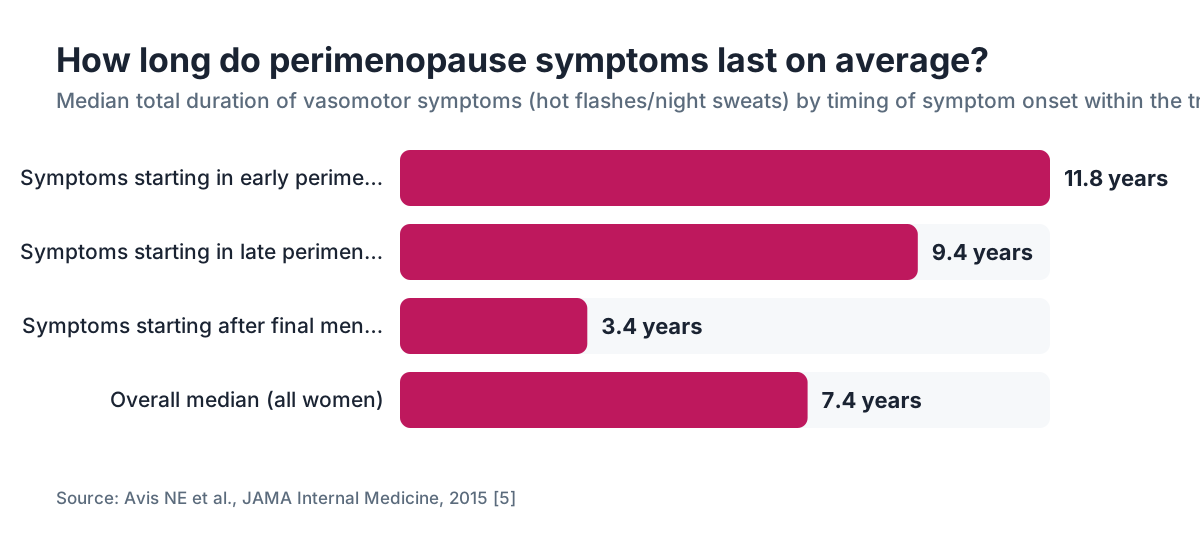
For some women hot flashes are a mild nuisance. For others they wreck work, sleep, and relationships. The median duration of VMS across all women is about 7.4 years, per a 2015 JAMA Internal Medicine study, and women who start earlier in the transition tend to have them longest [5].
If your hot flashes are wrecking your sleep or your day, that's a real clinical problem. It isn't something to grit your teeth through.
What does early perimenopause feel like emotionally and mentally?
This is where perimenopause blindsides people. Hormonal changes don't stay in the body. They travel straight through the brain.
Estrogen tunes serotonin, dopamine, and GABA. When it swings without warning, mood regulation gets genuinely harder. Women who never had real PMS suddenly find the week before their period almost unmanageable. Others describe a low hum of dread or irritability that simply wasn't there a year ago.
The SWAN findings are worth reading straight. The authors reported that the menopausal transition was associated with a higher risk of depressive symptoms, especially in women with prior depression [4]. In plain terms: if you had postpartum depression or brutal PMS in your 20s and 30s, your brain may be more sensitive to the hormonal shifts ahead.
Cognitive symptoms (the fog, the missing words, the short-term memory slips) seem to peak in late perimenopause and early postmenopause, though many women first clock them early. A 2011 Menopause analysis found these changes are likely driven by hormonal variability rather than a steady estrogen decline [3]. That's why they come and go day to day.
Some of the emotional weight is about what this transition represents. Midlife is an identity shift for a lot of women, and that psychological layer sits on top of the physiological one. Both are real. Both deserve real attention.
How early can perimenopause start?
Most women enter perimenopause between 45 and 50, with an average onset around 47 [1]. But starting before 45 is more common than people think. Somewhere between 5% and 10% of women hit early menopause (before 45), and about 1% experience premature ovarian insufficiency, or POI, before 40 [6].
A few things push the start earlier. Smoking is the best-documented lifestyle factor and can move the transition up by 1 to 2 years [12]. Family history carries real weight; if your mother or older sisters started young, you likely will too. Certain treatments (chemotherapy, pelvic radiation, surgical removal of the ovaries) can trigger abrupt hormonal changes that mimic or cause early perimenopause or menopause.
Body weight is messier. Very low body fat can suppress estrogen. The data on higher body weight as a buffer is mixed, partly because fat tissue makes some estrogen, but adipose-derived estrogen doesn't behave exactly like the ovarian kind.
If you're in your late 30s with cycle irregularity, mood changes, and broken sleep, talk to a clinician instead of chalking it up to stress. A blood test for FSH (follicle-stimulating hormone) and estradiol can help, though one reading is rarely definitive because levels bounce so much during this window [7]. Our perimenopause age piece breaks down the onset ranges in detail.
What do period changes look like in early perimenopause?
Your period is the most objective early data you have. In early perimenopause, cycles usually shift in a few predictable ways before they stop for good.
Shorter cycles come first for many women. Instead of 28 days you might see 23 or 24, because the follicular phase (before ovulation) shortens as egg quality and follicle recruitment change. Later, cycles stretch out and turn unpredictable, with some months skipping entirely.
Flow changes too. Heavier periods are actually typical early on. Progesterone drops before estrogen does, and progesterone is what keeps the uterine lining in check [12]. Less progesterone means less regulated shedding, so the lining builds up and then comes down hard. Soaking a pad or tampon every hour for two or more consecutive hours counts as heavy bleeding and needs a look to rule out fibroids, polyps, or other causes [7].
Spotting between periods, or changes in the color and texture of the blood, show up as well. None of these is automatically alarming. But abnormal uterine bleeding always earns a clinical check, especially since the risk of uterine conditions climbs in this age range.
Track your cycles with an app or a plain calendar. It gives you real data to hand a clinician. A pattern across 3 to 6 months tells you far more than one strange month.
Our piece on when does menopause start follows the road from irregular cycles to the final period.
Are there physical symptoms of perimenopause beyond hot flashes?
Yes. A lot of them. And most women never connect them to hormones.
Vaginal dryness and shifts in libido track with falling estrogen. The vaginal walls thin, lose elasticity, and make less lubrication. Sex can turn uncomfortable or painful, a condition called genitourinary syndrome of menopause (GSM). It doesn't always travel with hot flashes, so you can have real GSM while barely noticing anything else [1].
Joint pain is underrecognized. Estrogen is anti-inflammatory, and as it shifts, some women develop new aching in the knees, hips, and hands. It gets dismissed as early arthritis. It can be both at once, but the hormonal piece is worth considering.
Heart palpitations happen often enough to belong here. Estrogen helps steady cardiac rhythm, and as it fluctuates, some women feel fluttering or racing that's almost always benign but genuinely scary. New or severe palpitations always need evaluation.
Skin and hair change too. Skin gets drier and shows more fine lines. Some women notice hair thinning, not dramatic loss but less density and volume. These come on slowly, which is exactly why nobody links them to hormones in the moment.
Bone loss speeds up during perimenopause and the early postmenopause years. Estrogen regulates bone remodeling, and density can start dropping before periods even stop [10]. Talk to your provider about a bone density test during this window, especially if you carry other risk factors.
How do you know it's perimenopause and not something else?
Fair question, and an important one. Several conditions mimic perimenopause, and the overlap is heavy.
Thyroid disease is the biggest confounder. Hypothyroidism causes fatigue, weight changes, mood shifts, brain fog, and irregular periods, a list that nearly matches perimenopause point for point. Hyperthyroidism can cause hot flashes and palpitations. A TSH test belongs in any workup for these symptoms [7].
Depression and anxiety disorders overlap with the mood side of perimenopause, and the two can coexist. A clinician who never asks about the hormonal context may treat the psychiatric symptoms alone and miss the driver underneath.
Anemia from heavy perimenopausal bleeding causes fatigue and cognitive fog. Iron deficiency is worth checking, especially if your periods have gotten heavier.
Autoimmune conditions like rheumatoid arthritis and lupus can flare in midlife and bring joint pain, fatigue, and mood changes. Rule these out if symptoms are severe or paired with other clinical signs.
Hormone testing during perimenopause is genuinely tricky. NAMS notes that FSH and estradiol swing so much day to day and cycle to cycle during the transition that a single value is rarely diagnostic [1]. The diagnosis is mostly clinical: your age, your symptoms, your menstrual history. Blood tests earn their keep by ruling out other causes (thyroid, anemia, ovarian insufficiency), not by confirming perimenopause itself.
If you want a clinician who actually understands hormonal transitions, practices like WomenRx do exactly this kind of evaluation.
What can you do about early perimenopause symptoms?
You can do plenty. You don't have to wait it out.
Hormone therapy (HT) is the most effective treatment for hot flashes, night sweats, mood instability, vaginal symptoms, and sleep disruption, and it protects bone during the transition. NAMS, the Endocrine Society, and the British Menopause Society all support HT in healthy women under 60 and within 10 years of menopause onset for symptom management [1][8]. The evidence has moved a lot since the early 2000s, and the blanket fear of HT has faded in clinical consensus. Our guide to hormone replacement therapy lays out the evidence.
Progesterone matters especially in perimenopause because it's often the first hormone to drop. For women with a uterus, it's prescribed alongside estrogen to protect the uterine lining. It also has independent benefits for sleep and mood. Micronized progesterone (Prometrium) can help early perimenopausal sleep in particular. See our piece on progesterone for the full picture.
If HT isn't an option or isn't wanted, some non-hormonal treatments have real evidence. The FDA approved fezolinetant (Veozah) in 2023 for moderate to severe hot flashes; it blocks neurokinin B receptors in the hypothalamus instead of replacing estrogen [9]. SSRIs and SNRIs, particularly paroxetine (the only FDA-approved SSRI for hot flashes) and venlafaxine, cut vasomotor symptoms modestly.
Lifestyle changes aren't magic, but they add up. Keep the bedroom cool. Cut alcohol and spicy food if they trigger flashes. Strength train for bone. Hold a steady sleep schedule. Each helps a little. Cognitive behavioral therapy (CBT) has strong evidence for reducing how much hot flashes bother you, even when it doesn't cut their frequency.
Perimenopausal weight change is partly hormonal, and the estrogen-driven shift in fat distribution is real. If weight is a concern alongside your symptoms, GLP-1 medications have growing evidence in midlife women; our article on semaglutide for weight loss covers whether that fits your situation.
When should you see a doctor about early perimenopause symptoms?
Go sooner rather than later if symptoms are hitting your sleep, your work, or your relationships. That bar is lower than most women assume, and many wait years longer than they need to.
See a clinician promptly for very heavy bleeding (soaking a pad or tampon hourly for two or more consecutive hours), bleeding after sex, or periods that stop before age 40, which can signal premature ovarian insufficiency rather than normal perimenopause [6][7].
New or worsening depression or anxiety alongside cycle changes deserves evaluation by someone who thinks about hormones, not someone who'll treat the psychiatric symptoms in a vacuum.
Bone health starts to count now. If you have risk factors (family history of osteoporosis, a history of eating disorders, long-term steroid use, low body weight), ask your provider about a baseline bone density scan in your mid-40s.
Here's the honest part: many primary care providers get little training in hormonal transitions, and plenty of women leave appointments feeling brushed off. If that's you, finding a provider with menopause-specific training (NAMS-certified, or a reproductive endocrinologist) is a reasonable next step, not an overreaction.
Our guide on menopause covers what comes after the transition, which helps put this phase in context.
Does perimenopause affect weight, metabolism, and body composition?
It does, and it's one of the most maddening parts of the transition. Several mechanisms stack on top of each other.
Estrogen decides where fat goes. Before menopause, fat tends to sit peripherally, in the hips and thighs. As estrogen drops, the pattern shifts toward central or visceral fat around the abdomen and organs. This happens even with no change in diet or activity.
Metabolic rate changes too. Muscle mass declines with age (sarcopenia), and estrogen supports muscle protein synthesis, so falling estrogen speeds the loss of metabolically active tissue. Less muscle means a lower resting metabolic rate.
Broken sleep compounds all of it. Poor sleep raises cortisol and ghrelin, drives insulin resistance, and makes food choices harder. A woman sleeping 4 or 5 fragmented hours a night because of night sweats is fighting a real metabolic headwind.
Weight gained in perimenopause is not a moral failure. It reflects physiology. Still, the shift toward visceral fat carries cardiovascular and metabolic risk, so managing it is a health goal, not a vanity one.
Strength training is probably the single most evidence-backed move, both for keeping lean mass and for bone. Protein matters too. The standard 0.8g per kg of body weight is likely too low here; some researchers suggest closer to 1.2 to 1.6g per kg to support muscle when estrogen's anabolic help is fading.
When diet and exercise haven't been enough, our overview of semaglutide for weight loss is worth a read. GLP-1 medications don't fix the hormonal shifts, but they can quiet the appetite dysregulation that makes the midlife metabolic environment so hard.
Frequently asked questions
Can perimenopause start at 35?
It's uncommon but possible. Most women start between 45 and 50, but roughly 5 to 10% begin before 45. Onset before 40 is classified as premature ovarian insufficiency (POI) and affects about 1% of women. If you're under 40 with irregular cycles and other symptoms, get evaluated. POI carries different health implications and management than typical perimenopause.
What does the very first sign of perimenopause feel like?
For most women it's a cycle change: slightly shorter cycles, heavier flow, or a period that shows up earlier or later than usual. Many dismiss it as stress. Some notice sleep disruption first, waking in the early hours for no clear reason. Mood changes, especially irritability before a period, are another common early sign. No single symptom is definitive, which is why pattern tracking matters.
How long does perimenopause last?
On average, perimenopause runs 4 to 8 years, and the range is wide. Some women move through it in 2 years; others stay in the transition for more than a decade. Women who start earlier tend to have longer transitions. The endpoint is 12 consecutive months without a period, which marks menopause. Hot flashes can continue for years past that point.
Can you get pregnant during perimenopause?
Yes. Ovulation still happens, just inconsistently, so pregnancy is possible even with irregular cycles. Use contraception until you've gone 12 full months without a period if you don't want to conceive. Fertility is much lower than in your 20s and 30s, but it's not zero. Don't assume irregular periods mean no contraception needed.
What blood tests confirm perimenopause?
No single blood test confirms it. NAMS notes that FSH and estradiol swing so widely during the transition that one reading is rarely diagnostic. FSH above 25 mIU/mL is suggestive, but it can be high one month and normal the next. Testing is most useful for ruling out thyroid disease, anemia, or premature ovarian insufficiency rather than confirming perimenopause itself.
Is hormone therapy safe to start during perimenopause?
For most healthy women under 60 who are within 10 years of menopause onset, current consensus from NAMS and the Endocrine Society supports hormone therapy for symptom management. The risk-benefit math is most favorable when started earlier in the transition. Women with certain histories (blood clots, hormone-sensitive cancers, uncontrolled cardiovascular disease) need individual assessment. The blanket fear from the early 2000s has been substantially revised by later research.
Can perimenopause cause anxiety and panic attacks?
Yes. Estrogen modulates GABA and serotonin pathways. Erratic estrogen fluctuations can lower the threshold for anxiety and, in some women, trigger panic attacks for the first time. SWAN data shows a 2 to 4-fold increase in depressive symptoms during the transition. Women with prior anxiety or depression are more vulnerable. This is a physiological effect on brain chemistry, and it responds to both hormonal and psychiatric treatment.
What's the difference between perimenopause and PMS?
PMS follows a predictable pattern tied to the luteal phase of a normal cycle. Perimenopausal mood and physical symptoms are less predictable and often fall outside a clear cyclic pattern because ovulation itself is irregular. PMS also doesn't cause hot flashes or big cycle-length changes. Perimenopausal symptoms tend to worsen over time rather than hold steady. Severe PMS (PMDD) can intensify during the perimenopausal years.
Does perimenopause affect sleep and how do I fix it?
Sleep disruption is one of the most common and disruptive symptoms. Night sweats break sleep architecture directly. Estrogen also affects adenosine signaling and melatonin regulation independent of sweating. Cool the bedroom, limit alcohol (it fragments sleep and worsens sweating), and keep consistent sleep timing. Micronized progesterone has evidence for improving sleep quality in perimenopause. For severe cases, treating the underlying vasomotor symptoms with hormone therapy often resolves the sleep problem.
Should I worry about bone loss during perimenopause?
Yes, ideally before it becomes a problem. Bone loss speeds up during the 1 to 2 years before and after the final period, and women can lose 2 to 3% of bone density per year during this window. Estrogen therapy is protective. Strength training, adequate calcium (1,000 to 1,200 mg daily from food and supplements combined), and vitamin D (1,500 to 2,000 IU daily) also matter. With risk factors, ask about a baseline bone density scan in your mid-40s.
How is late perimenopause different from early perimenopause?
Early perimenopause means your cycles still come but the interval has moved by 7 or more days. Late perimenopause means you've skipped cycles by 60 days or more. Late perimenopause usually brings more intense hot flashes and more pronounced vaginal and urinary changes as estrogen falls further. FSH tends to be more consistently elevated in late perimenopause. The move from early to late can take a few months to several years.
Can weight gain during perimenopause be reversed?
The hormonal shift toward central fat storage makes perimenopausal weight gain harder to reverse than earlier weight gain, but it isn't permanent. Strength training to preserve lean mass, a protein-adequate diet, and fixing sleep all help. Hormone therapy can partly counter the fat redistribution by keeping estrogen's influence on metabolism. For significant metabolic weight gain, GLP-1 medications are an emerging option to discuss with a clinician alongside hormonal management.
What foods or lifestyle changes help with perimenopause symptoms?
Alcohol worsens hot flashes and sleep fragmentation; cutting back has a real effect. Phytoestrogens (soy, flaxseed) have weak estrogen-like effects and modest evidence for reducing hot flash frequency in some women. Caffeine and spicy food are common triggers worth experimenting with. Strength training twice or more per week supports bone and metabolic health. Stress reduction through any method that works for you matters, because cortisol worsens hormonal dysregulation.
Sources
- North American Menopause Society (NAMS), Menopause Practice: A Clinician's Guide
- Harlow SD et al., Executive summary of the Stages of Reproductive Aging Workshop + 10 (STRAW+10), Climacteric 2012
- Bromberger JT, Kravitz HM, 'Mood and menopause: findings from SWAN', Menopause journal 2011
- Study of Women's Health Across the Nation (SWAN), National Institute on Aging / NIH
- Avis NE et al., 'Duration of menopausal vasomotor symptoms over the menopause transition', JAMA Internal Medicine 2015
- Eunice Kennedy Shriver National Institute of Child Health and Human Development (NICHD), NIH, Primary Ovarian Insufficiency
- American College of Obstetricians and Gynecologists (ACOG), Practice Bulletin on Abnormal Uterine Bleeding
- Endocrine Society, Clinical Practice Guideline: Treatment of Symptoms of the Menopause, 2015
- U.S. Food and Drug Administration, Drug Approval for fezolinetant (Veozah), 2023
- Bone Health & Osteoporosis Foundation, Clinician's Guide to Prevention and Treatment of Osteoporosis
- Thurston RC, Joffe H, 'Vasomotor symptoms and menopause: Findings from the Study of Women's Health Across the Nation', Obstetrics and Gynecology Clinics 2011
- Santoro N et al., 'Menopausal symptoms and their management', Endocrinology and Metabolism Clinics of North America 2015