Early perimenopause symptoms: what to expect starting at 40
TL;DR: Early perimenopause can start in your early-to-mid 40s, sometimes in the late 30s. The first symptoms are usually irregular periods, night sweats, broken sleep, mood shifts, and brain fog. Estrogen and progesterone swing unpredictably during this phase, which is why nothing feels consistent. Most women spend 4 to 10 years in perimenopause before their final period.
What is early perimenopause and when does it start?
Perimenopause is the stretch before menopause when your ovaries wind down estrogen production and your cycle stops behaving. It is not one moment. It is a process that plays out over years, sometimes a full decade.
Most women land in perimenopause between 45 and 55. But early perimenopause, meaning symptoms that show up before 45, happens far more often than most doctors admit. The Study of Women's Health Across the Nation (SWAN) tracked women through this transition and found many noticed changes in their late 30s and early 40s, years before anyone put a name to it [1]. The average age of the final menstrual period in the US is 51, so the transition typically starts in the mid-to-late 40s. "Average" hides a huge spread.
You are 40. Your periods have shifted, your sleep fell apart, your mood is cycling in ways that feel foreign. You are not imagining it.
Clinicians sometimes split the transition. "Early perimenopause" means cycles that are still mostly regular but changing in length or flow. "Late perimenopause" means cycles skipping by 60 days or more. This article covers both and leans hard on what shows up first. For the full timeline, see our guide on perimenopause age.
What are the first signs of perimenopause at 40?
The earliest signs are quiet and easy to explain away. That is what makes early perimenopause so maddening. The symptoms rarely announce themselves as hormones. They mutter "you're just tired" or "you're stressed."
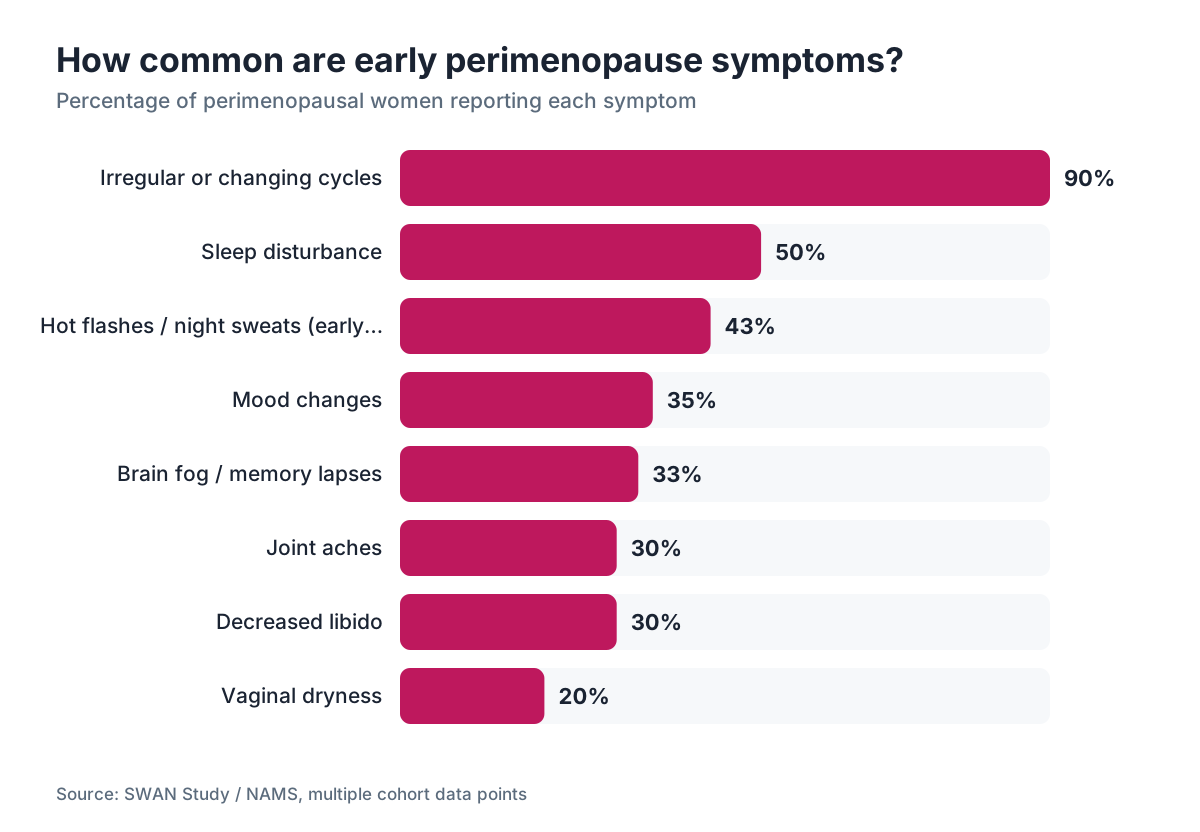
Here are the symptoms most women report early, ranked by how often they show up in SWAN and similar cohort data:
| Symptom | % of perimenopausal women reporting it | |---|---| | Irregular or changing menstrual cycles | ~90% | | Sleep disturbance | 40 to 60% | | Vasomotor symptoms (hot flashes, night sweats) | 35 to 50% in early peri, rising to 75%+ in late peri | | Mood changes (irritability, anxiety, low mood) | 30 to 40% | | Brain fog or memory lapses | 25 to 40% | | Decreased libido | 20 to 40% | | Vaginal dryness | 15 to 25% (rises sharply post-menopause) | | Joint aches | 25 to 35% |
Cycle changes come first for most women [1]. Your period arrives a few days early, month after month. Or flow runs heavy for a cycle or two, then thins out. Premenstrual symptoms often ramp up before anything else does, worse breast tenderness, more bloating, sharper mood dips, because progesterone drops first while estrogen keeps fluctuating.
Sleep disruption is the most underrated early symptom. It does not always come with obvious night sweats. Plenty of women wake at 3 a.m. over and over for no clear reason. That is often a low-estrogen or low-progesterone pattern, not textbook insomnia. Nobody catches it because nobody orders a hormone test at 3 a.m.
Brain fog in your early 40s is real, and it is measurable. Research in Menopause (the journal of the North American Menopause Society, NAMS) found that verbal memory and processing speed dip during the transition, then steady out after menopause for most women [2]. It passes for many women. Telling someone in the thick of it that it will pass is cold comfort.
Why do perimenopause symptoms start so early for some women?
Several things move the start date. Genetics is probably the strongest signal. If your mother or older sisters had early symptoms, your odds climb. Smoking pulls the transition earlier by roughly one to two years on average [3]. Chemotherapy or pelvic radiation can age the ovaries fast.
Body weight matters too, and the relationship is messy. Very low body fat can push the transition earlier. Higher body fat converts androgens into estrogen in fat tissue, which may soften some symptoms without preventing them. Women who had a hysterectomy but kept their ovaries sometimes hit symptoms sooner than expected, possibly because surgery disrupts blood supply to the ovaries.
Race and ethnicity shape the experience. SWAN found that Black women report more frequent and more severe hot flashes than white women and enter the transition at slightly younger ages [1]. Hispanic and Japanese-American women report different symptom profiles again. This is not about who tolerates discomfort better. It is biology, culture, and differences in health system access all pushing on each other at once.
Primary ovarian insufficiency (POI), once called premature ovarian failure, is a separate condition that affects roughly 1 in 100 women under 40 [4]. POI is not early perimenopause, but the symptoms overlap so heavily that it is worth ruling out with a blood test if you are under 40 and things are changing.
How do irregular periods fit into early perimenopause?
A cycle change is usually the first flag that something is shifting. In early perimenopause, the common pattern is shortening. Cycles that ran 28 days start running 24 or 25. This happens because follicle-stimulating hormone (FSH) rises as the ovaries get less responsive, which pushes ovulation earlier.
Later on, cycles stretch out and turn erratic. Skipping a period by more than seven days is clinically significant. Skipping by 60 days marks late perimenopause. You have not reached menopause until you have gone 12 straight months without a period [5].
Heavy bleeding is common in perimenopause and badly underreported. Estrogen can surge without enough progesterone to balance it, so the uterine lining builds up and then sheds hard. That is not dangerous by itself. But bleeding that soaks a pad or tampon every hour for several hours, or that comes with large clots, needs an evaluation. Fibroids, polyps, and endometrial hyperplasia all peak during this hormonal window and can pile onto irregular bleeding.
You can still get pregnant. Ovulation is irregular, not gone. Until menopause is confirmed, contraception still applies if you are not trying. This catches a lot of women off guard.
For what happens once the transition ends, see our guide on menopause.
What do hot flashes and night sweats feel like in early perimenopause?
A hot flash is a sudden wave of heat, usually across the chest, neck, and face, lasting anywhere from 30 seconds to 5 minutes. It often ends in sweat, then a chill. The trigger is a narrowed thermoregulatory zone in the hypothalamus. Estrogen keeps your internal thermostat calibrated, and when estrogen drops or swings sharply, that zone tightens [6].
In early perimenopause, hot flashes rarely look like the dramatic full-body scenes on TV. They start as subtle warmth or flushing, often at night. Night sweats show up before classic daytime flashes for many women. You wake up damp or soaked, kick off the covers, then get cold. Then you cannot fall back asleep. Repeat until the alarm.
Frequency varies wildly. Some women get one or two flashes a week. Some get ten to fifteen a day. SWAN found that vasomotor symptoms last a median of 7.4 years from onset, far longer than the 2 years often quoted [6]. Women who start hot flashes before their final period tend to have them longer than women who start after.
Triggers include alcohol (wine especially), caffeine, spicy food, a warm room, stress, and tight clothing. None of these cause hot flashes. Estrogen dysregulation does. But they set off episodes in someone already primed.
Why does perimenopause cause anxiety, mood swings, and depression?
Estrogen shapes serotonin and GABA signaling in the brain. When estrogen swings wildly, and early perimenopause is choppy oscillation rather than a gentle decline, mood tends to follow the wave.
It can look like generalized anxiety, out-of-nowhere panic attacks, irritability that feels out of proportion, a low-grade sadness, or several of these at once. Women who had rough PMS or postpartum mood changes appear more sensitive to hormonal shifts and often get hit harder here.
A 2023 analysis in JAMA Psychiatry found that the risk of a major depressive episode more than doubles during the perimenopause transition compared to premenopausal years, even in women with no prior depression [7]. That is a big effect. It means a first bout of depression or anxiety in your early 40s deserves a hormonal workup alongside a psychiatric one, not instead of it.
Here is the frustrating part. Antidepressants get prescribed without anyone checking hormones. SSRIs can help, and they do cut hot flashes modestly, but they do not touch the hormonal driver. A good provider looks at both. Hormone replacement therapy is worth understanding before you decide, not something to reject on reflex.
Sleep loss makes all of it worse. If night sweats or hormonal insomnia wake you repeatedly, your mood, focus, and patience crater. Fixing the sleep often lifts mood more than anything else you try.
What causes brain fog and memory changes in perimenopause?
Brain fog is one of the most distressing early symptoms precisely because nobody else can see it. You know your own baseline. When you lose words mid-sentence, walk into a room and forget why, or read the same paragraph three times and hold nothing, you notice fast.
Estrogen receptors sit throughout the brain, packed into regions that run memory and executive function. The hippocampus, central to verbal and spatial memory, responds strongly to estrogen. The SWAN Memory Study found that verbal memory scores dropped measurably during the transition and recovered somewhat after menopause, which points to the fluctuation itself as the worst stretch, not the steady low-estrogen state that follows [2].
Sleep muddies everything. If your nights are fragmented, memory suffers no matter what your hormones are doing. Pulling the two apart is hard. The honest answer is that both are probably in play.
There is early research on estrogen and long-term brain health. The timing hypothesis suggests hormone therapy started near menopause may protect the brain in ways that are lost if you start a decade later. This is active research, not settled science. The Endocrine Society's 2022 clinical practice guideline on menopause calls the evidence suggestive but not conclusive [8].
How are early perimenopause symptoms diagnosed?
There is no single test that confirms perimenopause. Understand that before you walk in, because it saves a lot of grief.
FSH (follicle-stimulating hormone) gets ordered a lot, but one FSH reading is unreliable because it bounces around cycle to cycle. The Endocrine Society and NAMS both say the diagnosis is clinical, based on your age, your symptoms, and your menstrual history, not a lab panel [5][8].
Blood work still earns its place by ruling out other causes. A reasonable panel for a 40-year-old with new symptoms includes FSH, estradiol (drawn day 2 or 3 of the cycle if you can), TSH (thyroid disease mimics perimenopause almost perfectly), and a complete blood count if bleeding has been heavy. Anti-Mullerian hormone (AMH) tells you about ovarian reserve but does not diagnose perimenopause.
At-home hormone kits are everywhere. They give a snapshot, and a snapshot should not drive treatment decisions alone. Your levels change so much across days and cycles that a single reading is hard to trust.
Under 40 with these symptoms? You need more workup to rule out POI, thyroid disease, and other causes. In your early-to-mid 40s with cycle changes and the classic cluster? A knowledgeable clinician can usually make the call without a big lab chase.
A telehealth platform like WomenRx that focuses on hormone care can order the right labs and read them in context, which matters more than the raw numbers.
What helps with early perimenopause symptoms?
Options run from lifestyle changes to prescriptions. They work through different mechanisms, and you can stack them.
Hormone therapy is the most effective treatment for hot flashes and night sweats, with good evidence for sleep, mood, and bone protection. NAMS's 2022 position statement concludes that for women under 60 or within 10 years of menopause onset, the benefits outweigh the risks for most women without contraindications [5]. The old breast cancer fear, driven mostly by the 2002 WHI study, has been reworked. The risk from estrogen-alone therapy (for women without a uterus) is actually lower than combined therapy, and both are smaller than first reported. If you have a uterus and take estrogen, you need progesterone to protect the uterine lining. The form matters. The estrogen patch has a different metabolic profile than the oral pill, for one.
Non-hormonal prescriptions include SSRIs and SNRIs (paroxetine is the only FDA-approved non-hormonal for hot flashes), gabapentin, and fezolinetant (Veozah), an NK3 receptor antagonist for vasomotor symptoms that the FDA approved in 2023 [9].
Lifestyle changes are more than filler advice. A steady sleep schedule, less alcohol and caffeine, regular aerobic exercise, and stress work like yoga or mindfulness all carry small-to-moderate evidence for symptom relief. They will not fix a heavy symptom load on their own, but they add to whatever else you do.
Bone health deserves attention now, not later. Estrogen holds bone density steady, and the perimenopausal years speed up bone loss. A bone density test is worth raising with your provider, especially if you carry risk factors. Calcium and vitamin D matter. The current thinking is food-first for calcium and D3 at 1,000 to 2,000 IU/day for women at risk of deficiency.
Weight changes in perimenopause are common and frustrating. Hormonal shifts push fat toward the abdomen even with no change in diet or exercise. For women dealing with real weight gain alongside symptoms, semaglutide for weight loss comes up more and more. It is not a perimenopause treatment. But the metabolic shifts of the transition and the power of GLP-1s can land on the same woman at the same time.
How is perimenopause different from menopause?
Menopause is a single point: exactly 12 consecutive months without a period. Everything before it is perimenopause (or premenopause if your cycles are still fully regular). Everything after is postmenopause.
Perimenopause runs 4 to 10 years by definition. Symptoms usually peak in the 1 to 2 years right before and just after the final period, but they can start much earlier and hang on for years. The perimenopausal brain is adjusting to hormones that swing hard, not to hormones that are simply low. That swing is often harder to live with than the stable low-estrogen state of postmenopause.
For the timeline and what sets your date, see when does menopause start and menopause age.
The distinction matters for treatment. Some providers wait until symptoms are severe or menopause is confirmed before starting hormone therapy. NAMS and the Endocrine Society both support starting during perimenopause when symptoms hurt your quality of life, rather than holding off until after the final period [5][8].
What early perimenopause symptoms should you not ignore?
Most perimenopause symptoms are uncomfortable, not dangerous. A few need prompt evaluation.
Bleeding that soaks more than a pad an hour for multiple hours, or bleeding that comes back after 12 months of none, needs to be checked. Postmenopausal bleeding always warrants a workup to rule out endometrial disease [10].
New or worsening heart palpitations around hot flashes are usually benign, because estrogen touches the heart's electrical system too. But palpitations that run long, feel irregular, or come with dizziness or shortness of breath need a cardiac evaluation, not a reassuring hormone story.
Severe depression or anxiety, especially with any thought of suicide, is not something to chalk up to hormones and wait out. Get care now.
Vulvovaginal symptoms, real dryness, burning, pain with sex, recurrent UTIs, are underreported and undertreated. Local vaginal estrogen is safe even for women who cannot or will not use systemic hormone therapy, and it changes daily life. FDA labeling for local vaginal estrogen reflects its low systemic absorption [9].
New joint pain or noticeable hair loss alongside other symptoms warrants thyroid and autoimmune screening. Hashimoto's thyroiditis peaks in women in their 40s, and its symptoms are a near-perfect copy of perimenopause.
How do you track perimenopause symptoms effectively?
Tracking pays off more than it sounds like it should. Walk into an appointment with a symptom log and you turn vague complaints into data a provider can act on.
At a minimum, log your period start dates. An app like Clue or Natural Cycles works fine. What you want to show is the pattern of variability, more than the dates. Note flow intensity, and flag any spotting between periods.
Beyond cycles, a simple daily note on sleep (hours, wake-ups), hot flash frequency and timing, mood, energy, and any new physical symptom gives a clinician a picture no single office visit can.
The Menopause Rating Scale (MRS) and the Greene Climacteric Scale are standardized questionnaires researchers use to quantify symptom burden. You can find both online and bring your score in. Some providers like the numbers, some prefer plain language. Being specific helps either way.
For a 40-year-old with early symptoms, documentation also helps when a provider might otherwise wave everything off as stress or anxiety. Coming in prepared changes that conversation.
Frequently asked questions
Can perimenopause really start at 40?
Yes. The average onset is the mid-to-late 40s, but many women notice symptoms at 40 or even in their late 30s. SWAN data confirmed that hormonal and cycle changes often begin years before the final period. Starting at 40 falls inside the normal range. It is not a sign something is wrong.
What is the difference between PMS and early perimenopause symptoms?
PMS happens in the luteal phase after ovulation and clears with your period. Perimenopause symptoms can hit at any point in the cycle or run continuously. In early perimenopause, PMS often gets worse, more breast tenderness, more irritability, heavier flow, but you also notice symptoms outside that two-week window. The timing pattern separates the two.
What blood tests diagnose perimenopause?
No single blood test diagnoses perimenopause. FSH, estradiol, TSH, and a CBC help rule out other causes and add context. NAMS and the Endocrine Society recommend a clinical diagnosis based on symptoms, age, and menstrual history. A single FSH reading is unreliable because levels swing dramatically day to day during the transition.
How long does early perimenopause last?
The full transition averages 4 to 7 years and can range from 1 to 10. Early perimenopause, the stage with mostly regular but slightly changing cycles, can run several years before cycles turn overtly irregular. Women who first notice symptoms at 40 may stay in the transition until their late 40s or early 50s.
Can you get pregnant during early perimenopause?
Yes. Ovulation still happens in perimenopause, just unpredictably. Pregnancy is possible until menopause is confirmed, which takes 12 consecutive months without a period. If you do not want to get pregnant, you still need contraception through the entire transition. Many women learn this the hard way.
Does perimenopause cause weight gain?
Perimenopause pushes fat toward the abdomen, driven by falling estrogen and shifts in insulin sensitivity. Total weight gain across the transition averages 2 to 5 pounds, though the same calorie intake produces different results. Muscle mass also declines with age, which lowers resting metabolism. This is a real biological change, not a willpower problem.
Is hormone therapy safe to start in perimenopause at 40?
For most healthy women without contraindications, hormone therapy started in perimenopause or within 10 years of menopause has a favorable benefit-risk profile, per NAMS's 2022 position statement. Starting at 40 with a clinical diagnosis is supported by evidence. Risk depends heavily on the type, dose, and route, so individual evaluation matters.
What is the difference between perimenopause and premature ovarian insufficiency?
Primary ovarian insufficiency (POI) affects roughly 1 in 100 women under 40 and involves reduced or absent ovarian function. Perimenopause is a normal transition that starts earlier in some women. Both cause similar symptoms, irregular periods, hot flashes, mood changes, but POI needs specific workup (FSH above 40 IU/L on two readings 4 weeks apart) and carries different implications for fertility and long-term health.
Why is sleep so disrupted in perimenopause?
Both estrogen and progesterone affect sleep architecture. Estrogen fluctuation disrupts thermoregulation, so night sweats fragment sleep. Progesterone has a calming, GABA-like effect, and as it drops in early perimenopause, sleep turns lighter and less restorative. Many women wake in the early morning hours and cannot get back down. That is a hormonal pattern, not classic insomnia.
Do perimenopause symptoms get worse before they get better?
Generally yes. Symptoms tend to peak in the 12 to 24 months around the final period, when hormone swings are most extreme. Once menopause settles in, estrogen holds at a new lower level, and many symptoms, especially mood and brain fog, ease. Vasomotor symptoms can linger for years in some women, but their intensity usually drops.
Can thyroid problems cause the same symptoms as perimenopause?
Yes, and it gets missed constantly. Hypothyroidism causes fatigue, weight gain, brain fog, mood changes, and irregular periods. Hyperthyroidism causes hot flashes, palpitations, anxiety, and disrupted sleep. Hashimoto's thyroiditis peaks in women in their 40s. Any perimenopause workup should include TSH at minimum. Both conditions can coexist, which makes management trickier.
How does perimenopause affect sex drive and vaginal health?
Libido shifts in perimenopause pull from hormones (estrogen, testosterone, and progesterone all feed sexual interest), sleep loss, mood, and relationship factors. Vaginal dryness from falling estrogen causes discomfort during sex, which itself dampens desire. Local vaginal estrogen treats the tissue changes directly and is considered safe for most women. Systemic testosterone is sometimes prescribed off-label for low libido, with modest evidence.
What lifestyle changes actually help with perimenopause symptoms?
Regular aerobic exercise (150 minutes a week) cuts hot flash frequency and improves mood and sleep across multiple studies. Cutting alcohol has a real effect on hot flash triggers. A Mediterranean-style diet supports metabolic and heart health through the transition. Mindfulness-based stress reduction carries moderate evidence for vasomotor relief. None of these replace hormone therapy for severe symptoms, but they add to any treatment.
When should I see a doctor about perimenopause symptoms?
See a provider if symptoms are hurting your daily function, sleep, or relationships. Also get checked for any bleeding heavier than usual over multiple cycles, bleeding after 12 months of none, symptoms starting before 40, or new heart palpitations. You do not have to wait until things feel intolerable. Earlier action, especially for bone health, tends to pay off long term.
Sources
- SWAN (Study of Women's Health Across the Nation), University of Michigan, overview and findings
- Menopause (journal of NAMS), verbal memory and processing speed during the menopause transition
- Mayo Clinic, Perimenopause: Causes and risk factors
- NICHD, National Institutes of Health, Primary Ovarian Insufficiency
- SWAN study / Menopause journal, vasomotor symptom duration, Avis et al. 2015
- JAMA Psychiatry, depression risk during the menopause transition, 2023 analysis
- Endocrine Society, Menopause and Hormone Therapy Clinical Practice Guideline 2022
- FDA, Drug approvals: fezolinetant (Veozah) and labeling for vaginal estrogen products
- American College of Obstetricians and Gynecologists (ACOG), Postmenopausal bleeding evaluation
- CDC, Women's Reproductive Health