Early menopause: causes, signs, and what to do next
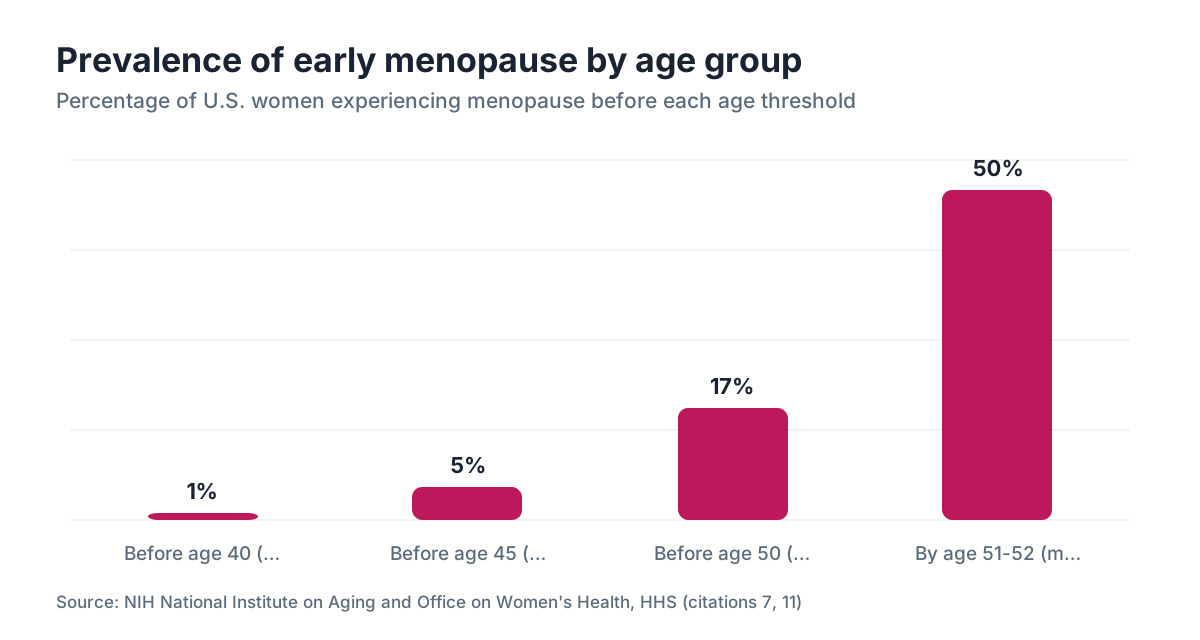
TL;DR: Early menopause means your periods stop for good before age 45. The most severe form, primary ovarian insufficiency (POI), happens before 40. It affects about 1 in 100 women under 40 and 1 in 20 under 45. Symptoms mirror regular menopause but carry higher long-term risk for bone loss and heart disease. Hormone therapy is recommended until at least age 51.
What exactly is early menopause, and how is it defined?
Menopause is the point where you've gone 12 straight months without a period and your ovaries have stopped releasing eggs. "Early" menopause means that line gets crossed before age 45. Cross it before 40 and clinicians switch to a different name: primary ovarian insufficiency (POI), once called premature ovarian failure. POI is the preferred term now because the ovaries don't always fail outright and can sometimes flicker back to life [1].
The distinction changes what happens next. POI before 40 means a longer stretch of life without estrogen, which stacks up more risk for osteoporosis and heart disease than early menopause between 40 and 44. Both are separate from ordinary natural menopause, which The Menopause Society puts at a median age of 51.4 years in U.S. women [2].
About 1% of women reach menopause before 40, and roughly 5% before 45 [7]. Those percentages sound tiny. They aren't. They represent millions of women hit with menopause during the years they'd usually be building careers and families.
If your periods are irregular but haven't stopped for a full 12 months, you're still in perimenopause, which can run ahead of early menopause by months or several years. Getting that distinction right shapes both your diagnosis and your fertility options.
What are the early signs of menopause at 35, 40, or before age 45?
Early menopause sends the same hormonal signals as natural menopause, just decades ahead of schedule. That timing is exactly why the signs get missed. A 35-year-old with irregular cycles and hot flashes usually hears "it's probably stress" long before anyone orders an FSH test.
The most common signs of early menopause include:
Menstrual changes. Cycles turn irregular, shorter, longer, heavier, or lighter before they stop. Missing three or more periods in a row before 45 calls for a workup, not watchful waiting.
Vasomotor symptoms. Hot flashes and night sweats hit roughly 75% of women going through any kind of menopause [3]. At 35, waking up soaked is not anxiety until an FSH test says otherwise.
Vaginal and urinary changes. Falling estrogen thins vaginal tissue, which brings dryness, painful sex, and more urinary tract infections. This cluster now has a name: genitourinary syndrome of menopause (GSM).
Sleep disruption. Often tied to night sweats, but it can show up on its own as estrogen and progesterone drop.
Mood shifts. Irritability, low mood, anxiety. Estrogen shapes serotonin pathways, so this is biology, not a character flaw.
Brain fog. Trouble concentrating or finding words. Real, documented, and reversible with treatment in many women [3].
Joint pain. Rarely mentioned. Estrogen calms inflammation, and losing it can trigger aching in fingers, wrists, and knees.
Signs of early menopause at 35 often go undiagnosed for a year or two because the age pushes clinicians toward other answers first. If you have two or more of these symptoms plus irregular periods before 45, ask by name for day-3 FSH and estradiol testing. Don't wait for someone else to bring it up.
What causes early menopause or primary ovarian insufficiency?
Most cases of early menopause have no single findable cause. That's the frustrating answer, and it's the honest one. For natural early menopause, how many follicles you were born with and how fast you burn through them is probably the biggest driver, and both are largely genetic [4].
The identifiable causes fall into a few buckets.
Genetics and chromosomes. Turner syndrome (45,X), Fragile X premutation carrier status, and mutations in genes like BRCA1 (which handles DNA repair in follicles) all raise POI risk [12]. Family history is one of the strongest predictors. If your mother or sister went through it early, your own odds climb [4].
Autoimmune disease. Roughly 5 to 30% of POI cases tie back to autoimmune conditions, mostly autoimmune thyroid disease, Addison's disease, and type 1 diabetes. The immune system turns on ovarian tissue by mistake [11].
Medical treatments. Chemotherapy and pelvic radiation are well-known causes. The damage tracks with dose and drug; alkylating agents like cyclophosphamide are the harshest on the ovaries. Removing both ovaries (bilateral oophorectomy) causes surgical menopause overnight, the most abrupt version of all [4].
Infections. Rarely, mumps oophoritis or another infection damages ovarian tissue.
Idiopathic. In most POI cases, the workup finds nothing. That isn't medicine failing you. It's where the science actually sits right now.
Smoking speeds follicle loss and is linked to menopause arriving one to two years early on average, though it usually shifts natural menopause from the early 50s to the late 40s rather than causing true early menopause by itself [2].
How is early menopause diagnosed?
Diagnosis takes two things: being under 45 (or under 40 for POI), and lab proof that the ovaries have stopped, more than missed periods [1].
The standard lab workup looks like this:
| Test | What it shows | Threshold for POI/early menopause | |---|---|---| | FSH (follicle-stimulating hormone) | Rises when ovaries stop responding | Greater than 25 IU/L on two tests, 4+ weeks apart [1] | | Estradiol | Ovarian output | Typically below 20 pg/mL in confirmed menopause | | AMH (anti-Müllerian hormone) | Ovarian reserve | Very low or undetectable | | Thyroid panel (TSH, free T4) | Rules out thyroid cause | Standard reference ranges | | Prolactin | Rules out pituitary cause | Standard reference ranges | | Karyotype | Chromosomal problems | For POI under 35 | | FMR1 premutation screen | Fragile X carrier status | For POI under 40 | | Adrenal antibodies | Autoimmune cause | 21-hydroxylase antibodies |
One high FSH isn't enough. Ovaries in early POI can bounce around, and 5 to 10% of women with confirmed POI still ovulate now and then [1]. That's why the Endocrine Society and The Menopause Society want a second FSH test at least four weeks after the first.
Rule out pregnancy first, always. And if a woman under 35 presents with POI, a karyotype and Fragile X screen are standard, because those diagnoses carry weight beyond the ovaries, including for male relatives in the case of Fragile X [1].
A bone density test belongs at diagnosis for anyone with POI or early menopause, because bone loss speeds up the moment estrogen drops below a certain point. Skip nothing here.
What are the long-term health risks of early menopause?
This is where early menopause splits hardest from natural menopause at 51. The risks aren't a different type. They're worse because they last longer. Every year without estrogen before your natural menopause age piles on [3].
Bone health. Estrogen is the main brake on bone breakdown. POI and early menopause are strong risk factors for osteoporosis and fracture on their own. Women with POI carry lower bone mineral density than age-matched women who haven't gone through it [4].
Cardiovascular disease. Estrogen relaxes blood vessels and shapes cholesterol. Early menopause is tied to a 50% higher risk of cardiovascular events than natural menopause, per a systematic review of 32 studies [5]. Much of that risk moves with hormone therapy.
Cognition and dementia. The evidence is thinner but pointed. Some studies show women with earlier menopause have higher rates of cognitive decline and dementia. The critical period hypothesis holds that estrogen protects the brain best when started close to menopause onset [3].
Mental health. Depression and anxiety show up more often with POI. Part biology (estrogen's hand in neurotransmitters), part the psychological weight of a diagnosis that upends fertility and health plans overnight.
Mortality. A 2019 Lancet analysis found women who reached menopause before 40 had a 12% higher all-cause mortality than women who reached it at 50 to 54, most of the gap driven by cardiovascular disease [5].
Fertility loss is the obvious one, and it deserves plain words: most women with POI can't conceive with their own eggs. About 5% conceive on their own, but you can't count on it [11]. Egg donation is the most reliable route for women who want to carry a pregnancy.
Does hormone therapy actually help, and is it safe for early menopause?
Yes, and the evidence is cleaner than most women have been told. The risk-benefit math for hormone therapy in early menopause is nothing like the math for a woman starting HRT at 60 after a decade without estrogen. That difference gets flattened constantly in the noise around the Women's Health Initiative.
The Endocrine Society's POI guideline states hormone therapy should be offered to every woman with POI or early menopause who has no contraindication, and continued at least to the average natural menopause age of 51 [1]. The logic is simple: you're replacing estrogen your body would have made anyway. Not stacking extra estrogen on normal levels. Restoring near-normal levels.
What HRT does for this group:
- Holds bone mineral density steady (multiple randomized trials back this [4])
- Lowers cardiovascular risk (estrogen keeps vessels flexible and lipids in better shape)
- Clears vasomotor symptoms in the large majority of women
- Eases GSM symptoms
- Improves mood and cognitive symptoms in many women
The formulation matters. If you have a uterus, progesterone has to go in to protect the lining. Oral micronized progesterone (Prometrium) looks safer than synthetic progestins. The estrogen patch skips first-pass liver metabolism, which matters for clot risk.
For the full menu, the hormone replacement therapy guide covers formulations, dosing, and how to raise the topic with your provider. A telehealth service like WomenRx can prescribe and manage HRT for perimenopause and early menopause, which helps when a local clinician fluent in POI is hard to find.
Contraindications are real: estrogen-receptor-positive breast cancer, unexplained vaginal bleeding, active DVT, and a handful of others [8]. Talk them through with your clinician. Don't wave them off.
What's the connection between early menopause and weight gain?
Estrogen steers fat distribution, insulin sensitivity, and metabolic rate. When it drops fast, as it does in early menopause, plenty of women watch weight settle around the belly with no change to diet or exercise. This is real. It's a genuine shift in how the body sorts fat, not a willpower problem [3].
Hormone therapy can soften this shift but usually doesn't reverse it fully. Some women with early menopause find that even dialed-in HRT leaves them fighting weight in a way they never did before.
GLP-1 receptor agonists like semaglutide have become a real option here. They act on appetite and insulin sensitivity through pathways that don't run through estrogen. If you're managing weight alongside early menopause, semaglutide for weight loss is worth reading, and the semaglutide vs tirzepatide comparison can help you and your clinician pick. These drugs don't treat menopause. They address a real side effect that HRT alone often leaves on the table.
The evidence for GLP-1s in menopausal women specifically is growing but shallow. The SURMOUNT and STEP trials that proved efficacy included women across ages but weren't built to analyze a menopausal subgroup [10]. Extrapolating is reasonable. Certainty isn't there yet.
How does early menopause affect bone density, and what should you do about it?
Bone mineral density (BMD) tops out in your late 20s, then drifts down. Estrogen is what keeps breakdown in check. When it falls off a cliff in early menopause or POI, bone loss can hit 2 to 3% per year in the first few years, against 0.5 to 1% per year in premenopausal women [4].
A woman who reaches menopause at 38 can lose a lot of bone over the 13 years before natural menopause would have arrived, even feeling perfectly fine the whole time. The vertebral and hip fractures that show up in the 50s and 60s trace straight back to this early window.
Here's the plan:
- Get a baseline DEXA scan (dual-energy X-ray absorptiometry) at diagnosis. Most women with POI aren't offered one automatically. Ask for it by name.
- Start hormone therapy if nothing rules it out. Controlled trials show HRT preserves BMD in women with POI [4].
- Cover calcium (1,000 to 1,200 mg daily from food and supplements combined) and vitamin D (1,500 to 2,000 IU daily for most women with POI, per Endocrine Society guidance [1]).
- Do weight-bearing exercise, especially resistance training. It cues bone formation and works alongside HRT.
- Repeat DEXA every 1 to 2 years early on to see how you're responding.
Bisphosphonates (alendronate, risedronate) usually aren't the first pick in young women with POI, because HRT holds bone and treats everything else too. Bisphosphonates linger in bone for years and carry implications for future pregnancy. For help reading your scan, see the bone density test guide.
Can early menopause be prevented or delayed?
For most women, no. If the cause is genetic, chromosomal, or autoimmune, nothing reliably slows follicle loss. If early menopause comes from a necessary bilateral oophorectomy, keeping the ovaries when it's oncologically safe is the only preventive move.
For chemotherapy-related POI, GnRH agonists (like leuprolide) given during treatment may cut ovarian damage by quieting the ovaries. The 2015 POEMS trial in the New England Journal of Medicine found that temporary ovarian suppression during chemotherapy for early breast cancer lowered POI rates and improved pregnancy outcomes, though the argument over whether it works in other cancers is still open [6].
Fertility preservation before cancer treatment, including egg or embryo freezing, doesn't stop menopause but keeps pregnancy on the table.
Quitting smoking is the one lifestyle lever with solid backing. It won't prevent POI, but it means you're not pouring a preventable accelerant onto follicle loss.
If early menopause runs in your family, tracking cycles carefully and checking an AMH level in your late 20s to early 30s gives you a clearer read on ovarian reserve. It won't bend the trajectory. It does buy you time to plan.
What are the options for fertility after an early menopause diagnosis?
A POI or early menopause diagnosis is crushing for women who want children. The honest truth: spontaneous pregnancy with your own eggs is rare after POI, around 5% after confirmed diagnosis [11]. That number gets sold as hope sometimes, but it can't work as birth control either.
The most effective route to pregnancy with POI is egg donation with IVF. Success rates using donor eggs track the donor's age, not yours. A 40-year-old with POI using eggs from a 28-year-old donor has success rates that match that donor's natural fertility.
The more experimental options:
Ovarian tissue cryopreservation and transplantation. For women who froze ovarian tissue before chemotherapy or surgery. The tissue gets re-implanted and can restart ovarian function for a while. Live births have happened, but the technique is specialized and not everywhere.
In vitro activation (IVA). A newer approach that fragments and drug-activates dormant follicles. Case series look promising. It's still experimental.
Embryo cryopreservation before treatment. When early menopause is coming (before chemotherapy or a planned bilateral oophorectomy), freezing embryos ahead of time is the most established option.
Adoption and child-free living are real choices too, not runner-up prizes. Women with POI do better with counseling that sits with the grief of unexpected fertility loss instead of rushing past it.
How is early menopause different from perimenopause?
Perimenopause is the run-up: irregular cycles and swinging hormones before you hit that 12-month mark. It can last 2 to 10 years. Early menopause is the finish line reached before 45 [2].
In natural perimenopause, the transition usually starts in the mid to late 40s. In early menopause, that same hormonal turbulence can start in the early 30s, which is why early menopause and young perimenopause get mixed up so easily.
The clinical line is clean: perimenopause is a process, early menopause is a destination already reached. A 38-year-old with irregular periods for two years and no period for 13 months has likely reached early menopause. A 38-year-old with irregular periods for six months is probably in early perimenopause. For more on timing, see the perimenopause age and when does menopause start guides.
Treatment shifts too. During perimenopause, progesterone alone or low-dose hormonal contraception can settle symptoms while keeping the theoretical option of natural pregnancy open. After confirmed early menopause, full hormone replacement therapy is the standard call.
What should you actually do if you think you're having early menopause?
Don't wait for it to get worse. Here's the sequence.
Start with your primary care doctor or gynecologist and ask by name for FSH, estradiol, and thyroid testing. Spell out your age and the symptom pattern. If you're under 40, say "I want to rule out primary ovarian insufficiency" so the framing is right from the first minute.
If FSH comes back high (above 25 IU/L), confirm it with a second test four weeks later. Don't let one result push a big decision either way.
If POI or early menopause is confirmed, push for the full workup: karyotype if under 35, FMR1 premutation screen, adrenal antibodies, DEXA scan, thyroid panel. This isn't overkill. It's the Endocrine Society's recommended standard [1].
Ask about hormone therapy directly. If your provider hesitates and cites "breast cancer risk from the WHI," the answer is that the WHI studied women with a mean age of 63, not 38, and both the Endocrine Society and The Menopause Society back HRT for POI until at least age 51 [1] [2]. You've earned an evidence-based conversation.
If good care is hard to find near you, telehealth platforms with menopause-trained clinicians, WomenRx among them, can move you toward hormone evaluation and prescriptions without a months-long wait for a specialist.
Then find support. The Daisy Network (for POI under 40) and The Menopause Society's provider locator are real resources. A diagnosis in your 30s is lonely. Talking to women who've walked it matters.
For how early menopause fits the bigger picture, the menopause and menopause age pages give you the background.
Frequently asked questions
What age is considered early menopause?
Menopause before age 45 counts as early menopause. Menopause before 40 is called primary ovarian insufficiency (POI), a distinct condition. Natural menopause hits a median age of 51.4 years in U.S. women, so early menopause is a gap of at least six years below average. Both need confirmation with two elevated FSH tests taken at least four weeks apart.
Can you get pregnant with early menopause?
Spontaneous pregnancy after confirmed POI happens in roughly 5% of women and can't be relied on. The most effective route is IVF with donor eggs, where success rates track the donor's age, not yours. When early menopause is anticipated, fertility preservation before cancer treatment or planned surgery is the best approach. See a reproductive endocrinologist promptly after diagnosis.
What does early menopause feel like at 35?
It feels like natural menopause: hot flashes, night sweats, irregular or absent periods, vaginal dryness, mood changes, brain fog, joint aches. At 35, these get blamed on stress, thyroid problems, or anxiety before menopause enters the picture. If two or more show up alongside irregular periods before 40, ask for FSH and estradiol testing rather than waiting it out.
Is early menopause hereditary?
Yes. Family history is one of the strongest predictors. If your mother or sisters had early menopause or POI, your own risk climbs. Specific genetic factors include the Fragile X premutation, Turner syndrome, and BRCA1 mutations. Knowing your family history is useful because it can prompt earlier ovarian reserve testing and fertility planning in your late 20s to early 30s.
Does early menopause cause weight gain?
Estrogen shapes fat distribution and insulin sensitivity. When it falls, many women notice abdominal weight gain with no diet change. HRT can soften but doesn't always prevent the shift. GLP-1 receptor agonists like semaglutide work through pathways independent of estrogen and can be a meaningful addition for women managing weight alongside hormone therapy. Discuss this with a clinician familiar with both.
What is the difference between premature ovarian failure and primary ovarian insufficiency?
Same condition, but POI is the preferred term now because "failure" implies a complete, permanent shutdown that isn't always accurate. Up to 5 to 10% of women with POI ovulate now and then, and a small share conceive spontaneously. POI means the ovaries aren't working normally before age 40, but not necessarily that they're permanently and fully done.
Is hormone therapy safe for women with early menopause?
Yes, for most women without contraindications. The Endocrine Society recommends HRT for all women with POI who lack a specific reason to avoid it, continued until at least age 51. The risk picture differs from older women starting HRT years after natural menopause. You're replacing estrogen the body would have made, not adding above-normal levels. Bone, cardiovascular, and cognitive benefits are well-documented in this younger group.
How long does early menopause last?
Once menopause is confirmed (12 straight months without a period), the change is permanent. The symptoms vary widely, though. Some women have intense hot flashes for two to five years; others for a decade or more. With hormone therapy, most vasomotor symptoms clear quickly. Vaginal and urinary symptoms tend to persist and worsen over time if untreated, whether or not hot flashes improve.
What tests confirm early menopause?
Diagnosis takes two FSH tests above 25 IU/L at least four weeks apart, plus absent or irregular periods before age 45. Supporting tests include estradiol, AMH, a thyroid panel, and prolactin to rule out other causes. Women under 40 should also get a karyotype and Fragile X premutation screen. A DEXA bone density scan is recommended at diagnosis to set a baseline before bone loss progresses.
Can chemotherapy cause early menopause?
Yes. Alkylating agents like cyclophosphamide are especially toxic to ovarian follicles. Risk depends on age at treatment, the specific drugs, and cumulative dose. Pelvic radiation also damages ovarian tissue directly. GnRH agonist co-treatment during chemotherapy may lower the risk, particularly in breast cancer. Women of reproductive age facing chemotherapy should be referred to a reproductive endocrinologist before treatment to discuss fertility preservation.
What vitamins or supplements help with early menopause?
Calcium (1,000 to 1,200 mg daily from food and supplements combined) and vitamin D (1,500 to 2,000 IU for most women with POI) are the evidence-based supplements for bone protection. The Endocrine Society recommends these doses specifically for POI. Past those, the evidence for other supplements is weak. Hormone therapy does far more than any supplement can for bone, cardiovascular, and symptom management.
Can stress or lifestyle factors cause early menopause?
Extreme calorie restriction, very low body weight, and eating disorders can suppress ovulation and cause amenorrhea, but that's hypothalamic suppression, not menopause, and it reverses with nutritional recovery. Chronic stress hasn't been shown to directly cause POI. Smoking speeds follicle loss and moves natural menopause earlier by one to two years, but doesn't directly cause POI. Genetics and medical exposures drive most true early menopause.
Will early menopause symptoms improve on their own without treatment?
Hot flashes and night sweats often ease over two to five years even untreated, though this is less predictable in early menopause. But the risks to bone, heart, and brain keep building quietly whether or not symptoms bother you. Treating early menopause isn't only about comfort. It's about offsetting decades without estrogen. Going untreated because symptoms feel tolerable isn't sound advice for a woman in her 30s or early 40s.
Does early menopause increase breast cancer risk?
No. Earlier menopause is linked to lower lifetime breast cancer risk, not higher, because of shorter cumulative estrogen exposure. This is one reason the WHI findings on HRT and breast cancer don't map onto women with POI or early menopause. Replacing estrogen to near-normal premenopausal levels in a 38-year-old is not the same intervention as adding estrogen to a 63-year-old postmenopausal for over a decade.
Sources
- Endocrine Society Clinical Practice Guideline: Primary Ovarian Insufficiency in Adolescent and Adult Women
- The Menopause Society (NAMS): Menopause 101, median menopause age and perimenopause transition
- The Menopause Society, Menopause Practice: A Clinician's Guide, vasomotor symptoms, cognitive effects, and cardiovascular risk
- Endocrine Society: POI bone density guidance and hormonal management data
- The Lancet, 2019: Menopause transition, timing, and cardiovascular disease risk (Zhu et al.)
- New England Journal of Medicine, 2015: POEMS trial, ovarian protection during chemotherapy in breast cancer
- NIH National Institute on Aging: Menopause overview and early menopause definition
- FDA: Approved hormone therapy labeling and prescribing information index
- CDC National Center for Health Statistics: Menopause and ovarian function epidemiology data
- New England Journal of Medicine: STEP trial publications, semaglutide weight reduction in adults with obesity or overweight
- Office on Women's Health, U.S. Department of Health and Human Services: Primary ovarian insufficiency fact sheet
- NIH MedlinePlus: Turner syndrome and Fragile X premutation as causes of primary ovarian insufficiency