Dulaglutide vs semaglutide: which GLP-1 is right for you?
TL;DR: Semaglutide (Ozempic, Wegovy) drives far more weight loss than dulaglutide (Trulicity), roughly 14.9% of body weight versus 2 to 3% at standard doses. Dulaglutide still holds up for blood sugar control in type 2 diabetes and has the longest cardiovascular trial follow-up in the class. If weight loss is your main goal, the evidence points hard toward semaglutide. Both are once-weekly injections with similar side effects.
What are dulaglutide and semaglutide, and how do they work?
Both drugs are GLP-1 receptor agonists. GLP-1 (glucagon-like peptide-1) is a hormone your gut releases after you eat. It tells your pancreas to release insulin, signals your brain that you're full, and slows how fast food leaves your stomach. These synthetic versions copy that whole cascade.
Dulaglutide (brand name Trulicity, made by Eli Lilly) has been FDA-approved since 2014 for type 2 diabetes. It is a once-weekly injection under the skin. Semaglutide comes in two forms: a once-weekly injection (Ozempic for diabetes, approved 2017; Wegovy for chronic weight management, approved 2021) and a once-daily pill (Rybelsus, approved 2019) [1].
The structural difference matters. Dulaglutide is a GLP-1 analog fused to an antibody fragment, which stretches its half-life but limits how far the dose can be pushed before side effects turn intolerable. Semaglutide is a GLP-1 analog with a fatty acid chain attached. That chain extends its half-life too, and it lets the drug reach much higher receptor occupancy at the doses used in Wegovy. That higher receptor engagement is likely a big reason semaglutide takes off more weight.
Neither drug is a stimulant. Neither works the way old diet pills did. They shift the hormonal environment around hunger and fullness. The effects are real, but they build over weeks, not days.
How does weight loss compare between dulaglutide and semaglutide?
The gap here is hard to argue with. Semaglutide wins, and it isn't close.
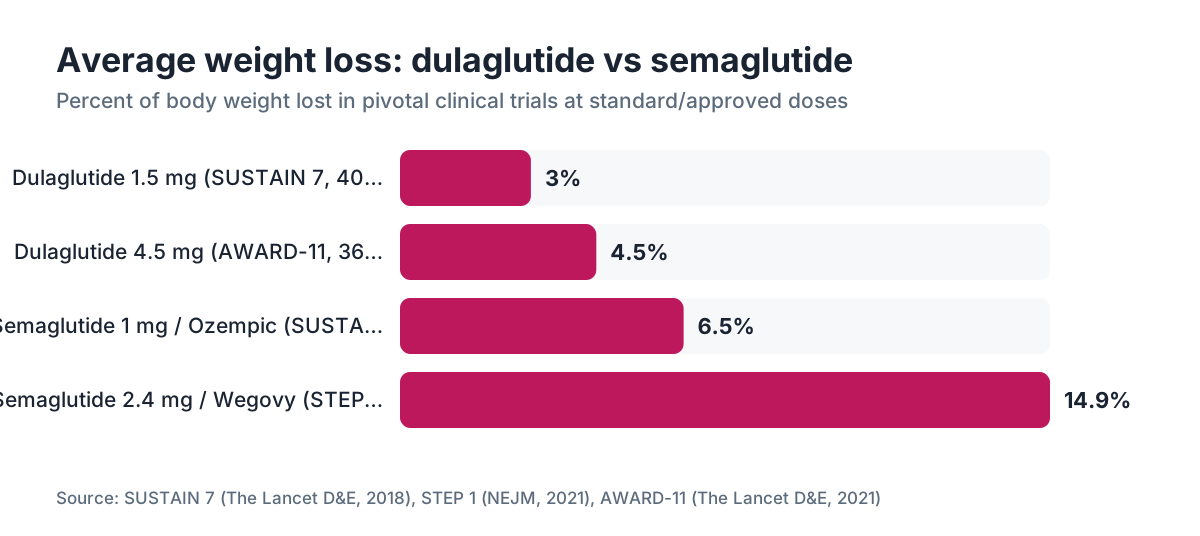
The STEP 1 trial, published in the New England Journal of Medicine in 2021, found that people on semaglutide 2.4 mg (Wegovy) lost an average of 14.9% of body weight over 68 weeks, versus 2.4% on placebo [2]. That is enough to change how clothes fit, how joints feel, and what the metabolic panel says.
Dulaglutide 1.5 mg, the standard diabetes dose, usually produces around 2 to 3 kg of weight loss in trials. The AWARD-11 trial tested higher doses (3 mg and 4.5 mg) and found modestly better results, but the numbers still land well short of semaglutide. At 4.5 mg, participants lost about 4.7 kg (roughly 4.5% of body weight) over 36 weeks [3].
SUSTAIN 7 put the two drugs head-to-head in people with type 2 diabetes. Semaglutide 1 mg produced roughly 6.5 kg of weight loss versus 3 kg for dulaglutide 1.5 mg over 40 weeks [4]. And semaglutide 1 mg isn't even the weight-loss dose. Wegovy goes up to 2.4 mg.
For women in perimenopause or menopause dealing with the hormonal shifts that park fat around the abdomen, a drug that moves the needle 14 to 15% instead of 2 to 3% is a different category of tool. Hold onto that context through the rest of this comparison.
| Metric | Dulaglutide 1.5 mg | Semaglutide 2.4 mg (Wegovy) | |---|---|---| | Average weight loss | ~2.6% body weight | ~14.9% body weight | | Key trial | AWARD-11 | STEP 1 | | Trial duration | 36-52 weeks | 68 weeks | | FDA indication | Type 2 diabetes | Chronic weight management + T2D | | Weekly injection | Yes | Yes | | Oral form available | No | Yes (Rybelsus, daily) |
What are the FDA-approved uses for each drug?
Dulaglutide (Trulicity) is FDA-approved for blood sugar control in adults with type 2 diabetes and to reduce the risk of major cardiovascular events in type 2 diabetics with established heart disease or multiple risk factors [1]. It is not approved for weight loss.
Semaglutide has broader approvals. Ozempic (injectable, up to 2 mg) covers type 2 diabetes and cardiovascular risk reduction. Wegovy (injectable, 2.4 mg) covers chronic weight management in adults with a BMI of 30 or higher, or 27 or higher with at least one weight-related condition. Rybelsus (oral, 7 mg or 14 mg) is approved for type 2 diabetes only [1].
That approval difference plays out at the pharmacy counter. If you have type 2 diabetes, both drugs are on-label. If you want a GLP-1 specifically for weight, semaglutide (Wegovy) is the approved route. Dulaglutide for weight loss would be off-label. Some providers do prescribe it that way, but insurance coverage in that scenario is much harder to get.
If you're also sorting out how hormonal changes tie into metabolic health, pairing the GLP-1 question with a conversation about hormone replacement therapy can pay off. Estrogen loss in menopause shifts fat distribution and drops insulin sensitivity, which is exactly the environment these drugs act in.
How do the side effects of dulaglutide and semaglutide compare?
The side effects overlap heavily because both drugs hit the same receptor. Nausea, vomiting, diarrhea, constipation, and reduced appetite top the list for both. They tend to be worst in the first 4 to 8 weeks and ease as the body adjusts.
SUSTAIN 7 found slightly higher rates of nausea and vomiting with semaglutide than with dulaglutide at matched dose levels [4]. That tracks with semaglutide's stronger receptor engagement, the same mechanism behind the better weight loss. You usually get more of both the benefit and the stomach trouble.
Both drugs carry a black box warning for thyroid C-cell tumors based on rodent data. Neither is recommended for anyone with a personal or family history of medullary thyroid carcinoma or MEN 2 (multiple endocrine neoplasia syndrome type 2) [1]. This is an FDA labeling requirement for the whole GLP-1 class, not proof of human thyroid cancer risk, but providers take it seriously.
Pancreatitis is a rare but serious risk with both. Anyone with a history of it should talk it through carefully with their prescriber. Same with diabetic retinopathy: rapid blood sugar improvement on semaglutide has been linked to temporary worsening of retinopathy in some people who already have it [2].
One effect that gets underreported is muscle loss. These drugs cut weight partly by cutting food intake, which can mean not enough protein and faster loss of lean mass, especially in women over 40 who are already at risk for age-related muscle loss (sarcopenia). That is an argument for resistance training and deliberate protein targets while you're on either drug. It is not an argument against using them.
How do the doses and injection schedules work?
Both are once-weekly injections under the skin, which beats older daily GLP-1 drugs like liraglutide (Victoza/Saxenda) on convenience alone.
Dulaglutide comes in four pre-filled pen doses: 0.75 mg, 1.5 mg, 3 mg, and 4.5 mg. The standard diabetes start is 0.75 mg weekly, moved up to 1.5 mg as tolerated. The higher doses (3 mg, 4.5 mg) arrived after AWARD-11 showed better glucose control and modest extra weight loss, though they're still mostly used in a diabetes setting [3].
Semaglutide (Wegovy) starts at 0.25 mg weekly, then steps up every 4 weeks: 0.5 mg, 1 mg, 1.7 mg, and finally 2.4 mg around week 16. That slow climb is built to blunt GI side effects. Ozempic (the diabetes version) tops out at 2 mg weekly. Rybelsus starts at 3 mg daily, moves to 7 mg, then 14 mg [1].
The injectable versions don't require a specific time of day or any link to meals. Rybelsus is the fussy exception: take it on an empty stomach, 30 minutes before the first food, drink, or other medication of the day, with no more than 4 oz of plain water. That requirement makes it a lot harder to use consistently.
What does each drug cost, and will insurance cover it?
Cost is where a lot of these decisions actually get made. Without insurance, Trulicity (dulaglutide) lists at roughly $800 to $1,000 per month depending on dose and pharmacy. Ozempic runs about $900 to $1,000 per month at list price. Wegovy lists at around $1,300 to $1,400 per month as of 2024 [5].
Insurance coverage swings wildly. Most commercial plans cover Ozempic and Trulicity for type 2 diabetes when prescribed appropriately. Wegovy coverage for obesity is far less predictable. Many commercial plans exclude it, though that has been improving as more employers add obesity benefit riders. Medicare Part D flatly excluded weight-loss drugs for years; as of 2024, Medicare covers Wegovy mostly for cardiovascular risk reduction under the SELECT trial indication, not for weight loss on its own [8].
Manufacturer savings programs help. Lilly offers a Trulicity savings card that can cut out-of-pocket costs sharply for commercially insured patients. Novo Nordisk runs similar programs for Ozempic and Wegovy [5]. If cost is the wall you keep hitting, compounded semaglutide was widely available during shortage periods, though the FDA has been tightening its rules on compounded versions as brand-name supply recovers [11].
No generic version of either drug is on the U.S. market. Semaglutide's patents don't expire here until the early 2030s at the earliest.
Which drug has better evidence for heart health?
Both drugs have cardiovascular outcome trials behind them, which puts them ahead of most older diabetes drugs. The nuance is who they were tested in.
Dulaglutide's REWIND trial, published in The Lancet in 2019, enrolled 9,901 people with type 2 diabetes and showed a 12% relative reduction in major adverse cardiovascular events (MACE) with dulaglutide 1.5 mg versus placebo over a median 5.4 years [6]. REWIND included a higher share of participants without established heart disease than most rival trials, so its findings may apply to a broader group.
Semaglutide's SELECT trial carries the heavier punch. Published in the New England Journal of Medicine in 2023, it enrolled 17,604 people with obesity and existing cardiovascular disease but without diabetes. Semaglutide 2.4 mg cut MACE by 20% versus placebo over a mean of 39.8 months [7]. This was the first GLP-1 trial to show a cardiovascular benefit specifically in people without diabetes, and it is why the FDA added a cardiovascular indication for Wegovy [8].
For women with a history of heart disease or serious risk factors, both drugs offer real protection. The SELECT data matters especially for women in their 50s and 60s, when cardiovascular risk climbs after menopause and weight management gets both harder and more consequential.
How do dulaglutide and semaglutide compare for blood sugar control in type 2 diabetes?
On HbA1c, semaglutide generally beats dulaglutide, though both work. In SUSTAIN 7, the direct comparison, semaglutide 1 mg dropped HbA1c by 1.5 percentage points on average versus 1.1 points for dulaglutide 1.5 mg over 40 weeks [4]. At the lower doses, semaglutide 0.5 mg and dulaglutide 0.75 mg were about even.
Both drugs carry a low intrinsic risk of hypoglycemia when used without insulin or a sulfonylurea, because they only trigger insulin release in response to glucose (a glucose-dependent mechanism). That makes them safer on that front than older diabetes drug classes.
For women with type 2 diabetes who are also in perimenopause or menopause, blood sugar can get harder to predict, because estrogen influences insulin sensitivity. This is a spot where working with an endocrinologist or a telehealth provider who understands women's metabolic health (WomenRx prescribes GLP-1s with this context in mind) can give you tighter management than a generalist usually can.
Is semaglutide better than dulaglutide for women specifically?
The trials for both drugs enrolled men and women, but most weren't powered to detect sex differences. That is a genuine hole in the literature, and anyone who tells you otherwise is overselling.
Here's what we do know. Menopause and perimenopause create a distinct metabolic setting. Estrogen loss drops insulin sensitivity, pushes fat storage toward the visceral (abdominal) compartment, and slows resting metabolic rate [9]. Women in this phase often gain weight more easily and lose it more slowly than they did in their 30s, even without much change in diet or activity.
Given that, the size of the weight loss effect matters more for midlife women, not less. A drug that reliably produces 14 to 15% weight loss is a different tool than one producing 2 to 3%. That math alone pushes semaglutide ahead for most women whose main goal is weight rather than pure glucose control.
Bone density is a separate concern. Rapid weight loss on any GLP-1 can speed bone loss, already a worry for women near or past menopause. If you're on a GLP-1 and over 45, track it with a bone density test and talk to your provider about calcium, vitamin D, and resistance training.
Women who are pregnant or trying to conceive should not use either drug. Both should be stopped at least 2 months before a planned pregnancy. For women with PCOS using GLP-1s partly to improve insulin sensitivity and cycle regularity, that timing question comes up often. See perimenopause age for context on when these hormonal shifts usually start.
Can you switch from dulaglutide to semaglutide?
Yes, and it happens a lot when someone on Trulicity for diabetes wants better weight loss or their provider is stepping up therapy. There is no required washout period between GLP-1 agonists.
Because dulaglutide's half-life is about 5 days, the standard move is to start semaglutide the week after the last dulaglutide dose. Most providers start semaglutide at its lowest dose (0.25 mg weekly) and titrate up to keep GI side effects manageable, even if you were tolerating a higher dulaglutide dose, because the two drugs aren't bioequivalent.
In practice, most people who switch report similar or slightly worse GI symptoms at the start of semaglutide compared to where they were on dulaglutide. It usually passes in a few weeks. The trade is a much higher ceiling for weight loss.
If you're switching because dulaglutide stopped controlling your blood sugar (secondary failure), that is a different problem than switching for weight. Your endocrinologist may want to check whether you need insulin added rather than just a different GLP-1.
For a broader comparison that includes tirzepatide (Mounjaro, Zepbound), which hits both GLP-1 and GIP receptors and beats semaglutide on weight loss in some trials, see semaglutide vs tirzepatide.
What does the evidence say about long-term use of these drugs?
The longest semaglutide trial data runs to about 5 years in some subgroups. The SUSTAIN extension studies and real-world diabetes registry data suggest HbA1c reduction and weight loss hold up as long as you stay on the drug. Here's the catch: most people regain weight when they stop. The STEP 1 extension, published in 2022, found participants who stopped semaglutide regained about two-thirds of their lost weight within one year [2]. The drug manages a chronic condition. It doesn't cure it.
Dulaglutide's REWIND trial followed patients for a median of 5.4 years, the longest prospective cardiovascular trial in this class so far, and the heart benefit held across that stretch [6].
Neither drug has a clearly defined maximum duration. Both are meant for ongoing use in the populations they're approved for. Long-term GI tolerance, thyroid monitoring, and the muscle-mass question are all active research areas [10]. The thyroid C-cell signal from rodent studies has not shown up in human data across more than a decade of post-marketing surveillance, but it stays on the label.
For women managing menopause symptoms alongside metabolic concerns, the interaction between GLP-1 therapy and hormone therapy is understudied. The North American Menopause Society (NAMS) doesn't yet have a formal position on combining GLP-1 drugs with hormone replacement therapy [9], but the combination looks clinically reasonable and possibly additive for metabolic health based on how each works.
Which drug should you choose?
Honest answer: if weight loss is your main goal and you qualify for Wegovy, semaglutide is the better-evidenced choice by a wide margin. STEP 1 weight loss (14.9% of body weight) versus what dulaglutide produces (2 to 3%) at standard doses is not a close call. SELECT adds strong cardiovascular outcome data for semaglutide in people with obesity [7].
If you have type 2 diabetes and weight loss is a secondary goal, both are reasonable. Semaglutide still wins on glucose reduction and weight in head-to-head trials, but dulaglutide's longer cardiovascular follow-up in a mixed prevention population (REWIND) is genuinely distinctive.
If semaglutide isn't covered and cost decides it, dulaglutide is a real option for diabetes. It reduces cardiovascular events, lowers blood sugar meaningfully, and causes some weight loss. That is not nothing.
For women working through midlife weight gain, hormonal change, and insulin resistance all at once, pairing evidence-based GLP-1 therapy with the underlying estrogen picture is worth taking seriously. That means talking to a provider who understands both. The semaglutide for weight loss piece on this site walks through the STEP trial data in more detail. WomenRx clinicians work with both GLP-1 and hormone protocols and can help you figure out which fits your situation.
Bottom line: semaglutide is the stronger drug for weight. Dulaglutide still earns its place in diabetes care. Pick based on your primary goal, your insurance, and an honest talk with a provider who knows your full history.
Frequently asked questions
Is dulaglutide the same as semaglutide?
No. Both are GLP-1 receptor agonists, but they are different molecules from different companies. Dulaglutide (Trulicity, Eli Lilly) and semaglutide (Ozempic/Wegovy, Novo Nordisk) bind the same receptor but differ in structure, dosing range, and potency. Semaglutide reaches higher effective receptor engagement at its approved doses, which is likely why it produces substantially more weight loss.
Can I take dulaglutide and semaglutide together?
No. Combining two GLP-1 receptor agonists is not recommended and not studied. They act on the same receptor, so there's no expected added benefit, and the risk of nausea, vomiting, and other GI trouble would climb. If your current GLP-1 isn't hitting your goals, the right move is switching drugs or doses, not stacking them.
Which has fewer side effects, dulaglutide or semaglutide?
Head-to-head data from SUSTAIN 7 found slightly higher rates of nausea and vomiting with semaglutide than with dulaglutide at comparable doses. Both drugs share the same GI side-effect profile. Semaglutide's slower dose escalation (16 weeks to reach the full 2.4 mg Wegovy dose) helps with tolerability. Most side effects are worst in the first 4 to 8 weeks.
Does dulaglutide cause weight loss like semaglutide does?
Much less. Dulaglutide at standard diabetes doses (1.5 mg) produces roughly 2 to 3 kg of weight loss. Even at the higher dose tested in AWARD-11 (4.5 mg), it averaged about 4.7 kg. Semaglutide 2.4 mg (Wegovy) produced an average of 14.9% of body weight lost in STEP 1. For women whose main goal is weight, that gap is clinically significant.
Is dulaglutide approved for weight loss?
No. As of 2025, dulaglutide (Trulicity) is FDA-approved only for blood sugar control and cardiovascular risk reduction in adults with type 2 diabetes. It is not approved for chronic weight management. Using it just for weight loss would be off-label, which also means insurance coverage for that use is highly unlikely.
How long does it take to see results with each drug?
With semaglutide, most people notice appetite changes and modest weight changes within the first 4 weeks at the 0.25 mg starting dose. Meaningful weight loss usually shows up by weeks 8 to 12 as the dose steps up. Dulaglutide's glucose-lowering effect appears within the first few weeks; its weight effect is more modest and often plateaus around 6 months. Full effects of either drug take 6 to 12 months of consistent use.
Which GLP-1 is best for women in menopause?
No randomized trial has enrolled menopausal women specifically to compare GLP-1 drugs head-to-head. Based on overall weight loss efficacy, semaglutide (Wegovy) is the strongest option for the fat redistribution and insulin resistance that come with estrogen decline. Adding hormone therapy to address the underlying estrogen deficit alongside a GLP-1 is a clinically reasonable approach that some providers now use together.
What happens when you stop taking dulaglutide or semaglutide?
Blood sugar and weight tend to drift back toward baseline after stopping either drug. The STEP 1 extension found participants who stopped semaglutide regained about two-thirds of their lost weight within one year. Dulaglutide shows similar rebound in blood sugar. Both treat ongoing physiological conditions rather than fixing them permanently, so most people need to stay on them long-term to keep the benefits.
Is semaglutide or dulaglutide better for PCOS?
Neither drug is FDA-approved for PCOS, but GLP-1 receptor agonists are used off-label because insulin resistance drives the condition. Small studies and case series show semaglutide improving insulin sensitivity, cycle regularity, and weight in women with PCOS. Dulaglutide has limited published PCOS data. Semaglutide's stronger weight and insulin-sensitivity effects make it the more commonly prescribed choice here.
Can dulaglutide or semaglutide affect bone density?
Rapid weight loss on any GLP-1 can reduce bone mineral density, especially if protein intake and resistance training fall short. That's a real concern for women over 45, when postmenopausal bone loss is already speeding up. Current trial data don't show a direct negative bone effect from GLP-1 receptor agonism itself, but the weight-loss-related bone impact warrants monitoring with a DEXA scan if you're postmenopausal and on these drugs.
Are there biosimilar or generic versions of dulaglutide or semaglutide?
Not currently in the U.S. market. Both are brand-name biologics with active patent protection. Semaglutide's core patents are expected to expire in the early 2030s, and dulaglutide's run through a similar window. Compounded semaglutide was available during shortage periods from 503A and 503B compounding pharmacies, though the FDA has been tightening oversight as brand-name supply recovers.
Which drug is covered by Medicare for weight loss?
Medicare Part D historically excluded drugs used solely for weight loss. As of 2024, Wegovy (semaglutide 2.4 mg) gained Medicare coverage under the cardiovascular risk reduction indication following the SELECT trial, but only for patients who meet those criteria. Dulaglutide is covered under Part D for type 2 diabetes. Neither drug is broadly covered by Medicare purely for obesity without a concurrent covered indication.
What is the maximum dose of each drug?
Dulaglutide's maximum approved dose is 4.5 mg weekly (added as an option after AWARD-11). Semaglutide's maximum approved dose for weight management (Wegovy) is 2.4 mg weekly. For diabetes, Ozempic tops out at 2 mg weekly, and Rybelsus (oral) maxes at 14 mg daily. Higher doses are not studied or approved beyond these thresholds.
Do dulaglutide or semaglutide interact with birth control pills?
Oral semaglutide (Rybelsus) may reduce absorption of oral contraceptives because it slows gastric emptying and must be taken 30 minutes before other medications. Novo Nordisk's prescribing information advises taking oral contraceptives at least 30 minutes after Rybelsus. Injectable semaglutide and injectable dulaglutide have no direct pharmacokinetic interaction with oral contraceptives, though gastric motility changes could in theory affect absorption timing.
Sources
- FDA Drug Database, Drugs@FDA: dulaglutide (Trulicity), semaglutide (Ozempic, Wegovy, Rybelsus) prescribing information
- Wilding JPH et al., New England Journal of Medicine 2021 (STEP 1 trial): Once-Weekly Semaglutide in Adults with Overweight or Obesity
- Ludvik B et al., The Lancet Diabetes & Endocrinology 2021 (AWARD-11 trial): Efficacy and safety of dulaglutide 3 mg and 4.5 mg versus dulaglutide 1.5 mg
- Pratley RE et al., The Lancet Diabetes & Endocrinology 2018 (SUSTAIN 7 trial): Semaglutide versus dulaglutide once weekly in patients with type 2 diabetes
- GoodRx Health: GLP-1 drug pricing and manufacturer savings programs
- Gerstein HC et al., The Lancet 2019 (REWIND trial): Dulaglutide and cardiovascular outcomes in type 2 diabetes
- Lincoff AM et al., New England Journal of Medicine 2023 (SELECT trial): Semaglutide and Cardiovascular Outcomes in Obesity without Diabetes
- FDA Center for Drug Evaluation and Research: Wegovy (semaglutide) approval and label
- North American Menopause Society (NAMS): Menopause practice guidelines and position statements
- Endocrine Society Clinical Practice Guideline: Pharmacological Management of Obesity
- FDA Drug Shortage Database: semaglutide compounding status