Does testosterone HRT lower estrogen in women?
TL;DR: Testosterone HRT does not directly suppress estrogen in women. Some testosterone converts to estradiol through a process called aromatization, which can raise estrogen levels rather than lower them. Whether your estrogen goes up, stays flat, or drops depends on your dose, delivery method, and where you are in menopause. Lab monitoring is the only way to know what's actually happening in your body.
What actually happens to estrogen when you take testosterone HRT?
Testosterone does not suppress estrogen production in women the way it does in men. In women, testosterone and estrogen are made from the same precursor hormones, and your body can convert testosterone into estradiol through an enzyme called aromatase. Adding testosterone from outside your body can sometimes increase circulating estradiol, not lower it.
This surprises a lot of women and even some prescribers who assume the two hormones work against each other. They don't. In women, they're more like cousins on the same pathway. Androstenedione, which your ovaries and adrenal glands produce, gets converted into either testosterone or estrone. Testosterone itself can then be aromatized into estradiol, the most biologically active form of estrogen.
How much aromatization happens depends on several things: your dose, your body composition (fat tissue is a major site of aromatase activity), your age, and how the testosterone is delivered. Women with higher body fat tend to aromatize more. Transdermal gels and pellets, which release testosterone into systemic circulation, give aromatase more substrate to work with than very low-dose vaginal formulations.
So testosterone therapy in women is not an estrogen-lowering strategy. If your estrogen is already elevated and causing symptoms, adding testosterone won't reliably fix that.
Can testosterone HRT raise estrogen instead of lowering it?
Yes, and that's the more common scenario clinically. A 2014 review published in the journal Maturitas examined testosterone therapy in postmenopausal women and noted that serum estradiol can rise after testosterone administration, particularly with higher doses and in women with more fat tissue, where aromatase concentrates [1].
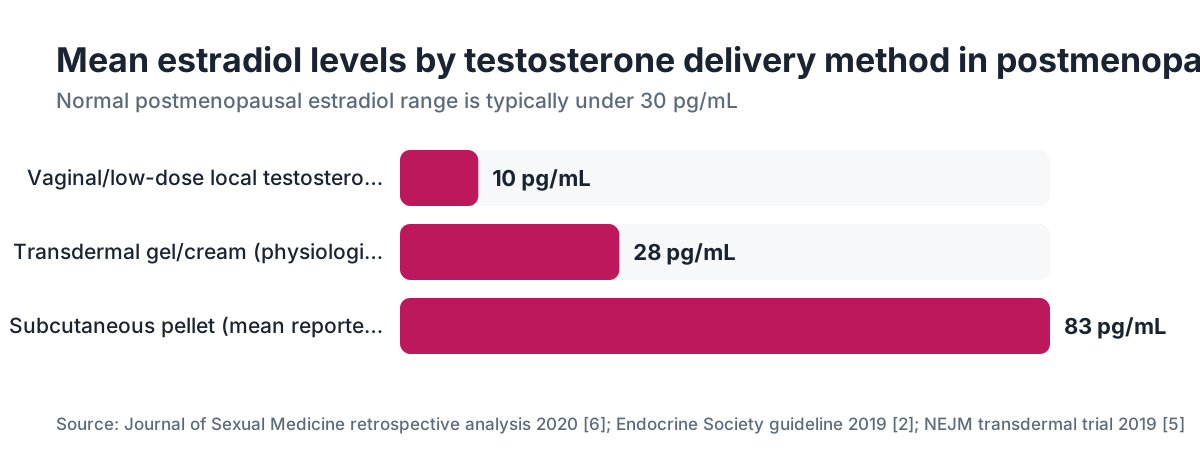
Testosterone pellets are the delivery method most linked to estrogen elevation. Pellets release a continuous, relatively high dose of testosterone, and some practitioners report that women using pellets end up with estradiol levels well above the normal postmenopausal range. The Endocrine Society's 2019 clinical practice guideline on androgen therapy in women flags this directly, noting that pellet implants carry a higher risk of supraphysiologic androgen (and therefore supraphysiologic estrogen) levels compared to other formulations [2].
Transdermal creams and gels, used at physiologic replacement doses (typically 0.5 to 2 mg per day for women), tend to produce smaller estrogen changes. Oral testosterone is rarely used in women, mostly because of variable first-pass liver metabolism, and it converts differently.
If you're taking testosterone and haven't had your estradiol checked, raise it with your prescriber. A serum estradiol, ideally drawn in the morning and at trough from your last dose if you're on a cyclical regimen, gives you the clearest picture.
Does testosterone therapy affect estrogen differently before vs. after menopause?
Timing matters a lot here.
Before menopause, your ovaries are still producing estradiol in substantial amounts. Adding testosterone from outside to that existing hormonal environment has a relatively small marginal effect on total estrogen. Your ovaries are the dominant source, and testosterone's conversion is a minor add-on. Some premenopausal women prescribed low-dose testosterone for low libido or mood symptoms see essentially no meaningful change in their estradiol labs.
After menopause, the picture shifts. Your ovaries have largely stopped producing estradiol, so your baseline is very low, typically below 30 pg/mL. Now any testosterone you add becomes a more significant relative source of estrogen through aromatization. A postmenopausal woman on a testosterone pellet dosed for male ranges (which some pellet clinics do, incorrectly) can end up with estradiol in the 80 to 200 pg/mL range, higher than many women had during their reproductive years.
Perimenopause sits somewhere in between. Estrogen levels swing wildly, sometimes spiking high and sometimes crashing low [3]. Adding testosterone in perimenopause takes careful monitoring because the hormonal baseline is a moving target. If you're still figuring out where you are in that transition, the article on perimenopause age walks through how ovarian function shifts across that window.
The Menopause Society (formerly NAMS) recommends that testosterone therapy in women start at the lowest effective dose and that serum testosterone and, where relevant, estradiol be monitored periodically [4].
What does the research say about testosterone, estrogen, and aromatization in women?
The research base here is smaller than we'd like. Most testosterone trials in women have tracked libido and sexual function rather than detailed hormone metabolite changes. Still, a few findings are worth knowing.
A randomized controlled trial published in the New England Journal of Medicine in 2019 found that transdermal testosterone at 150 to 300 mcg per day in postmenopausal women improved sexual function without pushing total testosterone into supraphysiologic ranges. The study also reported that estradiol did not rise significantly at those doses [5].
Studies of testosterone pellets tell a different story. A 2020 retrospective analysis in the Journal of Sexual Medicine found that women receiving subcutaneous testosterone pellets had mean estradiol levels of 83.1 pg/mL, which the authors noted was well above the normal postmenopausal range, and pointed to aromatization as the mechanism [6].
Nobody has great long-term data on what sustained elevated estradiol from testosterone aromatization means for breast tissue or the uterine lining in postmenopausal women. The honest position: the signal is plausible, but the clinical significance over years is not well established. The Endocrine Society's 2019 guideline puts it plainly: "We recommend against the general use of testosterone by women because the evidence to support benefits is limited and the long-term safety is unknown" outside of hypoactive sexual desire disorder [11]. That's a narrow approval frame, not a blanket ban, but it tells you how conservative the mainstream evidence base still is.
For the wider context of hormone therapy, the hormone replacement therapy overview covers what we do and don't know across all the major hormones.
Which testosterone delivery methods affect estrogen the most?
Delivery method is one of the biggest variables in how much aromatization happens, so it's worth breaking down concretely.
| Delivery Method | Typical Female Dose Range | Aromatization Risk | Notes | |---|---|---|---| | Transdermal gel/cream | 0.5 to 2 mg/day | Low to moderate | Most studied, easiest to titrate | | Subcutaneous pellet | 75 to 150 mg per pellet (every 3 to 6 months) | Moderate to high | Dose is fixed after insertion; harder to adjust | | Injection (IM or SC) | 1 to 5 mg/week (varies widely) | Moderate | Uncommon in women; peaks and troughs | | Oral (oral DHEA or oral T) | Variable | Variable | DHEA converts to both testosterone and estrogens; oral T rarely used | | Intravaginal | Very low, localized | Very low | Minimal systemic absorption; mainly for local symptoms |
Gels and creams applied to the skin give the prescriber the most flexibility. If your estradiol drifts up, the dose comes down immediately. With pellets, you're committed to that dose for months. That's not necessarily bad if the dose is calibrated correctly, but it means the conversation about monitoring should happen before insertion, not after.
DHEA deserves its own note. DHEA (dehydroepiandrosterone) gets grouped with testosterone therapy because it's an androgen precursor. But it converts to both androgens and estrogens in peripheral tissue. Vaginal DHEA (the FDA-approved prescription product Intrarosa) has minimal systemic absorption, while systemic oral DHEA can measurably raise estradiol. It's a different compound from testosterone, and women researching testosterone sometimes run into DHEA and need to know the two are not the same thing.
Should you be concerned if your estrogen rises on testosterone therapy?
It depends on your clinical picture, and the honest answer is that prescribers disagree on this more than the guidelines suggest.
If you're postmenopausal and not taking supplemental estrogen, rising estradiol from testosterone aromatization may actually ease some menopause symptoms: hot flashes, sleep disruption, vaginal dryness. In that narrow sense, the rise can feel like a benefit. But it's not a controlled way to dose estrogen. You can't predict how much will aromatize, and that estradiol acts on your uterine lining as well as everywhere else. Women with a uterus who have uterine estrogen exposure without progesterone to balance it face elevated endometrial risk over time. If that's you and you're not taking progesterone, the conversation with your provider is overdue.
The progesterone article covers how and why a progestogen is typically paired with systemic estrogen in women who still have a uterus.
If your estradiol climbs well above the normal range for your life stage and you have estrogen-dominant symptoms (breast tenderness, bloating, mood swings), that's a signal to re-examine the testosterone dose. An aromatase inhibitor is sometimes added for men on testosterone to manage this, but that approach is not standard or well-studied in women.
For most women on appropriately dosed transdermal testosterone, the estradiol change is modest and not alarming. The concern lives mostly with supraphysiologic dosing, which is still common in some direct-to-consumer pellet and compounding clinic settings.
Does testosterone HRT lower estrogen in women being treated for estrogen-sensitive conditions?
This comes up most often in two groups: women with estrogen-receptor-positive breast cancer on aromatase inhibitors, and women with endometriosis.
For breast cancer survivors on aromatase inhibitors (drugs like anastrozole or letrozole that block the conversion of androgens to estrogens), adding testosterone is complicated. The aromatase inhibitor blocks testosterone from converting to estradiol, so estrogen stays suppressed. But some oncologists are uneasy about testosterone from outside the body in ER-positive cancer patients, and the safety evidence in that population is thin. A few small studies and a 2021 review in Breast Cancer Research and Treatment suggest the approach may be feasible in selected patients, but it is not standard of care [10]. This is a decision to make with an oncologist, not a general hormone prescriber.
For endometriosis, testosterone has been explored as a way to shift the hormonal environment toward androgen dominance and possibly reduce estrogen-driven lesion activity. The evidence here is mostly observational and small. Testosterone does not reliably suppress systemic estrogen in women with intact ovaries, so it's not an effective treatment for active endometriosis on its own.
For the general population of women using testosterone as part of broader hormone replacement therapy, the concern about estrogen-sensitive conditions centers on making sure unexpected estradiol elevation from aromatization doesn't go unmonitored. Regular labs are the answer, not avoidance.
How do doctors monitor estrogen and testosterone levels during HRT?
Standard monitoring for women on testosterone typically includes serum total testosterone and, depending on the prescriber and the clinical question, free testosterone and estradiol. SHBG (sex hormone-binding globulin) is sometimes added because it affects how much testosterone is biologically available.
The Endocrine Society recommends checking serum testosterone 3 to 6 weeks after starting or adjusting therapy for transdermal formulations, and 6 weeks after a pellet insertion [2]. Estradiol is not always in a standard testosterone monitoring panel, but it should be if there's any concern about aromatization, particularly in postmenopausal women or those on higher doses.
Timing matters for accuracy. Testosterone peaks 4 to 8 hours after applying a gel or cream, so a trough measurement (before the next day's application) gives the most conservative read. For pellets, levels are generally stable after the first few weeks post-insertion but can spike shortly after.
Some telehealth platforms, including WomenRx, include laboratory monitoring as part of ongoing testosterone or broader hormone therapy management, which means you don't have to chase separate lab orders and interpretation on your own.
One practical note: testosterone assays in women are notoriously imprecise at low levels. The Endocrine Society states that "commercially available testosterone assays may not be sufficiently accurate at the low concentrations found in women" [2]. Liquid chromatography-tandem mass spectrometry (LC-MS/MS) is the preferred method, but it's not what most standard commercial lab panels run. If your numbers look odd, ask what assay method was used.
What are the symptoms of too much estrogen from testosterone aromatization?
Aromatization-driven estrogen excess in women on testosterone tends to look like classic estrogen dominance: breast tenderness or swelling, bloating and fluid retention, mood swings or irritability, headaches (particularly in a cyclical pattern if still menstruating), and sometimes worsening fibroids or heavy bleeding if the uterine lining is being stimulated.
The tricky part is that many of these overlap with the reasons women start testosterone in the first place. Mood issues, fatigue, and breast discomfort can all be low-testosterone symptoms too. That's why labs, not symptoms alone, are the right tool for figuring out what's happening.
If you're on testosterone and having any of the above, get an estradiol level drawn before you assume the dose needs to go up. Counterintuitively, some women feel worse on testosterone not because they need more, but because aromatization is pushing their estrogen too high.
A serum estradiol above about 200 pg/mL in a postmenopausal woman not on supplemental estrogen should prompt a dose review. Above 300 pg/mL is clearly supraphysiologic for that life stage. Those numbers are general clinical reference points; your prescriber's read should account for your whole picture.
What does low estrogen alongside low testosterone actually look like, and how is it treated?
Low testosterone and low estrogen together is very common in menopause and surgical menopause. Both decline as the ovaries age and eventually stop producing hormones, so the symptoms layer on top of each other and get hard to untangle.
Low testosterone in women links to reduced sexual desire and responsiveness, fatigue that doesn't respond to sleep, blunted motivation, and a diminished sense of wellbeing. Low estrogen brings hot flashes, night sweats, vaginal dryness, sleep disruption, and longer-term risks to bone and cardiovascular health [7].
When both are low, combination therapy is common: estrogen (often as a patch, gel, or spray) plus testosterone at a low physiologic dose. In this setting, adding testosterone does not suppress the estrogen you're taking, and it does not reduce estrogen's benefits on bone or vasomotor symptoms. The two hormones address partially overlapping but distinct symptom clusters.
The estrogen patch article covers transdermal estrogen options in more detail. Transdermal is the preferred route for most women for systemic menopause hormone therapy under current guidelines from The Menopause Society [4].
Surgical menopause, where both ovaries are removed, causes a more abrupt and complete drop in both estrogen and testosterone than natural menopause. Women in this situation often have particularly severe symptoms and may benefit from both hormones at once. The evidence for testosterone's quality-of-life benefits is strongest in this group [8].
Is testosterone therapy FDA-approved for women in the US?
No testosterone product is currently FDA-approved for use in women in the United States [9]. This is a genuine regulatory gap, not a safety prohibition, and it has real consequences for how women access and are dosed with testosterone.
Because no approved formulation exists, prescribers who treat women with testosterone do it off-label, typically using compounded testosterone creams or gels or the AndroGel product approved for men (at a fraction of the male dose). Dosing is not standardized across practices, and quality control leans heavily on the compounding pharmacy.
In Australia, Organon's Androfeme 1% cream is approved specifically for women at a 5 mg/day maximum dose, a reasonable international benchmark for what physiologic female dosing looks like. The UK's NHS similarly has protocols using male formulations at female-appropriate doses. The FDA has not followed, partly because no manufacturer has funded the trials needed for a women's indication.
The Endocrine Society has called for better evidence and standardized formulations for women. Until that happens, the responsibility for appropriate dosing falls on the prescriber and on informed patients. If you're considering testosterone therapy, asking specifically about the dose in milligrams per day and how it compares to the Australian standard is a solid way to open that conversation.
Where does testosterone fit in a broader HRT plan for menopause?
For most women approaching menopause, the first hormonal conversation is about estrogen, and rightly so. Estrogen deficiency drives the most urgent and best-documented menopause symptoms. For women with a uterus, progesterone or a progestogen pairs with estrogen to protect the uterine lining. Testosterone, if added, is generally the third component, addressed after estrogen and progesterone are optimized.
Where testosterone earns its place is mainly in persistent low libido or sexual dysfunction that doesn't fully resolve with estrogen therapy, in persistent fatigue or cognitive fog despite optimized estrogen, and in some cases of early menopause or surgical menopause where androgen deficiency runs more pronounced.
Testosterone is not a replacement for estrogen. It does not protect against osteoporosis the way estrogen does, it does not reliably control hot flashes, and adding it without adequate estrogen in a postmenopausal woman is not a complete approach. The monitoring question, specifically whether testosterone will meaningfully raise estrogen in your particular situation, is one to establish at baseline and revisit at follow-up labs.
WomenRx offers clinical consultations for women evaluating their full hormone picture, including testosterone, where the conversation about dosing, monitoring, and expected effects on other hormones happens up front rather than as an afterthought.
For a wider view of how these hormones interact, the article on hormone replacement therapy is a good place to ground the discussion. And if you're uncertain whether you've actually reached menopause or are still in the transition, when does menopause start covers the diagnostic criteria and what lab values actually mean.
Frequently asked questions
Does testosterone HRT lower estrogen in women?
No. Testosterone does not suppress estrogen in women. Some testosterone converts to estradiol through aromatization, which can actually raise estrogen levels, particularly with higher doses or in women with more body fat. The degree of change depends on your dose, delivery method, and menopausal status. Regular lab monitoring of both testosterone and estradiol is the only way to know what's happening in your specific case.
Can testosterone therapy cause high estrogen levels?
Yes. Testosterone can be converted to estradiol by the enzyme aromatase, and this conversion is more pronounced with higher doses and in women with more fat tissue. Subcutaneous pellets carry the highest aromatization risk because they deliver a continuous, relatively large dose. Symptoms of excess estrogen from aromatization include breast tenderness, bloating, and mood swings. A serum estradiol test confirms whether levels are elevated.
Does testosterone replace estrogen during menopause?
No. Testosterone and estrogen have different biological roles. Estrogen is the primary driver of vasomotor symptoms like hot flashes, protects bone density, and supports cardiovascular and vaginal health in menopause. Testosterone mainly addresses libido, sexual responsiveness, and energy. Adding testosterone does not compensate for estrogen deficiency, and postmenopausal women typically need both if they have symptoms and risk factors that warrant treatment.
How much does testosterone convert to estrogen in women?
The conversion rate varies by individual, dose, and delivery method. Women with higher body fat aromatize more because fat tissue is a major site of aromatase activity. At physiologic transdermal doses (0.5 to 2 mg per day), estradiol increases are usually modest. At supraphysiologic doses used in some pellet protocols, postmenopausal women have shown mean estradiol levels exceeding 80 pg/mL, well above the normal postmenopausal range of under 30 pg/mL.
Should I test my estrogen levels while on testosterone HRT?
Yes, especially if you are postmenopausal, using testosterone pellets, or have any reason to be concerned about estrogen-sensitive tissues. The Endocrine Society recommends monitoring serum testosterone 3 to 6 weeks after starting or adjusting therapy. Including estradiol in that panel is reasonable and gives you a complete picture. If you have a uterus and your estradiol is rising from aromatization, progesterone coverage becomes an important question to discuss with your provider.
Can testosterone therapy be used alongside estrogen HRT?
Yes, and this is the most common clinical scenario. Testosterone is typically added after estrogen (and progesterone for women with a uterus) are already part of a hormone therapy plan. The two hormones address different symptom clusters and do not cancel each other out. Testosterone added to an estrogen regimen may cause a small additional estradiol increase through aromatization, so labs should be rechecked after starting or adjusting testosterone.
Does testosterone HRT affect estrogen differently for women who still have their ovaries?
Yes. Women with functioning ovaries are already producing substantial estradiol, so testosterone's aromatization contribution is proportionally smaller. In postmenopausal women whose ovaries have stopped producing estradiol, the same dose of testosterone can produce a much larger relative increase in estradiol because the baseline is so low. Premenopausal women on low-dose testosterone for libido often see minimal change in estradiol levels.
Is there a testosterone dose for women that avoids raising estrogen?
Lower doses and certain delivery methods reduce aromatization. Transdermal gels or creams at 0.5 to 2 mg per day are associated with smaller estradiol changes than pellets. Very low-dose vaginal testosterone has minimal systemic absorption and essentially no aromatization effect. There is no dose guaranteed to cause zero estradiol change in all women, which is why individual monitoring matters rather than assuming a standard dose works universally.
Do testosterone pellets raise estrogen more than creams or gels?
Yes, based on available data. Pellets deliver a continuous, relatively high dose of testosterone, and retrospective studies have found mean estradiol levels above 80 pg/mL in postmenopausal women receiving pellets, compared with modest changes at physiologic transdermal doses. The Endocrine Society's guidelines specifically flag pellets as carrying higher risk of supraphysiologic androgen and consequently elevated estrogen levels compared to other formulations.
Can women with estrogen-sensitive breast cancer use testosterone HRT?
This is contested and should be decided with an oncologist, not a general hormone prescriber. Women on aromatase inhibitors for ER-positive breast cancer have that conversion pathway blocked, which limits aromatization of testosterone to estradiol. A small body of literature suggests testosterone may be feasible in selected survivors, but it is not standard of care and long-term safety data are lacking. Any decision in this population requires specialist oversight.
What are signs that testosterone HRT is raising my estrogen too high?
Classic signs of estrogen excess include breast tenderness or fullness, bloating and water retention, mood swings, headaches, and in women still menstruating, heavier or irregular periods. These overlap with other hormonal issues, so symptoms alone are unreliable. A serum estradiol test gives you the answer. In a postmenopausal woman not on supplemental estrogen, levels consistently above 200 pg/mL while on testosterone warrant a dose review.
Is testosterone HRT FDA-approved for women?
No. As of 2025, no testosterone product carries FDA approval for use in women in the United States. Prescribers use compounded formulations or male-approved products off-label at female-appropriate doses. Australia has an approved women's testosterone cream (Androfeme 1%) at up to 5 mg per day, which many clinicians reference as a dosing benchmark. The FDA regulatory gap means dosing standards vary significantly across practices.
Does DHEA therapy raise estrogen the same way testosterone does?
DHEA is an androgen precursor that converts to both androgens and estrogens, so it has a different and somewhat less predictable effect on estrogen than direct testosterone. Vaginal DHEA (Intrarosa) has minimal systemic absorption and negligible effect on systemic estrogen. Oral systemic DHEA can raise both testosterone and estradiol. DHEA and testosterone are distinct compounds even though both are androgens, and their effects on estrogen are not interchangeable.
How long does it take to see hormone level changes after starting testosterone HRT?
For transdermal formulations, serum testosterone reflects the new dose within 1 to 2 weeks, and the Endocrine Society recommends checking labs at 3 to 6 weeks after initiation or dose change. Estradiol changes from aromatization track a similar timeline. Pellets take 2 to 4 weeks post-insertion to reach stable levels. Symptom changes often lag lab changes, so clinical response is typically assessed at 8 to 12 weeks.
Sources
- Maturitas, Davis et al. 2014 – Testosterone for low libido in postmenopausal women
- Endocrine Society – Androgen Therapy in Women Clinical Practice Guideline 2019
- NAMS (The Menopause Society) – Perimenopause and hormone fluctuation overview
- The Menopause Society – 2023 Hormone Therapy Position Statement
- New England Journal of Medicine – Transdermal Testosterone in Postmenopausal Women 2019
- Journal of Sexual Medicine – Subcutaneous testosterone pellet retrospective analysis 2020
- NIH Office on Women's Health – Menopause symptoms and treatment
- Cochrane Review – Testosterone for women with hypoactive sexual desire disorder 2019
- FDA – Approved Drug Products with Therapeutic Equivalence Evaluations (Orange Book)
- Breast Cancer Research and Treatment – Testosterone in breast cancer survivors review 2021
- Endocrine Society – Androgen Therapy in Women 2019 (direct quotation)