Does semaglutide expire? Shelf life, storage, and safety explained
TL;DR: Yes, semaglutide expires. An unopened, refrigerated Ozempic or Wegovy pen is good until the date printed on the label. Once you use it the first time, you have 28 days, in the fridge or at room temperature. Compounded semaglutide vials follow the beyond-use date the compounding pharmacy assigns, usually 30 to 90 days from dispensing.
What is the expiration date on semaglutide?
Every semaglutide product, branded or compounded, carries two dates worth understanding. The first is the manufacturer's expiration date printed on the carton and the pen label. For Ozempic and Wegovy, Novo Nordisk stamps this date after stability testing under controlled conditions. The FDA requires that date to mark the point through which the drug still meets its labeled potency, purity, and safety specifications [1].
The second date is the in-use expiration: 28 days from the day you first inject with the pen. This is the number that trips people up. You might have a pen with a manufacturer date of December 2026, but if you primed it on September 1, you discard it by September 29 no matter how much product remains [2].
A drug used past its expiration date can lose potency or, in rare cases, change chemically. For a weight-loss medication dosed weekly, a degraded product mostly means you're not getting the dose you think you are. That matters for managing side effects and titration.
Compounded semaglutide runs on a different framework. Compounding pharmacies assign a "beyond-use date" (BUD) under USP standards, not manufacturer stability data. That BUD is typically 30 to 90 days from the date of compounding or dispensing, depending on storage conditions and the pharmacy's own testing. Read the label on your compounded vial specifically.
How long does an unopened semaglutide pen last in the refrigerator?
An unopened Ozempic or Wegovy pen stored correctly in the refrigerator (36°F to 46°F, or 2°C to 8°C) is good until the expiration date printed on the label [2]. In practice, most pens dispensed from a US pharmacy carry a date 12 to 18 months out from your pickup, because the supply chain already ate some of that window.
Keep semaglutide away from the freezer compartment and off the refrigerator's back wall, both spots that can dip below 32°F. Freezing a pen ruins it. The pen should sit away from light, ideally in its original carton.
One principle worth remembering: many solid-dose medications hold their potency well past the printed date, but injectable biologics and peptides are a different category [3]. Peptide-based drugs like semaglutide react to temperature swings and light more than a tablet does, so the manufacturer's storage rules are not conservative suggestions. They reflect real chemistry.
Think of the refrigerator range as a working window, not a formality. A pen that spent a week riding around in a warm bag before it reached you may not last as long as the label promises.
What is the 28-day rule for semaglutide after first use?
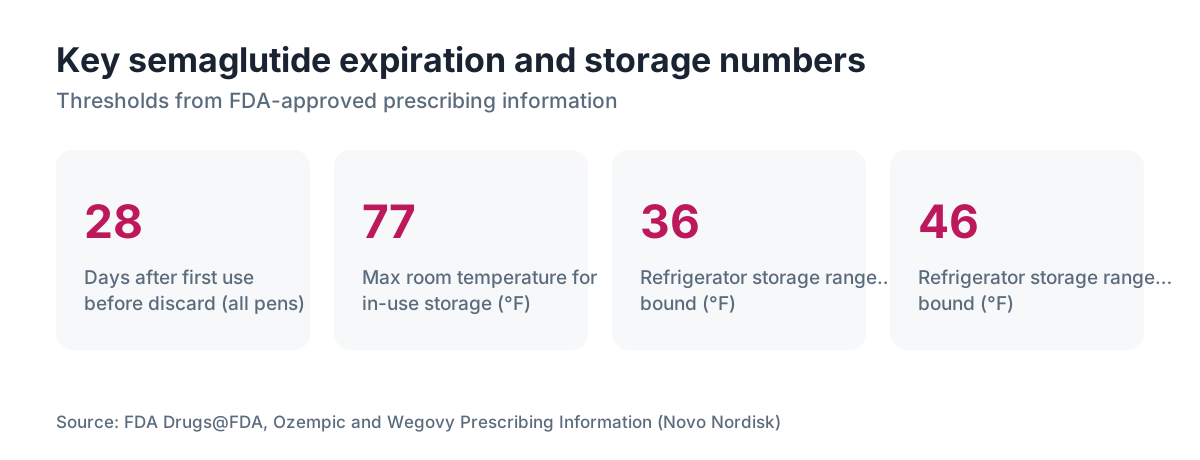
Once you prime the pen and inject your first dose, the clock starts. Both Ozempic and Wegovy pens get discarded 28 days after first use, no matter how much drug is left and no matter whether you stored the pen in the refrigerator or at room temperature [2].
This is stricter than it sounds for people on the lower doses. A 0.25 mg or 0.5 mg Ozempic dose uses only a fraction of the pen's volume. Patients sometimes assume they can save the pen for next month's injections. They can't, past that 28-day window.
After the pen is in use, you have a storage choice: refrigerator (36°F to 46°F) or room temperature up to 77°F (25°C). Both hold for up to 28 days. Travel somewhere hot and you should keep the pen cool anyway, because temperatures above 77°F speed up peptide breakdown even inside that 28-day window.
Mark the date on the pen or set a phone reminder the day you first use it. This one habit heads off most of the expiration questions that come up in practice.
Does expired semaglutide become dangerous, or just less effective?
For most injectable peptides, degradation means lost potency, not the sudden appearance of toxic breakdown products. Semaglutide stored past its expiration date or outside the recommended temperature range most likely under-delivers on dose, so you may feel less appetite suppression and see less weight effect than you expect [3].
Still, nobody should deliberately use expired semaglutide. Degradation can produce aggregates or altered peptide fragments whose safety isn't well characterized, especially in an injectable that skips the gut's protective metabolism. The FDA's stance is plain: use medications by their labeled expiration date.
For a weekly GLP-1 drug with real effects on blood sugar, appetite, and cardiovascular risk, using a degraded product also means your clinician is making dose decisions based on an exposure that isn't actually happening. That's a clinical problem more than a pharmacology footnote.
Here's the honest read: expired semaglutide is probably not acutely dangerous for a healthy adult, but it's an unknown, and it undermines your treatment. Discard it. Replace it.
How should semaglutide be stored to maximize its shelf life?
Storage rules for branded semaglutide:
| Condition | Unopened pen | Pen after first use | |---|---|---| | Refrigerator (36°F to 46°F) | Until printed expiration date | Up to 28 days | | Room temperature (up to 77°F) | Not recommended long-term | Up to 28 days | | Freezer | Never | Never | | Direct sunlight or heat above 77°F | Never | Never |
Compounded semaglutide comes in glass vials, single-use or multi-dose, not pens. Multi-dose vials from a compounding pharmacy usually need refrigeration for their entire beyond-use period. Some pharmacies specify 2°C to 8°C (the same range as branded products) and tell you not to leave the vial at room temperature for long stretches between doses. Read your specific label, because BUD and storage rules change with the formulation and the preservative used [4].
A few practical notes that come up over and over:
Don't transfer semaglutide between containers. If the vial cap is compromised or you've drawn the drug into a syringe, use that syringe right away instead of storing it.
Don't shake the pen or vial. The solution should be clear and colorless to slightly yellow, with no visible particles. Cloudy, particles, or a color change means discard it regardless of the date.
Airline travel: TSA allows injectable medications in carry-on bags without the 3.4 oz liquid limit applying, and semaglutide falls under that accommodation. Pack a small insulated pouch with an ice pack for flights over two hours to hold the pen in range. Skip checked luggage on long flights, where the cargo hold can hit extreme temperatures.
Does compounded semaglutide expire differently than Ozempic or Wegovy?
Yes, and the difference matters day to day. Branded Ozempic and Wegovy go through FDA-approved stability protocols that confirm potency, sterility, and safety through a specific date. The 28-day in-use rule and the printed expiration date on those products come from Novo Nordisk's stability data submitted to the FDA.
Compounded semaglutide gets made by a 503A or 503B compounding pharmacy under USP Chapter <797> sterility and beyond-use dating standards, not FDA drug approval [4]. USP <797> sets BUD categories by sterility risk level and storage conditions. A compounded vial stored refrigerated (2°C to 8°C) under those categories may carry a BUD of 30, 45, or 90 days depending on the pharmacy's sterility testing and the specific formulation. A few pharmacies run extra stability testing to extend BUDs. Most don't.
The practical upshot: your compounded semaglutide likely expires sooner on the calendar than a branded pen would, and the 28-day branded rule does not apply to your compounded vial. Read the label your pharmacy produced.
For how compounded and branded semaglutide compare clinically, see our article on compounded semaglutide.
One regulatory note: in 2024 the FDA declared the semaglutide shortage resolved, which restricts most 503A and 503B pharmacies from continuing to compound it [5]. Ask your prescriber about the current legal status in your state, because this picture was still shifting through mid-2025.
What happens if you accidentally use expired semaglutide?
Injected from a pen past its 28-day window, or a vial past its BUD? Don't panic. A few extra days is a very different situation from many months. Degradation is a gradient, not a cliff.
The likeliest consequence is reduced effect for that dose cycle. Less appetite suppression or less nausea than usual (nausea partly signals the drug is active) can track with reduced potency. The STEP 1 trial showed the full 2.4 mg weekly dose produced a 14.9% mean body weight reduction over 68 weeks [6]. A degraded dose disrupts the pharmacology behind numbers like that.
Tell your prescriber or clinical team. They may adjust your dose timing or replace the pen. For a single use of a pen a few days over, most clinicians would simply swap the pen and move on. For something weeks or months past the date, your clinician should know, because it affects your treatment record.
Don't inject again from the same expired pen or vial.
Can you use semaglutide past the expiration date if there's a shortage?
Shortages create real pressure to stretch medications past their dates. The FDA has occasionally allowed certain drugs to be used past expiration during declared shortages, but it does so one product at a time after reviewing the stability data for that specific drug.
As of early 2025, no FDA guidance extended the expiration dates of Ozempic or Wegovy. The branded shortage situation shifted a lot: the FDA declared the semaglutide shortage resolved [5], which cut access to compounded alternatives and improved branded supply. Facing a genuine gap? Talk to your prescriber. Options include dose timing adjustments, a switch to tirzepatide (Mounjaro or Zepbound), or a bridging plan, instead of using an expired product.
Using a meaningfully expired injectable isn't a call to make alone. It's a conversation with the clinical team who knows your full health picture.
For women in perimenopause or menopause using semaglutide inside a broader metabolic plan alongside hormone therapy, drug gaps are disruptive, because the hormonal and GLP-1 pathways interact. WomenRx clinicians can help bridge those gaps with a plan that accounts for the full picture. Read more about how GLP-1 medications fit a hormone care plan in semaglutide for weight loss or how menopause affects metabolic health.
How do you know if semaglutide has gone bad before the expiration date?
The expiration date isn't the only signal that a product has degraded. Visual inspection is your first check before every injection.
Semaglutide solution should be clear, colorless to slightly yellow, and free of particles. Discard the pen or vial right away if you see:
- Cloudiness or turbidity
- Visible particles or clumps
- A color shift (darker yellow, brown, or anything else)
- A change in consistency
These point to degradation or contamination regardless of the date on the label [2].
Temperature excursions cause most pre-expiration spoilage. If your pen sat in a hot car (interiors commonly reach 130°F to 170°F in summer), or froze, or spent hours in direct sun, treat it as unusable even if it looks fine. Heat can break down a peptide without leaving a visible trace.
Refrigerator failures happen too. If your fridge malfunctions and you don't know how long the temperature was off, call the pharmacy or Novo Nordisk's patient support line, which can help assess the exposure.
For compounded vials, bacterial contamination is a second concern beyond peptide degradation, especially if aseptic technique slipped during drawing. If a vial looks abnormal in any way, or sat outside its specified conditions, discard it.
How should you dispose of expired or unused semaglutide?
Don't flush it. Don't toss the used pen in the trash with the needle exposed. Semaglutide disposal follows the same rules as other injectable medications.
The FDA recommends an authorized drug take-back location for most prescription medications [7]. The DEA's National Prescription Drug Take-Back initiative runs periodic events and keeps permanent drop-off locations [10]. Use the DEA's locator to find a site near you.
No take-back site available? The FDA allows disposal of certain medications in household trash using the mix-and-seal method: mix the medication with something unappealing (used coffee grounds, dirt, or kitty litter), seal it in a container, and put it in the trash. Don't crush the pen. Remove the needle safely with a needle-clipping device or an approved sharps container first [7].
Used pens and needles are sharps waste. Most states require disposal in a puncture-resistant sharps container. Many pharmacies, hospitals, and fire stations accept them. Check your state's rules, because sharps disposal regulations vary.
Never recap a used pen needle. Never throw loose needles into the trash. This is a community safety issue more than a personal hygiene one.
Does semaglutide's expiration affect its GLP-1 mechanism, and does this matter more for women in menopause?
Semaglutide is a GLP-1 receptor agonist: it mimics glucagon-like peptide-1 to suppress appetite, slow gastric emptying, and modulate insulin release [6]. Its half-life in the body is about one week, which is why it's dosed weekly. That long half-life comes from an albumin-binding fatty acid chain and amino acid modifications on the molecule, not from any special storage property.
Degradation from poor storage or age can break down those molecular modifications, shortening the effective half-life of what remains and cutting receptor binding. You end up with a lower effective dose than what you drew up.
For women in perimenopause and menopause, this lands a little differently than for younger patients. Estrogen decline speeds visceral fat accumulation and metabolic slowdown; research published in Menopause, the journal of the North American Menopause Society, links the menopausal transition to a marked shift in body fat toward visceral adiposity [8]. GLP-1 medications increasingly get used in this population to counter that shift. An inconsistent or degraded dose adds noise to an already hormonally complex picture.
Managing weight alongside hormone therapy, or working through perimenopause? Dose consistency matters. The relationship between estrogen status and GLP-1 sensitivity is an active research area. Expired or poorly stored semaglutide adds a variable you can easily control by following storage and expiration rules.
What do the Ozempic and Wegovy prescribing information documents say about expiration?
The FDA-approved prescribing information for Ozempic states, in the "How Supplied/Storage and Handling" section, that the pen should be stored in a refrigerator at 36°F to 46°F (2°C to 8°C) before first use, and after first use may be stored at room temperature not exceeding 77°F (25°C) or refrigerated, for up to 28 days. The instruction is explicit: "Discard 28 days after first use." [2]
Wegovy's prescribing information carries the same 28-day discard instruction and the same temperature thresholds [9], which makes sense given that both products contain semaglutide and differ only in dose and pen design.
The labeling also says semaglutide pens should be "protected from light" and kept away from heat. These aren't vague suggestions. Photodegradation is real for peptides; UV exposure can break peptide bonds and alter the molecule's structure.
To read the full labeling yourself, the FDA's Drugs@FDA database hosts the current approved documents for both products. Prescribing information is the most authoritative source on expiration and storage, more detailed than the patient leaflet, because it contains the data that drove the recommendations.
Frequently asked questions
How long is an unopened Ozempic pen good for?
An unopened Ozempic pen stored in a refrigerator at 36°F to 46°F (2°C to 8°C) is good until the expiration date printed on the label and carton. Most pens dispensed from a US pharmacy have a date 12 to 18 months out from pickup. Never freeze it, and keep it in its original carton away from light. Once you take it out of refrigeration for good, use it within 28 days.
Can I use semaglutide that was accidentally left out overnight?
If the pen sat at room temperature (77°F or below) overnight, it's likely still usable, because the 28-day room-temperature window covers exactly this situation. If it sat somewhere above 77°F (a car in summer heat), treat it as potentially compromised. Inspect it for cloudiness or particles. When in doubt, call your prescriber or the manufacturer's support line before using it.
What happens to semaglutide if it freezes?
Freezing ruins the pen. Semaglutide solution should never freeze. If it froze and then thawed, discard it. Freezing can disrupt the peptide's structure and cause irreversible aggregation that doesn't always leave visible changes. The FDA-approved prescribing information explicitly says do not freeze.
Does compounded semaglutide expire at 28 days too?
No, not necessarily. Compounded semaglutide vials carry a beyond-use date set by the compounding pharmacy under USP Chapter <797> standards, not the 28-day branded rule. That BUD could be 30, 45, or 90 days depending on the pharmacy's formulation, sterility testing, and storage requirements. Read the label your specific pharmacy provided. Never assume the branded 28-day rule applies to a compounded product.
Is it safe to use semaglutide a few days after the expiration date?
The FDA's position is to follow the labeled expiration date. That said, the main risk of marginally expired semaglutide is reduced potency, not acute toxicity. A few days past the date is unlikely to be dangerous, but you may get less effect than expected. Replace the pen and tell your prescriber. Never use semaglutide that's weeks or months past its expiration date.
Does the semaglutide expiration date change if I store it at room temperature instead of the fridge?
Yes, in practice. The labeled expiration date on an unopened pen assumes refrigerated storage. Once a pen is in use, both storage conditions give you 28 days. But if you store an unopened pen at room temperature for extended periods before first use, Novo Nordisk's guidance doesn't endorse that, and the labeled expiration date may no longer be reliable. Keep unopened pens refrigerated.
How do I dispose of expired semaglutide pens?
Use an FDA-authorized drug take-back location when possible (the DEA runs permanent drop-off sites). If none is available, mix the remaining medication with coffee grounds or dirt, seal it in a container, and place it in household trash. Put used needles in an approved puncture-resistant sharps container and follow your state's sharps disposal rules. Never flush semaglutide or throw loose needles in the trash.
Can semaglutide go bad before the expiration date?
Yes. Temperature swings (heat above 77°F, freezing, or freeze-thaw cycles) and light exposure can degrade the product before the labeled date. Always inspect the solution before injecting: clear, colorless to slightly yellow, and free of particles. Cloudiness, color changes, or visible particles mean discard it regardless of the date. A malfunctioning refrigerator is the most common cause of pre-expiration spoilage.
Does semaglutide expiration matter differently during menopause?
Dose consistency matters more when you're managing weight during hormonal changes. Menopause speeds visceral fat accumulation and metabolic shifts, so a degraded or underdosed GLP-1 medication adds an unpredictable variable to an already complex picture. Stick to proper storage and discard timelines, and talk to your prescriber if supply interruptions affected your dose consistency.
Where can I find the official expiration and storage rules for Wegovy?
The most authoritative source is the FDA-approved prescribing information for Wegovy, available through the FDA's Drugs@FDA database. It specifies refrigerator storage before first use, a 28-day discard window after first use, a maximum room temperature of 77°F (25°C) during that window, and instructions to protect the pen from light and never freeze it. The patient leaflet with your pen summarizes these same rules.
Does the 28-day rule apply if I only used the pen once?
Yes. The 28-day discard rule starts the moment you first use the pen, no matter how many doses remain. Use it once for a 0.25 mg starting dose and the clock is still running. Patients on low doses often end a 28-day period with product left over. That remaining product gets discarded. It's one reason clinicians and patients track first-use dates carefully.
Can I travel internationally with semaglutide without it expiring?
Yes, if you manage storage. Keep the pen in an insulated pouch with an ice pack for flights over two hours. Room temperature storage (up to 77°F) is fine for up to 28 days after first use, so short trips in moderate climates work without refrigeration. For hot climates or trips longer than a few days, use a portable cooler or ask your hotel for refrigerator access. Check the destination country's import rules for injectable medications before you travel.
Does semaglutide expire faster in humid conditions?
Humidity isn't the main concern for a sealed injectable pen, because the solution is enclosed. Heat and light are the real environmental threats. For compounded semaglutide in multi-dose vials, moisture and contamination from repeated needle entries matter more than ambient humidity. Follow the storage instructions from your compounding pharmacy exactly, and inspect the vial at each use.
Sources
- FDA: Drug Expiration Dates — Do They Mean Anything?
- FDA Drugs@FDA: Ozempic (semaglutide) Prescribing Information, Novo Nordisk
- NIH/National Center for Advancing Translational Sciences: Drug Stability and Expiration
- USP General Chapter <797> Pharmaceutical Compounding — Sterile Preparations
- FDA: Drug Shortages / FDA Clarifies Policies for Compounders as Semaglutide Shortage Resolved
- Wilding JPH et al. (STEP 1 trial), NEJM 2021: Once-Weekly Semaglutide in Adults with Overweight or Obesity
- FDA: Where and How to Dispose of Unused Medicines
- Menopause journal (NAMS): Body fat distribution and metabolic risk in menopausal women
- FDA Drugs@FDA: Wegovy (semaglutide) Prescribing Information, Novo Nordisk
- DEA: National Prescription Drug Take-Back Day