Does semaglutide cause hair loss? What the evidence actually says
TL;DR: Semaglutide does cause temporary hair shedding in a small share of users, about 3% in the STEP trials versus 0.6% on placebo. The cause is telogen effluvium from rapid weight loss and low calorie intake, not the drug acting on your follicles. Hair regrows within 3 to 6 months once weight stabilizes. Menopause hormone changes can make it worse.
What exactly is the hair loss people report on semaglutide?
The hair loss tied to semaglutide is diffuse shedding. Hair falls from all over the scalp, not one spot, and it leaves no bald patches or scars. Dermatologists call it telogen effluvium. It is temporary, it reverses on its own, and it turns up in GLP-1 users often enough that the FDA's adverse event database (FAERS) holds thousands of reports.
Here is the mechanism. Your follicles cycle through three phases: anagen (active growth), catagen (transition), and telogen (rest, then shedding). On a normal day, 5 to 15 percent of your follicles sit in telogen. A hard physical stressor, whether surgery, a serious illness, childbirth, or a steep calorie deficit, can push a big batch of follicles into telogen all at once. Two to four months later, those follicles let go of their resting hairs together. That is why the shower drain looks alarming: it is genuinely more hair than usual, arriving on a delay.
The word that matters is temporary. Once the stressor clears, follicles resume their normal rhythm and hair grows back. Most people see real regrowth within three to six months after their weight stabilizes. The follicle is not damaged. It just rested longer than it should have.
How common is hair loss on semaglutide, according to clinical trials?
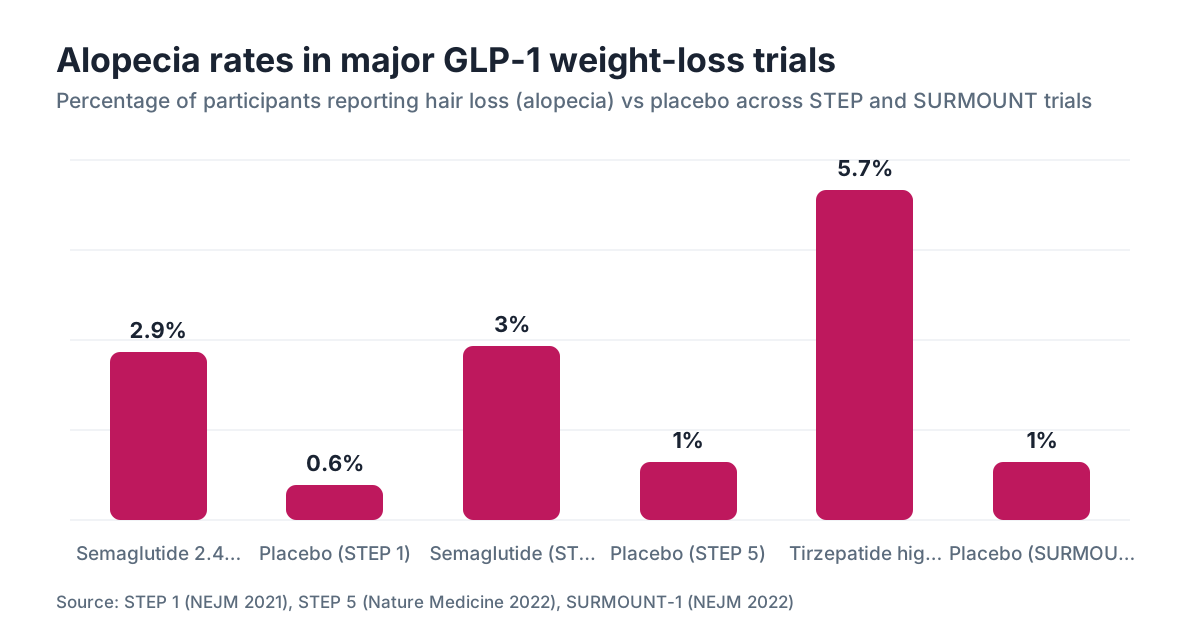
The STEP trials are the best data we have. In STEP 1, which enrolled 1,961 adults with obesity or overweight, alopecia (the term used in trial reporting) hit 2.9 percent of participants on semaglutide 2.4 mg weekly, versus 0.6 percent on placebo [1]. That is close to a fivefold jump, but the absolute number stays small. Fewer than 3 in 100 people.
STEP 5 followed participants for 104 weeks and found the same signal. The people who lost weight fastest reported shedding most often, which is exactly what the telogen effluvium explanation predicts [2].
Compare that to bariatric surgery, where weight comes off far faster and telogen effluvium shows up in roughly 30 to 40 percent of patients in published case series. Semaglutide's 3 percent looks mild by that standard, most likely because GLP-1 weight loss, though real, comes off more slowly than surgical weight loss.
The FDA prescribing information for Wegovy (semaglutide 2.4 mg) lists alopecia as an adverse reaction seen more often with semaglutide than placebo [3]. The label does not call it permanent or progressive, because across the trial follow-up it was neither.
| Trial | Semaglutide alopecia rate | Placebo alopecia rate | Duration | |---|---|---|---| | STEP 1 | 2.9% | 0.6% | 68 weeks | | STEP 5 | ~3% | ~1% | 104 weeks | | SURMOUNT-1 (tirzepatide, comparison) | ~5.7% | ~1% | 72 weeks |
Is it the semaglutide itself or the weight loss causing hair to shed?
This is the question that decides what you do about it. The evidence points hard at calorie restriction and rapid weight loss, not at semaglutide doing something to your follicles directly.
Three things back that up. First, published histology has not found GLP-1 receptors in any meaningful amount on human hair follicle cells. There is no known route by which semaglutide binds follicle tissue and disrupts its cycle.
Second, shedding rates across the different GLP-1 drugs roughly track with how much weight people lose. Tirzepatide (Mounjaro, Zepbound), which usually takes off more weight than semaglutide, also reports somewhat higher alopecia. In SURMOUNT-1, alopecia showed up in about 5.7 percent of participants on the highest tirzepatide dose [4].
Third, people who lose weight fast by other means, including very low calorie diets and bariatric surgery, get the same diffuse shedding at similar or higher rates.
The honest caveat: nobody has run a controlled study of semaglutide users who lose weight against semaglutide users who do not. The closest evidence is the dose-response pattern and the parallel with other weight-loss methods. Indirect, but fairly convincing.
Protein is a big piece of this. Hair is keratin, which is protein. Eat far less and lose weight fast, and the protein available for non-essential structures like hair drops off. Low protein intake triggers telogen effluvium on its own, separate from the weight loss. Plenty of semaglutide users eat much less than they think, and skimp on protein on top of it.
Does menopause cause hair loss?
Yes. This matters for any woman on semaglutide who is also in perimenopause or postmenopause, because the two processes stack and produce shedding worse than either alone.
Estrogen and progesterone both shape how follicles cycle. Estrogen stretches out the anagen (growth) phase and keeps more follicles actively growing. As estrogen drops in perimenopause and menopause, the anagen phase shortens and more follicles tip into telogen sooner. The result is diffuse thinning across the whole scalp, hitting the frontal hairline and crown hardest.
Androgen sensitivity is the second mechanism. Postmenopausal women carry lower absolute androgen levels than men, but once estrogen falls, the ratio of androgens to estrogens climbs. Scalp follicles that are genetically sensitive to dihydrotestosterone (DHT) start to miniaturize, turning out finer, shorter hairs cycle after cycle. This is female-pattern hair loss (androgenetic alopecia). Roughly 40 percent of women show some degree of it by age 50, according to the American Academy of Dermatology [5].
The North American Menopause Society (NAMS) recognizes hair thinning as a symptom of the menopause transition, alongside the better-known hot flashes and sleep problems [6]. Menopausal thinning tends to creep in gradually rather than dump all at once, which is one way clinicians tell it apart from the abrupt shedding of telogen effluvium.
Start semaglutide in your 40s or 50s and you may be fighting two hair-loss mechanisms at once. That combination can shed hair well beyond what the STEP percentages suggest. Your provider needs both pieces of the story.
What does hair loss from semaglutide actually look like, and how do you tell it apart from other causes?
Telogen effluvium from semaglutide usually starts two to four months after you begin the drug or hit a stretch of rapid weight loss. It shows as diffuse shedding across the whole scalp, not localized bald spots. You see more hair on the pillow, in the drain, on the brush. Overall density drops, but you rarely see scalp through the hair unless the shedding is severe.
Female-pattern hair loss from menopause moves slower and concentrates at the crown and frontal hairline. Alopecia areata, an autoimmune condition, makes distinct round or oval patches of complete loss. Thyroid-related shedding is diffuse but comes with other thyroid symptoms. Iron deficiency, genuinely common in women eating very little on GLP-1s, also causes diffuse shedding and deserves a ferritin check.
A dermatologist can run a pull test, grasping a small cluster of hairs at the root and tugging, then examine the shed hairs under a microscope to confirm the telogen phase. A scalp biopsy is rarely needed but sorts out ambiguous cases.
Lab work worth ordering: TSH, free T4, complete blood count, ferritin, zinc, and if androgen excess is a question, free and total testosterone plus DHEA-S. Several of these ride along with standard metabolic monitoring anyway.
How long does semaglutide hair loss last?
For most people the shedding phase runs two to three months. Once follicles flip back to anagen they regrow, but hair grows slowly. A follicle produces about 0.3 to 0.4 millimeters a day, roughly half an inch a month. So visible regrowth after the shedding stops takes another three to six months.
The full arc from shedding to visible recovery usually runs six to nine months, assuming you have handled the trigger. If weight loss has stabilized, protein intake is adequate, and any micronutrient gaps are fixed, most women see solid recovery inside that window.
Shedding that drags past six months, or shedding that will not slow even after weight settles, calls for a fuller workup. Menopause-driven androgenetic alopecia will not resolve on its own the way telogen effluvium does. It needs its own treatment.
What can you actually do to prevent or reduce hair loss while on semaglutide?
The best-supported move is hitting your protein. Most clinical nutrition guidelines for people losing significant weight call for at least 1.2 grams of protein per kilogram of body weight per day, and some bariatric programs push toward 1.5 g/kg to protect lean mass and hair [7]. Semaglutide kills appetite hard enough that those targets get tough. Protein shakes, Greek yogurt, eggs, and cottage cheese pack protein into low volume, which is the whole game when you are not hungry.
Iron matters too. Ferritin, iron's storage form, is the most sensitive marker for hair health. A ferritin under 30 ng/mL has been linked to telogen effluvium in the dermatology literature even when hemoglobin reads normal [8]. If yours is low, supplementing usually helps, though rebuilding stores takes months.
Zinc and biotin get marketed hard, and the evidence is thinner. Zinc helps if you have a real deficiency, more likely when you are eating very little. Biotin is not well-supported for hair loss unless you have a rare biotin deficiency, and high-dose biotin can throw off thyroid and cardiac troponin lab tests. Take it, and tell your lab.
Topical minoxidil (Rogaine) has real evidence in both telogen effluvium and androgenetic alopecia. The 5 percent foam is FDA-approved for women's hair loss. It does not treat the cause, but it can speed regrowth and cut the shedding short. A dermatologist can prescribe low-dose oral minoxidil (0.25 to 1 mg a day in women), which some find easier and more effective.
Slowing your dose escalation is worth raising with your prescriber if the shedding is bad. GLP-1 treatment aims for sustainable weight loss, not the fastest possible drop, and no rule forces you up the dose ladder on the quickest schedule.
Can hormone replacement therapy help with hair loss during menopause and GLP-1 use?
Hormone replacement therapy (HRT) addresses one of the two main drivers of hair loss in perimenopausal and postmenopausal women: falling estrogen. Restoring estrogen, through an estrogen patch or another route, can lengthen the anagen phase and pull down the androgen-to-estrogen ratio that drives follicle miniaturization.
The evidence that HRT improves hair density is weaker than the evidence for its effect on hot flashes and bone. It rests more on mechanism: estrogen supports hair growth, so restoring physiologic estrogen should support the follicle environment. Some observational data show women on estrogen-containing HRT hold better hair density than untreated postmenopausal controls, but randomized trial data on hair outcomes specifically are limited.
Progesterone matters here too. Natural progesterone has a mild anti-androgen effect by inhibiting 5-alpha reductase, the enzyme that converts testosterone to DHT. Some clinicians think micronized progesterone (Prometrium or a compounded bioidentical) may protect follicles modestly through that route. Synthetic progestins vary widely: levonorgestrel and norethindrone are more androgenic and may worsen shedding, while dydrogesterone and micronized progesterone are the more hair-friendly choices.
Already on hormone replacement therapy and shedding on semaglutide? Fix protein and micronutrients first, before touching the HRT regimen. If shedding persists and you are not on HRT, raising it with your provider is reasonable, especially if you have other menopause symptoms worth treating.
WomenRx clinicians can review your GLP-1 protocol and your hormone status in one visit, which matters because these two problems feed each other more often than most primary care doctors catch.
Does hair grow back after stopping semaglutide?
In most cases, yes. If the shedding was telogen effluvium driven by the weight-loss phase, it clears as body weight stabilizes, whether or not you stay on semaglutide. The drug is not damaging the follicle.
Stopping semaglutide to save your hair is generally a bad trade, and not one to make without your prescriber, because weight regain after stopping GLP-1s is fast and large. The STEP 1 extension found that participants who stopped semaglutide regained about two-thirds of their lost weight within a year [9]. Lose weight, shed hair, regain weight, lose again, and you can set off repeated bouts of telogen effluvium. That is worse overall than staying on the drug and managing the hair directly.
The smarter path for most women is to stay the course, eat enough protein, fix any deficiencies, and give hair time. Quitting semaglutide over hair loss swaps a temporary, reversible cosmetic problem for the full return of the metabolic disease the drug was treating.
What is the semaglutide hair loss timeline most women actually experience?
Here is the timeline in concrete terms.
Months 0 to 2: dose escalation, sharp appetite drop, often the fastest weight loss of the whole run. Follicles are getting stressed but have not reacted visibly yet.
Months 2 to 4: the shedding usually begins. More hair in the drain and on the pillow. This is the telogen effluvium phase, a delayed response to the earlier stress, not damage.
Months 4 to 6: weight loss usually slows as the body adjusts and the dose holds steady. Shedding often starts to ease here if protein is adequate and weight loss has moderated.
Months 6 to 12: for most women, shedding normalizes and regrowth shows. Fine, short hairs along the hairline and part are the sign you want.
If you are in perimenopause or postmenopause, the androgenetic alopecia piece does not follow this recovery arc. That part needs its own ongoing management.
Should you be worried about permanent hair loss from semaglutide?
Permanent loss from telogen effluvium alone is very unlikely. By definition the condition is a temporary disruption of the hair cycle. The follicle stays intact and can re-enter anagen once the trigger clears.
Permanent or progressive thinning becomes a worry when androgenetic alopecia is also in play, because that one advances over time without treatment. If you are a woman in your late 40s or 50s who already had some diffuse thinning before semaglutide, and you are shedding more now, see a dermatologist to separate the telogen effluvium (temporary) from the androgenetic component (needs treatment to halt).
The Endocrine Society's obesity guidelines advise clinicians to bring up common GLP-1 side effects, including transient hair loss, so patients can plan for them instead of quitting effective treatment early [10]. That concern is real: hair loss is exactly the visible, distressing side effect that drives people off the drug at higher rates than nausea, even though the GI effects are technically more common.
If you are weighing semaglutide for weight loss, knowing the hair picture up front lets you plan for it. That planning changes outcomes.
Frequently asked questions
Does semaglutide cause permanent hair loss?
Almost certainly not for telogen effluvium, the type of shedding linked to rapid weight loss on semaglutide. Telogen effluvium is temporary and reverses once the trigger clears. If you also have underlying androgenetic alopecia (genetic thinning worsened by menopause), that component needs its own treatment and can progress without it, but semaglutide does not make your genetics worse.
Does menopause cause hair loss?
Yes. Falling estrogen and progesterone during perimenopause and menopause shorten the growth phase and push more follicles into the resting-shedding phase. The rising androgen-to-estrogen ratio after menopause also causes gradual follicle miniaturization, known as female-pattern hair loss. About 40 percent of women show some degree of this by age 50, according to the American Academy of Dermatology.
How common is hair loss on Wegovy?
In STEP 1, alopecia was reported by 2.9 percent of participants on Wegovy (semaglutide 2.4 mg), versus 0.6 percent on placebo. That is a real increase over baseline but a small absolute number. The FDA-approved Wegovy label lists alopecia as an observed adverse reaction. Most cases resolved without stopping the drug.
When does semaglutide hair loss start?
Most women notice more shedding two to four months after starting semaglutide or after a stretch of especially rapid weight loss. That delay is the hallmark of telogen effluvium: the follicle stress happens first, and the visible shedding follows months later when those follicles finish their resting phase and release the hair shaft.
How long does hair loss last on semaglutide?
The active shedding phase usually runs two to three months. Regrowth begins once follicles return to anagen, but growing hair back takes time, roughly half an inch a month. Most women see noticeable recovery within six to nine months of the shedding onset, assuming protein intake is adequate and weight loss has stabilized.
What vitamins help with hair loss on semaglutide?
Protein is the most important nutritional factor, and it is not a vitamin. Adequate iron (check your ferritin; below 30 ng/mL is linked to telogen effluvium) and zinc are worth addressing if you are deficient. Biotin gets marketed heavily but is not well-supported unless you have a rare deficiency. High-dose biotin can distort lab tests, so tell your provider if you take it.
Does tirzepatide cause more hair loss than semaglutide?
Possibly, slightly more. In SURMOUNT-1, alopecia was reported in about 5.7 percent of participants at the highest tirzepatide dose, versus roughly 3 percent in the STEP trials for semaglutide. The gap likely reflects the greater weight loss tirzepatide produces rather than a direct drug effect. Both numbers stay relatively small.
Can hormone replacement therapy prevent hair loss on semaglutide?
HRT addresses the menopause-related part of hair loss by restoring estrogen's effect on follicle cycling and adding progesterone's mild anti-androgen benefit. It is unlikely to fully prevent telogen effluvium from rapid weight loss, but it may soften the combined effect. If you are perimenopausal or postmenopausal and shedding on semaglutide, HRT is worth discussing with your provider.
Should I stop taking semaglutide if my hair is falling out?
Usually not. The shedding is almost always temporary and clears without stopping the drug. Stopping semaglutide typically brings rapid weight regain, shown in the STEP 1 extension: participants regained about two-thirds of lost weight within a year of stopping. Repeated cycles of loss and regain can trigger multiple bouts of telogen effluvium, a worse outcome overall.
Does minoxidil help with semaglutide-related hair loss?
Yes. Topical minoxidil has genuine evidence for shortening the shedding phase and speeding regrowth in both telogen effluvium and androgenetic alopecia. The 5 percent foam is FDA-approved for women's hair loss. Low-dose oral minoxidil (0.25 to 1 mg daily for women) is increasingly used by dermatologists and can be more practical. It does not fix the underlying protein or hormonal factors.
How much protein do I need to prevent hair loss on semaglutide?
Most clinical nutrition guidelines for significant weight loss call for at least 1.2 grams of protein per kilogram of body weight per day. Some bariatric programs recommend up to 1.5 g/kg to protect lean mass and cut telogen effluvium risk. On semaglutide, appetite drops enough that many users fall well short without tracking. Protein shakes, eggs, Greek yogurt, and cottage cheese pack protein into low volume.
Is semaglutide hair loss different from normal hair loss?
Yes, in pattern and timing. Semaglutide shedding is diffuse, from all over the scalp rather than in patches, and it starts two to four months after the stress trigger, not right away. Normal daily loss is 50 to 100 hairs. Telogen effluvium produces noticeably more per day but rarely leaves visible bald spots. Alopecia areata, by contrast, makes distinct round patches.
Does compounded semaglutide cause the same hair loss as brand-name Wegovy?
No head-to-head trial exists, but the mechanism is identical: rapid weight loss triggers telogen effluvium. If compounded semaglutide produces similar weight loss, the shedding risk should be similar. Compounded versions can vary in concentration and purity, which affects tolerability in other ways, but hair loss risk tracks with the amount of weight lost more than with the specific formulation.
Sources
- Wilding JPH et al., STEP 1 trial, New England Journal of Medicine, 2021
- Garvey WT et al., STEP 5 trial, Nature Medicine, 2022
- FDA, Wegovy (semaglutide) prescribing information
- Jastreboff AM et al., SURMOUNT-1 trial, New England Journal of Medicine, 2022
- American Academy of Dermatology, Hair Loss: Overview
- North American Menopause Society (NAMS), Menopause Practice: A Clinician's Guide
- American Society for Metabolic and Bariatric Surgery, Nutritional Guidelines for the Surgical Weight Loss Patient
- Trost LB et al., 'The diagnosis and treatment of iron deficiency and its potential relationship to hair loss', Journal of the American Academy of Dermatology, 2006
- Wilding JPH et al., STEP 1 withdrawal extension, Diabetes, Obesity and Metabolism, 2022
- Endocrine Society, Clinical Practice Guideline: Pharmacological Management of Obesity, 2023