Does progesterone make you tired? What the science says
TL;DR: Progesterone has real sedative effects, strongest with oral micronized progesterone (Prometrium). The liver converts it to allopregnanolone, a compound that switches on GABA receptors the same way sleep aids do. Fatigue peaks in the first 4 to 8 weeks and at doses of 200 mg or more. Taking it at bedtime fixes it for most women.
Does progesterone actually cause fatigue?
Yes, and this is not in your head. Oral micronized progesterone (the kind sold as Prometrium) has a sedative mechanism that neuroscience understands well. When you swallow it, your liver turns part of it into a neurosteroid called allopregnanolone. That compound binds GABA-A receptors in the brain and produces a calm, drowsy effect chemically close to what benzodiazepines and sleep medications do. [1]
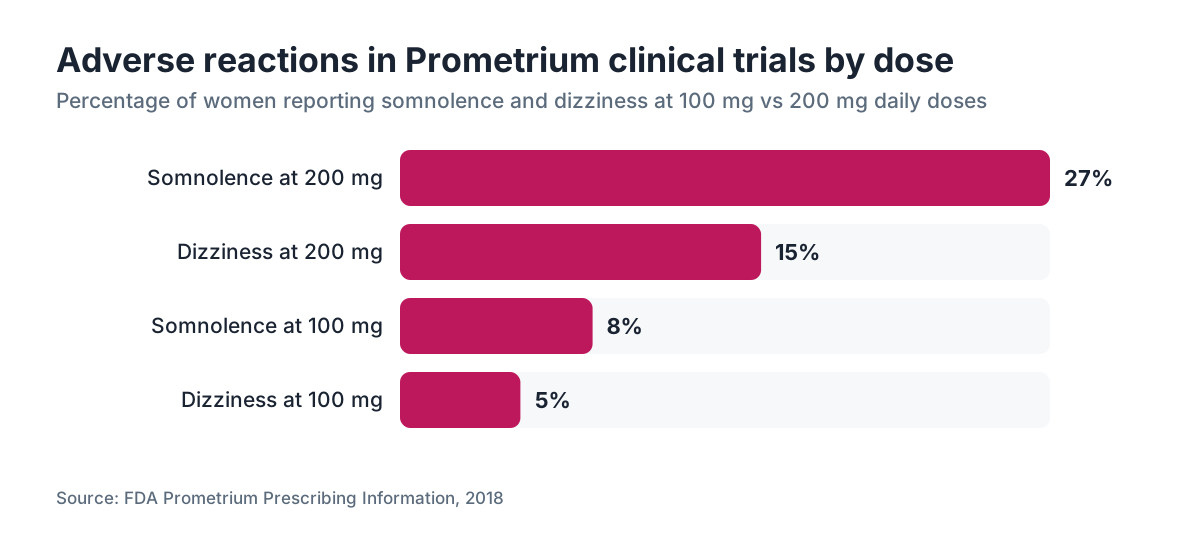
The FDA label for Prometrium lists somnolence (drowsiness) and dizziness as adverse reactions in more than 5% of users in clinical trials. [2] That is not a footnote. For many women on hormone replacement therapy, this fatigue is the first side effect they notice, often within an hour of the first dose.
Not every form does this. Transdermal creams and vaginal suppositories skip the first-pass liver metabolism that creates allopregnanolone, so they usually cause less sedation. Synthetic progestins like medroxyprogesterone acetate (MPA, the old Provera-type products) work through a different pathway and never convert to allopregnanolone, so their fatigue pattern differs, though progestins carry their own separate risks. [1]
Why does progesterone make you sleepy? The GABA connection
The mechanism explains almost everything about when and how much fatigue you feel, so it's worth ten minutes of your attention.
Oral progesterone absorbs in the gut, travels to the liver, and gets metabolized into two main neurosteroids: allopregnanolone and pregnanolone. Both are potent positive allosteric modulators of GABA-A receptors. GABA is your brain's main inhibitory neurotransmitter, the chemical that slows neural firing. When allopregnanolone amplifies GABA signaling, you get sedation, less anxiety, and sometimes mild cognitive slowing. [1]
A 2010 review in Progress in Brain Research described allopregnanolone as among "the most potent endogenous modulators" of GABA-A receptors and noted plasma levels rise within 1 to 2 hours of an oral dose. [3] That timing matches what women report exactly. The sleepiness hits roughly an hour after the pill.
Dose matters for the same reason. The standard dose for uterine protection in HRT is 100 mg nightly. The 200 mg dose used for amenorrhea or cycle regulation produces roughly twice the allopregnanolone load, so the sedation is heavier and lingers further into the next morning. [2]
Here's the flip side. This same mechanism is why oral progesterone genuinely improves sleep in many perimenopausal women. Researchers found that 300 mg of oral micronized progesterone increased deep sleep in postmenopausal women. The tiredness and the sleep benefit are two sides of one coin. [4]
How common is progesterone fatigue and how bad does it get?
Somnolence appears in a meaningful share of women on oral progesterone, and it climbs with dose. In Prometrium clinical trial data, drowsiness ran higher at 200 mg daily than at 100 mg, and dizziness followed the same pattern. [2] At the 100 mg dose used in most HRT protocols, the numbers are lower but still real.
For most women, the fatigue is manageable, not disabling. It usually peaks in the first two to four weeks while your system adjusts. Many women feel foggy or heavy for an hour or two after the pill, then fine once they've slept it off. A smaller group, maybe 10 to 15% in clinical experience, find it genuinely disruptive even at standard doses. [2]
What makes it worse: taking the pill in the morning or midday, mixing it with alcohol (both hit GABA receptors), starting at a higher dose, or carrying more adipose tissue, since fat stores lipophilic compounds like progesterone and stretches out their release.
What makes it better: strict bedtime dosing, staying hydrated, giving it four to eight weeks before you call it intolerable, and switching to a vaginal or transdermal route if the sedation truly won't quit.
Does the fatigue go away? What to expect over time
For most women, yes. Practitioners and the clinical literature both point to a 4 to 8 week adjustment window. Your GABA receptors adapt to the higher allopregnanolone signal over time, a process called receptor desensitization, and each dose loses some of its punch. [1]
Women who dose at bedtime often report that by week six the main effect is that they fall asleep faster and sleep deeper, which they count as a win rather than a side effect. That's a reasonable target.
If heavy fatigue hangs on past 8 to 10 weeks despite bedtime dosing and a sensible dose, bring it to your prescriber. It may mean the oral route isn't right for you. It may also mean something else is draining your energy. Thyroid problems, anemia, and sleep apnea are common in midlife women and all masquerade as hormone side effects.
Daytime fatigue on progesterone should never just be endured forever. You have options.
Does the form of progesterone matter for fatigue?
It matters a lot, and this is probably the most useful thing in this article. Oral micronized progesterone causes the most sedation because of the first-pass liver conversion to allopregnanolone. Vaginal progesterone (gel, suppository, or insert) delivers high local levels to the uterus but much lower systemic blood levels, which means far less effect on the central nervous system. Transdermal creams land in the middle, though their absorption is variable and often lower than oral. [5]
For women using progesterone mainly for uterine protection in HRT, the vaginal route is a legitimate alternative when oral fatigue is significant. The 2022 Menopause Society (NAMS) hormone therapy position statement acknowledges vaginal progesterone as an option for endometrial protection in select patients. [6]
Synthetic progestins don't convert to allopregnanolone, so they skip the GABA-driven sedation. But the hormone replacement therapy evidence now clearly favors oral micronized progesterone over older synthetic progestins on cardiovascular and breast risk. Switching to a progestin just to dodge tiredness is a real tradeoff that deserves a full conversation with your provider. [6]
Here's how the forms stack up on sedation:
| Form | First-pass metabolism | Allopregnanolone production | Relative sedation | |---|---|---|---| | Oral micronized (Prometrium 100 mg) | High | High | Moderate | | Oral micronized (Prometrium 200 mg) | High | Very high | High | | Vaginal gel/suppository | Minimal | Very low | Low | | Transdermal cream | Low | Low | Low to moderate | | Synthetic progestins (MPA) | Moderate | None | Low (different mechanism) |
When does progesterone fatigue peak during your cycle or HRT protocol?
If you take progesterone cyclically, meaning 10 to 14 days a month to mimic the luteal phase, the fatigue follows a predictable arc. It's strongest in the first few days of each cycle when you restart, then eases as the days pass even within that same stretch. Some women get a brief bump of energy when they stop for the month, then a grumpy readjustment when they start again. That's normal.
With continuous combined HRT, where you take progesterone every day, the fatigue is worst in weeks one and two, then fades as your receptors adapt. [2]
Your own progesterone swings too. In the luteal phase of a normal cycle, endogenous progesterone peaks around 5 to 20 ng/mL. [7] Plenty of women notice natural premenstrual sleepiness in the days before their period, driven by the exact same GABA mechanism as the pharmaceutical version. If you've always felt heavy in the back half of your cycle, you already know how this drug will feel.
Women in perimenopause often ride erratic progesterone levels before cycles stop, which causes unpredictable fatigue and broken sleep even with no medication at all. Adding pharmaceutical progesterone in that setting can sometimes steady sleep rather than wreck it, depending on where you are in the transition.
Can progesterone cause fatigue through other mechanisms beyond GABA?
The GABA-allopregnanolone pathway is the main event, but a few other pathways are worth knowing.
Progesterone has mild thyroid-binding effects in some women, and there's early evidence it touches mitochondrial function and cellular energy metabolism, though that research is far less settled than the GABA data. [8]
Progesterone receptors sit throughout the brain, including regions that run wakefulness, circadian rhythm, and mood. Animal studies show progesterone can quiet noradrenergic neurons involved in arousal. Whether that produces meaningful fatigue in humans at typical HRT doses is not well established. [8]
There's also an indirect route. Progesterone can shift blood sugar regulation, especially at higher doses, by nudging insulin sensitivity. Some women notice fatigue that tracks with carbohydrate intake after starting therapy. It's not a primary mechanism, but worth logging if your tiredness seems tied to meals.
One more thing. If your fatigue started with HRT overall rather than with the progesterone specifically, check whether the estrogen dose is right. Under-dosed estrogen leaves women with broken sleep, overnight hot flashes, and cortisol spikes that wreck daytime energy. Progesterone often gets blamed for tiredness that subtherapeutic estrogen is actually causing. [6]
What can you do to reduce progesterone-related fatigue?
Several strategies work, roughly in order of how much they help.
Take it at bedtime. This is the single most effective move and it costs nothing. You sleep straight through the peak sedation window, which falls 1 to 2 hours after ingestion. [2] If you're dosing in the morning or midday, shifting to 9 or 10 pm can change everything within days.
Give it 6 to 8 weeks. The adaptation window is real. Week two misery is not proof the medication is wrong for you. It's a sign your receptors haven't caught up yet.
Check your dose. If you're on 200 mg and your provider can safely use 100 mg for your situation, ask. Sedation drops meaningfully at the lower dose. [2]
Consider the vaginal route. If you've tried bedtime dosing for eight weeks and still have real daytime impairment, vaginal progesterone is a genuine alternative for many women using HRT for uterine protection. [6]
Drop the evening alcohol. Alcohol boosts GABA activity and amplifies the sedation.
Rule out other causes. Thyroid function, iron, vitamin B12, sleep apnea, and blood sugar swings all cause fatigue that's easy to pin on progesterone by mistake. A basic lab panel clears the obvious suspects.
Work with a provider who actually troubleshoots dose timing and route instead of telling you to push through. Telehealth platforms like WomenRx that focus on women's hormones tend to give more specific guidance than a general practitioner who writes an HRT script now and then.
Is progesterone fatigue different from perimenopause fatigue?
This overlap confuses almost everyone. Perimenopause is one of the most exhausting stretches many women describe, driven by broken sleep from night sweats, cortisol dysregulation, thyroid shifts, and the weight of a major life transition. Then you start progesterone and add a sedative on top.
The tell is timing and pattern. Progesterone fatigue comes in a predictable wave: heavy and drowsy for 1 to 2 hours after dosing, then clearing. Perimenopause fatigue runs more constant, worse after bad sleep, often with cognitive fog that hangs around all day no matter what you took. [9]
If you're on progesterone and tired all day, well beyond the hour after your dose, the progesterone is probably not the whole story. Separate the two by tracking exactly when the fatigue peaks relative to when you take the pill.
Understanding when menopause starts and the hormonal trajectory helps you read your own body. Progesterone drops in the late luteal phase years before estrogen does, which makes progesterone deficiency often the first hormonal shift of perimenopause and a driver of the insomnia and anxiety that mark the early transition. The fatigue picture is tangled.
Does progesterone cream cause the same fatigue as oral progesterone?
Generally much less. Progesterone cream absorbs through the skin, skips liver first-pass metabolism, and produces lower peak blood levels than oral at the same nominal dose. Less allopregnanolone means less sedation, and most women report far fewer drowsy effects with cream than with pills. [5]
Cream has its own uncertainties, though. Absorption varies widely between people depending on application site, skin thickness, and how often you use it. The literature still argues about whether transdermal progesterone gives adequate uterine protection for women who need it in HRT. A 2005 study in Maturitas found serum progesterone after transdermal cream was significantly lower than after oral, which raises real questions about endometrial adequacy. [5]
The Menopause Society does not endorse over-the-counter progesterone cream as a substitute for prescription progesterone in women with a uterus who are taking estrogen. [6] If you're eyeing cream to cut fatigue, that conversation has to happen with a prescriber who can check your endometrial status.
For women using progesterone for sleep or anxiety rather than uterine protection, cream may be a reasonable lower-sedation option. The evidence here is thin, and nobody has strong randomized data comparing OTC cream to oral for these specific uses.
Should you stop taking progesterone if you are too tired?
Don't stop without talking to your prescriber first, especially if you still have a uterus and take estrogen. Progesterone is not optional for uterine protection on estrogen therapy. Stopping it on your own leaves the uterine lining exposed to unopposed estrogen, which raises the risk of endometrial hyperplasia and endometrial cancer. That risk is real, not theoretical. [6]
If you've had a hysterectomy, the math changes. Women without a uterus don't need progesterone for endometrial protection at all, though some use it for sleep or mood. In that case, pausing is a much lower-stakes call.
The better path for most women is optimizing, not quitting: dose timing, dose amount, route. Most women who are genuinely bothered by progesterone fatigue can find a version of the therapy that works with some trial and adjustment. That's worth the effort, given progesterone's documented role in bone density and quality of life through the menopausal transition. [6]
If you're rethinking your hormone replacement therapy more broadly, including whether the specific combination and doses you're on still make sense, that full review is often the most productive next step.
Does progesterone cause fatigue differently in perimenopause versus postmenopause?
There are real differences depending on where you are in the transition. In perimenopause, you still make your own fluctuating progesterone. Adding pharmaceutical progesterone on top during certain cycle phases can push total levels higher, with heavier sedation, and it can interact unpredictably with the erratic swings that define perimenopause. Some women find they're more sensitive to the drug than they expected, especially in the first cycle.
In postmenopause, your own progesterone production is essentially zero. Starting therapy is a clean introduction with no baseline to complicate it. Many postmenopausal women actually find the sleep benefit more noticeable than daytime fatigue, because the allopregnanolone effect on GABA helps them reach deeper sleep stages. A 2011 randomized crossover trial published in the Journal of Clinical Endocrinology and Metabolism found that 300 mg of oral micronized progesterone significantly increased slow-wave (deep) sleep in postmenopausal women. [4]
Age shapes drug metabolism too. Older postmenopausal women may clear progesterone more slowly, which stretches the sedation window. Dosing down is sometimes appropriate in women over 65.
Frequently asked questions
How long does progesterone fatigue last after starting HRT?
For most women, the heaviest fatigue lasts 4 to 8 weeks as GABA receptors adapt to higher allopregnanolone levels. Taking oral progesterone at bedtime means much of the sedation happens while you sleep. If you still have significant daytime fatigue after 8 to 10 weeks despite bedtime dosing, ask your prescriber about a dose change or switching to a vaginal or transdermal form.
What time of day should I take progesterone to avoid feeling tired?
Bedtime, ideally 30 to 60 minutes before you want to sleep. Oral progesterone peaks in the blood about 1 to 2 hours after you swallow it. Dosing at 9 or 10 pm means the strongest sedative effect lands while you're asleep, which is both safe and often good for sleep quality. Most practitioners now recommend bedtime dosing as the default.
Does natural progesterone cause more or less fatigue than synthetic progestins?
Different mechanisms, not easily compared. Natural (micronized) progesterone causes fatigue through allopregnanolone's GABA activation, strongest in oral form. Synthetic progestins don't convert to allopregnanolone, so they skip that specific sedation. But progestins carry different side effect profiles. Micronized progesterone is generally preferred in modern HRT protocols because of its cardiovascular and breast safety data.
Can progesterone make you tired even at low doses like 100 mg?
Yes, though milder than at 200 mg. The FDA label for Prometrium shows dose-dependent sedation, with more somnolence at 200 mg than 100 mg. Some women are sensitive enough to feel real drowsiness at 100 mg, especially in the first few weeks. Bedtime dosing usually resolves it at 100 mg for most users.
Is progesterone fatigue a sign that something is wrong?
Usually no. It's a predictable effect of oral micronized progesterone converting to allopregnanolone. It's only a warning sign if it persists past 8 to 10 weeks despite bedtime dosing, is disabling rather than mild, or comes with other new symptoms. In those cases, rule out thyroid problems, adrenal issues, anemia, and sleep apnea before blaming the progesterone.
Does vaginal progesterone cause fatigue?
Much less than oral, and often none at all. Vaginal progesterone skips liver first-pass metabolism, so it produces very little systemic allopregnanolone. Blood levels after vaginal use are a fraction of oral at the same dose. Women who can't tolerate oral progesterone's sedation often do well on vaginal forms, provided their prescriber confirms it meets their clinical needs.
Why does progesterone make me tired the morning after taking it?
A next-morning hangover is more common at 200 mg or higher, and in women who dose earlier in the evening, say 7 pm, giving it more time to still be active in the morning. Shifting the dose to 10 pm or later usually fixes it. If it persists at 100 mg with late dosing, ask your prescriber about splitting the dose or switching routes.
Can progesterone fatigue affect my ability to drive or work?
The FDA label for Prometrium warns about driving and operating machinery, especially after the first dose or a dose increase, because of dizziness and somnolence. Most women who dose at bedtime have no functional impairment during work hours once the 4 to 8 week adjustment passes. If you take it during the day, or you're in the early weeks, be cautious about driving until you know your own response.
Does progesterone cause brain fog as well as physical tiredness?
Yes, some women report cognitive slowing alongside physical fatigue, especially in the first few weeks. It runs on the same GABA-mediated mechanism as the drowsiness and usually clears on the same timeline. If significant fog persists past eight weeks on standard HRT doses, re-examine whether the form and dose are optimized, and check for thyroid problems or sleep apnea.
Is it normal to feel energized by progesterone rather than tired?
Some women do feel calmer and more rested rather than sedated, especially postmenopausal women whose sleep was poor before therapy. The allopregnanolone effect improves deep sleep architecture in some people, so the net result is more energy the next day, not less. Individual variation in how GABA receptors respond is real, and some women are simply less sensitive to the sedation.
Can I take progesterone every other day to reduce fatigue?
This is not a standard approach and shouldn't be done without prescriber guidance. For uterine protection on estrogen HRT, progesterone has to follow a schedule proven to adequately oppose estrogen's effect on the endometrial lining. Changing the schedule without evidence could leave the uterus under-protected. Ask your provider about approved low-dose or alternative protocols if fatigue is a real problem.
Does progesterone from food or supplements cause fatigue?
Dietary sources don't deliver meaningful progesterone or its precursors. Wild yam cream contains diosgenin, a plant compound marketed as a progesterone precursor, but the human body can't convert diosgenin to progesterone. Over-the-counter creams with actual USP progesterone exist, but their dosing is inconsistent. Neither is likely to cause significant GABA-mediated fatigue because systemic levels from these sources are usually negligible.
How does progesterone fatigue compare to fatigue from other hormones in HRT?
Estrogen generally raises energy in women who were deficient, and estrogen-related fatigue is less common, usually tied to over- or under-dosing rather than direct sedation. Testosterone in women (used off-label in some protocols) tends to increase energy. Progesterone is unique among the sex hormones in having a clear, direct CNS sedative mechanism through allopregnanolone, which makes it the most common cause of hormone-related fatigue in HRT users.
Sources
- Brinton RD et al., 'Progesterone receptors: Form and function in brain', Frontiers in Neuroendocrinology, 2008
- FDA, Drugs at FDA database, Prometrium prescribing information
- Reddy DS, 'Neurosteroids: Endogenous role in the human brain and therapeutic potentials', Progress in Brain Research, 2010
- Caufriez A et al., 'Progesterone prevents sleep disturbances and modulates GH, TSH, and melatonin secretion in postmenopausal women', Journal of Clinical Endocrinology and Metabolism, 2011
- Wren BG et al., 'Transdermal progesterone and its effect on vasomotor symptoms, blood lipid levels, bone metabolic markers, moods, and quality of life for postmenopausal women', Maturitas, 2005
- The Menopause Society (NAMS), '2022 Hormone Therapy Position Statement'
- National Institutes of Health, MedlinePlus, 'Progesterone Test'
- Baulieu EE, Robel P, 'Neurosteroids: a new brain function?', Journal of Steroid Biochemistry and Molecular Biology, 1990
- Santoro N et al., 'Menopausal Symptoms and Their Management', Endocrinology and Metabolism Clinics of North America, 2015