Does progesterone make you gain weight? What the evidence says
TL;DR: Progesterone does not directly cause fat gain. It can raise appetite a little and hold onto water for a few weeks, but clinical trials show that properly dosed bioidentical or synthetic progesterone does not add body fat. Midlife weight gain is driven mostly by estrogen loss and aging. Most women on HRT see no meaningful change on the scale.
What does progesterone actually do in your body?
Progesterone is a steroid hormone your body makes mainly from the corpus luteum after ovulation, and from the placenta during pregnancy. Outside of pregnancy, its main jobs are preparing the uterine lining for implantation, opposing estrogen's growth effect on the endometrium, and signaling the brain about where you are in your cycle.
It also reaches your nervous system. Progesterone converts in the brain to allopregnanolone, a neurosteroid that binds GABA receptors and calms things down, sometimes to the point of sedation. That's why some women feel sleepy after taking oral micronized progesterone at night. Most prescribers use that effect on purpose.
What progesterone is not is a fat-storage hormone. Insulin, cortisol, and estrogen deficiency shift body composition far more than progesterone does. That distinction matters, because women blame progesterone for scale changes that have entirely different causes.
For a broader look at how this hormone works across the lifespan, see our full overview on progesterone.
Does progesterone cause water retention or bloating?
Yes, and this is the main reason women feel heavier on progesterone. It has nothing to do with fat.
Progesterone is structurally close to aldosterone, the hormone that tells your kidneys to hold onto sodium. When levels rise sharply, as they do in the luteal phase of a natural cycle or the first weeks of a new HRT dose, some women retain fluid. On the scale that reads as one to three pounds of water, sometimes more. It usually clears once levels stabilize or the dose changes.
Bloating works a little differently. Progesterone slows gut motility, so food moves through your digestive tract more slowly. That's useful in pregnancy, when the body wants more time to absorb nutrients, but it registers as fullness and discomfort the rest of the time. Still not fat. Still not permanent.
The practical fix. If you started progesterone and your rings feel tight or your jeans feel snug in the first four to six weeks, wait. Most of that is fluid. If it hangs around past two months, talk to your prescriber about timing or route.
Does progesterone increase appetite or food cravings?
It can. This is the one path by which progesterone might indirectly add weight over time, and even then the effect is small and varies a lot between women.
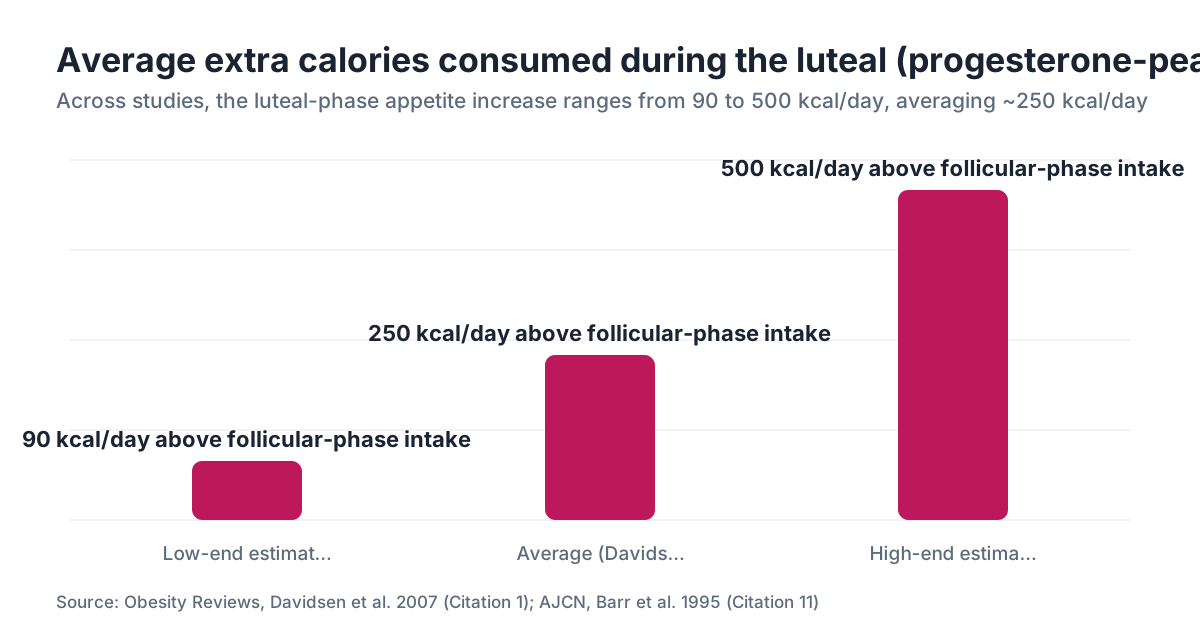
Studies of the luteal phase, when natural progesterone peaks, consistently show women eat roughly 90 to 500 extra calories a day compared with the follicular phase [1]. A 2007 review in Obesity Reviews put the average luteal-phase increase at about 250 kcal/day, driven partly by progesterone's effect on appetite-regulating peptides and partly by its small bump in basal body temperature, which raises resting metabolic rate a touch but not enough to cancel out the appetite bump for most women [1].
The calorie-craving effect is real. The open question is whether it turns into actual fat over months and years of HRT, and the trial evidence says it mostly does not, because the appetite signal is modest and the metabolic rate change offsets part of it.
Carb and sweet cravings in the second half of your cycle, or in the days after starting progesterone, come from progesterone. Knowing that doesn't erase them. It does let you plan for them instead of feeling ambushed.
What do clinical trials actually show about progesterone and weight?
The strongest data come from the Women's Health Initiative (WHI) and several smaller randomized controlled trials. The short version: no meaningful fat gain from either synthetic progestins or bioidentical progesterone at standard doses.
The WHI enrolled over 160,000 postmenopausal women and tracked weight across its hormone therapy arms. Women on conjugated equine estrogen plus medroxyprogesterone acetate (a synthetic progestin, not bioidentical progesterone) did not gain significantly more weight than women on placebo over follow-up. The WHI writing group reported no clinically meaningful difference in body mass index between the hormone therapy and placebo groups [2].
A common worry is that synthetic progestins like medroxyprogesterone acetate (MPA) behave differently from bioidentical micronized progesterone (Prometrium or a compounded equivalent). MPA has some androgenic and glucocorticoid receptor activity that oral micronized progesterone lacks, which could in theory shift fat distribution. The PEPI trial, which compared several HRT regimens, found that oral micronized progesterone with estrogen produced a better metabolic profile than MPA with estrogen: more HDL cholesterol preserved and no greater weight gain [3].
The scale changes women notice are water weight, gut motility, and the ordinary weight trajectory of midlife. They are not progesterone building fat.
| Form of progestogen | Weight change vs. placebo (WHI / PEPI data) | Other metabolic notes | |---|---|---| | Medroxyprogesterone acetate (MPA) | No significant difference | Slightly lowered HDL vs. estrogen alone | | Oral micronized progesterone | No significant difference | Preserved HDL, favorable lipid profile | | No hormone therapy (placebo) | Baseline comparison | Menopause-related weight gain still occurs |
Does HRT make you gain weight overall?
This is the question most women actually mean when they ask about progesterone, so here's the direct answer: HRT does not cause fat gain, and the evidence suggests it may slightly reduce the belly fat that piles on around menopause.
Estrogen loss shifts fat from the hips and thighs toward the abdomen, and that shift drives metabolic risk on its own, apart from total weight. Studies show women using estrogen-based HRT keep more lower-body (gynoid) fat distribution and less visceral abdominal fat than non-users [10]. The North American Menopause Society (NAMS) 2022 position statement says hormone therapy does not cause weight gain, and that the weight women put on near menopause comes from aging and hormonal change, not from HRT itself [4].
The confusion makes sense. Women often start HRT right when perimenopausal weight gain is accelerating, so the timing invents a link that isn't there. Average weight gain across the menopausal transition runs about 1.5 pounds per year whether or not a woman uses hormones, driven by muscle loss, a slowing metabolism, and the insulin resistance that comes with estrogen decline [9].
For more on the transition itself, see our articles on menopause and when does menopause start.
If you're here because you're afraid HRT will make a weight problem worse, the data points the other way. Women on hormone replacement therapy tend to hold onto more lean mass and gain less visceral fat than untreated women the same age.
Why do women gain weight during perimenopause even without hormones?
Because the weight gain is caused by the hormones you're losing, not the ones you might be taking. Perimenopause starts on average in the mid-to-late 40s, though it can begin in the late 30s. For a closer look at timing, see our piece on perimenopause age.
During the transition, estrogen swings erratically before it finally drops. Estrogen protects metabolic rate, insulin sensitivity, and fat distribution. As it fades, several things happen at once.
Muscle mass drops at roughly 3 to 8 percent per decade after age 30, then faster after 50 [5]. Muscle burns more calories at rest than fat, so losing it lowers your basal metabolic rate. Sleep gets worse, partly from hot flashes and partly from progesterone's own decline (less allopregnanolone, less GABA activation, lighter sleep). Poor sleep raises ghrelin, the hunger hormone, and lowers leptin, the satiety hormone, so intake creeps up. Cortisol gets harder to buffer, and chronically high cortisol parks fat on the abdomen.
None of that is progesterone's doing. Blaming the hormone you're taking for what the hormones you're losing are causing is a common and understandable mistake.
Does the way you take progesterone (pill, cream, suppository) affect weight?
Route matters more for how well it works and how you feel than for weight specifically. Still worth understanding.
Oral micronized progesterone (like Prometrium) gets heavily processed in the gut and liver before it hits your bloodstream. That first-pass metabolism produces high levels of allopregnanolone and other neuroactive metabolites, which is why oral progesterone makes you sleepy. Enough progesterone reaches the uterus, but blood levels look lower than the actual protective effect after oral dosing. This form has the best safety data and the most research behind it.
Topical progesterone creams sell over the counter, but most of them don't deliver enough progesterone to protect the uterine lining in women who still have a uterus and take estrogen. Serum levels after OTC cream are generally too low for endometrial protection, and the FDA has not approved OTC progesterone creams for that purpose [6]. Women use them hoping for weight neutrality or other perks, but the efficacy data is thin.
Vaginal progesterone suppositories or gels deliver high local concentrations with little systemic absorption, which cuts down on sedation and some side effects. Weight effects are minimal here too.
The honest answer. No route is meaningfully more likely to add weight than another. The differences are how you feel (drowsy or not), how well your uterus is protected, and how reliably the dose absorbs.
Could it be your estrogen dose, not progesterone, causing the problem?
Very possibly, and this gets missed a lot. Estrogen at the right dose has a net metabolic benefit: better insulin sensitivity, less visceral fat, more lean mass preserved. But estrogen dosed too high causes real water retention and breast tenderness, and some women get an appetite bump from it too.
When women on combination HRT feel puffy or heavier, they usually blame progesterone, because it's the piece they think of as optional. The estrogen dose is just as likely to be the culprit.
If you started an estrogen patch or oral estrogen at the same time as progesterone and you're holding fluid, ask your prescriber whether the estrogen dose is matched to your actual estradiol levels rather than a default number. The Endocrine Society's menopause hormone therapy guidance recommends individualizing doses by symptom response and lab monitoring instead of starting every patient on the same amount [7].
Some women also find that switching from oral estrogen to a transdermal form (patch or gel) clears up weight-related complaints, because transdermal delivery skips the liver first-pass effects that can worsen triglycerides and fluid retention in some people.
At WomenRx, hormone prescribing is tied to lab results and follow-up, which is the kind of individualization the Endocrine Society describes.
What should you actually do if you're gaining weight on progesterone?
Give it two full menstrual cycles, or about eight weeks if you're postmenopausal, before you draw conclusions. Most fluid and bloating complaints settle as your body adjusts to the new hormone levels.
Still seeing scale changes after two months? Figure out what kind of weight it is. Weigh yourself at the same time each morning, before eating, after using the bathroom. Day-to-day swings of more than three pounds are fluid. Fat gain is slow and steady, rarely more than a pound or two a month even under conditions built to produce it.
Ask your prescriber to run labs. Fasting insulin, fasting glucose, and a thyroid panel are reasonable. Hypothyroidism often shows up in perimenopause and causes real weight gain that gets pinned on hormones.
If you're on oral progesterone and feeling puffy, ask about moving the dose to bedtime (this cuts daytime sedation and some women find it eases bloating), or ask whether vaginal progesterone fits your situation.
If true fat gain is happening and you've ruled out dose and route, look wider: sleep quality, resistance training, protein intake, stress. Those are the levers that move body composition in midlife. Hormones set the conditions for your metabolism to work well. They don't override calories in versus calories out.
When midlife weight gain is significant and lifestyle alone isn't moving it, GLP-1 receptor agonists like semaglutide or tirzepatide have strong evidence in this group. The STEP trials for semaglutide and the SURMOUNT trials for tirzepatide both enrolled large numbers of women aged 40 to 65 and showed meaningful, sustained weight loss. Read more on semaglutide for weight loss or the semaglutide vs tirzepatide comparison if that path fits you.
How does progesterone interact with GLP-1 medications for weight loss?
There's no direct drug interaction between progesterone (or most progestins) and GLP-1 receptor agonists like semaglutide or tirzepatide that would be expected to cut efficacy or raise risk. You can use both when both are clinically indicated.
The STEP 1 trial for semaglutide 2.4 mg showed an average 14.9% body weight loss over 68 weeks in adults with obesity or overweight [8]. Many STEP participants were women in the menopausal age range, and subgroup analyses have not shown that using hormones alongside the drug changes outcomes much, though formal interaction analyses specific to HRT users are limited.
Here's what matters day to day. GLP-1 agonists work by slowing gastric emptying and turning down appetite centrally. Progesterone already slows gut motility. So some women on both report more pronounced nausea, especially at higher GLP-1 doses. That's manageable with slower titration and meal timing, but flag it to your prescriber.
Used together, optimized hormones and a GLP-1 drug may hit complementary drivers of midlife weight gain: HRT corrects the hormonal side of fat redistribution and muscle loss, while the GLP-1 drug cuts caloric intake. Nobody has a clean trial on this exact combination yet. The mechanistic case for it is sound.
Is there any form of progesterone that is more weight-neutral?
Among prescribed options, oral micronized progesterone (bioidentical) has the most weight-neutral and metabolically favorable profile compared with older synthetic progestins, based on the PEPI trial and later research [3]. The Endocrine Society and NAMS both note the distinction in their guidance.
Synthetic progestins vary. Norethindrone and levonorgestrel have androgenic activity and may hit weight and lipids harder than dydrogesterone or micronized progesterone. Dydrogesterone, common in Europe, has a favorable weight profile in observational data but is not FDA-approved in the United States.
The NAMS 2022 position statement puts it this way: "Among the progestogens, micronized progesterone and dydrogesterone appear to have less adverse effects on the lipid profile and less androgenicity than older progestins" [4].
For most US women who need a progestogen, oral micronized progesterone is the starting point for good reason. If it causes side effects you can't live with, vaginal progesterone or a different synthetic progestin is a fair conversation with your prescriber.
Frequently asked questions
Does HRT make you gain weight?
No, HRT does not cause fat gain. The North American Menopause Society's 2022 position statement is explicit: weight increases near menopause come from aging and hormone decline, not from hormone therapy. Women on HRT often show less visceral abdominal fat than untreated women the same age. Scale changes in the first weeks of HRT are usually fluid shifts, not fat.
How long does progesterone bloating last?
Most women who bloat or retain water when starting progesterone see it clear within four to eight weeks as the body adjusts. If it hangs on past two full menstrual cycles, or two months of postmenopausal use, ask your prescriber about a dose or timing change. Switching oral progesterone from morning to bedtime helps some women a lot.
Does micronized progesterone cause weight gain differently than synthetic progestins?
Clinical data, including the PEPI trial, suggest oral micronized progesterone (Prometrium) has a better metabolic profile than medroxyprogesterone acetate (Provera). Neither causes meaningful fat gain at standard doses, but micronized progesterone preserves HDL cholesterol better and has less androgenic activity, which supports a more neutral effect on body composition.
Why am I gaining weight during perimenopause if it's not my hormones causing it?
It is caused by hormonal change, specifically estrogen decline, just not by any hormone you're taking. Falling estrogen lowers insulin sensitivity, shifts fat from hips to belly, and speeds muscle loss. Add disrupted sleep, which raises hunger hormones, and a slowing metabolism from muscle loss, and the average woman gains about 1.5 pounds per year through the transition, HRT or not.
Can progesterone cream help with weight loss?
No good clinical evidence supports that. OTC progesterone creams don't deliver enough into circulation to change body composition, and FDA-approved uses of progesterone don't include weight management. Some sellers claim it lowers cortisol-driven fat storage, but controlled trials don't back that up. Save your money for interventions that have real evidence behind them.
Should I stop progesterone to lose weight?
No, not if you have a uterus and take estrogen. Stopping progesterone in that setting removes endometrial protection and raises the risk of uterine hyperplasia. Weight gain on HRT usually isn't from progesterone anyway. If your HRT and your weight worry you, the right move is a talk with your prescriber about dose and formulation, not quitting on your own.
Does progesterone affect insulin resistance or blood sugar?
High doses, particularly in pregnancy, can modestly reduce insulin sensitivity. At the much lower doses used in HRT, the effect on insulin resistance is generally negligible. Estrogen deficiency has a far bigger impact on insulin sensitivity in perimenopausal women. If you have prediabetes or metabolic syndrome, get your fasting insulin and glucose checked rather than blaming progesterone.
Why do I crave carbs the week before my period or after starting progesterone?
Progesterone raises appetite during the luteal phase and in the early weeks of supplementation. Studies show average caloric intake climbs by roughly 250 calories a day during progesterone's peak. The brain's serotonin system is partly involved, which drives sweet and carb cravings specifically. Knowing the trigger helps: plan higher-protein meals and keep grab-and-go carbs out of reach during that window.
Does taking progesterone at night vs. morning affect weight or bloating?
Timing doesn't change weight much, but taking oral micronized progesterone at bedtime cuts next-day sedation, and some women report less daytime bloating on that schedule. The neurosteroid metabolites that cause drowsiness peak two to three hours after an oral dose, so nighttime dosing turns the sedation into a sleep aid instead of a nuisance. Most prescribers default to bedtime for oral progesterone.
Can a GLP-1 drug like semaglutide help if I'm gaining weight during menopause?
Yes. GLP-1 receptor agonists have strong evidence for weight loss in women in the menopausal age range. The STEP 1 trial showed semaglutide 2.4 mg produced an average 14.9% body weight reduction over 68 weeks. GLP-1 drugs address the caloric intake side of midlife weight gain; optimized HRT addresses the hormonal side. They work through different mechanisms and aren't contraindicated together.
How do I know if my weight gain is from progesterone or something else entirely?
Track your weight at the same time each morning for two to four weeks. Fat gain is slow and steady; fluid gain shows up as big day-to-day swings of two to four pounds. Also rule out hypothyroidism with a TSH test, which is common in perimenopause and causes real fat gain that often gets blamed on hormones. Insulin resistance and poor sleep are other common culprits worth checking with your doctor.
Does the estrogen in HRT cause weight gain instead of the progesterone?
Estrogen dosed too high can cause water retention and some appetite effects, much like progesterone. Estrogen at the right dose tends to improve metabolic markers. If you're on combination HRT and feeling puffy, look at the estrogen dose before the progesterone. Switching from oral to transdermal estrogen clears fluid-related complaints in some women because it avoids first-pass liver effects.
Does progesterone-only contraception (the mini-pill or Depo-Provera) cause weight gain?
The mini-pill (progestin-only pill) has little data supporting fat gain. Depo-Provera (injectable medroxyprogesterone acetate) has more documented association with weight gain, with some studies showing two to four pounds over the first year, though results vary widely. These are much higher, more potent progestin exposures than standard HRT doses, so the data don't translate directly to HRT-level progesterone.
Are there lifestyle changes that offset progesterone-related appetite increases?
Yes. Raising protein intake to 1.2 to 1.6 grams per kilogram of body weight per day improves satiety and cuts carb cravings across the cycle. Resistance training two to three times a week preserves muscle, which keeps resting metabolic rate higher. Getting seven to eight hours of sleep matters more than most people think: one bad night raises ghrelin and pushes next-day intake up noticeably.
Sources
- Obesity Reviews, Davidsen et al. 2007 – Impact of the menstrual cycle on determinants of energy balance
- JAMA, Women's Health Initiative Writing Group, 2002 – Risks and benefits of estrogen plus progestin in healthy postmenopausal women
- JAMA, Writing Group for the PEPI Trial, 1995 – Effects of estrogen or estrogen/progestin regimens on heart disease risk factors
- The North American Menopause Society – 2022 Hormone Therapy Position Statement
- NIH National Institute on Aging – Exercise and Physical Activity
- U.S. Food and Drug Administration – Compounding and the FDA
- Endocrine Society – Clinical Practice Guidelines
- New England Journal of Medicine, Wilding et al. 2021 – Once-weekly semaglutide in adults with overweight or obesity (STEP 1 trial)
- Mayo Clinic Proceedings, Davis et al. 2012 – Understanding weight gain at menopause
- Menopause (journal) – Effects of hormone therapy on body composition
- American Journal of Clinical Nutrition, Barr et al. 1995 – Energy intake across the menstrual cycle