Does progesterone increase libido in women?
TL;DR: Progesterone has a mixed, dose-dependent relationship with libido. At physiologic levels it can support sexual interest, but in the synthetic form (progestin) commonly used in HRT, it often blunts desire. Natural micronized progesterone appears more neutral to mildly positive. Testosterone remains the hormone with the strongest evidence for female sexual desire.
What does progesterone actually do to female libido?
The short answer: it depends on the form, the dose, and where you are in your cycle.
Progesterone is made mostly in the ovaries after ovulation and, during pregnancy, by the placenta. Its main job is preparing the uterine lining for implantation and holding early pregnancy in place. But it also acts on the brain, in the same regions tied to mood, arousal, and reward. That overlap is why the libido question gets complicated fast.
At low, physiologic levels, progesterone can nudge desire upward for some women. Animal studies show progesterone briefly primes the brain's sexual response circuits after estrogen exposure, which mirrors the pattern many women recognize: a spike in desire around ovulation, followed by a quieter luteal phase [1]. That post-ovulation window of heightened interest matches rising progesterone alongside still-elevated estrogen.
The problem is context. Once progesterone dominates and estrogen falls, desire usually drops. That is the second half of the luteal phase, and it is why so many women feel less interested in sex in the days before their period. High-dose synthetic progestins, like medroxyprogesterone acetate (MPA), the version used in older combined HRT, blunt libido more than natural micronized progesterone (Prometrium, compounded bioidentical) in head-to-head studies [2].
So the hormone is not a simple booster or a killer. It is a modulator. The net effect depends heavily on what else is happening hormonally.
How does progesterone differ from testosterone for sexual desire?
Testosterone has the strongest and most consistent evidence for driving female sexual desire. The Endocrine Society's 2019 clinical practice guideline states that "testosterone therapy improves sexual function in postmenopausal women" and cites gains in desire, arousal, and satisfying sexual events [3]. No comparable consensus statement exists for progesterone as a libido treatment.
Progesterone's role is regulatory, not driving. Testosterone is the accelerator. Progesterone is a variable that can ease off the brake (at low levels) or press harder on it (at high or synthetic levels). Estrogen works separately, mainly by keeping vaginal tissue healthy and maintaining blood flow and nerve sensitivity, all of which shape the physical experience of sex even when desire is present.
The table below shows how the three main sex hormones relate to different parts of female sexual function.
| Hormone | Primary sexual effect | Evidence level | Common form in HRT | |---|---|---|---| | Testosterone | Drives desire/libido | Strong (RCTs, meta-analyses) | Compounded cream/gel, transdermal | | Estrogen | Vaginal health, lubrication, arousal | Strong (RCTs) | Patch, gel, ring, pill, cream | | Progesterone (natural) | Neutral to mildly supportive | Weak (observational, mechanistic) | Oral micronized (Prometrium) | | Progestin (synthetic) | Often suppressive | Moderate (RCTs in HRT context) | MPA (Provera), norethindrone |
The split between natural micronized progesterone and synthetic progestins matters a lot here. They bind receptors differently and have very different effects on mood and libido [2].
What happens to libido during perimenopause and menopause?
Somewhere between 40% and 50% of women report reduced sexual desire during the menopause transition, which makes low libido one of the most common complaints providers hear in this age group [9]. Several hormones shift at once, so it is hard to blame any single one.
Estrogen falls first and most sharply, driving vaginal dryness, urinary symptoms, and reduced clitoral sensitivity. Testosterone declines gradually across the 30s and 40s, not suddenly at menopause. Progesterone drops fast once ovulation becomes irregular in perimenopause, because there is no reliable luteal phase left to produce it.
This means many perimenopausal women lose all three hormones at once, and the libido effect stacks. Restoring only one rarely fixes the whole picture.
Sleep disruption from night sweats and insomnia, which hit a majority of perimenopausal women, adds its own drag independent of hormone levels. So does the psychological weight of the transition. Any honest accounting of libido changes at midlife has to hold those factors alongside the hormonal ones.
If you are in this phase and want the timeline, the article on perimenopause age covers when these changes typically begin and how long they last.
Does taking progesterone as part of HRT help or hurt libido?
The answer depends almost entirely on which progestogen you are prescribed and how it is delivered.
Synthetic progestins, especially MPA (medroxyprogesterone acetate), have shown negative effects on mood and libido across HRT trials. The Women's Health Initiative (WHI) used conjugated equine estrogen plus MPA in its combined arm, and while the WHI was not built to measure libido, later analyses found that women on the combined regimen reported lower sexual satisfaction scores than women on estrogen alone [2]. The PEPI trial and smaller studies point the same way: synthetic progestins cut into estrogen's libido-supportive effect when the two are combined.
Natural micronized progesterone (the oral form sold as Prometrium, or compounded versions) reads as more neutral. Some small studies report slightly better mood and sleep with micronized progesterone versus MPA, and clinicians report fewer complaints of blunted libido. One reason: oral micronized progesterone converts partly to allopregnanolone in the gut and liver, a neurosteroid with calming, GABA-modulating effects. Whether that helps or hurts libido varies by woman.
Vaginal progesterone skips this conversion almost entirely, which is why it is the preferred route when the goal is uterine protection with the least systemic neurological effect. If libido is a concern and you still need progesterone for uterine protection, micronized progesterone or vaginal delivery is a reasonable thing to raise with your provider.
For a wider view of how these decisions fit together, the article on hormone replacement therapy walks through the options in more detail.
What does the research say about progesterone and sexual function specifically?
The research base here is thinner than you would expect. Most hormone-and-libido studies focus on testosterone or estrogen, and when progesterone shows up it is usually a background variable (part of a combined HRT regimen) rather than the main intervention.
A 2005 randomized crossover trial by Schiff et al. compared oral micronized progesterone to MPA in postmenopausal women on estrogen and found MPA linked to more negative mood effects, including lower sexual interest, compared to micronized progesterone [2]. The study was small, but it is one of the cleaner head-to-head comparisons available.
Animal research, mostly in rodents, shows a clear biphasic pattern: low progesterone after estrogen priming facilitates sexual behavior, while high progesterone inhibits it [1]. Whether this maps cleanly to human experience is not settled, but it is mechanistically plausible and fits what many women report about their cycle.
A 2019 meta-analysis in the Journal of Sexual Medicine looked at all forms of hormone therapy and female sexual dysfunction and found that testosterone-containing regimens showed the most consistent benefit, while progestogen-only data were too heterogeneous to draw firm conclusions [5]. Nobody has good large-scale trial data testing micronized progesterone as a libido intervention. The closest we have are small trials, observational studies, and mechanistic data.
Honest bottom line: progesterone is not a treatment for low libido with real evidence behind it. If libido is your main concern, that conversation should start with testosterone and estrogen, not progesterone.
Can progesterone improve libido indirectly through mood or sleep?
This is where it gets genuinely interesting, and it is probably where progesterone's reputation as a libido-supporter comes from.
Oral micronized progesterone's conversion to allopregnanolone produces a calming, anti-anxiety effect that some women find meaningful. For a woman whose low libido is driven mostly by anxiety, hyperarousal, or poor sleep, that calming effect can translate into more interest in sex. It is an indirect pathway, but it is real.
Sleep is a huge, underrated driver of female libido. Women who sleep less than 7 hours report significantly lower sexual desire. A 2015 study in the Journal of Sexual Medicine found that each additional hour of sleep raised the likelihood of sexual activity the following day by 14% [6]. Progesterone's sedating properties may improve sleep quality, which can then support libido downstream.
Mood works the same way. Depression cuts libido through a well-documented pathway involving dopamine and motivation circuits. If progesterone's neurosteroid effects ease anxiety or a low-grade mood dip, desire may improve as a side effect.
None of this makes progesterone a treatment for low libido. But for a woman who is exhausted, anxious, or sleeping badly, adding micronized progesterone to her regimen might do more for her sex life than the direct hormone data would suggest.
How do progesterone levels naturally change across the menstrual cycle?
Understanding the natural cycle explains why progesterone's libido effect is so context-dependent.
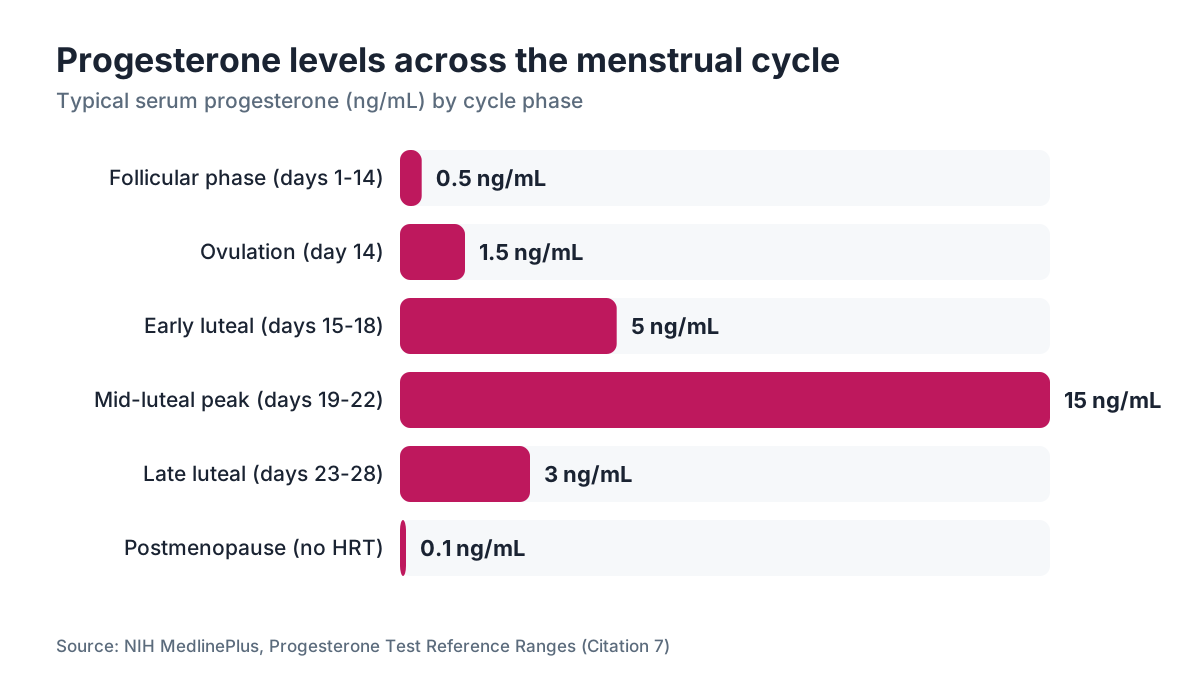
During the follicular phase (roughly days 1 to 14), progesterone is very low, under 1 ng/mL. Estrogen rises toward ovulation, and most women notice peak desire in this window. At ovulation, a brief LH surge triggers the corpus luteum to form, and progesterone output jumps sharply, reaching 5 to 20 ng/mL in the mid-luteal phase (roughly days 19 to 22) [7].
This is the double-edged moment. Early in the luteal phase, progesterone is still rising alongside estrogen, and some women feel a secondary interest spike. As the luteal phase moves on and estrogen falls, progesterone dominates alone, and desire tends to quiet. If pregnancy does not happen, both hormones drop, triggering menstruation.
After menopause, progesterone is essentially absent (typically under 0.1 ng/mL) unless it is supplemented. Perimenopause produces irregular, unpredictable cycles where ovulation may not happen at all, so progesterone may never rise in some cycles, which throws off the normal rhythm.
For women tracking their cycle to understand their own desire patterns, this progression explains a lot. The low-progesterone, high-estrogen follicular phase is almost universally the window of highest sexual interest. That is not coincidence.
What other factors affect libido in midlife women beyond hormones?
Hormones get most of the attention, but they are rarely the whole story for women in their 40s and 50s.
Relationship satisfaction is one of the strongest predictors of sexual desire in long-term partnerships. Research consistently shows that desire is more responsive to relationship context in women than in men. Body image and self-perception shift during the menopause transition in ways that independently affect sexual confidence.
Medications are a commonly missed driver. SSRIs and SNRIs (prescribed at high rates to midlife women for depression and anxiety) reliably suppress libido. Beta-blockers, antihistamines, and some blood pressure medications do the same. If libido dropped around the time a medication started, that connection is worth investigating before pinning everything on hormones.
Genitourinary syndrome of menopause (GSM), the clinical term for vaginal dryness, thinning, and urinary changes, causes painful sex for a large share of postmenopausal women. Pain during sex erodes desire fast, and it is often undertreated because women feel embarrassed to bring it up. Local estrogen (vaginal ring, cream, or suppository) treats GSM effectively and is considered safe even for many women who cannot use systemic HRT [8].
Chronic illness, thyroid disorders, and stress-related fatigue also affect libido. Before assuming a hormone deficiency, a basic thyroid panel and metabolic workup is reasonable.
The providers at WomenRx treat this as a full clinical picture rather than a single-hormone fix, which is the right frame for a symptom this multifactorial.
When should you talk to a doctor about low libido and hormone levels?
Low libido counts as a clinical concern when it bothers you. That sounds obvious, but many women are told their labs are normal and sent home. Hormone lab ranges for women are notoriously broad and do not always capture symptomatic thresholds, especially for testosterone.
A reasonable starting workup includes estradiol, FSH, total and free testosterone, SHBG (sex hormone binding globulin, which affects how much testosterone is actually available), a thyroid panel, and a basic metabolic panel. Progesterone levels are less useful for the libido question because they swing so much across the cycle, but checking the full picture is worthwhile.
The Endocrine Society recommends against measuring testosterone in women as a routine screening test and says treatment should be based on symptoms rather than a specific lab cutoff [12]. North American Menopause Society (NAMS) guidance similarly stresses that no validated serum testosterone level defines female hypoactive sexual desire disorder (HSDD) [4].
If you are in perimenopause or postmenopause, the conversation with the most evidence behind it is whether systemic HRT is right for you (estrogen plus progesterone if you have a uterus, estrogen alone if not) and whether adding low-dose testosterone makes sense. The article on menopause covers HRT candidacy in detail.
Do not start any hormone therapy based on an article alone. Hormone levels interact with your full health history, including cardiovascular risk, family history, and the timing of menopause onset, and need a qualified provider to interpret.
Is natural or bioidentical progesterone better for libido than synthetic progestins?
Based on the available evidence, yes, with real caveats.
Natural micronized progesterone (bioidentical, meaning chemically identical to what the ovary makes) has a different receptor-binding profile and metabolic pathway than synthetic progestins. It does not bind androgen receptors the way some progestins do, which matters because androgen-receptor activity is tied to libido. MPA has mild androgenic activity at some receptors but also anti-estrogenic effects that may compound libido suppression.
The NAMS hormone therapy position statement notes that progestogens differ meaningfully in their effects on mood, metabolic markers, and patient-reported quality of life, and that micronized progesterone is generally preferred for its more favorable side effect profile [4].
The FDA-approved oral form is Prometrium (100 mg and 200 mg capsules) [10]. Compounded bioidentical progesterone is also widely prescribed, though it carries less regulatory oversight. Vaginal micronized progesterone (Crinone, Endometrin) delivers locally and has the least systemic neurological effect, which may matter if mood or libido side effects are a concern.
If you are on HRT with a synthetic progestin and struggling with libido or mood, switching to micronized progesterone is a reasonable discussion to have with your provider. The available data support the switch, even if the libido-specific evidence is not from large trials.
For a deeper look at progesterone specifically, the article on progesterone covers forms, dosing, and use cases.
What are realistic expectations if you start or adjust progesterone?
Let me manage expectations honestly: progesterone alone is unlikely to turn a low libido into a high one. That is just not what the data show, and any provider who pitches it that way is overselling.
What you might reasonably notice with oral micronized progesterone, especially if you were previously on a synthetic progestin, is less suppression of desire, better sleep (which indirectly supports libido), and possibly steadier mood in the luteal-equivalent window. Some women say progesterone helps them feel more settled in a way that makes them more open to intimacy. That is real. It is not the same as a direct libido boost.
If the main issue is desire, testosterone is the conversation to have. If the main issue is painful sex, local estrogen handles that directly. Progesterone is typically prescribed for uterine protection in women with an intact uterus on estrogen, and its effect on libido should be understood in that context, not as the reason to add it.
The most realistic expectation: choosing the right form of progesterone (micronized over synthetic) removes a possible barrier to libido without actively driving it. That is still worth doing. Removing a suppressive factor is not nothing.
Frequently asked questions
Does progesterone increase libido or decrease it?
Both, depending on dose, form, and hormonal context. At low physiologic levels, progesterone may mildly support desire, particularly alongside estrogen. At high levels or in synthetic form (progestins like MPA), it tends to suppress libido. Natural micronized progesterone is more neutral. It is not a reliable libido booster, and testosterone has far stronger evidence for that purpose.
Can low progesterone cause low libido?
Possibly, but indirectly. Very low progesterone, as seen in anovulatory perimenopause, disrupts the normal hormonal rhythm and is often accompanied by low estrogen and testosterone. Any of those three independently affects libido. Low progesterone alone is rarely the direct cause. If libido is low and progesterone is low, the full hormonal picture needs evaluating, more than one hormone.
Does progesterone cream increase libido?
Topical progesterone cream is available over the counter and as prescription-compounded formulations. Skin absorption is inconsistent, making blood levels unreliable. There are no good clinical trials showing progesterone cream specifically improves libido. Some women report subjective benefit, but that may reflect improved sleep or mood rather than a direct libido effect. It is not something I would count on as a primary intervention.
What is the best hormone for female libido?
Testosterone has the best evidence. Multiple randomized controlled trials and a 2019 Endocrine Society guideline support testosterone therapy for improving sexual desire, arousal, and satisfying sexual events in postmenopausal women. Estrogen addresses the physical side of sex by treating vaginal dryness and improving tissue sensitivity. Progesterone is important for uterine protection but is not primarily a libido hormone.
Does progesterone affect mood and can that affect libido?
Yes. Oral micronized progesterone converts partly to allopregnanolone, a neurosteroid with calming, GABA-activating effects. For women whose low libido is driven by anxiety, hyperarousal, or poor sleep, this sedating effect can indirectly support sexual interest. Synthetic progestins do not share this pathway and are more often associated with low mood, irritability, and blunted libido.
How long does it take for progesterone to affect libido after starting HRT?
There is no established timeline specific to progesterone and libido because the evidence for a direct effect is weak. If libido improves after starting a combined HRT regimen, it is usually due to the estrogen component or (if included) testosterone. Any progesterone-related mood or sleep benefits that might indirectly support libido typically appear within 4 to 8 weeks of consistent use.
Is bioidentical progesterone better for libido than synthetic progestins?
Based on available evidence, yes. Natural micronized progesterone does not have the anti-estrogenic or androgen-receptor effects of some synthetic progestins. Studies comparing micronized progesterone to MPA show less suppression of mood and sexual interest with the natural form. NAMS notes that progestogens differ meaningfully in patient-reported quality of life. Choosing micronized progesterone removes a likely barrier to libido without actively driving it.
Does progesterone help with vaginal dryness and painful sex?
Not directly. Vaginal dryness and atrophy are primarily estrogen deficiency symptoms. Progesterone does not meaningfully treat genital tissue changes. Local vaginal estrogen (cream, ring, suppository) is the evidence-based treatment for those symptoms. Women who cannot use systemic estrogen are often still candidates for local vaginal estrogen, which has minimal systemic absorption.
Can too much progesterone kill libido?
Yes. Excess progesterone, whether from high-dose supplementation or certain phases of natural pregnancy, is consistently associated with reduced sexual desire. The mechanism likely involves both central (brain) suppression of arousal circuits and the anti-estrogenic effect of high progesterone, which reduces the estrogen activity that supports desire and tissue sensitivity. Getting doses right with a prescriber matters.
Does progesterone help with menopause-related low libido?
Only modestly and indirectly. Menopausal low libido reflects declining estrogen and testosterone, and progesterone does not compensate for either. In women on estrogen HRT who need progesterone for uterine protection, choosing micronized progesterone over a synthetic progestin may preserve more of estrogen's libido-supportive effects. But progesterone alone is not an effective treatment for menopausal sexual dysfunction.
What hormone levels should be tested if I have low libido?
A reasonable panel includes estradiol, FSH, total testosterone, free testosterone, SHBG, and thyroid hormones (TSH, free T3, free T4). Progesterone is less diagnostically useful for libido because it fluctuates widely across the cycle. The Endocrine Society cautions against using a specific testosterone number as the trigger for treatment; symptoms matter more than a single lab value.
Does the timing of progesterone in the cycle affect libido?
Yes. The follicular phase, when progesterone is very low and estrogen is rising, is typically when women report the highest sexual interest. The mid-to-late luteal phase, when progesterone peaks and estrogen drops, is usually associated with lower desire. This mirrors the premenstrual pattern many women notice. Taking exogenous progesterone may replicate some of these effects depending on timing and dose.
Can stopping progesterone improve libido?
If you are on a synthetic progestin and finding it suppresses mood or desire, switching to natural micronized progesterone (rather than stopping entirely) is generally the safer move for uterine-intact women on estrogen. Stopping progesterone while remaining on systemic estrogen creates an unprotected uterine lining, which carries endometrial cancer risk. Talk to your provider before making any changes.
Is hypoactive sexual desire disorder (HSDD) a recognized condition?
Yes. HSDD is recognized in the DSM-5 (merged with female sexual arousal disorder as female sexual interest/arousal disorder) and is one of the most common sexual complaints in midlife women. It is defined as persistent or recurrent low desire causing personal distress. FDA-approved treatments include flibanserin (Addyi) and bremelanotide (Vyleesi). Testosterone is prescribed off-label and has the strongest evidence base among hormone options.
Sources
- Endocrine Reviews, Mani & Bhatt (2004) - Progesterone and female sexual behavior
- Menopause (journal), Schiff et al. (2005) - MPA vs micronized progesterone and mood/sexual effects
- Endocrine Society Clinical Practice Guideline, Testosterone Therapy in Women (2019)
- North American Menopause Society (NAMS) Position Statement, Hormone Therapy 2022
- Journal of Sexual Medicine, meta-analysis of hormone therapy and female sexual dysfunction (2019)
- Journal of Sexual Medicine, Kalmbach et al. (2015) - Sleep and sexual activity in women
- NIH MedlinePlus, Progesterone normal reference ranges
- FDA Drug Label, Vaginal Estrogen Products (Estrace, Premarin Vaginal)
- NAMS, Menopause Practice: A Clinician's Guide (2022)
- FDA Drug Label, Prometrium (progesterone, USP) capsules
- Endocrine Society, Testosterone Therapy in Women Position (2019)