Does progesterone cause weight gain? What the evidence actually says
TL;DR: Progesterone can cause temporary bloating and water retention that shows up on the scale, but clinical trials do not support the idea that it causes lasting fat gain. Most women taking body-identical micronized progesterone as part of HRT do not gain significant weight. Falling estrogen, muscle loss, and disrupted sleep during menopause matter far more.
What does progesterone actually do in the body?
Progesterone is a steroid hormone made mainly by the ovaries after ovulation, with a smaller contribution from the adrenal glands. During a normal cycle, levels surge in the second half, then fall sharply right before a period. In pregnancy, the placenta takes over and levels climb hard. After menopause, production drops close to zero.
The hormone works through progesterone receptors found all over the body: the uterus, breast tissue, brain, bone, and fat cells. In the uterus, its job is to ready the lining for a fertilized egg and, if pregnancy doesn't happen, to trigger the shedding of that lining. In the brain, it converts to a compound called allopregnanolone, which has calming, sleep-promoting effects [1].
In hormone replacement therapy, progesterone (or a synthetic progestin) gets added whenever a woman still has a uterus. Estrogen on its own thickens the uterine lining in ways that raise endometrial cancer risk, and progesterone counters that. That protective role is why it's prescribed. It's not a weight tool. Knowing what it's for puts the weight question in context. Read more about how this hormone works on our progesterone overview page.
Can progesterone cause weight gain, or is it just bloating?
This is the question most women are really asking. The honest answer: probably not real fat gain, but the scale can absolutely move.
Progesterone has mild aldosterone-antagonist properties, meaning it competes with aldosterone at receptors in the kidney and can shift how the body handles sodium and water. Some women retain fluid, others do the opposite [2]. The net result is scale swings of roughly 1 to 3 pounds in the luteal phase of a natural cycle, documented in studies that measured body water directly. That is water, not fat.
The second worry is appetite. Progesterone does seem to nudge appetite up in some women, and there's reasonable evidence this runs partly through the hypothalamus [3]. Eating more over months or years can of course add fat, but that's a behavior effect downstream of the hormone, not a direct one.
The third mechanism is insulin sensitivity. Some progestins, especially older synthetic ones like medroxyprogesterone acetate, can modestly blunt insulin sensitivity, which over time could in theory encourage fat storage [4]. Body-identical micronized progesterone looks much more neutral here.
So can progesterone cause weight gain? It can shift fluid and may push appetite up, but well-run studies have not found it to drive meaningful fat gain on its own.
What does the research actually show about progesterone and weight?
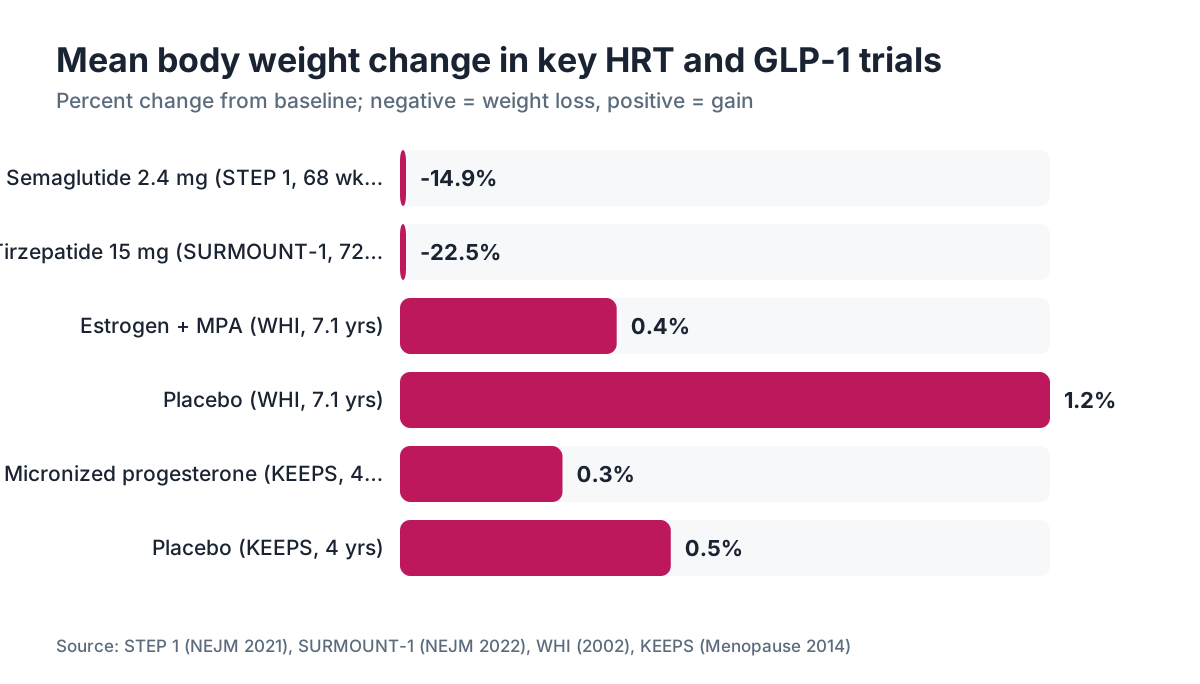
The largest and most rigorous data come from the Women's Health Initiative (WHI), which enrolled more than 16,000 postmenopausal women and randomized them to conjugated equine estrogen plus medroxyprogesterone acetate (MPA) or placebo. After one year, the HRT group had not gained more weight than placebo. After 7.1 years of follow-up, the HRT group actually had slightly smaller waist circumference increases [5].
The WHI used MPA, a synthetic progestin, not body-identical micronized progesterone. The KEEPS trial (Kronos Early Estrogen Prevention Study) looked specifically at oral micronized progesterone in recently menopausal women and found no significant effect on body weight or fat mass compared to placebo over four years [6].
A 2023 systematic review in Menopause: The Journal of The Menopause Society pulled together 10 randomized controlled trials of various HRT formulations. Its stated conclusion: "postmenopausal hormone therapy does not appear to cause weight gain" [5].
Here's the nuance. Some observational studies do find weight gain in women starting HRT. But once researchers account for the weight gain that happens during the menopausal transition anyway, the HRT groups often come out ahead, not behind.
For a fuller picture of the landscape, the hormone replacement therapy article covers formulation options and the current evidence.
Does HRT cause weight gain, and is progesterone the culprit?
This comes up constantly and deserves a straight answer. HRT as a category does not reliably cause weight gain in the trial data. The perception that it does is real, though, and comes from a few places.
Most women start HRT during perimenopause or early menopause, exactly when metabolic rate is slowing, visceral fat is moving from hips to abdomen, and muscle mass is dropping. These shifts happen with or without hormones. Gain weight around the time you start a new prescription and it's easy to blame the pill, even when the hormone transition itself did the work.
Progestins are not interchangeable. MPA, the synthetic progestin in the original WHI and many older pills, carries androgenic and glucocorticoid activity that micronized progesterone does not [4]. Head-to-head studies generally show better metabolic profiles with body-identical progesterone. If your HRT uses an older synthetic progestin and weight worries you, that's a conversation to have with your prescriber.
The estrogen half matters too. Estrogen helps hold onto insulin sensitivity and lean mass. Some evidence suggests estrogen-containing HRT actually cuts the visceral fat gain that menopause otherwise speeds up [7]. So HRT may modestly protect against the metabolic shifts of menopause rather than cause them.
Can HRT cause weight gain? In rare cases, estrogen-driven fluid retention adds a few transient pounds, usually in the first 1 to 3 months. True fat gain from standard HRT regimens is not what the controlled trials show. If your weight has climbed a lot after starting HRT, look at calorie intake, activity, sleep, and thyroid function before you blame the hormones.
Micronized progesterone vs synthetic progestins: does the type matter for weight?
Yes, and the difference is worth a minute of your attention.
Body-identical micronized progesterone (sold as Prometrium in the US) has the same molecular structure as the progesterone your ovaries make. It binds progesterone receptors selectively and mostly leaves other receptors alone.
Synthetic progestins are chemically modified to be more potent, orally active, or longer-lasting. The most studied is medroxyprogesterone acetate (MPA), sold as Provera. Others include norethindrone, levonorgestrel, and dienogest. They vary in how much they also switch on androgen, glucocorticoid, or mineralocorticoid receptors, and those off-target effects drive the differences in metabolism, fluid retention, and possibly appetite [4].
The table below sums up the key metabolic differences between the main progestogen types, based on published receptor-binding data and clinical trial outcomes.
| Progestogen | Type | Androgenic activity | Insulin sensitivity effect | Fluid retention risk | |---|---|---|---|---| | Micronized progesterone | Body-identical | None | Neutral | Low | | Medroxyprogesterone acetate (MPA) | Synthetic | Low | Modest impairment | Moderate | | Norethindrone acetate | Synthetic | Moderate | Modest impairment | Low-moderate | | Levonorgestrel | Synthetic | High | Moderate impairment | Low | | Dienogest | Synthetic | Anti-androgenic | Relatively neutral | Low |
For most postmenopausal women on HRT who still have a uterus, oral micronized progesterone 100 to 200 mg at bedtime is what the Menopause Society now calls the preferred formulation, partly for its better metabolic and safety profile [8]. The sleep boost from its conversion to allopregnanolone is a real bonus.
Why do so many women feel like progesterone makes them gain weight?
Lived experience matters even when it doesn't match the average trial result. A few things explain the gap.
Progesterone, especially oral micronized progesterone taken at night, hits the GABA-A receptor through allopregnanolone and can raise appetite the next day in some women [3]. Eat an extra 150 to 200 calories a day without noticing and that adds up to real fat over months. This is not inevitable, but it's real for some people.
Bloating is the other big one. Progesterone relaxes smooth muscle in the gut and slows motility. Gas and constipation both get worse, and the physical feeling of bloating reads as weight gain even when the scale says nothing alarming.
Fluid shifts are genuinely variable. Some women hold 2 to 4 pounds of water in the luteal phase or in the first month of a new prescription. Temporary, but distressing.
Dose and route matter too. High-dose oral progesterone hits the liver first and generates more metabolites than, say, a vaginal progesterone suppository that delivers the same uterine-protective dose at a fraction of the systemic exposure. If you're on oral progesterone and struggling, it's worth asking whether the vaginal route (or a lower dose) fits your situation.
None of this means your experience isn't real. It means the mechanism is probably fluid, gut motility, or appetite rather than direct fat, and each of those can be addressed.
What actually drives weight gain during perimenopause and menopause?
Progesterone takes the blame for a lot that is actually menopause biology. Naming the real drivers makes them easier to fix.
Estrogen decline is the central one. Estrogen helps set fat distribution, tune appetite signaling through leptin, and regulate energy expenditure. As it falls in perimenopause, fat shifts toward the abdomen even without any net change in total body weight. This is why so many women feel like they woke up in a new body in their late 40s [7].
Muscle loss speeds up after 40, and muscle burns calories. Lose it and you burn fewer calories at rest. Most women lose roughly 1 to 2% of muscle mass per year without resistance training after menopause.
Sleep disruption, common in perimenopause thanks to night sweats and insomnia, pushes ghrelin up and leptin down, which raises appetite and cuts satiety. A single night of 4 hours of sleep raises ghrelin by about 28% compared with 8 hours [9].
Chronic stress and cortisol pile on top. And thyroid trouble becomes more common after 40, often sliding under the radar for months.
Gaining weight in your 40s or 50s and wondering if your hormones are behind it? Probably yes, but usually through the estrogen drop and lost sleep rather than progesterone. Learn more about the transition in the menopause and perimenopause age articles.
Will progesterone cause weight gain if I start it for the first time?
If you're about to start progesterone as part of HRT and the weight question is on your mind, here's what to realistically expect.
In the first 4 to 8 weeks, some women see 1 to 3 pounds show up on the scale. That's almost always fluid, not fat. For most, it settles on its own as the body adjusts.
Appetite may feel a touch higher, especially in the first cycle or two. Awareness helps. If you notice you're hungrier in the evenings, when many women take their dose, planning meals beats relying on willpower.
True fat gain over 6 to 12 months from progesterone alone is not what the data shows. The KEEPS trial found no significant weight difference between oral micronized progesterone users and placebo after 4 years [6].
Gain more than 5 pounds after starting a new regimen and it doesn't budge after 3 months? That warrants a workup: thyroid function, an honest look at calorie intake, and a talk with your prescriber about formulation changes. The answer is rarely "stop the progesterone." It's far more often an adjustment.
What about GLP-1 medications for weight management alongside HRT?
For women gaining weight through the menopausal transition despite real effort, GLP-1 receptor agonists have become a legitimate clinical option. These drugs slow gastric emptying, cut appetite, and improve insulin sensitivity.
Semaglutide (Ozempic, Wegovy) cut body weight by a mean of 14.9% over 68 weeks in the STEP 1 trial, which enrolled adults with a BMI of 30 or higher, or 27 with a weight-related condition [10]. Tirzepatide (Zepbound) went further in the SURMOUNT-1 trial, with up to 22.5% weight reduction at the highest dose [11].
These are not progesterone replacements. They work on the energy-balance side. HRT works on the hormonal side. For many women in their 40s and 50s, the two together are genuinely effective, and that combination is now a recognized approach.
At WomenRx, our clinical team works with women managing both HRT and GLP-1 therapy, because these issues overlap constantly in perimenopausal and menopausal patients. To see whether a GLP-1 fits you, the semaglutide for weight loss article breaks down the evidence and eligibility. You can compare the main options in the semaglutide vs tirzepatide article.
One note for women on HRT: no major interaction has turned up between GLP-1 medications and standard HRT regimens, and both can be used together. Smaller meals on GLP-1 therapy can shift the absorption timing of oral progesterone, so your prescriber may suggest taking progesterone at bedtime, apart from your biggest meal, regardless.
Practical things you can actually do if you're gaining weight on progesterone
If progesterone is affecting your weight, or you suspect it is, a handful of moves have real evidence behind them.
Track the pattern. Weigh yourself daily for one full cycle and plot it. If your weight rises 2 to 4 pounds in the second half of the cycle and drops after your period (or after the progesterone phase of your HRT cycle), that's fluid. Different problem from fat, different fix.
Time your dose. Oral micronized progesterone at bedtime cuts next-day grogginess and may blunt the appetite effect compared with morning dosing. Standard practice, not a hack.
Lift weights. Resistance training is probably the single best tool for preventing the metabolic weight gain of menopause. Building and keeping muscle raises resting metabolic rate and improves insulin sensitivity. Aim for two to three sessions a week. Strong evidence, low cost [9].
Eat more protein. Most women fall well short of what they need to hold onto muscle through menopause. Current evidence supports 1.2 to 1.6 grams of protein per kilogram of body weight per day for women over 40. It helps with satiety too.
Sleep is not optional. Seven to nine hours moves hunger hormones within days. If hot flashes or night sweats are wrecking your sleep, treating those (often with HRT itself) helps weight management directly.
The estrogen patch article covers transdermal estrogen, which many women tolerate better if oral estrogen-plus-progesterone combinations bring on appetite or fluid trouble.
When to talk to a doctor about progesterone and weight changes
Most weight changes around progesterone are predictable, manageable, and no reason to stop treatment. Some patterns, though, warrant a clinical conversation.
Gain more than 5 pounds in the first 3 months of HRT and the weight won't trend back down? Worth investigating. Check thyroid-stimulating hormone (TSH), fasting glucose, and insulin. Look honestly at calorie intake and sleep.
Weight climbing steadily over 6 to 12 months despite reasonable diet and activity? A formulation review makes sense. Switching from a synthetic progestin to micronized progesterone, or from oral to vaginal progesterone, may help. Your prescriber can also check whether your estrogen dose is high enough, since underdosing estrogen strips away its protective effect on body composition.
Struggling to manage weight even after HRT is optimized and lifestyle is dialed in? Raise the question of a GLP-1 evaluation. The STEP and SURMOUNT trials showed meaningful, sustained weight loss in adults with obesity or overweight plus comorbidities, and menopausal women were well represented.
Don't stop progesterone on your own if you still have a uterus and you're on estrogen. The uterine protection is not optional. The conversation is about optimizing the regimen, not dropping a necessary piece of it.
Frequently asked questions
Does progesterone cause weight gain in perimenopause?
Progesterone can cause temporary fluid retention and mild appetite increases in perimenopause, both of which can move the scale. But the weight gain most women experience in perimenopause is driven mainly by falling estrogen, muscle loss, and disrupted sleep. Clinical trials have not found progesterone supplementation to be a significant cause of fat gain in perimenopausal women.
Does HRT cause weight gain?
The controlled trial evidence, including the Women's Health Initiative with more than 16,000 participants, does not support the idea that HRT causes net weight gain. Women on HRT sometimes gain weight, but so do women not on HRT during the menopausal transition. Menopause itself is the main driver; HRT may actually modestly reduce visceral fat gain compared with going without.
Can HRT cause weight gain in the early weeks?
Yes, transiently. Estrogen can cause fluid retention in the first 4 to 8 weeks of starting HRT, adding 1 to 3 pounds that usually resolve. Progesterone can add minor bloating from slowed gut motility. If weight gain persists past 3 months or tops 5 pounds, it warrants investigation rather than being pinned on HRT alone.
What is the difference between progesterone and progestin for weight?
Synthetic progestins like medroxyprogesterone acetate can modestly impair insulin sensitivity and carry androgenic or glucocorticoid activity that body-identical micronized progesterone does not. Most research comparing the two finds a better metabolic profile with micronized progesterone. If you're on an older synthetic progestin and struggling with weight, asking your prescriber about switching is reasonable.
Does progesterone cream cause weight gain?
Over-the-counter progesterone creams contain very low doses that achieve minimal systemic progesterone levels, so any effect on weight is unlikely. They also don't deliver enough progesterone to protect the uterine lining in women on estrogen therapy. The clinical relevance of OTC progesterone cream for weight is essentially zero either way.
Can stopping progesterone cause weight loss?
If progesterone was causing fluid retention, stopping it may let a few pounds of water weight resolve. But stopping progesterone over weight concerns is rarely the right call, especially if you still have a uterus and are on estrogen. Unprotected estrogen exposure to the uterus is a serious risk. The better path is formulation adjustment, not discontinuation.
Does progesterone affect belly fat specifically?
Progesterone does not appear to directly drive visceral fat. The shift of fat to the abdomen that women experience in perimenopause is driven mainly by falling estrogen. Some evidence suggests estrogen therapy modestly reduces visceral fat deposition, while progesterone's contribution to that effect is neutral or minor.
Does taking progesterone for sleep affect weight?
Oral micronized progesterone at bedtime promotes sleep through its conversion to allopregnanolone, which acts on GABA-A receptors. Better sleep can actually support healthy weight by improving hunger-hormone balance. The indirect effect of progesterone on weight through better sleep is likely positive rather than negative, based on sleep and metabolism research.
Will progesterone cause weight gain in younger women taking it for cycle irregularities?
Progesterone prescribed for cycle regulation or luteal phase support in younger women can cause the same temporary fluid retention and bloating. True fat gain is not supported by the evidence. If a younger woman is gaining fat on progesterone, the more likely culprits are appetite changes, diet, or an underlying condition like PCOS or thyroid dysfunction.
Do GLP-1 medications like semaglutide work for weight gain related to menopause?
Yes. GLP-1 receptor agonists reduce appetite and improve insulin sensitivity regardless of the hormonal cause of weight gain. Semaglutide cut body weight by an average of 14.9% in the STEP 1 trial. Menopausal women were included in these populations. GLP-1s and HRT can be used together, with no known significant interactions between them.
Does the progesterone IUD (Mirena) cause weight gain?
The levonorgestrel-releasing IUD (Mirena) delivers a synthetic progestin locally in the uterus with very low systemic absorption. Studies on weight gain with Mirena show mixed results, with most finding no significant net gain. Some women report bloating or appetite changes, mostly in the first few months. Any weight changes are modest and not universal.
How long does progesterone-related bloating last?
For most women starting a new progesterone prescription, bloating and fluid-related scale changes settle within 4 to 8 weeks as the body adjusts. If bloating drags on past 3 months, it's worth reviewing the formulation and dose, considering the vaginal route (which produces lower systemic levels), and ruling out other GI causes.
Is weight gain from progesterone reversible?
The fluid-based scale increases tied to progesterone are reversible, either on their own over the first couple of months or with formulation adjustments. Any appetite-driven fat gain is also reversible with dietary awareness and activity. There's no evidence that body-identical progesterone at standard HRT doses causes permanent or irreversible changes to body composition.
What does the Menopause Society say about HRT and weight?
The Menopause Society (formerly NAMS) states in its 2022 hormone therapy position statement that menopausal hormone therapy is not associated with weight gain when examined in randomized controlled trials. The society notes that the menopausal transition itself causes metabolic changes that raise weight-gain risk, and these are often mistakenly blamed on HRT.
Sources
- National Institutes of Health, StatPearls: Physiology, Progesterone
- National Library of Medicine, PubMed
- Endocrine Society, Journal of Clinical Endocrinology & Metabolism
- Climacteric: Journal of the International Menopause Society
- Menopause: The Journal of The Menopause Society, 2023 systematic review of HRT and weight
- Menopause (NAMS journal): Kronos Early Estrogen Prevention Study (KEEPS) trial results
- NIH National Institute on Aging
- The Menopause Society (NAMS) 2022 Hormone Therapy Position Statement
- NIH National Heart, Lung, and Blood Institute
- NEJM, Wilding et al. 2021: STEP 1 trial of semaglutide 2.4 mg for weight management
- NEJM, Jastreboff et al. 2022: SURMOUNT-1 trial of tirzepatide for weight management
- FDA drug label database (Drugs@FDA): Prometrium (micronized progesterone) prescribing information
- CDC National Center for Health Statistics