Does progesterone cause constipation? What the evidence says
TL;DR: Yes, progesterone can cause constipation. It relaxes smooth muscle throughout the body, including the gut, which slows stool transit. The effect is strongest with oral micronized progesterone (like Prometrium) and during the luteal phase of the menstrual cycle, early pregnancy, and perimenopause. Dietary fiber, hydration, and sometimes a different delivery route can fix it.
Why does progesterone cause constipation?
Progesterone is a smooth-muscle relaxant. That's its main job in pregnancy: it keeps the uterus calm so it doesn't contract too early. The problem is that smooth muscle lines your entire gastrointestinal tract, not only your uterus. When progesterone rises, the muscles that push food and stool through your bowel slow down. That slowing is called reduced colonic motility, and reduced motility means stool sits longer, dries out, and gets harder to pass. [1]
The scientific term for what progesterone does to the gut is "inhibition of colonic smooth muscle contractility." A 2018 review in Neurogastroenterology and Motility found that sex hormones, progesterone in particular, significantly affect gastrointestinal transit time, with higher progesterone levels consistently tied to slower transit. [2]
This isn't subtle. Gut transit during the luteal phase (when progesterone peaks naturally in your cycle) can be measurably longer than during the follicular phase. Some research puts the difference at roughly 20 to 30 percent slower colonic transit. Nobody has pinned this to a single clean mechanism yet. Progesterone appears to work through receptors on intestinal smooth muscle cells and may also suppress the enteric nervous system's normal "move things along" signals. [2]
One more layer. Progesterone raises aldosterone, which pushes the colon to absorb more water from stool. Drier stool is harder stool. The motility effect and the water-absorption effect stack on top of each other.
Is constipation a recognized side effect of progesterone therapy?
Yes, officially. The FDA-approved prescribing information for Prometrium (oral micronized progesterone 100 mg and 200 mg capsules) lists constipation as a documented adverse reaction seen in clinical trials. In the trial that supported Prometrium's approval, constipation was reported by about 13% of women taking the 200 mg dose in the Women's Health Initiative substudy cohort, higher than the placebo group. [3]
The Endocrine Society's clinical practice guideline on menopausal hormone therapy names GI side effects as a reason some women prefer transdermal or vaginal progesterone over oral. [4] The North American Menopause Society (NAMS) makes a similar point: oral progesterone goes through "first-pass" metabolism in the liver and gut, which produces higher levels of progesterone metabolites in circulation than other routes, and those metabolites drive side effects like sedation and GI slowing. [5]
So if you're on oral progesterone and newly constipated, this is a real, recognized drug effect. You're not imagining it, and it's not a coincidence.
How does progesterone affect gut motility specifically?
Your colon moves stool toward the exit through coordinated waves of muscle contraction called peristalsis. Picture squeezing a tube of toothpaste from the bottom up. Progesterone suppresses the strength and frequency of those contractions. [2]
There's also evidence that progesterone affects the migrating motor complex (MMC), the housekeeping contractions that sweep the small intestine clean between meals. Disrupted MMC activity can lead to bloating and slower transit before stool even reaches the colon. Women with irritable bowel syndrome often say their symptoms peak in the luteal phase, and altered MMC activity from progesterone is one plausible reason.
The colon has progesterone receptors, confirmed in biopsy studies. That matters because it means the gut responds directly to progesterone, not only indirectly through systemic hormonal signaling. When you take oral progesterone, the drug is absorbed through the intestinal wall before it reaches the rest of your body, so the local concentration hitting those colonic receptors is extremely high during that first pass. That's part of why oral delivery tends to cause more constipation than vaginal or transdermal routes.
Estrogen does roughly the opposite. Estrogen tends to speed gut transit a little, which is one reason some women find constipation worsens in perimenopause as estrogen drops but progesterone swings wildly, or during hormone therapy cycles when progesterone gets added to estrogen.
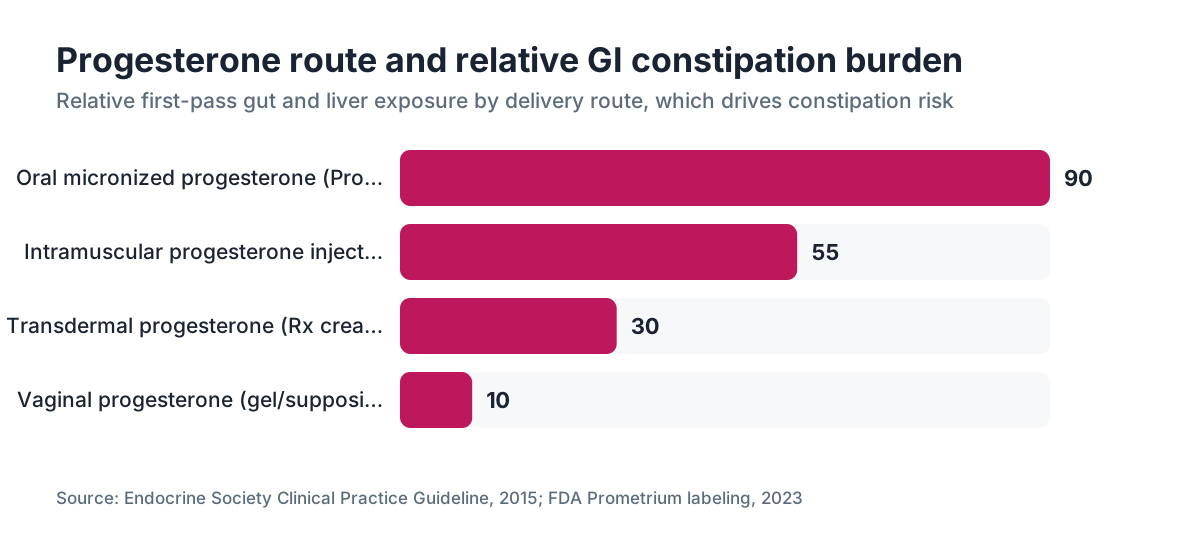
Which form of progesterone is most likely to cause constipation?
Route of delivery makes a real difference here.
Oral micronized progesterone (Prometrium, generics): Highest constipation risk. The drug passes through the gut wall, gets heavily metabolized in the liver, and produces sedating metabolites (allopregnanolone, pregnanolone). The GI tract gets a high local dose before the rest of your body does. Most women who report progesterone-related constipation are on this form. [3]
Vaginal progesterone (Crinone gel, Endometrin suppositories, compounded vaginal capsules): Much lower systemic side effect load, because the drug is absorbed locally and skips first-pass gut and liver metabolism. Women using vaginal progesterone report fewer GI complaints in comparative studies. If constipation is a real problem for you on oral progesterone, switching to vaginal delivery is the most evidence-backed move. [4]
Transdermal progesterone (prescription creams, not OTC wild yam creams): Less studied than oral or vaginal, and absorption varies a lot. Bioidentical transdermal progesterone creams at prescription strength carry a lower systemic load than oral, though whether they give enough endometrial protection for women on estrogen is still debated in the NAMS literature. [5]
Synthetic progestins (medroxyprogesterone acetate, norethindrone, levonorgestrel): These are chemically different from progesterone but still bind progesterone receptors. GI side effects happen with progestins too, though the profile differs from micronized progesterone. Medroxyprogesterone acetate, the progestin in older combined HRT regimens, has its own GI tolerability problems.
Here's the short version: if you're on oral progesterone and struggling with constipation, the form matters more than almost any other variable. Raise a route switch directly with your prescriber, and progesterone has a full breakdown of delivery options worth reading before that appointment.
| Form | First-pass metabolism | Relative constipation risk | |---|---|---| | Oral micronized (Prometrium) | High (gut + liver) | Highest | | Vaginal gel/suppository | None | Lowest | | Transdermal cream (Rx) | Low | Low to moderate | | Synthetic progestins (MPA) | Moderate | Moderate |
Does natural progesterone during your cycle cause constipation too?
It does, and this is well documented. The luteal phase of your cycle, roughly days 15 to 28, is when your body makes its own progesterone from the corpus luteum after ovulation. This is when many women notice bloating, slower bowel movements, or outright constipation that clears up almost the moment their period starts. [2]
The pattern is consistent enough that gastroenterologists studying functional bowel disorders have used it to understand the hormonal basis of IBS symptoms. A study published in Gut found that women with IBS had significantly slower whole-gut transit in the luteal phase compared to the follicular phase, and that the degree of slowing tracked with progesterone levels. [10]
This natural cyclical constipation also explains why early pregnancy, when progesterone rises sharply and stays elevated, is notorious for GI sluggishness. By the end of the first trimester, progesterone is high enough that constipation becomes one of the most common pregnancy complaints, affecting somewhere between 11 and 38 percent of pregnant women depending on the study and how constipation is defined. [6]
Perimenopause creates a messy version of this. Cycles turn irregular, progesterone secretion after ovulation can be erratic or too low, and some months you get a big luteal surge while others you don't ovulate at all. Women in their 40s sometimes report newly unpredictable bowel habits that don't follow the old pattern, and fluctuating progesterone is one reason. You can read more about that transition at perimenopause age.
How do you tell if progesterone is causing your constipation?
Timing is the clearest clue. If constipation starts or worsens in the second half of your cycle, specifically the 10 to 14 days before your period, progesterone is the most likely hormonal driver. If it started within the first few weeks of beginning progesterone therapy or raising your dose, that's a direct pharmacological signal.
Other signs that point toward progesterone rather than something else:
The constipation resolves when your period starts (natural cycle) or when you stop the progesterone phase of your HRT regimen.
You notice other progesterone side effects at the same time: breast tenderness, bloating, moodiness, or the drowsiness that oral micronized progesterone is known for.
You switched recently from a non-oral form to oral progesterone and the timing lines up.
What doesn't fit the progesterone picture: constipation that's constant regardless of where you are in your cycle or HRT schedule, constipation with rectal bleeding, pain, or unexplained weight loss, or constipation that began long before you started any hormonal treatment. Those warrant evaluation for other causes, including hypothyroidism (common in perimenopausal women and also a cause of constipation), colon disorders, or side effects from other medications.
What actually helps progesterone-related constipation?
The most effective fixes are practical, not exotic.
Increase soluble fiber. Soluble fiber (oats, flaxseed, psyllium, legumes) absorbs water and forms a gel that keeps stool soft. The Academy of Nutrition and Dietetics recommends 25 grams of total fiber per day for adult women, but most Americans get under 15 grams. [7] Psyllium husk has good evidence for constipation: a 2020 Cochrane review found dietary fiber supplements increased stool frequency by roughly 1.4 bowel movements per week compared to placebo. [8]
Drink more water. Boring advice, but real. Progesterone drives colonic water absorption from stool. If you're not replacing that fluid, the effect compounds. Aim for at least 8 to 10 cups of water daily, more if you're exercising.
Move your body. Physical activity speeds colon transit. Even a 20-minute walk after meals triggers the gastrocolic reflex. It's not a cure, but the finding is consistent enough that the American College of Gastroenterology includes it in constipation management. [9]
Magnesium. Magnesium (particularly magnesium citrate or magnesium oxide) draws water into the colon osmotically. Many women on progesterone therapy find that 200 to 400 mg of magnesium citrate at night helps a lot. It also pairs well with the sleep-promoting effect of oral progesterone. Magnesium is generally safe, but check with your prescriber if you have kidney issues.
Ask about switching delivery routes. If lifestyle changes aren't enough, switching from oral to vaginal progesterone is the most targeted fix, because it removes the first-pass gut exposure. This needs a prescribing conversation and isn't right for every situation (vaginal progesterone isn't always considered enough for endometrial protection in postmenopausal women on estrogen, depending on dose and regimen), but raise it. Hormone-focused telehealth providers like WomenRx can evaluate whether a route switch fits your regimen.
Short-term osmotic laxatives. Polyethylene glycol (MiraLAX) is safe and non-habit-forming for short-term use. If you need relief while you adjust fiber and hydration, this is what gastroenterologists reach for first. Stimulant laxatives (senna, bisacodyl) work but shouldn't become daily habits.
Adjust timing of oral progesterone. Taking oral progesterone at bedtime (which most prescribers already recommend because of its sedating effect) may cut GI discomfort compared to daytime dosing, though it doesn't fully erase the motility effect.
Does progesterone cause constipation in pregnancy?
Yes, and it's one of the most common GI complaints of the first trimester. Progesterone rises fast after conception, reaching levels that far exceed any pharmaceutical dose you'd take for HRT, and it stays elevated throughout pregnancy. The American College of Obstetricians and Gynecologists names constipation as a normal pregnancy symptom driven in part by this progesterone-mediated slowing of the gut. [6]
Estimates of pregnancy constipation prevalence run from 11 to 38 percent, a wide range because studies define constipation differently. Straining and infrequent stools are the top complaints. Iron from prenatal vitamins adds to the problem, because iron is directly constipating regardless of hormones.
Treatment in pregnancy is conservative: fiber, fluid, physical activity, and osmotic agents like polyethylene glycol if needed. Stimulant laxatives are generally avoided in pregnancy. The constipation usually improves as the gut adapts over the second trimester, even though progesterone stays high, which suggests some tolerance develops.
Can progesterone cause other GI symptoms beyond constipation?
Yes. The gut effects of progesterone reach past stool frequency.
Bloating is extremely common. Slower transit means more time for gas-producing bacteria to ferment food in the colon, which makes more gas and distension. This is why the week before a period can feel like you swallowed a balloon.
Nausea is a less common but real side effect of oral progesterone, particularly at higher doses. The gut's first-pass exposure to the drug and its metabolites is one proposed mechanism.
Gastroesophageal reflux. Progesterone relaxes the lower esophageal sphincter, the valve between your esophagus and stomach. A looser sphincter means more reflux. This is why heartburn is so common in pregnancy and why some women on HRT notice worse reflux during the progesterone phase of their cycle.
Gallstones. Progesterone slows gallbladder emptying, which lets bile concentrate and raises gallstone formation risk. That's a longer-term concern, not an acute GI symptom, but worth knowing if you're on progesterone therapy for years.
If you're juggling several GI symptoms while also on hormone replacement therapy, map your symptoms against your hormone schedule to see which phase drives which complaint.
Does progesterone cause constipation in menopause and perimenopause?
This is where it gets a little counterintuitive. Many perimenopausal and menopausal women are prescribed progesterone specifically to protect the uterine lining when they take estrogen. That's medically appropriate. But the progesterone in that regimen, especially oral micronized progesterone, can introduce or worsen constipation that wasn't there before. [4][5]
At the same time, falling estrogen in perimenopause removes estrogen's mild pro-motility effect on the gut. So you may be losing the hormone that helped things move while gaining the one that slows things down.
Women in perimenopause with new or worsening constipation should think through the full hormonal picture. When did the constipation start relative to your cycle changes and any hormone therapy you began? That timeline almost always tells you something useful.
NAMS recommends that women using estrogen therapy with an intact uterus take adequate progestogen to protect the endometrium, so the progesterone isn't optional for that group. [5] The practical fix is usually to optimize the form and dose rather than drop progesterone entirely. For the wider context, menopause covers the broader hormonal picture, and when does menopause start helps clarify where you are in the transition.
If you're working with a hormone-focused provider and constipation is hurting your quality of life, say so plainly. It's a legitimate clinical complaint that should shape your prescribing plan, not a nuisance to grit through.
When should you call your doctor about progesterone and constipation?
Most progesterone-related constipation is uncomfortable but not dangerous. It responds to lifestyle changes and doesn't need urgent evaluation. But some situations call for a prompt message to your provider.
Call or message your doctor if constipation is severe, meaning you haven't had a bowel movement in more than a week despite dietary changes and an osmotic laxative. Obstipation (total inability to pass stool or gas) is a medical emergency.
Get evaluated if you also have abdominal pain that is new or severe, rectal bleeding, unexplained weight loss, or a big change in stool caliber (very thin stools). These are potential red flags for colorectal disease and need workup regardless of what's happening with your hormones.
Also worth checking: thyroid function. Hypothyroidism is common in women over 40, causes constipation, and gets underdiagnosed often. A TSH level is a simple blood test. If your progesterone therapy is new and you've also felt fatigued, cold, or gained weight, ask to have your thyroid checked at the same visit.
And if constipation is making you want to quit a hormone regimen that's otherwise helping, tell your prescriber. Adherence matters. A route switch or timing change is a reasonable clinical accommodation.
Frequently asked questions
How long does progesterone-related constipation last?
If you're taking cyclic progesterone (for example, 12 to 14 days per month), constipation usually improves when you stop the progesterone phase and your period or withdrawal bleed starts. On continuous progesterone therapy, some women adapt over 4 to 8 weeks as the gut partially accommodates, but others need ongoing management with fiber, hydration, and magnesium. Switching to vaginal delivery often resolves it faster than waiting for adaptation.
Does prometrium (oral micronized progesterone) cause constipation more than synthetic progestins?
The GI side effect profiles differ somewhat between oral micronized progesterone and synthetic progestins like medroxyprogesterone acetate or norethindrone, but constipation is a recognized risk with both. Oral micronized progesterone also causes sedation through its conversion to neurosteroids, which some women find trades one problem for another. Your best guide is your own symptom pattern after starting either drug.
Can the progesterone IUD (Mirena) cause constipation?
The levonorgestrel IUD (Mirena, Liletta) releases a synthetic progestin locally into the uterus, with very low systemic absorption. Most women feel minimal systemic progestin effects from it. Constipation directly caused by a levonorgestrel IUD is uncommon and not well established in the literature, though individual variation exists. If constipation started shortly after IUD insertion, mention it to your provider, but look for other causes first.
Does progesterone cream (over the counter) cause constipation?
Over-the-counter progesterone creams, often marketed as wild yam or bioidentical progesterone creams, contain variable and often very low amounts of actual progesterone. Most don't deliver pharmacologically significant serum progesterone levels, so GI effects are unlikely from typical OTC products. Prescription transdermal progesterone at therapeutic doses is a different situation and may have some motility effect, though generally less than oral.
What is the best magnesium type for progesterone-related constipation?
Magnesium citrate and magnesium glycinate are the most commonly recommended forms for constipation. Magnesium citrate has a stronger osmotic effect, meaning it draws water into the colon more actively. Magnesium oxide is cheaper and has a similar effect. Magnesium glycinate absorbs well and is gentler if you're prone to loose stools. Start at 200 mg at night and adjust. Avoid magnesium sulfate (Epsom salts) orally except as a one-time laxative.
Is constipation from progesterone a sign the dose is too high?
Not necessarily, but it can be. GI side effects like constipation, bloating, and nausea are more common at higher doses of oral progesterone. If you're on 200 mg nightly and dealing with significant constipation, your prescriber might weigh whether 100 mg is enough for your clinical goal, or whether a route change to vaginal delivery makes more sense. Dose reduction isn't always clinically appropriate, so this needs an individual evaluation.
Does progesterone cause constipation during IVF?
Yes. High-dose vaginal and sometimes intramuscular progesterone is used during the luteal support phase of IVF cycles, and constipation is a commonly reported side effect even with vaginal delivery at those doses. The intramuscular route delivers particularly high systemic levels. Fiber and fluid management during IVF luteal support is standard patient counseling at most fertility centers.
Why does constipation improve when my period starts if progesterone causes it?
When progesterone drops sharply at the end of the luteal phase (just before your period), the smooth-muscle relaxation effect lifts quickly. The colon speeds back up, and prostaglandins released during menstruation actually stimulate contractions, sometimes quite strongly, which is why some women have loose stools or cramps at the start of their period. The diarrhea-at-period-onset and constipation-pre-period pattern together are both hormonal in origin.
Can progesterone cause constipation in men or transgender women?
Progesterone has gut motility effects regardless of birth sex, because the GI tract has progesterone receptors in all humans. Transgender women using progesterone as part of gender-affirming hormone therapy can experience the same constipation effect. The dose, route, and individual receptor sensitivity determine the severity. Management is the same: fiber, hydration, magnesium, and route optimization if needed.
Should I stop progesterone if it's causing constipation?
Don't stop progesterone on your own, particularly if you take it to protect your uterine lining while on estrogen therapy. Stopping progestogen in that context raises the risk of endometrial hyperplasia. Instead, contact your prescriber, explain the GI side effects, and ask about route changes, dose adjustments, or adjunct management. Constipation is treatable without abandoning a regimen that may be helping your overall health.
Does low progesterone cause constipation, or only high progesterone?
High progesterone causes constipation. Low progesterone, by contrast, takes the brake off gut motility. Some women with low progesterone in the luteal phase actually have loose stools or more frequent bowel movements. Estrogen dominance, which informally describes a state of relatively high estrogen and low progesterone, may be linked to faster gut transit rather than constipation.
How does progesterone-related constipation differ from constipation caused by GLP-1 drugs?
Both cause constipation but through different mechanisms. GLP-1 receptor agonists like semaglutide slow gastric emptying and overall gut transit by acting on GLP-1 receptors in the gut and brain. Progesterone slows colonic smooth muscle directly. GLP-1-related constipation tends to be more persistent and dose-dependent, while progesterone-related constipation often follows hormonal cycles. Both respond to fiber and magnesium, but GLP-1 constipation may need dose adjustment or anti-nausea management as well.
Sources
- StatPearls, National Library of Medicine: Progesterone (pharmacology)
- Neurogastroenterology and Motility, 2018: Sex hormones and gastrointestinal motility
- FDA prescribing information: Prometrium (progesterone) capsules
- Endocrine Society Clinical Practice Guideline: Treatment of Menopause-Associated Vasomotor Symptoms
- The Menopause Society (formerly NAMS): Hormone therapy position statement
- American College of Obstetricians and Gynecologists: women's health information
- Academy of Nutrition and Dietetics: Dietary fiber intake recommendations
- Cochrane Database of Systematic Reviews 2020: Dietary fibre for chronic constipation
- American College of Gastroenterology: Clinical guideline on chronic idiopathic constipation
- Gut (BMJ journal): Hormones and IBS gut transit in women