Does progesterone cause acne? What the evidence actually shows
TL;DR: Progesterone's effect on acne depends almost entirely on which form you're using. Synthetic progestins with androgenic activity, like norethindrone and levonorgestrel, clearly worsen breakouts. Micronized bioidentical progesterone (Prometrium) rarely does, and drospirenone can actually clear skin. Your delivery method, your dose, and your own androgen sensitivity decide the outcome.
What is progesterone actually doing to your skin?
Progesterone is a sex hormone your ovaries make after ovulation, plus a small amount from the adrenal glands. Its behavior in skin is genuinely complicated, and that complexity is why the acne answer is never a clean yes or no.
Skin has progesterone receptors. It also has androgen receptors, oil-producing sebaceous glands, and an enzyme called 5-alpha reductase that converts testosterone into the stronger androgen DHT. Sebum drives acne. Androgens drive sebum. So the real question is simple to state and hard to answer: does the progesterone you're taking act like true progesterone, or does it act like an androgen?
Natural progesterone is a weak 5-alpha reductase inhibitor. It mildly blocks the conversion of testosterone to dihydrotestosterone (DHT) right at the skin level [1]. That effect is anti-androgenic. Synthetic progestins are a different animal. They're chemically altered so they survive oral dosing or hit specific receptors, and some of them bind androgen receptors directly and turn the oil taps on.
Progesterone doesn't universally cause acne. Certain progestins absolutely do.
Do synthetic progestins cause more acne than natural progesterone?
Yes, and the gap is wide enough to change which formulation you and your prescriber choose.
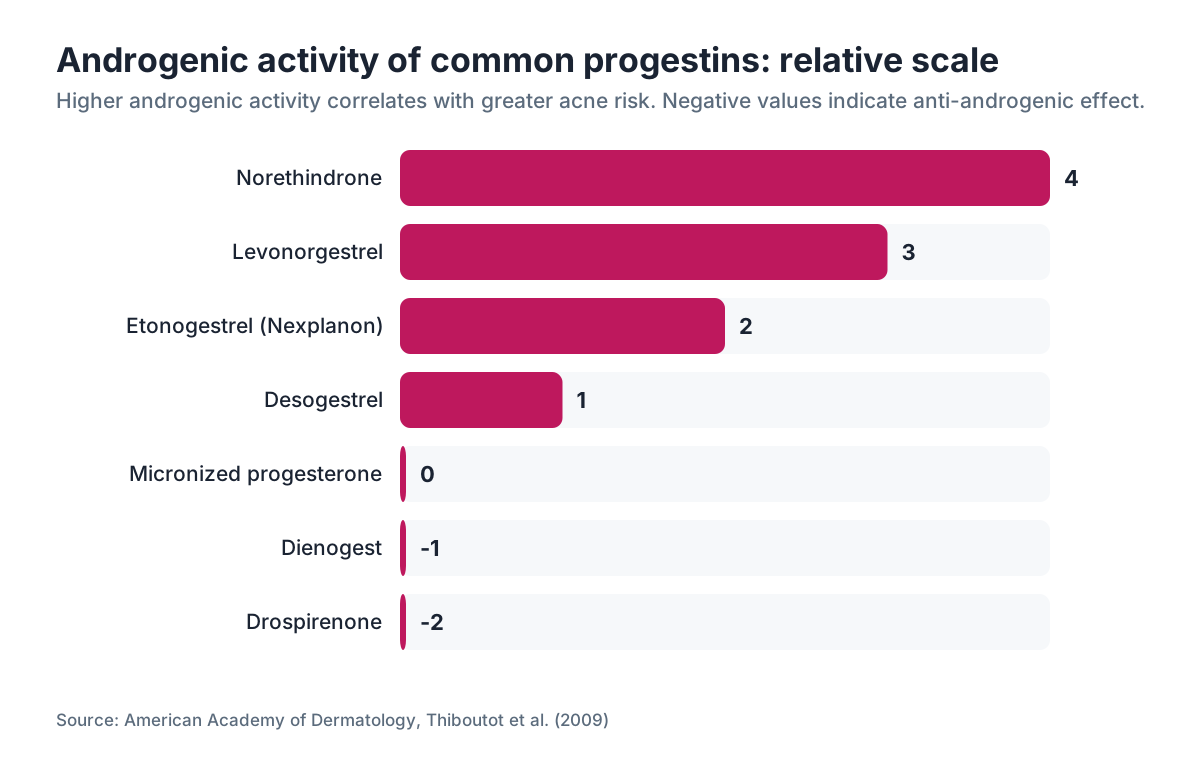
Progestins are sorted by how androgenic they are. The older 19-nortestosterone-derived group, including norethindrone, levonorgestrel, and norgestrel, has real androgenic activity and a documented record of worsening acne in susceptible women [2]. Norethindrone acetate shows up in some hormone therapy products like Activella and Combipatch, and it carries the same concern.
Third-generation progestins like desogestrel and gestodene are less androgenic, though not zero. Fourth-generation drospirenone (in Yasmin and Yaz) flips the direction entirely. It behaves like spironolactone, which is exactly why Yaz holds FDA approval as an acne treatment [3].
Micronized progesterone, sold as Prometrium or made by compounding pharmacies, is chemically identical to what your body produces. It doesn't bind androgen receptors in any meaningful way and doesn't push sebaceous glands the way androgenic progestins do [1]. For any woman on menopause hormone therapy who's worried about her skin, that single distinction carries most of the weight.
Here's a rough ranking by androgenic activity:
| Progestin | Androgenic Activity | Acne Risk | |---|---|---| | Norethindrone / norgestrel | High | High | | Levonorgestrel | Moderate-high | Moderate-high | | Desogestrel / gestodene | Low | Low | | Micronized progesterone | Negligible | Very low | | Drospirenone | Anti-androgenic | May improve acne | | Dienogest | Anti-androgenic | May improve acne |
Breaking out on hormone therapy? Which progestin you're on is step one, before anything else.
Why do some women get acne during perimenopause even without added hormones?
Plenty of women in their late 30s and 40s break out worse than they did at 15, and they've never touched a hormone pill. It's one of the strangest parts of the story. Here's what's happening under the surface.
During perimenopause, progesterone drops first and drops faster than estrogen [4]. Estrogen normally keeps androgens in check partly by raising sex hormone-binding globulin (SHBG), a protein that grabs testosterone and holds it inactive in the blood. When estrogen falls, SHBG falls with it, and free testosterone climbs. More free testosterone means more DHT at the oil gland, which means more sebum.
Ovulation also gets erratic in perimenopause. Progesterone is made after ovulation, so skipped or irregular cycles mean low progesterone. Some researchers think the sharp fall in progesterone after a cycle, more than the absolute level, is what sets off inflammatory signaling in the skin.
That's also why adult hormonal acne clusters on the lower face and jawline. It's the classic androgen-driven pattern, different from the forehead-heavy teenage version that's mostly about raw oil output. Breakouts parked on your jawline and chin? Hormonal shifts are almost certainly in the mix.
For a fuller picture of how perimenopause unfolds and when these shifts tend to hit, see our article on perimenopause age.
Can progesterone cream cause acne?
Probably not much, and mostly because the cream likely isn't doing a lot systemically to begin with. Over-the-counter progesterone creams sit in an odd regulatory gray zone, and the data on breakouts is genuinely thin.
Most OTC creams carry about 20 mg of progesterone per quarter-teaspoon dose. Whether that amount meaningfully raises serum progesterone is a contested question [5]. Small studies show transdermal progesterone absorbs erratically, with a lot of the hormone parking in the fat layer of the skin instead of reaching the bloodstream.
If the cream doesn't raise serum progesterone, it's not going to cause acne through systemic androgen effects. But rub it directly onto oil-rich zones like the face or chest and you might get a local effect.
Prescription compounded topical progesterone is a separate conversation. Compounding pharmacies can make much stronger formulas, and the acne risk there rides on the concentration and the progestin base they use. Nobody has good controlled-trial data on this specific question.
The honest version: OTC progesterone cream is unlikely to break you out. If you notice your skin worsening right after you start one, stop it for four to six weeks and watch what happens.
Does the progesterone in birth control cause acne?
It depends entirely on the progestin, and this is where the ranking table earns its keep clinically.
Combined oral contraceptives that pair estrogen with an anti-androgenic or low-androgenic progestin often improve acne. The FDA has approved four oral contraceptives specifically for it: Ortho Tri-Cyclen (norgestimate), Estrostep (norethindrone acetate with escalating estrogen), Yaz (drospirenone), and Beyaz (drospirenone plus levomefolate) [3]. The estrogen raises SHBG and cuts free testosterone. An anti-androgenic progestin adds to the effect.
Progestin-only methods are the ones that tend to backfire. That includes the mini-pill, and especially the hormonal IUD (Mirena, Kyleena), the Nexplanon implant, and the Depo-Provera shot. Nexplanon uses etonogestrel, which has some androgenic activity [2]. Depo-Provera uses medroxyprogesterone acetate, which is androgenic and also suppresses estrogen enough to strip away its skin-protective effect.
The Mirena IUD releases levonorgestrel mostly inside the uterus, so serum levels stay low. Most women see no skin change. A subset does, and the likely mechanism is that small amount of systemic levonorgestrel plus the loss of estrogen's protection at the skin.
Started a new hormonal contraceptive and broke out within two to three months? The progestin type is almost certainly worth raising with your prescriber.
Does progesterone in menopause hormone therapy cause acne?
For most postmenopausal women, micronized progesterone is the standard for uterine protection, and it's far less likely to break you out than the older synthetic progestins that were routine before the Women's Health Initiative trial.
The North American Menopause Society notes in its hormone therapy position statement that micronized progesterone has a more favorable side-effect profile than synthetic progestins, skin complaints included [6]. That's not the same as side-effect-free. Some women do report more acne or oiliness on Prometrium, mostly at higher doses, and it tends to be worse when the dose peaks during waking hours instead of overnight.
One practical note. Vaginal progesterone (Crinone gel, Endometrin suppositories) is used mainly in fertility treatment and absorbs into the bloodstream at very low levels. Acne from vaginal progesterone is rarely reported.
If you're on combination hormone therapy and breaking out, the sensible order is this. Confirm you're on micronized progesterone rather than a synthetic progestin. Consider vaginal delivery if it fits your situation. Then check your estrogen dose, because low estrogen relative to progesterone can feed the problem by dropping SHBG.
Our hormone replacement therapy overview walks through the full decision.
How do you tell if your acne is hormonal versus other causes?
Hormonal acne has a recognizable signature, and reading it right matters before you touch any hormone regimen.
Classic hormonal acne runs cyclic (worse the week before your period), sits on the lower face and jawline, shows up as deeper cystic or nodular lesions rather than surface whiteheads, and clears slowly. Comedonal acne, meaning blackheads and small whiteheads across the forehead and nose, ties more to clogged pores from skincare or diet and less to hormones.
Timing is your strongest clue. Hormonal acne triggered by a new medication generally appears within one to three months of starting it.
Bloodwork can add detail. A dermatologist or endocrinologist might order free testosterone, DHEAS, and SHBG to gauge androgen load. Total testosterone can read normal while free testosterone runs high if SHBG is low. Elevated DHEAS points toward adrenal androgens rather than ovarian, which shifts the treatment plan. Drawing these labs in the follicular phase (days 3 to 5 if you still cycle) gives the most interpretable numbers [7].
Other triggers worth ruling out before you blame hormones: comedogenic skincare or makeup, a dairy-heavy diet (dairy's insulin-like growth factor can push sebum), high-glycemic eating, and certain drugs including lithium, some anticonvulsants, and corticosteroids.
What can actually help hormonal acne in perimenopause and menopause?
There are real, well-evidenced options here. You don't have to choose between hormones and clear skin.
Spironolactone is the most useful drug for adult hormonal acne in women. It's an aldosterone antagonist that also blocks androgen receptors and lowers testosterone production. Doses of 50 to 200 mg a day are common off-label for acne, and a 2017 Cochrane review found it cut inflammatory lesions significantly compared with placebo [8]. Give it two to three months for the full effect. It's off the table if you're trying to conceive.
Topicals that work regardless of the hormonal cause: retinoids (tretinoin 0.025 to 0.1% is the standard for comedonal and inflammatory acne), benzoyl peroxide, topical clindamycin (usually paired with benzoyl peroxide to hold down antibiotic resistance), and azelaic acid, which also fades the post-acne dark spots that are common in darker skin tones.
Already on hormone therapy? Switching the progestin is often the most direct fix. Moving from a norethindrone-based regimen to micronized progesterone, or adjusting the estrogen dose, can settle the skin without adding a new prescription.
Diet moves with real evidence: a 2007 trial in the American Journal of Clinical Nutrition found low-glycemic diets cut acne lesion counts by roughly 22% versus high-glycemic controls [9]. Cutting dairy has weaker evidence but is worth a trial if you drink or eat a lot of it.
If you're weighing hormone therapy options with a telehealth provider, WomenRx runs consultations focused on finding the right formulation for women who've had side effects on other regimens.
Does taking progesterone at night reduce acne compared to taking it in the morning?
Timing does seem to matter for some women, and it's a question most prescribers skip. Take oral progesterone at night and its peak lands during sleep, which may keep it away from your oil glands during the day.
Micronized progesterone (Prometrium) makes many women drowsy because it converts into allopregnanolone, a GABA-A receptor modulator. That's why most prescribers say take it at bedtime. The sedation is well-documented. What it means for skin gets less attention.
Here's the logic. Dose at night and serum levels peak while you sleep. By morning they've dropped, so most of your waking hours run at lower circulating progesterone. That shrinks the window when progesterone could interact with sebaceous glands, which matters most if you're androgen-sensitive.
Women and their clinicians often report that shifting from morning to bedtime dosing calms acne and oiliness. There are no well-powered randomized trials testing this directly, so treat it as reasoned inference rather than proof. The pharmacokinetics back it up: oral micronized progesterone has a short half-life of about 16 to 18 hours, so when you take it genuinely shifts when levels peak [11].
On a vaginal gel or suppository, systemic absorption is low enough that timing probably does nothing for your skin.
Is there any progesterone formulation that actually helps acne?
Drospirenone is the clearest case of a progestin that helps, and it comes in both contraceptive and non-contraceptive forms.
In its contraceptive form (Yaz, Yasmin), drospirenone paired with ethinyl estradiol carries FDA approval for acne in women who also want contraception [3]. Drospirenone's anti-androgenic action plus the estrogen-driven SHBG rise gives you two mechanisms working against sebum at once.
For postmenopausal women who don't need contraception, the FDA approved a low-dose drospirenone tablet (0.25 mg) combined with estradiol in 2018, sold as Bijuva [12]. Some clinicians reach for it precisely because drospirenone's profile tends to be skin-neutral or better.
Dienogest, another anti-androgenic progestin available in some countries and used in the combination pill Natazia in the US, also has evidence for acne improvement [2].
Bioidentical progesterone applied topically in compounded formulas is sometimes marketed as anti-acne. The evidence is very thin. There's a theoretical case that it inhibits 5-alpha reductase locally, but no clinical trial data supports using it that way.
When should you see a doctor about acne related to hormones?
Most mild to moderate hormonal acne responds to topicals and progestin adjustments. Some situations call for medical evaluation sooner.
See a dermatologist or your prescribing physician if any of these apply: your acne is cystic, painful, or scarring; it appeared suddenly alongside other signs of androgen excess like hirsutism, hair loss, or irregular periods; you've used topical retinoids and benzoyl peroxide for three months with no improvement; or your skin worsened sharply after starting or changing a hormonal medication.
Rule out polycystic ovary syndrome (PCOS) if acne, irregular cycles, and high androgens all show up together. PCOS affects an estimated 6 to 12% of women of reproductive age in the US, per the CDC, and hormonal acne is one of its core features [10]. Treating the underlying imbalance in PCOS takes a different approach than swapping progestin types.
Early menopause or premature ovarian insufficiency can also surface as acne when estrogen drops, so women under 40 with new hormonal symptoms deserve a workup. For context on the usual timeline, our article on when does menopause start lays it out.
Frequently asked questions
Can progesterone cream cause acne on the face?
OTC progesterone creams carry about 20 mg per application and absorb inconsistently, so meaningful systemic effects are unlikely for most users. A local effect from applying it near the face is theoretically possible but not well-studied. If you see a clear link between starting the cream and new facial breakouts, stopping it for four to six weeks is a reasonable test.
Does Prometrium cause acne?
Prometrium is micronized bioidentical progesterone with negligible androgenic activity, and most women use it without skin changes. Some women at higher doses notice more oiliness or mild breakouts, possibly from progesterone's mild stimulation of oil glands. Taking it at bedtime, so peak serum levels land during sleep rather than waking hours, is a practical first adjustment before switching formulations.
Why am I breaking out more in perimenopause?
In perimenopause, progesterone drops before estrogen, and estrogen's own decline lowers sex hormone-binding globulin. Lower SHBG leaves more free testosterone circulating, which drives sebum production. Irregular ovulation also causes abrupt progesterone swings that may trigger inflammatory responses in the skin. Jawline and chin acne in your late 30s or 40s is a classic sign of this shift.
Does the Mirena IUD cause hormonal acne?
Mirena uses levonorgestrel, which has moderate androgenic activity. Serum levels from the IUD stay very low, around 150 picograms per milliliter on average, so most women see no significant skin change. A subset does report acne, likely from the small systemic levonorgestrel dose plus suppression of the estrogen-SHBG axis. Kyleena has lower levonorgestrel and slightly lower rates of this complaint.
Is hormonal acne in menopause different from teenage acne?
Yes, in both pattern and mechanism. Menopausal acne comes from relative androgen excess as estrogen falls, producing deeper cystic lesions on the lower face and jawline. Teenage acne comes from the overall androgen surge at puberty, producing widespread comedones and surface papules across the T-zone. Treatments overlap, but menopausal acne often responds better to spironolactone and hormone adjustment than to benzoyl peroxide alone.
What labs should I get if I think hormones are causing my acne?
Ask your provider for free testosterone, total testosterone, SHBG, and DHEAS. If you still have a cycle, drawing on days 3 to 5 gives the most interpretable results. Low SHBG with normal total testosterone often explains free androgen excess. Elevated DHEAS points toward an adrenal origin rather than ovarian. Some clinicians also check LH and FSH to gauge where you are in the menopause transition.
Can stopping progesterone clear up acne?
If an androgenic progestin is the cause, stopping it often clears acne within two to three months. The catch: if you have a uterus and take estrogen therapy, you generally need a progestin for uterine protection. The better move is usually switching to a lower-androgenic or anti-androgenic progestin like drospirenone or micronized progesterone rather than stopping altogether.
Does progesterone-only birth control always cause acne?
Not always. The risk depends heavily on the specific progestin. Desogestrel-based mini-pills carry lower androgenic risk than norethindrone-based ones. The hormonal IUD (Mirena) has very low systemic absorption, and most users see no acne. Nexplanon and Depo-Provera carry higher risk. Individual androgen sensitivity matters too; two women on the same pill can have very different skin.
Does spironolactone work for hormonal acne in menopause?
Yes. Spironolactone at 50 to 150 mg daily blocks androgen receptors and lowers testosterone production, hitting the root hormonal driver. A 2017 Cochrane review found it significantly reduced inflammatory lesion counts. Give it two to three months for the full effect. It's not a contraceptive and is generally safe for perimenopausal and postmenopausal women without kidney disease or hyperkalemia.
Can progesterone make acne worse right before a period?
Yes, this is one of the most documented patterns in hormonal acne. Progesterone rises in the luteal phase after ovulation, peaks about seven days before menstruation, then drops sharply. That spike and drop appears to trigger sebum surges and inflammatory responses in susceptible women. The link is tight enough that tracking your cycle against breakout timing can confirm whether progesterone is the driver.
Is progesterone used in any acne treatments?
Not directly as a standalone treatment in standard dermatology. But anti-androgenic progestins like drospirenone in combined oral contraceptives are FDA-approved for acne. Some researchers have looked at topical progesterone for its 5-alpha reductase inhibiting properties, though no approved topical progesterone acne product exists. Spironolactone, not progesterone itself, is the androgen-blocking workhorse in hormonal acne treatment.
How long does it take for acne from a progestin to clear after stopping?
Most women see real improvement within six to twelve weeks of stopping or switching the offending progestin. Full resolution of inflammatory lesions, especially cysts, can take three to four months. Post-inflammatory hyperpigmentation from healed cysts takes longer, often six months or more, and may fade faster with topical azelaic acid or a retinoid.
Sources
- Endocrine Society, Journal of Clinical Endocrinology and Metabolism: Zouboulis et al., "Human skin is a steroidogenic tissue" (2007)
- American Academy of Dermatology, Thiboutot et al., "New insights into the management of acne: An update from the Global Alliance" (2009)
- FDA, Approved Drug Products (Orange Book): Yaz and Ortho Tri-Cyclen acne labeling
- North American Menopause Society, Menopause Practice: A Clinician's Guide, 6th edition
- Mayo Clinic Proceedings: Wren et al., "Transdermal progesterone and its effect on vasomotor symptoms, blood lipid levels, bone metabolic markers" (2003)
- North American Menopause Society, hormone therapy position statement (2022)
- Endocrine Society Clinical Practice Guideline: Rosner et al., "Utility, Limitations, and Pitfalls in Measuring Testosterone" (2007)
- Cochrane Database of Systematic Reviews: Brown et al., "Spironolactone versus placebo or combined oral contraceptives for hirsutism and/or acne" (updated 2017)
- American Journal of Clinical Nutrition: Smith et al., "A low-glycemic-load diet improves symptoms in acne vulgaris patients" (2007)
- CDC, Reproductive Health: Polycystic Ovary Syndrome (PCOS)
- FDA Drug Label: Prometrium (progesterone capsules) prescribing information
- FDA Drug Label: Bijuva (estradiol/progesterone) prescribing information, approved 2018