Does menopause make you tired? What's actually happening
TL;DR: Yes, menopause can make you profoundly tired. Falling estrogen and progesterone disrupt sleep, blunt energy metabolism, and drive mood changes that pile onto the exhaustion. Studies put fatigue prevalence somewhere between 40% and 85% of menopausal women depending on how it's measured. The causes are real, mostly treatable, and not all permanent.
Will menopause make you tired, or is it something else?
The short answer is yes, and it is not in your head. Fatigue ranks among the most commonly reported symptoms across perimenopause and menopause, sitting right alongside hot flashes and mood changes in population studies. A 2015 analysis published in Menopause (the journal of the North American Menopause Society) found that fatigue affected roughly 40 to 60 percent of women in the menopausal transition, with some cross-sectional studies pushing that figure above 80 percent when broader definitions of "low energy" were used [1].
Menopause does not act alone, though. Thyroid dysfunction, anemia, sleep apnea, and depression all become more common in the same age window (roughly 45 to 55 for most women), and each one can mimic or amplify hormone-driven exhaustion. A tired perimenopausal woman deserves a full workup. She does not deserve the reflexive dismissal of "it's just your hormones." But her hormones are almost certainly part of the picture.
The distinction matters because the treatments differ. If poor sleep from night sweats is the engine, addressing estrogen levels directly tends to help more than a sleep aid. If subclinical hypothyroidism is the culprit, treating the thyroid does. Often it's both. So treat menopause as the likely contributing cause you investigate first, not the excuse that stops further inquiry.
What hormone changes actually cause the fatigue?
Three hormones do most of the damage: estrogen, progesterone, and (indirectly) cortisol.
Estrogen has receptors throughout the brain, including in the hypothalamus, which governs body temperature, and in the brainstem regions that regulate sleep architecture. As estrogen falls during perimenopause, thermoregulation becomes unstable. Hot flashes and night sweats are the visible result. The invisible result is fragmented sleep. Women wake up partially or fully during vasomotor episodes without always remembering it, and they spend less time in slow-wave and REM sleep, the two stages that drive physical and cognitive recovery [2]. Wake up unrestored enough days in a row and the fatigue compounds into something that feels chronic.
Progesterone is sedating by nature. It acts on GABA receptors in the brain (the same receptors benzodiazepines target) and it helps sleep start and stay. In the late luteal phase, progesterone peaks and many women notice they sleep heavily during that window. As the cycle becomes irregular in perimenopause, progesterone output drops first and hardest. The result is lighter sleep, more nighttime waking, and a nervous system running hotter than it should. You can read more about this hormone and its wider effects in our article on progesterone [3].
Cortisol enters the picture because estrogen normally keeps the stress axis (the HPA axis) in check. Without that buffer, cortisol can spike higher in the morning and stay elevated longer, which disrupts the normal circadian rhythm and makes it harder to fall asleep or stay asleep the following night. Over months, this dysregulation wears down the whole structure of rest.
What you get is a loop that feeds itself: hormones drop, sleep fractures, cortisol rises, sleep fragments further, fatigue deepens.
How common is fatigue during menopause? The actual numbers
Exact prevalence figures vary because studies define "fatigue" differently, but the range is consistent enough to draw real conclusions from.
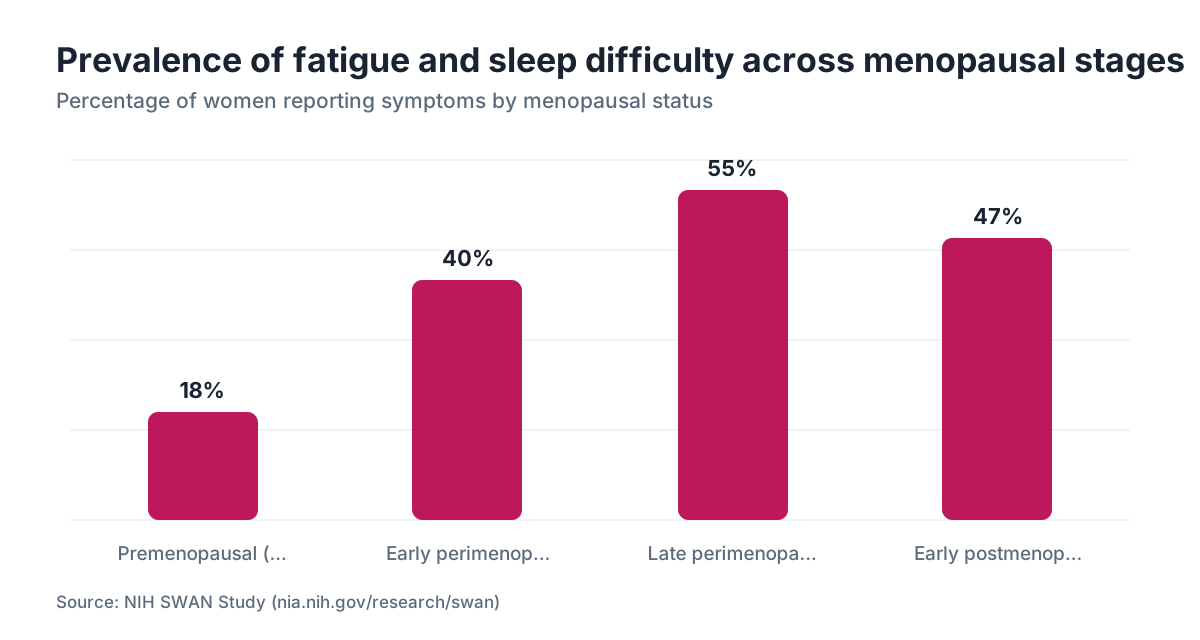
The Study of Women's Health Across the Nation (SWAN), which followed over 3,300 women across multiple ethnic groups from 1996 through the late 2000s, found that sleep difficulty affected 38 to 46 percent of women in perimenopause and up to 47 percent of postmenopausal women, with fatigue closely correlated [2]. A 2019 review in the journal Maturitas that pooled data from multiple cohort studies found self-reported fatigue in 40 to 85 percent of women across the menopausal transition, depending on how stringently the symptom was defined [4].
Compare that to premenopausal women in their late 30s, who report fatigue at rates closer to 15 to 20 percent. The jump is substantial and not explained by aging alone. Studies that control for age still find the menopausal transition an independent predictor of fatigue [4].
Sleep quality metrics tell the same story. Polysomnography studies show that postmenopausal women without hormone therapy average roughly 20 fewer minutes of slow-wave sleep per night than premenopausal controls, and that gap widens in women with frequent vasomotor symptoms [2].
Fatigue during menopause is not a vague, unmeasurable complaint. It has physiological correlates you can measure, and those correlates point straight at treatable hormone changes.
Does perimenopause cause fatigue before periods stop?
Yes, and for many women the fatigue actually peaks during perimenopause rather than after menopause itself.
Perimenopause can start as early as your late 30s, though the average onset is around 47 [5]. During this phase, hormone levels do not fall steadily. They swing erratically. Estrogen can spike higher than normal one month and drop sharply the next. Progesterone is usually the first to decline consistently. That volatility is harder on sleep and energy than a smooth glide down would be.
Women in early perimenopause often describe the classic "wired but tired" experience: they cannot fall asleep, they wake at 3 or 4 a.m. with racing thoughts, and they drag through the following day. This is the cortisol dysregulation from the section above playing out in real time. Cycles may still be regular at this point, so the fatigue gets easily misattributed to stress, overwork, or depression.
By late perimenopause, when cycles become irregular and FSH levels rise significantly, sleep disruption from hot flashes tends to become the dominant mechanism. You can find more on the timeline in our articles on perimenopause age and when does menopause start.
Here's the practical upshot. If you're in your mid-40s, still having periods, and exhausted in a way that sleep does not fix, that is perimenopause fatigue. It deserves the same clinical attention as classic menopause symptoms.
What does menopause fatigue actually feel like?
Women describe it differently from ordinary tiredness, and those descriptions turn out to be clinically useful.
The most common pattern is waking up unrefreshed even after a full night of sleep. Seven or eight hours pass, but the restorative quality is gone. Slow-wave sleep, the phase where growth hormone is released and tissue repairs itself, has been compressed. You log the hours but do not get the recovery.
Cognitive fatigue is the other hallmark. The term "brain fog" gets used a lot, and while it lacks precision, it points at something real: slower processing, difficulty holding a train of thought, word-finding gaps. A 2021 study in Menopause found that perimenopausal women scored significantly lower on standardized tests of verbal memory and processing speed than both their premenopausal baseline and age-matched controls [6]. Fatigue and cognitive symptoms show up together because they share the same machinery: disrupted sleep architecture, estrogen withdrawal from brain tissue, and cortisol excess.
There's also a physical heaviness that is distinct from muscle fatigue after exercise. Limbs feel weighted. The urge to move is gone. Some women describe it as running a constant low-grade flu without the fever.
Anxiety and mood changes layer on top of all of this. Progesterone's GABA-modulating effect calms the nervous system, so low progesterone can raise background anxiety, which further disrupts sleep, which deepens fatigue. These are not separate problems. They are the same hormonal disruption expressing itself in several systems at once.
Could something besides menopause be causing my fatigue?
Probably menopause is involved. Ruling out other causes is still not optional.
The conditions most likely to be mistaken for or to travel alongside menopause fatigue:
Hypothyroidism. Subclinical hypothyroidism gets more common with age in women, and its symptoms (fatigue, weight gain, cognitive slowing, cold intolerance) overlap almost completely with menopause. The American Thyroid Association recommends TSH screening every 5 years beginning at age 35 for women [7]. A TSH test costs almost nothing. Get one.
Sleep apnea. After menopause, obstructive sleep apnea in women rises sharply and approaches rates seen in men. Progesterone normally keeps upper airway muscle tone; without it, the airway is more prone to collapse. Many women go undiagnosed for years because the presentation (frequent waking, unrefreshed sleep, fatigue) gets pinned entirely on menopause [2].
Anemia. Heavy or irregular perimenopausal bleeding can drain iron stores faster than diet replaces them. Check a CBC with iron studies if cycles have gotten heavier.
Depression. This one is genuinely hard to untangle because the neurobiology overlaps so much. Estrogen modulates serotonin and dopamine, and its decline lowers the threshold for depression. The fatigue of depression is real, physiological, and responds to different treatments than menopause fatigue does. A PHQ-9 screen takes five minutes and belongs in the workup.
Autoimmune conditions. Rheumatoid arthritis, lupus, and celiac disease all commonly surface or worsen in the 40 to 55 age window. Celiac fatigue in particular gets missed a lot.
A reasonable baseline workup includes TSH, CBC, a metabolic panel, ferritin, and B12. If the clinical picture suggests sleep apnea, a home sleep study is the logical next step.
Does hormone therapy actually help menopause fatigue?
For most women, yes, particularly when fatigue is driven by disrupted sleep from vasomotor symptoms.
The evidence is clearest for estrogen's effect on sleep. Multiple randomized controlled trials show that estrogen therapy reduces the frequency and severity of hot flashes and night sweats, which in turn improves sleep continuity, increases slow-wave sleep time, and reduces next-day fatigue [8]. The NAMS 2022 Hormone Therapy Position Statement calls hormone therapy the most effective treatment for vasomotor symptoms and their downstream effects on sleep quality [1].
The picture for direct effects on fatigue, independent of sleep improvement, is less clean. Some small trials suggest estrogen has a direct energizing effect through dopamine pathways, but the data aren't strong enough to hang a treatment decision on that mechanism alone. What is strong: fix the sleep and the fatigue usually improves substantially.
Progesterone adds a wrinkle. Oral micronized progesterone (sold as Prometrium) has sedating properties through those GABA receptors mentioned earlier. For women who need progestogen to protect the uterine lining, oral micronized progesterone taken at night can actually improve sleep rather than worsen it. Synthetic progestins like medroxyprogesterone acetate (MPA) do not share this benefit to the same degree and may even impair sleep in some women. The choice of progestogen matters. Learn how these forms differ in our article on progesterone.
For women who cannot or choose not to take systemic hormone therapy, low-dose transdermal options (see estrogen patch) may carry a more favorable safety profile for certain risk groups, per FDA labeling, while still delivering meaningful symptom relief [8].
WomenRx providers can evaluate whether hormone therapy fits your specific history, which matters because the evidence around individual cardiovascular and breast risk varies considerably by age of initiation and health background.
A broader look at the treatment landscape lives in our hormone replacement therapy article.
What non-hormonal approaches actually help menopause fatigue?
Several have real evidence behind them, and a few are worth doing no matter whether you pursue hormone therapy.
Exercise. This is the one intervention with consistent, high-quality evidence across multiple symptom domains. A 2024 meta-analysis in Menopause International that pooled 28 trials found that regular aerobic exercise (150 minutes or more per week) significantly reduced self-reported fatigue, improved sleep quality scores, and decreased depression and anxiety in menopausal women [9]. The effect size was meaningful, not trivial. Resistance training added its own benefits for energy through effects on muscle mass and insulin sensitivity. You do not need to feel energized before you start. The energy comes from doing it.
Sleep hygiene (done properly). This means consistent wake times above all else, not consistent bedtimes. A fixed wake time anchors circadian rhythm. It also means keeping the bedroom cool (65 to 68 degrees Fahrenheit is the range sleep research commonly cites), which directly cuts into the thermoregulatory problem hot flashes create.
Cognitive behavioral therapy for insomnia (CBT-I). This is the first-line treatment for chronic insomnia per the American Academy of Sleep Medicine, and it has been studied specifically in perimenopausal and postmenopausal women with fatigue. CBT-I beats sleep medication for long-term outcomes and has no drug interactions [10]. You can access it through apps, online programs, or a sleep-trained therapist.
Dietary adjustments. Blood sugar swings make fatigue worse. Cutting refined carbohydrates, eating protein with every meal, and staying hydrated are not glamorous, but they address a real physiological amplifier. Some women find that caffeine after noon becomes noticeably more disruptive to sleep during perimenopause than it was at 35, even when it never seemed to bother them before.
Stress and cortisol management. Because dysregulated cortisol drives a big chunk of the sleep disruption, practices that lower HPA axis activation (breathwork, NSDR, restorative yoga, evidence-based mindfulness) can quiet the wired-at-night problem. This is not soft advice. It has measurable cortisol and sleep effects in controlled studies.
None of these work as fast as hormone therapy for women with severe vasomotor symptoms driving their fatigue. But they stack well with any treatment, and some women, especially those with contraindications to hormones, get substantial benefit from them alone.
Can GLP-1 medications affect energy levels in menopausal women?
This is a newer clinical intersection and the direct research is thin, but it's worth addressing because GLP-1 receptor agonists (semaglutide, tirzepatide) are increasingly used by women in the menopausal age range.
GLP-1 medications are approved for type 2 diabetes and chronic weight management. They do not treat menopause fatigue directly. But excess weight worsens nearly every mechanism driving menopause fatigue: it increases hot flash severity [1], dramatically raises sleep apnea risk, worsens insulin resistance, and raises systemic inflammation. Weight loss through GLP-1 treatment can ease all of these downstream burdens.
Some women in clinical practice report better energy and better sleep quality as they lose weight on semaglutide or tirzepatide. Whether that's the weight loss, improved metabolic health, or a direct neurological effect of GLP-1 receptor activation in the brain is not clearly established. The SURMOUNT-1 trial of tirzepatide (published in NEJM, 2022) reported significant reductions in sleep apnea severity as a secondary endpoint in participants with obesity, which is relevant to the fatigue-sleep connection [11].
If you're a menopausal woman with obesity and fatigue and are weighing this route, the comparison between the two main agents is laid out in our semaglutide vs tirzepatide article, and a broader overview of weight management options lives in semaglutide for weight loss. WomenRx evaluates both hormone therapy and GLP-1 options together, which matters because addressing one without the other often leaves significant fatigue on the table.
The bottom line on GLP-1s and fatigue: they are not the right primary treatment for menopause fatigue, but for women carrying significant excess weight, addressing that through a structured GLP-1 program may remove a major amplifier.
When should I see a doctor about menopause fatigue?
Some fatigue during the menopausal transition is expected and manageable. Some is a signal that something more needs attention.
See a clinician promptly if:
- Fatigue is severe enough to interfere with work, relationships, or basic daily function and has lasted more than four to six weeks.
- You are waking frequently at night with choking, gasping, or witnessed apneas (this suggests sleep apnea).
- You have heavy irregular bleeding alongside fatigue (rules out anemia and uterine pathology).
- You have unexplained weight gain, cold intolerance, or dry skin alongside fatigue (thyroid workup needed).
- You feel persistently hopeless or have lost interest in things you used to enjoy (depression needs its own evaluation and treatment).
- You are under 45 and fatigued alongside irregular cycles (this may be premature ovarian insufficiency, a distinct condition with different management).
The American College of Obstetricians and Gynecologists recommends that women in midlife get a focused history and basic metabolic workup when fatigue is a presenting complaint, rather than a default attribution to menopause [12]. You should not have to argue for a TSH and CBC. They should be offered.
Most menopause-related fatigue improves meaningfully with the right combination of treatment. The women who keep suffering for years are often the ones whose providers pinned everything on "just menopause" without looking further.
What does the timeline look like? Does the fatigue get better?
For most women, the answer is yes, but the timeline varies and the mechanism matters.
Fatigue driven mainly by night sweats and hot flashes tends to follow the trajectory of vasomotor symptoms. The average duration of vasomotor symptoms is about seven years from onset, per the SWAN data, though roughly 10 to 15 percent of women have symptoms lasting more than a decade [2]. For those women, fatigue driven by this mechanism can persist well into the postmenopausal years without treatment.
Fatigue driven by sleep architecture changes and cortisol dysregulation tends to settle after menopause once hormone levels plateau, though the plateau itself takes two to three years after the final menstrual period in most women. Some women notice a real jump in energy in their mid to late 50s as the turbulence of perimenopause resolves.
Fatigue with a strong cognitive component (brain fog, memory difficulty) also tends to improve after menopause for most women. The SWAN cognitive substudy found that processing speed and verbal memory, which dip during perimenopause, show some recovery in early postmenopause without treatment [6].
Women who start hormone therapy during or shortly after the transition generally report the fastest resolution of fatigue. Timing matters: the "window of opportunity" hypothesis from cardiovascular research (initiation within 10 years of menopause or before age 60 is associated with more favorable outcomes) applies indirectly here too, because years of persistent sleep deprivation and fatigue carry their own metabolic and cognitive costs [8].
The short version: fatigue is likely to improve, but "likely eventually" and "with treatment now" are very different experiences.
Frequently asked questions
Will menopause make you tired even if you sleep 8 hours?
Yes. Eight hours of fragmented sleep, with hot flashes or progesterone-related light sleep, is not the same as eight hours of restorative slow-wave and REM sleep. Polysomnography studies show menopausal women without treatment spend significantly less time in slow-wave sleep, the phase responsible for physical restoration and growth hormone release, even when total time in bed looks normal. You can log the hours and still wake depleted.
Can menopause make you tired all the time, or just at certain points?
Both patterns happen. Women with frequent night sweats often feel fatigue daily because every night is disrupted. Women in early perimenopause more commonly describe episodic crashes tied to hormonal fluctuations across the cycle. For some women the fatigue is worst in the late luteal phase, when progesterone should peak but does not. As perimenopause advances, the pattern often becomes more constant because the hormonal swings get less predictable.
Is menopause fatigue different from normal tiredness?
Most women who experience it say yes, and sleep research backs them up. The hallmarks are waking unrefreshed despite adequate time in bed, cognitive slowing (brain fog), and a persistent physical heaviness that ordinary rest does not fix. This is distinct from the tiredness of a busy week. The underlying cause is disrupted sleep architecture and direct neurochemical effects of estrogen and progesterone withdrawal, not simply too little rest.
How long does menopause fatigue last?
It depends heavily on what's driving it. Fatigue from hot-flash-related sleep disruption can last as long as vasomotor symptoms, which average about 7 years from onset but persist over a decade in 10 to 15 percent of women. Fatigue from progesterone withdrawal and cortisol dysregulation often settles a few years after the final period. Women who treat the underlying vasomotor symptoms typically see much faster resolution than those who wait it out.
Does hormone therapy help with menopause fatigue?
For most women, yes. The strongest evidence is for estrogen's indirect effect: reducing night sweats and hot flashes improves sleep continuity and slow-wave sleep, which reduces next-day fatigue. Oral micronized progesterone taken at night adds direct sleep-improving effects through GABA receptor activity. The NAMS 2022 position statement identifies hormone therapy as the most effective treatment for vasomotor symptoms and their downstream effects, including sleep disruption.
Can perimenopause cause fatigue even when my periods are still regular?
Yes. Progesterone is often the first hormone to decline, and it can drop meaningfully before cycles become irregular. Lower progesterone reduces GABA activity in the brain, making sleep lighter and increasing nighttime waking. Cortisol dysregulation, driven partly by lower estrogen's buffering effect on the stress axis, can start years before the final period. If you're in your mid to late 40s with regular cycles and new fatigue, perimenopause is a legitimate explanation.
What bloodwork should I ask for if I'm tired during menopause?
A reasonable baseline includes TSH (to rule out hypothyroidism), CBC with differential (anemia), a metabolic panel, ferritin, B12, and if cycles are irregular or you're under 45, FSH and estradiol levels. Iron studies and vitamin D round out a thorough panel. Thyroid dysfunction is the single most common menopause mimicker and is easily missed when clinicians pin all symptoms on hormone changes without testing.
Does sleep apnea worsen after menopause?
Yes, substantially. Progesterone normally keeps upper airway muscle tone; after menopause its decline increases airway collapsibility during sleep. Studies show the female-to-male ratio of sleep apnea prevalence, roughly 1:2 before menopause, narrows to nearly 1:1 after. Many postmenopausal women with "menopause fatigue" who do not respond to hormone therapy turn out to have undiagnosed obstructive sleep apnea on polysomnography.
Can weight gain during menopause make fatigue worse?
Yes, through several mechanisms. Excess weight increases the severity of hot flashes, raises sleep apnea risk, worsens insulin resistance (which drives daytime energy crashes), and increases systemic inflammation. All of these amplify the baseline fatigue from hormone withdrawal. Women who manage weight effectively during the transition, whether through dietary changes, exercise, or in some cases GLP-1 medications, often report better energy as an early benefit.
Is exercise actually helpful for menopause fatigue, or is it too hard when you're already exhausted?
The research consistently shows benefit even though the barrier feels high. A 2024 meta-analysis of 28 trials found that 150 or more minutes of aerobic exercise per week significantly reduced self-reported fatigue and improved sleep scores in menopausal women. Starting small matters more than starting perfect. A 20-minute walk is enough to begin shifting sleep quality and cortisol patterns within a few weeks, which then makes more exercise feel possible.
Can menopause cause fatigue and anxiety together?
Yes, and they usually share the same root cause. Progesterone calms the nervous system through GABA receptor activity. As it falls, background anxiety rises and sleep lightens at the same time. Estrogen modulates serotonin and dopamine, so its decline also lowers the threshold for both anxiety and low mood. The result is the classic perimenopausal wired-but-tired pattern: anxious at night, exhausted by morning. Treating the hormonal foundation usually improves both symptoms together.
Does menopause affect energy metabolism, or just sleep?
Both. Estrogen has direct effects on mitochondrial function and glucose metabolism in muscle cells. Its decline contributes to a lower resting metabolic rate, reduced insulin sensitivity, and a shift toward fat storage rather than fat burning. These metabolic changes reduce the energy available to cells independent of sleep quality. That's why many women feel physically sluggish even on days when sleep was actually fine, and why resistance training, which preserves muscle mass and metabolic rate, helps.
Can vitamin D or B12 deficiency cause fatigue that looks like menopause fatigue?
Both can contribute and both are common in this age group. Vitamin D deficiency affects roughly 40 percent of American adults and is strongly associated with fatigue, muscle weakness, and low mood. B12 deficiency causes neurological fatigue and cognitive symptoms that closely mimic brain fog. Neither replaces a hormone evaluation, but both should be checked in any woman with significant unexplained fatigue, especially if she follows a plant-heavy diet or takes a proton pump inhibitor, which reduces B12 absorption.
Sources
- North American Menopause Society, 2022 Hormone Therapy Position Statement
- NIH, Study of Women's Health Across the Nation (SWAN)
- Endocrine Society, Progesterone Clinical Practice Guideline
- Maturitas, 2019 systematic review on menopause-related fatigue
- ACOG (American College of Obstetricians and Gynecologists), Menopause FAQ
- Menopause journal, 2021, SWAN cognitive substudy
- American Thyroid Association, Thyroid Disease and Women
- FDA, Hormone Therapy Prescribing Information and Guidance
- Menopause International, 2024 meta-analysis of exercise in menopause
- American Academy of Sleep Medicine, Clinical Practice Guideline for CBT-I
- New England Journal of Medicine, SURMOUNT-1 tirzepatide trial, 2022
- ACOG Practice Bulletin on Menopause