Does menopause ever end? What actually happens after
TL;DR: Menopause is technically one day: 12 full months after your last period, usually around age 51. What most people call 'menopause' is really perimenopause plus postmenopause. Hot flashes and broken sleep often fade within 4 to 10 years. Low estrogen effects on bone, heart, and vaginal tissue are permanent without treatment. Symptoms do not end automatically for everyone.
What does 'menopause' actually mean, and when does it officially end?
Menopause is a single day. The North American Menopause Society (NAMS) defines it as 12 consecutive months without a menstrual period, not caused by pregnancy, illness, or medication [1]. That day usually lands around age 51 in the United States, with a normal range of roughly 45 to 55 [2]. Most people, though, use the word to mean the whole messy stretch of hot flashes, erratic periods, and mood swings.
So in the strictest sense, menopause ends the day it begins.
Everything before that day is perimenopause, which can start 2 to 10 years earlier. Everything after is postmenopause. The word people actually want when they ask 'does menopause end?' is really this: do the symptoms end? That's a different and more complicated question.
The terminology matters for a practical reason. If you're still having symptoms five years after your last period, you're in postmenopause, not menopause. That distinction changes how a doctor reads your risks and whether hormone therapy still makes sense for you. For the full timeline, see when does menopause start and menopause age.
How long does perimenopause last before you reach menopause?
Perimenopause is the run-up, and it averages about 4 years, though the range runs from a few months to roughly 10 years [3]. Ovarian estrogen production turns erratic, periods get unpredictable, and symptoms start showing up. The Study of Women's Health Across the Nation (SWAN), one of the largest long-term studies of midlife women in the US, tracked over 3,300 women and found the median duration of the perimenopause transition was 5.8 years [3].
A few things stretch perimenopause out. Women who notice irregular cycles earlier, say in their early 40s, tend to have longer transitions. Smoking is tied to both earlier onset and a longer, rougher course.
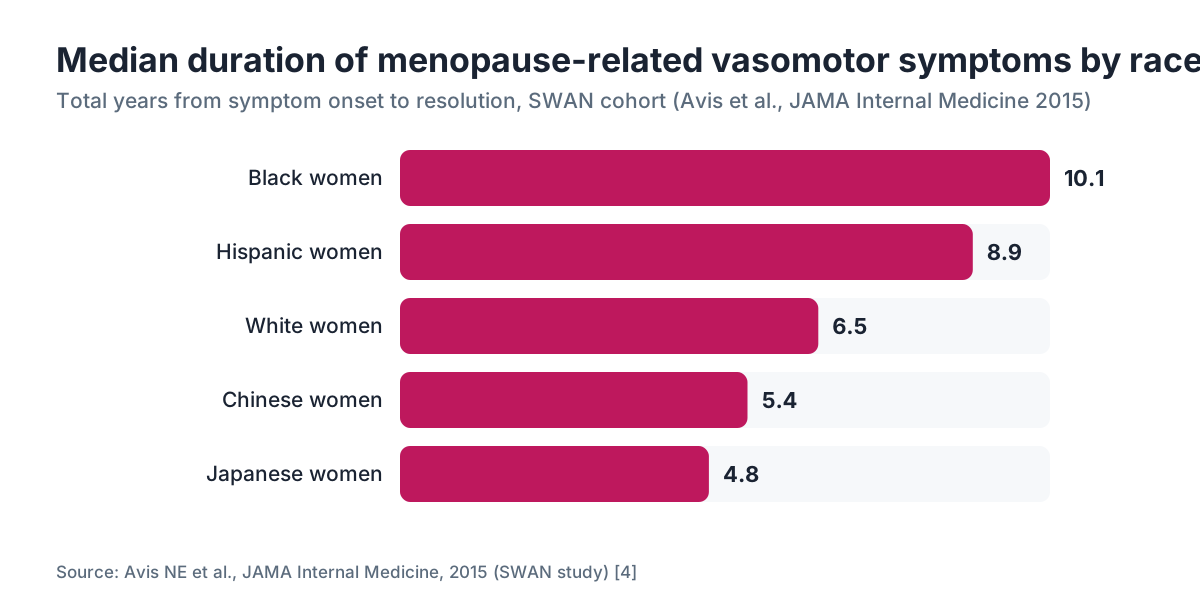
Black women in the SWAN cohort had, on average, a longer and more symptomatic perimenopause than white or Asian women, a difference researchers attribute to a mix of genetic, socioeconomic, and stress-related factors [3].
For a fuller picture of when this transition typically starts, see perimenopause age.
How long do hot flashes and other menopause symptoms last?
The median total duration of moderate-to-severe hot flashes and night sweats is 7.4 years, which is far longer than doctors used to say [4]. For decades the conventional wisdom held that hot flashes ran 2 to 3 years. SWAN blew that up. Women who started having symptoms before their final period had the longest courses, sometimes over 11 years.
About 1 in 3 women still has clinically bothersome hot flashes a decade after menopause [4]. Some report them into their 70s. So no, symptoms do not reliably end on any predictable schedule.
Other symptoms run on their own clocks:
| Symptom | Typical onset | Does it resolve on its own? | |---|---|---| | Hot flashes / night sweats | Perimenopause | Usually yes, 4-10+ years | | Sleep disruption | Perimenopause | Partly, often tied to hot flashes | | Mood changes, anxiety | Perimenopause | Often improves in postmenopause | | Brain fog | Perimenopause to early postmenopause | Usually improves 2-5 years post-menopause | | Vaginal dryness, pain | Early postmenopause | Does NOT improve without treatment | | Urinary urgency / UTIs | Early postmenopause | Does NOT improve without treatment | | Bone density loss | Accelerates 1-2 years before, 3-5 years after menopause | Ongoing without treatment | | Cardiovascular risk increase | Postmenopause | Ongoing without treatment |
Vaginal and urinary symptoms need a separate warning. Hot flashes come from acute hormonal swings. Genitourinary syndrome of menopause (GSM) comes from chronic low estrogen. The tissues thin and dry out a little more each year. Without local or systemic estrogen treatment, GSM gets worse over time. It does not spontaneously get better [1].
What happens to your body permanently after menopause?
The end of ovarian estrogen production does more than throw off hot flashes. It resets several body systems in ways that outlast any single symptom.
Bone. Estrogen actively holds back the osteoclasts, the cells that break bone down. When estrogen drops, bone resorption speeds up. Women lose roughly 1 to 2 percent of bone density per year in the first five years after menopause, compared to about 0.5 percent per year before [5]. The Bone Health and Osteoporosis Foundation estimates that about half of women over 50 will break a bone due to osteoporosis in their lifetime [5]. Time doesn't fix this. It takes intervention. A bone density test (DEXA scan) is recommended for all women at age 65, or earlier with risk factors.
Cardiovascular system. Before menopause, estrogen keeps LDL cholesterol lower, HDL higher, and blood vessels flexible. After menopause, LDL tends to rise and cardiovascular risk climbs steadily. Heart disease is the leading cause of death in postmenopausal women, per the American Heart Association [6].
Brain. Estrogen has neuroprotective effects. The cognitive fogginess many women notice during the transition usually clears, but the long-term link between estrogen loss and dementia risk is still under active study and far from settled.
None of these changes 'end.' They're the new baseline of postmenopause. Managing them takes attention, not patience.
Can menopause symptoms come back after years of being fine?
Yes, and it catches more women off guard than you'd expect.
The usual story: a woman had mild symptoms, figured she was through it, then found things getting worse again in her late 50s or 60s. GSM is the main offender. Because it builds with cumulative estrogen loss, it can flare years after the initial transition went quiet.
Hot flashes can also come back or intensify after a calm stretch, especially after stressful life events, big weight loss, illness, or starting certain medications. Tamoxifen and some antidepressants are common triggers.
One firm rule: if you've been postmenopausal for years and suddenly notice new bleeding, that is not menopause restarting. Postmenopausal bleeding always needs evaluation to rule out endometrial cancer or other pathology. See a clinician promptly.
Does hormone replacement therapy make menopause end faster or stop symptoms sooner?
Hormone therapy (HRT, or more precisely menopausal hormone therapy, MHT) does not speed up the biological transition. It won't restart your ovaries or shorten the physiological shift from perimenopause to postmenopause.
What it does is suppress symptoms, often very well, while you take it. The clinical literature is clear that vasomotor symptoms return when treatment stops [7]. HRT manages the symptoms; it doesn't cure the estrogen deficit underneath.
Started within 10 years of menopause or before age 60, HRT also protects bone density and may lower cardiovascular risk, and some of that benefit lasts past the treatment period [7]. The Endocrine Society's 2015 clinical practice guideline put it plainly: "the benefit-risk profile of MHT is favorable for most healthy women who are within 10 years of menopause or under age 60" [7].
For women with the longest, harshest hot flash courses, the question isn't whether to treat but how long. Many clinicians now back individualized duration instead of the old 'no more than 5 years' ceiling, which came from a misreading of the Women's Health Initiative data. NAMS's 2022 position statement openly supports longer duration when the benefits outweigh the risks for that specific woman [1].
Options include oral estrogen, an estrogen patch, gels, sprays, and for women with a uterus, combined therapy with progesterone. If you're weighing whether to start or extend HRT, hormone replacement therapy has more on formulations and how to decide.
WomenRx offers telehealth consultations for menopause hormone management if you want a clinician review without a long wait for a specialist.
Are there non-hormonal options that actually work for lingering symptoms?
Yes, and the options got meaningfully better in the last few years.
Fezolinetant (brand name Veozah) was FDA-approved in May 2023 as the first non-hormonal prescription drug made specifically for hot flashes [8]. It blocks the neurokinin 3 (NK3) receptor in the hypothalamus, part of the pathway that triggers a hot flash. In the SKYLIGHT trials it cut hot flash frequency by roughly 60 percent, compared to about 75 to 80 percent for hormone therapy. That's a real option for women who can't or won't use estrogen.
Other approaches with actual evidence behind them:
SSRI/SNRI antidepressants. Low-dose paroxetine (Brisdelle, 7.5 mg) is FDA-approved for hot flashes. Venlafaxine and escitalopram have solid trial data too, even though they're used off-label for this [9].
Gabapentin. Works reasonably well for nighttime hot flashes and the sleep loss that comes with them. Dizziness and sedation are the trade-offs.
Oxybutynin. An older anticholinergic bladder drug with decent data for cutting hot flashes, though nobody fully understands the mechanism.
For vaginal dryness, over-the-counter moisturizers (Replens, Good Clean Love) and lubricants help with comfort but don't reverse tissue thinning. Low-dose vaginal estrogen and vaginal DHEA (Intrarosa) do reverse it, and multiple oncology society guidelines consider them safe for most breast cancer survivors.
Cognitive behavioral therapy (CBT) and clinical hypnosis both have randomized trial data showing they lower how much hot flashes bother women, more than they change the actual count [9].
Does body weight affect how long menopause symptoms last?
Body composition genuinely matters here, and it cuts both ways.
Fat tissue converts androgens into estrogen through peripheral aromatization. Women with higher body fat hang onto a bit more circulating estrogen after menopause, which can soften some symptoms. Yet higher BMI is also tied to more severe hot flashes in many studies, probably because body fat traps heat and makes it harder to cool down.
The more useful issue is weight gain. Most women gain 5 to 8 pounds during the transition, driven partly by estrogen loss pushing fat toward the abdomen and partly by age-related muscle loss [10]. It isn't inevitable, and it isn't purely a 'slowed metabolism' problem. The shift from subcutaneous to visceral fat raises cardiovascular and metabolic risk on its own, apart from what the scale says.
GLP-1 receptor agonists, the same drugs used for type 2 diabetes and weight loss, are showing up more in postmenopausal women targeting that visceral fat. The SURMOUNT-1 trial of tirzepatide showed mean weight loss of 20.9 percent of body weight in adults with obesity [10]. Semaglutide (Ozempic, Wegovy) showed about 14.9 percent mean weight loss in the STEP 1 trial [10]. Both are increasingly useful tools for postmenopause metabolic changes. See semaglutide for weight loss and semaglutide vs tirzepatide for a side-by-side.
How GLP-1 medications and hormone therapy interact isn't well studied yet. Neither is documented as contraindicated with the other, but your prescribers should be talking to each other.
What's the difference between menopause ending and feeling like yourself again?
This is probably the most honest version of the question.
Most women aren't asking when the physiology of estrogen decline technically wraps up. They're asking when they'll feel normal again. Different questions, different answers.
The physiology does settle. Hot flashes fade for most women eventually. Sleep usually improves. Cognitive fog tends to lift in the early postmenopause years, though nobody can hand you a clean timeline.
Feeling like yourself again depends heavily on what you do in the window. Women who address bone health, cardiovascular risk, GSM, and mood early tend to do better long-term than those who wait symptoms out and hope. The stretch from perimenopause through the first five years of postmenopause is when most of the big intervention chances sit. The evidence gets much weaker for starting hormone therapy more than 10 years after menopause, for one.
Here's a thing practitioners say that rarely makes it onto paper: postmenopause, for most women who actively manage it, feels calmer than perimenopause. The hormonal swings stop. Many women describe feeling steadier, more themselves, once the transition is genuinely over. That part is real, and it's worth saying.
When should you see a doctor if you think your symptoms should have ended by now?
There's no hard 'you should be done' deadline, but several signs are worth a clinical conversation.
Hot flashes running past 10 years postmenopause, or flaring after a quiet stretch. New or worsening vaginal dryness, pain with sex, or recurrent UTIs at any point. Postmenopausal bleeding, always, no exceptions. New depression or anxiety showing up well into postmenopause. Bone fractures or losing more than 1.5 inches from your peak height, which can point to vertebral compression fractures. Any cognitive change that's noticeably hitting your daily function.
If you haven't had a formal symptom review since entering postmenopause, a dedicated menopause medicine visit is worth booking. NAMS keeps a certified practitioner directory at menopause.org. Plenty of primary care physicians aren't well trained in postmenopause management, and the gap between the evidence and everyday practice in this area is genuinely wide.
WomenRx also offers telehealth menopause hormone management for women who want specialized care without a long referral chain. Read more about the full menopause landscape before any appointment.
Surgical menopause: does it end the same way natural menopause does?
No. And this is a real gap in how surgical menopause gets explained to patients.
Natural menopause is a slow withdrawal. The ovaries wind down over years, giving the body time to adjust. Surgical menopause, meaning removal of both ovaries (bilateral oophorectomy), drops estrogen to near zero overnight. Symptoms hit harder and more abruptly than in natural menopause.
The symptom timeline doesn't necessarily shrink either. Women with surgical menopause can have prolonged, severe hot flashes. The bone loss curve is steeper and starts right away. Cardiovascular risk rises faster.
For women under 45 who have surgical menopause, the evidence strongly supports hormone therapy at least until the average natural menopause age of 51, because premature estrogen loss carries long-term risks that outweigh almost any HRT concern for this age group [7]. That recommendation comes from both NAMS and the Endocrine Society.
The 'does it end' answer for surgical menopause: the symptoms can and do improve over time, especially with treatment. But the underlying estrogen deficit is permanent unless you treat it.
Frequently asked questions
Does menopause ever completely go away on its own?
The acute hormonal fluctuation of the transition does stabilize. Hot flashes fade for most women within 4 to 10 years of the final period, though about 1 in 3 still has them a decade later. What does not go away is the underlying estrogen deficit: bone loss, cardiovascular changes, and vaginal tissue thinning are ongoing without treatment. So 'going away' depends on which part you mean.
How long after menopause do symptoms like hot flashes typically stop?
The SWAN study found the median total duration of moderate-to-severe hot flashes was 7.4 years, counting from when symptoms started in perimenopause. Women who began having symptoms before their final period had the longest duration, sometimes over 11 years. There is no single endpoint; roughly 10 to 15 percent of women have clinically bothersome hot flashes into their 60s and 70s.
Is postmenopause the same as menopause being over?
Postmenopause means the biological transition is complete. You are postmenopausal 12 months after your last period. But being postmenopausal does not mean symptoms are over. Vaginal dryness, urinary symptoms, bone loss, and cardiovascular risk all persist and often worsen in postmenopause without active management. The transition ends; its consequences do not.
Can you still get hot flashes 10 or 20 years after menopause?
Yes. The SWAN data showed some women have vasomotor symptoms for over a decade after their final period. Hot flashes in women in their 60s and 70s are underreported partly because many women assume they should be done by then and don't mention them to their doctors. Low-dose hormone therapy and newer options like fezolinetant (Veozah) work even in later postmenopause.
What age do most women stop having menopause symptoms?
There is no single age. Median hot flash duration is about 7.4 years from onset, which for a woman who reaches menopause at 51 might mean improvement by her late 50s. But roughly 30 percent of women still have bothersome symptoms at 60 or older. Genitourinary symptoms like vaginal dryness and urinary urgency tend to worsen with age unless treated, regardless of when hot flashes resolved.
Does going on HRT mean your symptoms come back when you stop?
Typically yes, if you stop while your body would otherwise still be generating hot flashes. Hormone therapy suppresses symptoms; it does not cure the underlying transition. When you taper off HRT, symptoms can return, though a slow taper causes less rebound than stopping abruptly. Many clinicians now support individualized duration rather than a fixed stopping date, based on the NAMS 2022 position statement.
What is genitourinary syndrome of menopause and does it go away?
Genitourinary syndrome of menopause (GSM) includes vaginal dryness, thinning, pain with sex, urinary urgency, and recurrent UTIs caused by chronic low estrogen. Unlike hot flashes, GSM does not improve on its own over time: it worsens progressively without treatment. Low-dose vaginal estrogen or vaginal DHEA (Intrarosa) reverse the tissue changes and are considered safe for most women, including many breast cancer survivors.
Is it normal to feel better emotionally after menopause is over?
Yes, and this is underreported. The hormonal volatility of perimenopause drives mood instability for many women. Once the transition is complete and hormone levels settle at a new lower baseline, many women describe feeling calmer, more emotionally steady, and in some ways more like themselves than during the turbulent perimenopause years. It doesn't apply universally, but it is genuinely common.
Can stress or weight changes make menopause symptoms come back?
Yes. Hot flashes that had faded can re-emerge during periods of significant physical or emotional stress. Major weight loss can also temporarily worsen hot flashes, partly by reducing peripheral estrogen production from fat tissue. Certain medications including tamoxifen, some antidepressants, and GnRH agonists can reactivate or worsen vasomotor symptoms in women who had been stable for years.
Does surgical menopause end differently than natural menopause?
Surgical menopause from bilateral oophorectomy is abrupt rather than gradual, which typically makes symptoms more intense. The physiological timeline does not automatically compress: severe symptoms can persist for years. For women under 45, guidelines from NAMS and the Endocrine Society strongly support hormone therapy at least until the average natural menopause age of 51 to protect bone density and cardiovascular health.
How does menopause affect bone loss permanently?
Estrogen suppresses bone breakdown. After menopause, women lose roughly 1 to 2 percent of bone density per year in the first five years, compared to about 0.5 percent per year premenopause. This accelerated loss is permanent without intervention. The Bone Health and Osteoporosis Foundation estimates about half of women over 50 will have an osteoporosis-related fracture in their lifetime. A DEXA bone density scan is recommended by age 65, or earlier with risk factors.
What non-hormonal treatments actually help after menopause is over?
Fezolinetant (Veozah), FDA-approved in 2023, is the first non-hormonal prescription drug made specifically for hot flashes and works via the neurokinin 3 pathway. SSRIs and SNRIs like paroxetine (Brisdelle) and venlafaxine have good evidence for vasomotor symptoms. Gabapentin helps with nighttime hot flashes. For vaginal symptoms, low-dose vaginal estrogen or vaginal DHEA are the most effective local options without meaningful systemic absorption.
What is the average age menopause ends in the sense that symptoms resolve?
There is no established 'symptoms end' age because the range is so wide. Using the SWAN data, if you start having symptoms at 47 and the median duration is 7.4 years, you might expect real improvement in hot flashes by 54 or 55. But about 30 percent of women have persistent symptoms past 60. Vaginal and urinary symptoms have no natural resolution date without treatment.
Do GLP-1 medications like semaglutide help with menopause symptoms?
GLP-1 medications are not treatments for hot flashes or GSM. Their menopause relevance is the visceral fat and metabolic shifts that speed up in postmenopause. The STEP 1 trial showed semaglutide produced mean weight loss of about 14.9 percent of body weight, and SURMOUNT-1 showed tirzepatide about 20.9 percent, both meaningful for postmenopause cardiovascular and metabolic risk. They do not replace hormone therapy for symptom management.
Sources
- North American Menopause Society (NAMS), 2022 Hormone Therapy Position Statement, Menopause journal
- NIH National Institute on Aging, Menopause overview
- Study of Women's Health Across the Nation (SWAN); NIH National Institute on Aging summary
- Avis NE et al., JAMA Internal Medicine, 2015: Duration of menopausal vasomotor symptoms (SWAN)
- Bone Health and Osteoporosis Foundation, bone health facts
- American Heart Association, menopause and cardiovascular disease
- Endocrine Society Clinical Practice Guideline, Treatment of Menopause-Associated Vasomotor Symptoms, 2015
- US Food and Drug Administration, Veozah (fezolinetant) approval, 2023
- Nonhormonal Management of Menopause-Associated Vasomotor Symptoms, NAMS Position Statement, Menopause 2023
- Wilding JPH et al. (STEP 1), NEJM 2021; Jastreboff AM et al. (SURMOUNT-1), NEJM 2022