Does HRT help with weight loss? What the evidence actually shows
TL;DR: HRT does not directly cause weight loss, but it can reduce the visceral belly fat gain that menopause drives and make it easier to lose weight through diet and exercise. Studies show transdermal estradiol lowers visceral fat accumulation and may improve insulin sensitivity. For meaningful weight loss, most women need additional strategies, including GLP-1 medications if metabolic issues are significant.
Does HRT help with weight loss, or is that a myth?
The short answer: HRT is not a weight loss drug, but it is not weight-neutral either. That distinction matters more than people realize.
Estrogen does something specific to fat distribution. During the reproductive years, estrogen keeps fat preferentially deposited on the hips and thighs (subcutaneous fat). When estrogen drops in perimenopause and menopause, fat migrates inward, packing around the organs as visceral fat. That visceral fat is metabolically active in the worst way: it raises insulin resistance, raises cardiovascular risk, and makes losing weight harder [1].
HRT, specifically estradiol-based therapy, partially reverses that shift. It does not strip existing fat off your body. What it does is slow or reduce the accumulation of new visceral fat during the menopausal transition. Several randomized controlled trials confirm this. The PEPI trial, a large placebo-controlled study of postmenopausal women, found that women on estrogen therapy gained significantly less abdominal fat than controls [2].
So if you are expecting the scale to drop 15 pounds because you started an estrogen patch, you will be disappointed. But if you are asking whether HRT creates a metabolic environment more favorable to weight management, the evidence says yes.
The North American Menopause Society (NAMS) states that "menopausal hormone therapy does not cause weight gain and may reduce fat mass and the risk of metabolic syndrome" [3]. That is a meaningful endorsement from the leading menopause authority in North America, and it is based on decades of data.
Why do women gain weight in menopause in the first place?
Understanding why menopause weight gain happens is the only way to understand what HRT can and cannot fix.
First, estrogen decline changes where fat goes, as described above. But aging itself also slows metabolic rate. Muscle mass drops by roughly 3-8% per decade after age 30, and muscle is the primary driver of resting metabolism [4]. So by the time a woman hits her late 40s or early 50s, she may have meaningfully less metabolic engine than she did at 35, independent of hormones.
Second, cortisol sensitivity increases around menopause. Sleep disruption, hot flashes, and the general stress of the menopausal transition all push cortisol higher, and cortisol directly promotes visceral fat storage.
Third, insulin sensitivity often worsens. A 2019 analysis in the Journal of Clinical Endocrinology & Metabolism found that postmenopausal women showed significantly higher insulin resistance compared to premenopausal controls of similar BMI, with estrogen loss identified as a contributing factor [5].
HRT addresses the estrogen and insulin-sensitivity pieces. It does not restore the muscle mass you have already lost (that requires resistance training and often adequate protein intake), and it does not solve cortisol dysregulation on its own. So expecting HRT to be a complete metabolic fix is unrealistic. Expecting it to be one useful piece of a broader strategy is entirely reasonable.
If you are early in the perimenopause transition, starting HRT sooner rather than later may matter because you are trying to prevent visceral fat accumulation, not reverse years of it.
What does the research actually show about HRT and body composition?
The data on HRT and body composition are more consistent than most people realize. The signal is real; the effect size is modest.
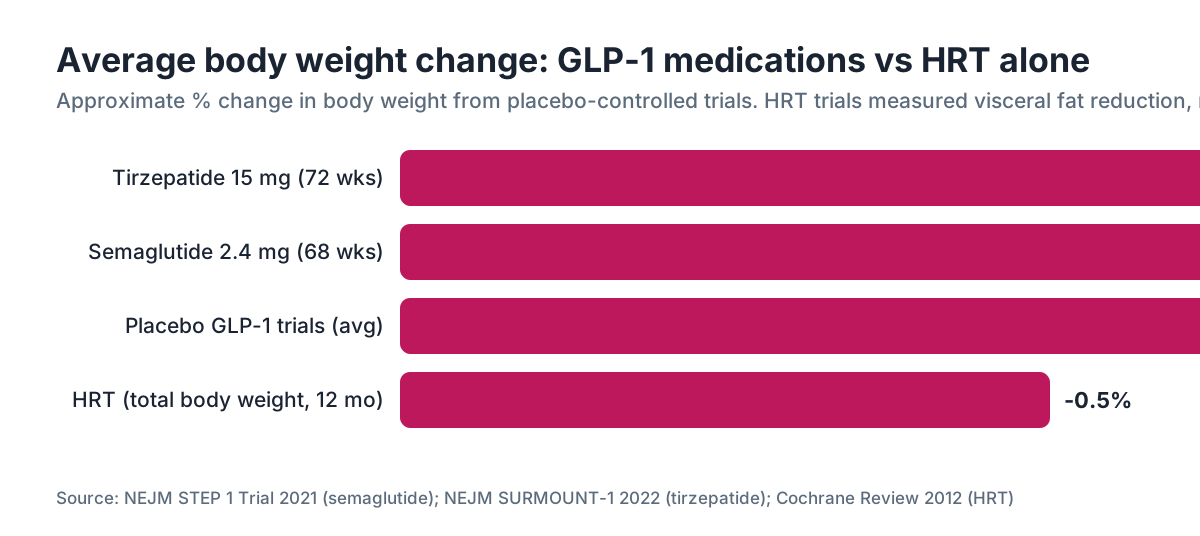
A 2012 Cochrane review of randomized controlled trials found that postmenopausal women on combined HRT had less central fat accumulation than women on placebo, though total body weight differences were not statistically significant [6]. That is the distinction that keeps getting lost: HRT shifts where fat sits more than it changes how much fat you have overall.
A more recent 2019 randomized trial published in Menopause found that women receiving transdermal estradiol combined with micronized progesterone had meaningfully lower visceral adipose tissue (VAT) at 12 months compared to controls, with no significant difference in total body weight [7].
| Outcome | Effect of estradiol-based HRT vs placebo | |---|---| | Total body weight | Minimal to no significant difference | | Visceral (belly) fat | Reduced accumulation | | Subcutaneous fat | Little change or slight increase | | Insulin sensitivity | Modest improvement, particularly with transdermal route | | Lean muscle mass | Trend toward preservation, evidence weaker |
The route of administration matters. Oral estrogen goes through first-pass liver metabolism, which raises certain clotting proteins and has a less favorable metabolic profile than transdermal estradiol (patches, gels, sprays). Transdermal estradiol bypasses the liver and appears to have a better impact on insulin resistance specifically [1][5].
If metabolic impact on body composition is a priority for you, the estrogen patch or a gel is generally considered preferable to oral estradiol by most menopause specialists. That preference is based on pharmacokinetics, more than convenience.
Can HRT help you lose weight if you are actively dieting?
This is the practical question most women actually want answered. And the answer is: probably yes, in a supporting role.
When you are in a caloric deficit trying to lose fat, your body faces a hormonal crosswind. Low estrogen makes your body preferentially break down muscle rather than fat during caloric restriction, which is the opposite of what you want. Estrogen appears to have a muscle-sparing effect during energy deficit [4].
Women on HRT who are dieting may preserve more lean muscle mass, which keeps their resting metabolic rate from crashing as badly. That is not a dramatic effect, but over months it compounds.
There is also an indirect appetite angle. Estrogen has some influence on leptin sensitivity and central appetite regulation. Hot flashes and night sweats disrupt sleep, and poor sleep elevates ghrelin (the hunger hormone) and suppresses leptin (the satiety hormone). If HRT controls vasomotor symptoms and restores better sleep, hunger regulation improves, and most women find calorie control substantially easier when they are sleeping through the night.
None of this means HRT is doing the weight loss work. It means HRT may reduce some of the metabolic friction that makes weight loss so much harder in midlife compared to your 30s. The actual work, calories, movement, muscle building, still has to happen.
What type of HRT is best if body composition is a concern?
Estrogen type, dose, route, and the progestogen you pair it with all influence metabolic outcomes.
Estradiol (bioidentical 17-beta estradiol) is the estrogen used in most evidence-based HRT protocols and has the most data on metabolic effects. Conjugated equine estrogens (the older Premarin-style therapy) have more mixed metabolic data.
Transdermal estradiol, meaning patches, gels, or sprays, avoids first-pass liver metabolism and produces more stable blood levels than oral forms. Most endocrinologists and menopause specialists prefer the transdermal route for women with metabolic concerns, insulin resistance, or elevated cardiovascular risk [1][5].
For the progestogen component (needed by women with a uterus to protect the uterine lining), micronized progesterone (Prometrium or compounded bioidentical progesterone) has a more favorable metabolic profile than synthetic progestins like medroxyprogesterone acetate. Some synthetic progestins appear to blunt the positive metabolic effects of estradiol and may increase appetite in some women. Micronized progesterone does not carry the same concerns.
Dosing matters too. Standard doses of estradiol used in HRT are enough to achieve symptom relief and favorable tissue effects. Going very low (insufficient to restore tissue levels) may not fully address the visceral fat shift, though exact threshold doses for metabolic effect are not as well established as doses for symptom relief.
If you are exploring your HRT options, a thorough conversation with a hormone replacement therapy specialist who reviews your individual metabolic picture is worth far more than any generic protocol.
Should you combine HRT with a GLP-1 medication for weight loss?
For women who have significant weight to lose, more than the menopause-related fat redistribution but meaningful obesity or metabolic disease, HRT alone will not get the job done. That is not a failure of HRT; it is just reality.
GLP-1 receptor agonists like semaglutide and tirzepatide are the most effective pharmaceutical weight loss tools we have. The STEP 1 trial showed semaglutide 2.4 mg weekly produced an average 14.9% body weight reduction over 68 weeks in adults with obesity or overweight with a weight-related condition, compared to 2.4% for placebo [8]. The SURMOUNT-1 trial showed tirzepatide 15 mg produced up to 22.5% average body weight reduction over 72 weeks [9].
For perimenopausal and postmenopausal women dealing with both hormonal fat redistribution and significant weight excess, combining HRT with a GLP-1 is an increasingly common approach among specialists. The theory is that HRT addresses the hormonal fat-shift and metabolic friction while the GLP-1 delivers the caloric deficit enforcement that actually drives scale weight down.
There is limited head-to-head trial data specifically on HRT plus GLP-1 combinations in menopausal women, so I am not going to claim this combination is proven superior to GLP-1 alone. What clinicians observe is that women feel better, have more energy, and may adhere better to the GLP-1 therapy when their hormone status is also optimized.
If you want to explore this path, platforms like WomenRx specialize in exactly this combination, offering both HRT and GLP-1 prescribing for women in midlife. Regardless of where you seek care, find someone who considers both pieces together rather than treating them in separate silos.
For more on GLP-1 options, semaglutide for weight loss and semaglutide vs tirzepatide are worth reading before your appointment.
Will HRT help me lose weight if I am in perimenopause vs. postmenopause?
The timing of when you start HRT relative to the menopause transition affects how much it can do for you metabolically.
In perimenopause, estrogen levels are fluctuating rather than simply declining. The metabolic disruption is already starting: visceral fat is accumulating, insulin sensitivity may be worsening, sleep is fragmented. Starting HRT during this window, before significant visceral fat has accumulated, may provide the most metabolic benefit because you are preventing accumulation rather than trying to reverse it.
In early postmenopause (within roughly 10 years of your final period or before age 60), the "timing hypothesis" holds that estrogen therapy is both safer and more metabolically active than starting later. The evidence for cardiovascular protection, bone protection, and favorable body composition effects is strongest in this window [3].
For women who are more than 10-15 years past menopause or are over age 60 and have never used HRT, starting estrogen carries higher absolute risks (particularly cardiovascular and possibly stroke) and less established metabolic benefit. This does not mean it is always wrong to start later, but it changes the risk-benefit calculation significantly and requires a more individualized conversation with a specialist.
The when does menopause start piece has a useful overview of staging the transition if you are unsure where you fall.
Does HRT cause weight gain? (Addressing the biggest fear)
One reason many women refuse or delay HRT is fear that it will make them gain weight. This fear comes largely from the old progestin-dominant oral HRT protocols of the 1980s and 1990s, where synthetic progestins like medroxyprogesterone acetate (MPA) were associated with bloating, fluid retention, and appetite changes that felt like weight gain to many women.
Modern HRT protocols, particularly transdermal estradiol plus micronized progesterone, do not appear to cause weight gain in randomized trial data [3][6]. Some women do notice transient water retention in the first few weeks of starting any hormone therapy, particularly progesterone. This is not fat. It resolves.
NAMS has stated clearly that hormone therapy does not cause weight gain. Individual responses vary, and some women will report feeling like they gained weight after starting HRT, but controlled trial data does not support net weight gain as an expected effect of evidence-based modern HRT.
The weight you gain during menopause, if you are gaining, is driven by the hormonal shift and aging process, not by HRT. In fact, the estrogen in HRT is partially counteracting the force that drives that gain.
What other factors affect weight in menopause beyond hormones?
Hormones are one variable in a system with multiple levers. Focusing only on HRT while ignoring the others is a common mistake.
Muscle mass is the most underappreciated factor. Progressive resistance training, meaning lifting weights in a structured way that progressively increases challenge, is the strongest intervention for preserving and rebuilding lean mass in midlife. Muscle is metabolically expensive tissue. More of it means a higher resting metabolic rate. Most women do not do nearly enough resistance training, and most cardio-only exercise programs do very little to stop muscle loss.
Protein intake is closely related. Most women eat far less protein than they need for muscle preservation, particularly when dieting. A general evidence-based target for midlife women trying to maintain muscle is around 1.2 to 1.6 grams of protein per kilogram of body weight daily [4]. That is substantially more than the general RDA.
Sleep quality directly affects hunger hormones. If hot flashes, night sweats, or anxiety are wrecking your sleep, no diet plan will work well until that is addressed. HRT is highly effective for vasomotor symptoms and may restore sleep quality in ways that indirectly support weight management.
Stress and cortisol deserve attention too. Chronic elevated cortisol, whether from life stress or the physiological stress of the menopausal transition itself, drives visceral fat storage through pathways independent of estrogen. Cortisol management through sleep, movement, and stress reduction is not optional or soft science; it has measurable metabolic effects.
Bone health and body composition are connected too. Women losing lean mass and gaining visceral fat during menopause are also at higher risk of osteoporosis. A bone density test at menopause is a reasonable step to understand your full metabolic picture.
How long does it take for HRT to affect body composition?
Do not expect dramatic changes in the first month. HRT is not working on a timeline measured in weeks.
In most clinical trials, measurable differences in visceral fat or metabolic markers appear at the 6-to-12-month mark [6][7]. Symptom relief, particularly for hot flashes and sleep, often comes faster, sometimes within 4-12 weeks of starting at adequate doses.
The body composition effects are slow, cumulative, and work through prevention more than reversal. You are changing the hormonal environment so that the next year of fat accumulation is less viscerally weighted, not dissolving the visceral fat you already have.
This is why patience matters and why many women stop HRT too soon, thinking it is not working. The benefit often shows up in what did not happen (the belly fat that did not accumulate) rather than the number on the scale going down.
For women who want to see faster, more visible weight loss results alongside HRT, pairing it with a structured dietary approach and, where appropriate, a GLP-1 medication will produce more measurable scale changes on a shorter timeline. Semaglutide and compounded semaglutide options are worth exploring with a prescriber if you have significant weight to lose.
What should I tell my doctor if I want HRT partly for weight management?
Be direct about your goals. Many doctors are still operating from outdated information suggesting HRT is primarily for hot flash relief. A well-informed conversation changes what you get offered.
Tell your doctor you are concerned about visceral fat accumulation and metabolic changes in menopause, more than symptoms. Ask specifically about transdermal estradiol and micronized progesterone if you have a uterus. Ask whether your metabolic labs (fasting insulin, HbA1c, fasting glucose, a lipid panel) should be checked before and after starting HRT.
If your doctor dismisses the metabolic rationale for HRT or insists that HRT causes weight gain, that is a signal they may not be current on menopause medicine. NAMS provides a certified menopause practitioner directory that is worth using if you are not getting informed care.
Be honest about your weight loss goals too. If you have significant weight to lose beyond the menopause belly fat, say so. That opens the door to a conversation about GLP-1 medications, which your doctor may not raise unless you do.
WomenRx clinicians evaluate hormone status, metabolic health, and weight loss goals together rather than in silos, which is the approach most likely to produce a plan that actually works for where you are in midlife.
Your menopause age and how long you have been in the transition shapes what options make the most sense, so come prepared with that information.
Frequently asked questions
Does HRT help with weight loss directly?
HRT does not cause weight loss on its own. It reduces the visceral fat accumulation that menopause drives, improves insulin sensitivity modestly, and creates a more favorable hormonal environment for weight management. Women on estrogen-based HRT typically see little change in total scale weight but may accumulate less dangerous belly fat over time compared to women not on therapy.
Can HRT help you lose weight if you are also dieting?
Yes, in a supporting role. Estrogen has a mild muscle-sparing effect during caloric restriction, which helps preserve resting metabolic rate when you are in a deficit. Better sleep from symptom control also improves hunger hormones. HRT does not do the weight loss work, but it reduces some of the metabolic friction that makes dieting so much harder in menopause than it was in your 30s.
Will HRT help me lose belly fat specifically?
HRT can slow or reduce new visceral belly fat accumulation, which menopause drives by shifting fat storage patterns inward. Randomized trials show transdermal estradiol lowers visceral adipose tissue compared to placebo. It is not a treatment that melts existing belly fat. Think of it as changing the direction your metabolism is heading rather than reversing years of accumulation quickly.
Would HRT help me lose weight if I have significant obesity?
For significant weight loss in women with obesity, HRT alone is not sufficient. It improves metabolic conditions but does not produce the caloric deficit that drives fat loss. GLP-1 medications like semaglutide or tirzepatide are far more effective for meaningful weight reduction. Many specialists now combine HRT with GLP-1 therapy for postmenopausal women who need both hormonal support and a strong weight loss intervention.
Can HRT help with weight loss in perimenopause?
Perimenopause is actually the best time to start HRT for metabolic benefit. Estrogen fluctuations are already driving visceral fat accumulation and insulin sensitivity changes before your final period. Starting HRT early in the transition, before significant metabolic changes have compounded, gives the most opportunity to prevent the pattern from taking hold rather than trying to reverse it later.
Does HRT cause weight gain? Many women think it does.
Modern HRT, meaning transdermal estradiol plus micronized progesterone, does not cause weight gain based on randomized controlled trial data. The North American Menopause Society states that hormone therapy does not cause weight gain and may reduce fat mass. Some women notice transient water retention when starting, particularly with progesterone, but this is not fat and typically resolves within weeks.
Is the estrogen patch better than oral estrogen for weight and metabolism?
Yes, most evidence favors the transdermal route for metabolic effects. Oral estrogen undergoes first-pass liver metabolism and produces less stable blood levels. Transdermal estradiol bypasses the liver, produces steadier estradiol levels, and has a more favorable impact on insulin resistance. For women with metabolic concerns or elevated cardiovascular risk, most menopause specialists recommend patches, gels, or sprays over oral estradiol.
How long does it take for HRT to affect body composition?
Most randomized trials show measurable differences in visceral fat and metabolic markers at the 6-to-12-month mark. Symptom relief is faster, often 4-12 weeks. Body composition changes are slow and work primarily through prevention of further visceral fat accumulation rather than rapid reversal of existing fat. Many women stop HRT too soon expecting faster visible results than the mechanism supports.
Should I combine HRT with a GLP-1 medication like semaglutide for weight loss?
If you have significant weight to lose and are in menopause or perimenopause, combining HRT with a GLP-1 is an increasingly common specialist approach. HRT addresses hormonal fat redistribution and metabolic friction while a GLP-1 medication drives the caloric deficit that produces meaningful scale weight loss. Direct trial data on the combination specifically is limited, but the physiological rationale is sound and many clinicians find it effective in practice.
Does the type of progestogen in HRT affect weight?
Yes. Synthetic progestins, particularly medroxyprogesterone acetate used in older HRT protocols, can cause fluid retention, appetite changes, and may blunt the favorable metabolic effects of estradiol. Micronized progesterone (bioidentical) has a much more neutral metabolic profile. If weight and body composition matter to you, micronized progesterone is the preferred choice among most current menopause specialists.
Can HRT improve insulin resistance in menopause?
Transdermal estradiol modestly improves insulin sensitivity in postmenopausal women, according to multiple trials including a 2019 analysis in the Journal of Clinical Endocrinology and Metabolism. The effect is not as powerful as lifestyle intervention or GLP-1 medications, but it is real. Improved insulin sensitivity makes it easier to manage blood sugar, reduces visceral fat deposition, and may lower progression risk toward type 2 diabetes in women with prediabetes.
Will HRT help me lose weight if I am already past menopause by many years?
Starting HRT more than 10-15 years after menopause or after age 60 carries higher cardiovascular risk and has less established metabolic benefit than starting earlier. The timing hypothesis, supported by major menopause society guidance, suggests the metabolic and cardiovascular protective effects of estrogen therapy are strongest when started during or shortly after the menopausal transition. Late-start HRT requires individualized risk-benefit assessment.
Sources
- North American Menopause Society (NAMS), Position Statement on Hormone Therapy
- Postmenopausal Estrogen/Progestin Interventions (PEPI) Trial, JAMA 1995
- The Menopause Society (formerly NAMS), 2022 Hormone Therapy Position Statement
- American College of Sports Medicine, Position Stand on Exercise and Physical Activity for Older Adults
- Journal of Clinical Endocrinology & Metabolism, 2019, Mauvais-Jarvis et al.
- Cochrane Database of Systematic Reviews, 2012, Marjoribanks et al., Long-term hormone therapy for perimenopausal and postmenopausal women
- Menopause journal (The Menopause Society), 2019, randomized trial on transdermal estradiol and micronized progesterone vs placebo
- New England Journal of Medicine, STEP 1 Trial, Wilding et al. 2021, Once-Weekly Semaglutide in Adults with Overweight or Obesity
- New England Journal of Medicine, SURMOUNT-1 Trial, Jastreboff et al. 2022, Tirzepatide Once Weekly for the Treatment of Obesity
- NIH National Institute on Aging, Menopause and Your Health
- Endocrine Society, Clinical Practice Guideline on Menopausal Hormone Therapy