Does hormone replacement therapy cause cancer? What the evidence actually says
TL;DR: Estrogen-only HRT is associated with a slightly lower breast cancer risk than taking no hormones. Combined estrogen-plus-progestogen HRT adds a small absolute risk, roughly 4 to 8 extra cases per 1,000 women over 5 to 10 years. The type of hormone, delivery method, duration, and your personal history all matter enormously. For most healthy women under 60 who start HRT within 10 years of menopause, benefits outweigh risks.
What does the research actually show about HRT and cancer?
The short answer: it depends which hormone, which cancer, and which woman.
The study that scared a generation of women and their doctors was the Women's Health Initiative (WHI), published in JAMA in 2002. It found a statistically significant increase in breast cancer among women taking combined conjugated equine estrogen plus medroxyprogesterone acetate (CEE+MPA). That headline triggered a dramatic drop in HRT prescriptions that lasted nearly two decades and left millions of women suffering preventable menopause symptoms without treatment [1].
What the headlines missed: the WHI enrolled women with an average age of 63, more than a decade past menopause. Many had pre-existing cardiovascular risk. The absolute risk increase was about 8 extra breast cancer cases per 10,000 women per year, smaller than the risk from drinking one alcoholic drink a day or being overweight at menopause. The estrogen-only arm of the WHI, which enrolled women without a uterus, actually found fewer breast cancers compared to placebo [2].
Science has moved considerably since 2002. A 2019 Lancet meta-analysis of 58 studies and 143,887 women with breast cancer is now the most cited source on this question. It confirmed that combined HRT does raise breast cancer incidence modestly, that the risk persists for some years after stopping, and that the magnitude depends heavily on the progestogen type used [3]. But "modest" deserves translation into real numbers, which the section below covers.
How much does HRT raise breast cancer risk, in actual numbers?
Absolute numbers matter more than relative risk percentages, and this is where most media coverage fails women.
The Lancet 2019 meta-analysis estimated that for women who use combined (estrogen plus progestogen) HRT for 5 years starting at age 50, there are approximately 6 extra breast cancer cases per 1,000 users compared to non-users over a 20-year period [3]. For 10 years of use, the figure rises to about 19 extra cases per 1,000 women.
Estrogen-only HRT tells a very different story. In the same analysis, 5 years of estrogen-only HRT was associated with about 1 extra case per 1,000 women, a number that barely clears statistical significance. The WHI estrogen-only trial found 0.76 relative risk, meaning fewer cancers in the HRT group than in the placebo group [2].
Not all progestogens carry the same risk. Oral synthetic progestogens (particularly MPA, the one used in the original WHI) appear to carry more breast cancer risk than micronized progesterone (also called body-identical or bioidentical progesterone). The French E3N cohort study found that combined HRT using estradiol plus micronized progesterone did not significantly raise breast cancer risk, while combinations using synthetic progestogens did [4]. That finding pushed European and, increasingly, North American prescribing toward micronized progesterone for women who need uterine protection. You can read more about how progesterone type matters in our progesterone explainer.
A useful comparison: moderate alcohol consumption (about one drink per day) is estimated to raise breast cancer risk by roughly 7 to 10 extra cases per 1,000 women over 10 years, which is comparable to or greater than the risk from combined HRT at standard doses [3].
Does HRT increase risk for cancers other than breast cancer?
Breast cancer dominates the conversation, but it's not the only cancer worth examining.
Endometrial (uterine) cancer. This is the clearest cancer risk tied to HRT, and it's almost entirely preventable with proper prescribing. Estrogen given alone to a woman who still has her uterus stimulates the uterine lining and, over time, raises endometrial cancer risk significantly. Taking a progestogen alongside estrogen (combined HRT) fully counteracts this risk. Women who have had a hysterectomy don't need progestogen at all, which is why estrogen-only HRT is a safe option for them [5].
Ovarian cancer. The evidence here is real but modest. The 2015 Collaborative Group on Epidemiological Studies of Ovarian Cancer pooled data from 52 studies and found that women who had ever used HRT had a relative risk of about 1.37 for ovarian cancer compared to never-users, translating to roughly 1 extra case per 1,000 women using HRT for 5 years [6]. The risk appeared similar for estrogen-only and combined HRT, and it declined after stopping.
Colorectal cancer. HRT appears to be protective here, not harmful. The WHI found a 37% reduction in colorectal cancer incidence among combined HRT users compared to placebo [1]. This protective effect is real but hasn't translated into a recommendation that women take HRT purely to prevent colorectal cancer.
Lung cancer, cervical cancer, thyroid cancer. No established causal link with HRT has been confirmed in large, well-controlled studies. Some small signals exist in observational data, but confounding makes interpretation difficult.
The net picture: HRT's cancer-related risks are concentrated in breast (combined HRT, modest increase), ovarian (modest increase), and endometrial (estrogen-only without progestogen, significant increase that is entirely avoidable). Its protective effects include colorectal cancer and possibly lung cancer mortality, though the latter evidence is weaker.
Does it matter how you take HRT: patch, gel, pill, or pellet?
Delivery method matters, particularly for cardiovascular risk and, to a lesser extent, breast cancer risk.
Oral estrogen is processed through the liver first, which affects clotting factors and increases the risk of blood clots (venous thromboembolism, or VTE). Transdermal estrogen (patches, gels, sprays) bypasses the liver and does not carry the same elevated clot risk. NICE guidelines in the UK and NAMS in North America both note that transdermal estrogen appears safer for women with higher baseline cardiovascular or clot risk [5][7].
For breast cancer specifically, the route of estrogen delivery has not been shown to produce meaningfully different breast cancer outcomes in the large datasets we have. What matters more for breast cancer is the progestogen used alongside estrogen, not whether the estrogen is in a patch or a pill.
Hormone pellets are worth addressing directly because they're heavily marketed. Pellets are implanted under the skin and release hormones slowly over several months. There are no large randomized trials establishing their safety or efficacy compared to FDA-approved forms, and they can lead to supraphysiologic (abnormally high) hormone levels that are impossible to adjust once implanted. Neither NAMS nor the Endocrine Society endorses pellets as a preferred delivery method [7]. If a clinic is pushing pellets aggressively, that's a flag worth examining.
For a detailed look at the transdermal estrogen option, see our guide to the estrogen patch.
Who has the highest and lowest HRT cancer risk?
Risk is not uniform. Personal history changes the math significantly.
Women with higher baseline risk include those with a BRCA1 or BRCA2 mutation, a first-degree family history of breast cancer, prior breast biopsy showing atypical hyperplasia, prior breast cancer, obesity (adipose tissue produces estrogen independently), dense breast tissue, and heavy alcohol use. For women with BRCA mutations who have had risk-reducing bilateral salpingo-oophorectomy, HRT to manage surgical menopause symptoms generally does not appear to restore them to pre-surgery risk levels, though data are limited and this decision requires specialist input.
Women with lower baseline risk can often be reassured that the absolute numbers are small. A healthy, lean, non-smoking 51-year-old with no family history and no prior breast disease who starts transdermal estradiol with micronized progesterone has a genuinely small absolute risk increase from HRT, one that many clinicians and most major guidelines now say is acceptable given the documented benefits.
The 10-year timing rule matters too. NAMS and the Endocrine Society's "timing hypothesis" holds that HRT started within 10 years of menopause or before age 60 has a more favorable benefit-risk profile than HRT started later. The WHI enrolled older women, and some of its elevated risks may have been specific to that older, later-starting group [7][8].
If you're trying to understand where you fit on this spectrum, a telehealth provider like WomenRx can walk through your personal risk factors and help you weigh the actual numbers rather than the headlines.
What are the documented benefits of HRT that affect this calculation?
Cancer risk can't be evaluated in isolation. It has to sit next to what HRT actually does.
Bone loss accelerates sharply in the first years after menopause. HRT is one of the most effective interventions for preventing osteoporotic fractures. Hip fractures in older women carry a mortality rate of 20 to 30% within a year, which means bone protection is not a cosmetic consideration [5]. Our article on the bone density test explains how to know where you stand before making this decision.
Cardiovascular disease is the leading cause of death in women. When HRT is started early (within 10 years of menopause), observational data and a re-analysis of WHI data both suggest a reduction in coronary heart disease risk. The DOPS (Danish Osteoporosis Prevention Study) randomized trial found a 52% reduction in cardiovascular mortality in women who started HRT early versus placebo [9].
Vasomotor symptoms (hot flashes, night sweats) affect about 75% of menopausal women. Severe sleep disruption, mood effects, and quality-of-life impairment are real clinical consequences. HRT remains the most effective treatment available, reducing hot flash frequency by 75 to 90% [7].
Genitourinary syndrome of menopause (GSM), which includes vaginal dryness, urinary urgency, and pain with sex, responds well to local estrogen, which carries essentially no systemic absorption and is not associated with the cancer risks discussed here.
For most healthy women under 60 starting HRT within 10 years of menopause, the balance of evidence points to net benefit. That's the NAMS 2022 position statement's conclusion [7].
What did the Women's Health Initiative really find, and why was it misread?
The WHI's 2002 publication is the single most consequential piece of research in modern menopause medicine, mostly for the damage it did.
The trial enrolled 16,608 women randomized to CEE (0.625mg/day) plus MPA (2.5mg/day) or placebo. It was stopped early at a median follow-up of 5.2 years because of a small increase in breast cancer cases. The relative risk was 1.26, meaning a 26% relative increase [1].
Here is what that meant in absolute terms: 38 breast cancer cases per 10,000 women per year in the HRT group versus 30 per 10,000 in the placebo group. Eight extra cases per 10,000 women per year. That's 0.08% per year in absolute terms.
Why the misread? Headlines reported the 26% relative risk increase without translating it to absolute risk. The study was widely (and incorrectly) presented as meaning "HRT causes breast cancer" rather than "this specific combination of synthetic hormones in older women adds a small absolute risk."
Subsequent analyses found that the elevated breast cancer risk in WHI was confined to women who had used HRT before enrollment. Women starting HRT fresh at enrollment did not show the same elevation [1]. This matters because most women prescribed HRT in clinical practice are starting fresh.
The estrogen-only arm (which enrolled 10,739 women without a uterus) was published in JAMA in 2004 and found a relative risk of 0.77 for breast cancer, meaning fewer cases in the HRT group [2]. This finding received a fraction of the media coverage of the 2002 paper.
For a broader look at what HRT is and how it's prescribed, see our hormone replacement therapy overview.
How does HRT compare to other everyday breast cancer risks?
Putting HRT risk in context helps because most people anchor on "cancer" as a category and don't compare magnitudes.
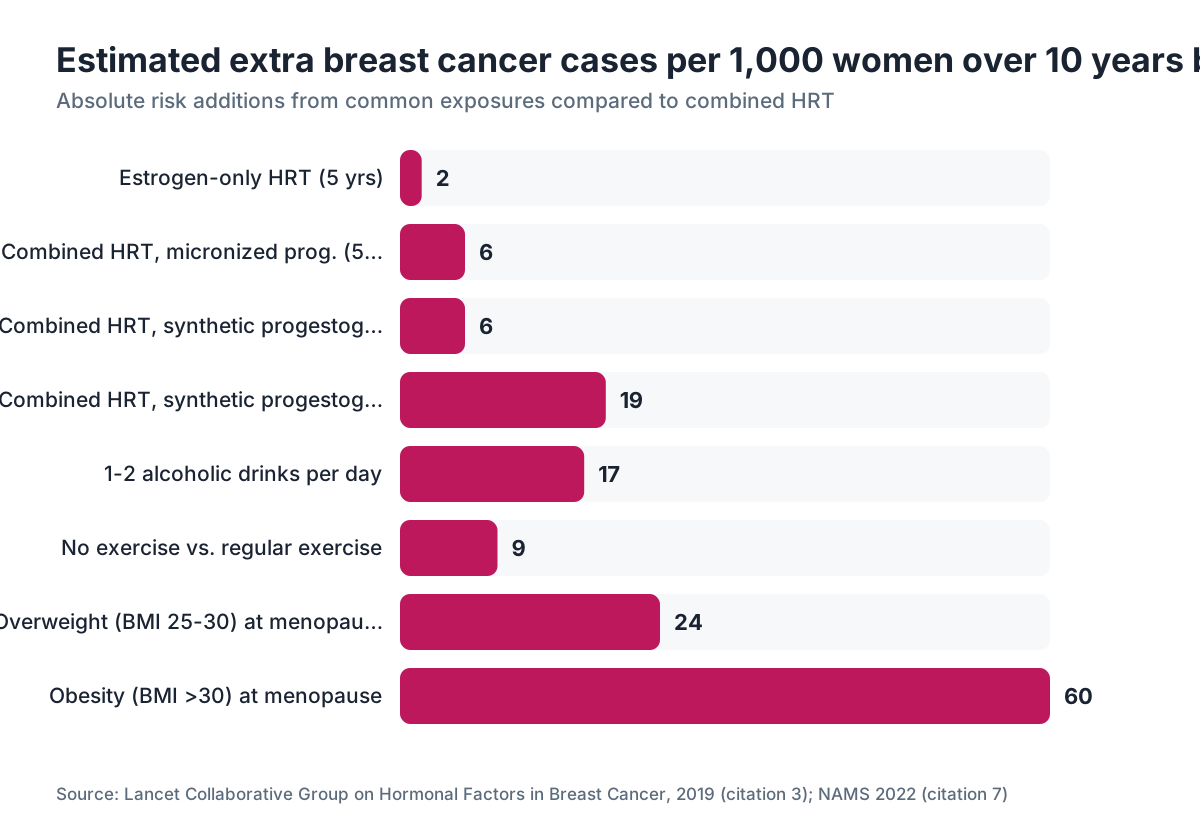
The table below shows estimated breast cancer excess cases per 1,000 women over 10 years for several common exposures. Data are drawn from the 2019 Lancet meta-analysis and NAMS resources.
| Risk factor | Approximate extra breast cancer cases per 1,000 women over 10 years | |---|---| | Estrogen-only HRT (5 years) | ~2 | | Combined HRT with micronized progesterone (5 years) | ~6 (French E3N estimate) | | Combined HRT with synthetic progestogen (5 years) | ~6 | | Combined HRT with synthetic progestogen (10 years) | ~19 | | Overweight (BMI 25-30) at menopause | ~24 | | Obesity (BMI >30) at menopause | ~60 | | Drinking 1-2 alcoholic drinks per day | ~15-20 | | Never having children | ~15 | | No exercise vs. regular exercise | ~9 |
Sources: Lancet 2019 [3], NAMS 2022 [7], Million Women Study [10]
The point isn't that HRT is risk-free. The point is that several lifestyle factors many women don't think twice about carry comparable or larger breast cancer risk than 5 years of combined HRT. That context belongs in any honest conversation about hormone therapy.
Does stopping HRT reduce cancer risk?
Yes, but the timing and degree depend on how long you used HRT.
The 2019 Lancet meta-analysis found that breast cancer risk begins to decline after stopping HRT, but the excess risk does not immediately return to baseline. For women who used combined HRT for 5 years, elevated risk persisted for about 10 years after stopping, though it declined steadily over that period [3]. For shorter courses, the residual risk fades more quickly.
Estrogen-only HRT had a much smaller residual effect after stopping, which is consistent with its lower absolute risk during use.
This has real implications for how women and their clinicians approach the "how long should I use HRT" question. There's no universal right answer. Some women have severe enough symptoms that continuing HRT at midlife is clearly the better trade. Others can taper off after 2 to 3 years. NAMS's position is that there is no mandatory duration limit for HRT use in women who are benefiting from it and have no contraindications, provided the decision is reviewed annually with a knowledgeable clinician [7].
For women who stop HRT and then experience a recurrence of severe symptoms, restarting is a valid option. The idea that once you stop you can never go back is not based in evidence.
What does the FDA currently say about HRT and cancer risk?
FDA-approved HRT labeling carries a black box warning about breast cancer and cardiovascular disease, added in response to the original WHI findings [5]. The black box warning is still there, even as the scientific understanding has refined considerably since 2002.
The FDA's position as of current labeling is that HRT should be used "at the lowest effective dose for the shortest duration consistent with treatment goals and risks for the individual woman." This language reflects appropriate caution without prohibiting long-term use where clinically indicated [5].
The FDA also requires that estrogen-only products for women with a uterus be prescribed with a progestogen, specifically to reduce endometrial cancer risk. This requirement is well-grounded in evidence.
FDA-approved micronized progesterone (Prometrium) carries a different, and generally more favorable, evidence profile than the synthetic MPA used in the original WHI, though the FDA's label language does not yet fully distinguish between progestogen types in its risk warnings. NAMS explicitly notes this distinction in its clinical practice guidelines [7].
The label does state, quoting directly from FDA guidance: "The WHI estrogen alone substudy reported no significant difference in breast cancer rates between women receiving CEE 0.625 mg and those receiving placebo." That sentence is in the current prescribing information for estrogen-only products and is important for women without a uterus to know [5].
What should women with a personal or family history of breast cancer know?
This is genuinely the hardest question in this space, and any honest answer has to acknowledge the limits of the evidence.
For women with a prior breast cancer diagnosis, most oncology guidelines and breast cancer organizations have historically advised against systemic HRT, out of concern that estrogen could stimulate hormone-receptor-positive cancer cells. The HABITS trial (Hormonal Replacement Therapy After Breast Cancer, Is It Safe?) was a Swedish randomized trial that had to be stopped early because women with breast cancer who took HRT had a higher rate of new breast cancer events compared to those who did not [11]. That result has not been conclusively replicated in every study, and some smaller trials in women with hormone-receptor-negative breast cancer have not shown the same signal, but HABITS is enough to make most oncologists very cautious.
For women with BRCA mutations who have not had breast cancer, the data are less alarming. Several studies of BRCA carriers who underwent risk-reducing oophorectomy and then took HRT have not found that HRT restores their breast cancer risk to pre-surgery levels, at least in the short to medium term. But these studies are small and follow-up is limited.
For women with a first-degree family history of breast cancer but no personal diagnosis and no known mutation, the absolute risk addition from HRT is small. A careful conversation with an oncologist or a menopause specialist is warranted, but family history alone is not a blanket contraindication.
If you're in any of these categories, this is a decision that genuinely benefits from a specialist, not a general practitioner who sees two menopause patients a week.
What are the current guidelines from NAMS and the Endocrine Society?
Both major North American bodies have moved toward a more nuanced position than the post-2002 panic.
NAMS's 2022 hormone therapy position statement concludes that "for women aged younger than 60 years or who are within 10 years of menopause onset and have no contraindications, the benefit-risk ratio is favorable for treatment of bothersome vasomotor symptoms and for those at elevated risk for bone loss or fracture." It also states explicitly that the risk of breast cancer from HRT is "in the uncommon-to-rare absolute-risk category for short-term users" [7].
The Endocrine Society's 2015 clinical practice guideline on menopause hormone therapy matches NAMS closely, recommending individualized assessment, preferring transdermal over oral estrogen for women with cardiovascular risk factors, and noting that the progestogen type matters for breast cancer risk [8].
Neither organization recommends a specific maximum duration. Both emphasize annual re-evaluation. Both note that local vaginal estrogen carries minimal systemic risk and can be used essentially indefinitely.
The British Menopause Society and NICE in the UK have gone somewhat further than their North American counterparts in normalizing HRT use, explicitly stating in 2023 NICE guidance that HRT should not be withheld from healthy women under 60 who want it for symptom relief, provided they are informed of the risks [5].
If you're building your own understanding of menopause and where HRT fits in the picture, our menopause guide covers the basics, and our piece on perimenopause age explains when this transition typically begins.
Frequently asked questions
Does estrogen-only HRT cause breast cancer?
Based on the WHI estrogen-only trial, estrogen alone (without progestogen) was associated with a 23% lower relative risk of breast cancer compared to placebo in women who had a hysterectomy. The 2019 Lancet meta-analysis found approximately 2 extra cases per 1,000 women over 10 years for estrogen-only users, a very small absolute figure. Estrogen-only HRT is only appropriate for women without a uterus.
Is the breast cancer risk from HRT the same as from the birth control pill?
They're similar in magnitude but not identical. A 2017 New England Journal of Medicine study found that hormonal contraceptives raised relative breast cancer risk by about 20%, comparable to combined HRT. The absolute risk for most women of reproductive age is still small because baseline breast cancer rates are lower in younger women. Both risks decline after stopping either therapy.
Does HRT cause ovarian cancer?
There is a modest, real association. A 2015 pooled analysis of 52 studies found roughly 1 extra ovarian cancer case per 1,000 women using HRT for 5 years. The risk applies to both estrogen-only and combined HRT and declines after stopping. This is a real risk to weigh, but the absolute numbers are small.
Can I take HRT if my mother had breast cancer?
A maternal history of breast cancer is not an absolute contraindication, but it warrants a careful individualized conversation. Your baseline risk is somewhat higher than average, so the same absolute risk addition from HRT represents a larger relative change for you. A menopause specialist or breast oncologist can help run through your full risk picture, including mammogram density and any genetic testing results.
Is bioidentical hormone therapy safer than conventional HRT for cancer risk?
The term 'bioidentical' is marketing language, not a regulated category. FDA-approved micronized progesterone (Prometrium) is body-identical and does appear to carry lower breast cancer risk than synthetic MPA based on observational studies like the French E3N cohort. Compounded 'bioidentical' hormone preparations lack the clinical trial evidence of approved products and are not regulated by the FDA for safety or efficacy.
Does vaginal estrogen (local estrogen) increase cancer risk?
No established increase in systemic cancer risk has been found with low-dose vaginal estrogen. Because local vaginal estrogen products (cream, ring, tablet) absorb minimally into the bloodstream, they do not provide the same systemic hormonal exposure as oral or transdermal HRT. NAMS and NICE both consider local vaginal estrogen safe for long-term use, including for most breast cancer survivors with GSM symptoms.
How long after stopping HRT does breast cancer risk return to normal?
It takes time, not an immediate reset. The 2019 Lancet meta-analysis found elevated breast cancer risk from combined HRT persists for roughly 10 years after stopping 5 years of use. The excess risk declines each year after stopping. For estrogen-only HRT, the residual risk is smaller and fades more quickly. Shorter courses of HRT carry smaller and shorter residual effects.
Does HRT protect against any cancers?
Yes. The WHI found a 37% reduction in colorectal cancer incidence in combined HRT users. HRT also reduces osteoporosis and hip fracture risk substantially, and hip fractures carry their own significant mortality risk in older women. Some data suggest estrogen-only HRT may reduce lung cancer mortality, though this evidence is less certain than the colorectal finding.
Is it safe to take HRT for more than 5 years?
NAMS's 2022 position statement says there is no arbitrary mandatory time limit on HRT use for women who are benefiting and have no contraindications, provided the decision is reviewed at least annually. Breast cancer risk does increase with longer duration of combined HRT use, so women continuing past 5 to 7 years should do so with full awareness of that fact and regular mammography screening.
Does HRT cause endometrial cancer?
Unopposed estrogen (estrogen without a progestogen) in a woman who still has her uterus raises endometrial cancer risk significantly. Adding a progestogen eliminates this risk. Women who have had a hysterectomy take estrogen-only HRT and have no endometrial cancer concern. Properly prescribed combined HRT does not increase endometrial cancer risk above baseline.
Which is safer for breast cancer risk: HRT pills or patches?
The route of estrogen delivery (pill vs. patch vs. gel) has not been consistently shown to produce different breast cancer outcomes. What matters more is the type of progestogen taken alongside estrogen. Micronized progesterone appears lower risk than synthetic progestins for breast cancer. Patches are generally preferred over pills for cardiovascular and clot risk, independent of breast cancer considerations.
Should I stop HRT before a mammogram?
No, you do not need to stop HRT before a mammogram. HRT can increase mammographic breast density, which may slightly reduce mammogram sensitivity. Your radiologist should know you are on HRT. Some guidelines suggest that for women on combined HRT, scheduling the mammogram at the end of a pill cycle (when progesterone levels are lower) may produce a clearer image, but stopping HRT entirely is not necessary or recommended.
What type of HRT has the lowest breast cancer risk?
Estrogen-only HRT has the lowest observed risk, but it's only appropriate for women who have had a hysterectomy. For women who need uterine protection, transdermal estradiol combined with micronized progesterone (rather than synthetic progestins like MPA) appears to carry the lowest breast cancer risk based on the French E3N cohort and similar observational data. No head-to-head randomized trial has directly compared progestogen types for breast cancer outcomes.
Sources
- JAMA, Writing Group for the WHI Investigators, 2002 (Women's Health Initiative combined HRT trial)
- JAMA, WHI Steering Committee, 2004 (estrogen-only trial in women post-hysterectomy)
- The Lancet, Collaborative Group on Hormonal Factors in Breast Cancer, 2019 meta-analysis
- International Journal of Cancer, Fournier et al., French E3N cohort study, 2008
- FDA, Estrogen and Estrogen with Progestin Therapies for Postmenopausal Women (prescribing information and guidance)
- The Lancet, Collaborative Group on Epidemiological Studies of Ovarian Cancer, 2015
- NAMS (North American Menopause Society), The 2022 Hormone Therapy Position Statement
- Endocrine Society, Clinical Practice Guideline: Treatment of Symptoms of the Menopause, 2015
- BMJ, Schierbeck et al., Danish Osteoporosis Prevention Study (DOPS) randomized trial, 2012
- The Lancet, Million Women Study Collaborators, Beral et al., 2003
- The Lancet Oncology, Holmberg et al., HABITS trial, 2004 and 2008 update