Does compounded semaglutide work? What the evidence actually shows
TL;DR: Compounded semaglutide uses the same active molecule (semaglutide base) as Ozempic and Wegovy. Clinical trials on brand-name semaglutide show 15 to 17% average body weight loss over 68 weeks. Compounded versions have no independent efficacy trials, but the pharmacology and real-world prescribing point to similar results when the dose is right. Quality control is the real variable.
What is compounded semaglutide and how does it differ from Ozempic or Wegovy?
Semaglutide is a GLP-1 receptor agonist originally developed by Novo Nordisk. The FDA-approved brand-name products are Ozempic (approved for type 2 diabetes in 2017) and Wegovy (approved for chronic weight management in 2021). Compounded semaglutide is made by state-licensed or FDA-registered 503A and 503B compounding pharmacies using pharmaceutical-grade semaglutide as the active ingredient [1].
The core molecule is the same. What changes is everything around it: the inactive excipients, the manufacturing environment, and the quality testing. Brand-name Wegovy comes in a fixed-dose auto-injector pen, ships cold-chain verified, and has passed FDA's manufacturing inspections. Compounded versions usually arrive as a multi-dose vial with bacteriostatic water or sodium chloride as diluent, and the patient draws and injects each dose.
The difference between a 503A and a 503B pharmacy is real and worth knowing. A 503A pharmacy compounds patient by patient with a prescription. A 503B outsourcing facility produces larger batches under current Good Manufacturing Practice (cGMP) requirements that sit closer to pharmaceutical-grade standards [2]. If you're sourcing compounded semaglutide, the 503B designation matters.
One more thing that trips people up. Some compounded products have contained semaglutide sodium or semaglutide acetate salt forms rather than the semaglutide base used in Ozempic and Wegovy. The FDA has said plainly that these salt forms are not the same as the approved drug substance and has raised safety and equivalence concerns [3]. Ask your pharmacy which form they use before you fill.
What does the clinical evidence say about semaglutide's effectiveness for weight loss?
The evidence for semaglutide's weight-loss effect is among the strongest in obesity medicine. The STEP (Semaglutide Treatment Effect in People with Obesity) trial program is the clearest place to look.
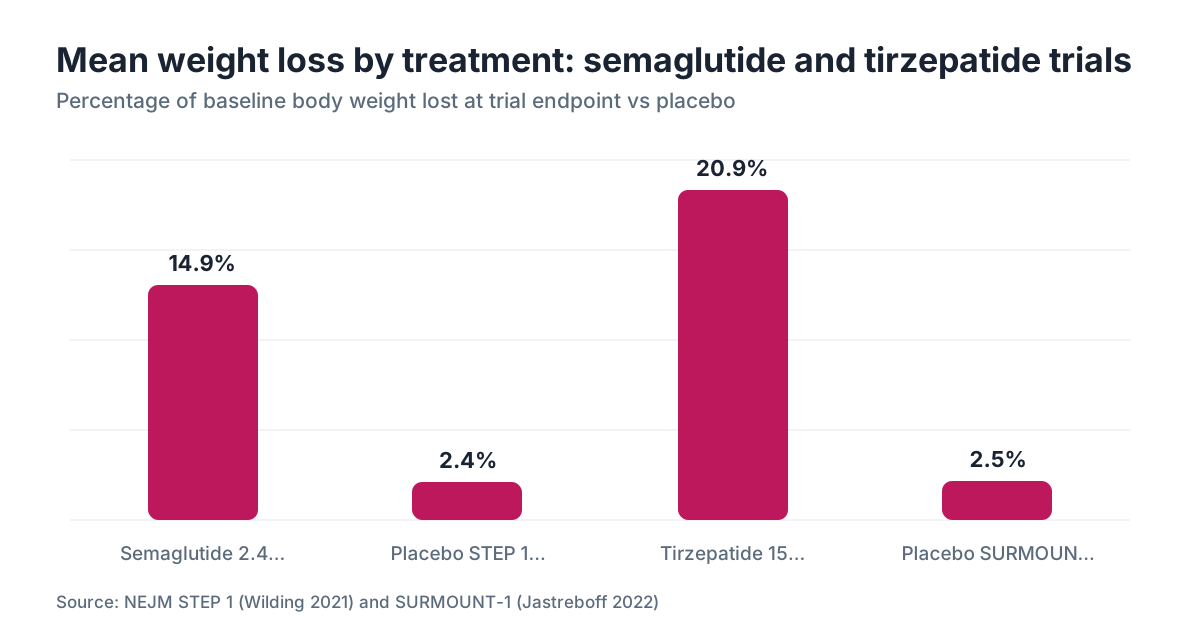
In STEP 1, published in the New England Journal of Medicine in 2021, 1,961 adults with obesity, or overweight plus a weight-related condition, were randomized to 2.4 mg semaglutide weekly or placebo alongside lifestyle changes. The semaglutide group lost a mean of 14.9% of body weight over 68 weeks versus 2.4% for placebo [4]. That is not a small effect. For context, the average loss in the semaglutide arm was roughly 33 pounds from a mean starting weight of 232 pounds.
STEP 3 and STEP 4 filled in the picture. STEP 4 showed that people who stopped semaglutide after 20 weeks regained about two-thirds of their lost weight by week 68. The drug works while you take it. Sustained use is what holds the result [4].
For women specifically, the STEP 1 subgroup data did not show a statistically significant difference in weight loss by sex, though some analyses hint that women lose slightly less than men on average. Menopausal status was not a primary variable in the STEP trials, which is a real gap.
None of this evidence comes from compounded semaglutide trials. It comes from Wegovy trials. But the active molecule is identical and the mechanism is well established (GLP-1 receptor agonism suppresses appetite and slows gastric emptying), so most clinicians reason that a correctly dosed, properly made compounded product should behave the same way. That reasoning is sound. It has just never been tested in a randomized controlled trial specific to compounded formulations.
Has compounded semaglutide been tested in its own clinical trials?
No. There are no published randomized controlled trials that enrolled patients on compounded semaglutide specifically and measured weight or glucose outcomes. That is the honest answer, and it matters.
What exists instead is a large and growing pile of real-world prescribing data from telehealth platforms and weight-loss clinics that dispensed compounded semaglutide during the 2022 to 2024 shortage. These are observational reports, not trials, and they carry every usual caveat: no control group, self-selected patients, variable dosing, and outcomes that rely on patient self-report.
Some of these programs reported outcomes roughly in line with STEP trial data, with patients losing 10 to 15% of body weight over similar timeframes. Others saw lower response, possibly from inconsistent titration, doses below the 2.4 mg Wegovy target, or product quality variation.
The absence of independent trials does not mean compounded semaglutide fails to work. It means you're leaning on the mechanistic argument (same molecule, same receptor, same effect) instead of direct evidence. For most people that argument is strong enough to act on, as long as the pharmacy's manufacturing quality is verified. But it's a gap worth naming out loud.
Is compounded semaglutide safe?
The safety profile of semaglutide itself is well characterized from the STEP trials and post-marketing surveillance on Ozempic and Wegovy. The most common side effects are gastrointestinal: nausea, vomiting, diarrhea, and constipation, mostly during dose titration. These usually ease after the first 4 to 8 weeks. STEP 1 reported that 4.5% of participants in the semaglutide group discontinued because of gastrointestinal adverse events [4].
Rarer but more serious risks include pancreatitis, gallbladder disease (including gallstones), and a theoretical risk of thyroid C-cell tumors seen in rodent studies. Semaglutide carries a black box warning for thyroid C-cell tumor risk and is contraindicated in people with a personal or family history of medullary thyroid carcinoma or Multiple Endocrine Neoplasia syndrome type 2 [5].
The safety questions specific to compounded semaglutide are different. They are about manufacturing quality. A bad batch could have the wrong concentration (causing underdosing or dangerous overdosing), contamination from poor sterile technique, or an off pH that hurts stability. The FDA has received adverse event reports tied to compounded GLP-1 products, and in 2024 the agency warned about dosing errors with compounded semaglutide, especially concentrated formulations where patients miscalculated the volume to inject [3].
Muscle loss is a concern that hits brand-name and compounded semaglutide equally. Fast weight loss on any GLP-1 without resistance training tends to include a big lean-mass component. Studies suggest roughly 25 to 39% of weight lost on semaglutide can be lean mass rather than fat [6]. This matters more for women in perimenopause and menopause who are already losing muscle as estrogen declines. Pairing semaglutide with progressive resistance training and enough protein (most guidelines suggest 1.2 to 1.6 g per kilogram of body weight daily) is not optional if you want to keep your muscle [9].
Why was compounded semaglutide legal, and what is the FDA's current position?
Compounded semaglutide became widely available while the FDA listed semaglutide injection on its drug shortage database. Under Sections 503A and 503B of the Federal Food, Drug, and Cosmetic Act, compounding pharmacies are generally allowed to compound copies of commercially available drugs when those drugs sit on the FDA shortage list [2].
The FDA removed semaglutide (for both Ozempic and Wegovy) from the shortage list in 2024. Once a drug comes off that list, the legal basis for compounding it largely disappears. The FDA issued guidance in 2024 saying that once the Wegovy and Ozempic shortages resolved, 503B outsourcing facilities could no longer lawfully compound semaglutide, and 503A pharmacies could do so only under specific patient-need criteria [3].
The agency put it bluntly. "FDA is not aware of any basis for concluding that outsourcing facilities may compound semaglutide products." That is a direct quote from FDA guidance [3].
In practice, as of mid-2025, some 503A pharmacies keep compounding semaglutide for patients with documented individual needs, such as allergies to inactive ingredients in the commercial product or doses the commercial pen cannot deliver. Enforcement is still shifting. If you're sourcing compounded semaglutide now, the pharmacy should be able to state its legal basis clearly under current FDA guidance.
How does compounded semaglutide compare to brand-name Wegovy in cost?
Cost is the most common reason patients ask about compounded semaglutide. The list price of Wegovy in the United States is about $1,350 per month without insurance as of 2025, though manufacturer coupons can bring that to somewhere between $0 and $499 for commercially insured patients who qualify [5].
Compounded semaglutide has typically run $150 to $500 per month depending on the pharmacy, the dose, and whether you're going through a telehealth platform. That gap has driven enormous demand.
Insurance coverage for Wegovy stays patchy. Medicare Part D was barred from covering weight-loss drugs for years, and recent legislative and regulatory changes have only started to open that door. Employer plans vary wildly [11]. For women without coverage who cannot access manufacturer savings programs, compounded semaglutide has been the only affordable route to GLP-1 therapy.
Cheapest is not best here. A pharmacy's quality practices do not show up on the price tag, and a $99 a month compounded product from an unverified online seller is not the same thing as a $400 a month product from an FDA-registered 503B facility with published certificate-of-analysis data. Always ask for the certificate of analysis (CoA) before using any compounded peptide or GLP-1 product.
For more on how compounded semaglutide differs from brand-name products in formulation and sourcing, that article goes deeper into pharmacy verification.
What weight loss results can women realistically expect from semaglutide?
Realistic expectations matter because GLP-1 marketing (from telehealth platforms and pharmacies alike) tends to lead with the best responders and oversell the average result.
The STEP 1 mean of 14.9% at 68 weeks is a real number, but it's a mean, and the spread tells the fuller story. In STEP 1, roughly 32% of semaglutide participants lost 20% or more of their body weight, while about 14% lost less than 5% [4]. That bottom group is real. Some people are non-responders or low responders, and the reasons aren't fully understood, though genetic variation in GLP-1 receptor sensitivity, gut microbiome, and baseline insulin resistance all seem to matter.
For women in perimenopause and menopause, weight loss can be harder to reach and harder to hold, because declining estrogen changes fat distribution, insulin sensitivity, and resting metabolic rate. That does not make semaglutide less effective in menopausal women, but the hormonal context is part of the equation. Some clinicians find that treating estrogen deficiency alongside GLP-1 therapy produces better metabolic outcomes than either alone, though randomized data on the combination is still thin.
A practical benchmark. If you've been on 1.0 mg or higher for 12 weeks and lost less than 5% of your starting weight, that's a signal to reassess with your prescriber. It may mean under-dosing, absorption trouble, or that semaglutide is not your agent. Semaglutide vs tirzepatide is worth reading if you're in that category, since tirzepatide's dual GIP/GLP-1 mechanism appears to produce larger average weight loss.
If you want the mechanics and the full dosing protocol, the semaglutide for weight loss article covers the titration schedule and what to do when you plateau.
How do you verify that a compounded semaglutide pharmacy is legitimate?
This is where most people get burned. The telehealth GLP-1 market grew faster than any quality-assurance system around it, and not every pharmacy compounding semaglutide has worked to the same standard.
Start with concrete checks.
First, confirm the pharmacy holds a 503B outsourcing facility registration with the FDA if it sells in bulk, or a valid state pharmacy license for 503A compounding. The FDA keeps a public list of registered 503B outsourcing facilities at fda.gov [2]. If a pharmacy claims 503B status but isn't on that list, walk away.
Second, request a certificate of analysis (CoA) from a third-party lab for the specific lot you'll receive. The CoA should confirm potency (the actual concentration matches the label), sterility, endotoxin levels, and pH. A legitimate compounding pharmacy hands this over without a fuss. If they refuse or say they don't have one, don't order.
Third, make sure the pharmacy requires a valid prescription from a licensed prescriber. No prescription, no credibility. Full stop.
Fourth, be suspicious of any platform advertising "semaglutide" far below market (under $100 a month) with no clear pharmacy name, license number, or prescriber involved. Those often operate outside U.S. law.
WomenRx works with licensed compounding pharmacies and requires a clinician consultation and prescription before dispensing any GLP-1 product. That is the floor any platform in this space should meet.
For a wider look at GLP-1 options and how to think about which form fits you, the semaglutide overview is a good starting point.
Does compounded semaglutide work for women in menopause or perimenopause specifically?
No trial has enrolled only menopausal or perimenopausal women on semaglutide and reported their results separately. That's a real gap. The STEP trials enrolled a broad adult population and did not break out results by menopausal status in their primary publications.
What the endocrinology literature does tell us is that menopause shifts fat toward visceral storage, worsens insulin sensitivity, and lowers resting metabolic rate as estrogen falls [10]. Those changes make weight loss harder by any method. They also raise cardiovascular and metabolic risk, which is part of why treating obesity in this age group carries real value.
The mechanistic case for semaglutide still holds in menopausal women. GLP-1 receptors sit at the same density regardless of menopausal status. Appetite suppression and slower gastric emptying still happen. But the hormonal environment may blunt some of the metabolic benefit, and the muscle-loss risk runs higher when estrogen is low, because estrogen has direct anabolic effects on skeletal muscle.
Some clinicians who treat perimenopausal and menopausal women with both hormone therapy and GLP-1s report better body composition when they combine estrogen replacement with semaglutide than with the GLP-1 alone. The logic is that estrogen helps hold onto lean mass during the caloric restriction the drug produces. That combination has biological plausibility and is increasingly common in practice, but it needs randomized confirmation before anyone can call it evidence-based.
If you're in your 40s or 50s and wondering whether hormonal change is driving your weight gain, reading about perimenopause age and hormone replacement therapy alongside this will give you a fuller picture of what's happening metabolically.
What are the most common reasons compounded semaglutide stops working?
If compounded semaglutide worked and then stalled, run through a short list of likely causes with your prescriber before you conclude the drug has failed.
Dose plateau is the most common. Many compounded protocols start at 0.25 mg weekly and titrate slowly. If the dose never reaches the therapeutic range of 1.0 to 2.4 mg weekly, the diminishing returns of a low dose can look like treatment failure when it's really under-dosing. Wegovy's approved dose is 2.4 mg weekly. Not every compounded protocol gets patients there.
Product degradation is a real concern with multi-dose vials. Semaglutide in solution is temperature sensitive. A vial stored above refrigeration temperature or punctured over and over can lose potency. If your results dropped off partway through a vial, look at storage.
Metabolic adaptation happens with any sustained caloric restriction. After 6 to 12 months on semaglutide, resting metabolic rate tends to drift downward, and the appetite suppression can feel less dramatic at the same dose. This is not unique to compounded versions.
Hormonal change can shift the response too. A woman who starts semaglutide in perimenopause and then reaches full menopause (12 months without a period) mid-treatment may find weight loss stalls from the metabolic shift, not because the drug quit. Checking FSH, estradiol, and other metabolic markers at that point makes sense.
Antibody formation can cut efficacy for some GLP-1 receptor agonists, though it appears less common with semaglutide than with older agents. It has been documented in some patients on long-term semaglutide and can be assessed through anti-drug antibody testing if your prescriber suspects it.
Should you choose compounded semaglutide or the brand-name version?
Honest answer. If you can get brand-name Wegovy at a reasonable cost, that's the lower-risk choice. The manufacturing quality is established, the pen removes dose-calculation errors, and you're using an FDA-approved product with a known regulatory history.
For many women, brand-name Wegovy just isn't within reach. It's unaffordable without coverage, unavailable at their pharmacy, or flatly excluded by their insurer. In that case, a properly sourced compounded semaglutide from an FDA-registered or state-licensed compounding pharmacy, with a valid prescription and a certificate of analysis, is a reasonable alternative.
The false choice to avoid is between brand-name Wegovy and cheap unverified semaglutide from an online storefront with no prescriber. The second option carries real safety risk from manufacturing unknowns.
Ask yourself three things before choosing compounded semaglutide. Is the pharmacy licensed and verifiable? Will they provide a certificate of analysis on request? Does a licensed prescriber who has reviewed your medical history oversee the prescription? If any answer is no or unclear, find a different source.
The compounded semaglutide guide on this site walks through the verification process in more detail and lists the specific questions to ask before ordering.
For women weighing the broader GLP-1 landscape, comparing semaglutide vs tirzepatide is worth doing before committing to either, especially given tirzepatide's increasingly available compounded forms and larger average weight loss in head-to-head data.
Frequently asked questions
Is compounded semaglutide exactly the same as Ozempic or Wegovy?
The active molecule is the same: semaglutide. But the formulation, inactive ingredients, delivery device, and manufacturing oversight differ. Brand-name products are FDA-approved with inspected manufacturing. Compounded versions vary in quality by pharmacy. Some compounders have used semaglutide salt forms (sodium or acetate) rather than the base used in Ozempic and Wegovy, which the FDA considers not equivalent.
Can compounded semaglutide cause the same side effects as Wegovy?
Yes. Because the active ingredient is the same, expect the same class of side effects: nausea, vomiting, diarrhea, constipation, and reduced appetite, especially during titration. The black box warning for thyroid C-cell tumors also applies. Extra risks specific to compounded products include incorrect dosing from vial miscalculation and possible contamination if sterile technique was inadequate during manufacturing.
How much weight can I expect to lose on compounded semaglutide?
Trial data on brand-name semaglutide at 2.4 mg weekly shows a mean loss of 14.9% of body weight over 68 weeks in STEP 1. Real-world outcomes vary. Roughly 32% of trial participants lost 20% or more, while about 14% lost less than 5%. There are no randomized trials specific to compounded semaglutide. Results depend on dose, adherence, diet, exercise, and individual metabolic factors.
Is compounded semaglutide still legal in 2025?
It's legally complicated. The FDA removed Wegovy and Ozempic from its drug shortage list in 2024, which removed the primary legal basis for widespread compounding. 503B outsourcing facilities generally can no longer compound semaglutide. Some 503A pharmacies may still do so for patients with documented individual medical needs. The landscape is still evolving and varies by state. Ask your pharmacy to state its specific legal basis.
How do I know if my compounded semaglutide is real and properly dosed?
Request a certificate of analysis (CoA) from an independent third-party lab for your specific lot number. The CoA should confirm potency (actual semaglutide concentration), sterility, endotoxin levels, and pH. A legitimate compounding pharmacy provides this on request. Verify the pharmacy's license through your state board of pharmacy or confirm FDA 503B registration at fda.gov. Never order from a source that does not require a prescription.
Why is compounded semaglutide so much cheaper than Wegovy?
Novo Nordisk sets Wegovy's list price around $1,350 per month, reflecting R&D, FDA approval costs, and brand margin. Compounded semaglutide bypasses those costs. Compounders buy pharmaceutical-grade semaglutide as a raw ingredient, formulate in-house, and sell without the patent premium. Pricing of $150 to $500 per month is typical. The lower price doesn't guarantee lower quality, but it also doesn't guarantee adequate quality control.
Does semaglutide work differently in menopausal women?
No published trial has studied semaglutide in menopausal women as a distinct cohort. Mechanistically, GLP-1 receptor density does not change with menopause. But declining estrogen worsens insulin sensitivity, shifts fat toward visceral storage, and reduces muscle mass, which can make weight loss harder and raise the risk of losing lean mass on any caloric-restriction therapy, semaglutide included. Pairing GLP-1 therapy with resistance training is especially important in this group.
What dose of compounded semaglutide is effective for weight loss?
The FDA-approved dose for weight management is 2.4 mg of semaglutide weekly, reached through a titration that starts at 0.25 mg weekly for the first four weeks and steps up monthly. Many compounded protocols follow this same titration. If your protocol never reaches at least 1.0 mg weekly after the first 4 to 8 weeks, you may be under-dosed relative to what produced the STEP trial results.
Can compounded semaglutide be used for type 2 diabetes?
Ozempic (0.5 mg, 1 mg, 2 mg doses) is FDA-approved for type 2 diabetes management. Brand-name semaglutide has strong evidence for lowering HbA1c and reducing cardiovascular events in people with type 2 diabetes from the SUSTAIN trial program. Compounded semaglutide could theoretically achieve the same glycemic effect via the same mechanism, but it is not FDA-approved for this use. People with diabetes should discuss this with their endocrinologist before switching from an approved product.
What is the difference between semaglutide and tirzepatide for women?
Semaglutide is a GLP-1 receptor agonist. Tirzepatide (Mounjaro for diabetes, Zepbound for obesity) is a dual GIP and GLP-1 receptor agonist. The SURMOUNT-1 trial showed tirzepatide at the highest dose (15 mg) produced a mean weight loss of 20.9% over 72 weeks, larger than semaglutide's 14.9% in STEP 1. Head-to-head data specifically comparing the two in women is limited, but tirzepatide appears to have a greater average weight-loss effect.
Should I take compounded semaglutide with hormone therapy?
There is no clinical contraindication between semaglutide and standard hormone replacement therapy. Some clinicians think estrogen replacement helps preserve muscle mass during the weight loss GLP-1 therapy produces, which is biologically plausible given estrogen's anabolic role in skeletal muscle. Randomized data on this combination does not yet exist. If you're considering both, a clinician who understands menopause management and GLP-1 therapy can help you structure the approach safely.
How long do I need to take semaglutide to keep the weight off?
The STEP 4 trial showed that patients who stopped semaglutide after 20 weeks regained about two-thirds of their lost weight by 68 weeks. For most people, semaglutide's effects require ongoing use to maintain. Weight management guidelines increasingly treat obesity as a chronic condition needing long-term medical management rather than a short-term intervention with a set stop date.
Sources
- FDA, Drugs (Semaglutide product information)
- FDA, Compounding and the FDA (503A and 503B overview, includes 503B registered facility list)
- FDA, Compounded Drug Products Containing Semaglutide guidance (2024)
- Wilding JPH et al., NEJM 2021, STEP 1 Trial (Once-Weekly Semaglutide in Adults with Overweight or Obesity)
- FDA, Wegovy (semaglutide) Prescribing Information
- Wilding JPH et al., Diabetes, Obesity and Metabolism, 2021 (body composition data from STEP trials)
- Jastreboff AM et al., NEJM 2022, SURMOUNT-1 Trial (Tirzepatide for Obesity)
- The Obesity Society
- Endocrine Society, Clinical Practice Guidelines
- The Menopause Society, Position Statements
- CMS, Medicare Part D coverage of anti-obesity medications