Does Blue Cross cover hormone replacement therapy?
TL;DR: Most Blue Cross Blue Shield plans cover FDA-approved hormone replacement therapy when a doctor prescribes it for a diagnosed condition like menopause. Your cost depends on the plan's formulary, tier placement, and documented medical necessity. Compounded bioidentical hormones from wellness clinics are almost never covered. Covered products usually run $10 to $50 per month.
What does Blue Cross Blue Shield actually cover for HRT?
Most BCBS plans cover FDA-approved hormone replacement therapy when a licensed provider writes a prescription tied to a documented medical need. That means estrogen-only products (patches, pills, gels, rings, sprays) and combination estrogen-progestogen products prescribed for hot flashes, genitourinary syndrome of menopause, or osteoporosis prevention in high-risk women. [1]
The word "most" is carrying weight in that sentence. Blue Cross Blue Shield is not one insurer. It is a federation of 33 regional companies, each negotiating its own drug formularies and medical policy. BCBS of Illinois looks different from BCBS of Texas, which looks different from BCBS of North Carolina. Same logo, genuinely different rules.
Patterns still hold. Most BCBS commercial plans put generic oral estradiol and generic medroxyprogesterone acetate on Tier 1 (lowest cost, often $0 to $10 per fill once you have met a standard deductible). Brand-name patches like Vivelle-Dot or Climara usually land on Tier 2 or 3 ($20 to $50+ per fill). Specialty hormone products or brand vaginal estrogen like Vagifem can sit higher still. [2]
For hormone replacement therapy, pull two documents: your plan's Summary of Benefits and Coverage (SBC) and the actual formulary PDF. Both live in your member portal under "Drug Coverage" or "Formulary." The formulary tells you the tier, any prior authorization requirement, and any quantity limit.
Medicaid-managed BCBS plans (where BCBS administers a state Medicaid benefit) follow separate rules set by each state. Medicare Advantage BCBS plans cover drugs through Part D, which runs its own formulary and treats HRT differently from commercial plans. Check the specific plan you are actually enrolled in, not the one your neighbor has.
Does Blue Cross Blue Shield cover bioidentical hormone therapy?
The answer splits in two, and the split is where women get surprised at the pharmacy counter. FDA-approved bioidentical hormones are covered by most BCBS plans. Custom-compounded ones almost never are.
Bioidentical means the molecule is chemically identical to the hormone your body makes. Plenty of FDA-approved products meet that definition: estradiol patches, estradiol gel (EstroGel, Divigel), micronized progesterone (Prometrium), and vaginal estradiol rings. Most BCBS formularies include at least some of these. [3]
Custom-compounded bioidentical hormones are the other story. These are mixed by a compounding pharmacy to a non-standard dose or combination, often prescribed by integrative or functional medicine providers. BCBS commercial plans exclude coverage for compounded drugs nearly across the board, because compounded preparations are not FDA-approved. The FDA states plainly that "compounded drugs are not FDA-approved," meaning they have not been evaluated for safety, effectiveness, or quality the way approved drugs are. [4]
A few plans carve out narrow exceptions for compounded drugs, usually when a patient has a documented allergy to an ingredient in an approved product and no suitable alternative exists. Getting that approved takes a prior authorization and a letter from your prescriber. It happens. It is not the norm.
If your provider recommends custom-compounded BHRT (the pellets, troches, or custom creams marketed hard in wellness clinics), plan to pay out of pocket. Costs run $150 to $500 per month depending on the formulation and where you live. That is real money. Ask your provider whether an FDA-approved bioidentical would do the same job, because the North American Menopause Society (NAMS) states that compounded hormones carry risks without proven advantages over regulated products for most women. [5]
How do HRT coverage tiers and costs work at BCBS?
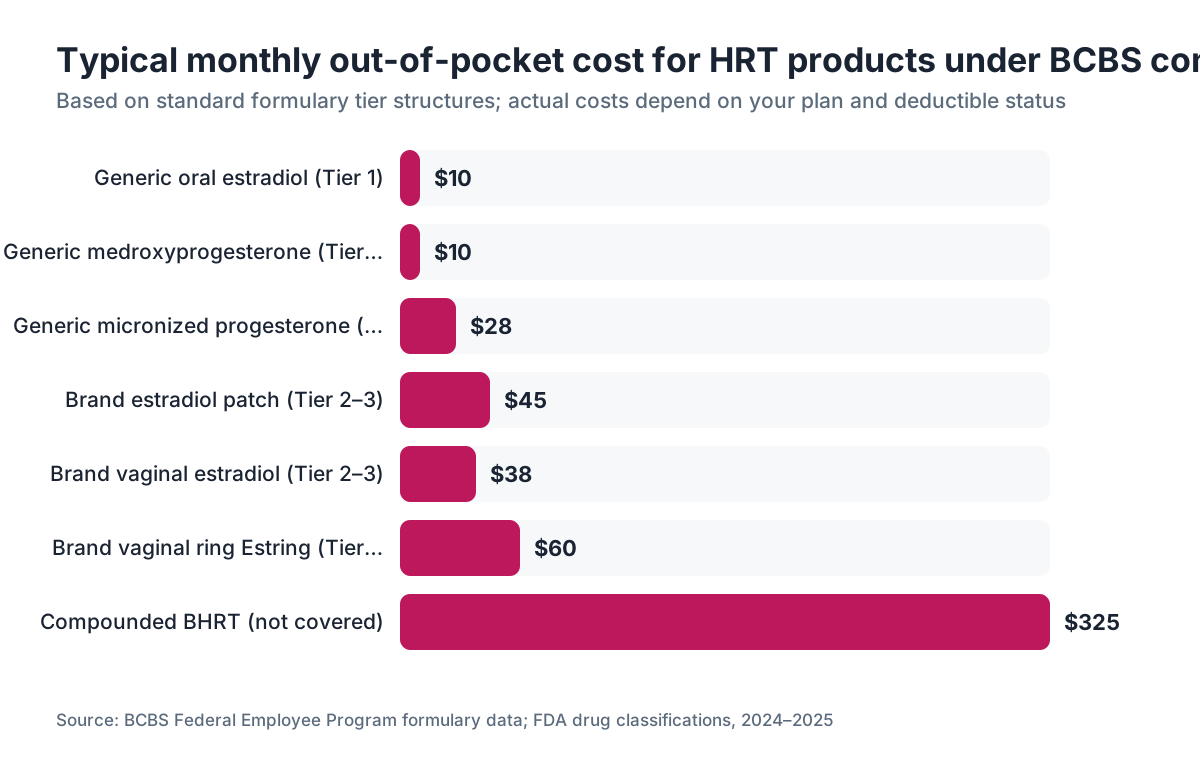
Most BCBS prescription drug plans use a four- or five-tier formulary. Where your HRT product lands sets what you pay. Generic oral estradiol on Tier 1 might cost $0 to $15 a month; a compounded formulation costs the full $150 to $500 because it is not covered at all.
| Product Type | Typical BCBS Tier | Estimated Monthly Copay | |---|---|---| | Generic oral estradiol (0.5mg, 1mg, 2mg) | Tier 1 | $0 to $15 | | Generic medroxyprogesterone acetate | Tier 1 | $0 to $15 | | Generic micronized progesterone (Prometrium generic) | Tier 2 | $15 to $40 | | Brand estradiol patch (Vivelle-Dot, Climara) | Tier 2 to 3 | $30 to $60 | | Brand vaginal estradiol (Vagifem, Yuvafem) | Tier 2 to 3 | $20 to $55 | | Brand vaginal ring (Estring) | Tier 3 | $40 to $80 | | Compounded BHRT | Not covered | Full cost ($150 to $500+) |
These ranges come from public BCBS formulary data and member cost-estimator tools. Your actual copay depends on your plan, your deductible status, and your pharmacy. [2]
Two things can meaningfully lower what you pay. Step therapy (where your insurer makes you try a lower-tier product before authorizing a higher-tier one) is common. If your doctor prescribes a brand patch but the plan requires generic oral estradiol first, you may need a step-therapy exception letter explaining why the generic does not work for you (GI intolerance, adhesive skin reaction, or a specific reason the oral route is wrong). Get that letter. Step-therapy exceptions are routinely granted when a provider makes the case clearly.
Manufacturer copay cards cut costs on brand products too. Several hormone manufacturers offer cards that drop brand copays to as low as $0 per month for commercially insured patients. These cards do not work with Medicare or Medicaid.
Check GoodRx and similar discount programs even with insurance. On some generic estradiol products, the cash discount price at certain pharmacies beats the insurance copay outright. No prescription workaround or prior authorization needed, just the drug name and the card.
Does Blue Cross require prior authorization for HRT?
Prior authorization (PA) applies to some HRT products under most BCBS plans, not all. Generic oral estradiol and generic progestins almost never need it. Brand patches, brand vaginal products, high-dose formulations, off-label testosterone for women, and anything compounded are where PA shows up.
Generic estradiol fills like any other generic. Your pharmacy runs it, you pay the copay, done.
When your provider's preferred product needs PA, they submit the request, not you. Most plans respond within 3 to 15 days for standard requests, or within 72 hours for urgent ones. BCBS must give a written reason if they deny. [6]
If your PA is denied, run two plays at once. First, ask your provider to request a peer-to-peer review, where your doctor speaks directly with the BCBS medical director on the denial. These calls resolve a real share of first denials. Second, file a formal appeal. Under the Affordable Care Act, you have the right to an internal appeal and, if that fails, an external review by an independent organization. [7]
Use the external review. Independent reviewers overturn insurer denials at meaningful rates, and the process costs you nothing. Your denial letter has to include instructions for starting an appeal; federal law requires BCBS to provide them. [7]
Quantity limits are separate from PA. Some plans cap estradiol patches at a 30-day supply per fill, or limit rings to one per 90 days. If the pharmacy says your prescription is "too early to fill," that is usually a quantity limit, not a PA problem. Your provider can request a quantity limit exception when your dosing schedule requires it.
Does BCBS cover HRT under the Affordable Care Act's preventive care rules?
No, and this trips up a lot of women and providers. Under the ACA, FDA-approved contraceptives must be covered without cost-sharing by non-grandfathered plans. Hormones prescribed for menopausal symptoms or osteoporosis prevention are not contraceptives. They fall under standard prescription drug benefits, with your normal copay or deductible. [8]
USPSTF (U.S. Preventive Services Task Force) recommendations touch coverage in a narrower way. The USPSTF recommends bone density screening for women 65 and older, and for younger postmenopausal women at increased fracture risk. That screening (DEXA scanning) often counts as a covered preventive service. If your HRT is prescribed partly to protect bone density, the clinical context helps your documentation, but it does not make the HRT itself free. [9]
The July 2024 federal rule addressing ACA contraceptive coverage after the Braidwood litigation created some short-term confusion. Menopausal HRT stays outside the contraceptive mandate regardless of how that case settles. [8]
Some ACA marketplace BCBS plans bundle wellness benefits or disease management programs (nurse hotlines, care coordination) for women going through menopause. Those are supplemental services. They do not cover the hormones.
Does BCBS cover testosterone for women?
Testosterone for women is one of the more reliably uncovered items in BCBS formularies, and the reason is simple: the FDA has not approved any testosterone product specifically for women in the United States.
Every testosterone prescription for a woman is off-label use of a product approved for men (gels, patches, injections) or a compounded preparation. BCBS plans handle this inconsistently. Some cover low-dose generic testosterone gel when the prescriber documents a diagnosis like hypoactive sexual desire disorder and files a PA. Others exclude testosterone for women outright in their pharmacy medical policy. You have to check your plan.
The Endocrine Society's 2023 clinical practice guideline on female hypoactive sexual desire disorder recognizes the evidence for low-dose testosterone in postmenopausal women but notes that the absence of an approved product complicates access. [10]
If your provider is recommending testosterone, ask upfront whether they plan to prescribe an FDA-approved product off-label (more likely to get at least partial coverage) or a compounded product (almost certainly not covered). The clinical results may be similar. The out-of-pocket cost is not.
How do you actually check if YOUR Blue Cross plan covers HRT?
Start with the drug lookup tool in your BCBS member portal. Almost every BCBS plan has one. You enter the drug name and dose, and it returns the tier, your estimated cost, whether PA is required, and any quantity limit. That is the fastest answer you can get.
If the online tool is vague, call the member services number on the back of your card and ask these exact questions:
- Is [specific drug name and dose] covered under my plan's pharmacy benefit?
- What tier is it on, and what is my copay?
- Does it require prior authorization or step therapy?
- Is there a quantity limit?
- Are any bioidentical hormone products on Tier 1 for my plan?
Write down the representative's name, the date, and the call reference number. If they tell you something is covered and it turns out it is not, that record matters for an appeal.
Your provider's office usually has someone (a medical assistant, billing coordinator, or prior auth specialist) who checks benefits all day and can call BCBS for you. This is a normal part of the workflow. Let them handle it. They know the language that gets a yes.
If you are looking at a telehealth HRT provider like WomenRx (which prescribes FDA-approved hormone therapies), ask the platform what insurance they accept before you schedule, because reimbursement for telehealth visits varies by BCBS plan and state.
Timing matters too. Women in perimenopause often need to document symptoms more carefully than women who are clearly postmenopausal. Knowing when menopause starts in your own timeline helps your provider write accurate clinical notes, which is what coverage hinges on.
What if BCBS denies your HRT coverage claim?
Denials happen. They are not the end of the road. Most HRT denials come from a short list of fixable problems: the drug is not on formulary, prior authorization was not obtained, step therapy was not met, the diagnosis code did not match a covered indication, or the prescriber missed a documentation requirement.
Read the denial letter first. It has to state the specific reason and the criteria the plan used. If the reason is "not medically necessary," your provider submits a letter (with clinical notes attached) explaining why you need this exact medication.
Next, have your provider request a peer-to-peer review. This is a phone call between your doctor and the BCBS medical reviewer. It is free, it is routine, and it works more often than people expect.
If the internal appeal fails, go to external review. Under the ACA, non-grandfathered health plans must offer it. An independent review organization (IRO) reviews your case, and its decision is binding on the insurer. The federal government maintains a list of accredited IROs. [7]
For progesterone specifically, coverage is stronger if you have a uterus and take estrogen, because the medical necessity is clear-cut: unopposed estrogen without a progestogen raises endometrial cancer risk. Documenting that the progesterone is part of a combined regimen makes the case hard to argue against.
Does BCBS cover HRT for conditions other than menopause?
Yes, and coverage is sometimes cleaner for non-menopausal diagnoses than for perimenopause symptom management. The medical necessity argument gets harder to dispute the clearer the cause.
Premature ovarian insufficiency (POI), surgical menopause after oophorectomy, and hypoestrogenism from hypothalamic amenorrhea are conditions where BCBS plans generally cover hormone therapy without the resistance you can hit with "natural menopause." A 35-year-old who had both ovaries removed is not a hard sell.
Osteoporosis is another route. Some BCBS plans cover estrogen for osteoporosis prevention in high-risk postmenopausal women, especially when a bone density test documents low bone mass and other first-line agents were tried or are contraindicated.
Hypothyroidism often rides alongside menopause symptoms, but thyroid hormone replacement (levothyroxine, liothyronine) is a separate drug benefit and almost always covered at Tier 1. Do not mix the two up when you check benefits.
If you are premenopausal and using hormones for endometriosis or heavy menstrual bleeding, the pathway shifts again. Hormonal IUDs, combined oral contraceptives, and progestins for those indications fall under contraceptive or gynecological coverage rules and are generally covered without cost-sharing under the ACA contraceptive mandate.
How does Medicare and Medicaid BCBS coverage for HRT differ?
If you have Medicare Advantage through BCBS (not original Medicare), your HRT drugs run through the plan's Part D benefit. Medicare has no uniform HRT formulary. Each Part D plan sets its own, and BCBS Medicare Advantage plans vary by region.
The good part: generic oral estradiol and generic progestins sit on most Part D formularies at low tiers. The catch: Part D plans carry an annual deductible (up to $590 in 2025 for standard plans), and until you meet it, you pay retail. [11]
Manufacturer copay cards and most discount programs do not work with Medicare, period. That is federal law. Your real cost-reduction options in Medicare are the Extra Help (Low Income Subsidy) program and switching to a plan with a better formulary at open enrollment.
Medicaid-administered BCBS plans (where BCBS holds a state contract to manage Medicaid benefits) must cover medically necessary prescription drugs, which usually includes standard HRT. Copays for Medicaid beneficiaries are minimal, often $1 to $4 per prescription under federal rules. Some state Medicaid programs restrict which HRT formulations they cover, so the specifics still vary by state. [12]
If you are comparing plans, open enrollment is your window to switch when your current coverage is poor: November 1 to January 15 for ACA marketplace plans, October 15 to December 7 for Medicare. Use the comparison tools at healthcare.gov or medicare.gov and check that your specific HRT products are covered before you lock in a plan.
Is HRT worth the cost if insurance doesn't fully cover it?
Only you and your provider can settle that, but the data help. NAMS's 2022 position statement concludes that "for most healthy, symptomatic women under age 60 or within 10 years of menopause, benefits of hormone therapy outweigh risks." [5]
The WHI study that scared a generation of women and providers has been substantially reinterpreted. The average age of women in that trial was 63, and many were years past menopause when they enrolled, which is not the population most women asking this question fall into.
If you are in your 40s or early 50s with real hot flashes, wrecked sleep, brain fog, or genitourinary symptoms, the math often favors treatment. A generic estradiol patch plus generic micronized progesterone from a mail-order pharmacy, even out of pocket, might run $50 to $80 per month with GoodRx pricing. Real, but manageable for many women.
Compounded pellets or custom troches from a concierge wellness clinic run $500 to $2,000 per quarter, and the evidence for better outcomes over FDA-approved products is not there. NAMS says so directly. [5]
Telehealth changed access. A provider who can prescribe FDA-approved HRT and help you work through your insurance is now reachable from most states without a drive to a specialist. WomenRx is one option for women who want an evidence-based protocol and help with insurance logistics.
If cost is the real barrier, ask about estrogen patches. The generic estradiol patch (weekly or twice-weekly) is bioidentical, FDA-approved, and often under $30 per month without insurance through discount programs. It is not a downgrade. For many women it is the right first choice, clinically and financially.
Frequently asked questions
Does Blue Cross Blue Shield cover estrogen patches?
Most BCBS plans cover generic estradiol patches (Mylan, Actavis generics) at Tier 1 or Tier 2, with copays roughly $10 to $40 per month. Brand patches like Vivelle-Dot or Climara often sit at Tier 2 or 3 and cost more. Check your plan's formulary for the exact tier. Generic patches are bioidentical and FDA-approved, and most providers can prescribe them without a prior authorization hassle.
Does Blue Cross Blue Shield cover vaginal estrogen cream?
Generic vaginal estradiol cream (Estrace Vaginal generic) is on most BCBS formularies, usually Tier 1 or 2. Brand vaginal products like Estrace brand, Vagifem, or Yuvafem may need prior authorization or step therapy. Vaginal rings like Estring tend to sit at higher tiers. Because vaginal estrogen is low-dose and treats genitourinary syndrome, a prescriber can document medical necessity clearly, which helps with any PA requirement.
Does Blue Cross cover Premarin or conjugated estrogens?
Premarin (brand conjugated equine estrogen) is often on Tier 3 or higher in BCBS formularies, and plans commonly prefer generic conjugated estrogens or generic estradiol instead. Your plan may require you to try a generic first under step therapy. If there is a clinical reason generics are not right for you, your provider can document that for a step-therapy exception. Generic conjugated estrogens are typically Tier 1 to 2.
Does Blue Cross Blue Shield cover Prometrium (micronized progesterone)?
Generic micronized progesterone (the generic of Prometrium) is on most BCBS formularies, usually Tier 1 or 2, at $10 to $40 per month. Brand Prometrium costs more. Micronized progesterone is the bioidentical, FDA-approved progestogen, and NAMS considers it the preferred form for women with a uterus on estrogen therapy. Most plans cover at least the generic without prior authorization.
Will Blue Cross pay for hormone pellets?
No. Hormone pellets are compounded, not FDA-approved, and they are excluded from nearly every BCBS pharmacy benefit. They are also not covered under major medical benefits, because implanting pellets is not a standard-of-care procedure with a recognized covered-service category in most BCBS medical policies. Pellet therapy is typically a full out-of-pocket expense, running $300 to $600 per insertion every 3 to 6 months.
Does BCBS cover the HRT visit itself, more than the prescription?
Yes. Provider visits are covered under your medical benefit, subject to your deductible and copay. A gynecology or primary care office visit is usually a standard specialist or PCP copay ($20 to $60 for most commercial BCBS plans). Telehealth visits for HRT management are covered by most BCBS commercial plans post-pandemic, though rules vary by state and by whether the telehealth provider is in-network. Verify in-network status before your first visit.
Does Blue Cross Blue Shield cover hormone therapy for surgical menopause?
Generally yes, and often with less resistance than natural menopause. Surgical menopause after bilateral oophorectomy is a clear clinical indication: your body no longer produces estrogen because of surgery. Most BCBS plans cover FDA-approved HRT for this without step therapy, though you may still need a prescription with the correct ICD-10 diagnosis code (E28.39 or N95.1, depending on context).
How do I find out my specific BCBS plan's HRT formulary?
Log into your BCBS member portal and open the drug formulary or prescription cost estimator tool. Search by drug name and dose. You can also call the member services number on your card and ask about specific products. Request the full formulary PDF if the online tool is unclear. Your provider's office can also run a benefits check for you before submitting a prescription, which saves time at the pharmacy counter.
What diagnosis code does my doctor use for HRT to be covered?
Common ICD-10 codes supporting HRT coverage include N95.1 (menopausal and female climacteric states), N95.0 (postmenopausal bleeding), E28.39 (other primary ovarian failure, for POI or surgical menopause), and M81.0 (age-related osteoporosis). The code must match your clinical situation. An imprecise code is one of the most common reasons pharmacy benefits get denied. Ask your provider to confirm the code before sending the prescription.
Does Blue Cross cover HRT under the ACA marketplace plans?
ACA marketplace BCBS plans cover FDA-approved prescription drugs under their pharmacy benefit, which includes most standard HRT products. HRT is not part of the ACA's required no-cost preventive services, so you pay your applicable copay or deductible. Coverage quality varies by metal tier: Gold and Platinum plans usually have lower drug copays than Bronze plans. Check the specific plan's formulary on healthcare.gov before enrolling.
Does BCBS Medicare Advantage cover hormone replacement therapy?
Most BCBS Medicare Advantage plans include Part D coverage, which covers standard HRT like generic estradiol and generic progestins. Tiers and copays vary by region. The annual Part D deductible (up to $590 in 2025) applies before cost-sharing kicks in. Manufacturer copay cards do not work with Medicare by federal law. During Medicare open enrollment (October 15 to December 7), you can switch to a plan with better HRT formulary coverage.
Can I appeal a Blue Cross denial for HRT?
Yes. Federal law gives you the right to an internal appeal and, if that fails, an external review by an independent organization. Start by asking your provider to request a peer-to-peer review with the BCBS medical director. If the internal appeal is denied, file for external review. Independent reviewers overturn insurer decisions at meaningful rates in coverage disputes. Your denial letter must include appeal instructions; BCBS is legally required to provide them under the ACA.
Does BCBS cover testosterone replacement for women?
Coverage is inconsistent. No FDA-approved testosterone product exists specifically for women in the US, so all prescriptions are off-label. Some BCBS plans cover low-dose generic testosterone gel with prior authorization and a documented diagnosis like hypoactive sexual desire disorder. Others exclude testosterone for women categorically. Compounded testosterone is almost never covered. Check your plan's medical policy for "female testosterone," or call member services with your specific product in mind.
Sources
- FDA, Menopause and Hormones drug information
- BCBS Federal Employee Program, Prescription Drug Benefit Guide
- FDA, BioIdentical Hormones Questions and Answers
- FDA, Compounding and the FDA
- North American Menopause Society, 2022 Hormone Therapy Position Statement
- CMS, Prior Authorization and Utilization Management
- HealthCare.gov, Appealing a health plan decision
- HHS, Health care and the Affordable Care Act
- U.S. Preventive Services Task Force, Osteoporosis to Prevent Fractures screening recommendation (2018)
- Endocrine Society, Female Hypoactive Sexual Desire Disorder Clinical Practice Guideline (2023)
- CMS, Medicare Part D benefit information
- Medicaid.gov, Prescription Drugs