Does a hysterectomy cause menopause? What actually happens
TL;DR: A hysterectomy causes immediate surgical menopause only if both ovaries come out at the same time. If your ovaries stay in, they keep making estrogen, so no overnight hot flashes. You do lose your period, and you may hit natural menopause 1 to 2 years earlier than expected. Ovaries in versus ovaries out is the whole question.
What exactly is a hysterectomy, and what gets removed?
A hysterectomy removes the uterus. That's the core of it. But one word covers several very different operations, and the difference matters more than most surgeons explain before you sign the consent form.
A simple or total hysterectomy takes the uterus and cervix. A radical hysterectomy, done mainly for cancer, also takes the upper vagina and surrounding tissue. A supracervical hysterectomy removes only the uterine body and leaves the cervix. None of these three automatically touches the ovaries.
When both ovaries come out, that's a bilateral oophorectomy. Done at the same time as a hysterectomy, the full name is hysterectomy with bilateral salpingo-oophorectomy (BSO): uterus, cervix, fallopian tubes, and ovaries all removed. That one distinction, ovaries in versus ovaries out, decides whether you wake up in surgical menopause [1].
About 600,000 hysterectomies happen in the United States each year, the second most common major surgery for women after cesarean delivery [2]. Roughly half include ovary removal, though the rate swings a lot by age and reason for surgery.
Does a hysterectomy cause menopause if your ovaries stay in?
No, not right away. Keep your ovaries and they keep making estrogen, progesterone, and testosterone after the uterus comes out. Your period stops because the uterus is gone, but your hormonal cycle keeps running. No sudden hot flashes, no night sweats, no vaginal dryness overnight.
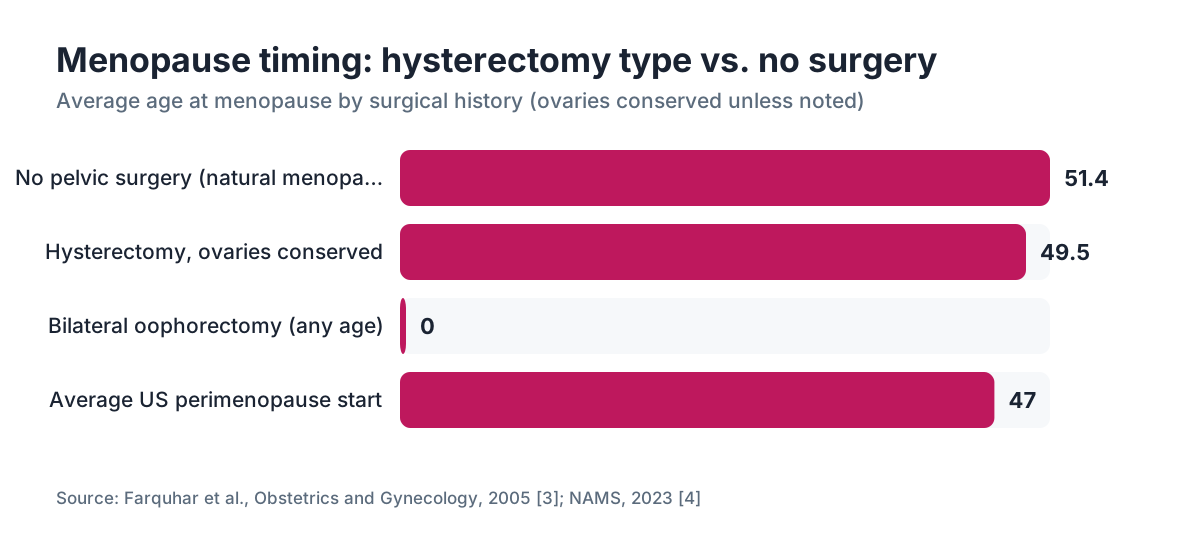
The real effect is quieter. Surgery can disrupt blood flow to the ovaries, and some research shows ovarian function may fade faster after hysterectomy even when the ovaries stay put [3]. An analysis in Obstetrics and Gynecology found that women who had a hysterectomy with ovaries conserved reached natural menopause an average of 1.9 years earlier than women who never had pelvic surgery [3]. That's a genuine effect, and almost nobody hears about it before surgery.
You also lose your best tracking tool. No periods means no cycle to read. Hormone testing, specifically FSH and estradiol, becomes the only reliable way to know where your ovaries stand. If you have symptoms you can't explain after an ovary-sparing hysterectomy, a hormone panel is worth asking for.
What is surgical menopause and how is it different from natural menopause?
Surgical menopause is what happens when both ovaries come out, at any age. Estrogen drops from normal premenopausal levels to near zero within 24 to 48 hours of surgery [1]. That's a far steeper drop than natural menopause, which usually plays out over years of perimenopause.
Natural menopause is slow. The average age in the United States is 51, and most women spend 4 to 8 years in perimenopause before periods stop for good [4]. Across that window, estrogen fluctuates and eases down. The body adapts, imperfectly, but a little at a time.
Surgery gives the body no runway. Hot flashes, broken sleep, mood shifts, vaginal dryness, and joint pain can show up within days, and they're often worse than what natural menopause brings. A 2019 study in Menopause found women in surgical menopause reported significantly higher symptom burden scores than women in natural menopause at the same estrogen level [5].
Bone loss speeds up too. Estrogen is one of the main brakes on bone breakdown, and pulling it out fast can trigger rapid loss, worst in the first 2 years after surgery. Women who have a bilateral oophorectomy before age 45 carry a meaningfully higher lifetime fracture risk than women who reach menopause naturally [6]. A baseline bone density test before or shortly after surgery is a practical step most women skip.
Heart risk climbs as well. The Parker analysis in Obstetrics and Gynecology found bilateral oophorectomy before natural menopause in low-risk women was linked to excess all-cause mortality, including cardiovascular disease and hip fracture, compared with keeping the ovaries [9]. The risk is worse when hormone therapy isn't started afterward.
Does age at hysterectomy change what happens to your hormones?
Yes. Age is a major variable. Have a hysterectomy with oophorectomy in your 30s and you're facing two or more decades of estrogen deficiency, which loads far more cumulative risk onto bones, heart, and brain than the same surgery at 52. The North American Menopause Society (NAMS) advises that for women having oophorectomy before age 45, hormone therapy is generally recommended until at least the average age of natural menopause, 51, to offset premature estrogen loss [4].
If you're in your early 50s and already close to natural menopause, oophorectomy is still an abrupt shift, but the hormonal gap between surgery and natural menopause is short. The choice to remove the ovaries in this group is more of a judgment call, weighing ovarian cancer risk (which rises with age) against the heart and bone benefits of keeping ovaries working.
Women with ovary-sparing hysterectomies still reach menopause eventually. They just can't track it by cycle. Symptoms and lab work become the only guide. To see when menopause typically starts or what the full menopause age range looks like, read those alongside whatever your surgeon tells you.
What hormones are affected by a hysterectomy?
Uterus out, ovaries in: estrogen and testosterone production carry on largely unchanged. Progesterone keeps flowing too, though it matters less clinically now, since there's no uterine lining to protect. This shapes later hormone therapy: women without a uterus don't need progestin added to estrogen to prevent endometrial cancer, because there's no endometrium left [7].
Ovaries out: estrogen falls sharply (most circulating estrogen in premenopausal women is ovarian). Testosterone drops by roughly 50%, since the ovaries make about half of a woman's testosterone. Progesterone goes to near zero. The adrenal glands still make small amounts of precursor hormones that convert in peripheral tissue, but the ovarian share can't be replaced by anything the body does on its own.
FSH (follicle-stimulating hormone) climbs sharply after oophorectomy, often past 40 mIU/mL, the conventional threshold for confirming menopause. LH rises the same way. These labs, read alongside symptoms, confirm surgical menopause and help set hormone therapy dosing [1].
Do you need hormone therapy after a hysterectomy?
After a hysterectomy with both ovaries removed, hormone therapy isn't optional for most women under 50. It's the standard of care from NAMS, the Endocrine Society, and the American College of Obstetricians and Gynecologists [4][7]. Untreated surgical menopause at a young age brings bone loss, higher heart risk, cognitive changes, and hard quality-of-life symptoms, and for most healthy women those risks outweigh the risks of hormone therapy.
After an ovary-sparing hysterectomy, you may need hormone therapy when natural menopause arrives, but there's no clock ticking. Symptoms drive the decision.
Here's a real advantage after a hysterectomy: you can use estrogen alone, no progestin. Progestin exists to protect the uterine lining from estrogen-driven overgrowth. No uterus, no lining, no need. FDA labeling for conjugated estrogens confirms women without a uterus don't require a progestin with systemic estrogen therapy [10]. Estrogen-only therapy also shows a somewhat more favorable long-term profile than combined estrogen-progestin, one reason the Women's Health Initiative results diverged between the estrogen-alone arm and the combination arm [7].
Delivery runs from pills to patches to gels to pellets. An estrogen patch is often the pick for surgical menopause because it delivers a steady transdermal dose and skips first-pass liver metabolism. For the full picture of what treatment involves, hormone replacement therapy walks through the options.
If you're sorting these decisions with a provider who does hormonal care, WomenRx offers telehealth consultations focused on hormone management after hysterectomy and surgical menopause, so you get evidence-based guidance without a months-long wait for a specialist.
Does a partial hysterectomy cause menopause?
No. A partial hysterectomy, also called a supracervical hysterectomy, removes the uterine body but leaves the cervix, and it always leaves the ovaries (take the ovaries and it becomes an oophorectomy, a separate procedure). Ovaries intact means no surgical menopause.
Your periods stop, which is often the whole point of the surgery. Hormonally, you're in the same spot as someone who had a total hysterectomy with ovaries preserved: normal cycling continues, but reading it takes lab work instead of a calendar.
One thing to know: after a supracervical hysterectomy, you still need Pap smear screening for the cervix. Some women assume any hysterectomy ends Pap tests. That's wrong if the cervix was left in place [8].
How quickly do menopause symptoms start after oophorectomy?
Fast. Most women have their first hot flashes within 24 to 72 hours of bilateral oophorectomy. Broken sleep usually follows inside the first week. Vaginal dryness takes longer, weeks to months, because vaginal tissue responds to estrogen loss more slowly than the body's temperature control does.
How bad it gets depends on your age, your baseline estrogen before surgery, and whether you start hormone therapy quickly. Women who begin estrogen within a few days of surgery generally carry far less symptom burden than those who wait weeks or months. There's no clinical reason to delay hormone therapy after elective oophorectomy in a woman without hormone-sensitive cancer.
Mood changes, anxiety and depression included, are common in the weeks after surgical menopause. The sudden estrogen withdrawal has a measurable effect on serotonin signaling, and women deserve a real warning about this before surgery, not a pamphlet handed over after they're already struggling [5].
What's the difference between perimenopause and what happens after a hysterectomy?
Perimenopause is the transition before menopause, usually 4 to 8 years, when ovarian hormone production turns irregular and slides down to menopausal levels. Periods get unpredictable, symptoms come and go, and FSH swings widely.
After an ovary-sparing hysterectomy, you're not really in perimenopause in the usual sense. Your ovaries may still be cycling normally, but you have no periods to track. When the ovaries do start their natural decline, you'll feel the hormonal swings of perimenopause without the classic irregular-period signal. That can make the whole thing confusing.
After oophorectomy, there is no perimenopause at all. You move from premenopausal to postmenopausal hormone levels in a matter of days. That abrupt jump is part of why surgical menopause symptoms tend to be worse: the body gets no time to adjust.
Menopause as a clinical term means 12 straight months without a period. After any hysterectomy, you can never meet that definition, because there are no periods. Post-hysterectomy menopause gets defined by hormone levels and symptoms instead.
Does a hysterectomy increase your risk of osteoporosis?
It depends on the ovaries. An ovary-sparing hysterectomy doesn't meaningfully raise osteoporosis risk beyond the modest effect of slightly earlier menopause.
Bilateral oophorectomy, especially before age 45, is a real risk factor for osteoporosis and fracture. Estrogen directly blocks osteoclasts, the cells that break down bone. Pull estrogen out fast and bone resorption speeds up, sometimes sharply in the first 2 to 3 years after surgery.
The Endocrine Society's clinical practice guidelines recommend that women with premature ovarian insufficiency (ovaries removed before 40) and surgical menopause before 45 start hormone therapy and get bone density monitored regularly [6]. A baseline DXA scan at or shortly after oophorectomy gives you a number to measure against later. If you haven't had one, a bone density test is worth prioritizing.
Calcium and vitamin D matter, but they don't stand in for estrogen in the first years after surgical menopause in younger women. The bone loss without hormone therapy moves too fast for supplements alone to catch.
Can a hysterectomy affect weight?
Lots of women ask this, and few get a straight answer. The hysterectomy itself, the uterine removal, doesn't directly cause weight gain. The uterus is not a metabolic organ.
Bilateral oophorectomy is different. It changes the hormonal environment in ways that shift body composition. Estrogen shapes fat distribution and metabolic rate. Its sudden loss pushes fat storage toward visceral (abdominal) fat and can nudge resting metabolic rate down a little. Women who go through surgical menopause without hormone therapy often see body composition change even without eating more.
That's one reason some women weigh hormone replacement therapy for metabolic reasons, not only symptoms. There's also rising interest in GLP-1 medications like semaglutide for weight management during menopause, though that's a separate decision from hormone therapy and no substitute for treating estrogen deficiency directly.
What questions should you ask your surgeon before a hysterectomy?
Most hysterectomy consults center on surgical technique and recovery time. The hormonal conversation gets rushed or skipped. Ask these before you schedule.
Are you planning to remove my ovaries, and why or why not? If you keep them, what's the estimated impact on their function and on the timing of my natural menopause? If you remove them, will you prescribe hormone therapy, and who manages it long term? What symptoms should I watch for in the weeks after surgery? What's the plan if I hit severe surgical menopause symptoms?
If your surgeon can't answer these clearly, or waves them off, treat that as a signal to get a second opinion or find a provider who also manages hormones. A gynecologist plus an endocrinologist or menopause specialist working together is a reasonable setup for women having oophorectomy before 50. ACOG recommends against routine bilateral oophorectomy at hysterectomy in premenopausal women at average ovarian cancer risk, given the long-term costs of early estrogen loss [11].
For women managing care through telehealth, WomenRx providers can help coordinate hormone management after hysterectomy, including starting or adjusting estrogen therapy in the post-surgical window.
Frequently asked questions
Does a hysterectomy cause menopause?
Only if both ovaries come out at the same time, an operation called bilateral oophorectomy. Removing the uterus alone stops your periods but doesn't stop your ovaries from making estrogen. If the ovaries stay in, you reach menopause eventually at its natural time, just without periods as a signal. You may also hit natural menopause about 1 to 2 years earlier than average.
What is surgical menopause?
Surgical menopause is the abrupt onset of menopause from removing both ovaries. Estrogen drops from premenopausal levels to near zero within 24 to 48 hours. Hot flashes, mood changes, and broken sleep can appear within days and tend to hit harder than natural menopause symptoms, because the hormonal drop is so fast.
Can you have a hysterectomy without going into menopause?
Yes. Leave the ovaries intact during the hysterectomy and your body keeps producing estrogen, so the surgery doesn't put you into menopause. You'll stop having periods, but your hormonal cycle continues. You'll still reach natural menopause eventually, likely 1 to 2 years earlier than you would have otherwise.
How long after a hysterectomy do menopause symptoms start?
If both ovaries come out, hot flashes and broken sleep often begin within 24 to 72 hours. Mood changes usually appear in the first 1 to 2 weeks. Vaginal dryness develops over weeks to months. Starting hormone therapy within days of surgery cuts the severity of these symptoms for most women.
Do I need hormone therapy after a hysterectomy?
If both ovaries were removed and you're under 50, yes. Hormone therapy is the standard of care from NAMS and the Endocrine Society to protect your bones, heart, and brain from estrogen deficiency. If your ovaries stayed in, hormone therapy isn't immediately necessary but may be needed when natural menopause arrives. Women without a uterus can safely use estrogen alone, without progestin.
Does a partial hysterectomy cause menopause?
No. A partial or supracervical hysterectomy removes only the upper uterus, leaving the cervix and always the ovaries. Because the ovaries stay, estrogen production continues and surgical menopause doesn't happen. You'll stop having periods, but your hormones stay at premenopausal levels until your ovaries decline naturally.
Will I gain weight after a hysterectomy?
The hysterectomy itself doesn't directly cause weight gain. But bilateral oophorectomy removes estrogen abruptly, which can push fat storage toward the abdomen and modestly lower metabolic rate. Women who go through surgical menopause without hormone therapy are more likely to notice body composition changes. Hormone therapy may partially offset that shift.
Can a hysterectomy cause osteoporosis?
An ovary-sparing hysterectomy has minimal effect on bone density. But removing both ovaries, especially before age 45, causes rapid bone loss, because estrogen is one of the main brakes on bone breakdown. The Endocrine Society recommends hormone therapy and regular bone density monitoring for women who have oophorectomy before natural menopause.
How do I know if I'm in menopause after a hysterectomy?
With no periods, the 12-months-without-a-period definition doesn't apply. After a hysterectomy, menopause is confirmed through blood tests: FSH above 40 mIU/mL and low estradiol, alongside symptoms like hot flashes and vaginal dryness, point to menopausal hormone status. Ask your provider to check these if you're unsure.
Is menopause after hysterectomy worse than natural menopause?
Surgical menopause, when the ovaries are removed, tends to hit harder than natural menopause because estrogen drops abruptly instead of gradually. Studies show higher symptom burden scores in women with surgical menopause at comparable estrogen levels. Natural menopause unfolds over years of perimenopause, giving the body time to adjust. Hormone therapy narrows the gap in symptom severity.
At what age is it safe to have ovaries removed during a hysterectomy?
There's no single safe age, but the risk-benefit math shifts around age 50 to 51, close to natural menopause. NAMS and ACOG generally recommend against routine oophorectomy in low-risk women before 50, because the heart, bone, and cognitive costs of premature estrogen loss outweigh the ovarian cancer prevention benefit for most women.
Does removing one ovary cause menopause?
Removing one ovary (unilateral oophorectomy) doesn't cause surgical menopause. The remaining ovary compensates and keeps making estrogen, often at near-normal levels. Single oophorectomy may be linked to earlier natural menopause compared with women who keep both ovaries. It's bilateral oophorectomy, both ovaries removed, that causes surgical menopause.
Can you get pregnant after a hysterectomy?
No. Pregnancy needs a uterus to carry the baby. Once the uterus is gone, pregnancy isn't possible. If the ovaries stay in, you still make eggs and estrogen, but those eggs have nowhere to go. This is permanent. There's no reversal of a hysterectomy.
Do I still need Pap smears after a hysterectomy?
It depends on the type. If you had a total hysterectomy (cervix removed) and it wasn't for cervical cancer or precancer, you generally no longer need Pap smears. If you had a supracervical (partial) hysterectomy with the cervix left in place, you still need regular Pap screening. Ask your provider which type you had.
Sources
- StatPearls (NCBI Bookshelf), Hysterectomy
- CDC, National Center for Health Statistics, Hysterectomy rates
- Farquhar CM et al., Obstetrics and Gynecology, 2005 - Hysterectomy and ovarian function
- North American Menopause Society (NAMS), Menopause Practice: A Clinician's Guide
- Biglia N et al., Menopause, 2019 - Symptom burden in surgical vs natural menopause
- Endocrine Society Clinical Practice Guideline, Hormone Therapy in Women with Premature Ovarian Insufficiency
- NIH, Women's Health Initiative study results - estrogen-alone vs combined arm
- American College of Obstetricians and Gynecologists (ACOG), Cervical Cancer Screening After Hysterectomy
- Parker WH et al., Obstetrics and Gynecology, 2009 - Long-term mortality associated with oophorectomy
- FDA, Premarin (conjugated estrogens) prescribing information
- ACOG Practice Bulletin 141, Management of Menopausal Symptoms