Do peptides help with menopause symptoms? What the evidence says
TL;DR: Some peptides show genuine promise for menopause-related concerns: GLP-1 receptor agonists like semaglutide have strong trial data for the weight gain that accelerates at menopause, PT-141 (bremelanotide) is FDA-approved for low libido, and a few others have early preclinical evidence. Most peptides widely marketed for menopause have no human trial data at all. The honest answer is: it depends entirely on which peptide.
What are peptides and why are they being talked about for menopause?
Peptides are short chains of amino acids, usually 2 to 50 of them, that act as signaling molecules in the body. They tell cells to make more growth hormone, repair tissue, regulate appetite, or modulate inflammation. Because they are smaller than full proteins, they are absorbed and used differently, and many can be given by subcutaneous injection or nasal spray.
The menopause conversation picked up steam around 2021 to 2023 as compounding pharmacies started marketing peptide injections alongside hormone therapy. The pitch is that peptides address things estrogen does not: body composition shifts, sleep disruption, cognitive fog, and low libido. Some of that pitch has real science behind it. A lot of it does not.
Menopause is a hormonal event. Estrogen and progesterone fall, and a cascade of symptoms follows: hot flashes, disrupted sleep, vaginal dryness, bone loss, and cardiovascular risk changes. Hormone replacement therapy addresses the root cause directly. Peptides generally do not replace hormones; they work on adjacent pathways. That distinction matters when you are deciding what to spend money on and what to put in your body.
For a broader picture of what midlife hormonal change actually involves, the peri menopausal transition is worth understanding first, because the timing of any intervention matters.
Which peptides have actual human trial data for menopause-related symptoms?
This is where honesty becomes uncomfortable. Almost every peptide marketed for menopause has been studied in animals, in vitro, or in populations that are not perimenopausal women. There are two real exceptions.
GLP-1 receptor agonists (semaglutide, tirzepatide)
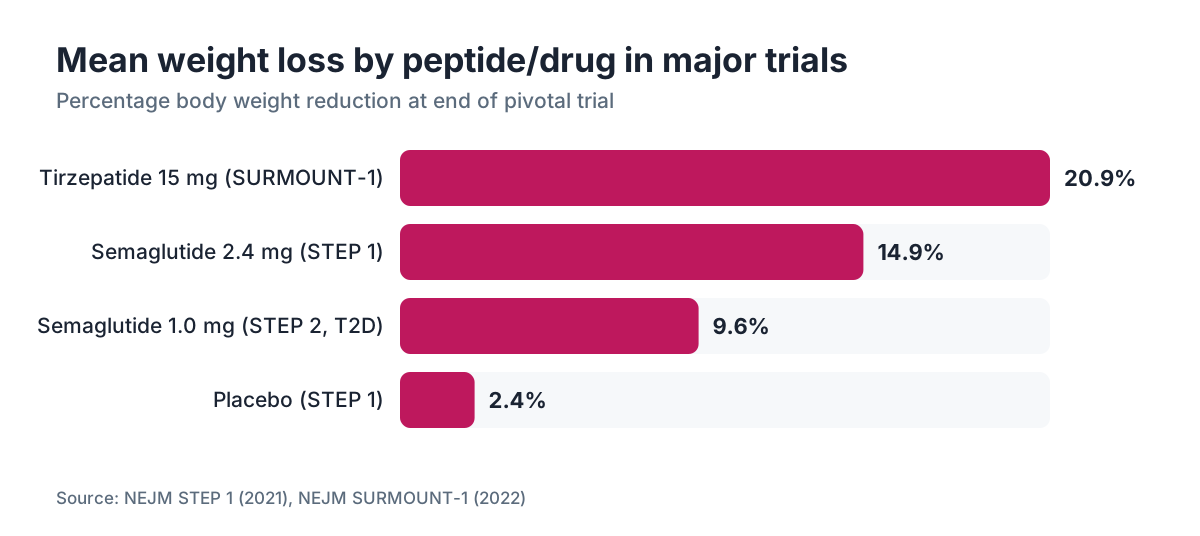
These are peptides. Semaglutide is a 31-amino-acid GLP-1 analogue. The STEP 1 trial (published in the New England Journal of Medicine, 2021) showed a mean 14.9% body weight reduction in adults with BMI 30 or higher over 68 weeks [1]. The SURMOUNT-1 trial of tirzepatide showed 20.9% mean weight loss at the highest dose [2]. Neither trial was specifically in menopausal women, but secondary analyses and real-world data confirm the effect holds in women over 45.
Why does this matter for menopause? Menopause accelerates visceral fat accumulation independent of calorie intake, and that fat drives insulin resistance, worsens hot flash severity, and raises cardiovascular risk. A 15 to 21% weight reduction changes that picture meaningfully. GLP-1s are not menopause hormone therapy, but for weight-driven symptoms they are the best-supported pharmacological tool available right now.
Bremelanotide (PT-141)
Bremelanotide is an FDA-approved melanocortin receptor agonist, sold as Vyleesi, indicated for hypoactive sexual desire disorder (HSDD) in premenopausal women [3]. The registration trials enrolled premenopausal women, so the FDA label does not extend to postmenopausal women. That said, some clinicians use it off-label in peri and postmenopausal women for low libido. The mechanism (central nervous system activation of desire pathways) does not depend on estrogen levels, which is why the off-label logic exists. But the trial data in menopausal women simply is not there yet.
Everything else
BPC-157, TB-500, CJC-1295, ipamorelin, epithalon, and similar peptides have no randomized controlled trial data in menopausal women. Some have interesting preclinical evidence. Nobody has good data on these in humans; the closest evidence is often a rodent study or a small uncontrolled case series. That does not mean they are useless, but anyone presenting them as proven treatments for menopause symptoms is getting ahead of the science.
Do GLP-1 peptides help with menopausal weight gain specifically?
Yes, and this is the clearest evidence-based answer in the entire peptide-menopause conversation.
The hormonal shift at menopause changes body fat distribution toward visceral (abdominal) fat even when total weight stays the same. The North American Menopause Society (NAMS) acknowledges that this metabolic shift increases cardiometabolic risk beyond what weight alone explains [4]. GLP-1 receptor agonists work by slowing gastric emptying, increasing satiety signaling, and reducing appetite through central nervous system effects. They do not change estrogen levels and they do not directly treat hot flashes or bone loss.
Semaglutide (Ozempic/Wegovy) and tirzepatide (Mounjaro/Zepbound) are the two with the most data. For a detailed comparison of the drugs and their forms, is semaglutide the same as ozempic covers that question directly.
Here is what clinicians see repeatedly. Women in perimenopause find that the calorie restriction that worked in their 30s stops working in their 40s. It is not willpower. It is biology, specifically the metabolic and fat-distribution changes tied to falling estrogen. GLP-1s address part of that biology. They are not a substitute for estrogen when estrogen deficiency symptoms are the main problem, but for weight and metabolic concerns they are the peptide with real human evidence.
The latest developments on semaglutide approvals and formulations are tracked at semaglutide news if you want to stay current.
Can peptides like BPC-157 help with menopause joint pain or frozen shoulder?
BPC-157 is a synthetic 15-amino-acid peptide derived from a protein found in gastric juice. Animal studies show it accelerates tendon and ligament healing, reduces inflammation, and may modulate nitric oxide pathways [5]. In rodent models it reduces joint inflammation. Those findings are genuinely interesting.
Here is the problem: there are no published randomized controlled trials of BPC-157 in humans as of mid-2026. The FDA has not approved it for any indication. It is available from compounding pharmacies and peptide research suppliers, but it sits firmly in the off-label, experimental category.
Joint pain is extremely common in perimenopause and menopause. Estrogen has anti-inflammatory effects in connective tissue, so when it drops, tendons, ligaments, and joint capsules become more vulnerable. Frozen shoulder (adhesive capsulitis) is genuinely more common in menopausal women, a fact covered in detail at frozen shoulder menopause. Whether BPC-157 could reduce that vulnerability is a plausible hypothesis. Plausible is not proven.
If joint pain is your primary concern, the evidence puts optimized estrogen therapy above any peptide on the market right now. BPC-157 might be worth discussing with a provider who understands the risk-benefit calculation, but do not pay for it instead of getting your hormones evaluated.
What does the evidence say about peptides for hot flashes and sleep?
Hot flashes are driven primarily by estrogen withdrawal acting on the hypothalamus, specifically on a population of neurons that express neurokinin B and kisspeptin. The new non-hormonal drug fezolinetant (Veozah, FDA-approved in 2023) works by blocking neurokinin B receptor signaling and reduced hot flash frequency by about 45% in the SKYLIGHT trials [6].
Fezolinetant is not a peptide in the traditional compounding-pharmacy sense, but it illustrates that targeting specific neuropeptide pathways can reduce hot flashes without estrogen. That is scientifically interesting context.
For sleep disruption, no peptide currently has trial evidence in menopausal women. Some clinicians experiment with low-dose peptide bioregulators (short dipeptides and tripeptides derived from pineal gland extracts) for sleep, pointing to research from Russian scientist Vladimir Khavinson going back to the 1970s and 1980s. That research is real but largely unpublished in peer-reviewed English-language journals and not replicated by independent groups. The honest position is: nobody knows.
For hot flashes, the evidence-backed options remain hormone therapy, fezolinetant, and certain antidepressants (venlafaxine, paroxetine). For sleep, estrogen therapy itself improves sleep architecture in symptomatic menopausal women. The menopause society position statements on these topics are the clearest summaries of where the evidence stands.
Is PT-141 safe and effective for low libido in menopause?
PT-141 (bremelanotide) is the peptide with the clearest approval pathway for a menopause-adjacent symptom. The FDA approved it in 2019 under the brand name Vyleesi specifically for HSDD in premenopausal women [3]. The mechanism is central: it activates melanocortin receptors in the brain to increase sexual desire, rather than working peripherally like PDE-5 inhibitors in men.
Low libido is extremely common in menopause, driven by falling estrogen, testosterone, and sometimes by relationship or psychological factors. Bremelanotide does not restore hormone levels. It acts on the brain's desire circuitry directly. That means it can work even when hormone therapy is not an option or has not fully resolved libido concerns.
The common side effects in trials were nausea (reported in about 40% of users), flushing, and transient blood pressure increases [3]. The blood pressure rise (average 1-3 mmHg systolic in trials, but can be higher acutely) matters if you have cardiovascular concerns.
The off-label use in postmenopausal women is widespread in clinical practice. The biology does not change dramatically after menopause for this mechanism, but the trials were not designed to study that population, so the risk-benefit data is thinner. Discuss it with a provider who knows your cardiovascular history.
What about growth hormone peptides (sermorelin, ipamorelin, CJC-1295) for menopause symptoms?
Growth hormone secretagogue peptides stimulate the pituitary to release more growth hormone. Sermorelin is an FDA-approved GHRH analogue (though its original approval was for pediatric growth hormone deficiency; adult anti-aging use is off-label). Ipamorelin and CJC-1295 are synthetic peptides available from compounding pharmacies.
The rationale for women in menopause is that growth hormone declines with age and estrogen also stimulates GH release, so the menopause years see a double decline. Growth hormone promotes lean muscle mass, fat metabolism, and skin integrity.
Here is what the evidence actually shows. Studies of recombinant human growth hormone in older adults show modest improvements in body composition but no consistent quality-of-life benefit and a real side effect profile including fluid retention, carpal tunnel syndrome, insulin resistance, and potential cancer risk concerns with long-term use [7]. The secretagogue peptides have less data than actual GH, not more. They are lower-dose by design, which may also mean lower side effects, but the trade-off is that the benefits are also less clear.
If body composition is the goal, GLP-1 receptor agonists have far more rigorous trial data than any GH secretagogue. If muscle preservation is the goal, resistance training and adequate protein intake have the best evidence. GH peptides occupy an interesting middle space that is not ready for broad recommendation.
How do peptides compare to hormone therapy for menopause symptoms?
This comparison is worth being direct about.
Hormone therapy (estrogen with or without progesterone) is the most effective treatment for the core symptoms of menopause: hot flashes, night sweats, vaginal dryness, sleep disruption, and bone loss. The Endocrine Society and NAMS both support hormone therapy for symptomatic women without contraindications, particularly when started within 10 years of menopause onset or before age 60 [4][8].
Peptides do not replace estrogen. None of them address vaginal atrophy. None have trial evidence for reducing bone loss comparable to estrogen. None have been shown to reduce hot flash frequency the way estrogen or even fezolinetant do.
The honest comparison looks like this:
| Symptom | Best evidence intervention | Peptide with evidence | |---|---|---| | Hot flashes | Estrogen therapy, fezolinetant | None proven | | Night sweats | Estrogen therapy | None proven | | Vaginal dryness | Topical estrogen | None | | Bone loss | Estrogen, bisphosphonates | None | | Menopausal weight gain | GLP-1 agonists + lifestyle | GLP-1s (strong) | | Low libido | Testosterone (off-label), PT-141 | PT-141 (premenopausal FDA approval) | | Joint pain | Estrogen, NSAIDs, PT | BPC-157 (preclinical only) | | Sleep disruption | Estrogen therapy | None proven |
The pattern is clear: peptides fill niches, not the core. Using them alongside well-managed hormone therapy is a defensible approach. Using them instead of hormone therapy to avoid a conversation about HRT is a mistake based on current evidence.
For context on the full landscape of menopause care, the new menopause covers how the clinical consensus has shifted in recent years.
Are peptides for menopause FDA-approved or regulated?
This is where women need to be careful. The regulatory picture is fragmented.
FDA-approved peptides relevant to menopause: semaglutide (Wegovy for weight loss, Ozempic for type 2 diabetes), tirzepatide (Zepbound for weight loss, Mounjaro for type 2 diabetes), and bremelanotide/Vyleesi (HSDD in premenopausal women). These have gone through rigorous trials, have known safety profiles, and come with FDA-regulated labeling.
Compounded peptides (BPC-157, TB-500, ipamorelin, CJC-1295, epithalon, and most of what is being marketed for menopause): these are not FDA-approved. They come from compounding pharmacies or, in some cases, from gray-market research chemical suppliers. The FDA has specifically raised concerns about several peptides including BPC-157, noting they do not meet the legal criteria for compounding under 503A or 503B pharmacy frameworks [9].
The FDA's concern is not that these molecules are necessarily harmful. It is that without trial data, there is no way to know the right dose, the long-term risks, or even whether the compounded version matches what is claimed on the label. Third-party purity testing of peptide products has found significant variation in actual peptide concentration.
If you are going to use off-label or compounded peptides, sourcing from a licensed compounding pharmacy that follows USP standards matters. Ask for a certificate of analysis. And be honest with your prescribing provider about what you are taking so they can watch for interactions.
What should I realistically expect if I try peptides alongside menopause treatment?
If you are using GLP-1s for weight, realistic expectations from the STEP and SURMOUNT trials are 10 to 21% body weight loss over 12 to 18 months with weekly injections, contingent on adherence and dose titration [1][2]. That is a meaningful metabolic shift. Side effects (nausea, constipation, slowed gastric emptying) are real and most pronounced in the titration phase.
If you are trying bremelanotide for libido, the trials showed meaningful increases in satisfying sexual events and reduced distress about low desire, but the effect size was moderate, not dramatic. Nausea is the main barrier to consistent use.
For everything else, the honest expectation is: unknown. You might feel better. You might not. If you are spending money on BPC-157 or epithalon, you are essentially paying for a personal experiment with limited reference data. That is a choice some informed women make. It is not a choice with the same evidentiary backing as hormone therapy or GLP-1s.
Practices like WomenRx that specialize in women's hormones and GLP-1s can help you sort which peptides have enough evidence to discuss seriously and which are mostly hype, so you are not making these decisions based on social media alone.
One practical suggestion: if you are considering peptides, get a baseline metabolic panel, hormone panel, and bone density assessment first. Then you can actually measure whether anything is changing.
How much do peptides for menopause typically cost?
Cost varies widely and is worth knowing before you commit.
FDA-approved GLP-1s without insurance run approximately $900 to $1,400 per month for brand-name Wegovy or Zepbound as of mid-2026. Compounded semaglutide has run $200 to $400 per month from licensed pharmacies, though FDA enforcement actions on compounded GLP-1s have created supply uncertainty [9]. Check current availability before assuming compounded is an option.
Bremelanotide (Vyleesi) costs approximately $800 to $1,000 per injection kit at retail; some insurance plans cover it for HSDD with a prior authorization.
Compounded BPC-157 or ipamorelin/CJC-1295 blends typically run $80 to $300 per month depending on dose and pharmacy. These are entirely out of pocket since they carry no FDA approval.
Sermorelin from a compounding pharmacy tends to cost $150 to $400 per month.
If budget is a constraint, the math strongly favors spending on hormone therapy optimization and GLP-1s before spending on unproven peptides. A course of compounded BPC-157 costs the same as several months of well-managed estrogen therapy, and the evidence for the two is not remotely comparable.
Frequently asked questions
Do peptides work as well as hormone therapy for menopause?
No. Hormone therapy remains the most effective treatment for core menopause symptoms including hot flashes, night sweats, vaginal dryness, and bone loss. No peptide currently has trial data that comes close to matching estrogen's effect on these symptoms. Some peptides (GLP-1s for weight, PT-141 for libido) address specific concerns well, but they complement hormone therapy rather than replace it.
Is BPC-157 safe for women in menopause?
Nobody knows definitively. BPC-157 has no completed randomized controlled trials in humans as of 2026. Animal studies show a strong safety profile and potential anti-inflammatory and tissue-repair effects. The FDA has raised concerns about its use in compounded products. Women who use it are doing so without long-term human safety data. If you choose to try it, do so with a provider who can monitor you and report any adverse effects.
Can semaglutide help with menopause weight gain?
Yes, this is the strongest evidence in the peptide-menopause space. Semaglutide produced a mean 14.9% body weight reduction in the STEP 1 trial. Menopausal women experience visceral fat accumulation driven by estrogen loss, and GLP-1 receptor agonists directly counter that mechanism. They do not treat hot flashes or bone loss, but for metabolic and weight concerns they are the best-supported peptide option available.
What peptides are FDA-approved for menopause-related issues?
Three matter here. Semaglutide (Wegovy) and tirzepatide (Zepbound) are FDA-approved for weight management, which addresses a major menopausal concern. Bremelanotide (Vyleesi) is FDA-approved for hypoactive sexual desire disorder in premenopausal women, often used off-label in menopause. No peptide is FDA-approved specifically for hot flashes, bone loss, or night sweats.
Does PT-141 help with low sex drive during menopause?
Possibly. Bremelanotide (PT-141/Vyleesi) is FDA-approved for HSDD in premenopausal women. Its mechanism works through central nervous system melanocortin receptors, independent of hormone levels, which is why clinicians use it off-label in menopausal women. Trials showed meaningful improvements in desire and sexual satisfaction. About 40% of users experience nausea. The data in postmenopausal women specifically is limited.
Can peptides help with menopause brain fog?
There is no peptide with clinical trial evidence for menopause-related cognitive symptoms. Estrogen has documented neuroprotective effects, and cognitive fog in perimenopause is linked to estrogen fluctuation. Some clinicians have explored semax or other nootropic peptides, but no human trial data exists for these in menopausal women. Optimizing thyroid function (see thyroid hormone replacement therapy) and estrogen levels are better-evidenced first steps.
Are growth hormone peptides like sermorelin worth trying in menopause?
The evidence is thin. Sermorelin and similar secretagogues (ipamorelin, CJC-1295) stimulate GH release and may improve body composition, but no rigorous trials exist in menopausal women. Full recombinant GH studies in older adults showed modest body composition benefits with real side effects. If body composition is the goal, GLP-1 receptor agonists have substantially more evidence. GH peptides remain experimental for this population.
How do I find a doctor who prescribes peptides for menopause?
Look for board-certified OB/GYNs or endocrinologists who specialize in menopause care, or telehealth practices focused on women's hormones. Ask directly whether they prescribe compounded peptides and how they monitor outcomes. Be cautious of providers who lead with peptides rather than starting with a complete hormone evaluation; the sequence matters. The Menopause Society's provider directory lists certified menopause practitioners.
Can peptides replace estrogen for menopause symptoms?
No. Estrogen deficiency drives the core symptoms of menopause. No peptide restores estrogen, and none have been shown to prevent the bone loss, cardiovascular changes, or urogenital atrophy that estrogen therapy addresses. GLP-1s help with weight, PT-141 can help with libido, but these are adjuncts. Using peptides to avoid having an honest conversation about hormone therapy is not a strategy supported by evidence.
What are the risks of using compounded peptides for menopause?
The main risks are unknown long-term safety, product purity variability, and regulatory uncertainty. The FDA does not approve compounded peptides for menopause, and testing has found actual peptide content often differs from labeled amounts. There are also drug interaction unknowns. Use only licensed 503A or 503B compounding pharmacies, ask for a certificate of analysis, and keep your primary care provider informed.
Do peptides help with menopause-related anxiety or mood changes?
No peptide has clinical trial evidence for menopause-related mood symptoms. Estrogen therapy has documented benefits for mood in perimenopause, particularly for women whose mood symptoms are clearly tied to hormonal fluctuation. Selank and other anxiolytic peptides are used experimentally but have no trial data in menopausal women. Addressing hormone imbalance, sleep, and metabolic health first is the evidence-based approach.
How long do peptide treatments for menopause symptoms take to work?
It depends on the peptide. GLP-1s show meaningful weight changes at 12 to 16 weeks with full effect at 52 to 68 weeks based on STEP and SURMOUNT trial timelines. Bremelanotide works acutely; it is taken 45 minutes before anticipated sexual activity. For experimental peptides like BPC-157, no reliable human timeline data exists. Anyone promising quick results from unproven peptides is selling beyond what the science shows.
Are there natural peptides in food that help with menopause?
Bioactive food peptides (from collagen, whey, soy, and other protein sources) have some evidence for cardiovascular and bone benefits at high intakes, but nothing with menopause-specific trial data. Soy isoflavones are sometimes grouped with peptide discussions but are actually phytoestrogens, not peptides. Adequate dietary protein supports muscle preservation in menopause, which is real and important, but this is a nutritional strategy rather than a peptide therapy.
What questions should I ask a provider before starting a peptide for menopause?
Ask: What specific evidence exists for this peptide in menopausal or perimenopausal women? What are the known side effects and monitoring requirements? Is this coming from an FDA-licensed compounding pharmacy with a certificate of analysis? How will we measure whether it is working? And critically: have we fully optimized my hormone therapy first? A provider who cannot answer these questions clearly is not the right provider for this conversation.
Sources
- New England Journal of Medicine, Wilding et al. 2021, STEP 1 trial of semaglutide
- New England Journal of Medicine, Jastreboff et al. 2022, SURMOUNT-1 trial of tirzepatide
- FDA Drug Label, Vyleesi (bremelanotide), NDA 210557
- North American Menopause Society (Menopause Society), 2022 Hormone Therapy Position Statement
- Current Pharmaceutical Design, Sikiric et al. 2018, BPC-157 mechanisms review
- JAMA, Lederman et al. 2023, SKYLIGHT 1 trial of fezolinetant
- Annals of Internal Medicine, Liu et al. 2007, systematic review of GH in healthy older adults
- Endocrine Society Clinical Practice Guideline, Menopause Hormone Therapy 2015 (updated guidance)
- FDA, Drug Shortage and Compounding Guidance for GLP-1 products, 2024
- Menopause Society (NAMS), Clinical Care Recommendations, vasomotor symptoms section
- FDA, Wegovy (semaglutide) prescribing information, NDA 215256