Do estrogen patches cause weight gain? What the evidence actually shows
TL;DR: Estrogen patches do not cause meaningful weight gain in most women. The PEPI trial and multiple randomized studies show transdermal estrogen is largely weight-neutral, and it may even reduce the abdominal fat gain common in menopause. The pill form carries more fluid-retention risk than the patch. Weight changes during menopause are mostly driven by hormonal shifts and aging, not the patch itself.
What does the research actually say about estrogen patches and weight gain?
The short answer: estrogen patches do not cause clinically significant weight gain. This is one of the most persistent fears women bring to their doctors, and the evidence keeps failing to support it.
The Postmenopausal Estrogen/Progestin Interventions (PEPI) trial, an NIH-funded randomized controlled study, followed 875 postmenopausal women for three years and found no significant weight difference between women on hormone therapy and those on placebo [1]. Both groups gained a modest amount of weight over those three years. That reflects normal aging, not the hormone treatment.
More recent data points the same way. A 2019 analysis in Menopause, the journal of the Menopause Society (formerly NAMS), reviewed body composition changes across multiple HRT trials and concluded that transdermal estrogen specifically was linked to less visceral fat accumulation than untreated menopause [2]. That matters. The menopause transition itself reliably shifts fat from the hips to the abdomen, and estrogen appears to partially blunt that redistribution.
So when a woman starts a patch and notices her weight creeping up around the same time, the likely culprit is the underlying hormonal shift that drove her to seek treatment in the first place, not the patch. Correlation is not causation, and the timing can be genuinely confusing.
Why do so many women feel like the estrogen patch makes them gain weight?
Fair question. The honest answer has a few layers.
First, menopause itself causes weight gain. Average weight gain during the transition runs roughly 1.5 to 3 pounds per year regardless of treatment status, driven by declining estrogen, slowing metabolism, and age-related muscle loss [10]. Women who start HRT are usually in that transition window, so the weight change gets pinned on the patch rather than the underlying biology.
Second, some women hold water when they first start estrogen, particularly at higher doses. It shows up on the scale within days and can feel alarming. It usually clears within two to four weeks as the body adjusts. Fluid retention is not fat gain, and it tends to be stronger with oral estrogen pills than with patches, because the patch bypasses the liver and produces a steadier blood level without the peak-and-trough swings of a swallowed pill [4].
Third, progestogens matter a lot here. Women who still have a uterus need a progestogen alongside estrogen, and some synthetic progestins (particularly medroxyprogesterone acetate, or MPA) have a stronger link to appetite changes and bloating than micronized progesterone does [5]. If you feel puffier on a combined regimen, look at the progestogen before you blame the estrogen patch. Our article on progesterone covers that comparison in more depth.
Estrogen patch vs. pill weight gain: is there a real difference?
Yes. There's a meaningful pharmacological difference between the two, even though the clinical weight data on both forms is generally reassuring.
Oral estrogen goes through first-pass liver metabolism, which raises sex hormone-binding globulin (SHBG) and can affect fluid balance and triglycerides. Transdermal estrogen, whether a patch, gel, or spray, delivers estradiol straight into the bloodstream and skips the liver almost entirely [4]. You get lower and steadier circulating hormone levels for the dose, less impact on SHBG, and less stimulation of the liver proteins tied to bloating and fluid retention.
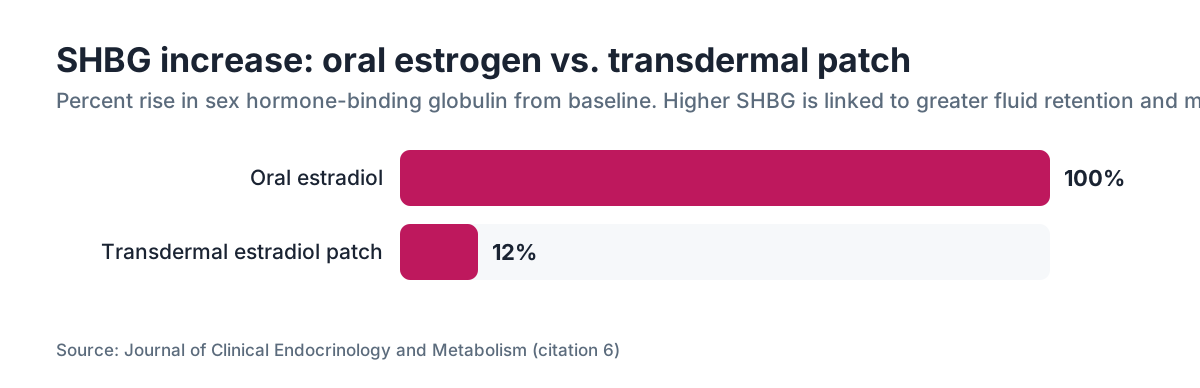
A head-to-head comparison of oral versus transdermal estrogen in the Journal of Clinical Endocrinology and Metabolism found that oral estrogen raised SHBG by roughly 100% while transdermal estrogen raised it by only about 12% [6]. That gap does not automatically become a big weight difference in clinical trials, but it explains why women who switch from pill to patch so often report less bloating.
For women with a history of migraines, hypertension, or high triglycerides, guidelines from both the Menopause Society and the Endocrine Society already prefer transdermal delivery over oral for safety reasons that have nothing to do with weight [9]. The estrogen patch vs. pill weight gain question is real at the biochemical level. In practice, the effect on fat mass looks small for both routes.
What body composition changes actually happen during menopause?
You can't fairly judge what the patch is doing until you understand what menopause does to the body on its own.
Estrogen has a direct effect on fat distribution. Premenopausal women store fat subcutaneously, in the hips, thighs, and buttocks. After menopause, the default shifts toward visceral fat around the abdomen. This is not a small change. DEXA-scan data from the Study of Women's Health Across the Nation (SWAN) found women gain an average of 2.1 kg of fat mass in the two years around the final menstrual period, with a disproportionate jump in trunk fat [3].
Muscle mass falls in parallel. Lower estrogen weakens the anabolic signal for skeletal muscle, so lean mass drops while fat mass climbs, a double hit on body composition that doesn't show up cleanly on the scale but matters metabolically. Blood pressure, insulin sensitivity, and lipid profiles can all slide at the same time.
When you read that estrogen therapy didn't prevent weight gain in a trial, ask what the comparison group did. Studies comparing HRT users to non-users almost always find both groups gain weight, which is exactly what the biology above predicts. The sharper question is whether HRT changes the composition of that weight gain. Several studies suggest it does, favoring less visceral fat and better preservation of lean mass in the HRT group [2].
For more on the timeline and biology of this transition, see our articles on menopause and when does menopause start.
Does the dose of the estrogen patch affect weight changes?
Dose matters, but not in the direction most people assume.
Higher estrogen doses can bring more fluid retention early in treatment, which temporarily nudges the scale up. Standard transdermal doses for menopausal symptom relief run from 0.025 mg per day to 0.1 mg per day (25 mcg to 100 mcg) [8]. Most women start at the low end and titrate up based on symptom response.
There's no good clinical evidence that moving from a 0.025 mg patch to a 0.05 mg patch causes real fat gain. The fluid retention effect, if it happens at all, usually settles within a few weeks regardless of dose. If a woman has persistent bloating or weight gain beyond four to six weeks on the patch, that calls for a review of the full regimen, including the progestogen type and dose, rather than an assumption that the estrogen patch is the problem.
Underreplacement is the more common clinical problem. Women on too little estrogen to actually control symptoms keep dealing with the sleep disruption, hot flashes, and mood swings that themselves drive overeating and less activity. Getting the dose right can improve sleep and energy, which quietly supports healthier weight management.
Can estrogen patches cause weight gain through appetite changes?
Estrogen has well-documented effects on appetite hormones, particularly leptin and neuropeptide Y, but those effects generally push against weight gain, not toward it.
Estrogen tends to lower appetite centrally and improve insulin sensitivity peripherally. Animal studies have shown for decades that estrogen deficiency drives overeating and weight gain, and that estrogen replacement reverses it. Human data is messier because confounders are hard to control, but population studies consistently show women who use HRT after menopause have lower rates of metabolic syndrome and type 2 diabetes than non-users [2]. That's the opposite of what you'd see if estrogen were packing on fat.
The appetite-dampening effect is part of why some women notice they eat a little less or feel more satisfied once they start the patch and their estrogen levels steady out. It isn't universal, but it fits the underlying biology.
That said, estrogen is not a weight loss treatment. A patch won't reverse the weight gained during menopause on its own, and it wasn't designed to. If real weight management is a goal alongside symptom relief, that takes a separate, dedicated strategy.
What if you need both hormone therapy and weight loss support?
This comes up constantly, and the good news is that HRT and GLP-1 receptor agonists are not mutually exclusive. Plenty of women in perimenopause and menopause now combine transdermal estrogen with semaglutide or tirzepatide for weight management, and there's no known pharmacokinetic interaction between them.
GLP-1 medications slow gastric emptying, which can in theory affect the absorption timing of oral drugs. Transdermal estrogen absorbs through the skin, so that concern doesn't touch the patch. Women taking oral estrogen pills alongside a GLP-1 should mention it to their prescriber, just to keep the full picture visible.
The biology of menopause can make weight loss harder even with real effort. Declining estrogen worsens insulin signaling, increases the visceral fat tendency, and wrecks sleep, all of which fight caloric balance. Addressing both problems at once makes clinical sense. If you're weighing that combination, our articles on semaglutide for weight loss and semaglutide vs tirzepatide cover the options in detail.
Telehealth practices like WomenRx increasingly evaluate both needs together, so a single clinical conversation can cover hormone symptoms and weight trajectory instead of treating them as unrelated.
How does the patch compare to other HRT delivery methods for body weight?
Here's a side-by-side look at what the evidence shows for the main delivery forms:
| Delivery method | Liver first-pass effect | SHBG impact | Fluid retention risk | Fat mass data | |---|---|---|---|---| | Oral estradiol tablet | Yes | High (+100%) | Higher | Neutral to slight reduction vs. no HRT | | Transdermal patch | No | Low (+12%) | Lower | Neutral to modest visceral fat reduction [2][6] | | Estrogen gel | No | Low | Lower | Similar to patch, limited long-term data | | Vaginal estrogen (low dose) | Minimal systemic | Minimal | Negligible | No meaningful systemic effect | | Injectable estradiol | No | Moderate | Moderate | Insufficient comparative weight data |
The patch and gel consistently come out as the most weight-neutral and metabolically friendly transdermal options in the research available. Oral estrogen isn't harmful for most women, but its higher SHBG and triglyceride effects make the transdermal route the better pick when weight and metabolic concerns are front of mind.
Vaginal estrogen, at the doses prescribed for genitourinary syndrome of menopause, has essentially no systemic effect on weight in either direction. It treats local tissue symptoms without touching body composition.
For the big picture on HRT options, see our article on hormone replacement therapy.
What do major medical guidelines say about HRT and weight?
The Menopause Society (formerly the North American Menopause Society, or NAMS) published a detailed position statement on hormone therapy in 2022. It states that hormone therapy is the most effective treatment for vasomotor symptoms and genitourinary syndrome of menopause, and that for healthy women under 60 or within 10 years of menopause onset, the benefits generally outweigh the risks for the indicated conditions [7]. The statement does not list weight gain as a documented harm of transdermal estrogen.
The Endocrine Society's clinical practice guideline on menopause likewise doesn't flag weight gain as a primary concern with transdermal estrogen, and it notes that the cardiovascular risk profile of transdermal delivery beats oral [9]. The guidance acknowledges that weight management in menopausal women has many moving parts.
The FDA-approved prescribing information for transdermal estradiol products does list "weight changes" as a reported adverse reaction, because post-marketing surveillance captures everything patients report, including things that may not be causally related. A symptom appearing in the label doesn't mean the drug causes it at a rate above placebo. The PEPI trial, which compared active HRT to placebo, found no significant weight difference at three years [1]. That's the more useful data point for most clinical decisions.
Women weighing these decisions should also factor in the protective effect of estrogen on bone density. See our article on bone density test to understand how menopause affects bone and what screening looks like.
What should you do if your weight changes after starting the patch?
If your scale number climbs in the first two to four weeks after starting or changing an estrogen patch, wait it out before you make any decisions. Early weight change in that window is almost always fluid, not fat, and it's more likely to fade than stick.
If weight gain runs past six weeks or comes with persistent bloating, look first at the progestogen you take alongside the estrogen, if you take one. Synthetic progestins like MPA carry a stronger appetite and bloating signal than micronized progesterone (Prometrium or generic equivalents). Ask your prescriber whether switching progestogen type makes sense for you.
Track your symptoms next to your weight. Are you sleeping better since starting the patch? Better sleep improves cortisol regulation and appetite control, and the downstream effect on weight can take months to appear. Are the hot flashes gone? Night sweats were probably shredding your sleep and raising your stress hormone baseline, both of which favor fat storage.
Be honest about the full picture. Menopause is one of the most reliable times in a woman's life to gain weight, treatment or no treatment. The patch didn't cause menopause. If you're gaining weight despite a sensible regimen, the conversation to have with your provider is about the menopause physiology itself, not about stopping a treatment that's actually helping your symptoms.
For context on the timing and stages involved, our article on perimenopause age is a useful reference.
The bottom line on estrogen patches and weight
Estrogen patches do not cause meaningful weight gain in the clinical trial evidence. The PEPI trial found no significant weight difference between HRT and placebo over three years [1], and multiple body composition studies favor transdermal estrogen over no treatment for visceral fat outcomes [2]. The patch is also more weight-friendly than the oral pill because it skips first-pass liver metabolism and produces a steadier hormone level with less fluid retention risk [4][6].
Weight gain during menopause is real and well-documented, but it traces back to the biology of the transition, not to the patch prescribed to treat it. If you're gaining weight in menopause, the patch is not the likely cause, and stopping it won't fix the underlying problem.
The women most prone to HRT-associated bloating are those on higher doses, those using synthetic progestins, and those starting treatment relatively young with higher hormone sensitivity. None of those situations are permanent, and dose or formulation adjustments usually handle them.
If you want a full evaluation of your HRT regimen alongside a weight management plan built around your menopausal physiology, WomenRx offers telehealth consultations that address both in the same clinical context. The estrogen patch article on this site goes deeper on dosing and application.
Frequently asked questions
Does the estrogen patch cause weight gain in perimenopause?
No, not according to the clinical trial evidence. The PEPI trial found no significant weight difference between HRT users and placebo at three years. Weight gain during perimenopause is driven primarily by the hormonal transition itself, including declining estrogen, slowing metabolism, and muscle loss, not by the patch used to treat symptoms. Transient fluid retention in the first few weeks can mimic weight gain but typically resolves.
Is weight gain a listed side effect on the estrogen patch label?
Yes, "weight changes" appear in the adverse reactions section of most transdermal estradiol prescribing information, because post-marketing surveillance captures all patient-reported events. This does not mean the patch causes weight gain at a rate above placebo. The PEPI randomized controlled trial, which included a true placebo arm, found no significant weight difference, making the label entry a caution rather than a proven causal effect.
Does the estrogen patch cause more or less weight gain than the estrogen pill?
Less, based on pharmacological evidence. Oral estrogen undergoes first-pass liver metabolism, raising SHBG by roughly 100% and affecting fluid balance. Transdermal estrogen bypasses the liver and raises SHBG by only about 12%. This explains why women on the patch report less bloating and fluid retention than those on pills. For metabolic and cardiovascular reasons, guidelines from NAMS and the Endocrine Society already favor the transdermal route.
Can switching from estrogen pills to the patch reduce bloating or weight gain?
Many women report less bloating after switching from oral estradiol to the patch, and this is mechanistically plausible given the liver bypass effect. Clinical trial evidence for a direct fat-mass difference is limited, but the reduction in SHBG stimulation and lower first-pass triglyceride effect are real advantages of transdermal delivery. If you are experiencing persistent bloating on oral HRT, a transdermal switch is a reasonable conversation to have with your prescriber.
How much weight do most women gain during menopause regardless of HRT?
The SWAN study found women gain an average of 2.1 kg of fat mass in the two years around the final menstrual period, with disproportionate increases in trunk fat. Women tend to gain 1.5 to 3 pounds per year during the menopause transition. This happens with or without hormone therapy and reflects the combined effect of lower estrogen, muscle loss, and age-related metabolic slowing, not HRT use.
Does progesterone or progestin with the patch cause more weight gain than estrogen alone?
Progestogens are more likely to be the culprit than estrogen when women report bloating or appetite changes on combined HRT. Synthetic progestins, particularly medroxyprogesterone acetate (MPA), have stronger appetite-stimulating and bloating effects than micronized progesterone. Women who experience these symptoms on a combined regimen often benefit from switching to micronized progesterone rather than stopping estrogen.
Will stopping the estrogen patch help me lose weight?
Probably not. If weight gain is occurring during menopause, it is driven by the hormonal transition itself, not by the patch. Stopping estrogen therapy removes the partial protection it provides against visceral fat redistribution and may worsen the underlying metabolic changes. Women who discontinue HRT often find their symptoms return without any improvement in weight, and may experience accelerated bone loss as an additional consequence.
Can I use a GLP-1 medication and an estrogen patch at the same time?
Yes. There is no known pharmacokinetic interaction between transdermal estrogen and GLP-1 receptor agonists like semaglutide or tirzepatide. The patch delivers estradiol through the skin, so GLP-1-related gastric slowing does not affect its absorption. Women using oral estrogen alongside a GLP-1 medication should mention the combination to their prescriber, but transdermal delivery largely sidesteps that concern. Many women pursue both simultaneously for symptom management and weight support.
What is the best estrogen patch dose to avoid weight gain?
There is no clinical evidence that any specific patch dose causes fat gain. Lower doses (0.025 mg/day) produce less initial fluid retention than higher doses (0.075 to 0.1 mg/day), but neither causes meaningful long-term fat accumulation per clinical trials. Standard practice is to start at the lowest effective dose for symptom control and titrate upward only if needed. The progestogen type and dose are more likely to affect bloating than the estrogen dose is.
Does the estrogen patch cause belly fat?
No. The evidence runs in the opposite direction. Multiple studies, including a 2019 Menopause journal analysis, found that transdermal estrogen is associated with less visceral fat accumulation than untreated menopause. The menopause transition itself shifts fat storage from subcutaneous (hips, thighs) to visceral (abdomen). Estrogen therapy partially counteracts that redistribution rather than causing it.
How long does bloating from the estrogen patch last?
Transient fluid retention or bloating from a new estrogen patch typically resolves within two to four weeks as hormone levels stabilize. If bloating persists beyond six weeks, the progestogen component of the regimen is the more likely cause and worth reviewing with your prescriber. Persistent, worsening bloating that does not resolve warrants a clinical evaluation to rule out unrelated causes.
Are there studies comparing estrogen patch users to non-users for long-term weight outcomes?
Yes. The PEPI trial (875 women, 3 years, randomized, placebo-controlled) found no significant weight difference between HRT users and placebo. The SWAN cohort study tracked body composition changes around menopause and found that fat gain and muscle loss occur in the transition regardless of HRT use. Multiple smaller trials and meta-analyses consistently show transdermal estrogen is weight-neutral to mildly beneficial for visceral fat composition.
Does fluid retention from the estrogen patch show up on the scale right away?
Yes, fluid retention can show up within days of starting a new estrogen patch or increasing the dose, and it does register on the scale. This is not fat accumulation. It typically amounts to one to three pounds and resolves as the body adjusts over two to four weeks. Weighing yourself the morning after starting a patch and concluding it caused weight gain is one of the most common misattributions in HRT management.
Sources
- NIH/NHLBI, PEPI Trial (Writing Group for the PEPI Trial, JAMA 1995)
- Menopause (journal of The Menopause Society), 2019 body composition review
- Study of Women's Health Across the Nation (SWAN), NIH-funded cohort
- FDA, Transdermal Estradiol Prescribing Information (general pharmacokinetics guidance)
- Climacteric, International Menopause Society, progestogen comparative review
- Journal of Clinical Endocrinology and Metabolism, oral vs. transdermal estrogen SHBG comparison
- The Menopause Society, 2022 Hormone Therapy Position Statement
- FDA, Climara (estradiol transdermal system) prescribing information
- Endocrine Society Clinical Practice Guideline, Treatment of Menopause
- JAMA Internal Medicine, menopause weight gain systematic review