Do bioidentical hormones work better than synthetic hormones?
TL;DR: No large randomized trial shows bioidentical hormones beat conventional hormone therapy for menopause symptoms. FDA-approved bioidentical estradiol and progesterone exist and are well-studied. Compounded 'custom' bioidentical hormones lack that evidence and carry real safety concerns flagged by the FDA and the Menopause Society. The word 'bioidentical' is a marketing term, not a regulatory category.
What does 'bioidentical' actually mean?
Bioidentical hormones are molecules chemically identical to the hormones your ovaries made before menopause. Estradiol (E2), progesterone, and sometimes testosterone are the main ones. Because the structure matches what your body produced, the hormone binds and behaves the same way at the receptor.
That part is true, as far as it goes. The problem is that 'bioidentical' is not an FDA regulatory category. It is a marketing term. Any product, whether manufactured by a large pharmaceutical company and FDA-approved or mixed in a compounding pharmacy, can be called bioidentical if its molecular structure matches the hormone your body makes [1].
So when a clinic advertises 'bioidentical hormone therapy,' they might mean an FDA-approved 17-beta estradiol patch like Vivelle-Dot. Or they might mean a custom cream made to one provider's recipe. Those are not the same thing. Conflating them is how a lot of confusion starts.
Conventional hormone therapy historically included conjugated equine estrogens (CEE, sold as Premarin), which come from pregnant horse urine and contain a mix of estrogens that is not identical to human estradiol. Synthetic progestins like medroxyprogesterone acetate (MPA) are also structurally different from human progesterone. Those structural differences matter in some tissue contexts, and that is where the debate gets interesting.
What is the difference between FDA-approved and compounded bioidentical hormones?
This is the distinction most articles skip, and it is the whole ballgame. FDA-approved bioidentical products went through clinical trials and manufacturing review. Compounded ones did not. Same molecule, completely different level of oversight.
FDA-approved bioidentical options include estradiol patches, gels, sprays, and vaginal rings, plus oral micronized progesterone (Prometrium). The FDA reviewed their manufacturing, purity, potency, and label claims. When you pick up a Vivelle-Dot patch or a Prometrium capsule, the dose is what the label says it is [1].
Compounded bioidentical hormones (cBHT) are made by compounding pharmacies, usually mixed into creams, troches (dissolving tablets), or pellets implanted under the skin. They are not FDA-approved. Compounding is legal under federal law for patients with a documented clinical need that an approved product cannot meet, but that gateway gets used loosely in hormone clinics [2].
A review in Menopause found that compounded hormone products showed wide variability in measured potency, sometimes delivering doses far above or below what was prescribed [3]. The FDA has issued multiple warning letters to compounding pharmacies for exactly this [1].
The Menopause Society and the Endocrine Society both state that compounded bioidentical hormones should not be treated as equivalent to FDA-approved therapy, and that they carry unquantified risks because no large safety trial has ever studied them [4][5]. That is not a footnote. The Women's Health Initiative followed over 27,000 women. No trial anywhere near that size exists for compounded preparations.
Do bioidentical hormones relieve menopause symptoms as well as conventional HRT?
For FDA-approved bioidentical products, yes, and the evidence is solid. Transdermal estradiol reduces hot flashes, night sweats, vaginal dryness, and sleep disruption. Oral micronized progesterone protects the uterine lining in women who still have a uterus. Multiple randomized controlled trials back both [6].
For compounded bioidentical hormones, nobody can say with confidence, because the trials have not been done. Advocates point to patient satisfaction surveys. Those are not double-blind efficacy data.
Here is the honest version. Many women do feel better on transdermal estradiol plus micronized progesterone than on older oral CEE plus MPA. Part of that is route: transdermal estradiol skips first-pass liver metabolism, which matters for clotting risk [6]. Part is that micronized progesterone has a gentler side-effect profile than MPA for a lot of women. Those differences are real. But they compare two FDA-approved products against each other. They are not proof that 'bioidentical' as a category wins.
A 2019 Cochrane review of hormone therapy for menopausal symptoms found transdermal and oral estradiol both cut vasomotor symptom frequency and severity compared to placebo [7]. The Cochrane authors found no evidence that bioidentical branding added benefit beyond what route of delivery and molecule type already explain.
Are bioidentical hormones safer than synthetic hormones?
The evidence is more layered than either camp admits. FDA-approved bioidentical hormones look favorable next to older oral synthetic regimens. Compounded ones sit in a data void.
Oral conjugated equine estrogens plus MPA, the regimen studied in the Women's Health Initiative, were tied to a small increase in breast cancer risk after about five years of combined use and an increase in venous thromboembolism [8]. Those findings drove a sharp drop in HRT prescribing after 2002 and a lot of fear that still lingers.
Later analyses paint a different picture for transdermal estradiol and micronized progesterone. The E3N cohort, a French prospective study of over 80,000 women, found that transdermal estradiol combined with micronized progesterone was not associated with increased breast cancer risk over follow-up, while oral estrogen plus synthetic progestins was [6]. That is a meaningful split, and it is one reason many menopause specialists now reach for transdermal estradiol plus micronized progesterone in appropriate candidates.
Now the gap the marketing skips over. Compounded pellets, high-dose troches, and unapproved hormone mixes have no long-term safety data at all. Pellets in particular push doses that routinely exceed physiologic ranges, and case reports describe serious complications including endometrial hyperplasia and virilization from testosterone pellets [4]. FDA warning letters specifically flag compounded hormone pellets as posing significant safety risks [1].
So the honest answer: FDA-approved bioidentical hormones have a favorable safety profile compared to older oral synthetic regimens. Compounded bioidentical hormones may or may not be safe. Nobody knows, because nobody has run the trials.
What does the FDA say about bioidentical hormones?
The FDA has stayed consistent. The agency says it is 'not aware of credible scientific evidence' that compounded bioidentical hormones are safer or more effective than FDA-approved hormone therapy [1]. It requires any hormone product, bioidentical or synthetic, to carry labeling that reflects the known risks found in approved products.
The agency has specifically warned against marketing that calls compounded hormones 'natural,' 'safer,' or 'more effective' than approved therapies, and it calls those claims misleading. As the FDA's consumer guidance puts it, 'FDA-approved hormone therapy products are tested for safety and effectiveness. Compounded hormone preparations are not.' [10]
The FDA has sent enforcement letters to compounding pharmacies making unsupported claims. It has also flagged hormone pellet implants as a category of particular concern, because once a pellet is in, the dose it delivers cannot be pulled back out.
What does NAMS recommend about bioidentical versus synthetic hormone therapy?
The Menopause Society (formerly NAMS) publishes the most widely used menopause guidelines in North America. Its 2022 Hormone Therapy Position Statement is the reference most clinicians work from [4].
The society says hormone therapy remains the most effective treatment for hot flashes and night sweats, and that risks and benefits shift by age, time since menopause, and personal health history. On the bioidentical question it is direct: the Menopause Society does not recommend compounded bioidentical hormone therapy as a first-line option, and it notes that compounded preparations lack the testing for safety, efficacy, and quality required of FDA-approved products [4].
The society does accept that FDA-approved bioidentical formulations (transdermal estradiol, vaginal estradiol, micronized progesterone) are appropriate options, and that some women prefer them for tolerability. So this is not an anti-bioidentical stance. It is specific skepticism of the compounded, unapproved, custom-mixed versions.
To see what a sound menopause care framework looks like alongside the primary guidelines, the new menopause and the broader menopause society resource are worth reading.
What is the difference between estradiol, estrone, and estriol in bioidentical products?
Many compounding pharmacies sell 'tri-est' or 'bi-est' creams that combine estradiol (E2), estrone (E1), and estriol (E3) in various ratios. The pitch is that this mirrors the body's natural estrogen mix more closely.
The evidence does not back that up. Estradiol is the dominant and most potent estrogen during the reproductive years, and it is the form with the most efficacy data behind it. Estriol is a weak estrogen made mostly during pregnancy. Adding estriol to a cream does not recreate a premenopausal state. It adds a weak estrogen with its own uncertain activity.
The Endocrine Society's 2016 Scientific Statement on compounded bioidentical hormones called out bi-est and tri-est directly, noting there is 'no scientific rationale' for multi-estrogen compounded formulations and that estriol's safety for endometrial and breast tissue has not been adequately studied [5].
This matters because some women reach for estriol-heavy creams believing they are a 'safer' estrogen. No clinical trial data supports that belief. The FDA has not approved any estriol product in the United States, which tells you something on its own.
How do hormone pellets compare to patches and gels?
Subcutaneous hormone pellets, tiny compressed cylinders of estradiol or testosterone slid under the skin of the hip or buttock, get pushed hard in concierge and functional medicine practices as a better delivery method. The appeal is convenience. One insertion lasts three to six months instead of daily gel or twice-weekly patches.
The clinical reality is messier. Pellets are not FDA-approved. Hormone levels do not hold steady across a pellet's lifespan. Most studies show a peak in the first few weeks, then a decline. The dose cannot be adjusted after insertion, and it cannot be reversed if you have a side effect. That last point is the one that bites.
Research on pellet testosterone in women shows it often delivers supraphysiologic levels, with some patients reaching male-range testosterone and developing side effects including hair loss, acne, voice changes, and clitoral enlargement [4][5]. Those effects can hang on for months after the pellet runs out, because androgen-sensitive tissues do not reverse quickly.
FDA-approved transdermal estradiol patches and gels allow precise, adjustable dosing. If a 0.05 mg/day patch causes breakthrough bleeding or side effects, you drop to a lower dose or stop. That flexibility alone makes approved transdermal options the more sensible starting point for most women.
For women in the peri menopausal transition trying hormone therapy for the first time, starting with a reversible, adjustable formulation is basic common sense.
Do saliva and urine hormone tests used in bioidentical hormone programs give useful information?
Mostly no, at least not for dosing. Many bioidentical programs use salivary or dried urine testing to guide dose changes. It feels personalized and scientific. The catch is that these tests do not track reliably with blood levels for the purpose of guiding hormone dosing, and neither the Menopause Society nor the Endocrine Society endorses them for it [4][5].
Salivary estradiol swings with hydration, time of day, food, and the exact collection method. With transdermal products in particular, saliva testing picks up contamination from the skin or hands and overestimates circulating levels badly. A paper in Climacteric found salivary estradiol measurements in women using transdermal estradiol so unreliable as to be clinically misleading [3].
Serum (blood) testing is the standard the major societies endorse, because it reflects what is actually reaching your tissues. If a provider is using saliva tests to justify pushing your doses higher, raise it directly. That is a red flag.
None of this means monitoring is wrong. It means the tool matters. Serum estradiol, FSH in some contexts, and a clinical symptom review are the right guides for adjusting therapy.
How do I choose between bioidentical and conventional hormone therapy?
Separate the marketing from the medicine first. The real question is not 'bioidentical versus synthetic' as two rival teams. It is which molecule, at which dose, by which route, with what progestogen if you need one. That framing gets you somewhere.
For most women starting menopause hormone therapy today, transdermal estradiol plus oral micronized progesterone (if you have a uterus) is a reasonable first choice. Both are FDA-approved. Both are bioidentical in structure. The observational safety data on this combination looks more favorable than older oral synthetic regimens [6]. You get the bioidentical molecule with the regulatory oversight attached.
Women who cannot tolerate micronized progesterone (some get sedated by the oral form) may do better with a lower-dose synthetic progestin, a progesterone IUD for local uterine protection, or a different delivery route. That is a clinical conversation, not an ideological one.
Compounded preparations make sense in a narrow set of cases: a documented allergy to a component of an approved product, a dose that is not commercially available, or trouble with a standard delivery method. They are not a general upgrade.
At WomenRx, clinicians work through this individualization directly, because a 42-year-old in early perimenopause with irregular cycles needs a different plan than a 58-year-old a decade past menopause. The right hormone controls your symptoms, fits your risk profile, and comes in a formulation you can trust.
If you are dealing with symptoms that are hard to pin down, like frozen shoulder menopause or bleeding concerns (see is bleeding after menopause always cancer), get the full clinical picture before choosing any regimen. That time pays off.
What questions should I ask a provider about bioidentical hormone therapy?
Providers who open with 'we use bioidentical hormones' and stop there are often blurring the line between FDA-approved and compounded products. A few questions cut through it fast.
Is the product you are prescribing FDA-approved? If it is compounded, why is an approved product not enough for my situation? What evidence guides the dose you are recommending? If you use pellets, how do you handle supraphysiologic dosing, and what happens if I have a side effect? What monitoring will we do, and will it be serum testing?
A provider who cannot answer those clearly, or who treats any question as resistance to 'natural' medicine, is a provider worth leaving.
Also ask whether their progesterone is micronized progesterone (Prometrium or generic) or a synthetic progestin, and why. That distinction has the clearest evidence behind it, and a good provider can walk you through the reasoning without flinching.
For how hormone therapy interacts with other conditions and medications, thyroid hormone replacement therapy is worth understanding, since thyroid problems are common in the same age group pursuing menopause care.
Are there any real advantages to compounded bioidentical hormones?
Yes, in a narrow set of situations.
Women with allergies to dyes, peanut oil (which is in Prometrium), or other excipients in approved products may genuinely need a compounded alternative. Women who need a specific vaginal estradiol concentration that is not sold commercially have a legitimate case. And women who need testosterone are often treated with compounded testosterone because no FDA-approved testosterone product exists specifically for women in the United States [5].
On testosterone, the evidence for low-dose therapy in women for hypoactive sexual desire disorder is actually reasonably strong. A 2019 meta-analysis in The Lancet Diabetes and Endocrinology, covering 36 trials and over 8,000 women, found testosterone improved sexual function compared to placebo or comparator [9]. With no approved female product in the US, compounding is the practical route for women who need it, used at physiologic doses with serum monitoring.
So the answer is not 'compounding is always bad.' It is 'compounding fills real gaps, and it should not replace approved products where approved products exist and work.'
Frequently asked questions
Are bioidentical hormones FDA approved?
Some are. FDA-approved bioidentical products include transdermal estradiol patches, gels, and sprays, vaginal estradiol rings and creams, and oral micronized progesterone (Prometrium). Compounded bioidentical preparations mixed by compounding pharmacies are not FDA-approved, regardless of whether the hormones themselves are bioidentical in structure. The FDA has stated it is not aware of evidence that compounded versions are safer or more effective than approved ones.
Is progesterone in bioidentical therapy the same as progestin in conventional HRT?
No. Micronized progesterone is chemically identical to the progesterone your body makes. Synthetic progestins like medroxyprogesterone acetate (MPA) have a different structure and bind progesterone receptors differently, with downstream differences in tissue effects. Observational data from the E3N cohort suggests micronized progesterone carries a lower breast cancer risk signal than MPA when combined with estrogen, though randomized trial data comparing the two head to head is limited.
Do bioidentical hormone pellets work?
Pellets deliver estradiol or testosterone and do relieve symptoms in some women. The problems: they are not FDA-approved, dosing is irreversible once implanted, hormone levels peak then decline unpredictably, and testosterone pellets frequently produce supraphysiologic levels in women. The Menopause Society and the Endocrine Society do not recommend pellets as first-line because of unquantified risks and the absence of large safety trials.
Is BHRT the same as HRT?
BHRT (bioidentical hormone replacement therapy) and HRT (hormone replacement therapy) overlap but are not the same term. HRT usually means any hormone therapy for menopause, including older oral synthetic regimens. BHRT implies hormones structurally identical to your own, but people apply the term to both FDA-approved products and compounded ones. The distinction that matters most is whether the specific product is FDA-approved, not which label a clinic uses.
Can bioidentical hormones prevent osteoporosis?
FDA-approved estradiol products are indicated for preventing postmenopausal osteoporosis. Estrogen maintains bone density by suppressing osteoclast activity. There is no reason compounded bioidentical estradiol at the same dose would work differently on bone, but those preparations have not gone through the trials required for an FDA indication. Women with significant osteoporosis risk should discuss whether dedicated bone-protective therapies are also appropriate.
Do bioidentical hormones cause weight gain?
Weight gain during perimenopause and menopause is common and driven mostly by metabolic changes tied to declining estrogen, not by hormone therapy itself. Some women gain weight on certain progestins. Micronized progesterone tends to be more metabolically neutral. Transdermal estradiol may have a modest favorable effect on body composition compared to no treatment in some studies, though it is not a weight loss strategy.
Is there a natural alternative to bioidentical hormones for hot flashes?
Non-hormonal options with real evidence include the SNRI/SSRI class (particularly paroxetine, FDA-approved for hot flashes as Brisdelle), the neurokinin B antagonist fezolinetant (FDA-approved in 2023 as Veozah), and gabapentin off-label. Soy isoflavones and black cohosh have inconsistent trial results. None fully replace hormone therapy for severe hot flashes or address genitourinary changes, but they are real options for women who cannot or choose not to use hormones.
How do I know if my bioidentical hormone levels are in the right range?
Serum (blood) testing is the standard recommended by the Menopause Society and the Endocrine Society. Premenopausal estradiol varies widely by cycle phase (roughly 15 to 350 pg/mL). For postmenopausal women on therapy, providers usually aim for a symptom-controlling level rather than one target number. Salivary and dried urine tests are not validated for dose adjustment in women using transdermal hormones and can be significantly misleading.
Can I get bioidentical hormones without a prescription?
No FDA-approved bioidentical hormone therapy is available without a prescription. Low-dose vaginal estradiol products like Vagifem require one, and so do all systemic estradiol and progesterone preparations. Products sold over the counter as 'bioidentical hormone creams' usually contain pregnenolone or DHEA, precursor hormones with unpredictable conversion to active hormones in the body. They are not equivalent to prescription hormone therapy.
What is the difference between custom-compounded and FDA-approved bioidentical hormones in terms of cost?
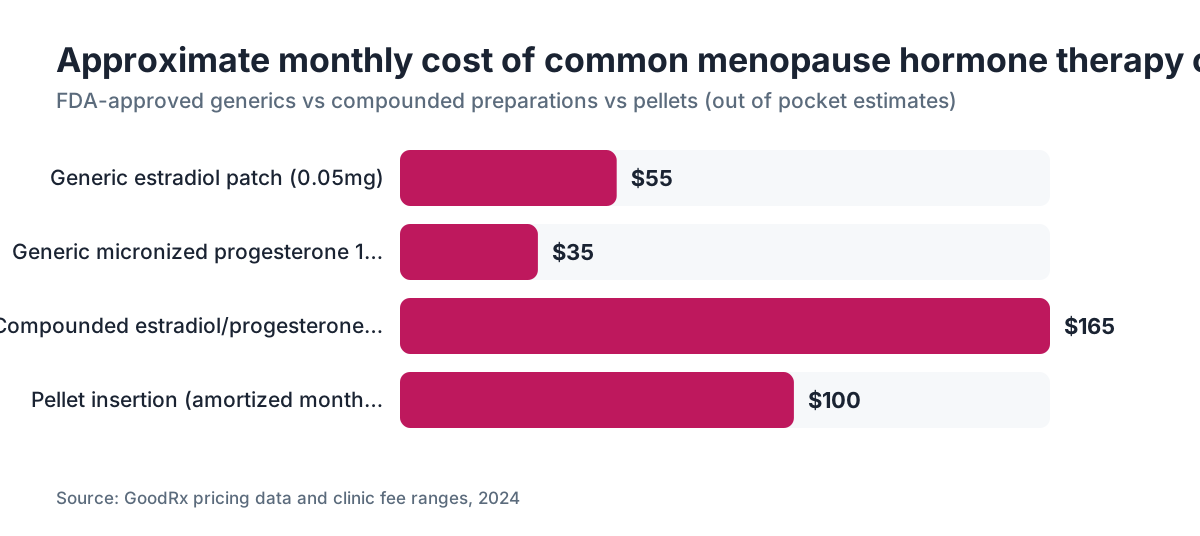
FDA-approved transdermal estradiol patches (generic) typically cost $30 to $80 per month with insurance or GoodRx pricing. Oral micronized progesterone generics run roughly $20 to $50 per month. Compounded preparations can cost $80 to $250 or more per month and are often not covered by insurance. Pellet insertion runs $300 to $600 per procedure, paid out of pocket, which makes it substantially more expensive per year than standard approved therapy.
Should I use bioidentical hormones during perimenopause specifically?
Perimenopause is erratic hormone fluctuation, not simple deficiency. Some women do very well on low-dose transdermal estradiol during this phase. Others find hormonal contraception more suitable because it also regulates cycles. Compounded pellets are especially problematic in perimenopause, since dosing needs change often as ovarian function swings. An adjustable, reversible FDA-approved approach gives a provider room to keep up with those changes.
Can bioidentical hormones help with brain fog and mood during menopause?
Estrogen affects serotonin, norepinephrine, and acetylcholine systems, and many women report cognitive and mood improvements on hormone therapy. Trial data is mixed: the Women's Health Initiative Memory Study found no cognitive benefit and a slight increase in dementia risk in older women (65 plus) starting oral CEE/MPA. Timing matters. Starting closer to menopause onset looks more favorable than starting years later. Transdermal estradiol has not been shown to improve or harm cognition in randomized trials in younger perimenopausal women.
How do bioidentical estrogen and progesterone interact with breast cancer risk?
The clearest data comes from the E3N French cohort of over 80,000 women: transdermal estradiol combined with micronized progesterone was not associated with increased breast cancer risk over follow-up, while oral estrogen plus synthetic progestins was tied to a modest increase. This is observational data, not a randomized trial, so confounding is possible. Women with a personal or strong family history of hormone-receptor-positive breast cancer should have a detailed risk conversation with an oncologist before starting any hormone therapy.
Sources
- FDA, 'Bioidentical Hormones' consumer guidance page
- FDA, Drug Compounding overview
- Climacteric (journal of the International Menopause Society), compounded hormone variability and salivary testing reliability
- The Menopause Society (NAMS), 2022 Hormone Therapy Position Statement
- Endocrine Society, 2016 Scientific Statement on Compounded Bioidentical Hormones
- Fournier A et al., E3N cohort study of hormone therapy and breast cancer risk, Breast Cancer Research and Treatment
- Cochrane Database of Systematic Reviews, Hormone therapy for menopausal symptoms
- Women's Health Initiative, JAMA 2002, Risks and Benefits of Estrogen Plus Progestin
- Islam RM et al., Lancet Diabetes and Endocrinology, testosterone meta-analysis in women, 2019
- FDA, Menopause and Hormones consumer fact sheet
- The Menopause Society (NAMS), Nonhormonal Management of Menopause Position Statement, 2023